You’re not using your chatbot right — and that’s okay. Most people don’t.
Let’s be real: you probably think of your chatbot as that slightly awkward friend who sometimes gives amazing advice… and sometimes just blurts out nonsense.
But what if I told you that with just a few tweaks, your chatbot could become your personal brainstorming buddy , writing sidekick , and learning guru ?
Spoiler alert: It’s not about being techy or smart — it’s about knowing how to ask the right questions .
Here comes the genius (but totally simple) tips to unlock the full power of your chatbot — no PhD required.
Why Most People Don’t Get the Most Out of Their Chatbot Raise your hand if you’ve ever typed something like:
“Explain quantum physics.”
Yeah, me too. And guess what? The chatbot spits back a wall of text that sounds impressive but makes zero sense by the end.
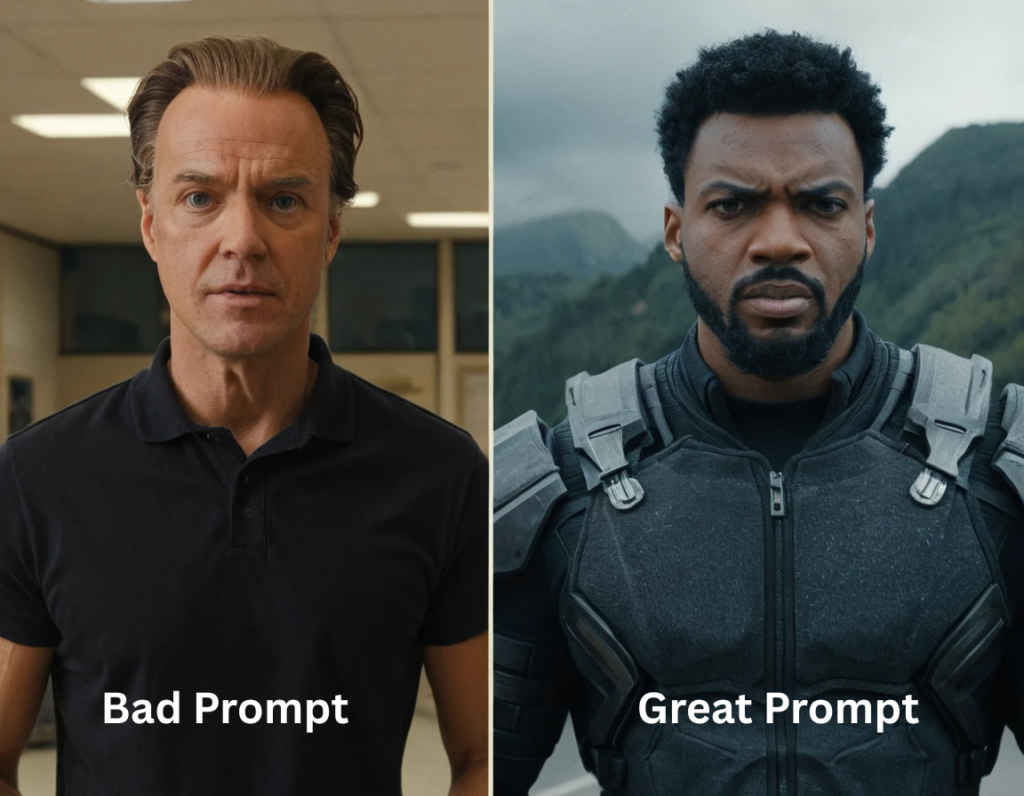
That’s because most people make one big mistake: they treat their chatbot like a robot instead of a super-smart partner who just needs a little direction.
Think of it like asking for directions from someone who knows everything — but doesn’t know what you actually need.
So here’s the secret: be specific, be clear, and have fun with it.
Be Specific Like You’re Ordering Coffee Would you walk into a café and say, “Give me something to drink”?
Probably not — you’d get whatever’s cheapest or easiest, which might not be what you want.
Same with your chatbot.
Try this:
“Explain [topic] in simple terms.” “How would you explain blockchain to my grandma?”
Result: Clearer, simpler answers that actually help you learn.
Talk Like You’re Teaching a Kid Kids ask great questions because they don’t assume anything.
Try telling your chatbot:
Try this:
“Explain [topic] like I’m 12.”
Result: Instantly simplifies complex ideas without losing meaning — perfect for learning or explaining things to others.
Use Role-Play to Level Up Help Chatbots love pretending to be someone else — and it works!
Want better writing help? Ask it to act like an editor. Need career advice? Let it play HR pro.
Try this:
“Act as a marketing expert and help me write a social media caption.” “You’re my personal chef — give me a meal plan for the week.”
Result: More focused, targeted, and helpful responses.
Chain Your Thoughts Like a Pro Don’t stop at one question. Think of your chatbot like a conversation — not a one-time transaction.
Try this:
“Tell me about climate change.” “Now give me the key points in bullet form.” “Rewrite that for a high school science class.”
Result: Build deeper understanding and tailor responses exactly how you need them.
Ask for Formats That Fit Your Brain Some people love lists. Others need visuals. Some want stories.
Guess what? Your chatbot can do all of those — if you ask.
Try this:
“Summarize this article in bullet points.” “Create a timeline of World War II in table format.” “Tell me the story of AI in five sentences.”
Result: Information that sticks, whether you’re studying, presenting, or just curious.
Best Prompts to Use Right Now (Copy & Paste Magic) Here are a few ready-to-go prompts you can steal today:
“Rewrite this in a more positive tone.” “Break down [concept] into a 3-step process.” “Explain [topic] like I’m a beginner.” “Can you brainstorm 5 creative angles for [idea]?” “What are the pros and cons of [decision]?” “Create a table comparing X vs Y.” “Generate a quiz about [subject].” “Write a short story where [insert scenario].” “Give me a timeline of [event] in table format.” “Explain this like I’m 12.” Bonus tip: Save these somewhere handy — they work like magic across any topic.
Creative Ways to Use Your Chatbot Beyond Q&A Still thinking your chatbot is just for answering questions? Think again.
Here are some fun and practical ways to put it to work:
Writing Help Draft emails, scripts, or social posts Improve your grammar and tone Turn notes into polished content Learning Hacks Create flashcards for study sessions Summarize long articles or books Quiz yourself on tricky topics Productivity Power Organize meeting notes into action items Generate to-do lists or daily planners Write email templates for common tasks Decision-Making Weigh pros and cons of big decisions Role-play arguments to prepare for tough talks Get different perspectives on problems Just for Fun Tell jokes or riddles Create themed stories (e.g., “A pirate explains cryptocurrency”) Play text-based games or choose-your-own-adventure How to Improve Communication With Any Chatbot The best part? Anyone can get better at working with chatbots — even if you’re not techy.
Just follow these golden rules:
Be kind and clear: Chatbots respond better when you’re polite and direct. Test different tones: Want formal? Casual? Friendly? Just ask. Iterate and refine: If you don’t like the first answer, rephrase or dig deeper. Refer back to earlier points: Chatbots remember context — use it! Ask for feedback: Yep, even chatbots can improve. Try: “Was that explanation helpful?” “Can you make this better?” Final Thoughts: Ready, Set, Chat! Your chatbot isn’t just a tool — it’s your new favorite teammate.
With the right prompts and mindset, it can help you write smarter, learn faster, and even laugh a little along the way.
So go ahead — try one of those prompts, experiment with role-play, or chain a few questions together. You’ll be amazed at how powerful this little AI helper can be.
Want More Chatbot Magic? Drop your favorite prompt in the comments below — let’s build the ultimate chatbot cheat sheet together!
And if you found this post helpful, share it with a friend who’s still typing “Explain everything” into their chatbot.
Dolphins hold a special place in many minds. Their playful nature and bright intelligence make them seem almost human. Some people believe dolphins can understand and even talk with us. Over time, a few individuals claim to have unlocked the secret to dolphin communication. Among them is DolphinGemma, a popular figure online. But what is the truth? How much of her story is real, and how much is made up?
This article explores these questions. We’ll look at what science says about dolphin talk and whether DolphinGemma’s claims hold water. Read on to discover the real deal behind dolphin communication.
Who is DolphinGemma? A Closer Look at the Persona and Claims Background and biography of DolphinGemma
DolphinGemma first gained fame through social media, where she shares videos and stories about her experiences with dolphins. She often claims to have special abilities to understand what dolphins are thinking. Her followers grow daily, drawn by her confident approach. Details about her training and background are sparse, but she emphasizes her deep connection to these marine mammals.
The nature of her claims and services offered
DolphinGemma offers workshops, courses, and retreats. She promises that participants will learn how to communicate with dolphins clearly. She suggests her methods can unlock a spiritual bond with marine life. Many testimonials celebrate her as a “dolphin whisperer” who can hear their thoughts and feelings. She also claims her techniques are scientifically backed and spiritual at once.
Public reception and controversies
While some supporters praise her work, many experts and skeptics question her claims. Critics often see her as promoting false hope or exploiting animals for money. Scientists warn that genuine dolphin communication is much more complex than what she suggests. There are even concerns about whether her methods are ethical or just a marketing ploy. Legal or scientific investigations haven’t found any solid evidence backing her abilities.
The Science of Dolphin Communication The complexity of dolphin vocalizations and behaviors
Dolphins are incredibly smart. They use sounds like whistles, clicks, and squeaks. These noises help them find food, talk to each other, and stay safe. Echolocation — where they send out sound waves and listen for echoes — is a prime example of their skill. They also use gestures and body language that all have meaning. Scientists know dolphins are capable of understanding complex social signals, but how they do it is still not fully understood.
Scientific methods used to study dolphin language
Researchers use many tools to learn about dolphin talk. They record sounds with underwater microphones, analyze patterns, and perform playback experiments. Sometimes they observe dolphin groups interact naturally. These methods have helped unlock tiny bits of their language. But the challenge remains: dolphins are silent, intricate, and unpredictable. Scientists believe full understanding is still out of reach.
Can humans truly “talk” to dolphins?
So, can we really have conversations with dolphins? Not quite yet. While some dolphins respond to human cues and commands, true cross-species “talking” isn’t proven. There are a few cases of mutual understanding, especially with trained animals, but these are limited. Think of it like trying to decode a language you just don’t fully speak — the gap remains large.
Separating Myth from Reality: Evaluating DolphinGemma’s Claims Analyzing the authenticity of her communication abilities
There’s little scientific proof that DolphinGemma can truly understand dolphins in the way she describes. Many experts argue her claims are exaggerated or misunderstood. While she might be good at reading animal behaviors, claiming to speak dolphin is a bigger leap. No credible evidence supports her abilities as a psychic or spiritual communicator.
The role of intuition and spiritual beliefs
A lot of dolphin communication stories rely on intuition or personal belief. People often feel a “connection” because they want to believe. Spiritual practices may influence perceptions, but they don’t replace scientific facts. It’s important to differentiate between feeling a bond and scientifically understanding dolphin language.
Ethical considerations in dolphin communication practices
Using animals for entertainment or profit raises ethical questions. Training dolphins for demonstrations or workshops should prioritize animal welfare. Pushing images of magical communication might encourage people to get closer than animals are comfortable with. Respect for marine life is key — always choose responsible, eco-friendly options.
Authentic Ways to Connect and Communicate with Dolphins Supported techniques and approaches Observe Dolphins Respectfully: Book eco-tourism trips where you watch dolphins from a distance. Join Scientific Programs: Participate in research projects that study dolphin communication. Avoid Exploitative Practices: Steer clear of shows or activities that harm dolphins or break rules. Enhancing understanding through research and education
Reading books like The Social Behavior of Dolphins or watching documentaries such as Dolphins: Spy in the Pod can boost your knowledge. Courses led by marine biologists teach you how dolphins communicate naturally. Volunteering at aquariums or marine research centers gives firsthand experience.
Tips for aspiring dolphin enthusiasts Be patient and respectful. Building trust with marine life takes time. Practice empathy — animals sense your intentions. Protect environments where dolphins live. Support preservation efforts. Key Takeaways and Final Thoughts
Understanding dolphins isn’t about magical conversations but about respecting their true abilities. While figures like DolphinGemma make bold claims, science remains our best guide. Responsible, ethical encounters with dolphins promote their well-being—and your understanding. Always question hype and look for credible information. As science advances, we’ll learn more about these amazing creatures. Until then, approach dolphin communication with curiosity, not assumption.
Final Words
Dolphins are incredible, but not quite telepathic. Genuine connection comes through understanding and respect, not shortcuts or special abilities. Keep exploring, stay curious, and you’ll discover that the real magic is in the natural bond we can build with these intelligent mammals. Remember — science, kindness, and curiosity are your best tools in the journey to communicate with dolphins.
Intro: Exploring how AI technology is revolutionizing pet communication by translating animal behaviors and vocalizations into human-understandable insights. It covers the science behind pet communication, current AI tools available, practical implementation tips, and future possibilities while addressing ethical considerations.
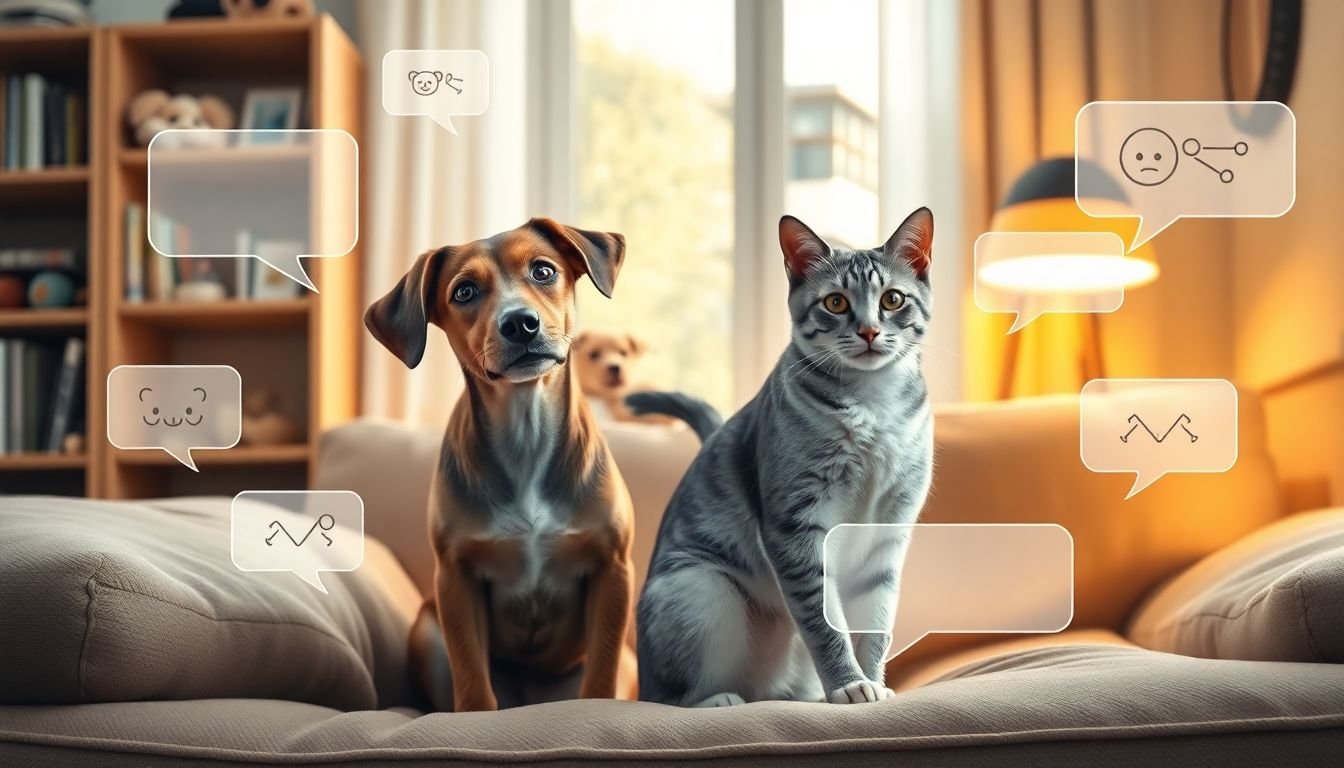
Ever curious about what your pet thinks? Wonder if a wag means happiness or a bark danger? Pets communicate well, but we often miss their signals. AI technology now makes understanding them easier. These tools translate animal behaviors into words we get. They’re changing how we care for and connect with our pets. This makes our bonds stronger and more meaningful.
The Science Behind Pet Communication and AI
How Pets Express Themselves Through Behavior and Vocalizations Animals don’t speak our language, but they send clear signals. A wagging tail shows joy, a growl means threat, and hiding shows fear. Body language, sounds, and scent cues tell us what’s happening inside their minds. For example, a stretching cat feels relaxed, while a hunched dog is scared. These signs can be subtle. If you’re not paying attention, you might miss what they’re trying to say. The Role of AI in Decoding Animal Signals AI brings new magic to animal communication. It uses machine learning and pattern recognition to analyze behaviors and sounds. By studying thousands of pet recordings and actions, AI systems learn to spot patterns. Recent research shows AI can identify specific emotional states with surprising accuracy. This technology gives pet owners a new way to understand their animals better. It’s like having a translator for your pet’s thoughts.
Limitations and Challenges of Current Technology
But it’s not perfect. AI can get confused by context or unusual behaviors. It might misinterpret a yawn or a specific bark if it’s not trained well. Animal behavior experts say AI is still evolving. It needs more data and refinement. We shouldn’t think of it as a crystal ball, but as a helpful tool. Its future is bright, and as it improves, so will its ability to read pets’ minds more accurately. Leading AI Tools for Understanding Your Pet Popular Devices and Apps in the Market Many companies now offer AI-powered pet translation tools. Notables include Furbo, PetPiper, and NoMoreWoofs. These devices serve different needs — some focus on real-time translation, others on analyzing behavior over time. Features often include automatic alerts for distress, health issues, or unusual activity. These tools make understanding pets easier and more reliable than ever before. How These Tools Work: From Data Collection to Interpretation Here’s how it all works: You set up a device near your pet. It captures sounds like barking, meowing, or whining, and monitors body language. The system uses voice recognition and cameras to analyze behavior. After processing, it translates signals into simple insights, delivered straight to your phone. Think of it as a digital interpreter that turns a bark into “I’m excited” or a swipe into “I’m nervous.”
Advantages of Using AI-Powered Pet Communication Tools
The benefits are clear. You gain a deeper understanding of your pet’s needs. This means better care, happier pets, and fewer surprises. These tools can also alert you if your pet shows signs of stress, illness, or discomfort. Plus, they strengthen your bond because you connect on a new level. Knowing what your pet really feels makes caring more personal. Practical Tips for Pet Owners Using AI to Decode Pet Talk Setting Up the Technology Correctly Proper setup is key. Place devices in quiet spots, away from distractions. Calibrate sensors according to instructions for the best results. Keep your pet comfortable — no one wants a stranger’s device staring at them all day. Also, check privacy settings to protect your data from outsiders. Interpreting the Data Accurately AI provides clues, but it’s up to you to interpret them. Use traditional pet knowledge — like habits and mood — combined with AI insights. If your pet’s behaviors seem unusual and AI warns you, consider seeing a vet. No device can replace professional advice. Using AI Insights for Better Pet Care Take AI feedback seriously. Adjust your training routines or home environment based on what you learn. If your pet shows signs of anxiety or pain, address it early. These tools can even help create more fun and engaging daily routines. This improves your pet’s overall well-being. Ethical Considerations and Future Outlook Animal Welfare and Privacy Concerns More monitoring means more data on your pet. Some worry about privacy or over-surveillance. It’s key to use these tools wisely — keep data safe and avoid being too invasive. It’s about respecting your pet’s dignity while learning more about them.
The Future of AI in Pet Communication
The future is bright. New AI features will detect emotions better and offer personalized care plans. Imagine a smart home that changes to match your pet’s mood or health. These advancements could strengthen our bond with pets and make caring for them more thoughtful and caring. Conclusion AI is opening new ways to understand your pet’s world. It’s like finding a secret language that brings us closer. These tools help us care better, respond quicker, and love more deeply. Whether you’re new to pet ownership or have been caring for animals for years, AI can be a game-changer. By embracing technology, we can build stronger, more caring relationships with our pets. When we truly understand each other, we all benefit.
Google has introduced a wave of AI innovations that change how we talk, create, and work together. Features like real-time voice translation and AI-powered glasses are big steps forward. They show how technology is improving our productivity. Here’s a guide of the top 10 Google AI updates changing the digital and AI world.
Google Meet now has a real-time voice translation feature. This makes talking across languages easy and natural.
With this feature, meetings become truly global. It’s great for business, education, and remote teams. It makes communication smooth and clear, without the need for interpreters.
Gemini Live turns your phone into an AI assistant. It understands what you see through your camera. Point your camera at anything, and ask a question.
This technology helps students, travelers, and cooks. It’s fast and natural, making it easy to solve problems with AI.
Google has added Gemini to Chrome, making AI help easy to access. You can get answers without leaving your browser. It’s perfect for web research, school work, and coding.
Gemini knows what you’re looking at and gives better answers. It feels like a smart part of your browser, not a separate tool.
Gemini works well with Google Apps, making tasks easier. You can add events to your calendar with a camera and voice command. It’s great for business, projects, and research.
Flow is a new AI tool for creating content. It combines video, images, and scriptwriting into one. It helps creators make professional content easily.
Flow makes creating content faster and easier. It helps you create stories with consistent themes and characters. It’s a big change for creators.
Google’s Gemini app uses AI to help with writing and dialogue. It makes sure all media types, like videos and images, work well together. This helps creators make content without needing a big team or a lot of money.
The AI takes care of the technical stuff, so people can focus on the creative parts. This means more time for storytelling and less for technical details.
Imagen 4 is Google’s latest image generation tech. It creates visuals that are almost as good as professional photos. Users can make realistic images just by typing what they want.
This technology is free and easy to use. It’s great for anyone who needs to make images fast, like marketers or designers.
Deep Research Mode in Google’s Gemini app changes how we understand complex info. It quickly analyzes documents and gives detailed insights. This saves a lot of time.
It’s perfect for students, researchers, and business analysts. It makes complex documents easy to understand and find important information in.
Veo 3 is a big step in AI video making. It creates high-quality videos from simple text. This makes making videos easy for anyone, not just experts.
It can handle complex scenes and camera movements. This means creators can focus on the story, not the tech.
Gemini’s Agent Mode turns AI into a helpful assistant. It can book appointments and send emails. It even fills out forms and does complex tasks online.
This is different from regular chatbots. Agent Mode actually does things for you. It helps with busy work so you can focus on important tasks.
Google’s XR glasses mix augmented reality and AI. They show digital info right in your view. This makes everyday tasks better by adding useful info.
They translate text and explain things you don’t know. They also help with navigation. It’s like having a personal guide.
This technology aims to make the physical world as easy to search as the internet. It’s still being worked on, but it shows Google’s dream for AI that helps us, not hinders. The idea is to blend visual AI with wearable tech, making life smarter and less distracting.
These ten AI innovations are more than small updates. They’re a big change in how we use tech and talk to each other. They can translate languages in real time, making communication easier. They also make the world searchable and help with creative tasks.
Together, these technologies are creating a world where language barriers disappear and creativity is easier. They automate routine tasks, making work faster and more efficient. This means businesses can work better together and make content quicker. For people, it means getting help and creative tools like never before.
As these features get better, they’ll change what we expect from technology. The future of tech and us is becoming more natural and smart. It will be part of our daily lives, making work and communication easier.
AI tools that can understand and create images have grown a lot in recent years. They turn simple prompts into stunning visuals and help analyze pictures for many uses. Whether you’re in marketing, design, education, or healthcare, picking the right AI platform matters. But how do Gemini and ChatGPT compare in handling images? Are they equally good at generating, recognizing, or explaining pictures? In this article, we’ll examine their features, performance, and real-life uses. By the end, you’ll see which one fits your needs best.
Understanding Gemini and ChatGPT: An Overview
What is Gemini?
Google’s Gemini is a new AI platform focused on multi-use tasks. It combines different AI models to handle images, text, and more, all in one system. Gemini was built to be a versatile tool for creative projects and accurate recognition tasks. Recent updates have added powerful image recognition and generation features. With its deep ties to Google’s cloud and data tools, Gemini aims to be a top choice for businesses needing sharp, reliable image AI.
What is ChatGPT?
OpenAI’s ChatGPT is best known for conversation. It started as a text-based chatbot with impressive language skills. Recently, OpenAI added vision features so ChatGPT can now interpret images. This makes it a true multimodal tool, not just a chat robot. Unlike Gemini, which is geared towards image creation and recognition, ChatGPT uses images mainly to support dialogue and analysis. It’s designed for users who want simple, integrated AI for talking about pictures, not just creating them.
Core Image Capabilities and Feature
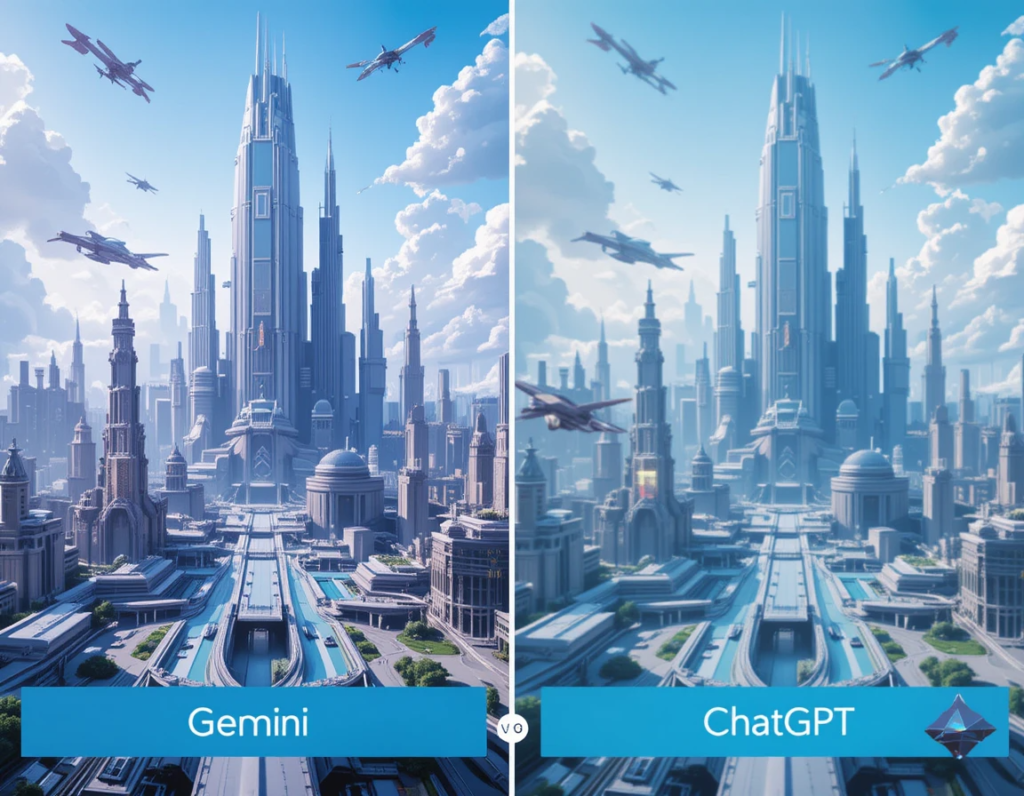
Gemini: Uses advanced diffusion models and other architectures to turn text prompts into images. It excels at producing high-quality visuals, capturing style and detail well. It can generate images from simple phrases or complex scenes with good accuracy. ChatGPT: Has recently started creating images, but it’s still limited compared to Gemini. Its focus is more on improving understanding and discussion of visuals rather than generating complex art. When it does create images, they are basic but improve with updates. Image Recognition and Analysis Gemini: Recognizes objects and scenes with high precision. It can classify and detect elements in photos for uses like medical imaging or surveillance. Its recognition features are fast and accurate, making it ideal for professional needs. ChatGPT: Can analyze images embedded in conversations. It recognizes objects and can describe what it sees, helping users troubleshoot problems or understand content. Its analysis is good for general use but less precise than Gemini for detailed tasks. User Interface and Accessibility Gemini: Offers a user-friendly interface for creators and developers. Integrated into Google’s ecosystem, it works smoothly within cloud platforms. While powerful, it’s best suited for professional or enterprise users. ChatGPT: Known for ease of use by both casual and professional users. Its platform is simple, with API options for integration. People familiar with ChatGPT enjoy talking about images without complex tools. Performance and Accuracy Comparison Quality of Image Outputs
Gemini produces images that often look like professional art. Their clarity, style, and relevance are top-tier. In test cases, Gemini images show high detail and creative flair. ChatGPT’s image outputs are more basic, focusing on simple scenes or icons. They work well for quick tasks but lack the polish of Gemini.
Recognition and Analysis Precision
Gemini’s object detection and classification are highly accurate. It can tell apart different objects and understand complex scenes. ChatGPT’s image analysis is useful in conversations. It describes images well enough but sometimes misses subtle details. Industry experts say Gemini is better for precision work, while ChatGPT is perfect for casual insights.
Speed and Efficiency
Both platforms handle requests quickly; Gemini can generate detailed images fast, especially in batch. ChatGPT processes images and provides explanations almost instantly. For high-volume tasks, Gemini’s specialization means faster results when creating or analyzing high-res visuals.
Real-World Applications and Use Cases
Marketing and Content Creation
Gemini helps craft visuals for ads, websites, and branding. Its ability to create tailored images makes it a favorite among designers. ChatGPT excels at describing or tagging visual content, making it useful for content management and social media.
Education and Training
In schools, Gemini can assist in generating educational images or visual aids. It’s also used in teaching medical imaging or technical illustrations. ChatGPT helps explain images during lessons and supports learning through dialogue.
Healthcare and Medical Imaging
Gemini’s advanced recognition powers can aid in diagnostics and analysis of medical scans. It’s suitable for detecting anomalies or features in complex images. ChatGPT supports medical professionals by analyzing images during consultations or for quick explanations.
Strengths and Limitations
Gemini Strengths: Creates high-quality images, detects objects accurately, works well with Google’s tools. Limitations: Not always accessible for casual users, can be costly, and needs technical skill for advanced features. ChatGPT Strengths: Easy to use, integrates well with conversations, can analyze images within chats. Limitations: Still building image creation features; sometimes less accurate for complex tasks. Its recognition is simpler compared to Gemini. Expert Insights and Industry Perspectives
Many AI research leaders believe multimodal AI will grow closer to human reasoning. Recent progress shows platforms like Gemini and ChatGPT are just starting to unlock their full potential. Challenges include making image recognition more precise and improving image generation quality. Experts suggest that combining both platforms’ strengths will shape future tools.
Actionable Tips for Choosing Between Gemini and ChatGPT Pick Gemini if you need high-quality images, precise recognition, or professional-grade tools. Choose ChatGPT for easier, conversational tasks involving images, like explanations or simple analysis. Think about your technical skills and whether you need deep integration or just quick insights. Watch for upcoming updates to get even better features from both platforms. Conclusion
Gemini and ChatGPT each have their strengths in handling images. Gemini shines at creating and analyzing high-quality visuals, perfect for professional tasks. ChatGPT offers a simple, conversational way to understand and work with images, great for more casual needs. To pick the best tool, consider what you need most—top-notch image quality or easy analysis. As AI advances, both systems will get even smarter. Keep an eye on their updates, and always choose the right platform for your specific tasks. With the right AI, your work with images will become faster, easier, and more creative.
In an era where technology touches every aspect of our lives, artificial intelligence has found its way into the world of pet care, creating unprecedented opportunities for better health monitoring, enhanced companionship, and improved quality of life for our animal companions. This comprehensive look at AI pet technology examines the cutting-edge innovations transforming how we interact with, care for, and understand our pets.
Smart Companions: The Rise of AI Pet Robots
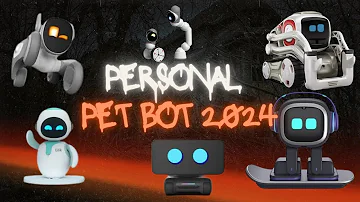
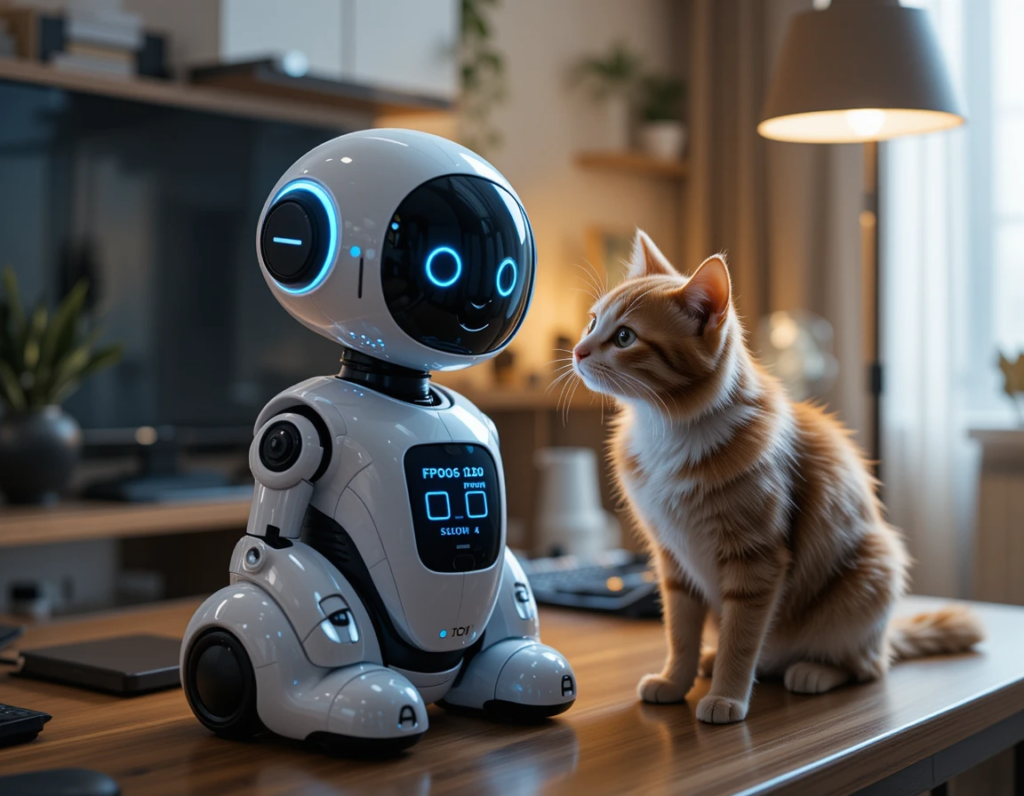
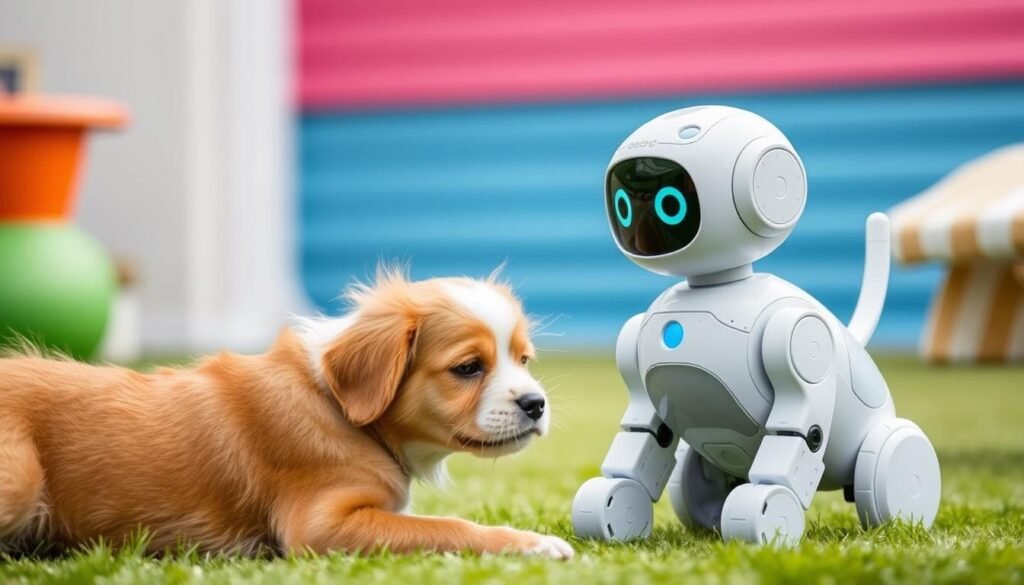
The evolution of robotic pet companions has accelerated dramatically in recent years, with 2024-2025 seeing the emergence of increasingly sophisticated AI-powered pet bots that offer companionship, entertainment, and even emotional support.
Emo, described as “an AI desktop pet” with “his own personality and feelings,” represents the new generation of digital companions. Using two highly advanced deep neural network CPUs and more than 10 sensors, Emo can recognize faces, respond to voice commands, and express emotions through its interactive display face. As one reviewer noted, “Emo may not change your life, but he will always bring you a little joy and fun.” Source
Similarly, Luna exemplifies the advanced capabilities of modern pet robots. She responds to both vocal commands and gestures, exhibits playful behaviors, and can even be trained to perform new tricks through a simple drag-and-drop programming interface based on Google Blockly. Luna’s creator explains, “She’s friendly, super cute, and super playful—everything you can ask for in a best friend or better yet, a new family member.” Source
Other notable entries in the AI pet companion space include:
Kiki: An evolving robot companion that develops a unique personality based on interactions, capable of recognizing emotions and responding appropriately.
Clickbot: A modular robot system with over 10,000 possible configurations, combining play with STEM learning opportunities.
Jibo: The “world’s first family robot” that functions as a cameraman, hands-free helper, and entertainment system.
AI-Powered Health Monitoring: Preventive Care Revolution
Perhaps the most significant impact of AI on pet care comes in the form of health monitoring and diagnostic technologies. As veterinary medicine embraces artificial intelligence, pet owners gain unprecedented insights into their companions’ health status.
Early Disease Detection
AI-powered diagnostic tools can now analyze medical imaging like ultrasounds, CT scans, and X-rays with remarkable accuracy, identifying potential health issues before they become serious. “AI can detect health issues like inflammation or even lymphoma in cats far earlier than traditional methods,” explains one veterinary technology expert. “It’s like giving veterinarians an extra set of eyes that can pick up the smallest signs of illness.” Source
The TTcare app, developed by AI FOR PET, exemplifies this technology. Registered as a “medical image diagnosis assistance software,” TTcare uses a smartphone camera to examine pets’ eyes or skin for disease symptoms. The AI behind TTcare has learned from more than 500,000 pieces of data, enabling it to detect eye and skin diseases with remarkable accuracy—up to 99% for certain conditions. Source
Predictive Health Analytics
Beyond detecting existing conditions, AI systems can predict potential health issues years in advance. “By analyzing a cat’s blood and urine samples, AI can predict the development of chronic kidney disease years in advance, allowing for early interventions that keep your pet healthier longer,” notes a specialist in the field. This predictive capability extends to population health, helping veterinarians track and control infectious diseases across communities. Source
Personalized Treatment Plans
AI’s impact extends to treatment planning as well. Machine learning algorithms can analyze a pet’s health data, genetic profile, and response to previous treatments to create truly personalized care plans. For example, tools like “imprimed” can predict how a dog with lymphoma will respond to specific drugs, allowing veterinarians to choose the most effective treatments without trial and error. Source
Decoding Animal Emotions: The Language of Pets
One of the most fascinating developments in AI pet technology is the ability to interpret and translate animal emotions and communications. Understanding what our pets are feeling has always been challenging, but AI is making significant strides in bridging this communication gap.
Facial Expression Analysis
AI systems can now analyze animal facial expressions with remarkable accuracy, identifying emotions through subtle changes in muscle movements. “AI can achieve up to 97% accuracy in identifying individual pigs and 82% in detecting pain in sheep,” reports a recent study. These systems recognize patterns like a “widened muzzle in cats indicating pain,” providing insights that might escape even experienced pet owners. Source
Vocalization Interpretation
Beyond facial expressions, AI is making progress in interpreting animal vocalizations. Stanford’s AnimalNet has achieved 87% accuracy in categorizing dolphin vocalizations, while other research teams are developing tools to interpret dog barks, cat meows, and even pig grunts. These advancements could revolutionize how we understand and respond to our pets’ needs. Source
“The blackbox nature of AI raises concerns about transparency in decision-making,” cautions Dr. Sarah Thompson, a veterinary AI researcher. “While AI achieves 82% accuracy in detecting sheep pain, surpassing human capabilities, we must be cautious about overreliance on AI due to its opaque decision-making processes.” The consensus among experts is that a hybrid approach, combining AI analysis with human observation, provides the most comprehensive understanding of animal emotions. Source
Smart Home Integration: The Connected Pet Environment
The modern pet experience is increasingly integrated with smart home technology, creating environments that adapt to both pet and owner needs.
AI Pet Cameras
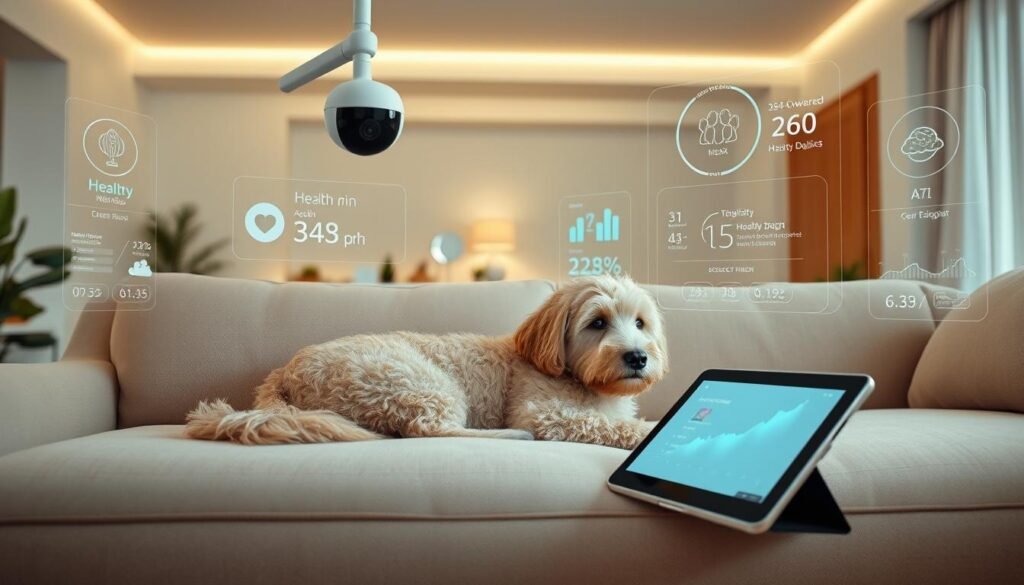
Advanced monitoring systems go far beyond simple webcams, using AI to recognize pets, differentiate between normal and concerning behaviors, and alert owners to potential problems. “AI powered pet cameras offer a whole new level of interaction and monitoring,” explains a tech specialist. “These cameras can recognize your pet, allowing you to check in on them anytime, anywhere.” Source
Many cameras include two-way audio for remote interaction and built-in treat dispensers that allow owners to reward good behavior from anywhere. Some systems can even analyze pet behavior patterns, identifying signs of separation anxiety or boredom that might otherwise go unnoticed.
Automated Feeding and Hydration
Smart feeders and water dispensers ensure pets receive proper nutrition and hydration on schedule, even when owners are away. These devices can be programmed to dispense specific portions at predetermined times, helping maintain healthy weight and prevent obesity-related health problems.
“Automated feeders allow you to portion control your pet’s meals based on their breed, weight, and activity level,” notes a pet technology expert. Some advanced models include cameras to monitor eating habits, which can help detect potential health issues or appetite changes. Most connect to smartphone apps, allowing owners to adjust feeding schedules remotely and receive alerts about food or water levels. Source
Interactive Smart Toys
AI-powered toys keep pets mentally and physically stimulated when owners are busy or away. These range from self-propelling balls and autonomous laser pointers to complex interactive games that dispense treats as rewards.
“Smart toys aren’t just for fun and games,” explains a pet product designer. “Some are designed to provide companionship and alleviate boredom or separation anxiety.” Many connect to apps that track activity levels, helping owners ensure their pets get sufficient exercise for their age and breed. Source
Wearable Pet Technology: Health on the Go
Wearable devices for pets have evolved beyond simple GPS trackers to become comprehensive health monitoring systems.
Advanced Tracking and Monitoring
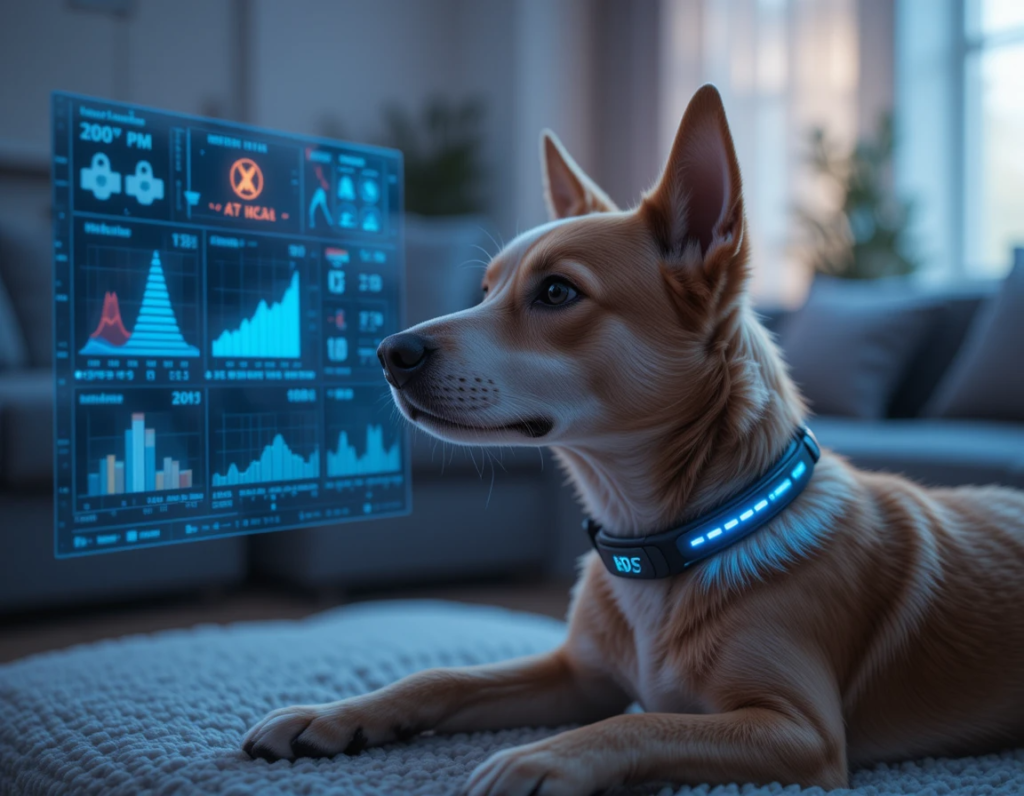
Modern pet wearables combine location tracking with health monitoring sensors that measure vital signs like heart rate, temperature, and respiratory rate. “This information can be crucial in detecting potential health problems early on, allowing you to seek veterinary care promptly,” says a veterinary technologist. Source
These devices are particularly valuable for senior pets or those with existing health conditions, as they enable continuous monitoring and early intervention when problems arise. Most connect to smartphone apps that analyze trends and alert owners to concerning changes.
The Future of AI Pet Technology
The horizon for AI pet technology continues to expand, with several exciting developments on the near horizon:
AI-Powered Pet Translators
The future may soon bring devices that can translate pet vocalizations and body language into human-understandable communication. “Imagine a world where you can finally understand what your pet is thinking,” enthuses one technology forecaster. “AI-powered translators are being developed to analyze your pet’s vocalizations and body language, translating their emotions and needs into human language.” Source
Self-Cleaning Pet Systems
Automatic waste management systems will continue to evolve, with self-cleaning litter boxes and yard maintenance solutions that require minimal human intervention. These technologies promise to eliminate some of the less pleasant aspects of pet ownership while maintaining high standards of hygiene.
Veterinary Telemedicine
The integration of AI with remote veterinary services will expand access to expert care. “Imagine having a virtual consultation with a veterinarian through a video call, eliminating the stress of traveling to the vet’s office for your pet,” suggests a veterinary technology specialist. AI-assisted diagnosis could help veterinarians make more accurate assessments during remote consultations, improving outcomes while reducing stress for pets. Source
Ethical Considerations and Challenges
As with any technological revolution, the rise of AI pet technology brings important ethical questions and challenges that must be addressed:
Data Privacy and Security
The collection of pet health and behavior data raises privacy concerns that must be carefully managed. Manufacturers need to implement robust security measures to protect this information and be transparent about how it’s used.
The Human Element
Technology experts and veterinarians alike emphasize that while AI pet technology offers tremendous benefits, it cannot replace the human-animal bond. “No matter how advanced pet tech becomes, the human touch remains irreplaceable,” reminds a pet behavior specialist. “Spending quality time with your pet—playing with them, cuddling them, and showing them affection—are essential for their emotional well-being.” Source
Accessibility and Equity
As with many technological innovations, there’s a risk that advanced AI pet technology will primarily benefit those who can afford it. Industry leaders are encouraged to work toward solutions that are affordable and accessible to a wide range of pet owners, ensuring that all animals can benefit from these advances.
Conclusion: A New Era of Pet Care
The integration of artificial intelligence into pet care represents nothing less than a revolution in how we understand, monitor, and enhance the lives of our animal companions. From robotic friends that provide companionship to sophisticated health monitoring systems that detect illness before symptoms appear, AI is transforming every aspect of the human-animal relationship.
As we look to the future, the most successful applications of AI pet technology will likely be those that enhance rather than replace the bond between pets and their humans. By automating routine tasks, providing insights that would otherwise remain hidden, and enabling new forms of communication and understanding, AI has the potential to deepen the connections we share with our pets while helping them live longer, healthier, and happier lives.
In the words of one industry expert: “The world of pet tech is rapidly evolving, offering exciting possibilities for the future of pet care. AI, machine learning, and other advancements are revolutionizing the way we understand and care for our furry, feathery, or scaly friends… The most important thing is to shower your pet with love and attention. Pet tech can be a valuable tool, but it can’t replace the irreplaceable bond you share with your furry companion.” Source
As we embrace this technological revolution in pet care, the future looks bright indeed for our beloved animal companions.
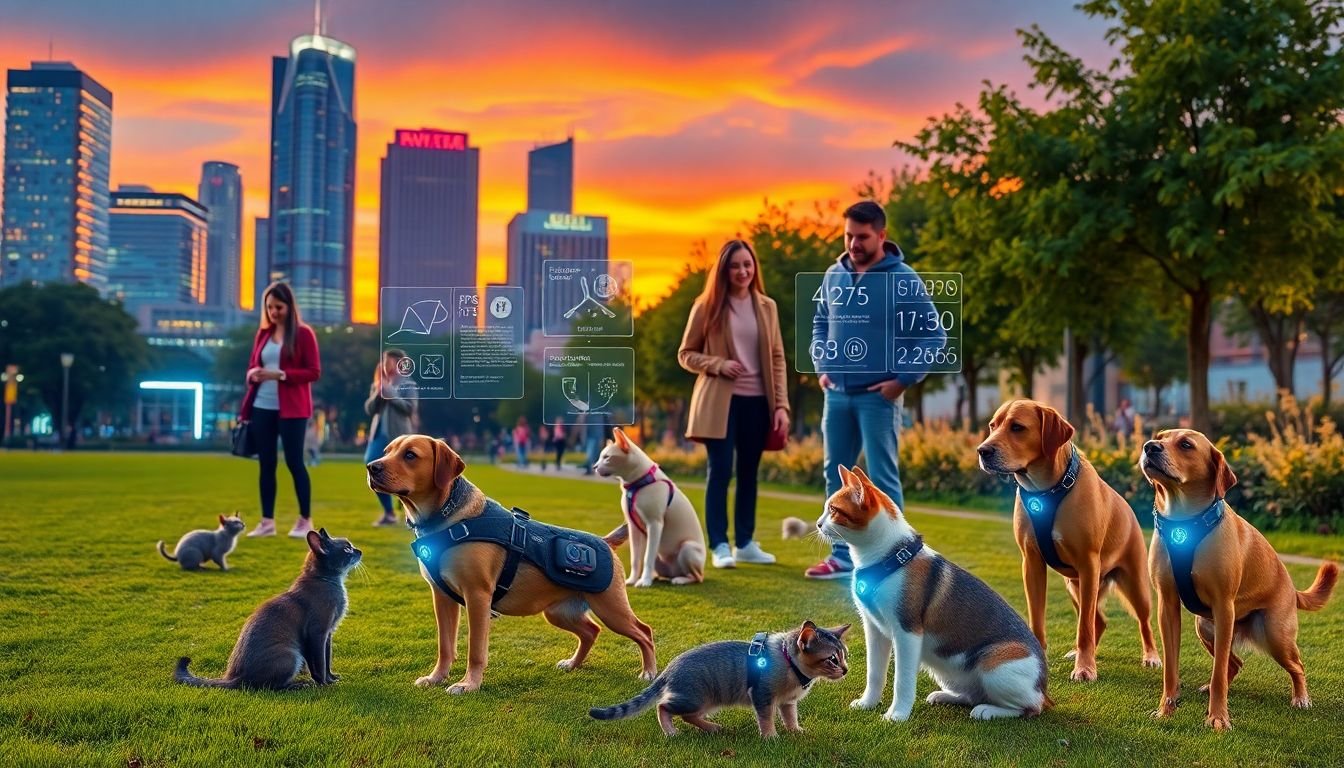
Pets are no longer just animals; they are family members. Pet owners want the best for their furry friends, including advanced ways to keep them safe. Technology is changing fast, and AI is now part of daily life. From smart homes to health apps, AI is making pet care smarter and easier. In 2025, AI pet trackers become essentials that help owners stay connected and protect their pets like never before.
The Rise of AI Pet Trackers: A Game-Changer in Pet Care
Explosion in Pet Tech Market
The pet tech market is booming. More pet owners are buying smart devices every year. This growth is driven by the desire for better safety, health, and peace of mind. Among these devices, AI pet trackers lead the way. They attract consumers because they offer more than basic GPS — they provide insights and alerts that can save lives.
How AI Enhances Pet Monitoring
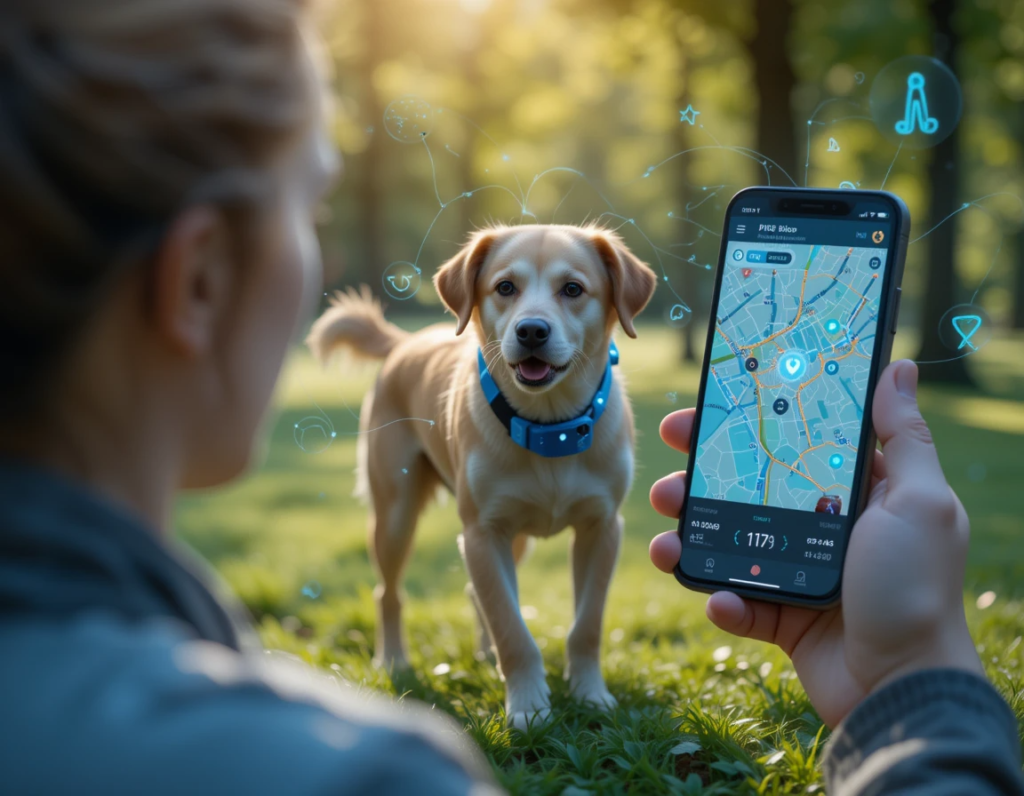
Traditional GPS and activity trackers only show location or activity level. AI-powered pet trackers do much more. They analyze data in real time using machine learning algorithms. These devices can identify patterns, predict issues, and send alerts instantly. This makes monitoring pets easier and more accurate. For example, if your dog starts acting strange, the tracker might flag this early, prompting you to see a vet.
Real-World Examples of AI Tracker Adoption
Companies like Whistle Health and FitBark are now working with veterinary clinics. Their data shows positive results. Pets using these trackers often show improved health and faster diagnosis of illnesses. The integration of AI helps veterinarians understand pet behavior and health trends over time, leading to better treatment plans.
Benefits of AI Pet Trackers for Pet Owners
Improved Safety and Security
AI trackers keep pets safe with GPS location and fences. If your pet leaves a designated area, you get an instant alert. Some trackers detect falls or unusual movements too. This can be a lifesaver if your pet gets off the leash or wanders into danger.
Enhanced Health Monitoring
These trackers aren’t just for safety. They continuously check vital signs and activity levels. If something changes—like a drop in activity or abnormal heart rate—they can warn you early. This helps catch health issues before they become serious.
Peace of Mind and Convenience
Access everything from your phone. You can see your pet’s location, activity, and health stats at any time. Managing multiple pets? No problem. Share access with family or pet sitters easily and stay updated no matter where you are.
Actionable Tips
Check tracker data often and set custom alerts for your pet.
Use insights from the tracker to discuss health concerns with your vet.
Complement tech with regular vet visits for total pet health.
Technological Advancements Making AI Pet Trackers Essential
Integration of IoT and AI
The Internet of Things (IoT) connects your pet’s tracker with other smart devices. For instance, it can work with smart feeders, cameras, or home assistants. Cloud computing stores and processes pet data, making information available anytime and anywhere.
Features Expected in 2025
Upcoming trackers will come with biometric sensors to monitor heart rate, body temperature, and sleep. AI will analyze this data to reveal health risks early. They might even suggest behavioral changes or automatically alert you to safety concerns.
Data Privacy and Security
As these devices get smarter, guarding pet data becomes critical. Pet owners should look for trackers with encrypted data and secure cloud storage. Always verify how a company manages privacy and considers data security a top priority.
Challenges and Considerations
Cost and Accessibility
High-end AI pet trackers often cost between $150 and $300. For many, this can be a big investment. However, there are options for different budgets. Basic models might lack some features but still provide valuable safety.
Dependence on Connectivity
Poor internet can interfere with the performance of AI trackers. Offline data storage can help, but real-time alerts may wait until the connection improves. Always check the connectivity dependency before buying.
Ethical Concerns
Constant monitoring raises privacy issues. Some might see it as invasive. It’s important for pet owners to use these tools responsibly. Respect your pet’s privacy and avoid over-surveillance.
Future Trends in AI Pet Tracking
Personalization and Predictive Analytics
Future AI devices will learn your pet’s habits and predict problems before they happen. For example, if your cat shows signs of arthritis, the tracker might flag this early.
Integration with Smart Home Ecosystems
AI trackers will sync with other smart home devices. Think of a system that adjusts the thermostat based on your pet’s activity or notifies you if your pet is near the smart camera.
Regulatory and Industry Developments
Expect new standards, certifications, and best practices for AI pet trackers. As technology spreads, industry leaders will push for ethical and privacy-friendly products.
Conclusion
AI pet trackers in 2025 aren’t just gadgets; they’re vital tools for pet owners. They combine safety, health monitoring, and technology to protect and care for your furry friends. Whether you’re worried about safety or health, these devices have you covered. Think about your pet’s needs today and consider adopting AI-powered solutions. Your pet’s well-being and your peace of mind may depend on it.
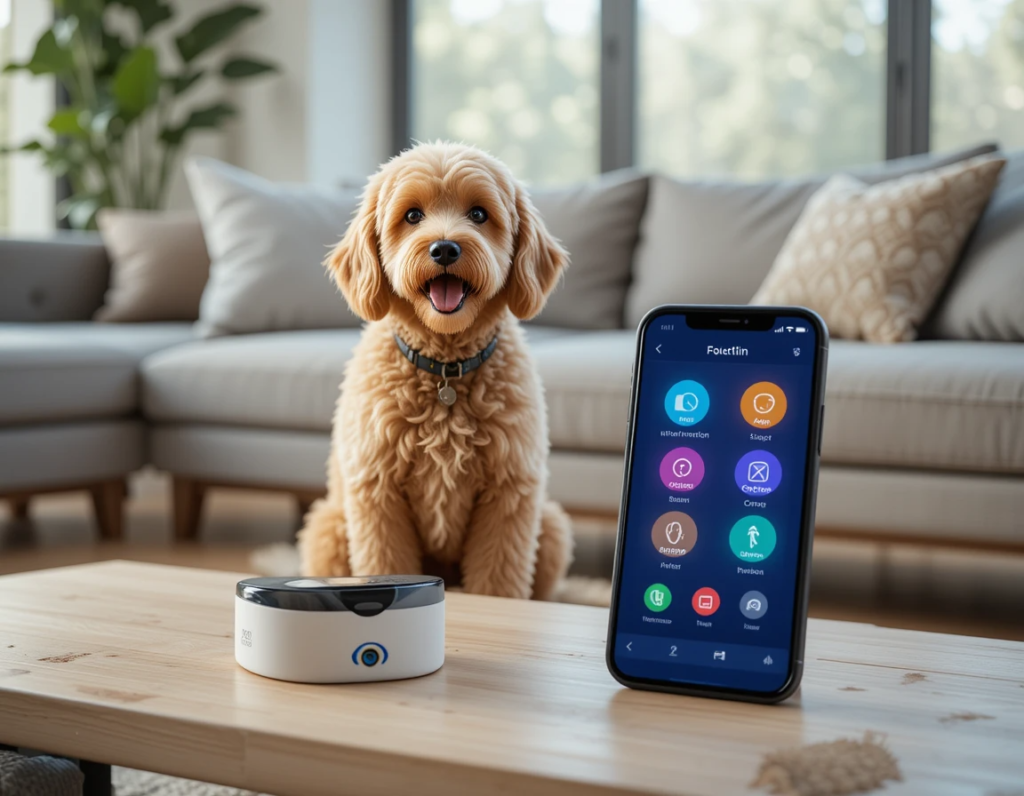
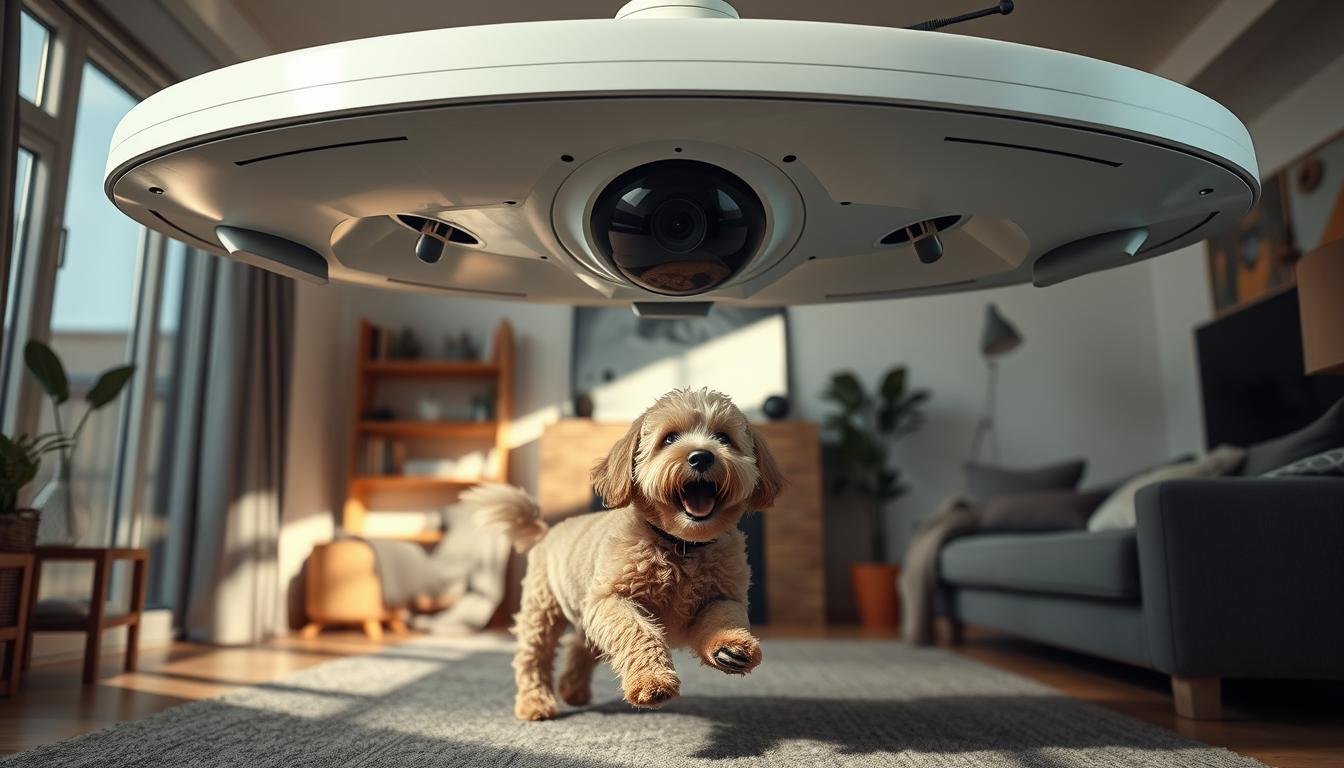
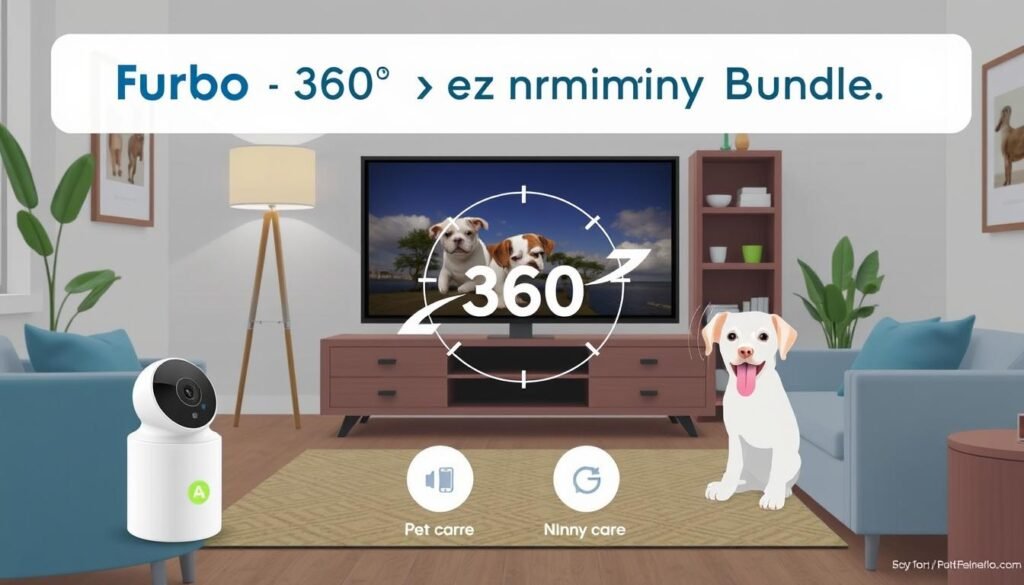
As a pet owner, leaving your furry friend behind when you’re away from home can be stressful. You worry about their safety and well-being, wondering if they’re comfortable or if they’re getting into mischief. The Furbo 360° Dog Camera + Nanny Bundle is an advanced pet monitoring system designed specifically for dog owners who want to keep tabs on their pets remotely.
Artificial intelligence has revolutionized pet care by providing innovative solutions like AI-powered pet cameras and predictive behavior analysis. These technologies enable pet owners to ensure their pets receive top-notch care even when they’re not physically present.
Key Takeaways
Discover how AI surveillance technology transforms pet safety and well-being.
Learn why traditional pet monitoring methods fall short.
Understand the emotional benefits of AI surveillance for pets.
Explore how AI pet monitoring detects potential health issues.
Find out why pet owners are turning to smart surveillance solutions.
The Evolution of Pet Monitoring: From Kennels to AI
Pet monitoring has evolved substantially, from simple kennels to sophisticated AI systems. This transformation reflects the changing needs of pet owners and advancements in technology.
The traditional methods of pet care have been fraught with challenges. Leaving pets in kennels or with sitters often resulted in stress for both pets and owners. The lack of real-time monitoring and interaction capabilities made it difficult for owners to ensure their pets’ well-being.
Challenges in Traditional Pet Care
Traditional pet care methods had several limitations. These included the inability to monitor pets in real-time, interact with them remotely, and the stress pets experienced when separated from their owners. Such challenges highlighted the need for more advanced and personalized pet care solutions.
Key limitations included:
Lack of continuous observation
Inability to interact with pets remotely
Stress experienced by pets due to separation from owners
The Rise of Smart Pet Technology
The emergence of smart pet technology has addressed many of the challenges associated with traditional pet care. With advancements in miniaturized cameras, advanced sensors, and machine learning algorithms, pet owners can now monitor and interact with their pets more effectively.
The development of AI-powered monitoring systems has been pivotal. These systems provide continuous observation, interaction capabilities, and data-driven insights into pet behavior and health. Early adopters of smart pet technology paved the way for today’s comprehensive AI surveillance systems, offering unprecedented peace of mind for pet owners.
As pet care continues to evolve, technology plays a crucial role in shaping its future. The integration of AI and other smart technologies is making dog care more efficient, open, and customized to individual needs.
Is Your Pet Safe While You’re Away? How AI Surveillance Could Be a Game-Changer
Leaving your pet behind can be stressful, but advancements in AI surveillance are changing the game. Many pet owners worry about their pets’ safety and well-being when they’re not around to care for them. This concern is valid, given the various risks pets face when left alone, from anxiety and stress to potential safety hazards.
Understanding Pet Anxiety and Behavior When Alone
Pet anxiety is a common issue that affects many animals when they’re left alone. Dogs, for instance, can exhibit destructive behavior, bark excessively, or even attempt to escape due to separation anxiety. Cats may hide, become aggressive, or display other signs of stress. Understanding these behaviors is crucial for pet owners to address their pets’ needs effectively.
Common signs of pet anxiety include:
Pacing or restlessness
Destructive behavior
Excessive barking or meowing
Escape attempts
Hiding or avoidance
How AI Surveillance Addresses Pet Safety Concerns
AI surveillance systems are designed to monitor pets remotely, providing owners with peace of mind and valuable insights into their pets’ behavior. These systems use advanced algorithms to detect unusual behaviors, such as those associated with anxiety or potential safety hazards. For example, if a pet is engaging in destructive behavior or showing signs of distress, the system can alert the owner.
Some key benefits of AI surveillance for pet safety include:
Real-time monitoring and alerts
Detection of unusual behaviors
Insights into pet behavior patterns
Enhanced safety and security
Real-Time Monitoring vs. Periodic Check-ins
Traditional pet care often involves periodic check-ins by pet sitters or neighbors. While this can provide some level of reassurance, it has limitations. AI surveillance offers real-time monitoring, allowing owners to respond promptly to any issues that arise. This continuous protection is particularly valuable for pets that require close monitoring due to health issues or anxiety.
By comparing real-time AI monitoring to traditional periodic check-ins, it becomes clear that technology offers a more comprehensive solution for pet owners. With AI surveillance, owners can:
Monitor their pets in real-time
Receive alerts for unusual behavior
Make informed decisions about their pet’s care
The Furbo 360° Dog Camera + Nanny Bundle: A Comprehensive Overview
For dog owners, the Furbo 360° Dog Camera + Nanny Bundle offers a comprehensive solution to monitor and interact with their pets remotely. This advanced pet monitoring system is designed specifically for dog owners who want to keep tabs on their pets while away from home.
The Furbo 360° Dog Camera + Nanny Bundle combines home security features with pet-specific functionality, allowing you to monitor, interact with, and care for your dog remotely. With its cutting-edge technology, this device provides a range of benefits for dog owners.
Key Features and Specifications
The Furbo 360° Dog Camera + Nanny Bundle boasts an impressive array of features, including a 360-degree rotating view, night vision capabilities, and barking alert technology. These features enable dog owners to keep a close eye on their pets and respond to any potential issues.
The 360-degree rotating view allows you to see your dog from any angle, while night vision capabilities ensure that you can monitor your pet even in low-light conditions. The barking alert technology sends notifications to your device when your dog is barking, allowing you to respond promptly.
How the AI Technology Works
The Furbo 360° Dog Camera + Nanny Bundle is powered by sophisticated AI algorithms that enable it to distinguish between normal and concerning pet behaviors. This minimizes false alarms and ensures that you receive accurate notifications.
The AI technology tracks dog activities, identifies odd behavior, and sends owners real-time alarms. This allows dog owners to respond quickly to any potential issues and provide their pets with the care and attention they need.
Setup and Installation Guide
Setting up the Furbo 360° Dog Camera + Nanny Bundle is a straightforward process. To get started, simply follow these steps:
First, choose the optimal placement for your Furbo device, ensuring that it has a clear view of your dog. Next, connect the device to your Wi-Fi network and configure the settings to suit your needs.
Optimal placement is crucial to ensure that the device can monitor your dog effectively. The Furbo app will guide you through the setup process, making it easy to get started.
Advanced AI Features That Transform Pet Care
The latest AI technology is transforming pet care by providing real-time insights and enabling meaningful interactions between pets and their owners. This transformation is largely due to advanced features that not only enhance the pet care experience but also provide peace of mind for pet owners.
Real-Time Alerts and Notifications
One of the most significant advantages of AI-powered pet cameras is their ability to send real-time alerts and notifications to pet owners. For instance, if your dog is barking excessively or showing signs of distress, the camera can detect these behaviors and notify you immediately. This feature is particularly useful for identifying potential issues early on, allowing you to take prompt action to ensure your pet’s safety and comfort.
These alerts can be customized based on the specific needs of your pet, ensuring that you receive relevant information without being overwhelmed by false alarms. Advanced AI algorithms can distinguish between normal pet activities and potentially problematic behaviors, reducing the likelihood of unnecessary notifications.
Two-Way Audio Communication
Two-way audio communication is another powerful feature offered by many AI pet cameras. This functionality allows you to soothe your pet remotely using your familiar voice, providing reassurance and comfort even when you’re not physically present. The psychological benefits of this feature are significant, as it helps maintain the bond between you and your pet despite physical separation.
By enabling you to communicate with your pet in real-time, two-way audio also opens up new avenues for training and interaction. You can use verbal commands or simply talk to your pet to calm them down, making it a valuable tool for addressing anxiety or stress-related behaviors.
Treat Dispensing and Interaction Features
Some AI pet cameras, like the Furbo Dog Camera, come equipped with treat dispensing features. These allow you to administer treats to your pet remotely, which can be used to reward good behavior or simply to interact with your pet. When combined with two-way audio, treat dispensing creates a powerful interaction tool that can help reinforce positive behaviors and strengthen your bond with your pet.
Explore the benefits of real-time alerts for detecting distress or unusual behavior in pets.
Understand how two-way audio can soothe pets and maintain owner-pet bonds.
Learn about the positive impact of treat dispensing on pet behavior and owner-pet interaction.
By integrating these advanced AI features, pet owners can enjoy a more comprehensive and engaging pet care experience. Whether it’s through real-time monitoring, interactive communication, or remote treat dispensing, AI is revolutionizing the way we care for our pets.
Health Monitoring Through AI: Beyond Basic Surveillance
AI technology has taken pet care to the next level by providing advanced health monitoring capabilities that go beyond basic surveillance. The use of AI in health monitoring for pets is a significant advancement, enabling pet owners to gain a deeper understanding of their pet’s overall well-being.
One of the key aspects of AI-driven health monitoring is tracking activity levels and patterns. Smart collars and wearables can now monitor your pet’s vital signs, activity levels, and even sleeping patterns. This data is invaluable as it provides insights into your pet’s daily routines and helps identify any deviations from the norm.
Tracking Activity Levels and Patterns
By continuously monitoring activity levels, AI systems can establish a baseline for your pet’s normal behavior. This allows for the early detection of potential health issues, such as decreased activity or irregular sleeping patterns, which could be indicative of underlying health problems.
Detecting Unusual Behaviors and Health Issues
AI algorithms are capable of detecting subtle behavioral changes that might indicate pain, illness, or discomfort in pets. These changes can often be early warning signs of health issues that might not be immediately apparent to pet owners. By alerting owners to these changes, AI health monitoring systems enable quicker interventions, potentially preventing health issues from escalating.
Creating Health Reports for Veterinary Care
The data collected through AI health monitoring can be compiled into detailed reports that provide valuable information for veterinarians during check-ups and treatments. This proactive approach to health monitoring can lead to earlier interventions, potentially reducing veterinary costs and improving treatment outcomes for pets.
AI surveillance systems function as comprehensive health monitoring tools, offering insights into a pet’s overall well-being.
These systems track activity levels and movement patterns, establishing baselines that help identify potential health concerns.
AI algorithms detect subtle behavioral changes that might indicate health issues before obvious symptoms appear.
Collected health data is compiled into detailed reports for veterinarians, aiding in check-ups and treatments.
Proactive health monitoring through AI can lead to earlier interventions, improving treatment outcomes and potentially reducing veterinary costs.
Setting Up Your AI Pet Surveillance System: Step-by-Step Guide
With the advancement of smart home technologies, pet owners can now easily set up an AI-powered surveillance system to keep an eye on their pets. This comprehensive guide will walk you through the process of setting up your AI pet surveillance system, ensuring that your pet stays safe and secure while you’re away.
Optimal Camera Placement
Choosing the right location for your pet surveillance cameras is crucial for effective monitoring. Consider your dog’s favorite spots, potential blind spots, and optimal viewing angles when selecting camera locations. For instance, placing a camera in the living room can provide a clear view of your pet’s activity, while another in the backyard can monitor their outdoor movements.
Identify areas where your pet spends most of their time.
Avoid placing cameras in areas with harsh lighting or glare.
Ensure the camera’s field of view is not obstructed by furniture or other objects.
Configuring Alerts and Notifications
Customizing alert settings based on your pet’s specific behaviors and needs is essential for minimizing unnecessary interruptions. Configure your system to notify you of significant events, such as unusual barking or changes in activity levels.
Set up motion detection alerts to notify you of any unusual activity.
Configure audio alerts to detect specific sounds, like barking or whining.
Adjust notification settings to suit your lifestyle and preferences.
Creating a Pet-Friendly Environment
To maximize the effectiveness of your surveillance system, create an environment that is comfortable and stress-free for your pet. This can be achieved by ensuring that your home is equipped with the necessary amenities and by minimizing changes that could cause your pet undue stress.
Consider integrating your pet surveillance system with other smart home devices, such as automated feeders or devices that can dispense treats, to create a comprehensive pet care solution.
Integrating with Other Smart Home Devices
Integrating your pet surveillance systems with other smart home devices can enhance the overall pet care experience. Explore options for connecting your surveillance system to automated feeders, smart speakers, or lighting systems to create a seamless and efficient pet care routine.
By following these steps and considering the unique needs of your pet, you can create a safe, secure, and comfortable environment that leverages the full potential of AI-powered pet monitoring.
AI Pet Monitoring for Special Needs and Situations
Pets with special needs require extra attention and care, and AI-powered solutions are revolutionizing their monitoring and well-being. As the pet care landscape evolves, it’s becoming increasingly clear that one-size-fits-all approaches are no longer sufficient. AI pet monitoring is stepping in to fill this gap, offering tailored support for pets with unique requirements.
Supporting Senior Pets or Those with Health Conditions
Senior pets or those with chronic health conditions benefit significantly from AI-based monitoring. This technology can track mobility, monitor eating patterns, and even provide timely reminders for medication. For instance, AI-powered cameras can observe changes in a pet’s behavior or physical condition, alerting owners to potential health issues before they become severe.
Key features of AI monitoring for senior pets include:
Activity tracking to monitor mobility and detect any decline
Eating pattern analysis to ensure proper nutrition
Medication reminders to maintain health regimens
Customizing Surveillance for Multi-Pet Households
In households with multiple pets, AI surveillance can be customized to distinguish between different animals and their unique needs. Advanced identification capabilities allow the system to recognize individual pets, providing insights into their behavior, health, and interaction patterns.
For multi-pet households, AI monitoring can:
Identify and track individual pets
Monitor their unique needs and behaviors
Provide insights into pet interactions
Advanced Planning for Travel and Extended Absences
When planning extended travel or absences, pet owners can optimize their AI surveillance system for longer periods. This includes coordinating with in-person care providers and ensuring that the system is configured to meet the pet’s needs during the owner’s absence.
Strategies for extended absences include:
Configuring the AI system for extended monitoring
Coordinating with pet care providers for in-person visits
Ensuring continuous monitoring and support
By leveraging AI pet monitoring, owners can ensure their pets receive the care and attention they need, even when they’re not physically present.
Beyond the Furbo: Other Leading AI Pet Surveillance Options
Beyond the Furbo, a range of AI-powered pet surveillance solutions offer advanced features and capabilities. These innovative systems cater to various pet needs, providing pet owners with peace of mind and enhanced pet care.
The PetPace Smart Collar stands out for its comprehensive health monitoring capabilities, utilizing vet-developed artificial intelligence to track vital signs and provide early warnings for potential health issues. This advanced technology surpasses traditional surveillance by offering in-depth insights into a dog’s health.
Key Benefits: Comprehensive health monitoring, early warning systems for health issues, vet-developed AI technology.
The OroBuddy AI Pet Companion Robot is an innovative solution that combines surveillance with interactive play and feeding capabilities. Equipped with AI technology, it learns a dog’s behavior and adapts to their needs, ensuring a more engaging experience for pets left alone.
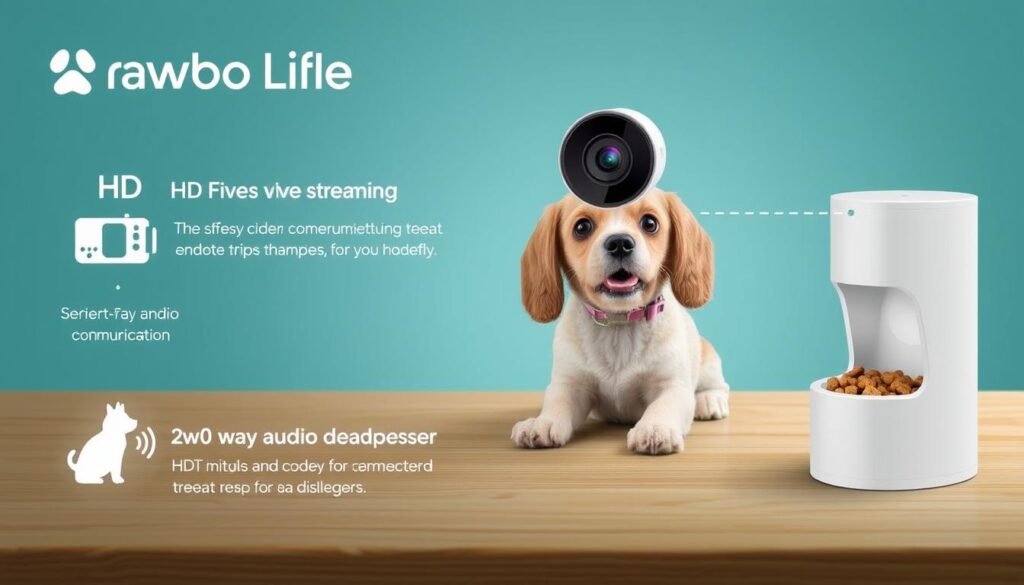
The Pawbo Life Pet Camera is designed to keep pets entertained while their owners are away. With features like HD live streaming, two-way audio, and a treat dispenser, it provides a comprehensive entertainment solution. Additionally, it includes laser games to keep pets mentally stimulated.
Key Features: HD live streaming, two-way audio, treat dispenser, laser games.
The SureFlap Microchip Pet Door Connect revolutionizes pet monitoring by providing smart access control. It allows pet owners to track their pet’s movements in and out of the home, enhancing safety and security.
Key Benefits: Smart access control, movement tracking, enhanced safety and security.
When selecting an AI pet surveillance system, pet owners should consider factors such as budget, specific pet needs, and integration capabilities with existing smart home setups. By understanding these factors and exploring the available options, pet owners can make informed decisions to ensure the best possible care for their pets.
Privacy and Ethical Considerations in AI Pet Surveillance
The integration of AI in pet surveillance raises important questions about data privacy and the ethical implications of constant monitoring. As pet owners increasingly adopt AI-powered surveillance systems, it’s essential to consider the potential risks and benefits associated with these technologies.
One of the primary concerns is data security and privacy. AI pet surveillance systems collect and store sensitive information, including video footage and pet behavior data. Ensuring the security of this data is crucial to prevent unauthorized access and potential breaches.
Securing Your Pet Surveillance System
To mitigate potential risks, pet owners can take several steps to secure their AI pet surveillance systems:
Implement strong password protection and enable two-factor authentication
Regularly update firmware to ensure the latest security patches are installed
Use a secure network and consider isolating the surveillance system from other devices
Another critical consideration is the balance between technological monitoring and personal interaction. While AI surveillance can provide valuable insights into a pet’s behavior and well-being, it’s essential to maintain a balance between technology use and personal interaction with pets.
Balancing Technology and Personal Interaction
Pet owners should be aware of the potential for over-reliance on technology and ensure that their pets continue to receive adequate social interaction and human connection. This can be achieved by:
Setting aside dedicated time for interaction and play with pets
Using AI surveillance as a supplement to, rather than a replacement for, human care and attention
Monitoring pet behavior and adjusting the use of AI surveillance accordingly
As AI pet surveillance technology continues to evolve, it’s crucial to consider the broader societal implications of these innovations. This includes examining the potential impact on pet ownership, animal welfare, and the human-animal bond.
By understanding the privacy and ethical considerations associated with AI pet surveillance, pet owners can make informed decisions about the use of these technologies and ensure that they are used in a responsible and beneficial manner.
The Future of AI in Pet Care: What’s Next for Pet Parents
The future of pet care is being reshaped by AI, offering pet parents new tools and insights to enhance their pets’ lives. As AI technology continues to evolve, we can expect significant advancements in how we care for our pets, making it more personalized and efficient.
Emerging trends in AI pet care technology include predictive health analytics and emotion recognition, which will allow for more sophisticated behavioral analysis capabilities. This means pet owners will be able to identify potential health issues before they become serious, ensuring their dogs and other pets receive the best possible care.
Advances in machine learning will create more personalized pet care experiences, with systems adapting to the unique needs and personalities of individual pets. Furthermore, innovations in pet wearables and environmental sensors will provide comprehensive monitoring of a pet’s health and wellbeing.
The integration of AI pet care with other health systems could enable automatic veterinary consultations or medication delivery when issues are detected. This will not only enhance the care provided to pets but also transform the relationship between pet parents, their pets, and veterinary professionals.
As AI continues to advance, it’s clear that the future of pet care lies in the perfect blend of human expertise and technology. By embracing these innovations, pet owners can look forward to a new era of enhanced care and communication, ultimately improving the lives of their beloved pets. (“As an Amazon Associate I earn from qualifying purchases.”)
FAQ
What are the benefits of using AI surveillance for pet monitoring?
AI surveillance offers real-time monitoring, detects unusual behaviors, and provides health reports, giving pet owners peace of mind and enabling them to respond promptly to their pet’s needs.
How does AI technology track my pet’s activity levels and patterns?
AI-powered devices, such as the Furbo 360° Dog Camera, use computer vision and machine learning algorithms to analyze your pet’s movements, tracking activity levels and identifying patterns, which helps detect potential health issues.
Can AI pet surveillance systems detect health issues in my pet?
Yes, advanced AI systems can identify unusual behaviors, such as changes in appetite, sleep patterns, or activity levels, which may indicate underlying health issues, allowing for early intervention and veterinary care.
How do I set up an AI pet surveillance system in my home?
Setting up an AI pet surveillance system involves choosing the optimal camera placement, configuring alerts and notifications, and integrating with other smart home devices to create a comprehensive monitoring solution.
Are AI pet surveillance systems secure and private?
Reputable manufacturers prioritize data security and privacy, using encryption and secure data storage to protect your pet’s information and your own.
Can I interact with my pet remotely using AI pet surveillance?
Yes, many AI pet surveillance systems, such as the Furbo 360° Dog Camera, offer two-way audio communication, allowing you to talk to your pet and even dispense treats remotely.
How do I choose the right AI pet surveillance system for my needs?
Consider factors such as camera resolution, field of view, motion detection, and integration with other smart devices when selecting an AI pet surveillance system that meets your specific needs and provides the desired level of monitoring and interaction.
Did you know 63% of U.S. pet owners post photos of their furry friends online monthly? These images aren’t just for likes. Artificial intelligence tools now analyze and repurpose them to generate custom pet portraits, artwork, and even commercial products. Machine learning models, trained on millions of uploaded photos, mimic styles from Picasso to modern digital art—often without explicit consent.
Pet photography has exploded in popularity, but AI’s role is reshaping the landscape. Platforms use convolutional neural networks (CNNs) to transform casual snapshots into stylized pet art. While these creations capture a pet’s personality, they rely on data scraped from social media and galleries. Many owners unknowingly contribute to training datasets simply by sharing their favorite pet portraits.
The line between creativity and privacy grows blurrier. Custom pet artwork now thrives on platforms using artificial intelligence, but who truly owns the original images? Awareness is the first step. This guide reveals how to protect your pet’s photos while navigating this evolving technology.
Introducing the New Era of AI Pet Photography
Gone are the days of blurry snapshots gathering dust in digital albums. Advanced algorithms now turn ordinary moments into gallery-worthy masterpieces. Deep learning systems analyze whisker patterns, ear shapes, and tail positions to craft lifelike portraits that leap off the screen.
Leading platforms harness neural networks to reimagine furry companions as Renaissance nobles or pop art icons. One viral example transformed a tabby cat into a Van Gogh-inspired star, complete with swirling starry night fur textures. This blend of machine precision and artistic flair creates pieces that traditional photography can’t match.
The magic lies in capturing unique quirks – a head tilt during fetch games or that signature “dinner time” sprint. AI tools dissect thousands of visual cues to replicate personality through brushstrokes and color choices. What emerges isn’t just a picture, but a character study in pixels.
Creative possibilities now extend beyond wall art. Pet influencers gain traction with AI-generated content ranging from superhero-themed posters to animated avatars. Entrepreneurs even build entire brands around customized pet merchandise powered by these tools.
This revolution isn’t replacing photographers – it’s giving them new brushes. Professionals combine technical skills with AI enhancements to offer clients unprecedented options. The result? A thriving market where technology meets tail wags in perfect harmony.
Your pet photos are being used by AI! Find out how.
Millions of cat and dog snapshots fuel a hidden digital ecosystem. Algorithms scan social media and galleries, dissecting whisker curves and paw shapes to train image generators. Convolutional neural networks map textures from uploaded photos, blending them into new creations sold as custom portraits or merchandise.
Here’s how it works: AI tools break down images into layers – fur patterns become brushstrokes, eye colors transform into palette selections. One viral case reshaped a Boston Terrier into a Warhol-inspired pop art piece, using 12,000 similar dog photos as reference material. The system doesn’t “copy” but learns to replicate styles through pattern recognition.
“Most platforms’ terms of service allow using uploaded content for model training,” explains digital rights attorney Mara Lin. “That puppy pic you shared? It’s now part of a dataset powering someone else’s profit.”
Traditional photography gives full control to owners. AI flips this dynamic – your golden retriever’s beach photo could inspire thousands of algorithm-generated artworks. While results dazzle, original contributors rarely see credit or compensation.
AI processing: Instant style transfers using scraped image banks
Stay vigilant. Reverse-image search tools can reveal if machines repurpose your companion’s likeness. Next, we’ll explore how to safeguard memories while embracing innovation.
Transforming Pet Images: From Upload to Artwork
Turning casual snapshots into gallery pieces takes just four taps. Start with a crisp photo of your companion – natural light and eye-level angles work best. Avoid shadows across their face, and capture unique markings that define their charm.
Next, explore artistic styles ranging from cosmic nebula themes to Monet-inspired brushwork. One user transformed their husky into a stained-glass warrior using this step:
Upload high-resolution images showing distinct facial features
Choose from 50+ filters like “Renaissance Pup” or “Cyberpunk Cat”
Let machine learning analyze fur textures and posture
Manual Editing
AI Transformation
Requires Photoshop skills
Automates complex techniques
Limited to one style per session
Generates 8 variations instantly
Hours of adjustments
3-minute processing time
“The AI isn’t replacing creativity—it’s amplifying it,” says digital artist Lila Corwin. “Owners guide the vision; technology handles the execution.”
Review generated portraits and tweak color saturation or background elements. Many platforms learn from feedback, refining future outputs. Final designs adapt seamlessly to mugs, totes, or phone cases – perfect for showcasing personality beyond social media.
This blend of art and artificial intelligence lets every wag and whisker tell a story. Why settle for ordinary when technology can turn memories into masterpieces?
Conclusion
Capturing a pet’s essence now extends beyond traditional photography. Artificial intelligence transforms casual snapshots into striking portraits, blending technology with creativity. These AI-generated pieces preserve memories while offering fresh ways to celebrate furry companions.
Owners can protect their images by adjusting social media privacy settings and using watermarks. High-quality portraits become timeless keepsakes or professional tools for content creators. Platforms turn playful moments into marketable art, opening doors for entrepreneurial pet lovers.
Embracing this innovation doesn’t mean sacrificing control. Review existing photos and explore trusted AI art services. The result? Unique portraits that honor a pet’s personality through brushstrokes and pixels.
As machine learning evolves, so do opportunities to reimagine pet photography. Whether creating holiday cards or building a brand, AI tools amplify creativity while safeguarding original images. Start today – turn everyday moments into extraordinary art that lasts generations.
Have you ever glanced at a pet and thought, “No way, that’s gotta be fake?” With AI images getting so real, it’s tough to tell sometimes. Today, we look at some real animals with looks that are so unique, that they seem like they were made by computers.
Here are five real pets whose looks are so wild, that people ask if they’re real.
Section 1: The Exquisite Hairless Cat
Hairless cats are something else. They strut around with the confidence of a supermodel. These felines often spark debate. Are they cute, or are they creepy? One thing is for sure: they always turn heads.
Subsection 1: The Genetics of Hairlessness
A genetic mutation is behind that smooth skin. This mutation stops the cat from growing a full coat of fur. The Sphynx is the most famous hairless breed. It came from Canada in the 1960s. These cats are known for their warmth and friendliness.
Subsection 2: The Striking Features
These cats have wrinkles. They also have big ears, and sculpted cheekbones. Their skin feels like suede. It is warm to the touch. Without fur, their bodies look very different. This breed exhibits features many find very strange.
Subsection 3: Why They Look Unreal
It’s the lack of fur that throws people off. We are used to seeing cats with soft, fluffy coats. A hairless cat’s smooth, almost sculpted appearance can look like a rendering. They look like digital art more than an animal.
Section 2: The Dog with Unnaturally Perfect Markings
Some dogs have markings that seem too good to be true. These pups look like they were painted by a pro artist. Their markings are so symmetrical, and so perfect, that people can’t believe what they are seeing. Symmetry adds to their beauty.
Subsection 1: The Beauty of Symmetry
Symmetry is attractive to the eye. We like things that are balanced and orderly. When a dog has perfect markings, it’s visually pleasing. It gives us a sense of perfection.
Subsection 2: Breed Standard vs. Reality
Breed standards set the rules for markings. Some dogs go beyond these rules. This makes them look unreal. A Dalmatian with spots that are all the same size is an example.
Subsection 3: Examples and Comparisons
Consider a Border Collie with a perfect mask. Compare its markings to AI images of dogs. The real dog can seem just as fake. Their markings appear too perfect.
Section 3: The Bird with Iridescent Plumage
Certain birds have feathers that shine like rainbows. Iridescence can make these birds look like living jewels. The colours shift and change with the light. It’s an effect that seems unreal.
Subsection 1: The Science of Iridescence
Iridescence is caused by light refraction. Tiny structures on the feathers split light into different colours. This creates a rainbow effect. It’s science, but it looks like magic.
Subsection 2: A Living Jewel
Hummingbirds are a perfect example. Their feathers shimmer with greens, blues, and reds. The colours change as they fly. They look like tiny, flying rainbows.
Subsection 3: Challenging Perception
The intense colours make you wonder if the bird is real. The colours are so vibrant, that some assume it’s enhanced. Nature’s beauty can be deceiving. These intense colours are real.
Section 4: The Reptile with Alien Eyes
Reptile eyes can be very strange. Unique colours, shapes, and textures set them apart. Some reptile eyes can look like they are not of this world.
Subsection 1: Unique Eye Adaptations
Many reptiles are nocturnal. They have vertical pupils to help them see in the dark. Some also have a tapetum lucidum, which reflects light back through the retina.
Subsection 2: A Window to Another World
Consider a gecko with huge, golden eyes. The vertical pupils and textured irises make it look alien. They almost look like they belong on another planet.
Subsection 3: Blurring the Lines
Their eyes are different from what we expect. The unusual colours and shapes make it seem artificial. We can easily confuse this with something synthetic. It makes them seem unreal.
Section 5: The Miniature Horse with Doll-Like Features
Miniature horses are like living dolls. They are tiny, and perfectly proportioned. Their features are delicate, and their coats gleam. They look almost too perfect to be real.
Subsection 1: Breeding for Perfection
Selective breeding has shaped their looks. Breeders focus on small size and refined features. This creates a horse that looks almost cartoonish.
Subsection 2: Petite Proportions
These horses stand only a few feet tall. They have small heads and delicate legs. Their manes and tails are often perfectly groomed. You may see these animals in a doll house.
Subsection 3: Too Perfect to Be Real?
Their doll-like features can make you question if they’re real. They look like toys. Their beauty can be deceiving. Their perfection has people wondering.
Conclusion
These pets show us how amazing nature can be. Sometimes, real life is more incredible than anything AI can create. Next time you see an unbelievable pet, remember that nature is full of surprises. Share your photos of pets that look AI-generated!