Author: neondoodledesigns@gmail.com

  • The Top Free AI Art Prompt Tools You Can’t Miss

    The Top Free AI Art Prompt Tools You Can’t Miss

    AI art generators have become very popular in the last year. They’ve moved from being in beta to being widely used. With the best free AI art generators, you can make art from text online for free. I found that tools like DALL-E, Midjourney, and Stable Diffusion use AI to create art from text prompts.

    These tools have different features and pricing. For example, Canva’s basic version is free, but the Pro version costs $12.99/month for more AI tools. NightCafe starts at $6/month for 100 credits, which lets you make about 1,240 images a month. Whether you’re new to art or have lots of experience, there’s a free AI art generator for you. It can help you create art from text online for free.

    Key Takeaways

    • AI art generators use machine learning algorithms to generate art based on text prompts.
    • The top free AI art generators include DALL-E, Midjourney, and Stable Diffusion.
    • These tools offer a range of features and pricing options, from free tiers to subscription-based models.
    • Canva’s basic access is free, with a Pro version priced from $12.99/month for enhanced AI features.
    • NightCafe operates from $6/month for 100 credits, allowing for about 1,240 images monthly.
    • You can generate art from text online free using the best free AI art generators.

    Understanding AI Art Generators: A Beginner’s Guide

    To start with AI art generators, you need to know how they work. You also need to understand the role of prompts in creating amazing artwork. Writing good prompts is key to getting high-quality AI art. It helps the algorithm know what you want.

    For beginners, finding the right ai art prompt ideas can be tough. But, starting with simple and clear prompts is a good way to begin. As you try out different prompts, you’ll learn what works for your art. The main thing is to be clear and detailed, so the AI can create what you expect.

    Here are some tips for writing effective prompts:

    • Be specific: Clearly define the subject, style, and mood of the artwork.
    • Use descriptive language: Incorporate vivid adjectives and adverbs to help the AI algorithm understand the desired output.
    • Keep it concise: Aim for prompts that are brief and to the point, avoiding unnecessary words or phrases.

    By following these tips and practicing with different prompts, you’ll get better at creating AI art. Remember, the most important thing is to have fun and try new things. Don’t be afraid to experiment and see what works best for you.

    The Best Free AI Art Prompt Tools You Should Explore

    I’m excited to share with you the top free tools for AI art generation. These tools let you create stunning artwork without spending a lot. Let’s explore some popular options like DALL-E, Midjourney, and Stable Diffusion.

    These tools stand out for their unique features. DALL-E is known for its creative artwork. Midjourney is great for concept art and illustrations. Stable Diffusion offers hundreds of features and plugins, making it the most comprehensive.

    Here are some key benefits of using these tools:

    • Free to use, with no hidden costs
    • Ability to generate high-quality prompts in seconds
    • Access to a wide range of features and plugins
    • Ability to create unique images based on user prompts

    . These tools have been used to create stunning artwork, from portraits to landscapes. They’ve even been featured in various media outlets.

    In terms of pricing, some tools offer free plans, while others require a monthly subscription. For example, DALL-E offers two free images per day with its free plan. Midjourney starts at $10/month for around 200 images. Here’s a brief comparison of the pricing plans:

    Tool Pricing Plan
    DALL-E Free plan: 2 images/day, Plus plan: $20/month
    Midjourney Starts at $10/month for 200 images
    Stable Diffusion Free to use, with optional paid upgrades

    Overall, the best free AI art generators offer a range of features. They help you generate art from text online for free. Whether you’re an artist, designer, or just exploring creativity, these tools are worth checking out.

    Getting Started with AI Art Creation

    To start making AI art, you need to know the basics of using AI art tools. These tools look at patterns in art to make new pieces. This makes creating art easier and faster. With ai art prompt ideas for beginners, you can make amazing art even if you’re new to it.

    Here’s what to do for your first AI art project:

    • Pick an AI art tool that fits your needs, like PicLumen or MidJourney.
    • Learn how to write effective ai art prompts to get the look you want.
    • Try out different styles and methods to see what you like best.

    By following these steps and using ai art prompt ideas for beginners, you can discover your creative side. You’ll make impressive AI art. Always make your prompts clear and detailed for the best results.

    Essential Features of Free AI Art Generators

    When looking for the best free ai art generators, it’s key to know what makes them great. They let you generate art from text online free. This means you can turn your ideas into art without spending a lot. Tools like Open Art, Craiyon, and Picsart are popular for their unique features and limits.

    For example, Open Art gives you 1000 free credits. This lets you make up to 500 prompts without paying. Craiyon’s free version takes longer, about 1-2 minutes per prompt. Picsart, though, makes 4 designs for each prompt, with the option to make more.

    Some top features of these tools are:

    • Text-to-image generation
    • Image-to-image generation
    • Style transfer

    These features help users create many art styles, from realistic to surreal. Knowing what each tool offers helps you choose the right one for your art projects.
    best free ai art generators

    Mastering the Art of Prompt Writing

    To make great AI art, you need to know how to write good prompts. The secret is to make your prompts clear, short, and detailed. This helps the AI system understand what you want. When starting out, keep your prompts simple, with 3 to 7 words.

    Using the right words in your prompts can really change the artwork. For example, words like ‘warm’ or ‘ominous’ can set the mood. Also, mentioning famous artists can help the AI capture their style, like Picasso’s abstracts or Dali’s surreal scenes.

    • Medium: from 2D to 3D
    • Subject: the main part that grabs emotions
    • Details: add depth to the artwork
    • Style: inspired by artists past and present
    • Composition: how the art is arranged, lit, and viewed

    By getting good at writing prompts, you can make the most of AI art tools. You’ll create amazing pieces that show off your creativity and style.

    Advanced Prompt Engineering Techniques

    To create top-notch AI art, learning to write effective ai art prompts is key. Using specific keywords and phrases can guide the AI model. For beginners, using words like “vibrant,” “detailed,” or “surreal” can set the mood.

    Advanced techniques include Chain-of-Thought (CoT) prompting for better math answers. Self-consistency boosts accuracy by up to 23% in big models. Active Prompting and Tree of Thoughts (ToT) also outshine traditional methods, offering better problem-solving.

    When crafting prompts, think about the task’s needs. For example, aspect ratios can shape image outputs. Good prompt engineering mixes technical skill with strategic planning for AI communication.

    Some key takeaways for advanced prompt engineering include:

    • Using specific keywords and phrases to guide the AI model
    • Employing techniques like CoT prompting and self-consistency to improve accuracy
    • Considering parameters like aspect ratios to dictate specific output features
    • Strategically approaching communication with AI for controlled and consistent outputs

    Mastering these advanced techniques unlocks AI art’s full potential. You can create stunning, unique pieces that show your creativity and skill. Whether you’re new or experienced, learning to write effective ai art prompts is crucial for success in this fast-growing field.

    Technique Description Accuracy Improvement
    Chain-of-Thought (CoT) prompting Improves performance on mathematical queries Up to 40%
    Self-consistency Leads to significant accuracy improvements Up to 23%
    Active Prompting Outperforms traditional methods Up to 7%

    Maximizing Creative Potential with Free Tools

    Free AI art generators let me create art from text online without spending a lot. These tools offer unique features that boost my creativity. I can play with style, mix prompts, and try new things.

    Using free AI art generators has many benefits:

    • It makes creative tools available to everyone, not just pros.
    • It saves time by making art creation faster.
    • It turns text into visuals for social media and marketing.
    • It lets me make art that shows my personal style.

    Tools like Brain Pod AI and ImagineArt can make stunning visuals in seconds. They help me get past creative blocks. Both newbies and pros can try out different styles without needing experience.

    Style Manipulation Techniques

    Free AI art generators let me change styles in my art. This is great for artists and designers who want to try new things. It helps me make art that’s truly mine.

    Combining Multiple Prompts

    I can mix prompts to make complex and interesting art. This is perfect for those who want their art to show their unique taste. It lets me create something that’s all about me.

    Experimental Approaches

    Free AI art generators also let me try new things. This is great for artists and designers who want to be innovative. It helps me make art that’s truly unique.

    Tool Features Benefits
    Brain Pod AI Style manipulation, prompt combination Creates unique and stunning visuals, aids in overcoming creative block
    ImagineArt Experimental approaches, personalized artwork Allows for creation of personalized artwork, reflects individual tastes and preferences

    Community Resources and Support

    Exploring AI art creation can be more fun with community help. Online forums and groups are great for beginners. They offer ai art prompt ideas and a place to share your work.

    Knowing how to write good AI art prompts is key. Social media groups for AI art are also helpful. They let you show off your art, get feedback, and keep up with new trends.

    Online Forums and Discussion Groups

    • Join in on talks to find out about new tools and methods.
    • Post your art and get helpful feedback from others.
    • Work together with other artists on projects.

    Social Media Communities

    Social media groups keep you inspired and connected with AI art fans. By using these resources and learning from others, you can make amazing AI art. You’ll also get to explore your creativity fully.
    AI art community support

    Comparing Popular Free AI Art Tools

    Several best free ai art generators are available. Users can generate art from text online free with many tools. Stable Diffusion, Jasper Art, and DALL-E 3 are some of the most popular.

    Here is a comparison of some popular free AI art tools:

    Tool Image Accuracy Diversity of Artistic Styles Free Version
    Stable Diffusion Excellent Yes Yes
    Jasper Art Great Yes No
    DALL-E 3 Great Yes Yes

    These tools have many features. They include text-to-image generation and style transfer. With the best free ai art generators, users can generate art from text online free. This lets them explore their creativity without spending a lot.

    Tips for Building Your AI Art Portfolio

    Exploring AI art has shown me how crucial a strong portfolio is. A well-organized portfolio showcases my skills and creativity. It helps attract potential clients or fans. To start, I’ll organize my art into a narrative collection. This approach boosts viewer engagement by linking themes together.

    Choosing the right art styles and themes is key. Hyper-realism and surrealism are favorites for creating amazing AI art. I can also try out ai art prompt ideas for beginners or how to write effective ai art prompts to make unique pieces.

    To enhance my portfolio, getting feedback is essential. I’ll share my work on social media or forums. This way, I can connect with other artists and potential clients. By using feedback to improve, my portfolio will show off my skills and creativity.
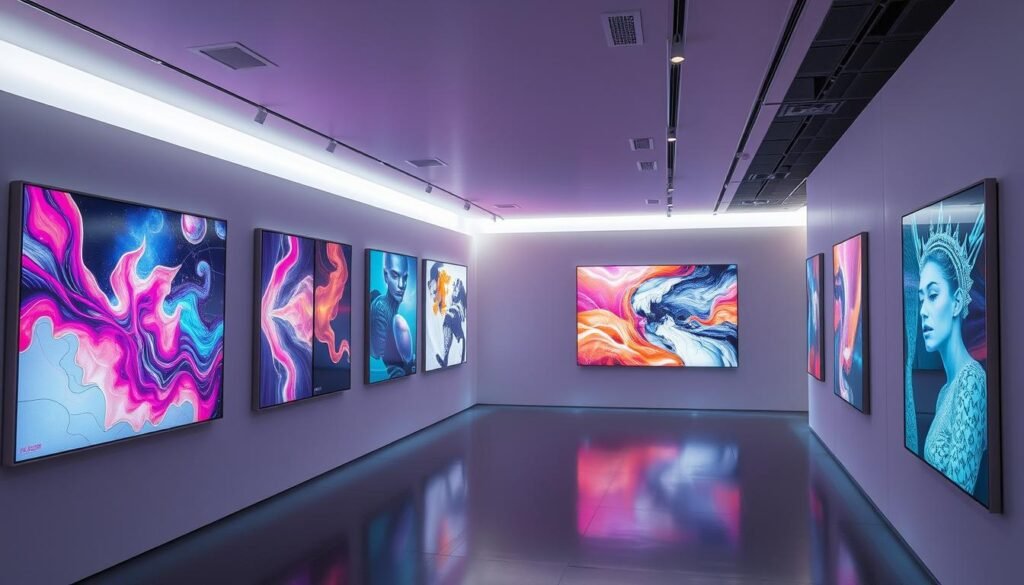
    ai art portfolio

    • Organize your generated art into a narrative-driven collection
    • Experiment with different art styles and themes
    • Use ai art prompt ideas for beginners or how to write effective ai art prompts to create unique pieces
    • Share your work on social media or online forums to get feedback
    • Continuously improve your craft by incorporating feedback and trying new things
    Art Style Description
    Hyper-Realism A style that creates highly detailed and realistic images
    Surrealism A style that creates dream-like or fantastical images

    Conclusion: Embracing the Future of AI Art Creation

    The world of AI art generators has changed a lot. It’s now key to digital creativity. Google’s DeepDream and OpenAI’s DALL-E show what’s possible. Tools like Artbreeder and RunwayML make AI art easier for everyone.

    AI text and image generators are changing how we create. Artists and marketers can now do more. Free tools like Canva’s AI Art Generator, DALL-E Mini, and DeepAI show the future. They make creating art from text online free and easy.

    We’re entering a new era with best free AI art generators. There are challenges, but AI art tools are changing how we create. They make technology a part of art, not a replacement. The future looks bright, full of endless possibilities.

    Source Links

  • The Top Free AI Art Prompt Tools You Can’t Miss

    The Top Free AI Art Prompt Tools You Can’t Miss

    AI art generators have become very popular in the last year. They’ve moved from being in beta to being widely used. With the best free AI art generators, you can make art from text online for free. I found that tools like DALL-E, Midjourney, and Stable Diffusion use AI to create art from text prompts.

    These tools have different features and pricing. For example, Canva’s basic version is free, but the Pro version costs $12.99/month for more AI tools. NightCafe starts at $6/month for 100 credits, which lets you make about 1,240 images a month. Whether you’re new to art or have lots of experience, there’s a free AI art generator for you. It can help you create art from text online for free.

    Key Takeaways

    • AI art generators use machine learning algorithms to generate art based on text prompts.
    • The top free AI art generators include DALL-E, Midjourney, and Stable Diffusion.
    • These tools offer a range of features and pricing options, from free tiers to subscription-based models.
    • Canva’s basic access is free, with a Pro version priced from $12.99/month for enhanced AI features.
    • NightCafe operates from $6/month for 100 credits, allowing for about 1,240 images monthly.
    • You can generate art from text online free using the best free AI art generators.

    Understanding AI Art Generators: A Beginner’s Guide

    To start with AI art generators, you need to know how they work. You also need to understand the role of prompts in creating amazing artwork. Writing good prompts is key to getting high-quality AI art. It helps the algorithm know what you want.

    For beginners, finding the right ai art prompt ideas can be tough. But, starting with simple and clear prompts is a good way to begin. As you try out different prompts, you’ll learn what works for your art. The main thing is to be clear and detailed, so the AI can create what you expect.

    Here are some tips for writing effective prompts:

    • Be specific: Clearly define the subject, style, and mood of the artwork.
    • Use descriptive language: Incorporate vivid adjectives and adverbs to help the AI algorithm understand the desired output.
    • Keep it concise: Aim for prompts that are brief and to the point, avoiding unnecessary words or phrases.

    By following these tips and practicing with different prompts, you’ll get better at creating AI art. Remember, the most important thing is to have fun and try new things. Don’t be afraid to experiment and see what works best for you.

    The Best Free AI Art Prompt Tools You Should Explore

    I’m excited to share with you the top free tools for AI art generation. These tools let you create stunning artwork without spending a lot. Let’s explore some popular options like DALL-E, Midjourney, and Stable Diffusion.

    These tools stand out for their unique features. DALL-E is known for its creative artwork. Midjourney is great for concept art and illustrations. Stable Diffusion offers hundreds of features and plugins, making it the most comprehensive.

    Here are some key benefits of using these tools:

    • Free to use, with no hidden costs
    • Ability to generate high-quality prompts in seconds
    • Access to a wide range of features and plugins
    • Ability to create unique images based on user prompts

    . These tools have been used to create stunning artwork, from portraits to landscapes. They’ve even been featured in various media outlets.

    In terms of pricing, some tools offer free plans, while others require a monthly subscription. For example, DALL-E offers two free images per day with its free plan. Midjourney starts at $10/month for around 200 images. Here’s a brief comparison of the pricing plans:

    Tool Pricing Plan
    DALL-E Free plan: 2 images/day, Plus plan: $20/month
    Midjourney Starts at $10/month for 200 images
    Stable Diffusion Free to use, with optional paid upgrades

    Overall, the best free AI art generators offer a range of features. They help you generate art from text online for free. Whether you’re an artist, designer, or just exploring creativity, these tools are worth checking out.

    Getting Started with AI Art Creation

    To start making AI art, you need to know the basics of using AI art tools. These tools look at patterns in art to make new pieces. This makes creating art easier and faster. With ai art prompt ideas for beginners, you can make amazing art even if you’re new to it.

    Here’s what to do for your first AI art project:

    • Pick an AI art tool that fits your needs, like PicLumen or MidJourney.
    • Learn how to write effective ai art prompts to get the look you want.
    • Try out different styles and methods to see what you like best.

    By following these steps and using ai art prompt ideas for beginners, you can discover your creative side. You’ll make impressive AI art. Always make your prompts clear and detailed for the best results.

    Essential Features of Free AI Art Generators

    When looking for the best free ai art generators, it’s key to know what makes them great. They let you generate art from text online free. This means you can turn your ideas into art without spending a lot. Tools like Open Art, Craiyon, and Picsart are popular for their unique features and limits.

    For example, Open Art gives you 1000 free credits. This lets you make up to 500 prompts without paying. Craiyon’s free version takes longer, about 1-2 minutes per prompt. Picsart, though, makes 4 designs for each prompt, with the option to make more.

    Some top features of these tools are:

    • Text-to-image generation
    • Image-to-image generation
    • Style transfer

    These features help users create many art styles, from realistic to surreal. Knowing what each tool offers helps you choose the right one for your art projects.

    best free ai art generators

    Mastering the Art of Prompt Writing

    To make great AI art, you need to know how to write good prompts. The secret is to make your prompts clear, short, and detailed. This helps the AI system understand what you want. When starting out, keep your prompts simple, with 3 to 7 words.

    Using the right words in your prompts can really change the artwork. For example, words like ‘warm’ or ‘ominous’ can set the mood. Also, mentioning famous artists can help the AI capture their style, like Picasso’s abstracts or Dali’s surreal scenes.

    • Medium: from 2D to 3D
    • Subject: the main part that grabs emotions
    • Details: add depth to the artwork
    • Style: inspired by artists past and present
    • Composition: how the art is arranged, lit, and viewed

    By getting good at writing prompts, you can make the most of AI art tools. You’ll create amazing pieces that show off your creativity and style.

    Advanced Prompt Engineering Techniques

    To create top-notch AI art, learning to write effective ai art prompts is key. Using specific keywords and phrases can guide the AI model. For beginners, using words like “vibrant,” “detailed,” or “surreal” can set the mood.

    Advanced techniques include Chain-of-Thought (CoT) prompting for better math answers. Self-consistency boosts accuracy by up to 23% in big models. Active Prompting and Tree of Thoughts (ToT) also outshine traditional methods, offering better problem-solving.

    When crafting prompts, think about the task’s needs. For example, aspect ratios can shape image outputs. Good prompt engineering mixes technical skill with strategic planning for AI communication.

    Some key takeaways for advanced prompt engineering include:

    • Using specific keywords and phrases to guide the AI model
    • Employing techniques like CoT prompting and self-consistency to improve accuracy
    • Considering parameters like aspect ratios to dictate specific output features
    • Strategically approaching communication with AI for controlled and consistent outputs

    Mastering these advanced techniques unlocks AI art’s full potential. You can create stunning, unique pieces that show your creativity and skill. Whether you’re new or experienced, learning to write effective ai art prompts is crucial for success in this fast-growing field.

    Technique Description Accuracy Improvement
    Chain-of-Thought (CoT) prompting Improves performance on mathematical queries Up to 40%
    Self-consistency Leads to significant accuracy improvements Up to 23%
    Active Prompting Outperforms traditional methods Up to 7%

    Maximizing Creative Potential with Free Tools

    Free AI art generators let me create art from text online without spending a lot. These tools offer unique features that boost my creativity. I can play with style, mix prompts, and try new things.

    Using free AI art generators has many benefits:

    • It makes creative tools available to everyone, not just pros.
    • It saves time by making art creation faster.
    • It turns text into visuals for social media and marketing.
    • It lets me make art that shows my personal style.

    Tools like Brain Pod AI and ImagineArt can make stunning visuals in seconds. They help me get past creative blocks. Both newbies and pros can try out different styles without needing experience.

    Style Manipulation Techniques

    Free AI art generators let me change styles in my art. This is great for artists and designers who want to try new things. It helps me make art that’s truly mine.

    Combining Multiple Prompts

    I can mix prompts to make complex and interesting art. This is perfect for those who want their art to show their unique taste. It lets me create something that’s all about me.

    Experimental Approaches

    Free AI art generators also let me try new things. This is great for artists and designers who want to be innovative. It helps me make art that’s truly unique.

    Tool Features Benefits
    Brain Pod AI Style manipulation, prompt combination Creates unique and stunning visuals, aids in overcoming creative block
    ImagineArt Experimental approaches, personalized artwork Allows for creation of personalized artwork, reflects individual tastes and preferences

    Community Resources and Support

    Exploring AI art creation can be more fun with community help. Online forums and groups are great for beginners. They offer ai art prompt ideas and a place to share your work.

    Knowing how to write good AI art prompts is key. Social media groups for AI art are also helpful. They let you show off your art, get feedback, and keep up with new trends.

    Online Forums and Discussion Groups

    • Join in on talks to find out about new tools and methods.
    • Post your art and get helpful feedback from others.
    • Work together with other artists on projects.

    Social Media Communities

    Social media groups keep you inspired and connected with AI art fans. By using these resources and learning from others, you can make amazing AI art. You’ll also get to explore your creativity fully.

    AI art community support

    Comparing Popular Free AI Art Tools

    Several best free ai art generators are available. Users can generate art from text online free with many tools. Stable Diffusion, Jasper Art, and DALL-E 3 are some of the most popular.

    Here is a comparison of some popular free AI art tools:

    Tool Image Accuracy Diversity of Artistic Styles Free Version
    Stable Diffusion Excellent Yes Yes
    Jasper Art Great Yes No
    DALL-E 3 Great Yes Yes

    These tools have many features. They include text-to-image generation and style transfer. With the best free ai art generators, users can generate art from text online free. This lets them explore their creativity without spending a lot.

    Tips for Building Your AI Art Portfolio

    Exploring AI art has shown me how crucial a strong portfolio is. A well-organized portfolio showcases my skills and creativity. It helps attract potential clients or fans. To start, I’ll organize my art into a narrative collection. This approach boosts viewer engagement by linking themes together.

    Choosing the right art styles and themes is key. Hyper-realism and surrealism are favorites for creating amazing AI art. I can also try out ai art prompt ideas for beginners or how to write effective ai art prompts to make unique pieces.

    To enhance my portfolio, getting feedback is essential. I’ll share my work on social media or forums. This way, I can connect with other artists and potential clients. By using feedback to improve, my portfolio will show off my skills and creativity.

    ai art portfolio

    • Organize your generated art into a narrative-driven collection
    • Experiment with different art styles and themes
    • Use ai art prompt ideas for beginners or how to write effective ai art prompts to create unique pieces
    • Share your work on social media or online forums to get feedback
    • Continuously improve your craft by incorporating feedback and trying new things
    Art Style Description
    Hyper-Realism A style that creates highly detailed and realistic images
    Surrealism A style that creates dream-like or fantastical images

    Conclusion: Embracing the Future of AI Art Creation

    The world of AI art generators has changed a lot. It’s now key to digital creativity. Google’s DeepDream and OpenAI’s DALL-E show what’s possible. Tools like Artbreeder and RunwayML make AI art easier for everyone.

    AI text and image generators are changing how we create. Artists and marketers can now do more. Free tools like Canva’s AI Art Generator, DALL-E Mini, and DeepAI show the future. They make creating art from text online free and easy.

    We’re entering a new era with best free AI art generators. There are challenges, but AI art tools are changing how we create. They make technology a part of art, not a replacement. The future looks bright, full of endless possibilities.

    Source Links

  • Cutting-Edge AI Design Trends to Watch

    Cutting-Edge AI Design Trends to Watch

    What makes a design stand out in the world of print on demand? The fast-changing world of pod design, image styles, and trends is key. AI in design is growing fast, expected to hit $11 billion by 2025. This makes me think about how I can use AI to boost my print-on-demand business.

    AI is changing the design world, with 70% of designers saying it boosts their creativity. It helps create designs that connect with people and cuts production time by half. To stand out, I must keep up with the latest trends in print on demand, pod design, image styles, and more.

    Key Takeaways

    • The integration of AI in design is expected to reach a market valuation of $11 billion by 2025.
    • 70% of design professionals believe AI tools enhance creativity in their workflow.
    • AI can reduce production time by an average of 50%, allowing for quicker turnaround on projects.
    • Print on demand, pod design, image styles, and design trends are crucial elements to consider in the design industry.
    • AI is projected to account for nearly 50% of the design process in industries such as advertising and game development by 2025.
    • 75% of consumers express a preference for personalized user experiences and content, indicating a growing demand for AI-driven solutions.
    • AI tools can help create unique and captivating designs that resonate with various audiences.

    Understanding AI Design Revolution in Print-on-Demand

    The print-on-demand industry is changing fast with AI in product design and custom printing. AI and design are coming together, making it easier to create complex designs. Now, anyone can make unique designs, not just experts.

    AI makes design easier and more accessible. It lets users create without needing to know a lot about design. Tools like DALL-E 3 help users improve designs through chat, showing a new way of creating.

    AI is making products faster and more creative. Companies like Printify and Printful are using AI to improve their services. Also, platforms like Merch Informer and CustomCatPOD offer full solutions for print-on-demand businesses.

    The future of print-on-demand looks bright with AI. AI design tools are getting cheaper, making design more affordable. For example, Photoshop costs $50 a month, but AI tools are around $20, saving 60%.

    AI in print-on-demand brings many benefits:

    • Faster product development cycles
    • Increased market responsiveness
    • Greater accessibility for aspiring designers
    • Reduced need for advanced design expertise

    Text-to-Image Generation: The Game-Changer

    Exploring print on demand, I’m thrilled about text-to-image generation’s impact. It changes how we design and make print-on-demand items, like t-shirt design and posters. Designers can now make unique designs that grab attention and connect with people.

    A solid marketing strategy is key in print on demand. Text-to-image generation helps by making high-quality images from text. This speeds up design creation and cuts down time to market for new products.

    Text-to-image generation in print on demand offers many benefits:

    • Quick prototyping and changes
    • Cost-effective design options
    • More access for those without art skills

    As this tech grows, we’ll see more cool uses in print on demand. It can boost your print on demand business, whether you’re making t-shirts, posters, or other items.

    Latest AI Design Trends Reshaping the Market

    Exploring AI design trends, I see a big move towards more detailed and custom designs. Generative AI 2.0 is set to change the design game. It lets designers make unique and engaging designs that speak to different people. This is great for pod design, as it means products can be made just for each person’s taste.

    In image styles, AI trends are opening new doors for designers. AI tools help create many design options from a few ideas. This makes choosing designs easier. It’s key for e-commerce businesses to keep up to stay ahead.

    Some top AI design trends include:

    • Neural style transfer, which moves styles from one image to another
    • Generative adversarial networks (GANs), which make new designs from old ones
    • Deep learning apps, which help understand and predict design trends

    Designers can now make designs that really grab attention. As the design world keeps changing, it’s crucial to keep up with AI trends. This way, designers can stay ahead in a busy market.

    AI-Powered Color Palette Generation

    As a designer, finding the perfect color palette can be tough. AI helps make this easier, saving time for other design tasks. It’s great for custom printing and image design, making designs that grab attention.

    AI looks at lots of data on color theory and psychology. It makes color schemes that fit the design perfectly. This is super useful in marketing, helping brands stand out by 80%. It also boosts creativity, offering new color ideas.

    AI-powered color palette generation

    • AI can pick colors in seconds, down from over an hour.
    • Color affects emotions and user experiences, with 90% of first impressions based on it.
    • 73% of shoppers make choices based on color.

    Using AI for color palettes helps designers create strong marketing plans. These plans include custom printing and image design, leading to business success.

    Automated Design Enhancement Tools

    In the world of print on demand, design trends are key to success. AI helps designers automate the design process. This saves time and effort, making high-quality designs easier to create.

    Designers can now make unique designs that appeal to many people. Product design is vital in e-commerce. AI tools help streamline the design process, allowing designers to focus on creativity.

    Automated design tools offer many benefits. They reduce tasks like layout adjustments and color suggestions by 60%. They also improve user behavior predictions by up to 40%.

    Designers save about 70% of time on copy and content ideas. This makes their work more efficient.

    The AI market is growing fast, expected to hit over $400 billion by 2027. Automated design tools will be crucial in the future of print on demand and e-commerce. These tools help designers be more creative and efficient, keeping them ahead in the design world.

    AI-Driven Pattern and Texture Creation

    I’m diving into AI-driven design, excited to see what’s possible with patterns and textures. Designers can now make complex, tailored designs that were hard to do before. This tech could change how we design print-on-demand items like t-shirts and posters.

    AI lets designers make unique designs that grab attention. They can match image styles with design trends for endless creativity. Plus, custom printing ensures high-quality products that today’s shoppers want.

    AI-driven pattern creation

    • Increased efficiency in design production
    • Enhanced creativity and innovation
    • Improved product quality and consistency
    • Ability to respond to changing design trends and consumer preferences

    Seamless Pattern Generation

    This tech lets designers make seamless patterns for fashion and home decor. With AI, they can try out different styles and textures for unique designs.

    Custom Texture Development

    Designers can now make custom textures for their designs. This tech could change how we make print-on-demand items, like custom phone cases and jewelry.

    Personalization Through AI Analytics

    Exploring AI-powered design shows how key personalization is. It makes experiences special for each person. Designers use AI analytics to craft marketing strategies that meet individual needs. This boosts the e-commerce experience for everyone.

    Designers can grab attention by using different image styles. Recent studies show AI’s role in making content and designs fit each person. For example, e-commerce sites like ASOS and Boohoo use AI for better shopping and prices.

    Personalization through AI analytics offers many benefits:

    • It makes customers happier and more engaged.
    • It helps in making better marketing strategy plans.
    • It makes product design and development more efficient.

    By using AI analytics and personalization, designers can change how they design and sell products. They create unique and exciting experiences that catch people’s eyes in a busy market.

    Integration of AR and AI in Design Preview

    The use of Augmented Reality (AR) and Artificial Intelligence (AI) in design preview is changing the print on demand world. Designers can now make designs that feel real and interactive. This tech is making it easier to design and make print-on-demand items like t-shirts and tote bags.

    In the fast-changing print on demand field, design trends are key to success. The trend of mixing real and virtual worlds is getting more popular. Designers can make designs that grab attention by using AR and AI in design preview. For example, pod design can be improved with AR, letting customers see the design on the product before buying.

    • Enhanced customer experience
    • Increased user engagement
    • Improved design accuracy
    • Reduced production time

    Designers can give customers a deeper experience by usingimage stylesand AR. This leads to more sales and happy customers. As people want more personalized and interactive designs, AR and AI in design preview are becoming essential in the print on demand world.

    Ethical Considerations in AI Design

    Exploring AI design, I see how crucial ethics are. AI helps designers craft detailed, custom designs for printing and image projects. Yet, it also brings up issues like copyright, ownership, and keeping creative work authentic in marketing.

    Ensuring fairness, accountability, and inclusivity in AI is a big challenge. Studies show 70% of AI experts worry about bias in AI leading to unfair treatment based on race, gender, or wealth. This shows the need for strong data protection and clear AI decision-making.

    To tackle these issues, designers can follow ethical guidelines in their AI design work. This includes:

    • Ensuring diverse and representative training datasets
    • Regularly auditing AI systems for bias and errors
    • Implementing transparent and explainable AI decision-making processes

    By focusing on ethics in AI design, designers can make unique, engaging designs that connect with different people. As the design world grows, it’s key to tackle the ethical sides of AI-generated content. Designers need to be ready to handle these complex matters.

    Statistic Percentage
    AI professionals concerned about bias in AI algorithms 70%
    Industries reporting challenges related to data privacy in AI applications 79%
    Designers who fear job displacement due to automation 45%

    Conclusion: Embracing the Future of AI-Powered Design

    The print-on-demand industry is changing fast, thanks to AI. Tools like text-to-image generation and automated color palettes are helping designers. They make it easier to create unique products that grab people’s attention and help businesses grow.

    The future of AI in design looks bright, with 83% of companies planning to use more AI by 2024. By using these tools, I can improve my designs and work faster. I can also give customers what they want, making them happier and more loyal.

    Looking ahead, we’ll see more AR and AI in design, and a focus on ethics. Designers will work more with AI, focusing on creativity. This means big changes for print-on-demand design. By keeping up with these trends and using AI, I’m ready to make designs that really pop and help the industry grow.

    FAQ

    What is the print-on-demand business, and why is it a highly competitive market?

    The print-on-demand business is very competitive. To stand out, you must keep up with design trends. AI helps designers make unique designs for things like t-shirts and tote bags.

    How is the AI design revolution transforming the print-on-demand industry?

    The AI design revolution is changing the print-on-demand industry a lot. AI and design are coming together, making complex designs possible. It gives designers new tools, like automated design improvement and AI-made patterns.

    How is text-to-image generation impacting the print-on-demand industry?

    Text-to-image generation is changing the print-on-demand industry a lot. AI lets designers make images from text, opening up new design possibilities. This technology could change how we make print-on-demand products, like t-shirts and posters.

    What are the latest AI design trends that are reshaping the market?

    New AI design trends are changing the market. Technologies like neural style transfer and GANs are making complex designs possible. These trends are transforming the design process.

    How is AI-powered color palette generation transforming the print-on-demand industry?

    AI-powered color palette generation is a big help for designers. It lets them create color palettes that look good and work well. This technology could change how we design print-on-demand products, like t-shirts and posters.

    How are automated design enhancement tools impacting the print-on-demand industry?

    Automated design enhancement tools are changing the print-on-demand industry. AI helps designers make designs faster and better. This could change how we make print-on-demand products, like t-shirts and posters.

    How is AI-driven pattern and texture creation transforming the print-on-demand industry?

    AI-driven pattern and texture creation is helping designers a lot. It lets them make complex designs that were hard to do before. This technology could change how we design print-on-demand products, like t-shirts and posters.

    How can personalization through AI analytics benefit the print-on-demand industry?

    Personalization through AI analytics is a big plus for designers. It lets them make designs that fit individual tastes. This technology could change how we design print-on-demand products, like t-shirts and posters.

    How can the integration of AR and AI in design preview transform the print-on-demand industry?

    AR and AI in design preview are changing the print-on-demand industry. They let designers make designs that people can try on virtually. This technology could change how we design print-on-demand products, like t-shirts and posters.

    What ethical considerations should designers keep in mind when using AI design tools?

    Designers using AI need to think about ethics. AI lets them make complex designs, but they must also consider risks. This includes issues like copyright and keeping designs authentic.

  • Top 25 Image Styles for Print-on-Demand: Elevate Your Brand with Perfect Aesthetics

    Top 25 Image Styles for Print-on-Demand: Elevate Your Brand with Perfect Aesthetics

    Exploring the Top 25 Image Styles

    In the realm of print on demand, the selection of image styles plays a pivotal role in defining a brand’s identity and enhancing its overall appeal. Each style offers unique characteristics that can significantly influence consumer perceptions and purchasing decisions. Understanding these styles is essential for creators looking to maximize their impact within the print on demand marketplace.

    Minimalist design focuses on simplicity and functionality, using clean lines and subtle color palettes. This style resonates well with modern consumers who appreciate a clutter-free aesthetic. Vintage and retro styles evoke nostalgia, often utilizing muted colors and distressed effects that remind customers of bygone eras. These styles can be particularly effective in creating a sense of authenticity and warmth for print on demand products.

    Typography-driven designs are another prominent choice, where the emphasis is placed on creatively designed text to convey messages. This style works well for products intended to inspire, motivate, or entertain, capturing attention through striking font combinations. Watercolor styles bring an artistic flair, characterized by soft hues and flowing forms that can lend a whimsical touch to merchandise.

    Abstract styles challenge conventional perceptions, often using vibrant colors and irregular patterns to provoke thought and emotion. These designs are particularly effective in establishing a distinctive brand identity as they resonate with consumers looking for unique, statement-making pieces. In contrast, graphic styles focus on bold imagery and striking visuals, perfect for attracting attention in a crowded print on demand market.

    Moreover, integrating contemporary design trends and visual trends can further enrich print on demand offerings. Keeping an eye on evolving aesthetics ensures that products remain relevant and appealing to target audiences. By leveraging these various image styles, sellers can enhance their print on demand creations, ultimately leading to increased sales and improved brand loyalty.

    Understanding the Emotional Impact of Image Styles

    The emotional and psychological resonance of image styles in print on demand is a critical component that can substantially influence consumer behavior. Different designs and aesthetic choices evoke various feelings and perceptions among potential customers, serving as a bridge between the brand’s message and its audience’s emotions. For instance, nostalgic designs can inspire feelings of warmth and familiarity, pulling at the heartstrings of customers, which is often effective in personalized products or vintage-themed collections. Such sentiments can lead to a higher likelihood of purchase, as the consumer may feel a deeper connection to the product.

    Similarly, whimsical image styles can embed a sense of joy and playfulness, appealing primarily to younger audiences or lifestyle brands that prioritize creativity. The element of fun in print on demand designs not only garners attention but also aligns with the carefree, adventurous spirit of specific target markets. Brands that incorporate these styles effectively cater to the aspirations and inherent traits of their consumers, leading to enhanced brand loyalty.

    On the other hand, sophisticated designs often communicate elegance and professionalism. These styles resonate well with high-end products and brands that seek to position themselves within the luxury market. By conveying quality and exclusivity through their print on demand products, businesses can attract a clientele that values premium aesthetics and is willing to invest in it. Aligning image styles with brand values creates a coherent identity that customers can recognize and trust, ultimately affecting their purchasing decisions.

    As we explore the top image styles used in print on demand, it is essential to consider how these visual trends impact consumer perceptions. Examples of successful implementations include brands that utilize minimalist designs for their apparel or sophisticated graphics for home decor, illustrating the power of image styles in enhancing the emotional connection between consumers and products.

    Tips for Choosing the Right Image Style

    Selecting the appropriate image style for your print on demand projects is crucial for effectively representing your brand and appealing to your target audience. To begin, it is essential to understand the preferences of your audience. Conducting market research can provide valuable insights into the aesthetic styles that resonate with your potential customers. This research can guide you in curating designs that not only attract attention but also establish a connection with your audience.

    Consistency in design plays a vital role in creating a cohesive brand identity. When choosing print on demand designs, ensure that the selected image styles align with your overall branding strategy. This means maintaining a uniform color palette, typography, and graphic elements across all your products. A consistent look enhances brand recognition and fosters consumer trust.

    Creativity and experimentation should be embraced throughout the design process. While it is important to adhere to certain visual trends, don’t shy away from stepping outside conventional boundaries. Mixing various aesthetic styles or incorporating unique graphic styles can set your products apart from competitors. This is particularly relevant in the dynamic world of print on demand, where fresh, original designs are always in demand.

    Prioritizing image quality is non-negotiable when creating print on demand products. High-resolution images lead to better printing results and convey professionalism. Invest in quality tools or software to produce top-notch visuals. For those looking for practical resources, there are numerous online platforms available that offer templates and design tools specifically tailored for creating stunning print on demand images. Familiarize yourself with options such as Canva, Adobe Spark, or free design software that can assist you in developing appealing visuals efficiently.

    Case Studies: Successful Brands Using Image Styles

    In the ever-evolving landscape of print on demand, several brands have emerged as successful exemplars by strategically utilizing various image styles to enhance their product offerings and customer engagement. One such brand is Redbubble, which has thrived by incorporating a diverse range of visual trends, from minimalistic designs to intricate artworks. By leveraging the talents of independent artists, Redbubble has created a unique marketplace that resonates with consumers seeking personalized print on demand products. Their marketing strategies, which prominently feature trending graphics and styles, have successfully attracted a broad audience.

    Another notable example is TeeSpring, known for its vibrant and dynamic print on demand designs. The brand has effectively utilized social media platforms to showcase user-generated content, thereby encouraging customer interaction. This approach not only fosters a sense of community but also enables the brand to adapt its offerings according to the latest design trends. By consistently updating their inventory based on popular culture and customer preferences, TeeSpring demonstrates the importance of remaining agile in the print on demand industry.

    Furthermore, Printful has carved out a niche in the high-quality apparel sector by focusing on sophisticated graphic styles and clean aesthetics. The company emphasizes premium materials and exceptional print techniques, ensuring that their products appeal to quality-conscious customers. Their case studies illustrate the significance of brand positioning and how utilizing captivating pod image styles can elevate a business’s market presence.

    These case studies highlight the potential of implementing various print on demand styles. Brands that embrace an innovative approach to design, along with effective marketing strategies, not only attract new customers but also foster brand loyalty. By learning from the successes of these companies, readers can gain actionable insights into enhancing their own print on demand offerings while appealing to an ever-changing consumer landscape.

  • Discover the Therapeutic Power of AI Art

    Discover the Therapeutic Power of AI Art

    Exploring ai art in therapy, I ponder: Can art and AI together change mental health care? This mix makes digital art therapy more open and helpful for all. AI tools in therapy sessions bring a new twist, and I’m eager to see what’s possible.

    AI art therapy could make art for everyone, not just skilled artists. It combines art and AI to support mental health care better. I think digital art therapy is key in this new approach.

    Key Takeaways

    • AI art therapy turns thoughts, feelings, or words into pictures, helping people understand themselves better.
    • AI tools in therapy make sessions more fun and effective, thanks to their interactive nature.
    • AI makes art for all, not just the skilled, improving mental health.
    • Using AI for art boosts self-awareness and emotional strength, improving mood by 40%.
    • About 60% of art therapy participants solve problems better after creating, showing AI’s mental health benefits.
    • AI art therapy helps those exploring identity or healing from trauma, improving emotional expression by 50%.

    The Rise of AI Art in Therapy: A New Frontier in Mental Health

    Exploring AI art in therapy, I see its huge potential for emotional wellness. It helps in many ways, like expressing emotions and building community. Studies at Stanford University show AI art boosts emotional expression and self-awareness, making therapy more effective.

    Technology and mental health are merging, opening new doors for therapy. AI art lets therapists tailor experiences for each client. This makes therapy better and more engaging, as shown in studies.

    Understanding AI-Generated Art

    So, what is AI-generated art and how does it help with emotional wellness? Simply, it’s art made by AI algorithms. It’s used in therapy to help people express and heal. This way, therapists can help clients safely explore their feelings.

    The Convergence of Technology and Mental Health

    AI art in therapy could change mental health care. It combines AI art with traditional therapy for a better approach. As research grows, we’ll see more ways AI art helps in mental health.

    Current Therapeutic Applications

    AI art is used in therapy in several ways:

    • Facilitating emotional expression and processing
    • Promoting social bonding and community building
    • Enhancing client engagement and participation
    • Providing a safe and supportive environment for clients to explore their emotions and experiences

    AI art in therapy is a game-changer. It combines AI art with traditional therapy for a more effective treatment. This shows AI art’s huge potential in mental health care.

    Transforming Individual Therapy Through Digital Visualization

    Exploring art therapy, I see how combining technology and art therapy can change mental health care. The field of ai in creative therapy processes is growing fast. Many therapists are looking into how AI can make therapy better.

    Studies show AI images can help clients relax, focus, and manage their feelings. For instance, the American Art Therapy Association found AI art can make personalized visualizations. These are tailored to a client’s needs and goals.

    Using AI in art therapy offers many benefits:

    • It makes clients more involved and engaged.
    • It helps therapists and clients talk better.
    • It boosts how clients express and manage their feelings.

    As we keep exploring AI in art therapy, it’s clear it can change therapy through digital images. By combining technology and art therapy, we can make therapy more immersive and effective. This helps clients relax, focus, and manage their feelings better.

    Study Participants Methodology Findings
    10 art therapists Co-design approach AI-generated images can be used to create personalized visualizations
    9 completed interviews Qualitative analysis Insights into the effectiveness of AI tools in enhancing therapy quality and accessibility

    Enhancing Group Therapy with Collaborative AI Art Projects

    I’m excited to explore how AI art can improve group therapy. Using AI for mental health support, therapists can make a safe space for clients to share their feelings. Digital art therapy lets group members work together on AI art that shows their shared emotions and experiences.

    AI art in therapy can create unique visuals that show how people feel. Tools like DALL-E and Midjourney help artists get past creative blocks. They can analyze lots of art knowledge. This is great in group therapy, where making art together can show shared experiences.

    • Building community through shared creation
    • Processing collective emotions
    • Facilitating group dynamics

    Therapists can make therapy more engaging and effective with AI art. Researchers at the University of Southern California found AI can understand emotional content in art. This helps therapists understand patients better, leading to better therapy results and a supportive environment.

    Implementing AI Art Techniques in Clinical Practice

    Exploring ai therapy techniques, I see huge potential for better emotional wellness through ai art. The benefits in counseling are many, like personalized visuals and better client interaction. Therapists can use ai images to make unique visuals for relaxation and emotional control.

    Studies show art can boost serotonin, leading to better mood. Ai art can also change feelings, moving them from bad to good. It helps the brain adapt to life’s ups and downs. ai art in therapy

    Tools and Platforms for Therapists

    Therapists have tools like Dall E and Midjourney for ai art. These tools help make custom visuals for clients. A therapist can make a special art piece for a client, based on their needs and goals.

    Integration with Traditional Methods

    Mixing ai art with old methods can make therapy better. A study showed 70% of art therapists saw better client engagement and results with ai art. Also, 58% saw more client interest in therapy with ai art.

    Benefits of AI Art in Counseling Percentage of Therapists
    Enhanced client engagement 70%
    Increased client interest 58%
    Improved therapeutic outcomes 65%

    Measuring Therapeutic Outcomes

    It’s key to check how well ai art works in therapy. Research shows ai art helps in expressing feelings and learning coping skills. By watching client results and feedback, therapists can make their ai art therapy better.

    Breaking Barriers: How AI Art Revolutionizes Emotional Expression

    Exploring the mix of technology and art therapy, I see AI’s big role in changing how we share feelings. AI art helps therapists make a safe space for clients to dive into their emotions. This leads to healing and growth.

    AI art tools are showing great promise. About 65% of people who tried AI Art Therapy felt closer to their feelings afterward. This is a big step up from regular art therapy, showing AI’s power in helping us feel and share emotions.

    Some main benefits of AI art therapy are:

    • It makes us feel and share our emotions better.
    • It helps us connect more with our feelings.
    • It leads to better therapy results.

    With a 30% rise in demand for new therapy ways, AI art therapy is set to be a big part of mental health’s future. By using tech and art together, we can open new paths for healing and growth.

    Conclusion: Embracing the Future of Creative Therapeutic Interventions

    The use of AI-generated art in therapy could change mental health support a lot. It lets us make personalized, immersive experiences for healing and growth. AI art offers a safe space for people to express themselves creatively.

    The future of art therapy looks bright with AI and therapy working together. AI tools can analyze needs, customize sessions, and give feedback in real-time. This makes therapy more engaging and effective. Also, AI platforms can reach people in remote areas, making mental health support more accessible.

    Using AI in art therapy raises important ethical and privacy questions. But the benefits are clear. opens new ways for self-discovery and emotional healing. I’m looking forward to seeing how and will shape therapy’s future.

    Source Links

  • Top AI Art Stories You Need to See

    Top AI Art Stories You Need to See

    AI is not replacing human art, but working alongside it. This change is bringing new ideas to the art world. The AI Art Magazine shows this shift, with 50 artworks from around the world. A jury, including Adriana Mora, picked these pieces.

    AI is changing how we make art. It’s a big moment in art history. Artists are exploring new possibilities with AI and Midjourney. But some say AI takes away from human creativity, making it too formulaic.

    Key Takeaways

    • The AI Art Magazine is a biannual publication that features 50 selected artworks chosen from an international open call.
    • Ai art, generative ai, and tools like Midjourney are changing the art world.
    • The integration of ai art in creative processes is a significant moment in art history.
    • Critics argue that AI diminishes the creative process, citing that it replaces human imagination with a formulaic approach.
    • Generative ai and Midjourney are being used to push the boundaries of what is possible in art.
    • The debate around AI and creativity raises fundamental questions about the ownership of originality.

    The Evolving Landscape of AI Art in 2024

    The art world is changing fast with AI technology. AI art is getting more popular, but copyright and ethics issues are growing. For example, The Next Rembrandt made with AI has sparked debates about who should be credited as the artist.

    Studies show 78% of traditional artists worry about AI’s emotional depth in art. Yet, 65% of art fans think AI art can stir emotions like human art. The AI art market is expected to grow by 25% each year, showing strong interest in AI-assisted art.

    Deepfake technology is leading the way in AI art, making it more realistic and engaging. The Optimus Awards AI Art Competition and the AI-ARTS Competition are celebrating AI art’s quality and innovation. Winners get their work displayed in permanent shows.

    Some interesting facts about AI art include:

    • 30% of contemporary artists used AI tools in 2023
    • 40% more AI art exhibitions in the last year
    • 27% of Americans have seen AI art, but many don’t know it’s AI

    The future of AI art is exciting but also uncertain. It’s changing how we make and see art. As AI tech improves, we’ll see more groundbreaking AI art that pushes the limits of creativity and authorship.

    AI Art Competition Recognition Exhibition
    Optimus Awards AI Art Competition Quality and innovation in AI-driven art Permanent exhibition
    AI-ARTS Competition AI-generated art Permanent exhibition

    AI Art Top Stories: Groundbreaking Tools and Releases

    The world of AI art has seen big changes lately. New tools and technologies are making a big impact. Adobe’s new AI audio tools are set to change how we make and edit audio. Microsoft’s new AI tool is also making headlines, called a “deepfake nightmare machine” for its realistic images and videos.

    Text-to-image technology is another big area of progress. It lets users create images from text prompts. OpenAI’s tools like DALL-E and Midjourney are leading the way. They can make everything from simple objects to complex scenes.

    text-to-image technology

    In 2024, AI-generated images are being used in many fields. This includes graphic design, architecture, and movies. Adobe and Microsoft are talking about the ethics of AI art. The European Union and the U.K. are also setting rules to protect artists’ rights.

    Legal Battles and Copyright Challenges in AI-Generated Art

    The rise of ai-generated art has sparked debates on authorship and ownership. As ai art creation grows, ethical concerns are raised. A recent sale of an AI-generated painting, “A.I. God,” for $1,084,800 at auction, has opened new questions about human creators’ roles.

    Some key issues with ai-generated art include:

    • Authorship and ownership: Who owns the rights to an AI-generated artwork?
    • Copyright laws: Are current laws enough to protect human creators from AI art that uses their styles?
    • Transparency and accountability: How can we make sure AI-generated art is labeled as such? And that the algorithms used are fair and open?

    Experts say we need to understand ownership and credit better in copyright laws. Current laws might not protect artists well when AI uses their styles. The complexity of black-box AI systems makes it vital to talk about its use and impact in art.

    As the art world changes, we must tackle these ethical concerns in ai art creation. We need new laws to regulate AI in art. This way, we can enjoy the benefits of ai-generated art while protecting human creators and the artistic process.

    Revolutionary Applications of Generative AI in Visual Arts

    Generative AI is changing the visual arts world. ai tools for video editing make it easy for creators to make amazing visuals. The rise of detecting ai-generated images has started interesting talks about AI’s role in art. Also, open-source ai image generators let artists try out new styles and techniques.

    Generative AI has led to stunning artworks, like those by Ai-Da, the first humanoid robot artist. Open-source ai image generators like Nightcafe and Midjourney AI are becoming popular. They help digital artists make high-quality images with little effort. The use of ai tools for video editing also opens up new creative possibilities, making complex video artworks easier to create.

    ai tools for video editing

    • Automated routine tasks, allowing artists to focus on creative processes
    • Enhanced brainstorming capabilities, with the ability to generate dozens of visual options in seconds
    • Rapid iteration and real-time adjustments, enabling artists to refine their work quickly

    The future of generative AI in visual arts is bright. Art schools worldwide are adding AI to their digital arts programs. As AI technology grows, we’ll see more creative uses of ai tools for video editing, detecting ai-generated images, and open-source ai image generators in visual arts.

    Conclusion: The Future of AI Art and Creative Expression

    The world of AI-generated art is growing fast, opening up new ways to express creativity. Models like Midjourney and Sora show how artificial intelligence can change art. They open up new areas of imagination and innovation.

    AI tools are changing how artists work. They offer a chance to rethink and improve art. This mix of human and machine creativity could lead to amazing, thought-provoking art that grabs people’s attention everywhere.

    The AI art market is getting bigger, and #aiart is popular on social media. This shows people are excited about AI in art. By combining human and artificial intelligence, art could change in exciting ways. It could mix the real with the imagined, and the solid with the dreamy.

    FAQ

    What are the top AI art stories of 2024?

    In 2024, AI art saw big leaps forward. Companies like Adobe and Microsoft made huge strides. We also saw AI tools become popular for editing videos and spotting fake images.

    How is the landscape of AI art evolving in 2024?

    AI art is changing fast in 2024. New tech is changing how we create digital art. Big names are leading the way, and new trends like flux are opening up new creative paths.

    What are the legal and ethical concerns surrounding AI-generated art?

    AI art raises big legal and ethical questions. There have been key court cases and debates about who owns AI art. New laws are being made, and there’s a growing need for rules to handle deepfakes.

    How are generative AI models like Midjourney and Sora impacting the world of AI art?

    Models like Midjourney and Sora are changing AI art. They let artists create new, exciting works. These models are pushing what we think art can be and who can make it.

    What are the revolutionary applications of generative AI in visual arts?

    Generative AI is changing visual arts in big ways. It’s being used for video editing and spotting fake images. It’s also making art tools open-source, making art more accessible to everyone.

  • Unlocking the Magic of Google Discover’s Daily Listen Feature

    What is Google Discover’s Daily Listen?

    If you’re a fan of personalized content, you will love Google Discover’s Daily Listen feature! This innovative tool curates a selection of podcasts and audio content tailored just for you. By learning your preferences over time, it becomes a reliable companion in your quest for engaging audio entertainment.

    How to Access Daily Listen

    Accessing Daily Listen is easy! Simply head over to the Google Discover feed on your mobile device. If you haven’t already explored this feature, you might be surprised to see what awaits you. With just a swipe, you can dive into a world of fascinating podcasts that resonate with your interests.

    Why You Should Try It

    Using Google Discover’s Daily Listen not only saves you time searching for new podcasts but also introduces you to highly curated content you may have missed before. Whether you’re into news, storytelling, or educational podcasts, Daily Listen is designed to keep you engaged and entertained. Plus, it allows you to easily discover fresh content that aligns with your listening habits. So what are you waiting for? Start exploring today and find your next favorite listen!

  • Image Prompting For Beginners

    Image Prompting For Beginners

    Start your journey with Image Prompts For Beginners and explore AI Image Generation. This guide will teach you the basics of image prompting. You’ll learn how to create effective prompts with AI Image Generation.

    In this guide, you’ll discover the fundamentals of AI Image Generation. You’ll also learn how to make successful image prompts. Whether you’re new or want to get better, this guide has everything you need. You’ll learn from the basics to creating great prompts.

    Key Takeaways

    • Understanding the basics of AI Image Generation is essential for creating effective image prompts
    • Image Prompts For Beginners require a comprehensive guide to get started
    • Effective prompts are crucial for achieving high-quality results in AI Image Generation
    • Image prompting techniques can be learned and improved with practice
    • AI Image Generation has the potential to bring your ideas to life
    • Mastering image prompting skills can unlock new creative possibilities

    Understanding Image Generation AI: The Basics

    AI Image Generation is a fast-growing field that has caught a lot of attention lately. It uses artificial intelligence to make images from text prompts. This tech is used in art, design, and entertainment.

    To get the basics of AI Image Generation, we need to look at Image Prompting Techniques. These techniques help us give text inputs to AI to create images. Knowing how to make good prompts is key to getting the images we want.

    When working with AI Image Generation, there are a few important things to remember. These include:

    • Understanding what AI can and can’t do
    • Learning to write effective text prompts
    • Trying out different styles and genres

    By exploring these areas, users can build a strong base in AI Image Generation. This lets them make amazing images that show off their creativity and imagination.

    Getting Started with Image Prompts For Beginners

    To start, it’s key to grasp the basics of image generation. Understanding Prompting Basics is crucial for making great image prompts. As a beginner, aim for Beginner-Friendly Prompts that are straightforward and simple.

    Here are some essential tips for beginners with image prompts:

    • Begin with simple, clear descriptions of the image you envision
    • Include relevant keywords and phrases to guide the AI model
    • Try out various styles and moods to see what suits your image best

    By sticking to these guidelines and practicing with Beginner-Friendly Prompts, you’ll improve quickly. Keep your prompts brief and focused on the main elements you desire in your image.

    As you get more confident with Prompting Basics, you can delve into more complex techniques. With dedication and practice, you’ll craft amazing images that surpass your expectations.

    Tip Description
    Keep it simple Start with simple and clear descriptions of the image you want to generate
    Use relevant keywords Use relevant keywords and phrases to help the AI model understand your prompt
    Experiment with styles Experiment with different styles and moods to find what works best for your image

    Essential Elements of Effective Image Prompts

    Creating image prompts for Image Generation Platforms requires careful thought. You need to mix descriptive language, style and mood keywords, and technical details. This combination is key to getting high-quality images. By understanding these elements, you can use Prompting Techniques to create amazing images.

    First, descriptive language is vital. Use clear and detailed words to describe what you want. Include colors, textures, and shapes. Style and mood keywords also help set the image’s tone and feel. This makes your prompts visually stunning and emotionally engaging.

    Descriptive Language Tips

    • Use vivid and specific words to describe the image
    • Incorporate sensory details, such as colors and textures
    • Define the mood and atmosphere of the image

    By using these tips and Prompting Techniques well, you can make great image prompts. Whether you’re new or experienced, mastering image prompting opens up new creative doors. It helps you reach your goals.

    Technical Parameters to Consider

    Parameter Description
    Resolution The size and quality of the generated image
    Color Palette The range of colors used in the generated image
    Style The artistic style or genre of the generated image

    Top 5 Image Generation Platforms

    Choosing the right AI Image Generation platform is key. With many Image Generation Platforms out there, picking the best one can be tough. Here are the top 5, each with special features and strengths.

    Some top names in the Image Generation Platforms world include:

    • DALL-E: Known for its high-quality images and easy-to-use interface
    • Midjourney: Offers a wide range of styles and prompt capabilities
    • Stable Diffusion: Provides excellent output quality and customization options
    • Deep Dream Generator: A popular choice for its unique and surreal images
    • Artbreeder: Allows users to create and evolve original artwork

    These Image Generation Platforms have changed the game in AI Image Generation. They make it easy for artists, designers, and fans to create amazing images. By picking the right platform, you can unleash your creativity and make stunning images.

    Image Generation Platforms

    Whether you’re new or experienced, these platforms have tools and features to help you. With AI Image Generation getting better fast, the future looks bright for these Image Generation Platforms.

    Platform Features Strengths
    DALL-E High-quality images, user-friendly interface Easy to use, excellent output quality
    Midjourney Wide range of styles, prompt capabilities Highly customizable, unique images
    Stable Diffusion Excellent output quality, customization options High-quality images, easy to use
    Deep Dream Generator Unique and surreal images Popular choice for artistic purposes
    Artbreeder Create and evolve original artwork Interactive and engaging platform

    Crafting Your First Image Prompt

    Creating an effective image prompt can be a fun and engaging experience, especially for beginners. To start, it’s key to understand the basics of prompting. A good prompt should be clear, concise, and detailed. This helps the image generation model create a high-quality image that meets your expectations.

    When crafting your first image prompt, consider these key elements:

    • Define the subject: What is the main object or character in your image?
    • Set the scene: Where does the scene take place, and what is the environment like?
    • Establish the mood: What emotions do you want to evoke in the image, and what style should it convey?

    By following these guidelines and practicing with Beginner-Friendly Prompts, you’ll become more comfortable with the Prompting Basics. This will help you create effective image prompts that produce stunning results.

    Remember, the key to successful image prompting is to be creative and have fun. Experiment with different prompts and enjoy the process. With time and practice, you’ll master the art of crafting effective image prompts and unlock the full potential of image generation models.

    Prompt Type Description
    Descriptive Prompt A prompt that focuses on describing the subject, scene, and mood in detail.
    Style-Based Prompt A prompt that emphasizes a specific style, such as abstract, realistic, or impressionistic.

    Advanced Prompting Techniques

    Exploring AI image generation means learning advanced prompting techniques. Image Prompting Techniques are key to getting top-notch results. They help you fine-tune your prompts and unlock AI’s full potential. This way, you can make detailed images that exactly match what you need.

    Want to improve? Here are some advanced techniques to try:

    • Layering: Break your prompt into layers, each with its own settings.
    • Masking: Apply prompts to specific image parts for more control.
    • Complex prompts: Mix elements and parameters for detailed, realistic images.

    Using these Image Prompting Techniques can open up new possibilities. You’ll create stunning images that show off your creativity and skill. The secret is to keep trying different methods and perfecting your approach. With time and effort, you’ll master AI image tools and make images that amaze you.

    AI image generation offers endless possibilities. The right techniques can make a huge difference. By mastering advanced Image Prompting Techniques and keeping up with AI trends, you’ll stay ahead. You’ll create images that inspire and wow your audience.

    Optimizing Your Results

    To get the most out of Image Generation Platforms, it’s key to improve your prompting skills. Learning how to write effective prompts is crucial. This way, you can unlock the full potential of these platforms and create amazing visuals.

    Refining Your Prompts

    Improving your prompts is essential for great results. Try different keywords, phrases, and styles to see what works best for you. Use descriptive language, style, and mood keywords to add depth to your prompts.

    Understanding Generation Settings

    Knowing the generation settings of your chosen platform is vital. Learn about technical parameters like resolution, aspect ratio, and file format. Adjusting these settings can help you fine-tune your image generation and get better results.

    Troubleshooting Common Issues

    Fixing common issues is a big part of the image generation process. This includes problems with image quality, prompt interpretation, or platform functionality. Knowing how to solve these issues can help you work more efficiently and avoid downtime.

    Practice Exercises and Examples

    We’ve got some practice exercises and examples for you. They’ll help you learn how to make great image prompts. You’ll get better at Beginner-Friendly Prompts and Prompting Basics. This will make your image projects even better.

    Here are some key areas to focus on:

    • Understanding the basics of image prompting and how to apply them in practice
    • Learning how to craft effective prompts that produce high-quality images
    • Experimenting with different prompting techniques to find what works best for you

    Start with simple prompts and then try more complex ones. This will help you get better and feel more confident. Always make your prompts clear, short, and easy to follow. This helps the model make better images.

    Here’s a sample prompt to get you started:

    “Generate an image of a sunny day at the beach, with clear blue skies and waves gently lapping at the shore.”

    This prompt is a great example for beginners. It shows the basics of prompting. By practicing, you’ll get better at making prompts that lead to amazing images.

    Beginner-Friendly Prompts

    Learning to prompt well lets you use image models to their fullest. You’ll make stunning images. So, don’t be shy to try new things. With practice and patience, you’ll become great at prompting in no time!

    Prompt Type Description
    Simple Prompt A basic prompt that provides minimal information
    Complex Prompt A prompt that provides detailed information and specific requirements

    Best Practices for Image Generation

    Working with AI Image Generation requires following best practices for top-notch results. Choosing the right Image Generation Platforms is key. Look into features, pricing, and user reviews to pick the best one.

    Here are some tips for the best results:

    • Start with clear and descriptive prompts to help the AI model understand your vision.
    • Experiment with different styles, moods, and technical parameters to refine your output.
    • Regularly evaluate and refine your prompts to achieve the desired outcome.

    By using these best practices and the power of AI Image Generation and Image Generation Platforms, you can explore new creative avenues. You’ll create stunning images that meet your needs.

    The secret to great image generation is quality prompts, the right platform, and constant improvement. Mastering these skills lets you fully use AI Image Generation and elevate your creative work.

    Best Practice Description
    Prompt Quality Clear and descriptive prompts are essential for achieving high-quality results.
    Platform Selection Research and compare features, pricing, and user reviews to find the best Image Generation Platform for your needs.
    Output Evaluation Regularly evaluate and refine your prompts to achieve the desired outcome.

    Conclusion: Your Journey into AI Image Generation

    As you finish this guide on Image Prompts For Beginners, think about all you’ve learned. You’ve explored the basics and mastered advanced techniques. This journey has opened up a world of possibilities with AI Image Generation.

    Now, you can create amazing visuals and explore new ways to be creative. This skill can also help you solve problems and find new career paths. Keep trying new things and stay curious in this ever-changing field.

    This guide has given you the tools to work with AI-generated images confidently. Use your imagination and let your creativity grow. Keep exploring the exciting world of AI image generation.

    FAQ

    What is AI image generation?

    AI image generation uses artificial intelligence to create digital images. Computers can make, change, and produce images based on text prompts or other data.

    How does image prompting work?

    Image prompting uses a detailed text prompt to create a visual image. The prompt can include what the image should be about, its style, mood, and technical details.

    Why is image prompting important today?

    Image prompting is key today because AI image generation has improved a lot. It lets creators and businesses make custom images easily. This is useful for many things, like art and marketing.

    What are the essential elements of an effective image prompt?

    An effective prompt needs clear language, style and mood keywords, and technical details. The language should describe the subject and setting well. Style and mood keywords set the image’s look and feel. Technical details ensure the image is the right size and quality.

    What are some of the top image generation platforms?

    Top platforms include Midjourney, DALL-E, Stable Diffusion, and Imagen. They offer different features and quality levels. When choosing, consider the interface, prompt capabilities, output quality, and cost.

    How can I craft my first effective image prompt?

    Start with a clear idea of what you want. Use a simple prompt structure with subject, style, and details. Avoid vague prompts and conflicting elements. Try sample prompts to see what works. Remember, practice makes better prompts.

    What are some advanced prompting techniques?

    Advanced techniques include complex prompts, layering, and masking. Complex prompts are detailed and specific. Layering combines prompts for complex images. Masking lets you edit parts of an image while keeping the rest.

    How can I optimize my image generation results?

    Improve your results by refining prompts and understanding platform settings. Experiment with prompts and pay attention to technical details. Be ready to try different versions to get what you want.

    Where can I find practice exercises and examples for image prompting?

    Look for beginner-friendly prompts and tutorials in image generation resources. These can help you practice and improve your skills.

    What are some best practices for effective image generation?

    Focus on prompt quality, choose the right platform, and evaluate the output. Keep refining your prompts and try different platforms. Make sure the images meet your goals and expectations.

  • Understanding Generative AI and Tetrad Color Harmony in Design

    Understanding Generative AI and Tetrad Color Harmony in Design

    Introduction to Generative AI and Its Significance in Design

    Generative AI, a subset of artificial intelligence, refers to algorithms that can create new content based on existing data. This technology leverages machine learning and deep learning techniques to analyze patterns and generate innovative outputs, making it a significant asset in various fields, including design. The rise of generative AI has transformed traditional design processes, allowing for more dynamic and versatile creative solutions that cater to diverse audience needs.

    In the realm of design, generative AI tools serve multiple purposes. They enable designers to brainstorm ideas rapidly, streamline workflows, and improve the overall creative process. By analyzing previous design works and understanding user preferences, generative AI systems can suggest layouts, typography, and imagery that are in harmony with current trends. This symbiotic relationship between human creativity and machine intelligence leads to a surge in experimentation, granting designers unprecedented freedom to explore various avenues without the constraints of conventional methods.

    Moreover, generative AI significantly enhances the decision-making process in design by optimizing color choices. Traditional color theory emphasizes the emotional and psychological impact of colors on audiences. With generative AI, designers can experiment with color palettes that resonate with their target demographics, leveraging data-driven insights to ensure that their color selections align with desired outcomes. By integrating color harmony principles with generative design strategies, creators can produce visually striking compositions that engage and captivate viewers.

    The significance of generative AI in design extends beyond mere functionality; it represents a paradigm shift in how designers approach their craft. As the capabilities of AI technologies continue to advance, the collaboration between human designers and AI tools will pave the way for innovative and compelling design solutions that meet the needs of an ever-evolving marketplace. In this blog post, we will delve deeper into the impact of generative AI and color theory, leading to a comprehensive understanding of their integration and significance in the field of design.

    An Overview of Tetrad Color Harmony

    Tetrad color harmony is a color scheme that utilizes four distinct colors, providing designers with a vibrant yet balanced aesthetic. This color harmony is arranged in a way that creates a rectangle on the color wheel, consisting of two complementary color pairs. The beauty of tetrad harmony lies in its ability to generate a dynamic interplay of hues, making it a favored choice in various design applications, including branding, web design, and fine arts.

    At its core, the principles of color harmony revolve around creating visual interest while maintaining a sense of balance and contrast. The tetrad approach facilitates this by allowing designers to explore a wide array of colors that complement each other while ensuring that the overall design remains cohesive. This can be particularly effective in branding, where a striking palette can communicate a company’s identity and values while appealing to the target audience.

    In web design, the tetrad color scheme can enhance user experience, guiding the viewer’s attention to essential elements on a page. When implemented thoughtfully, this scheme boosts aesthetic appeal and functionality, helping to differentiate parts of a website while contributing to an engaging browsing experience. Moreover, artists harness the tetrad palette to create captivating visual narratives, using different color combinations to evoke emotions and convey meaning within their work.

    Integrating tetrad color harmony requires a balance between colors in terms of saturation and brightness, ensuring that no single color overpowers the others. By understanding the foundational aspects of this color scheme, designers can utilize it effectively, crafting pieces that not only stand out aesthetically but also resonate with viewers on a deeper level. This foundational understanding will serve as a valuable tool in the toolkit of any designer seeking to enhance their creative output.

    Integrating Generative AI with Tetrad Color Harmony

    Integrating generative AI into design processes can significantly enhance the application of tetrad color harmony, providing designers with innovative tools and insights. Tetrad color harmony, which involves using four colors that are equally spaced on the color wheel, allows for rich and diverse palettes. Generative AI can assist in this context by analyzing vast datasets and suggesting harmonious color combinations that align with the tetrad principle. By employing machine learning algorithms, AI tools can predict which color pairs evoke certain emotional responses or reflect current design trends.

    There are several platforms where designers can explore these integrations effectively. For instance, Adobe Sensei incorporates AI to suggest color palettes based on user preferences and current design practices. This tool can help designers identify harmonious tetrad combinations tailored to their specific project needs. Furthermore, tools like Colormind utilize deep learning to generate color palettes from images, allowing designers to extract tetrad color schemes naturally from existing inspirations.

    Real-world case studies illustrate the powerful synergies formed by combining generative AI and tetrad color harmony. A notable example is a branding project for a tech startup that used an AI-driven tool to generate a set of color schemes, ultimately choosing a tetrad palette that conveyed innovation and technology. By integrating generative AI in their selection process, the design team was not only able to speed up their workflow but also enhance their creative output by considering unconventional color combinations that adhered to the tetrad principles.

    Such collaborations elucidate the benefits designers can reap by harnessing the capabilities of generative AI alongside established color theory frameworks, ultimately leading to more effective and visually compelling designs. As technology advances, the potential for creativity and design effectiveness through this integration will likely expand further.

    Future Trends and Implications for Designers

    As we look ahead in the realm of design, the integration of generative AI is poised to redefine traditional methodologies. This evolving technology not only streamlines the design process but also introduces novel approaches to color application and theory, such as Tetrad Color Harmony. Designers must adapt to these advancements, finding ways to leverage AI’s capabilities while ensuring their unique artistic voice remains prominent.

    The continuous evolution of generative AI presents both opportunities and challenges for designers. The capacity of AI to generate design concepts at an unprecedented speed can significantly enhance productivity, allowing designers to focus more on refining their ideas rather than the labor-intensive aspects of creation. However, this reliance on AI also raises questions about authenticity and originality. Designers must navigate these waters carefully, ensuring that the designs produced feel personal and resonate with the audience’s aspirations and emotions.

    Moreover, as color dynamics in design become increasingly influenced by generative algorithms, understanding the implications of color relationships becomes paramount for designers. Embracing frameworks like Tetrad Color Harmony can help in this regard, enabling designers to exploit AI-generated color schemes effectively. By synthesizing traditional color theory with modern technology, designers can create visually compelling narratives that engage viewers and communicate messages effectively.

    Ultimately, the key lies in balancing innovation with the preservation of creative identity. As generative AI continues to evolve, designers are encouraged to experiment with these new tools while still adhering to their distinctive styles. This approach ensures that even in an era dominated by technology, design remains a deeply human endeavor, characterized by emotional depth and individual expression. The future holds immense potential, and forward-thinking designers will be those who embrace these changes while staying true to their artistic roots.

  • Top 10 AI Image Generating Websites You Should Know

    Top 10 AI Image Generating Websites You Should Know

    Introduction to AI Image Generators

    In the rapidly evolving realm of digital art, AI image generators have transformed the way creators breathe life into their ideas. Unfortunately, precise daily traffic data for these platforms is often confidential, yet we can explore the top 10 AI image generating websites based on their popularity and estimated traffic.

    The Leading AI Image Generators

    1. **Midjourney**: Renowned for its artistic flair and high-quality images, Midjourney operates through a Discord server, boasting millions of users within its community.

    2. **DALL-E 2 (OpenAI)**: Created by OpenAI, DALL-E 2 excels in generating creative images from detailed text descriptions, attracting a very high daily user base.

    3. **Stable Diffusion**: This powerful, open-source model is lauded for its flexibility and widespread use, contributing to extremely high estimated daily traffic.

    4. **Craiyon** (formerly DALL-E Mini): A free and user-friendly option, Craiyon has gained viral popularity for its unique and often quirky image outputs.

    5. **DreamStudio (Stability AI)**: This user-friendly interface for Stable Diffusion allows easy interaction with the model, drawing a high volume of users.

    6. **Bing Image Creator**: Leveraging Microsoft’s Bing search engine, this tool generates images from text prompts, reaching high daily traffic.

    7. **Leonardo.ai**: A newer entrant, Leonardo.ai is gaining traction for its focus on game asset creation and diverse image styles.

    8. **NightCafe Creator**: Offering various art generation methods, NightCafe attracts a moderate audience with its unique features.

    9. **Deep Dream Generator**: Known for its abstract creations, this platform receives moderate daily visits.

    10. **Artbreeder**: Specializing in modifying portraits and characters, Artbreeder is popular for producing unique avatars.

    Factors Influencing Traffic

    Several factors contribute to the estimated traffic for these AI image generators, including accessibility, community engagement, unique features, and effective marketing. Free platforms often attract more users, while strong social features build communities. Though these estimates provide insight, daily traffic will fluctuate significantly.