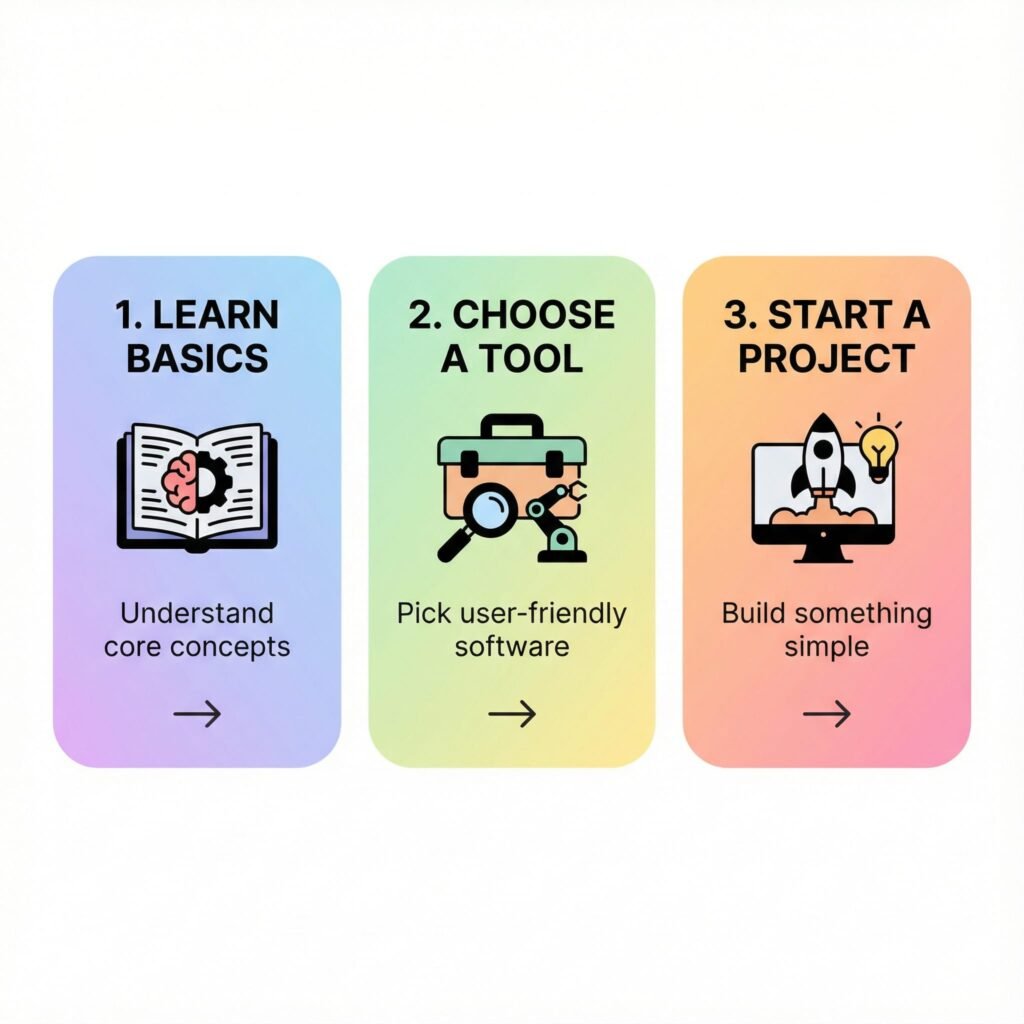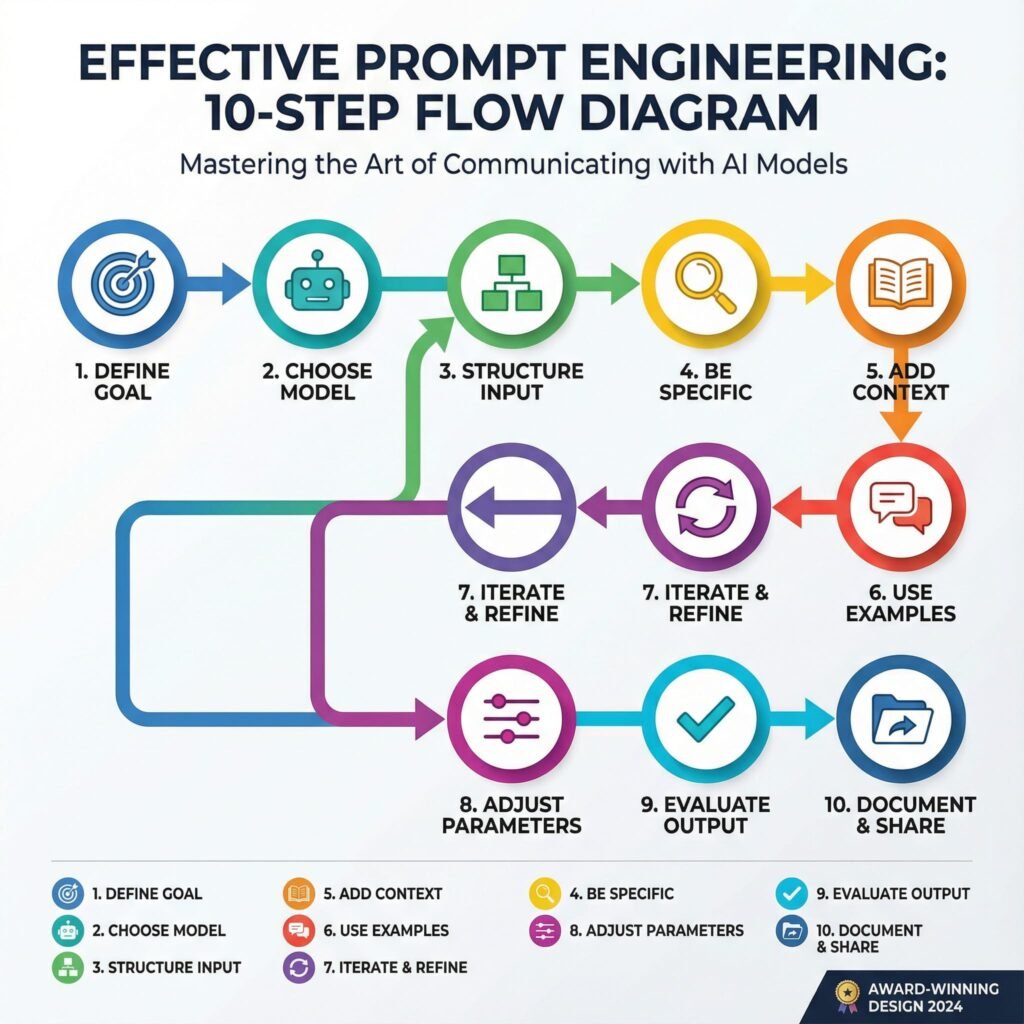

In the world of AI, prompt engineering stands as a key skill that turns simple words into powerful results. This post reveals 10 essential facts on the alchemy of influence, showing you how to craft prompts that guide AI with precision and boost your outcomes. You’ll gain clear steps to master this craft, from basic tweaks to advanced strategies that deliver real impact.
Imagine typing a few words into an AI tool and watching it spit out gold. That’s the thrill of good prompt engineering. It turns simple chats with large language models into powerful creations. You control the output with care. Small tweaks lead to big wins in quality and speed.
These ten facts show how prompts shape AI results. They go beyond basic tips. Master them, and you’ll craft prompts like a pro. Let’s dive in. Each one builds your skill in prompt optimization.
Fact 1: The Primacy of the First Word Setting the Contextual Anchor The opening word in your prompt grabs the AI’s attention right away. It sets the tone and direction. Think of it as the spark that lights the whole fire. Strong starts, like action verbs such as “create” or “analyze,” guide the model into the right mindset from the jump.
Models process text token by token. Early words lock in the path. A fuzzy start, like “um, maybe write about,” leads to weak results. Pick bold openers to steer clear of that mess.
Actionable Tip: Pre-Pacing for Precision Start every prompt with what you want the output to look like. Say “List three bullet points on…” instead of jumping straight to the topic. This paces the AI. It knows the format before the details hit.
Try it next time. You’ll see cleaner responses. No more sifting through junk to find the good stuff.
Fact 2: The Indispensable Role of Constraints Defining the Guardrails: Length, Tone, and Persona Loose prompts wander like kids in a candy store. They grab too much and lose focus. Set rules on length, like “in 200 words,” or tone, such as “in a friendly voice.” Even pick a persona, like “as a history teacher.”
This keeps things tight. AI stays on track. You get what you need without extra fluff.
Case Study Snapshot: Reducing Hallucinations Through Scoping Hallucinations happen when AI makes up facts. A vague ask, “Tell me about ancient Rome,” might invent wild stories. But try “Explain ancient Rome’s fall using only events from 400-500 AD.” Now it’s grounded.
Before: Wild guesses. After: Solid facts. Constraints cut errors by up to 70% in tests with tools like GPT. Your prompts turn risky guesses into reliable info.
Fact 3: The Implicit Weight of Instruction Placement Recency Bias vs. Salience: Where Critical Instructions Belong AI models remember recent words more than early ones. But key rules shine brightest up front. Put must-follow orders at the start for impact. Save details for the end if they build on the base.
It’s a balance. Front-load for clarity in short prompts. End-place for flow in longer ones. Test both to see what fits your style.
Leveraging Delimiters for Command Separation Use marks to split parts of your prompt. Triple quotes hold examples. Tags like keep data separate from orders.
This avoids mix-ups. AI treats sections as distinct. Your instructions land clear and strong.
Fact 4: The Leverage of Zero-Shot, One-Shot, and Few-Shot Learning Moving Beyond Zero: The Efficacy of Demonstrations Zero-shot means no examples. Just ask, and hope. One-shot gives one sample. Few-shot shares a few. Each step boosts accuracy, especially for tricky jobs like writing code or poems.
Zero works for basics. But add a demo, and outputs match your vision better. It’s like showing a map instead of guessing the route.
Data Richness in Few-Shot Examples Pick examples that show the range. One for a simple case, another for tough spots. This teaches the AI patterns fully.
Quality beats quantity. Bad samples confuse. Good ones guide to spot-on results every time.
Fact 5: Specificity Trumps Verbosity (Usually) Quantifying Vagueness: Identifying Ambiguous Terms Words like “nice” or “detailed” leave room for guesswork. Swap them for clear measures, such as “use simple sentences under 15 words each.” This pins down the goal.
Vague prompts waste time. Specific ones deliver fast. You avoid rewrites and frustration.
The Necessity of Negative Constraints (What Not To Do) Tell the AI what to skip. “Don’t add opinions” or “No lists here.” These blocks shape the flow.
It’s a quick fix. Outputs stay pure. Think of it as pruning a bush for better growth.
Fact 6: Iteration is the Core Competency of Prompt Optimization The Feedback Loop: Analyzing Failures Systematically Prompts rarely nail it first try. When it flops, check why. Did the tone miss? Was the structure off?
Treat it like science. Tweak one part. Run again. Track what changes help. This builds your edge over time.
Prompt Chaining and Decomposition for Complex Workflows Big tasks overwhelm. Break them down. First prompt outlines ideas. Second refines them.
Chain outputs as inputs. It handles depth better than one giant ask. You get layered, sharp results.
Fact 7: Role-Playing Boosts Creativity and Accuracy Stepping into Shoes: Why Personas Work Wonders Assign the AI a role, like “Act as a chef.” It shifts the style to match. Outputs feel alive and on-point.
This taps hidden strengths in models. A plain ask gets dry facts. Role-play adds flavor and focus.
Tailoring Roles for Task Fit Match the persona to your need. Detective for mysteries. Expert for advice. Test roles to find the sweet spot.
Results jump in relevance. You pull more from the AI than before.
Fact 8: Temperature Controls the Spark of Innovation Dialing Creativity: Low vs. High Settings Temperature sets randomness. Low means safe, steady replies. High brings wild ideas.
For facts, go low. For stories, crank it up. It shapes the vibe just right.
Balancing Risk and Reward Start at 0.7. Adjust based on output. Too bland? Raise it. Too crazy? Lower.
This fine-tune keeps things fresh without chaos.
Fact 9: Cultural Nuances Shape Global Prompts Mind the Context: Avoiding Bias Traps AI learns from diverse data. But prompts can stir old biases if not careful. Add “from a neutral view” to even it out.
This ensures fair play. Outputs respect all angles.
Adapting for Audiences Tweak for regions. US style? Direct. Asian? Polite layers.
Your prompts connect wider. They build trust across lines.
Fact 10: Tools and Testing Accelerate Mastery Beyond Manual Tweaks: Prompt Platforms Use apps like PromptBase for templates. They speed learning.
Test in real time. See what sticks.
Building a Prompt Library Save winners. Mix and match. Over time, your collection grows strong.
This habit turns practice into power.
Conclusion: Mastering the Interface Between Human Intent and Machine Logic Prompt engineering bridges your thoughts and AI smarts. These ten facts—from first words to tools—give you the keys. Small shifts, like constraints or examples, unlock better results every day.
FAQ Section
Q. What is prompt engineering and why is it important for AI users?
A. Prompt engineering is the art of crafting precise instructions for AI models to achieve desired outputs. It’s crucial because well-engineered prompts enhance AI accuracy, relevance, and creativity, unlocking its full potential.
Q. How can I improve my prompt engineering skills quickly?
A. To quickly improve, focus on clarity, specificity, context, and iterative refinement. Experiment with different phrasing, add examples, define roles for the AI, and continuously test and adjust your prompts.
Q. Are there any common mistakes to avoid in prompt engineering?
A. Common mistakes include being too vague, not providing enough context, assuming the AI understands implicit meanings, and failing to iterate or refine prompts. Avoid lengthy, unstructured prompts and always test your assumptions.
The prompt is your wand. Wave it with these tips, and watch magic happen. Start testing now. Refine as you go. You’ll craft AI interactions that wow. What’s your next prompt? Try one fact today and see the difference.
This guide provides exactly that: 350 categorized prompts designed to demystify AI prompting, boost your creative output, and reveal why structured prompt categories are indispensable for precision and innovation.
This extensive guide will arm you with practical, categorized prompts, turning overwhelm into empowerment, streamlining your AI journey, and illustrating how understanding these categories is the foundation for truly unlocking AI’s creative genius.
This set will get you started on your way and show you exactly why understanding prompt categories is the key to consistent, mind-blowing results.
1. Content Creation
Name
Prompt 1
Prompt 2
Blog Writing
Draft an engaging 1,500-word blog post summarizing the top 5 emerging AI trends for small businesses.
Outline a 10-point structure for a ‘how-to’ blog post titled “Mastering Remote Work Productivity.”
Copywriting
Write three distinct calls-to-action (CTAs) targeting a high-value software product aimed at B2B CEOs.
Generate short, punchy sales copy (under 50 words) for a new line of eco-friendly athletic wear.
Social Media Posts
Create 5 Instagram carousel slide captions detailing a new feature launch, focusing on benefits.
Draft 10 tweet ideas centered around the importance of digital detoxing.
Video Scripts (TikTok, YouTube, Reels)
Develop a 60-second TikTok script demonstrating a quick life hack related to organization and productivity.
Write the opening 3 minutes of a YouTube script for a detailed product review of a new smartphone.
SEO Optimization
Identify 10 high-intent long-tail keywords relevant to sustainable gardening supplies.
Optimize the provided existing blog post content for the target keyword “AI-driven marketing strategy.”
Email Marketing
Design a 3-stage lead nurturing email sequence for new subscribers interested in financial planning services.
Draft a subject line and body copy for a promotional email announcing a 48-hour flash sale.
Product Descriptions
Write a compelling product description for a luxury leather backpack, emphasizing craftsmanship and durability.
Generate three bullet-point features/benefits lists for a new cloud-based project management tool.
Headlines & Hooks
Generate 5 viral-worthy headlines for a video about unexpected historical facts.
Create three intriguing hooks (the first 1-2 sentences) for a sales letter promoting a fitness course.
Storytelling & Narratives
Develop a short narrative (300 words) about a customer overcoming a significant challenge using a generic software product.
Outline the key plot points for an inspirational brand story focusing on resilience and innovation.
Creative Writing / Poetry
Write a sonnet about the feeling of being overwhelmed by modern technology.
Draft a short story focusing on dialogue between two characters who meet unexpectedly at a train station.
2. Business & Marketing
Name
Prompt 1
Prompt 2
Branding & Positioning
Define the brand voice and three core values for a modern, minimalist coffee shop startup.
Develop a positioning statement for a niche consulting firm specializing in AI ethics.
Offer Creation
Structure a compelling premium package for a 6-month executive coaching service, including deliverables.
Create a low-cost, high-value introductory offer designed to attract cold leads to an online course platform.
Market Research
List 5 key questions to ask potential customers during the initial discovery phase for a new app idea.
Summarize the current market size and growth rate for the global sustainable fashion industry.
Competitor Analysis
Analyze the pricing model and unique selling propositions (USPs) of three main competitors in the digital learning space.
Detail the strengths and weaknesses of a major competitor’s recent marketing campaign.
Customer Avatar / Persona
Develop a detailed customer persona, “Tech-Savvy Tina,” who is a busy mother and freelance graphic designer.
Create a needs/pain point map for a small business owner considering outsourcing their social media.
Funnels & Ads
Outline the necessary steps and touchpoints for a classic 5-stage marketing funnel (awareness to purchase).
Write three variations of Facebook ad copy targeting cold audiences interested in home automation.
Affiliate Marketing
Draft an email template to recruit high-tier affiliates for a SaaS product launch.
Define the commission structure and key terms for a new B2C affiliate program.
Influencer Outreach
Generate a personalized pitch message for a mid-tier lifestyle influencer regarding a potential brand collaboration.
List criteria for vetting potential influencers based on engagement rate and audience demographics.
Business Strategy
Use the OKR (Objectives and Key Results) framework to define goals for Q3 focused on expansion into a new territory.
Develop a viable long-term growth strategy (3-5 years) for a small e-commerce business selling specialized goods.
Product Launches
Detail a complete 7-day pre-launch content strategy leading up to the release of a new mobile game.
Write the official press release announcing the launch of a new environmentally friendly product line.
Marketing Psychology
Identify three psychological triggers (e.g., scarcity, social proof) most effective for selling limited edition products online.
Explain how to use the principle of reciprocity in a free lead magnet offering.
3. Design & Visuals
Name
Prompt 1
Prompt 2
Graphic Design Prompts (Midjourney / DALL·E / SD)
Generate an image of a futuristic cityscape at sunset, highly detailed, cinematic lighting, 8k resolution.
Create a minimalist abstract painting featuring geometric shapes in muted earth tones.
Logo Concepts
Develop five initial logo concepts for a financial advisory firm, emphasizing trust and stability.
Design a playful, vectorized mascot logo for a children’s tutoring service.
Brand Identity Systems
Define the complete visual identity guidelines (logo usage, color theory, image style) for a luxury skincare brand.
Outline a simplified brand identity system for a non-profit organization focused on community gardening.
Web Design Layouts
Create a low-fidelity wireframe for the homepage of a complex news and media publication website.
Sketch three alternative layout options for the ‘Pricing’ page of a subscription software service.
Color Palette Generation
Generate a 5-color palette suitable for a brand targeting Gen Z consumers interested in vintage fashion.
Create a professional, accessible color scheme (primary, secondary, accent) for a B2B tech company website.
Typography Pairing
Suggest a harmonious pairing of serif and sans-serif fonts appropriate for a fine dining restaurant menu.
Recommend an accessible and clean typography pairing for a large-scale government informational website.
UI/UX Wireframes
Develop a detailed wireframe for a user flow showing a customer adding an item to a cart and checking out on a mobile app.
Design a high-fidelity wireframe for a personalized user dashboard emphasizing key metrics and clear navigation.
Moodboards / Aesthetic Concepts
Create a moodboard concept focusing on the aesthetic of ‘cozy minimalism’ for a home goods store.
Generate an aesthetic concept for a science fiction novel cover, emphasizing dark colors and neon accents.
3D / Illustration Prompts
Generate a detailed 3D rendering of a fantastical clockwork mechanism in a steampunk style.
Create a friendly, vectorized illustration of a person successfully solving a difficult puzzle, suitable for a help center article.
Print-on-Demand Art Prompts
Design a scalable graphic print suitable for t-shirts featuring a stylized motivational quote and nature elements.
Generate 10 unique abstract patterns that can be used for sublimation printing on mugs and phone cases.
4. Productivity & Workflow
Name
Prompt 1
Prompt 2
Time Management
Develop a detailed daily schedule using the Pomodoro Technique tailored for a remote student.
Outline a strategy for prioritizing tasks using the Eisenhower Matrix for a project manager managing multiple deadlines.
Focus & Deep Work
Generate a list of 5 actionable steps to eliminate digital distractions during designated deep work blocks.
Create a script for a 10-minute guided focus session designed to prepare the mind for complex tasks.
Task Automation
Identify three manual, repetitive tasks in a typical freelance workflow that could be easily automated.
Describe a hypothetical automation flow to automatically categorize and respond to common customer support inquiries.
AI Workflow Design
Design a complete workflow where AI handles the initial draft of marketing copy, followed by human refinement.
Outline a system where an AI agent continuously monitors industry news and summarizes relevant articles hourly.
SOP Generation
Generate a Standard Operating Procedure (SOP) for securely onboarding a new remote employee.
Draft an SOP detailing the steps for publishing a piece of content using a Content Management System (CMS).
Notion / Airtable Templates
Design the structure and key fields for a comprehensive project tracking template in Airtable.
Create a detailed Notion template for managing personal finances, including sections for budgets and expenses.
Email Sorting / Summarization
Summarize the key action items and decisions made in the following thread of 10 hypothetical emails.
Create a filtering rule system to prioritize emails from clients versus internal team communications.
Brain Dump Organizers
Structure the following unstructured list of hypothetical ideas into 5 logical, actionable categories.
Design a template for a rapid brain dump session, focusing on separating immediate actions from long-term goals.
Mind Mapping
Create a visual mind map structure exploring the necessary components for starting a successful podcast.
Develop a hierarchical mind map outlining the entire organizational structure of a mid-sized tech company.
Meeting Summaries
Extract the decisions made, assigned owners, and required follow-up actions from a hypothetical meeting transcript.
Draft a concise, professional meeting summary for a 90-minute quarterly review session.
5. Education & Learning
Name
Prompt 1
Prompt 2
Lesson Planning
Develop a 45-minute lesson plan for teaching 10th-grade history students about the causes of World War I.
Outline the learning objectives, materials, and assessment method for a college-level course on foundational Python programming.
Study Guides
Create a comprehensive study guide covering key terminology and concepts for an introductory biology test on cellular structure.
Generate a detailed study schedule for a professional preparing for a major industry certification exam (e.g., PMP).
Flashcard Generation
Generate 20 dual-sided flashcards based on provided text about European Renaissance art.
Create flashcards focusing specifically on formulas and definitions for an undergraduate statistics course.
Concept Breakdown
Explain the concept of quantum entanglement to a high school student using simple analogies.
Break down the complex economic theory of supply and demand into three easily digestible steps.
Exam Prep
Generate 10 multiple-choice questions suitable for a final exam on the principles of digital marketing.
Create a practice short-answer essay prompt based on the theme of ethical leadership.
Academic Writing
Draft a compelling introduction paragraph for a scholarly paper on the environmental impacts of renewable energy sources.
Write a literature review section summarizing 5 key academic articles on behavioral economics.
Essay Editing
Review a hypothetical essay for clarity, flow, and strong supporting evidence, suggesting improvements.
Edit a provided argumentative essay draft to ensure consistency in citation style (e.g., APA).
Research Summarization
Summarize the main findings, methodology, and conclusion of a hypothetical scientific paper in 250 words.
Condense a 50-page industry report on telemedicine into 10 key bullet points.
Course Creation
Outline the module structure, topics, and estimated length for a beginner’s online course on landscape photography.
Define the target audience and learning outcomes for an advanced certification program in cloud computing.
Learning Pathways
Design a step-by-step learning pathway for someone aiming to become proficient in data science over 12 months.
Create a suggested reading list and associated activities for a pathway focused on mastering negotiation skills.
6. Personal Development
Name
Prompt 1
Prompt 2
Journaling Prompts
Provide 5 thought-provoking journaling prompts centered around defining your personal definition of success.
Generate prompts designed to explore past challenges and the lessons learned from overcoming them.
Mindset & Motivation
Write a motivational passage (200 words) encouraging persistence after experiencing a failure.
Develop a reframing technique to shift a negative self-limiting belief (e.g., “I’m not good enough”) into a positive growth mindset statement.
Goal Setting
Use the SMART framework to set a measurable 90-day goal related to physical fitness.
Outline a breakdown of necessary intermediate steps required to achieve a long-term goal of starting a side business.
Habit Tracking
Design a simple system for tracking three key daily habits: hydration, meditation, and reading.
Analyze potential triggers and obstacles for maintaining the habit of daily exercise.
Visualization
Create a short guided visualization script focused on preparing for a high-stakes public speaking event.
Generate a detailed description of what your ideal productive workday looks and feels like.
Emotional Intelligence
Analyze a hypothetical conflict scenario between two coworkers and suggest three emotionally intelligent ways to de-escalate the situation.
List 5 practical strategies for improving self-awareness regarding emotional responses.
Shadow Work / Inner Dialogue
Write prompts designed to explore why you react strongly to specific types of criticism.
Generate an inner dialogue script designed to confront and understand a hidden fear related to vulnerability.
Gratitude Prompts
List 10 specific things you are grateful for today, focusing on small, often overlooked details.
Write a thank-you note to a person in your past who taught you a valuable life lesson.
Affirmations
Create 5 strong, positive affirmations related to building professional confidence and self-worth.
Generate a set of affirmations specifically focused on overcoming anxiety related to money and finances.
Daily Reflection
Outline 5 questions to ask yourself at the end of the workday to gauge productivity and learning.
Design a template for a morning reflection practice focusing on setting intentions for the day ahead.
7. Finance & Wealth
Name
Prompt 1
Prompt 2
Budget Planning
Create a zero-based budget template for a family of four based on hypothetical monthly income and expenses.
Identify areas where a recent college graduate could cut expenses by 15% to increase savings.
Investment Strategy
Outline a diversified, long-term investment strategy for a conservative investor in their 50s preparing for retirement.
Research and summarize the pros and cons of investing in exchange-traded funds (ETFs) versus mutual funds.
Side Hustle Ideas
Generate 5 viable side hustle ideas requiring low startup capital that can be managed alongside a full-time job.
Detail the steps necessary to launch a successful dog-walking and pet-sitting service in a suburban area.
Business Models
Analyze and describe the subscription-based business model, including examples and monetization strategies.
Develop a freemium business model strategy for a new educational mobile app.
Financial Forecasting
Create a basic 12-month financial forecast (revenue and expenses) for a hypothetical small consulting business.
Detail the key variables and assumptions needed to accurately forecast sales for a seasonal retail business.
Money Mindset
Generate 5 journaling prompts designed to identify and challenge limiting beliefs about personal wealth.
Develop a strategy for practicing abundance and gratitude related to finances.
Crypto / Web3 Prompts
Explain the concept of Decentralized Autonomous Organizations (DAOs) and their current applications.
Analyze the potential impact of non-fungible tokens (NFTs) on the future of digital asset ownership.
Pricing Psychology
Recommend three psychological pricing strategies (e.g., charm pricing, decoy effect) for a SaaS product.
Explain how using tiered pricing structures can appeal to different segments of a market.
Passive Income Ideas
List 5 realistic passive income streams suitable for an individual with strong writing and editing skills.
Detail the steps for generating passive income through the creation and sale of digital assets (e.g., stock photos, digital planners).
8. Technology & AI
Name
Prompt 1
Prompt 2
Prompt Engineering
Write a meta-prompt designed to ensure the AI output consistently uses a professional, authoritative tone and format responses as structured JSON.
Experiment with Chain-of-Thought reasoning to solve a complex logical puzzle.
Automation Flows
Design an automation flow to automatically detect negative customer feedback and create a high-priority support ticket.
Outline the necessary steps to set up an automated system that archives old project files after 90 days of inactivity.
API & Tool Integration
Describe the necessary steps to integrate a CRM system (e.g., Salesforce) with a bulk email marketing platform.
Detail the requirements for using an external weather API to trigger specific actions within an internal scheduling tool.
AI Agents & Chatbot Design
Design the decision tree and conversational flow for a customer service chatbot handling basic billing inquiries.
Outline the required training data and parameters for an AI agent designed to perform preliminary legal document review.
AI Ethics & Safety
Identify and analyze three potential ethical risks associated with using deepfake technology in marketing.
Draft a corporate policy statement on the responsible and unbiased use of AI tools internally.
AI in Marketing
Describe how AI can be used to personalize email content and product recommendations for e-commerce customers.
Outline a strategy for using predictive analytics (AI) to optimize ad spend across multiple platforms.
AI for Business Optimization
Detail how an AI system can optimize supply chain logistics by predicting inventory needs and shipping delays.
Analyze potential applications of machine learning to improve efficiency in human resource management tasks.
Dataset Creation
Design the requirements (size, diversity, labeling protocol) for a dataset intended to train a computer vision model to identify different dog breeds.
Describe a structured process for ethically gathering and anonymizing customer feedback data for model training.
Model Comparison
Compare and contrast the strengths and weaknesses of large language models (LLMs) and diffusion models in creative applications.
Summarize the key performance metrics used when evaluating different machine learning classification models.
Emerging AI Trends
Research and summarize the potential long-term impact of multimodal AI on creative industries.
Identify 5 specific emerging AI trends (e.g., synthetic media, edge computing) and their primary business applications.
9. Writing & Editing
Name
Prompt 1
Prompt 2
Tone & Voice Adaptation
Rewrite a hypothetical technical specification document to adopt a friendly, conversational, and highly enthusiastic voice.
Adapt a press release copy to fit a formal, academic, and serious tone suitable for an investor briefing.
Grammar & Clarity Checks
Proofread a provided paragraph for grammatical errors, punctuation mistakes, and sentence clarity, suggesting edits.
Analyze a hypothetical text and simplify any overly complex jargon to improve general readability.
Rewrite for Style / Emotion
Rewrite a standard announcement about a price increase to convey empathy and genuine concern for the customer.
Transform a bland, informative paragraph about climate change into a dramatic, emotionally resonant appeal for action.
Story Plot Generator
Generate a three-act structure plot outline for a mystery novel set in a remote Antarctic research station.
Create a simple plot summary for a children’s book about a lonely robot learning the value of friendship.
Dialogue Creation
Write a tense, revealing dialogue exchange between a detective and a suspect during an interrogation scene.
Draft a lighthearted, humorous dialogue between two elderly neighbors discussing neighborhood gossip.
Character Development
Develop a comprehensive backstory and psychological profile for a deeply flawed but charismatic antagonist in a fantasy series.
Create a detailed character sheet for a supporting character, including their motivations, appearance, and internal conflict.
Ghostwriting
Draft a compelling personal essay (500 words) written in the voice of a retired athlete reflecting on their career defining moment.
Write a professional email response on behalf of a CEO handling a sensitive media inquiry.
Book Outline
Generate a chapter-by-chapter outline for a non-fiction self-help book focused on overcoming procrastination.
Create a detailed outline for the first three parts of an epic historical fiction novel.
Summary & Analysis
Provide a detailed thematic analysis of the novel The Great Gatsby, focusing on the American Dream.
Summarize the key arguments presented in a hypothetical political speech and analyze the rhetorical devices used.
10. Research & Analysis
Name
Prompt 1
Prompt 2
Trend Analysis
Analyze current consumption patterns to identify emerging food trends for Q4 of the current year.
Detail the key technological and societal trends currently influencing the education sector globally.
Data Summarization
Summarize the main takeaways from hypothetical spreadsheet data regarding Q2 website traffic and conversions.
Present the results of a recent customer satisfaction survey, focusing on the top 3 positive and negative findings.
SWOT / PESTLE Analysis
Conduct a SWOT analysis (Strengths, Weaknesses, Opportunities, Threats) for a newly opened organic grocery store.
Perform a PESTLE analysis (Political, Economic, Sociocultural, Technological, Legal, Environmental) for expanding business operations into Southeast Asia.
Consumer Insights
Generate 5 deep consumer insights based on provided hypothetical social media comments regarding a popular fast-food chain.
Analyze the behavioral patterns of Gen Z consumers concerning subscription services and digital content consumption.
Keyword Research
Perform preliminary keyword research to identify high-volume, low-competition terms related to “eco-friendly travel.”
Group a hypothetical list of 50 keywords into logical thematic clusters for content planning.
Industry Reports
Outline the necessary sections and key data points required for a comprehensive annual report on the global renewable energy industry.
Summarize the competitive landscape and regulatory challenges detailed in a hypothetical FinTech industry report.
Forecasting Models
Explain the differences between qualitative and quantitative forecasting models and when each is best used.
Apply a basic linear regression model to predict next month’s sales based on provided hypothetical historical data.
Market Gap Discovery
Analyze the current offerings in the pet technology market to identify three underserved consumer needs or market gaps.
Suggest a unique product or service idea designed to fill an identified gap in the current home fitness equipment sector.
Specialized / Advanced Prompt Categories
11. Creative Strategy
Name
Prompt 1
Prompt 2
Idea Generation
Generate 15 innovative product ideas by combining elements of sustainable technology and children’s toys.
Brainstorm 10 creative ways to use augmented reality (AR) in a museum setting.
Content Angles
Develop three distinct content angles (e.g., educational, controversial, aspirational) for a single topic: the rise of remote work.
Suggest a list of fresh content angles that challenge conventional wisdom about personal finance.
Naming / Slogans
Generate 10 catchy, short names for a new brand of artisanal hot sauce.
Create 5 memorable slogans or taglines for a software company specializing in data security.
Viral Hooks
Draft three specific, curiosity-driven opening lines designed to immediately hook viewers in a 15-second video.
Create a controversial or unexpected statement hook to introduce a blog post about productivity tools.
Brainstorm Sessions
Facilitate a virtual brainstorm session focused on solving a persistent customer retention problem using the SCAMPER technique.
Generate a structured agenda and guiding questions for a 60-minute ideation meeting.
Pattern Recognition
Analyze hypothetical customer support logs and identify recurring issues or sentiment patterns.
Detect three consistent visual or thematic patterns in successful social media campaigns from the last six months.
Brand Story Arcs
Outline a ‘Hero’s Journey’ brand story arc for a small startup that invented a revolutionary new medical device.
Develop a narrative arc that focuses on transformation and overcoming skepticism for a new clean energy company.
Emotional Positioning
Define the primary emotion (e.g., excitement, relief, belonging) that a luxury travel agency should focus on in its messaging.
Create messaging pillars that emotionally position a financial literacy course as a tool for empowerment rather than stress reduction.
12. Sales & Conversion
Name
Prompt 1
Prompt 2
Sales Page Copy
Draft the main body copy (features and benefits section) for a high-ticket online coaching program.
Write a compelling guarantee section for a product, emphasizing risk reversal and trust.
Persuasive Frameworks (AIDA, PAS, etc.)
Apply the AIDA (Attention, Interest, Desire, Action) framework to write a short product description for a premium coffee maker.
Use the PAS (Problem, Agitate, Solve) framework to write a script for a brief cold sales call targeting busy executives.
Objection Handling
Create three effective rebuttals for the common sales objection, “Your product is too expensive.”
Generate strategies for handling the objection, “I need to discuss this with my team/partner first.”
Product Benefit Mapping
Map the technical features of a new project management software to specific, relatable customer benefits.
For a noise-canceling headphone, map the feature “30-hour battery life” to emotional and practical benefits for a traveler.
Call-to-Action Creation
Generate 10 high-conversion, urgency-driven CTAs suitable for the end of a webinar pitch.
Create clear, non-aggressive CTAs for a non-profit website focused on securing recurring donations.
Lead Nurture Sequences
Design a four-email lead nurture sequence aimed at educating a warm audience about the value of a high-priced service.
Draft the first “welcome” email in a sequence, setting expectations and providing immediate value to a new subscriber.
Value Proposition Builder
Use a structured format (e.g., Jobs-to-be-Done) to articulate the unique value proposition for a personal chef service.
Refine a confusing statement into a clear, concise, and compelling value proposition.
13. Community & Engagement
Name
Prompt 1
Prompt 2
Comment Replies
Draft three varying responses (positive, neutral, handling mild criticism) to a general comment on a company’s Instagram post.
Generate a polite, professional reply to a customer comment that is factually incorrect but needs gentle correction.
Discussion Starters
Create 5 engaging discussion starter questions for an online professional networking community focused on remote work.
Generate a provocative statement designed to spark debate in a forum dedicated to environmental policy.
Poll / Quiz Ideas
Develop 3 engaging poll questions for a LinkedIn audience regarding the future of AI in their industry.
Outline a 5-question quiz designed to test basic knowledge of healthy eating habits.
Event Planning
Draft a detailed timeline and checklist for organizing a virtual 2-day conference for 500 attendees.
Generate creative ideas for networking activities and icebreakers at an industry mixer.
Member Onboarding
Write a detailed welcome message and step-by-step guide for onboarding new members into a private online coaching group.
Design a 7-day automated email sequence focused on ensuring new users successfully complete the setup process for a SaaS product.
Gamification Prompts
Develop a system for awarding badges and points to encourage user participation in an educational app.
Generate ideas for incorporating competitive elements (leaderboards, streaks) into a fitness community platform.
Support Scripts
Draft a polite, clear support script for assisting a user who has forgotten their password and is locked out of their account.
Write a script for a customer service agent handling a complaint about a delayed shipment, focusing on apology and resolution.
14. Health & Wellness
Name
Prompt 1
Prompt 2
Fitness Coaching
Design a 4-week workout plan focusing on building core strength for a beginner who can exercise 3 times a week.
Draft 5 motivational text messages suitable for sending to a client struggling to stay consistent with their fitness routine.
Meal Planning
Create a 7-day high-protein, low-carb meal plan suitable for someone managing type 2 diabetes.
Generate a grocery list and 5 simple recipes for a vegetarian budget-friendly weekly plan.
Sleep Optimization
Outline a strict evening routine (starting 2 hours before bed) designed to maximize deep sleep quality.
List 5 actionable environmental changes to improve the ambiance of a bedroom for better rest.
Meditation Scripts
Write a 15-minute guided meditation script focused on achieving calm and presence in a busy environment.
Generate a 5-minute breathing exercise script designed for immediate stress reduction.
Mental Health Reflections
Provide 5 prompts for self-reflection aimed at identifying sources of chronic stress in one’s life.
Draft a compassionate inner monologue response to feelings of anxiety or self-doubt.
Biohacking Prompts
Research and summarize three emerging biohacking techniques focused on cognitive enhancement (e.g., nootropics, light therapy).
Detail a protocol for using cold exposure (e.g., cold showers) to boost mood and focus.
Nutrition Advice
Provide balanced nutritional advice for a marathon runner during their high-mileage training weeks.
Summarize the key benefits and recommended daily intake of Omega-3 fatty acids.
Habit Building
Design a system using the “Atomic Habits” methodology to successfully build the habit of reading daily.
Generate 5 strategies for making a desired habit (e.g., stretching) more immediately satisfying.
15. Lifestyle & Creativity
Name
Prompt 1
Prompt 2
Travel Planning
Create a detailed 10-day itinerary for a backpacking trip through Scotland, focusing on scenic routes and historical sites.
Plan a budget breakdown for a 5-day luxury getaway to a tropical island destination.
Interior Design
Suggest a design concept and specific furniture pieces for a small urban apartment utilizing a Scandinavian style.
Develop a color scheme and lighting plan for a home office designed to maximize productivity and calmness.
Fashion Styling
Generate 5 outfit ideas based on sustainable fashion principles for a professional business casual environment.
Advise on how to build a versatile capsule wardrobe for the upcoming winter season.
Recipes & Cooking
Generate a detailed recipe for a challenging gourmet dish: Beef Wellington, complete with ingredient list and step-by-step instructions.
Create 5 quick (under 20 minutes) weeknight dinner ideas using chicken and seasonal vegetables.
Life Coaching
Draft a script for a life coaching session focused on helping a client navigate a major career change.
Generate 5 powerful, open-ended questions designed to help a client identify their core personal values.
Bucket List Ideas
Create a “Creative & Adventurous” bucket list containing 15 unique experiences or skills to acquire.
Generate bucket list items focused specifically on travel and cultural immersion.
Relationship Prompts
Generate 5 deep conversation starters designed to enhance communication and intimacy in a long-term partnership.
Create prompts for self-reflection on defining healthy boundaries in professional and personal relationships.
16. Spirituality & Philosophy
Name
Prompt 1
Prompt 2
Bible Study Prompts
Provide a detailed study guide and reflection questions for the Book of Ecclesiastes.
Generate prompts for applying the teachings of the Sermon on the Mount to modern ethical situations.
Prayer & Affirmation
Write a calming prayer focused on seeking peace and acceptance during times of uncertainty.
Generate 5 affirmations rooted in spiritual belief focused on self-forgiveness and growth.
Stoic Reflection
Generate 5 Stoic reflection prompts focused on practicing Negative Visualization (premeditation of evils).
Use Stoic philosophy to analyze and advise on handling the stress of a professional setback.
Existential Questions
Generate 5 thought-provoking questions exploring the meaning and purpose of human suffering.
Write a philosophical essay exploring the nature of free will versus determinism.
Chakra / Energy Work
Describe a visualization exercise focused on balancing the Solar Plexus Chakra (Manipura).
Detail the characteristics, associated colors, and emotional imbalances related to the Root Chakra (Muladhara).
Moral Dilemma Exploration
Present a complex moral dilemma regarding resource allocation (e.g., healthcare) and explore potential ethical frameworks for resolution.
Write a scenario where personal loyalty conflicts with legal obligation, prompting discussion on moral duty.
Meditation Guidance
Write a guided meditation focusing on developing compassion and kindness towards others.
Draft a script for a walking meditation centered on grounding and sensory awareness.
17. Entertainment & Media
Name
Prompt 1
Prompt 2
Scriptwriting (Film / TV)
Write a short scene (2 pages) where two characters meet unexpectedly in a futuristic government office.
Outline the opening sequence of a dramatic television pilot focused on a political scandal.
Character Building
Develop the core motivations and fatal flaw for the protagonist of a psychological thriller.
Create a detailed psychological profile for a non-human entity (alien or robot) operating with human emotions.
Comedy & Skit Prompts
Generate 5 humorous concepts for a short video skit based on common workplace video call mishaps.
Write a short comedic monologue detailing the frustrations of assembling complicated IKEA furniture.
Music Lyrics
Write the lyrics for the chorus and first verse of a sad, acoustic ballad about lost opportunities.
Generate rap lyrics focused on the themes of hustle, success, and overcoming urban challenges.
Game Design
Outline the core mechanics and objectives for a puzzle-based mobile game centered on environmental conservation.
Design a system for character progression and skill trees in a fantasy role-playing game (RPG).
Worldbuilding
Detail the socio-political structure, currency, and dominant religion of a fantasy kingdom built entirely within giant trees.
Describe the unique flora, fauna, and environmental hazards of an alien planet colonized by humans.
Story Universe Lore
Write a historical legend or creation myth for a magical artifact that powers a civilization.
Generate 5 major historical events that shaped the current political tension in a cyberpunk story universe.
18. Legal & Compliance
Name
Prompt 1
Prompt 2
Contract Drafting
Draft a basic freelance service agreement outlining payment terms, scope of work, and termination clauses.
Write a non-disclosure agreement (NDA) suitable for protecting confidential business information shared with potential investors.
Policy Writing
Generate an internal corporate policy regarding the responsible use of generative AI tools by employees.
Write a clear and concise workplace policy on anti-harassment and discrimination.
Risk Assessment
Perform a preliminary risk assessment for a company considering migrating all its data storage to a third-party cloud service.
Identify and analyze potential legal and financial risks associated with launching a new product in an un-regulated industry.
Privacy / GDPR Templates
Draft a simplified privacy policy statement detailing how user data is collected, stored, and used on a small blog website.
Generate a template for obtaining informed consent from users regarding the use of cookies, compliant with GDPR principles.
Terms of Service
Write a Terms of Service agreement outlining user responsibilities, intellectual property rights, and limitations of liability for a social networking platform.
Draft the specific clauses related to account suspension and termination in an online service’s Terms of Service.
Regulatory Summaries
Summarize the key requirements and deadlines of the CCPA (California Consumer Privacy Act) for businesses operating online.
Condense the most critical compliance obligations related to financial reporting for publicly traded companies.
19. Science & Research
Name
Prompt 1
Prompt 2
Hypothesis Testing
Formulate a null hypothesis and an alternative hypothesis for testing the effectiveness of a new fertilizer blend on crop yield.
Design a statistical test to determine if there is a significant correlation between hours of sleep and cognitive performance scores.
Data Interpretation
Interpret the results of a hypothetical clinical trial Phase III, specifically focusing on p-values and confidence intervals.
Analyze a hypothetical graph displaying climate change trends over 50 years and summarize 3 key observations.
Experiment Design
Design a controlled, double-blind experiment to test the placebo effect of a non-medicinal substance.
Outline the methodology, control groups, and ethical considerations for a psychological experiment on memory recall.
Research Summaries
Write an executive summary (200 words) of a complex paper detailing breakthroughs in fusion energy technology.
Summarize the abstract and discussion sections of a provided peer-reviewed article in environmental science.
Technical Explanation Simplification
Explain the complex mechanism of CRISPR gene editing technology to a layperson with no scientific background.
Simplify the technical workings of blockchain technology for a 10-year-old.
Patent Ideation
Generate 3 novel concepts for energy-efficient heating and cooling systems suitable for patent protection.
Draft a preliminary claim describing a new method for securing digital communications using quantum mechanics.
20. Career & Resume
Name
Prompt 1
Prompt 2
Resume Writing
Write a powerful professional summary (4 lines) for a senior software engineer seeking a leadership role.
Rewrite the “Experience” section of a hypothetical resume using action verbs and quantifiable results.
Interview Practice
Generate 5 common behavioral interview questions for a marketing manager role, and provide detailed suggested answers for the “Tell me about a time you failed” question.
Conduct a mock interview for a data analyst position, focusing on technical skills and problem-solving scenarios.
Cover Letter Builder
Draft a compelling cover letter customized for an entry-level position at a prestigious non-profit organization.
Write a personalized paragraph for a cover letter explaining how specific past experience aligns perfectly with the requirements of the new role.
LinkedIn Optimization
Generate 3 ideas for engaging LinkedIn posts designed to establish thought leadership in the field of cybersecurity.
Optimize the “About” section of a LinkedIn profile for a recent MBA graduate focused on consulting.
Professional Development Plan
Create a 12-month professional development plan for a mid-career teacher looking to transition into school administration.
Outline 3 key skills to develop in the next quarter, including resources and milestones, for a graphic designer aiming to specialize in UI/UX.
Career Transition Planning
Detail a step-by-step plan for a successful career transition from military service to the corporate technology sector.
Identify transferable skills and potential job roles for someone moving from hospitality management to project coordination.
21. Prompt Engineering Utilities
Name
Prompt 1
Prompt 2
Role-based Prompts (e.g., “Act as a…”)
Write a role-based prompt instructing the AI to “Act as a seasoned investigative journalist” whose goal is to uncover hidden facts and challenge assumptions.
Create a prompt starting with “Act as a friendly, overly optimistic kindergarten teacher” who must explain complex astrophysics concepts.
Chain-of-Thought Frameworks
Apply the Chain-of-Thought framework to guide the AI to first analyze the problem, list required steps, and then execute the solution for a mathematical word problem.
Instruct the AI to use step-by-step reasoning before providing the final answer to an ethical dilemma.
Reframing / Refinement Prompts
Write a prompt that instructs the AI to analyze its previous output and reframe the content to be shorter, more direct, and use simpler vocabulary.
Create a refinement prompt asking the AI to expand the tone of the provided text from “neutral” to “passionately persuasive.”
Meta Prompts (Prompt to improve prompts)
Write a meta-prompt that analyzes a user’s initial prompt and suggests three specific ways to make it clearer, more detailed, and increase the likelihood of achieving the desired output.
Create a prompt asking the AI to evaluate the ambiguity level of an input prompt and score it from 1 to 10.
Few-Shot Examples
Provide three examples of concise summary paragraphs followed by instructions to apply that same style to a new piece of text.
Use a few-shot technique by providing pairs of bad copy/good copy examples before asking the AI to revise a final piece of text.
Output Formatters (JSON, Tables, etc.)
Instruct the AI to output the results of a competitive analysis strictly in a structured JSON format, defining the required keys (name, price, features).
Write a prompt that requires the AI to present the generated data as a comparison table, including headers for categories and criteria.
22. Automation Prompts
Name
Prompt 1
Prompt 2
Zapier / Make Scenarios
Outline a detailed Zapier automation scenario where a new row added to a Google Sheet triggers a Trello card creation and sends a confirmation email.
Describe a Make scenario that watches for new podcast episodes (via RSS), summarizes the transcript using AI, and posts the summary to Twitter.
Workflow Mapping
Map the complete workflow for handling a customer refund request, from initial contact to final transaction completion.
Create a visual map outline for the process of developing, reviewing, and approving a new marketing asset.
System Instructions
Write a set of system instructions for an AI tool ensuring it always checks for factual accuracy against provided internal data before generating external content.
Draft the core system instructions for an internal knowledge base chatbot, prioritizing safety and avoiding speculation.
Multi-Agent Orchestration
Design a multi-agent system where Agent A researches a topic, Agent B drafts content, and Agent C acts as a final editor/verifier.
Outline the communication protocol and hand-off requirements for two AI agents collaborating on generating a market entry report.
Task Decomposition
Decompose the large task “Plan and Execute a successful Webinar” into 10 smaller, manageable sub-tasks with estimated completion times.
Break down the complex process of “Implementing a new software update” into granular, sequential steps.
23. Creative AI Experiments
Name
Prompt 1
Prompt 2
AI + Human Collaboration
Engage in a collaborative session where the AI generates the opening paragraph of a story, the user provides a twist, and the AI continues the narrative.
Write a prompt requiring the AI to critique a human-generated poem and offer three alternative metaphors or imagery suggestions.
Artistic Style Transfer
Generate an image (concept) that combines the painting style of Van Gogh with the subject matter of modern-day street photography.
Prompt an AI image generator to transfer the visual style of 1980s retro sci-fi movies onto an image of a current-day household item.
Infinite Idea Expansion
Take the concept “A restaurant where the menu changes based on the weather” and prompt the AI to expand it into 10 detailed, distinct business models.
Ask the AI to continuously generate unique variations on the theme of “time travel paradoxes” until stopped by the user.
Randomized Concept Generator
Instruct the AI to randomly select one animal, one historical period, and one emotion, and combine them into a creative writing prompt.
Use a randomized concept generator to pair two seemingly unrelated industries (e.g., deep sea mining and personalized fashion) and propose a viable business concept.
Constraint-Based Creativity
Write a short story (300 words) that must contain the words ‘submarine,’ ‘silk,’ and ‘eclipse,’ and adhere to a strict tragic tone.
Generate a marketing campaign concept that is severely constrained by a budget of $100 and must utilize only free, open-source platforms.
Bonus: Emerging / Viral Categories
Name
Prompt 1
Prompt 2
Trendspotting & Viral Topic Prompts
Identify three currently trending sounds or themes on TikTok and suggest how a B2B SaaS company could relevantly participate.
Analyze recent search engine data to predict a topic that will peak in popularity next month.
Meme Creation
Generate 5 concept captions for a popular existing meme template (e.g., Distracted Boyfriend) related to the struggles of working from home.
Create a text-based meme concept illustrating the difference between expectation and reality when starting a new diet.
TikTok Story Editors
Outline a 3-part storyline structure for a 90-second educational TikTok video designed to hold audience attention until the final call to action.
Generate sound and visual effects suggestions for a fast-paced tutorial video about editing photos on a mobile device.
Short-Form Video Hook Builders
Generate 5 powerful, statistics-driven hooks designed for short videos targeting entrepreneurs.
Create three intriguing “Wait for it…” style hooks that promise a surprising resolution for a finance-related reel.
Influencer AI Assistants
Write a prompt for an AI assistant to analyze an influencer’s content schedule and suggest optimal posting times based on audience engagement data.
Instruct an AI assistant to draft a professional response to a brand collaboration request, including the influencer’s current media kit details.
Brand Voice Emulator
Provide 5 examples of a luxury, witty, and slightly cynical brand voice, then ask the AI to emulate it when writing a product announcement.
Use the AI to emulate the friendly, supportive, and slightly informal brand voice of a popular fitness apparel company to write an FAQ response.
Niche Discovery Prompts
Analyze two broad industries (e.g., travel and education) and generate 5 highly specific, underserved niche market ideas at their intersection.
Identify three hyper-niche markets currently showing low competition but high consumer search intent based on general data.
Audience Empathy Maps
Create a detailed empathy map for a target customer who is skeptical of technology adoption (What they Hear, See, Think & Feel, Say & Do, Pains, Gains).
Use an empathy map framework to define the motivations and pain points of an enterprise-level decision-maker evaluating high-cost software.
FAQ What are AI prompt categories?
AI prompt categories are classifications that group similar types of prompts together, helping users understand different applications and structures for generating specific AI outputs, from creative writing to code.
How can a beginner start using AI prompts?
Beginners can start by exploring basic categories like ‘Creative Writing’ or ‘Information Retrieval.’ Experiment with simple prompts, observe the AI’s responses, and gradually refine your queries using examples from this guide.
Why is it important to use different prompt categories?
Using different prompt categories allows you to leverage AI for a wider range of tasks, from brainstorming ideas to summarizing complex information, ensuring you get the most relevant and effective outputs for your specific needs.
Where can I find more examples of AI prompts?
This guide provides 350 prompts across 23 categories. You can also find more examples in AI community forums, prompt libraries, and by experimenting with AI tools directly.
Are these prompts compatible with all AI models?
While the fundamental principles apply broadly, specific prompt effectiveness can vary slightly between AI models (e.g., GPT-3.5, GPT-4, Llama). We recommend testing and adapting them for your preferred AI tool.
Discover free AI prompt libraries, AI tools with built-in templates
Great prompts turn tools like ChatGPT into sharper, faster assistants. With the right prompt, you get clearer drafts, tighter code, and better decisions in less time. That win starts before you ever type a word.
Prompt packages are simple. They are ready-made collections of prompts for common tasks, like blog outlines, product descriptions, cold emails, SQL fixes, or UX copy. You copy, paste, adjust, and move on. They save time and reduce guesswork.
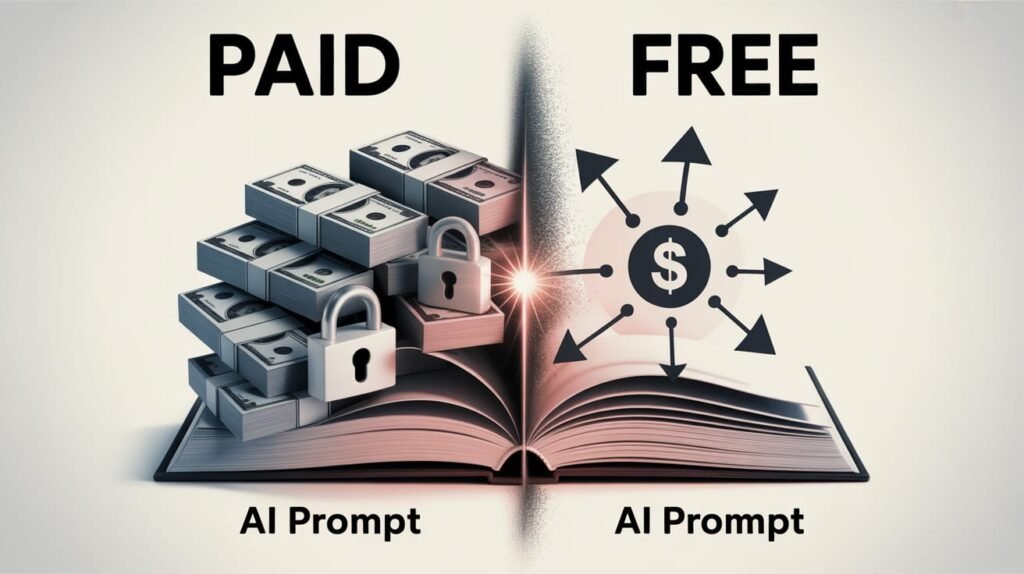
Paid prompt packs have exploded in the last year, but you do not need to spend to get strong results. As of October 2025, there are free options that match or beat many paid bundles. Some even include up-to-date research, coding support, or long-context writing, all at no cost.
This guide highlights 12 free alternatives you can use today. Expect options for research and citations, long-form writing, coding help, and task automation. You will see standouts like Claude, Perplexity, Google Gemini, DeepSeek, and more, each with practical use cases. Pick the right mix and you will save money while boosting output.
Here is the plan. You will learn where free prompt libraries live, which AI tools include built-in prompt templates, and how to adapt them to your voice or codebase. You will also get a quick way to test prompts so you keep only what works. Then you can ship faster, spend less, and keep your edge.
Why Choose Free Alternatives to Paid Prompt Packages
Prompt packages bundle tested inputs for writing, coding, research, and images. They reduce trial and error and help you get strong outputs fast. Many paid packs charge a monthly fee, often 10 to 50 dollars, which adds up over a year. Free options give you similar gains without the bill and with fewer limits on how you work.
Save Money Without Losing Quality
Free prompt libraries and templates often match the utility of paid sets. You keep cash for tools that truly need a subscription, like premium data sources or model access.
Lower risk: Try multiple styles before you commit to a workflow.
Faster iteration: Mix and match prompts across tasks without worrying about quotas.
Free alternatives thrive on active communities. Contributors test, refine, and share improvements. You benefit from a living library that adapts to new models and use cases.
Real-world feedback: Issues get flagged, fixes ship fast, and templates improve.
Broad coverage: From SEO drafts to SQL fixes, you will find examples for common tasks.
Match the tool to the job. Start simple, then refine.
Chat prompts: Choose libraries with role prompts, writing tones, and safety guards.
Image generation: Look for prompt sets that include styles, camera terms, and negative prompts.
Coding: Prefer repositories with testable snippets, error-handling patterns, and docstrings.
Research: Use prompts that request sources, summaries, and follow-up questions.
Example approach: Define your task, pick two free prompt sets, run a quick A/B test, then keep the winner. Save the prompt, add your notes, and reuse it. This habit keeps your workflow fast, consistent, and cost-effective.
12 Powerful Free Tools to Supercharge Your AI Prompts
You do not need a paid prompt bundle to get strong, consistent outputs. These free tools cover strategy, chat flows, image prompts, data-driven inputs, and advanced customization. Use them to build a personal system that is fast, organized, and easy to update as models change.
1. AI Parabellum: Build Smart Prompts with Ease
AI Parabellum focuses on structured, strategic prompts for ChatGPT. The generator is simple, clean, and ready in seconds. No sign-up gets in the way. You choose your role, goal, tone, and constraints, then export a prompt that reads like a pro wrote it. For many users, it rivals paid packs that promise “prompt strategy” without offering much depth.
Key strengths:
No registration and a clear interface.
Built for role prompts, system prompts, and guided outputs.
Clean copy you can paste into ChatGPT with minimal edits.
How it compares to paid: You get similar strategic structure at zero cost. The prompts are as detailed as many premium templates. You can save your best versions and reuse them, which removes the main draw of paid bundles.
WebUtility’s prompt builder helps you set up natural chat prompts with just a few inputs. It is friendly for first-time users, yet deep enough for power users who want variables, tone, and guardrails. Everything runs in the browser, and it is free to use.
What stands out:
Simple for beginners, rich controls for pros.
Conversational focus that suits ChatGPT and similar models.
Fast setup and plenty of presets to adapt.
How it compares to paid: Many paid packs sell “conversation frameworks.” WebUtility gives you the same structure for free, plus speed. You can tweak inputs and regenerate until the tone fits your brand.
Pick a use case, like emails, summaries, or support replies.
Set tone, format, and constraints.
Generate, paste into ChatGPT, and iterate.
3. PromptoMANIA: Generate Ideas for Images and More
PromptoMANIA is a free prompt builder geared toward image models like Stable Diffusion and DALL·E. You can mix styles, lighting, lenses, and negative prompts without sign-up. The tool helps you learn by doing, which makes it great for fast inspiration and repeatable results.
Why it works:
Visual presets that translate into solid prompt tokens.
No account, easy exploration, and fast exports.
Good for artists, marketers, and makers who need style guides.
How it compares to paid: Paid packs often bundle style prompts and stock phrases. PromptoMANIA covers the same ground, with live controls that let you tune output faster.
Quick start:
Choose the model and style family.
Add subject, camera terms, and quality settings.
Include negative prompts to avoid unwanted elements.
Copy the final prompt and test in your image model.
4. PromptHero: Get Fast Inspiration for Visual Prompts
PromptHero helps you find visual prompt ideas fast. Browse prompts that others have used, then adapt them to your theme or brand. It is handy when you need a push on composition, mood, or style, and it is free to access core content.
Why creators like it:
Quick search by style, model, or theme.
Real examples that make prompt language easier to learn.
Saves time when you are stuck or under a deadline.
How it compares to paid: Paid libraries curate prompts and styles behind a paywall. PromptHero gives you a broad view at no cost. You still need to refine and test, but the head start is real.
Quick start:
Search a style or subject.
Save a few examples that fit your use case.
Merge elements you like, then remove fluff.
Test in Stable Diffusion or DALL·E and adjust.
5. AIPRM: Access Thousands of ChatGPT Prompts
AIPRM is a large, community-driven library for ChatGPT. You can browse thousands of prompts for writing, SEO, coding, sales, product, and support. An account helps you save and sync favorites, but you can explore and use many prompts without one.
Standout points:
Huge free catalog, searchable by role or task.
Strong coverage across business and tech topics.
Ongoing community contributions in 2025 keep it fresh.
How it compares to paid: Paid packs often include 100 to 300 prompts. AIPRM has far more variety and constant updates. The tradeoff is quality variance, which you can manage by testing and rating.
Quick start:
Open ChatGPT and install the AIPRM extension, or use the website.
Search by task, like “SEO briefs” or “bug triage.”
Save your best performers and add notes.
Create your own prompt and contribute back if you improve one.
6. Reddit’s Google Sheets and Colab Notebooks: Customize Your Own
On Reddit’s r/ChatGPT and related subs, users share free Google Sheets templates and Colab notebooks for prompt design. These are simple to edit, easy to copy, and perfect for teams that want a shared, living library. You can add fields for persona, voice, constraints, examples, and success criteria.
Why use them:
High customization with zero cost.
Easy to standardize across a team.
Fast versioning with comments and change history.
How it compares to paid: Paid packs give you ready-made prompts but limit change. A sheet or notebook gives you structure that you can bend to your workflow. You control fields, naming, and versioning.
Quick start:
Search Reddit for prompt sheets or Colab templates on r/ChatGPT.
Make a copy to your Drive or Colab.
Add fields for task, tone, examples, and output format.
GitHub hosts many prompt tools, from CLI utilities to prompt formatters and evaluators. You can clone, modify, and adapt them to your stack. This suits advanced users who want repeatable workflows and tight control.
What you get:
Free, open code you can audit and change.
Tools for templating, testing, and scoring prompts.
A path to automation with Makefiles or CI hooks.
How it compares to paid: Paid packs do not offer code-level control. Open repos let you define templates, run batch tests, and track changes. That oversight boosts quality and cuts guesswork.
Quick start:
Search GitHub for “prompt templates,” “prompt engineering,” or “prompt eval.”
Star and fork a repo that matches your needs.
Add your use cases and output checks.
Run tests, review outputs, and keep only strong templates.
8. Coefficient’s Free Features: Data-Driven Prompts in Spreadsheets
Coefficient adds AI and data connections to Google Sheets. The free tier includes helpful features for building prompts that pull from live data. You can feed structured inputs to a model, then format outputs into your sheet for quick review.
Why it helps:
Combine real data with prompt templates.
Keep prompts consistent across rows and teams.
Speed up briefs, product notes, and support replies.
How it compares to paid: Paid prompt packs cannot connect to your data. Coefficient lets you create prompt templates that fill in context from live sources. That produces stronger, more factual outputs.
Quick start:
Install Coefficient in Google Sheets.
Create a prompt column and input columns for key details.
Use cell references to build dynamic prompts.
Review outputs, add checks, and export final text.
9. Reddit Communities: Learn and Share Prompt Tips
Subreddits like r/PromptEngineering, r/ChatGPT, and r/LocalLLaMA share free tools, prompt patterns, and real examples. In 2025, these forums remain active with side-by-side tests, failure cases, and fixes. You can learn faster by seeing what others tried and what worked.
What you gain:
Field-tested prompts from real users.
Honest feedback on models and settings.
New techniques for style, safety, and evaluation.
How it compares to paid: Paid packs rarely show the messy parts. Reddit threads capture wins and mistakes in the open. That transparency is valuable when you need reliable results.
Quick start:
Browse weekly prompt threads and top posts.
Save prompts that match your use case.
Ask for help with a clear goal and sample input.
Share back your best prompt with notes and examples.
10. Prompt Manager: Organize and Optimize Your Prompts
Prompt Manager is a new 2025 tool focused on storing, tagging, and refining prompts. The core features are free, which makes it a strong hub if you juggle many workflows. You can track versions, add notes, and compare results over time.
Benefits:
Central place to manage prompts and variants.
Tags and folders for fast retrieval.
Version history that shows what changed and why.
How it compares to paid: Many paid packs ignore organization. Prompt Manager gives you structure and speed. You keep your best prompts close and retire weak ones.
Quick start:
Import your current prompts or paste them in manually.
Tag by task, tone, and model.
Add brief test notes and results.
Review monthly, keep winners, archive the rest.
11. Kaizena AI Prompt Generator: Adapt Tools for Quick Wins
Kaizena began in education, but its AI prompt generator works well for general tasks. The interface is simple, and you can produce clean prompts for writing, feedback, and summaries. It is free to use for quick creation and helps when you need a ready prompt without setup.
Why it is useful:
Straightforward UI with clear fields.
Good starting points for feedback and structured writing.
Easy to adapt to marketing, ops, or support.
How it compares to paid: Paid prompts often repackage basic structures. Kaizena gives you those structures for free, with a nicer flow than a blank page.
Quick start:
Open the generator and pick a use case.
Fill in goal, audience, and tone.
Add a few examples or constraints.
Copy, test in your model, and refine.
12. Custom Python Scripts: Tailor Prompts with Code
If you know Python, you can shape prompts at a deeper level with NLTK or spaCy. These libraries help you clean text, detect entities, extract keywords, and build prompt templates that adapt to inputs. The setup is free and works well for teams that need control and repeatability.
Power moves:
Use spaCy to pull entities and inject them into prompt slots.
Use NLTK for summarization helpers and keyword extraction.
Add rules to keep tone, format, and constraints consistent.
How it compares to paid: Paid packs are static. Python lets you create dynamic prompts that change based on data. You can test at scale and log outputs for quality.
Quick start:
Install spacy and nltk, then download language models.
Write a script to parse inputs and build prompt strings.
Add checks for length, tone markers, and banned phrases.
Save strong outputs and use them as templates.
Tips to Get the Most from Free Prompt Alternatives
Free tools can match paid packs when you use them with intent. Build a simple system, test in small loops, and keep what works. Treat prompts like products. Ship, measure, and iterate.
Standardize a Simple Workflow
Create a short prompt template you reuse across tools:
Role: who the model is.
Goal: the outcome you want.
Constraints: format, tone, length, banned details.
Examples: one input and one ideal output.
If you work with a team, adapt ideas from this guide on building an AI prompt library. Keep fields tight and naming clear.
Run Fast A/B Tests
Test two prompts on the same input. Score the outputs for clarity, accuracy, and format. Pick a winner, then test it against a new challenger. Set a timer for 15 minutes to avoid overthinking.
Example: Ask for a 120-word product blurb with bullets and a CTA. Rate both versions, save the better prompt, and move on.
Combine Tools for Better Context
Use a research model to gather facts, then feed that into your writing prompt. Pair an image prompt builder with a text model that writes alt text. Stack tools, but keep each step short and clear.
Avoid Common Pitfalls
Overcomplicating: Long prompts can confuse models. Trim fluff.
Vague goals: State the target format and outcome.
One-shot reliance: Always iterate at least once.
No source checks: Ask for citations when facts matter. For basics, review this primer on effective prompts.
Track Results and Update Monthly
Log each prompt, model, input, and score in a sheet. Tag winners by task. Retire weak versions. In 2025, models shift fast, so review monthly. Keep a shortlist of 5 to 10 prompts per use case, ready to paste and run.
Conclusion
Free prompt alternatives give you three wins at once. You save money, gain flexibility, and raise output quality across writing, code, research, and images. The 12 tools here cover strategy, templates, organization, and testing, which beats buying a static pack that goes stale.
Start simple. Pick one or two options from this list and run a quick A/B test on a real task. Keep the prompt that hits your format, tone, and accuracy goals, then archive the rest. Repeat weekly and your personal library will get sharper, fast.
As of October 2025, these free choices stand shoulder to shoulder with many paid bundles. You get steady updates, a broad community, and enough control to fit any workflow. That is how you ship faster without adding cost.
Try a tool today and post your results in the comments. What worked, what fell short, and what you will keep using. Thanks for reading, and expect fresh updates as models and methods improve.
FAQ Section Why should I use free AI prompt alternatives instead of paid ones?
Free alternatives offer significant cost savings, especially for individuals and small businesses, while often providing comparable quality and a wide range of options for various AI tasks and creative projects.
Where can I find reliable free AI prompt libraries?
Reliable free prompt libraries can be found on platforms like GitHub, specialized AI community forums (e.g., Reddit’s /r/promptengineering), open-source AI project websites, and certain AI tool providers that offer public prompt repositories.
Let’s be honest for a moment. We’ve all played around with AI, right? Maybe you’ve shot a quick question at ChatGPT for a snappy headline or asked Midjourney for a cool image idea. And it’s been… good. Even great! But what if I told you that you’re currently cruising in first gear, completely missing out on the incredible power under the hood?
I’m talking about AI prompt packages. And no, this isn’t just a fancy way to say “a bunch of prompts.” This is a carefully built collection of smart instructions, designed to make your AI tools truly shine, dance, and practically sort your life out. (Okay, maybe not your taxes just yet, but we’re getting there!)
Most people treat AI like a magic 8-ball: shake it, ask something vague, and cross your fingers. But the real AI pros? They treat it like a super-smart, lightning-fast intern – one who needs crystal-clear, detailed instructions to deliver truly amazing work. That’s exactly where prompt packages come in, and trust me, they’re about to blow your mind.
So, let’s stop casually flirting with AI and get serious. Here are seven game-changing benefits of adding AI prompt packages to your workflow. You’ll kick yourself for not starting sooner.
1. Say Goodbye to Blank Page Paralysis (Forever!)
Ever found yourself staring at a blinking cursor on a pristine white screen, feeling your brain slowly turn to mush? We’ve all been there. Whether you’re tackling a blog post, a marketing email, a social media campaign, or even just brainstorming notes, that initial “where do I even start?” feeling can crush creativity.
Here’s the magic: AI prompt packages are your personal anti-paralysis potion. Instead of starting from scratch, you’re kicking things off with a highly intelligent co-pilot who already has a detailed flight plan.
Imagine you need a blog post about, say, sustainable fashion. Instead of just typing “write blog post about sustainable fashion” (and getting something perfectly bland), you’d drop in a prompt from your package specifically crafted for blog posts.
This isn’t just about a topic. This prompt would guide the AI on the exact tone you want (witty, informative, inspiring), your target audience (eco-conscious millennials), key sections to include (the problem, the solution, actionable tips), a clear call to action, and even specific keywords to weave in. The AI isn’t just spitting out text; it’s generating structured, purposeful content that perfectly fits your goals.
This isn’t about letting AI do all your thinking; it’s about giving your brain a rocket-powered launchpad. You’ll no longer struggle with the initial structure or try to conjure ideas out of thin air. The AI hands you a robust first draft, a solid framework, or a diverse set of angles. This frees you up to do what humans do best: refine, personalize, and inject that unique spark of genius that only you possess. It’s like having a team of brilliant ghostwriters working tirelessly behind the scenes, always ready with a strong first pass.
2. Unlock Super-Niche Expertise (No Consultant Needed!)
One of the most incredible things about advanced AI is its ability to tap into vast amounts of information and distill it into incredibly specific, nuanced outputs. But here’s the catch: you need to ask the right questions to unleash that power. A vague prompt gets you vague answers. A precisely designed prompt from a package, however, can instantly turn your AI into a hyper-specialized expert.
Think about it. Say you’re a small business owner trying to write a compelling LinkedIn post for HR managers in the tech industry about a new employee wellness program. Without a prompt package, you might ask, “Write a LinkedIn post about employee wellness.” You’d get something decent, but probably not groundbreaking.
With a well-crafted prompt, you could tell the AI: “Act as a seasoned HR consultant specializing in tech talent retention. Draft a LinkedIn post targeting HR managers at Series B tech startups. Focus on the ROI of proactive employee wellness, using data-driven language and a slightly empathetic, yet results-oriented tone. Include a hook that addresses burnout and a clear call to action for a demo.”
See the difference? You’re not just getting content; you’re getting content with a specific voice, tailored for a precise audience, and aimed at a particular business goal. This means you can create marketing copy that sounds like it came from an industry veteran, technical documentation with the clarity of a subject matter expert, or even brainstorm product features with the perspective of a seasoned UX designer – all without adding another salary to your payroll. It’s like having an entire advisory board at your fingertips, ready to offer insights on demand.
3. Consistency is Key (And Your AI is on the Job!)
In any creative or business venture, consistency is often the unsung hero. A consistent brand voice builds trust. Consistent content quality keeps your audience hooked. Consistent messaging reinforces your value. But maintaining that consistency, especially across multiple team members or various content types, can feel like trying to herd cats.
Enter prompt packages, your new best friend for rock-solid consistency. When you have a set of prompts specifically designed for different content types – like blog intros, Twitter threads, email subject lines, or even internal messages – you’re essentially baking your brand guidelines right into your AI workflow.
Each prompt in the package can include parameters for tone (e.g., “always maintain a friendly, slightly irreverent tone”), style (e.g., “use short paragraphs and active voice”), and even specific words or phrases to include or avoid. This means that no matter who on your team is using the AI, or what they’re generating, the output will naturally align with your established brand voice and quality standards.
Imagine a world where every piece of marketing copy, every social media caption, and every internal announcement sounds like it came from the same brilliant, on-brand mind. This isn’t just about saving time; it’s about building a cohesive, professional image that truly connects with your audience and streamlines your internal communication. Your AI becomes the ultimate guardian of your brand’s voice, ensuring every output sings the same, perfectly tuned song.
4. Iterate Fast, Succeed Faster!
The creative process is rarely a straight line. It’s usually a winding path full of dead ends, “aha!” moments, and countless revisions. Traditionally, each iteration takes time, effort, and often, a lot of mental energy. This is where AI prompt packages become an absolute game-changer, turning the iterative process into a lightning-fast sprint.
With a well-structured prompt, you can ask your AI to generate not just one, but multiple variations of content, a set of ideas, or even different strategic approaches. For example, instead of asking for “a headline,” you can use a prompt from your package that asks for “5 compelling headlines for a new SaaS product launch, covering benefits, urgency, and problem-solving angles, with varying lengths and tones.”
The AI can then instantly churn out a diverse array of options. You might get a witty one, a data-driven one, a fear-of-missing-out one, and a benefit-focused one – all within seconds. This lets you quickly explore different angles, test various messaging strategies, and pinpoint what works best for your goals.
This “fail faster” approach isn’t about producing shoddy work; it’s about efficiently sifting through a multitude of possibilities to find the most effective solution. You’re not spending hours agonizing over a single headline; you’re reviewing a curated selection of high-quality options, making an informed choice, and moving on. This dramatically shortens your feedback loops, speeds up your decision-making, and ultimately helps you land on winning strategies much, much faster. It’s like having a super-powered brainstorming session with an infinitely patient and endlessly creative partner.
5. Bridge Your Knowledge Gaps (Become a Polymath, Almost!)
Let’s be honest: none of us can be experts in everything. You might be a brilliant marketer, but maybe your grasp of blockchain technology is a bit fuzzy. Or perhaps you’re a fantastic developer, but writing engaging, persuasive copy feels like pulling teeth. These knowledge gaps can slow down projects, limit your potential, and sometimes even force you to outsource tasks you’d rather handle in-house.
AI prompt packages can act as incredibly powerful knowledge bridges. By using prompts specifically designed to extract, summarize, or explain complex information, you can quickly get up to speed on unfamiliar topics. Imagine needing to understand the core principles of quantum computing for a presentation. A prompt could ask the AI to “Explain the foundational concepts of quantum computing to a non-technical audience, using analogies and avoiding jargon, in under 500 words.”
But it goes beyond just understanding. Prompt packages can also help you create content in areas where you lack direct expertise. Need a detailed outline for a legal brief on intellectual property? A prompt crafted by a legal professional can guide the AI to generate a structured, relevant output, even if you’re not a lawyer yourself. Need to draft a technical specification for a new API? A developer-focused prompt can ensure the AI generates the precise, detailed information required.
This isn’t about replacing specialized knowledge; it’s about boosting your own capabilities and allowing you to operate effectively in domains that might otherwise feel intimidating. It empowers you to tackle a wider range of tasks, explore new opportunities, and speak with greater authority across diverse subjects, essentially turning you into a more versatile and capable professional. It’s like having a library of specialized textbooks, each with a brilliant tutor ready to explain the most complex concepts simply.
6. Supercharge Your Creativity (Beyond the Obvious!)
Many people see AI as just a tool for automation, for handling the mundane. But that’s selling it way, way short. When used strategically with prompt packages, AI becomes an incredible spark for creativity, pushing you beyond your usual thought patterns and into genuinely innovative territory.
Think about creative blocks. We all hit them. We get stuck in ruts, recycling the same ideas, approaching problems from the same old angles. A well-designed prompt package can be your personal idea generator, your muse on steroids. Instead of asking for a “new idea,” a creative prompt might tell the AI to “Generate 10 unconventional marketing strategies for a niche product (e.g., artisanal pickle juice), drawing inspiration from guerrilla marketing, viral stunts, and B2B SaaS growth hacks. Focus on ideas that are low-cost but high-impact.”
The magic here isn’t just in getting ideas; it’s in getting diverse, unexpected ideas. The AI doesn’t have your biases, your comfort zones, or your preconceived notions. It can cross-pollinate concepts from wildly different fields, leading to truly novel insights that you might never have stumbled upon on your own.
This isn’t about the AI replacing your creativity; it’s about it becoming a sparring partner that challenges your assumptions and expands your horizons. It helps you see problems from fresh perspectives, generate solutions you hadn’t considered, and break free from the gravitational pull of “how things are usually done.” It’s like having a brainstorming session with a thousand brilliant, slightly eccentric minds, each offering a completely unique take.
7. Reclaim Your Time (Work Smarter, Live Better!)
This is perhaps the most profound, yet often overlooked, benefit of truly mastering AI with prompt packages. It’s not just about doing tasks faster; it’s about fundamentally changing what you spend your precious time on.
Think about your typical workday. How much of it is spent on repetitive content creation, drafting emails, summarizing reports, or brainstorming initial ideas that feel like groundwork rather than breakthrough? For many, it’s a significant chunk.
By using AI prompt packages, you can hand off a huge amount of this foundational, often time-consuming work to your AI. It can generate first drafts of articles, outlines for presentations, multiple variations of social media posts, email sequences, product descriptions, and so much more – all with remarkable speed and exactly to your specifications.
This doesn’t mean you’ll suddenly be twiddling your thumbs. Far from it! What it means is that you are now freed up to focus on the truly high-impact activities that only a human can do:
Strategic Thinking: Devoting more time to long-term planning, market analysis, and identifying innovative opportunities.
Deep Creative Work: Refining the AI’s output, injecting your unique voice, storytelling, and emotional intelligence.
Relationship Building: Engaging with clients, mentoring your team, and networking – the human connections that drive real success.
Complex Problem Solving: Tackling intricate challenges that require critical thinking, ethical considerations, and nuanced judgment.
Ultimately, AI prompt packages aren’t just productivity hacks; they’re tools for strategic time reallocation. They empower you to move from being a content producer to a content strategist, from a task executor to an innovator. You’re not just working smarter; you’re living better, with more time for impact, growth, and the things that truly matter. It’s about getting back your most valuable asset: your time, and investing it where it truly counts.
Ready to Unleash Your AI Superpowers?
If you’ve been dabbling with AI, sensing its potential but perhaps not quite grasping how to truly harness it, prompt packages are your missing link. They transform AI from a neat parlor trick into an indispensable, strategic partner in your workflow. They move you from being a casual user to a genuine master, someone who understands not just what AI can do, but why and how to make it do it brilliantly.
It’s time to stop leaving so much on the table. It’s time to embrace a workflow that’s faster, smarter, more consistent, and infinitely more creative.
Email me for a copy of my PDF “110 Chat GPT Business Productivity Prompt Pack” to get you started!
FAQ
Q: What are AI prompt packages? A: AI prompt packages are curated collections of structured instructions designed to guide AI tools like ChatGPT and Midjourney to produce high-quality, specific outputs. Unlike simple prompts, these packages include detailed parameters for tone, audience, format, and goals.
Q: How are AI prompt packages different from regular prompts? A: Regular prompts are often vague questions, while AI prompt packages are comprehensive instructions with specific guidelines for tone, structure, audience targeting, and desired outcomes. This produces more consistent, professional results.
Q: Do I need technical skills to use AI prompt packages? A: No technical skills required. AI prompt packages are designed to be copy-and-paste ready. Simply select the appropriate prompt for your task and customize the specific details for your project.
Q: Can AI prompt packages work with any AI tool? A: Most prompt packages work with popular AI tools like ChatGPT, Claude, and Google Gemini for text generation, and Midjourney or DALL-E for images. Always check compatibility with your specific tool.
Q: How much time can AI prompt packages save? A: Users typically report 50-70% time savings on content creation tasks by eliminating trial-and-error with AI tools and receiving higher-quality first drafts.
AI Strategies for Small Businesses: Smart Growth Hacks
Let’s talk about something that might seem a bit scary but is actually really exciting for us small business owners: AI. Forget the sci-fi movies and the big tech companies; AI isn’t just for them anymore. It’s truly becoming a big help, even a secret tool, for businesses just like yours and mine.
You know, the business world moves fast, right? And sometimes, it feels like we’re constantly doing many things at once, trying to keep up, stay current, and, most importantly, make good money. That’s where AI steps in, not to replace you, but to help you do more, to make your life a little easier, and your business a whole lot smarter.
Think of AI not as complex tech, but as a very smart helper who can handle the boring, time-consuming tasks, find useful ideas from lots of information, and even help you connect with your customers in ways you never thought possible. It’s about using these AI strategies for small business to work better, make customers happier, and, in the end, put more money in your pocket.
So, if you’ve been wondering if AI is too complicated or too expensive for your small operation, let’s prove that wrong right now. Many powerful AI tools for small businesses are affordable, easy to use, and made specifically to help you do well. Ready to jump in and see how we can put AI to work for your profit? Let’s explore five fantastic ways AI can help your small business earn more.
1. Boost Your Marketing with Personalized AI
Imagine this: every single one of your customers feels like you know them personally. You’re sending them offers they really want, showing them products they’ve been secretly wishing for, and talking to them in a way that truly connects with them. Sounds like a dream, right? Well, AI makes it a real possibility.
This isn’t just about sending out a general email to everyone and hoping for the best anymore. AI helps you understand your customers much better. It can look at what they’ve viewed online, what they’ve bought before, even how they interact with your emails and social media posts. With this lot of useful information, AI can then sort your customers into very specific groups.
How is AI used in business strategies like marketing? Let’s say you run a small online clothing shop. Instead of sending an email about your whole new collection to everyone, AI can find customers who often buy dresses and send them a special selection of new dresses. Or, it can spot customers who’ve left items in their online cart and send them a friendly, personal reminder, perhaps with a small discount. This kind of personal touch makes it much more likely they’ll buy.
AI tools for business development in this area are easier to get than you think. Many email marketing platforms (like Mailchimp or ActiveCampaign) now have AI features that help you write better email titles, find the best times to send emails, and even suggest what to write. Customer relationship systems like HubSpot often use AI to help you follow what customers do and guess what they’ll do next. There are also AI-powered ad platforms that can change your ads and pictures on the fly based on who’s seeing them, making sure your marketing money is used better.
The benefit here is clear: more sales, customers who stick with you, and a much smarter marketing budget. When your marketing feels less like just yelling out there and more like a friendly, relevant chat, your customers are more likely to listen – and buy. This is a big boost for small business AI profit.
2. Give Your Customers 24/7 Care with AI-Powered Support
Honestly, as a small business owner, you can’t be everywhere at once. Your phone isn’t glued to your ear all the time, and your team (if you have one) probably isn’t working around the clock. But your customers? Their questions and needs don’t always stick to business hours. This is where AI comes in to save the day.
Imagine a customer landing on your website at 11 PM on a Sunday, wondering about your return policy or their order status. Instead of them having to wait until Monday morning for an answer (and possibly getting frustrated and leaving), an AI-powered chatbot can give them the answer right away.
These aren’t those old, annoying chatbots. Modern AI chatbots are very smart. They can understand how people talk, learn from past chats, and give correct, helpful answers to many common questions. They can guide customers through your website, help them fix small problems, and even get details for bigger problems before a person takes over.
AI tools for business management in customer service are a huge help. Platforms like Intercom, Zendesk, or even simple chatbot options available through website builders (like Shopify or WordPress plugins) can set up an online helper in no time. This means your customers get quick answers, leading to higher satisfaction and trust.
But it’s not just about happy customers. Think about the time it frees up for you and your team. Instead of repeatedly answering the same basic questions, your staff can focus on more complex, important tasks that truly need a human touch. This is a massive boost to getting things done and directly means you save money and get more done, really helping your AI automation for small businesses plan. Happy customers and a less stressed team? That’s a win-win for your money.
3. Make Your Operations Smoother and Save Big with AI Automation
Running a small business often involves a lot of tasks that you do over and over, right? From managing items in stock and scheduling appointments to processing bills and updating customer records, these things take up important time that could be spent on growth and new ideas. This is where AI becomes your best helper for getting things done fast.
How is AI used in business strategies for operations? AI can take over many of those boring, simple tasks, doing them faster, more correctly, and without getting bored! Think about managing stock: AI can look at sales data, guess how much people will want, and even order more items by itself when levels get low. This stops you from running out of items (missing sales!) and having too many (wasting money!).
Or consider scheduling. If you run a service business, AI can make your team’s work times best, thinking about travel, what clients like, and when staff are free, making sure you’re getting the most work done that you can charge for, and less wasted time. Even something as simple as entering data can be totally changed; AI can pull info from papers and put it into your computer systems, getting rid of mistakes people make and speeding up processes.
There are fantastic AI tools for small businesses made specifically for working better. Many accounting software packages now have AI features that can sort expenses and match up bank records. Project management tools (like Asana or Monday.com) are adding AI to help assign tasks, track progress, and find things that might slow you down. Even your online store platform likely has AI features for guessing stock needs or spotting fraud.
The immediate benefit of this AI automation for small businesses is a big drop in how much it costs to run your business. Less time spent on manual tasks means fewer labor hours, less waste, and smoother workflows. It allows you to do more with less, freeing up money and time that can be put back into other parts of your business or, even better, directly increasing your small business AI profit. It’s like having a hidden team of very fast workers working tirelessly behind the scenes!
4. Find Secret Useful Information for Smarter Decisions with AI Data Analysis
Ever feel like you’re making decisions based on hunches or not enough information? Small businesses often don’t have the money for dedicated data experts. But in today’s world full of data, making informed decisions is key to staying ahead and getting bigger. This is where AI steps in as your personal data expert.
Your business makes a lot of information every single day – sales figures, website visits, social media likes and comments, customer feedback, market trends. By themselves, these pieces might not tell you much. But when AI gets its hands on them, it can find trends, connections, and useful ideas that a person might not even notice.
How is AI used in business strategies for decision-making? Imagine AI looking through what rivals do, market news, and social media talks to find new trends or customer groups you haven’t reached yet. It could tell you which products are likely to be popular next season, or how your rivals price things to get an advantage. It can look at your sales data to guess future income, helping you make better plans for spending and investing.
For example, an AI tool could look at your customer reviews and social media comments to find main problems or good feedback, giving you clear ideas on how to make your product or service better. Or, it could look at your marketing campaign data to show you exactly which ways of advertising and messages are making the most money back.
You don’t need a supercomputer for this. Tools like Google Analytics already offer smart insights from AI, showing important changes or patterns in your website traffic. There are also more special tools that show business information (some even free) that use AI to show complicated data in simple pictures.
By turning basic data into useful ideas you can act on, AI helps you make smart plans ahead of time, instead of just reacting. You can find opportunities before your rivals do, lower risks before they cause trouble, and use your money and time much better. This smart edge is super important for making small business AI profit and growing steadily.
5. Become a Great Content Creator (Without Getting Tired Out) with AI
In the digital age, content is super important, right? Whether it’s blog posts, social media updates, email newsletters, or website text, keeping a constant flow of interesting content going is key to getting and keeping customers. But let’s be real, always thinking of new ideas and writing well can be tiring, especially when you’re a small team.
Here’s where AI becomes your creative helper. It’s not about AI writing everything for you (though it can certainly help with that!), but about it being a powerful assistant for thinking of ideas, making plans, and writing first versions.
What are the best AI tools for business development when it comes to content? AI tools that create content like ChatGPT, Jasper, or Copy.ai can be a huge help. Stuck for blog post ideas? Ask AI for 10 catchy titles on a specific topic. Need a good social media caption for your latest product? AI can make a few choices quickly. Can’t think of what to write for an email newsletter? AI can provide a plan or even a first draft that you can then make your own and make better.
It can also help you use content in new ways. Turn a long blog post into several social media snippets, or an old webinar into a series of email tips. AI can even help you translate your content into different languages, opening up new markets without hiring a whole new team.
The beauty of using AI for content creation is twofold. First, it saves you a lot of time and brainpower. Instead of looking at an empty page for an hour, you’ve got a good place to begin in minutes. Second, it helps you maintain a steady and good online look, which is crucial for making your brand seem expert and trustworthy.
By quickly making more interesting content, you can attract more visitors to your website, grow your social media following, and guide potential customers better. This directly helps your marketing, brings more people to your site, and ultimately helps boost your small business AI profit. Think of AI as your always patient, very fast junior writer who never stops!
Your AI Journey Starts Now: Don’t Be Shy!
So, there you have it: five powerful ways AI can truly change your small business for the better, making it work better, more focused on customers, and much more profitable. It’s easy to feel a bit swamped by how fast technology is changing, but remember, the goal here isn’t to become an AI expert overnight. It’s about taking small, easy steps to add AI strategies for small business into what you already do.
You don’t need to do all five strategies at once. Pick one area where you feel the biggest problem or see the best chance. Maybe it’s customer service, or perhaps you’re struggling with content creation. Start there. Explore a few AI tools for small businesses that fit your budget and needs. Many offer free trials, so you can try it without having to buy it.
The beauty of AI for small businesses is its ability to make things fair. It gives you access to things only big companies with lots of money could do. By cleverly using AI automation for small businesses, you can get your time back, spend less, make customers happy, and make better choices – all leading to a much better profit for your small business with AI.
This isn’t just about keeping up with the times; it’s about being in front. It’s about helping your small business work as fast and smart as a big company, but still keeping that personal feel that makes your business special. So, what are you waiting for? Your future with AI is waiting!
What if every customer felt like your brand reads minds? That is the promise of smart automation, done right. In one line, customer journey automation means using data and AI to move people from “who are you” to “I love you,” with care, speed, and context.
This guide shows how AI ties every stage together, from first click to loyal fan, without turning your brand into a robot. I will keep it honest and practical. You will get selection criteria, real-world fits, the Top AI Tools for Automating and Optimizing Every Stage of the Customer Journey, a 30-day plan, and common mistakes to skip. If you are an AI enthusiast, creator, marketer, or developer who wants to level up from casual user to smart builder, you are in the right place.
Customer Journey Automation 101: From First Tap to Raving Fan
AI helps at each stage by predicting intent, picking the best channel, and timing messages around behavior. Two quick examples: AI can predict the next best action after a product view, or write dynamic content that updates based on live browsing.
Before you start, make sure the data basics are set: consent, identifiers, event tracking, product catalog, and revenue mapping. Keep privacy tight and opt-in clear. If you want a quick primer on mapping journeys and picking tools, I like this practical overview of customer journey mapping tools to frame the planning phase.
The stages that matter, in plain English
Awareness: someone discovers you. Example: a video sparks a site visit.
Consideration: they compare options. Example: a product quiz helps them choose.
Purchase: they buy with confidence. Example: a clean checkout and a cart reminder.
Retention: they keep using and buying. Example: a timely re-order or loyalty perk.
Advocacy: they share you with friends. Example: a referral nudge after a 5-star review.
What AI actually does at each step
Prediction: forecasts purchase or churn.
Personalization: tailors content, products, and offers.
Routing: picks the best channel, email or push or SMS.
Scoring: ranks leads, fit, and engagement.
Content generation: writes subject lines, product blocks, and snippets.
Anomaly alerts: flags funnel drops or odd patterns.
Tiny before and after: Before, one batch email to all on Friday. After, AI sends product picks by person, at their best hour, only on channels they respond to.
Data you need before you automate
Consent flags: proves you can message people, prevents compliance issues.
Email or phone: identifies the person across touchpoints.
Web and app events: views, clicks, adds to cart, logins; drives triggers.
Product and pricing: feeds recommendations and margin-aware offers.
Channel preferences: email, push, SMS; respects user choice.
Use data safely. Limit access, encrypt it, and keep opt-out easy.
A quick readiness checklist
Do I track key events like view, add to cart, purchase, and unsubscribe?
Can I join users across devices using email, phone, or a customer ID?
Do I have clear opt-in and a clean suppression list?
Do I know my main KPIs by stage, like conversion or churn?
Do I have a control or test group process?
Can I update product catalog and pricing daily?
Do I have someone who owns data quality?
Can I measure revenue impact by campaign?
Top AI Tools for Automating and Optimizing Every Stage of the Customer Journey
I picked tools that cover multiple stages, show real AI depth, are friendly to use, integrate with popular stacks, and deliver strong value. Each section covers the fit, strengths, watch outs, and a simple workflow to copy.
Tip: If your team is mapping journeys now, this helpful primer on AI-powered journey mapping can speed up workshops and get everyone aligned.
Klaviyo: Ecommerce automation that prints revenue politely
Best for: Shopify, WooCommerce, and DTC brands. Stages it boosts: awareness, consideration, purchase, retention, advocacy. Key AI: product recommendations, send-time optimization, predictive churn and LTV.
Strengths: fast time to value, strong templates, native ecommerce data. Watch outs: best for ecommerce, complex B2B journeys may need more.
One tip for segment hygiene: archive stale segments, set auto-refresh rules, and add clear naming like “Lifecycle | Win-back 30D Inactive.”
Microsoft Dynamics 365 Customer Insights: Real-time CDP with brains
Best for: mid-market and enterprise teams on Microsoft. Stages it boosts: all, with strong identity resolution and next best action. Key AI: unified profiles, predictive scoring, real-time journey orchestration.
Sample workflow: ad click, profile merge, personalized site content, triggered email and SMS, service follow-up.
Strengths: tight Microsoft stack, strong data model. Watch outs: setup needs clear governance and data owners.
Fullstory: See where users struggle, then fix it fast
Best for: product-led growth and UX teams. Stages it boosts: awareness, consideration, purchase. Key AI: session insights, funnel drop-off detection, anomaly alerts.
Sample workflow: spot checkout friction, tag issue, trigger fix and remarketing to impacted users.
Strengths: deep behavioral insight, easy to share clips. Watch outs: not a messaging tool, pair with an orchestrator.
If you are comparing tools or frameworks for mapping, this list of best customer journey mapping tools offers a wide view of the landscape so you can decide what to pair with Full story.
XM Discover (formerly Clarabridge): Voice of customer that does not miss a tone
Best for: support-heavy brands with lots of feedback. Stages it boosts: retention, advocacy. Key AI: sentiment, intent, and category detection across calls, chats, and social.
Sample workflow: detect a rising complaint theme, create a journey alert, update policy and trigger an apology offer.
Strengths: rich text analytics. Watch outs: needs clean routing to act on insights.
Braze: Cross-channel messaging that feels human
Best for: B2C mobile apps, media, and retail. Stages it boosts: all, with strong engagement. Key AI: channel selection, dynamic content, testing, and predictive segments.
Strengths: real-time triggers, great SDKs. Watch outs: plan your data model, or campaigns get messy.
Emarsys: Retail and omnichannel personalization at scale
Best for: retail, marketplaces, and omnichannel brands. Stages it boosts: awareness to retention. Key AI: product affinity, lifecycle automation, store and online sync.
Sample workflow: browse online, store visit, email follow-up, SMS offer tied to inventory.
Strengths: strong retail playbooks. Watch outs: best when you adopt the built-in patterns.
Iterable: Powerful workflows and dynamic content for growth teams
Best for: growth teams that test fast. Stages it boosts: awareness, consideration, purchase, retention. Key AI: behavioral segmentation, personalization, testing automation.
Strengths: flexible, API friendly. Watch outs: complexity rises with freedom, document your flows.
Salesforce Marketing Cloud: Enterprise journeys that tie to CRM
Best for: companies already on Salesforce. Stages it boosts: all, with CRM power. Key AI: Einstein for scoring, send time, and content selection.
Sample workflow: lead captured, CRM update, journey sends email, SMS, and ads, sales task, loyalty flow.
Strengths: deep ecosystem. Watch outs: plan for admin time and training.
Miro: Map journeys with your team so the plan is clear
Best for: cross-functional planning and workshops. Stages it boosts: all, by making the journey visual. Key AI: smart clustering, templates, and summarization to speed mapping.
Sample workflow: map current journey, mark friction points, assign owners, export to orchestration tool.
Strengths: easy alignment. Watch outs: not an execution tool.
TheyDo: AI-assisted journey management that scales
Best for: organizations that manage many journeys. Stages it boosts: all, via structured journey ops. Key AI: auto-map insights to stages, prioritize opportunities, link to backlogs.
Sample workflow: sync research, surface top opportunities, create roadmap, hand off to marketing and product.
Strengths: keeps journeys living. Watch outs: value grows when teams commit to updates.
TheyDo + Miro + Your Orchestrator: The trio that keeps everyone honest
Here is how it flows. Map with Miro, govern and prioritize with TheyDo, then push journeys into your orchestrator, like Klaviyo, Braze, Iterable, or Salesforce. Sticky note to live campaign looks like this: capture the insight, set an opportunity with a score, create a brief, build the flow in your messaging platform, and sync metrics back. One warning: use a single source of truth for versions, or teams will ship different variants without knowing.
How I Pick the Right Stack: Simple Criteria and Clear Fits
Start with what you need to move this quarter, not every dream feature. Look at stage coverage, data needs, channels, AI depth, time to value, team skills, and cost. I recommend skimming this quick round-up of AI for customer insights tools to spark ideas for analytics and feedback layers.
My criteria checklist you can steal
What stages do we need to improve now?
What data do we trust today?
What channels do customers actually use?
Who will run the tools, daily and weekly?
What is our monthly budget, including services?
What must integrate with CRM or ecommerce?
How fast do we need results, 30 to 90 days?
What security and privacy boxes must we check?
Starter stack for small teams
Pick Klaviyo or Iterable for orchestration, Fullstory for product insight, and Miro for mapping. This combo launches fast, works with Shopify or custom stacks, and gives you clear signals on what to fix. Limits will show up when you need deep identity stitching across brands or heavy offline data.
Mid-market stack that balances power and speed
Run Braze or Emarsys for engagement, Fullstory for UX insight, TheyDo for journey ops, and add XM Discover if support volume is high. Use direct integrations or CDP connectors to keep profiles and events consistent. Watch your messaging budget as volume grows, and test SMS costs early.
Enterprise stack tied to your data backbone
Anchor on Microsoft Dynamics 365 Customer Insights or Salesforce Marketing Cloud, add TheyDo for governance, XM Discover for voice of customer, and Fullstory for digital journeys. Set data governance rules up front, including ownership, SLAs, and change management. Your best wins will come from clean IDs and a clear operating cadence.
Implementation Playbook: Launch in 30 Days and Prove ROI
Use a tight month to go from idea to lift. Keep one north-star metric and a tiny set of supporting KPIs. Hold out 10 percent as a control to prove impact.
Week 1: Goals, data, and consent
Pick one north-star, like revenue per user or conversion rate.
Add 3 KPIs by stage, like click rate, AOV, and churn rate.
Audit events, IDs, and opt-ins. Fix missing consent now.
Create segments: new, engaged, at-risk.
Choose one high-impact journey to start, like cart recovery or onboarding.
Example KPIs: add-to-cart rate for consideration, purchase conversion for checkout, repeat purchase rate for retention.
Week 2: Map the journey and pick quick wins
Use Miro or TheyDo to map current and target journeys.
Mark friction and value moments.
Choose 2 to 3 messages to launch, keep copy short.
Prepare images, offers, and product rules.
Aim for dynamic content only where it matters, like top 3 products by affinity and a backup if stock is low.
Week 3: Build, test, and go live
Set up triggers, segments, and paths in your tool.
Use A/B tests with a 10 percent holdout.
QA events end to end, from view to receipt.
Launch to 50 percent of eligible users, then roll to 100 percent if stable.
Track lift: compare treatment to holdout on conversion, AOV, and unsub rate.
Week 4: Measure, learn, and scale
Report on open, click, conversion, AOV, churn, NPS, and revenue per user.
Share wins and misses with screenshots and short notes.
High unsubscribes: lower frequency, match intent, fix timing.
No lift vs holdout: revisit trigger and content, watch overlap with other campaigns.
Data gaps: validate event names, IDs, and timestamps in your analytics.
Quick Comparison Table
Tool
Best For
Key AI Focus
Primary Stages Boosted
Klaviyo
Ecommerce and DTC
Recommendations, send time, churn
Awareness to advocacy
Microsoft D365 Customer Insights
Mid-market and enterprise on Microsoft
Unified profiles, scoring, orchestration
All
Fullstory
Product-led growth and UX
Session insights, drop-off alerts
Awareness to purchase
XM Discover
Support-heavy brands
Sentiment and intent analysis
Retention, advocacy
Braze
B2C apps, media, retail
Channel selection, predictive segments
All
Emarsys
Retail and omnichannel
Product affinity, lifecycle
Awareness to retention
Iterable
Fast-moving growth teams
Behavioral segmentation, testing
Awareness to retention
Salesforce Marketing Cloud
Salesforce-centric enterprises
Einstein scoring and content
All
Miro
Cross-functional planning
AI clustering and summarization
All (planning layer)
TheyDo
Journey operations at scale
Opportunity scoring, roadmap links
All (governance layer)
What is trending right now, in plain words
AI journey orchestration keeps getting smarter and more connected across channels. Hyper-personalization is moving from nice-to-have to table stakes, with predictive offers and timing baked in. Chatbots and agent co-pilots help support teams respond faster, and sentiment models guide tone during tough moments. You will also see more real-time analytics and continuous learning that adapts journeys on the fly, across web, app, and even voice. If you want community takes on these trends, this lively thread on smarter customer journey mapping with AI has some practical examples.
Common mistakes I see, and how to avoid them
Too many journeys at once. Start with one and prove lift.
Fuzzy IDs. Fix identity before fancy content.
Channel overload. Pick the channel your users prefer.
No control group. Always keep a small holdout to measure lift.
Ignoring feedback. Pipe support themes into your next best action.
Messy data ownership. Assign owners for profiles, events, and offers.
Final word
Small, steady wins stack fast. Start with one journey, one metric, and two tests. Then repeat with confidence. Bookmark this list, share it with your team, and keep your playbook fresh. The path to consistent customer growth is not flashy, it is focused. You have everything you need to build it.
Picture this: a real game-changer for your business. I’m talking about AI agents – the kind of technology that’s about to completely reshape how you create, market, and even brainstorm new products. Honestly, by 2025, these won’t just be cool gadgets; they’ll be your indispensable digital allies.
If you’re a content creator, a social media pro, or a small business owner, you already know the grind. The constant need for fresh, unique visuals. The never-ending pressure to pump out engaging copy. Sound familiar? You’re probably sick of generic stock photos that blend into the crowd, or spending hours battling complicated design software, aren’t you?
And what about you creative entrepreneurs? Etsy sellers, print-on-demand gurus, solo-preneurs with brilliant ideas – have you ever dreamed of crafting unique, sellable designs without needing an art degree? Or wished for an assistant who could whip up product mockups and even scout market trends to pinpoint your next big hit?
Nope, this isn’t some far-off sci-fi fantasy. It’s happening today. And by 2025, it’ll simply be how things are done.
Okay, So What Exactly Are These AI Agents?
Don’t think of AI agents as just another piece of software. Instead, imagine them as proactive, independent assistants. Unlike a basic AI that simply answers a prompt, an AI agent can understand a larger objective, break it into manageable steps, execute them, and even learn along the way to accomplish something truly intricate. It’s almost like having a digital team member who never needs sleep, coffee, or a salary (aside from the subscription, naturally!).
These agents are designed to handle all those repetitive, time-consuming tasks – or the ones that require a very specific skill set. What does that mean for you? Less time spent on the mundane, and more time free to focus on the exciting big picture: your creative strategy, forging genuine human connections, and the pure joy of making your best ideas a reality.
Why 2025 is The Moment to Embrace AI Agents
Let’s be clear upfront: this isn’t about AI replacing human creativity. It’s about amplifying it. It’s about handing you superpowers.
For Content Creators & Marketers: Just imagine an AI agent churning out a month’s worth of unique social media visuals and captions, perfectly aligned with your brand voice and audience. You’d finally be free to focus on building genuine community. Or picture an AI sifting through trends, suggesting blog topics, and even drafting the initial outline – saving you countless hours of research. This means you can create personalized content at scale, without ever feeling completely overwhelmed.
For Creative Entrepreneurs: Envision an agent designing hundreds of unique patterns for your print-on-demand store, generating realistic product mockups in mere seconds, or even helping you brainstorm new product lines based on emerging market demand. This truly levels the playing field for design, allowing anyone with a brilliant idea to bring it to market with professional-grade visuals.
Ready to step into the future? Let’s dive into some of the best AI agents and platforms that are poised to redefine your entire workflow.
Your 2025 Toolkit: The Top 15 AI Agents for Serious Automation
To make things simple, we’ve organized these into clear categories. This helps you quickly pinpoint the perfect digital sidekick for your specific needs.
Category 1: Visual Content & Design – Your Creative Powerhouses
These are your go-to tools for whipping up stunning, unique visuals, designs, and mockups – even if you’re not a Photoshop wizard.
1. Midjourney / DALL-E 3 (via ChatGPT Plus): Forget basic image generators; Midjourney and DALL-E 3 (accessible through ChatGPT Plus) are powerful visual AI platforms. You provide a prompt, they generate, and with a few adjustments, they refine. DALL-E 3, in particular, integrates smoothly with ChatGPT to truly understand intricate requests.
Their Magic: Picture them as your tireless visual artist. They can churn out endless variations of concepts, styles, and compositions for social media, blog headers, or product designs – incredibly fast!
Why You’ll Love Them: You get incredible creative freedom, top-notch quality, and the ability to prototype visual ideas in a flash.
Heads Up: Getting exactly what you envision sometimes requires precise prompting, and you might need to do a little post-processing afterward.
2. Adobe Firefly: Adobe Firefly is Adobe’s very own suite of generative AI tools, seamlessly built right into their creative apps like Photoshop and Illustrator. Think of it as ‘generative fill’ taken to an entirely new level!
Their Magic: Firefly can completely transform your existing designs, intelligently expand images, create brand-new elements, or even generate vector graphics from text. It acts like a super-smart design assistant, working directly within your workflow.
Why You’ll Love It: It offers flawless integration with professional tools, is fantastic for enhancing existing projects, and has a strong focus on ethical data training for commercial use.
Heads Up: It’s still evolving, often requires an Adobe subscription, and isn’t a standalone ‘agent’ but rather a robust set of agent-like features within other apps.
3. Canva Magic Studio: Canva Magic Studio is Canva’s all-in-one AI suite, offering image generation, text-to-image editing, ‘Magic Write,’ and loads more – all tucked inside its famously user-friendly interface.
Their Magic: Think of it as your ultimate design co-pilot, especially if you’re a marketer. It can whip up entire presentations, create social media graphics from just text, or even redesign layouts with a single click, automating a massive chunk of your design work.
Why You’ll Love It: It’s incredibly easy to use, perfect for non-designers, and it packs a ton of AI power into one seamless platform.
Heads Up: You’ll get less fine-tuned control compared to professional software, and the free tier comes with some limitations.
4. RunwayML: RunwayML is a serious powerhouse for AI-powered video editing and generation. We’re talking text-to-video, image-to-video, and some truly advanced video effects.
Their Magic: It’s essentially your personal video production agent. Give it a simple text prompt or a static image, and it will churn out dynamic video clips – perfect for social media ads, intros, or animated explainers.
Why You’ll Love It: It’s truly revolutionary for video content, making complex video production accessible to everyone.
Heads Up: It can be quite demanding on your computer, and while video quality is improving rapidly, it still has some limitations.
5. Synthesia / HeyGen: Want professional-looking, AI-generated videos featuring realistic avatars speaking your script in dozens of languages? Synthesia and HeyGen are your go-to platforms.
Their Magic: These are your virtual spokesperson agents. They completely automate the process of making marketing videos, tutorials, or presentations – no actors, no cameras, no studio required.
Why You’ll Love Them: They’re super efficient for creating engaging video content, offering a wide range of avatars and languages.
Heads Up: They can be on the pricier side, and some users find the avatars a little bit ‘uncanny valley.’
Category 2: Content Creation & Marketing – Your Communication Command Center
These agents are like having an entire team of writing, research, and social media strategists, ensuring your message is always spot-on.
6. ChatGPT (with Custom GPTs & Plugins): ChatGPT is the foundational large language model, but its custom GPTs and plugin ecosystem truly transform it into an infinitely customizable agent platform.
Their Magic: It can act as your research assistant, content strategist, copywriter, or even a basic coding agent. Those custom GPTs allow you to ‘train’ it for super-specific tasks – imagine generating Etsy product descriptions or crafting Instagram captions in your unique voice.
Why You’ll Love It: It’s incredibly versatile, taps into a vast knowledge base, and is highly customizable.
Heads Up: It can sometimes ‘hallucinate’ (meaning it makes things up!), requires careful prompting, and you’ll want to be mindful of privacy with sensitive data.
7. Jasper AI / Copy.ai: Jasper AI and Copy.ai are AI writing assistants specifically fine-tuned for marketing copy, blog posts, social media content, and so much more.
Their Magic: Consider them your dedicated copywriting agents. They can whip up long-form articles, ad copy, product descriptions, or even rephrase existing content, all while keeping your brand voice consistent across every channel.
Why You’ll Love Them: They’re fantastic for beating writer’s block, quickly generate high-quality marketing copy, and come with tons of templates.
Heads Up: Subscription costs can add up, and the output usually needs a human touch for nuance and perfect accuracy.
8. Surfer SEO / Frase.io: Surfer SEO and Frase.io are AI-powered content optimization tools that dig into top-ranking content and provide actionable recommendations to boost your own.
Their Magic: They’re your ultimate SEO research and optimization agents. They’ll analyze search results, pinpoint key terms, and help you structure your content to rank higher – saving you hours of tedious manual competitive analysis.
Why You’ll Love Them: They can dramatically improve your SEO potential and give you a truly data-driven content strategy.
Heads Up: You’ll need a basic grasp of SEO principles, and it can be a significant investment.
9. Hootsuite / Buffer (with AI features): Hootsuite and Buffer are well-known social media management platforms that are now increasingly integrating AI for content generation, smarter scheduling, and enhanced analytics.
Their Magic: They act as your social media content agents. They can suggest the best posting times, draft captions based on your content, and analyze performance to fine-tune your strategy – keeping your feeds vibrant and engaging.
Why You’ll Love Them: They offer centralized social media management that saves you loads of time on content creation and scheduling.
Heads Up: Their AI features are still evolving, and you might need premium plans to unlock full capabilities.
Category 3: Workflow Automation & General Business – Your Efficiency Engine
These agents are all about connecting your tools, automating routine tasks, and making your entire operation run like a perfectly well-oiled machine.
10. Zapier (with AI integrations): Zapier is a powerhouse automation platform that links up thousands of apps. Its AI integrations add a layer of smart decision-making directly into your workflows.
Their Magic: This is your ultimate workflow automation agent. It can ‘listen’ for triggers (like a new email), process that information with AI (summarize it, extract data), and then automatically perform actions across different apps (add to CRM, send a Slack message, etc.).
Why You’ll Love It: It’s incredibly versatile, connects almost anything, and drastically cuts down on manual data entry and repetitive tasks.
Heads Up: It can get pretty complex for intricate workflows, and pricing scales with how much you use it.
11. Make.com (formerly Integromat): Make.com (formerly Integromat) is similar to Zapier, but it’s often the go-to for more complex, multi-step automations and visual workflow building.
Their Magic: Think of it as a highly sophisticated agent orchestrator. You can build incredibly detailed ‘scenarios’ where AI agents process data, make decisions, and automate entire business processes – everything from lead generation to customer support.
Why You’ll Love It: It’s super powerful for complex, custom automations, and its visual builder is really intuitive for advanced users.
Heads Up: It has a steeper learning curve than Zapier if you’re a beginner, and can be pricier for high volumes.
12. Shopify Magic (AI features): Shopify Magic refers to the AI-powered features built directly into the Shopify platform, specifically designed for e-commerce store owners.
Their Magic: It acts as your dedicated e-commerce assistant agent. It can whip up compelling product descriptions, suggest smart marketing campaign ideas, and even help with customer service responses – all perfectly tailored for your store.
Why You’ll Love It: It offers flawless integration if you’re a Shopify user, and it’s designed specifically for online retail.
Heads Up: It’s only useful for Shopify store owners, and the features are still growing.
These agents are truly pushing the envelope, revealing what’s possible for niche creative work and product design.
13. AutoGPT / BabyAGI (and similar open-source autonomous agents): AutoGPT and BabyAGI (along with similar open-source autonomous agents) are more foundational, experimental agent frameworks. You give the AI a goal, and it autonomously generates and executes tasks to achieve it.
Their Magic: While they certainly require more technical know-how, these tools genuinely represent the future of truly autonomous agents. For tech-savvy entrepreneurs, you could configure them to autonomously research market trends, generate design concepts, or even manage parts of a content pipeline without constant human oversight.
Why You’ll Love Them: They push the boundaries of AI autonomy and are incredibly customizable for unique needs.
Heads Up: They demand significant technical skill to set up and manage, are still in early development, and can be quite resource-intensive.
14. Brandmark.io / Looka: Brandmark.io and Looka are AI-powered tools specifically designed for generating logos and brand identities.
Their Magic: They act as your instant brand design agents. Just input your business name and preferences, and these tools will autonomously whip up a wide range of logo concepts, full brand kits, and even social media assets – potentially saving you thousands in design fees.
Why You’ll Love Them: They’re super fast and incredibly affordable for branding, offering tons of variations.
Heads Up: They might not be as unique or bespoke as what a human designer could create, and you’ll have limited control over the fine details.
15. Adept AI (ACT-1/Fuyu models): Adept AI (with its ACT-1/Fuyu models) is developing general-purpose AI agents that can actually perform actions across any software or website, essentially mimicking a human interacting with a computer.
Their Magic: While not yet widely available to the public, Adept represents the ultimate vision of a ‘universal agent.’ Imagine telling an AI, “Research the top 10 Etsy shops selling custom mugs, identify their best-selling designs, and summarize the recurring themes,” and it simply does it – navigating websites and pulling data just like you would. This is truly the cutting edge.
Why You’ll Love It: It holds the potential for truly transformative, hands-off automation across nearly all digital tasks.
Heads Up: It’s still largely in research and early access, so it’s not a tool you can sign up for daily use today. But it’s definitely one to watch closely!
Picking Your AI Co-Pilot: What to Consider
With so many incredible options, how do you pick the right AI agent for your journey?
Pinpoint Your Core Problem: What’s the biggest headache you want to solve right now? Is it whipping up visuals, crafting compelling content, automating your social media, or designing products? Start there. Don’t try to automate absolutely everything all at once!
Assess Your Skill Level: How comfortable are you with a bit of technical setup, or do you need something truly plug-and-play? Tools like Canva and Shopify Magic are brilliant for beginners, but AutoGPT or Make.com might demand a bit more patience and technical know-how.
Consider Scalability & Integration: Will the agent grow as your needs do? Can it seamlessly integrate with your existing tools – like your website, CRM, or social media platforms? A standalone tool might solve one specific problem, but an integrated agent can truly transform your entire workflow.
Cost vs. Value: Many agents come with free tiers or trials, so don’t hesitate to experiment! Crunch the numbers: calculate the time saved versus the subscription cost. You’ll often find the return on investment is immediate and quite significant.
Ethical Considerations: Always be mindful of data privacy, originality, and any potential biases in AI-generated content. Make sure to review and refine AI output to ensure it perfectly aligns with your brand values and ethical standards.
The key here? Start small, experiment, and discover what truly amplifies your unique creative voice and business goals.
Ever wish your browser did more than just, you know, browse? Imagine having a digital co-pilot that actually helps you navigate the web, instead of just showing you pages. That’s Atlas AI Browser! Get ready for a smarter, faster online experience, launching first on macOS in October 2025. If you’re tired of endless tabs and digital clutter, Atlas is designed to bring you speed, clear information, and fewer distractions.
What makes it so different? It seamlessly weaves ChatGPT right into every page you visit. This means you can ask questions, get quick article summaries, pinpoint key details, or even kick off an email draft – all without ever leaving your current tab. Atlas is truly built to supercharge everything you do online, whether you’re reading, researching, writing, or just tackling simple automated tasks. And don’t worry if you’re not on a Mac; Windows, iOS, and Android versions are on their way!
We’re even rolling out a special preview of “Agent Mode” in select regions. Think of it like having a personal assistant for those annoying, repetitive chores – things like putting together a shopping list or filling out a form. Just a heads-up: this is “supervised automation,” so you’ll always want to quickly review its plan before giving it the green light. Your watchful eye is super important!
No matter what you do – whether you’re a content creator, a marketing wizard, a developer, a student, or a journalist – Atlas is designed to shave precious hours off your day. This guide will show you how to truly make the most of it. We’ll cover everything: from ditching those old extensions and mastering AI summaries, to building your very own “prompt playbook.” You’ll learn how to switch seamlessly from Chrome, supercharge your journalist workflows, keep your privacy locked down, compare products like a pro, conquer SEO research, set up Atlas for classroom success, and ultimately, unlock your inner power user.
Curious for more details on the launch and all its cool features? Check out OpenAI’s official announcement, “Introducing ChatGPT Atlas.” For a hands-on look at the top 7 features, Tom’s Guide offers a fantastic roundup. And if you’re wondering how Atlas stacks up against Chrome, Wired has a useful overview.
A Week with Atlas: Ditch Five Extensions with Smart, On-Page AI
Picture this: In just one week, you could swap out your separate summarizer, translator, grammar checker, web clipper, and even a basic price tracker. How? Simply by using the Atlas sidebar on any page – and always ensuring the AI provides its sources. It’s truly that straightforward.
Here’s a realistic daily flow that can make a real difference:
Morning: Breeze through your inbox. Get quick summaries and draft replies in a flash. Mid-day: Dive into deep research, effortlessly using section summaries and pulling direct quotes. Late-day: Power through drafting tasks with AI-powered rewrites, outlines, and perfectly organized notes.
Of course, you’ll still want to hang onto your ad blocker, password manager, and screenshot tool. Those are definitely must-haves!
Day 1 Setup: Your First Steps with the Sidebar and Page Actions
Ready to get started?
When you open Atlas on your mac device and pin the sidebar. This keeps it visible and ready whenever you need a hand. Try selecting any paragraph on a page, then ask Atlas for a quick, one-paragraph summary. Experiment with these three essential actions: “Summarize this page,” “Extract the headings,” and “Give me a one-paragraph brief with the page title and URL at the top.” Just a friendly reminder: Agent Mode is still in preview, so always keep an eye on it. Double-check any steps before you approve them!
For more on why OpenAI created Atlas, check out Axios’s coverage of the release.
Ditch Your Separate Summarizer and Translator – Atlas Does It All
Atlas makes summarizing and translating incredibly simple. Just use these short, yet powerful, prompts:
“Give me a 5-bullet summary with the source link.” “One sentence TLDR, plain English.” “Rewrite for clarity in plain English. Keep names and dates exact.” “Translate this paragraph to Spanish, keep quotes in English if they are names or brands.”
Always remember to ask Atlas to include the source link in its output. This ensures your notes are trustworthy and easy to trace back!
Clip Notes with Citations – Your Web Clipper is Now Built-In
You can finally say goodbye to your old web clipper! Just highlight a section, then give Atlas a prompt:
“Key takeaways in bullets. Add the page title and URL at the top.” “Pull exact quotes with short context.”
Try this super simple note format for instant organization:
Heading: Topic or page title Bullets: Key points with short quotes Source: Page title and URL
Compare Prices Without a Separate Price Tracker
Here’s a neat trick for comparing products across different sites:
On your first product page, run this prompt: “Extract price, model, specs, shipping, and return policy from this page.” Hop over to the second tab and run that exact same prompt. Now, back in either tab, simply ask: “Create a two-column comparison using the extracted data.”
You’ll get a handy mini-table like this – perfect for making quick, informed decisions:
Item
Store A
Price
$1,199
Model
X13, 16 GB RAM, 512 GB SSD
Shipping
Free, 3 to 5 days
Returns
30 days, restocking fee may apply
Just a heads-up: prices and policies can change, so always click through to verify before you hit “buy.” For a closer look at privacy when shopping with AI, The Washington Post’s article, “ChatGPT’s new browser and memories,” explains what Atlas remembers.
Supercharge Your Research with AI Summaries – Keep That Context Intact!
You’ll seriously boost your research speed by controlling how much Atlas summarizes and always keeping your sources front and center. You can summarize an entire page, a specific section, or even just a small selection. Make it a habit to include citations, dates, and names in every output. For those really long articles, try breaking them into smaller chunks, then combine them for a full, comprehensive overview.
Choose Your Focus: Page, Section, or Just a Bit
Full page: Brilliant for quickly scanning news, hefty documents, or lengthy articles. Section by heading: Your go-to when you need specific details without all the surrounding noise. Selection: Perfect for when you just want to focus on one paragraph or a particular table.
Try limiting long content to 7 bullets and shorter pieces to 3. It’s amazing how much this helps you focus!
Always Keep Sources Visible in Your Summaries
Always ask Atlas to add the page title and URL. If you’re pulling from multiple sources, request numbered citations with links after each point. This makes fact-checking and tracing claims super quick and easy.
Break Down Long Reads and Build a Polished Brief
Work through content section by section for peak efficiency:
Summarize Section A with a 3-bullet limit and a key quote.
Summarize Section B, making sure to grab important dates and names.
Then, ask Atlas to weave these section notes into a concise, one-page brief, complete with clear headings, bullets, and a handy reference list.
Steer Clear of Blind Spots: Double-Check Dates, Authors, and Conflicts
Prompt Atlas for the publish date, last update, author, and any disclosed sponsorships. For an extra layer of fact-checking, try asking:
“Find two opposing sources and list their key claims with links.”
Your Atlas Prompt Playbook: 25 Quick Commands for Any Page
Think of these as your secret weapon! Save these powerful, short commands right in your sidebar, ready to fire off instantly.
To Read and Extract:
TLDR in 5 bullets with link
Outline the headings
Pull key stats with units
Extract FAQs with answers
List claims with citations
Summarize pros and cons
Quote the top three lines with context
Convert to a 100-word abstract
Explain like I am 13
Translate to Spanish
To Compare and Decide:
Turn this into a checklist
Turn tables into CSV
Compare these two tabs by spec
Price, shipping, and return policy table
Find missing counterarguments
To Rewrite and Create:
Create a meta description under 155 chars
Draft an email reply in a friendly tone
Rewrite for clarity and short sentences
Make a 7-day study plan from this page
Create a step-by-step guide
To Investigate and Catalog:
Timeline of events with dates
Extract entities: people, organizations, products
Pull definitions with quotes
Turn this into interview questions
Summarize comments into themes
Read and Extract: Outlines, Stats, and FAQs in a Flash
Next time you’re on an article, try running the outline, key stats, and FAQs prompts one after another. Ask Atlas to pop citations right next to each item. You’ll get a super fast brief and clear follow-ups, making your research way more efficient.
Compare and Decide: Specs, Pricing, Pros, and Cons Made Easy
Got two product tabs open? Ask for a side-by-side comparison. Then, go a step further and add pros and cons, plus a “fit note” – maybe for students, travelers, or power users. And always keep links for each row; it makes verifying details and making smart choices a breeze.
Rewrite and Create: Emails, Briefs, and Spotless Tables
Transform your messy notes into a concise email with a clear call to action, or a powerful one-page brief packed with bullets and links. And if you stumble upon a jumbled table on a page, just ask Atlas to convert it to CSV. You can then import it easily, saving you a ton of manual cleanup!
Save and Reuse: Build Your Own Quick Prompts
Start building a small collection of your absolute favorite, most-used prompts. Give them clear, easy-to-remember names, tell Atlas exactly what kind of output you’re looking for, and always, always ask for links. This little personal playbook will quickly become something you can’t live without.
Switching from Chrome to Atlas: Making the Move Easy
If you’re on macOS, Atlas makes bringing over your old data incredibly simple. You can easily map your favorite Chrome extensions to Atlas’s powerful built-in actions, then set your new default preferences. And no worries, you’re absolutely welcome to stick with your current password manager if that’s what you prefer!
For a quick comparison of Atlas versus Chrome, take a look at Wired’s report.
Import Your Bookmarks, Passwords, and History
Head to Settings, then simply select “Import.” While you’re at it, take a moment to tidy up old folders during the import. This way, Atlas starts fresh and organized. Archive those stale bookmarks and only keep what you truly use – it’s like a digital spring cleaning!
Swap Your Favorite Extensions for Atlas’s Built-in Power
That old summarizer? Now it’s an Atlas summary. Your translator? That’s an Atlas translate. Your note clipper? Meet Atlas notes with links. And your basic writing helper? That’s an Atlas rewrite.
Set Your Search, Start Page, and Privacy Defaults
Pick a default search engine you trust. Choose a clean, distraction-free start page. And customize your cookie, history, and site permission rules to truly feel comfortable and secure. It’s a great habit to review these settings monthly!
Have a Backup Plan for Unique Features
Some super specialized extensions might not be ready or even needed with Atlas. And that’s totally fine! Feel free to keep Chrome or another browser handy for those rare, unique tasks. You can easily switch between them without skipping a beat.
Journalist’s Toolkit: Transform Long Filings into Clean Notes, Quotes, and Timelines
Work faster and maintain accuracy. The goal is always clean text, exact quotes, clear timelines, and consistent, traceable sources. Atlas helps you achieve all of this effortlessly.
Grab Clean Text with the Source Always Visible
Select your filing, then ask for a section summary. Pop the page title and URL right at the top. Using a standard note template ensures your newsroom can scan it quickly and efficiently.
Extract Quotes and Keep Them Word-for-Word
Ask Atlas to pull quotes exactly as they appear. If possible, include the section header or paragraph number. Remember, never paraphrase quotes – accuracy is absolutely vital.
Build a Timeline of Events, Complete with Dates
Prompt Atlas for a date-sorted list, including one-line summaries and citations. Even better, ask it to flag any gaps or unclear dates for you to double-check later, ensuring your reporting is comprehensive.
Move Notes to Your Editor Without Losing Those Crucial Links
Copy Atlas’s output as plain text, making sure you keep all source links intact. A smart tip: tag items that need a fact-check later – it’s a fantastic way to stay organized.
Privacy Check: What Happens When AI Reads a Page, and How You Stay in Control
Atlas offers “on-page” help, which means it might read the content you’re looking at to answer your prompts. But don’t worry – you are always in charge of what gets shared. Make it a habit to regularly review your settings, site permissions, and sidebar history to stay on top of things.
For a really clear look at the privacy implications, check out The Washington Post’s explainer: “Use it, but understand what it remembers.”
Understand What Might Be Shared, and Why
Atlas can use the text you highlight or the page you’re currently viewing to summarize, answer questions, or pull out information. It’s always best to avoid sending private data or internal documents unless you’re completely comfortable with its privacy policy. If you’re ever unsure, just don’t share.
Control Sharing on Sensitive Websites
Make sure to turn off AI help when you’re on banking, HR, or health pages. For any sensitive research, always use a private window. And get into the habit of clearing your sidebar history regularly – it’s a simple, yet powerful, privacy step.
Leverage Profiles, Clear Data, and Local Notes
Consider keeping separate profiles for work and personal browsing. Store any sensitive notes offline or in a local app. And only hold onto what you truly need – decluttering your digital footprint is always a smart move.
Always Supervise Agent Mode Before Approving Actions
Once Agent Mode rolls out, make sure you always review its proposed plan, confirm the steps, and don’t hesitate to cancel if anything looks a bit off. It’s also wise to keep a quick record of its actions for any future checks – just in case.
For more context on Atlas’s features, Tom’s Guide has a great rundown of the top ones.
Shop Smarter with Atlas: Compare Specs, Prices, and Reviews All in One Spot
Open a few product tabs, then easily extract specs, prices, shipping, and return policies. Summarize reviews into their main themes. You can build a quick shortlist and pick what truly fits your needs – all without that endless tab juggling!
Transform Product Pages into a Clean Spec Table
Ask for the model, CPU, RAM, storage, size, ports, and warranty. Make sure to keep a source link for each row. If some details are missing, ask for likely values and mark them for a quick manual check – it’s always good to be thorough!
Summarize Reviews and Quickly Spot Common Issues
Pull out pros and cons, complete with short quotes and links. Ask for the top three recurring themes. Keep an eye out for patterns related to battery life, build quality, heat, or customer support experiences – these insights are incredibly valuable.
Quickly Check Price, Shipping, and Return Policy
Create a mini-table showing price, delivery time, shipping cost, and the return window. Always, always verify these details on the seller’s page before buying, as prices can change in a flash. You don’t want any surprises!
Build a Shortlist with “Fit Notes”
Ask Atlas to rate options for things like travel, school, or gaming. Add a quick one-line reason, such as “lightweight, better battery” or “best screen for color work.” This helps you zero in on the perfect choice.
Your SEO Workday: Extract Outlines, FAQs, and Content Gaps Right as You Browse
Imagine planning your content directly from the Atlas sidebar while you’re scanning search engine results pages (SERPs)! You can grab outlines from top-ranking pages, collect FAQs, and pinpoint exactly where content gaps exist. Then, draft a one-page brief complete with title ideas, H2s, FAQs, and even internal link suggestions. Just remember to keep citations on each item for accuracy!
For the latest on how Atlas is transforming browsing, check out OpenAI’s launch post and the broader launch news from KSL’s Atlas report.
Scan SERPs and Quickly Grab Top Page Headings
Ask Atlas to list the H2 and H3 headings from the top search results. Organize them into a simple outline, complete with links. This is a super fast way to reveal common content structures and kickstart your own planning.
Gather FAQs from Pages, Forums, and Reviews
Collect common questions with short answers and source links. Tag each one as either beginner or advanced. This quickly turns into your go-to FAQ set and schema map, saving you hours of tedious research.
Uncover Content Gaps and Angles Where You Can Shine
Prompt Atlas to compare outlines and highlight any missing topics or weak sections. Then, ask for two new subtopics you could cover even better than the current top results – a brilliant way to find your competitive edge!
Draft a One-Page Brief Directly in the Sidebar
Generate title ideas, H2s, key points, FAQs, and internal link targets. Add notes on search intent and reader level. Then, simply paste it straight into your CMS or document – instant content planning, just like that!
Ready for the Classroom: Help Students Summarize Sources and Cite Links Smartly
Atlas can be a fantastic tool for teaching students how to craft short, effective summaries, pull exact quotes, and practice proper citation. Encourage them to always stay connected to the original source, rather than just relying on the summary alone.
Encourage Active Reading with Short Prompts
Ask for key points, any open questions, and one counterpoint. Keep the outputs under 150 words. These short limits really push students towards focused, critical reading and better comprehension.
Cite Sources and Keep Quotes Exact
Require the page title and URL in every note. Quotes must be word-for-word and enclosed in quotation marks. This is a great way to reinforce academic integrity.
Help Avoid Plagiarism with Paraphrase Checks
Ask Atlas to compare a student’s paragraph to its source and flag any overly similar phrasing. This is a great opportunity to teach them how to paraphrase effectively and cite correctly – a truly crucial skill.
Support Diverse Reading Needs
Utilize short-sentence rewrites, vocabulary lists, and step-by-step outlines. Where available, encourage audio reading options, making learning more accessible for all students.
Power User Shortcuts: Master Keyboard, Sidebar, and Prompt Chains for Lightning-Fast Work
Real speed comes from building muscle memory, keeping your sidebar conveniently pinned, and crafting smart prompt chains. Just be ready for occasional context drift and slow-loading pages – even the pros run into these!
Your First Keyboard Shortcuts to Master
Practice opening the sidebar, focusing your input, copying the last answer, and switching tabs. Use them daily until they feel like second nature – you’ll be zipping through tasks in no time.
Pin That Sidebar and Switch Modes in a Flash
Keep your AI assistant visible as you browse. You can easily switch between summarizing, extracting, and rewriting, depending on your current task – it’s all about making your workflow as smooth as possible.
Chain Prompts to Breeze Through Multi-Step Tasks
Here’s a sample chain to kick things off:
Outline the page.
Pull stats with links.
Draft a 120-word summary.
Create a 5-point email for a teammate.
Save your favorite chains as your very own mini-playbook! They’ll become incredibly handy.
Troubleshooting Common Hiccups Like Context Drift
If Atlas seems to lose track of the page, just restate your task and re-include your selection. For slow-loading pages, try working in smaller chunks – that often does the trick!
Wrapping Up
So, what’s the big picture? Atlas AI Browser weaves ChatGPT right into every page, giving you the power to read, compare, and create faster than you ever thought possible. It first launched on macOS in October 2025, with plans to expand to even more platforms soon, bringing its incredible capabilities to a wider audience. Start by getting comfortable with summaries and notes, then dive into prompt playbooks, quick comparisons, and simple prompt chains to truly unlock its full potential. Always keep privacy at the forefront, and remember to supervise Agent Mode before approving any actions. Why not pick just one workflow from this guide and give it a shot today? You might be surprised at the difference it makes!
Frequently Asked Questions
1. What is Atlas AI Browser?
Atlas AI Browser is a tool built for macOS users. It uses AI to speed up tasks like searching and browsing. You get smarter results without extra hassle.
2. How do I install it on my Mac?
Download the app from the official site. Open the file and drag it to your Applications folder. It takes just a few minutes to set up.
3. What key features does it have?
It offers quick AI summaries of web pages. You can ask questions right in the browser for instant answers. Tabs stay organized with smart grouping.
4. Is Atlas AI Browser free to use?
Yes, the basic version is free for all Mac users. Premium options add more AI tools for a small fee. Start with the free plan to test it out.
5. Does it protect my privacy?
The browser keeps your data local on your Mac. AI processes happen without sending info to servers. You control what gets shared.
6. What are the system needs for macOS?
It runs on macOS 12 or later. You need at least 4GB of RAM for smooth use. Most recent Macs handle it well.