Category: Design Technology

  • What’s New in AI for 2025? Key Trends to Watch

    What’s New in AI for 2025? Key Trends to Watch

    As we enter 2025, artificial intelligence (ai) is changing fast, thanks to machine learning. Everyone wants to know: what’s new in ai for 2025 that will change our lives and work? With innovation speeding up, it’s key to keep up and learn about the new trends in artificial intelligence.

    The mix of artificial intelligence and machine learning is leading to cool new things. We’ll look at the latest trends and breakthroughs in ai for 2025. These changes are making big waves in industries and shaping the future of artificial intelligence.

    Key Takeaways

    • Artificial intelligence (ai) is advancing rapidly, driven by machine learning innovations
    • What’s new in ai for 2025 includes emerging trends in natural language processing and computer vision
    • Machine learning is playing a crucial role in shaping the future of artificial intelligence
    • The intersection of ai and machine learning is transforming industries and revolutionizing the way we live and work
    • Staying informed about the latest developments in artificial intelligence is essential for businesses and individuals alike
    • What’s new in ai for 2025 will have a significant impact on the future of technology and innovation

    The Evolving Landscape of Artificial Intelligence in 2025

    As we explore the latest in AI, we see big steps forward in multimodal ai, ai governance, and ai ethics. These areas are key to AI’s future and its use in many fields.

    Current State of AI Technology

    AI tech is advancing fast, with big leaps in natural language, computer vision, and machine learning. Multimodal ai models, which handle different types of data, are now key in chatbots and virtual assistants.

    Major Shifts in AI Development

    AI development is changing, focusing more on responsible AI, better computing, and ai governance. This change aims for AI that’s clear, fair, and trustworthy for everyone.

    Impact Across Industries

    These changes are affecting many sectors, like healthcare, finance, education, and transport. Ai ethics is now a big deal, making sure AI systems respect human values and do good for society.

    As AI keeps growing, it’s vital to focus on ai governance, ai ethics, and responsible AI. This way, we can enjoy AI’s benefits while avoiding its downsides.

    Industry AI Application Impact
    Healthcare Medical diagnosis Improved accuracy and patient outcomes
    Finance Risk management Enhanced risk assessment and mitigation
    Education Personalized learning Customized learning experiences for students

    Breakthrough Developments in Multimodal AI Models

    Artificial intelligence has seen big leaps forward, thanks to multimodal AI models. These models can now understand and create language like humans. Large language models are leading this charge, making AI systems better and faster. Adding sustainable AI and edge computing boosts their abilities even more.

    These models bring many benefits, like better language skills. They can help in many fields, like healthcare, finance, and education. For example, they can read medical texts or handle big data fast with edge computing.

    • Ability to process and generate human-like language
    • Integration with sustainable AI practices
    • Edge computing capabilities for real-time data processing

    Businesses and organizations are drawn to multimodal AI models for their AI power. As the tech grows, we’ll see more cool uses of large language models, sustainable AI, and edge computing.

    AI Model Application Benefits
    Large Language Models Language Translation Improved accuracy and efficiency
    Edge Computing Real-time Data Processing Enhanced speed and reduced latency
    Sustainable AI Environmental Monitoring Increased accuracy and reduced carbon footprint

    Looking ahead, we must keep exploring multimodal AI models. By using large language models, sustainable AI, and edge computing, we can make AI better and more useful. This will lead to a more efficient and effective AI world.

    What’s New in AI for 2025? Key Trends Reshaping the Industry

    The AI industry is changing fast, thanks to new tech in ai infrastructure, neural networks, and making AI more accessible. This means AI is now used in many fields, making things easier and more efficient.

    If you work in tech, lead a business, or just love AI, you need to know the latest. Some big changes include:

    • Advanced natural language processing, making it easier to understand and create language
    • Computer vision getting better, helping us recognize and analyze images and videos
    • Improvements in audio and speech recognition, making voice commands and audio inputs more useful

    These changes come from better ai infrastructure and more powerful neural networks. Also, making AI easier for everyone to use, no matter their size or budget.

    As AI keeps getting better, we’ll see new and exciting ways it’s used. Keeping up with AI trends helps you stay ahead in this fast-changing field.

    The future of AI looks bright, full of possibilities and benefits. With ongoing improvements in ai infrastructure, neural networks, and making AI more accessible, AI will play a bigger role in our lives and work.

    AI Governance and Regulatory Framework Evolution

    Artificial intelligence is growing fast and becoming more common. This makes it crucial to have good rules and governance for AI. For business AI, the risks and benefits are huge. It’s key to keep AI safe to avoid problems.

    Creating global AI policies is a big task. It involves governments, businesses, and groups that care about society. We need rules, ethics, and to be open and accountable. This way, we can use AI’s good sides while avoiding its bad ones.

    • Creating strong AI safety plans
    • Setting clear rules for AI making and using
    • Making sure AI decisions are open and fair
    • Keeping human rights safe and avoiding AI bias

    By teaming up to tackle these issues, we can make AI work for everyone. This way, AI’s benefits will grow, and its downsides will shrink.

    Sustainable and Efficient Computing Solutions

    The need for sustainable and efficient computing grows as artificial intelligence demand increases. Generative ai plays a key role here, making ai systems more efficient. It’s also important to focus on responsible ai development for sustainability and efficiency.

    Key benefits of these solutions include:

    • Reduced energy consumption
    • Lower costs
    • Increased ai efficiency

    These advantages are vital for ai technology adoption. They can be achieved with generative ai and responsible ai development.

    By focusing on sustainable computing, we can ensure a greener ai future. This means prioritizing ai efficiency and using responsible ai development practices.

    As we progress, developing sustainable computing solutions is crucial. This will help us fully utilize ai while reducing its environmental footprint. By combining generative ai, responsible ai development, and ai efficiency, we can build a sustainable ai future.

    Enterprise AI Integration and Implementation

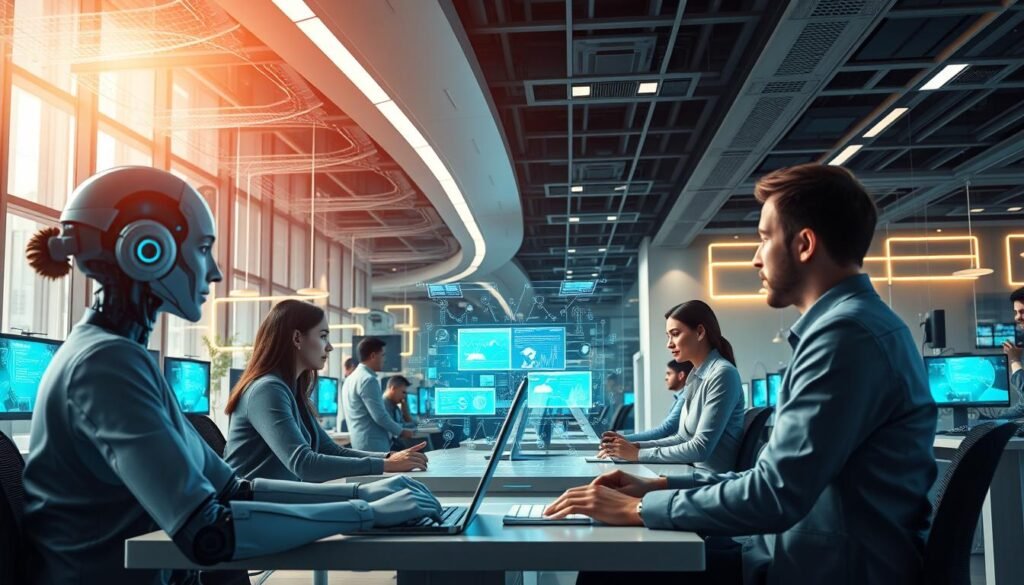
    Businesses are always looking for better ways to work. AI integration helps them do this by making operations smoother and decisions smarter. Deep learning lets companies automate hard tasks and understand their data better.

    AI innovation brings many benefits to businesses. They can make better choices, serve customers better, and work more efficiently. AI is changing many areas, including:

    • Business process automation: automating repetitive and mundane tasks to free up resources for more strategic initiatives
    • Decision support systems: providing data-driven insights to inform business decisions
    • AI-powered analytics: uncovering hidden patterns and trends in data to drive business growth

    By using AI and deep learning, companies can lead the way. They can work better and grow more. The possibilities with AI are endless and very promising.
    ai integration

    Benefits of AI Integration Description
    Improved Efficiency Automating repetitive tasks to free up resources
    Enhanced Decision-Making Providing data-driven insights to inform business decisions
    Increased Productivity Streamlining operations and improving overall performance

    Democratization of AI Technologies

    AI is becoming more accessible and affordable for everyone. This change is thanks to ai trends 2025, which make AI easier to use. Now, businesses and individuals can use AI to improve their work and decisions.

    AI offers many benefits, including:

    • Improved efficiency and productivity
    • Enhanced customer experience
    • Data-driven decision making

    These advantages will lead to more companies using AI in 2025. This will help them stay ahead in the market.

    The future of AI looks bright, with many uses in healthcare, finance, and education. As AI gets better, we’ll see new ways to change our lives and work.

    The spread of AI technology will greatly impact the future. It will make AI more available and affordable for all.

    AI Trend Description
    AI-powered automation Automating repetitive tasks to improve efficiency
    AI-driven decision making Using AI to analyze data and make informed decisions
    AI-enhanced customer experience Using AI to personalize customer interactions

    Safety and Responsible AI Development Practices

    As we see more ai advancements in 2025, safety and responsible AI development are key. New ai technologies are changing our lives, from healthcare to finance. It’s important to develop these systems with care.

    The latest in risk assessment, bias mitigation, and transparency are crucial. They help make sure 2025 ai innovations help society, not harm it.

    AI has made many industries more efficient and productive. But, it also brings risks. We need strong risk assessment frameworks and bias mitigation strategies. This ensures ai is fair and safe for everyone.

    Risk Assessment Frameworks

    Risk assessment frameworks are vital for ai safety. They help identify and reduce risks. These frameworks should assess risks and benefits of new ai technologies.

    Bias Mitigation Strategies

    Bias mitigation strategies are key for fair ai. They help detect and reduce bias in ai systems. This makes sure ai is fair for everyone.
    ai advancements 2025

    Transparency Initiatives

    Transparency is crucial for responsible ai use. It provides clear info about ai development and use. This helps users make informed choices.

    Conclusion: The Future Trajectory of AI Innovation

    The world of artificial intelligence is changing fast in 2025. AI growth predictions show we’ll see more progress. This progress will change how we live and work, making our lives better.

    AI is getting smarter, with new tools like AI analytics and computer vision. These tools will open up new possibilities for us. We’ll see big changes in many areas, like healthcare and finance.

    But, there are challenges ahead. We must use AI wisely and follow ethical rules. This way, AI can help us build a better world. The future of AI is full of promise, and it’s exciting to see what’s coming.
  • How to Use Google AI Image Generator: A Comprehensive Guide

    How to Use Google AI Image Generator: A Comprehensive Guide

    Can you make amazing images from just text using the Google AI Image Generator? This tool uses smart algorithms to turn text into pictures. It’s a great tool for anyone who loves to create.

    To start, you need to know how to use the Google AI image generator. It’s part of Google’s AI efforts, like DeepDream and Imagen. Learning to use it can change your creative projects for the better.

    Key Takeaways

    • Understanding the basics of Google AI Image Generator is key for using it well.
    • The Google AI Image Generator uses advanced algorithms to make images from text.
    • Learning to use Google AI image generator can improve your creative work.
    • The Google artificial intelligence image creator has many features and abilities.
    • Mastering the Google AI picture maker lets you make stunning images from text.
    • The Google AI Image Generator is a powerful tool for creatives, with lots of features.
    • By following this guide, you can learn to use Google AI image generator fully.

    Understanding Google AI Image Generator Basics

    The Google AI Image Generator is a tool that makes images from text. It uses advanced algorithms to do this. To start using it, you need to know the basics, like its features and what it can do.

    It lets users make high-quality images and change their styles. You can also use it with other Google tools. This makes it great for graphic design, marketing, and social media.

    • High-quality image generation
    • Customizable image styles
    • Integration with other Google tools
    • Fast and efficient image generation

    Knowing the basics and features of the Google AI Image Generator opens up its full power. It helps you make amazing visuals for your work and projects. It’s a must-have for anyone who needs to make high-quality images fast.

    Getting Started with Google AI Image Generator

    To start using the Google AI Image Generator, you need a Google account and access to the Google Cloud Platform. You can find the tool in the Google Cloud Console or on the Google AI Image Generator website. This is the first step to begin with the Google AI Image Generator.

    Setting up the Google AI Image Generator is simple. Users can follow a tutorial to learn how to use it. The tutorial shows how to enter text descriptions and create images. With this tool, you can make up to 8 images from one text prompt.

    Some key features of the Google AI Image Generator include:

    • Generating up to 4 different background images for each image when the background is replaced
    • Cropping images into 3 different aspect ratios: landscape, portrait, and square
    • An auto-enhance feature that applies adjustments to brightness, contrast, and saturation

    Getting started with the Google AI Image Generator is easy. With the right setup, users can create high-quality images. The tutorial guides users step-by-step, making it easy for everyone to use.

    google ai image generator

    By following the tutorial and using the tool’s features, users can create amazing images. Whether for personal or professional use, the Google AI Image Generator is a powerful tool. It helps users achieve their goals.

    Essential Steps to Create Your First AI Image

    To start creating ai images with google, first access the Google AI Image Generator platform. Sign in to your Google account and find the image generator tool. Then, start crafting your prompts to create the image you want.

    Creating high-quality AI images involves adjusting the generator settings. Choose the right style, composition, and subject for your image. Try different prompts to get the look you want. You can add colors, textures, or lighting effects to improve your image.

    creating ai images with google

    After making your image, save it to your device. Remember, the image’s quality depends on your prompt and settings. By trying different prompts and settings, you can make unique and high-quality AI images.

    When making AI images, be specific with your prompts. Try out various styles and compositions. Adjust the settings to get the look you desire. With practice and the Google AI Image Generator, you can create amazing AI images.

    Advanced Techniques and Features

    The Google AI Image Generator has many advanced features. It lets users customize image styles for unique images. It also works with other Google tools, like the Cloud Vision API, to improve its abilities.

    For better results, use clear input descriptions. This helps the AI create accurate images. You can also try different inputs to get various images. Training custom models with TensorFlow is another option. The Cloud Vision API is great for developers.

    Some key features of the Google AI Image Generator include:

    • Customization options for image styles
    • Integration with other Google tools, such as the Cloud Vision API
    • Machine learning algorithms to improve image quality
    • Ability to generate multiple images by altering inputs
    • Custom model training using Google’s TensorFlow

    These advanced techniques help users create top-notch images. The Google AI Image Generator is versatile. It’s useful for marketing, content creation, education, and art.

    Optimizing Your Results for Professional Use

    To get top-notch images from the Google AI Image Generator for work, you need to know how to tweak your settings. This means adjusting the image’s resolution and quality to fit your needs. For example, tweaking the Google AI Image Generator can make your images look much better.

    Here are some tips for using the Google AI Image Generator for work:

    • Change the image resolution to match where you’ll use it, like on the web, in print, or elsewhere.
    • Try different quality settings to find the right mix of detail and file size.
    • Use style and consistency tips to keep your images looking the same.

    Also, knowing how to adjust the Google AI Image Generator’s quality settings is key. This helps make images that look great and are good for work. By learning these settings and techniques, you can make high-quality images for your professional needs.

    Setting Description Professional Use
    Image Resolution Adjust the resolution to match the intended application. High resolution for print, lower for web.
    Quality Settings Balance detail and file size. High quality for critical applications, lower for less critical uses.
    Style and Consistency Maintain a uniform look across images. Essential for branding and professional appearance.

    Troubleshooting Common Challenges

    Using the Google AI Image Generator can sometimes lead to issues like error messages and slow performance. It’s important to know how to fix these problems. By identifying the cause and applying the right solutions, you can overcome these challenges.

    Error messages can be a big problem. They can stop you from working efficiently. To solve these, check your input prompts, adjust settings, and make sure your system is up to date. Also, improving the generator’s performance is key for faster results.

    Error Messages and Solutions

    • Check the input prompts for spelling and grammar errors
    • Adjust the generation settings to optimize performance
    • Ensure the system meets the minimum requirements for the Google AI Image Generator

    Performance Optimization

    To make the Google AI Image Generator work better, try a few things. Simplify your input prompts, use pre-trained models, and take advantage of cloud computing. These steps can make the image creation process faster and more efficient.

    Quality Enhancement Tips

    To get better images, refine your input prompts, use high-resolution images, and play with different styles and settings. These tips can help you create images that are just what you need.

    Troubleshooting Tips Description
    Check input prompts Verify spelling and grammar errors
    Adjust generation settings Optimize performance and quality
    Use pre-trained models Improve efficiency and speed

    Conclusion: Mastering the Google AI Image Generator

    This guide has shown you how the Google AI Image Generator can boost your creativity. You now know the basics and advanced techniques. This means you can make stunning images for your projects and marketing.

    Learning to make great prompts and improve your images for professional use is key. The tips in this article will help you master the Google AI Image Generator. With practice, you’ll make visuals that grab attention and stand out.

    If you’re into design, marketing, or just love making pictures, the Google AI Image Generator is for you. Use it to explore new ideas and let your creativity shine. With this tool, you can make AI-generated images that impress everyone.

  • Understanding Generative AI and Tetrad Color Harmony in Design

    Understanding Generative AI and Tetrad Color Harmony in Design

    Introduction to Generative AI and Its Significance in Design

    Generative AI, a subset of artificial intelligence, refers to algorithms that can create new content based on existing data. This technology leverages machine learning and deep learning techniques to analyze patterns and generate innovative outputs, making it a significant asset in various fields, including design. The rise of generative AI has transformed traditional design processes, allowing for more dynamic and versatile creative solutions that cater to diverse audience needs.

    In the realm of design, generative AI tools serve multiple purposes. They enable designers to brainstorm ideas rapidly, streamline workflows, and improve the overall creative process. By analyzing previous design works and understanding user preferences, generative AI systems can suggest layouts, typography, and imagery that are in harmony with current trends. This symbiotic relationship between human creativity and machine intelligence leads to a surge in experimentation, granting designers unprecedented freedom to explore various avenues without the constraints of conventional methods.

    Moreover, generative AI significantly enhances the decision-making process in design by optimizing color choices. Traditional color theory emphasizes the emotional and psychological impact of colors on audiences. With generative AI, designers can experiment with color palettes that resonate with their target demographics, leveraging data-driven insights to ensure that their color selections align with desired outcomes. By integrating color harmony principles with generative design strategies, creators can produce visually striking compositions that engage and captivate viewers.

    The significance of generative AI in design extends beyond mere functionality; it represents a paradigm shift in how designers approach their craft. As the capabilities of AI technologies continue to advance, the collaboration between human designers and AI tools will pave the way for innovative and compelling design solutions that meet the needs of an ever-evolving marketplace. In this blog post, we will delve deeper into the impact of generative AI and color theory, leading to a comprehensive understanding of their integration and significance in the field of design.

    An Overview of Tetrad Color Harmony

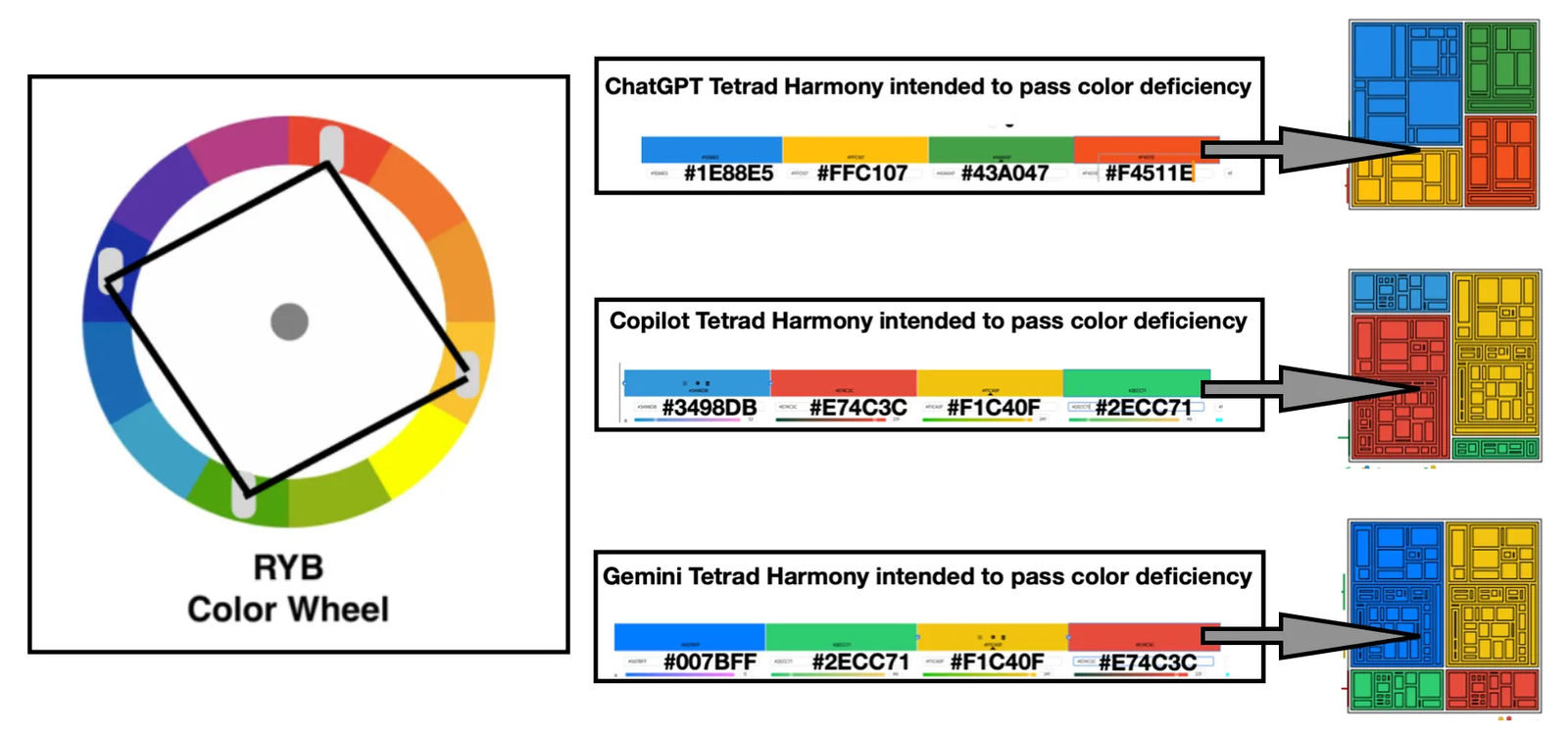
    Tetrad color harmony is a color scheme that utilizes four distinct colors, providing designers with a vibrant yet balanced aesthetic. This color harmony is arranged in a way that creates a rectangle on the color wheel, consisting of two complementary color pairs. The beauty of tetrad harmony lies in its ability to generate a dynamic interplay of hues, making it a favored choice in various design applications, including branding, web design, and fine arts.

    At its core, the principles of color harmony revolve around creating visual interest while maintaining a sense of balance and contrast. The tetrad approach facilitates this by allowing designers to explore a wide array of colors that complement each other while ensuring that the overall design remains cohesive. This can be particularly effective in branding, where a striking palette can communicate a company’s identity and values while appealing to the target audience.

    In web design, the tetrad color scheme can enhance user experience, guiding the viewer’s attention to essential elements on a page. When implemented thoughtfully, this scheme boosts aesthetic appeal and functionality, helping to differentiate parts of a website while contributing to an engaging browsing experience. Moreover, artists harness the tetrad palette to create captivating visual narratives, using different color combinations to evoke emotions and convey meaning within their work.

    Integrating tetrad color harmony requires a balance between colors in terms of saturation and brightness, ensuring that no single color overpowers the others. By understanding the foundational aspects of this color scheme, designers can utilize it effectively, crafting pieces that not only stand out aesthetically but also resonate with viewers on a deeper level. This foundational understanding will serve as a valuable tool in the toolkit of any designer seeking to enhance their creative output.

    Integrating Generative AI with Tetrad Color Harmony

    Integrating generative AI into design processes can significantly enhance the application of tetrad color harmony, providing designers with innovative tools and insights. Tetrad color harmony, which involves using four colors that are equally spaced on the color wheel, allows for rich and diverse palettes. Generative AI can assist in this context by analyzing vast datasets and suggesting harmonious color combinations that align with the tetrad principle. By employing machine learning algorithms, AI tools can predict which color pairs evoke certain emotional responses or reflect current design trends.

    There are several platforms where designers can explore these integrations effectively. For instance, Adobe Sensei incorporates AI to suggest color palettes based on user preferences and current design practices. This tool can help designers identify harmonious tetrad combinations tailored to their specific project needs. Furthermore, tools like Colormind utilize deep learning to generate color palettes from images, allowing designers to extract tetrad color schemes naturally from existing inspirations.

    Real-world case studies illustrate the powerful synergies formed by combining generative AI and tetrad color harmony. A notable example is a branding project for a tech startup that used an AI-driven tool to generate a set of color schemes, ultimately choosing a tetrad palette that conveyed innovation and technology. By integrating generative AI in their selection process, the design team was not only able to speed up their workflow but also enhance their creative output by considering unconventional color combinations that adhered to the tetrad principles.

    Such collaborations elucidate the benefits designers can reap by harnessing the capabilities of generative AI alongside established color theory frameworks, ultimately leading to more effective and visually compelling designs. As technology advances, the potential for creativity and design effectiveness through this integration will likely expand further.

    Future Trends and Implications for Designers

    As we look ahead in the realm of design, the integration of generative AI is poised to redefine traditional methodologies. This evolving technology not only streamlines the design process but also introduces novel approaches to color application and theory, such as Tetrad Color Harmony. Designers must adapt to these advancements, finding ways to leverage AI’s capabilities while ensuring their unique artistic voice remains prominent.

    The continuous evolution of generative AI presents both opportunities and challenges for designers. The capacity of AI to generate design concepts at an unprecedented speed can significantly enhance productivity, allowing designers to focus more on refining their ideas rather than the labor-intensive aspects of creation. However, this reliance on AI also raises questions about authenticity and originality. Designers must navigate these waters carefully, ensuring that the designs produced feel personal and resonate with the audience’s aspirations and emotions.

    Moreover, as color dynamics in design become increasingly influenced by generative algorithms, understanding the implications of color relationships becomes paramount for designers. Embracing frameworks like Tetrad Color Harmony can help in this regard, enabling designers to exploit AI-generated color schemes effectively. By synthesizing traditional color theory with modern technology, designers can create visually compelling narratives that engage viewers and communicate messages effectively.

    Ultimately, the key lies in balancing innovation with the preservation of creative identity. As generative AI continues to evolve, designers are encouraged to experiment with these new tools while still adhering to their distinctive styles. This approach ensures that even in an era dominated by technology, design remains a deeply human endeavor, characterized by emotional depth and individual expression. The future holds immense potential, and forward-thinking designers will be those who embrace these changes while staying true to their artistic roots.