
Tag: AI breakthroughs

  • What’s New in AI: 5 Game-Changing Headlines for February 20, 2025

    The AI Revolution Unveiled: Top AI News Headlines Shaking Up 2025

    February 20, 2025 | By [NeondoodleAI]

    Artificial Intelligence (AI) isn’t just shaping the future—it’s rewriting it in real time. As of February 20, 2025, the AI landscape is buzzing with breakthroughs that promise to redefine industries, spark ethical debates, and push the boundaries of what machines can achieve. From Google’s biomedical leaps to Elon Musk’s xAI unveiling Grok 3, the latest AI news headlines are a rollercoaster of innovation and intrigue. Buckle up as we dive into the top AI stories dominating 2025—and what they mean for you.

    1. Google’s AI Co-Scientist: A Game-Changer in Drug Discovery

    Imagine an AI that doesn’t just assist scientists but works alongside them as a partner. Google’s latest unveiling—a so-called “AI co-scientist”—is doing just that. Launched this week, this cutting-edge system is already making waves in drug discovery, accelerating research that could lead to life-saving treatments. By analyzing complex biological data at unprecedented speeds, Google’s AI is slashing the time it takes to identify promising drug candidates.

    Why does this matter? The pharmaceutical industry has long grappled with slow, costly development cycles. With this AI co-scientist, we’re looking at a future where diseases like cancer or Alzheimer’s might meet their match faster than ever. For businesses and investors, this signals a seismic shift in healthcare innovation—ripe with opportunity.

    Takeaway: Google’s AI co-scientist isn’t just a tool; it’s a glimpse into a world where human-AI collaboration could solve humanity’s toughest challenges. 

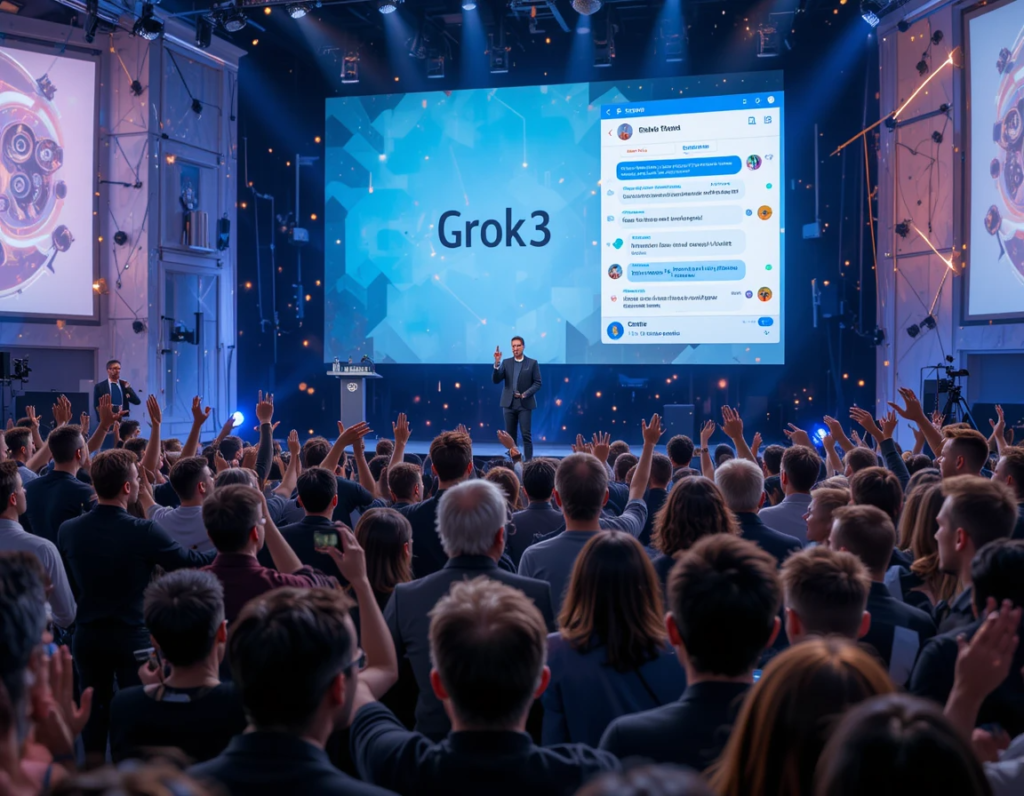
    2. xAI’s Grok 3: Elon Musk’s Bold Bid to Outsmart ChatGPT

    Elon Musk doesn’t do small—and his xAI team’s latest creation, Grok 3, proves it. Debuting this week with a live demo, Grok 3 is being hailed as a contender to dethrone OpenAI’s ChatGPT and China’s DeepSeek. Packed with advanced reasoning capabilities and powered by a massive 200,000-GPU cluster, Grok 3 promises to deliver smarter, faster answers to complex questions.

    Available now to X Premium Plus subscribers (and soon via a standalone “SuperGrok” subscription), Grok 3 isn’t just about chat—it’s about revolutionizing how we interact with AI. From its “DeepSearch” feature to its ability to tackle math, science, and coding challenges, this model is Musk’s latest step toward artificial general intelligence (AGI).

    Why It’s Big: If Grok 3 lives up to the hype, it could shift the balance of power in the AI chatbot race. For users, it’s a chance to experience next-level AI—assuming you’re willing to pay the premium.

    3. Meta’s Brain-to-Text Tech: Mind-Reading AI or Privacy Nightmare?

    Meta’s stepping into sci-fi territory with its brain-to-text AI, a system that translates thoughts into written words. Unveiled this month, this technology aims to bridge communication gaps for those with speech impairments—but it’s also igniting fierce ethical debates. How secure is your mind when AI can peek inside?

    The implications are staggering. Imagine typing a blog post like this one just by thinking it—or hackers tapping into your unspoken secrets. Meta insists the tech is opt-in and privacy-focused, but skeptics aren’t convinced. As this innovation unfolds, expect regulators and ethicists to weigh in heavily.

    What’s Next: This could redefine accessibility—or spark a privacy reckoning. Either way, it’s a headline you can’t ignore.

    4. Adobe Firefly’s Text-to-Video Leap: Creativity Meets AI Power

    Adobe’s Firefly is no longer just an image generator—it’s now a text-to-video powerhouse. Announced recently, this upgrade lets creators turn simple prompts into stunning video clips, seamlessly integrated into tools like Premiere Pro. Whether you’re a filmmaker, marketer, or hobbyist, Firefly’s AI is democratizing video production like never before.

    Built on Adobe Stock and public domain data, Firefly’s outputs are “commercially safe,” dodging the copyright headaches plaguing other generative AI tools. It’s a direct shot at competitors like OpenAI’s Sora and Meta’s Movie Gen, intensifying the race for creative AI dominance.

    Why You Should Care: For content creators, this is a game-changer—faster workflows, lower costs, and endless possibilities. Ready to create your own AI-powered masterpiece? Share your thoughts in the comments below!

    5. AGI Stalls: Why Scaling Alone Won’t Cut It

    Here’s a reality check: artificial general intelligence—AI that thinks like a human—might be further off than we thought. Experts are buzzing about a new report suggesting that simply throwing more computing power at models (think bigger GPUs, more data) isn’t delivering AGI. Instead, the focus is shifting to smarter architectures and novel approaches.

    This pivot could slow the hype train but accelerate true innovation. Companies like xAI and OpenAI are already rethinking their strategies, hinting at a more deliberate path to AGI. For now, the dream of a fully sentient AI remains elusive—but the journey’s heating up.

    Big Picture: This shift challenges the “bigger is better” mindset, pushing the industry toward creativity over brute force. Stay tuned for what’s next!

    A scientist and AI interface collaborate in a high-tech lab, surrounded by data screens and molecular models, showcasing Google’s AI co-scientist in action.

    What These Headlines Mean for You

    The AI news of February 2025 isn’t just tech chatter—it’s a roadmap to the future. For businesses, Google’s co-scientist and Adobe’s Firefly signal massive opportunities in healthcare and creative industries. For consumers, Grok 3 and Meta’s brain-to-text tech offer tantalizing possibilities—and thorny questions. And for the dreamers, the AGI debate reminds us that the biggest breakthroughs are still ahead.

    So, where do you fit in? Whether you’re a tech enthusiast, a professional eyeing AI tools, or just curious about the future, these developments are reshaping your world. Don’t get left behind—join the conversation and harness the power of AI today.

    Your Next Step: Subscribe now for weekly AI insights, tips, and trends to keep you ahead of the curve. Let’s navigate this revolution together!

    The Future Is Now: Final Thoughts

    From drug discovery to mind-reading AI, 2025 is proving to be a pivotal year for artificial intelligence. Google, xAI, Meta, and Adobe are pushing boundaries, while the quest for AGI keeps us guessing. These headlines aren’t just stories—they’re signals of a world in transformation.

    What’s your take? Are you excited about Grok 3’s potential, wary of Meta’s brain tech, or inspired by Adobe’s creative leap? Drop your thoughts below and let’s spark a discussion. The AI revolution is here—let’s make the most of it!

  • “Top 10 Breakthroughs in AI This Month: How They’re Shaping Our Future”

    Top 10 Breakthroughs in AI This Month

    AI investment has surged to over $100 billion this year, highlighting its rapid growth and widespread adoption. The advancements in artificial intelligence have transformed various sectors, weaving through healthcare, business, and environmental initiatives. This article explores ten significant breakthroughs in AI this month and how they are shaping our future.

    Revolutionizing Healthcare with AI Diagnostics

    AI-powered disease prediction and early detection

    AI is enhancing healthcare by predicting diseases before they become critical. For instance, AI systems now achieve over 95% accuracy in detecting skin cancer through image analysis. Additionally, diabetic retinopathy screening tools utilize AI to identify early signs, reducing unnecessary eye surgeries by up to 30%.

    Personalized medicine advancements

    AI is making waves in personalized medicine. By analyzing genetic data and medical histories, AI helps create tailored treatment plans. A notable example is IBM Watson, which has successfully matched treatment plans to patients based on their genetic profiles, improving success rates significantly.

    Robotic surgery enhancements

    AI is shifting the landscape of surgical procedures. Robots now assist surgeons, enhancing precision and performing minimally invasive surgeries. This innovation can reduce recovery times and complications, with some patients returning home within days instead of weeks.

    AI’s Impact on Climate Change Mitigation

    AI-driven optimization of renewable energy sources

    AI optimizes renewable energy systems, improving solar panel efficiency by about 20%. Smart grids, powered by AI, predict energy demands, leading to more efficient service delivery. Wind turbines are now strategically placed using AI algorithms, leading to a 15% increase in energy generation.

    Climate modeling and prediction improvements

    AI enhances climate forecasting accuracy. Machine learning models analyze vast datasets to predict extreme weather events, providing valuable insights for disaster preparedness. Recent studies show AI-driven predictions are 25% more accurate than traditional models.

    Carbon capture and reduction technologies

    Industries are turning to AI for carbon capture solutions. AI algorithms fine-tune the capture processes, showing up to a 40% increase in efficiency. This substantial emission reduction is vital for achieving global climate goals.

    Transforming Business Operations with AI Automation

    AI-powered automation in manufacturing and logistics

    Manufacturers are leveraging AI automation to streamline operations. Companies report up to 30% cost reductions through AI-driven inventory management. Robotics in logistics also optimize delivery routes, enhancing overall efficiency.

    AI-driven customer service and support

    Chatbots are revolutionizing customer service. These AI tools provide instant support, improving customer satisfaction rates to over 90%. Virtual assistants can handle queries faster than human representatives, reducing response times significantly.

    Predictive analytics for business decision-making

    AI enables better decision-making through predictive analytics. Businesses can anticipate market trends, optimizing resource allocation. Reports indicate that companies using AI analytics show up to a 20% increase in profitability.

    Ethical Considerations and Responsible AI Development

    Bias detection and mitigation in AI algorithms

    Addressing biases in AI is crucial. Recent cases show how biased algorithms can lead to unfair outcomes. Researchers are developing methods to detect and reduce these biases, ensuring fairer, more equitable AI systems.

    Data privacy and security in the age of AI

    With the rise of AI comes the challenge of data privacy. Protecting sensitive data is increasingly important. Strong regulations, like GDPR, aim to safeguard personal information against misuse in AI systems.

    AI governance and regulatory frameworks

    Establishing ethical guidelines for AI is essential. Regulatory bodies are working towards creating frameworks that govern AI development and deployment. These guidelines aim to ensure AI benefits society while minimizing risks.

    The Future of Work in an AI-Driven World

    AI’s impact on job displacement and creation

    The rise of AI raises questions about job markets. While some jobs may vanish, new roles are emerging. Reports suggest that AI could create over 15 million new jobs by 2030, underscoring the importance of adaptation.

    Reskilling and upskilling initiatives for the AI workforce

    To combat job displacement, reskilling programs are necessary. Organizations are investing in training initiatives to prepare workers for roles in AI. These programs focus on areas like data analytics and AI ethics, promoting workforce resilience.

    The human-AI collaboration model

    Collaboration between humans and AI can enhance productivity. By merging human intuition with AI efficiency, businesses can innovate faster. This model encourages creativity and problem-solving, transforming the workplace dynamic.

    Advances in natural language processing (NLP)

    NLP has seen remarkable progress this month. AI systems can now understand and generate human-like text more effectively. Applications like advanced chatbots and translation tools are leading the charge in improving communication.

    Progress in computer vision and image recognition

    AI’s image recognition capabilities are evolving rapidly. Algorithms now analyze visual data with high accuracy. Applications in autonomous vehicles and medical imaging are becoming more prominent, showcasing AI’s potential.

    Breakthroughs in generative AI models

    Generative AI is changing content creation. AI models can produce text, images, and music with creativity that rivals human creators. This trend opens new avenues in various fields, including marketing and entertainment.

    Conclusion

    This month’s AI breakthroughs demonstrate significant advancements across diverse sectors. From revolutionizing healthcare to addressing climate change, the impact of these technologies is profound. As AI continues to evolve, its potential to tackle global challenges becomes increasingly evident. Stay informed about AI developments, as they will shape our world for years to come.