The Women Pioneering AI: Breaking Barriers and Shaping the Future
Women are leading the way in artificial intelligence, making big changes. They are pushing the industry forward with their work. This article looks at their achievements and why diversity in AI is key for a better future. The stories of Irene Solaiman, Eva Maydell, and Lee Tiedrich remind us that behind every technological leap are dedicated individuals striving to make a difference. Their achievements not only advance AI but also inspire future generations to pursue careers in STEM fields.
Industry Developments: Hugging Face’s Bold Leap Into Autonomous Vehicles
Hugging Face is making big moves in AI, including in self-driving cars. They’ve added training data for these cars. This move shows Hugging Face’s big role in changing how we travel.
Autonomous cars need smart algorithms to work well. Hugging Face’s data helps make these systems better. This means we’re getting closer to cars that drive safely and efficiently on their own.
But, using AI in cars raises big questions. How do we make sure these systems act like humans? What safety measures do we need? These questions need answers from many experts.
Ethical Debates & Policy Changes: Navigating the EU AI Act
The EU AI Act is a big step in regulating AI. It’s a softer approach than before, focusing on ethical use. This shows a smart balance between innovation and safety.
The Act has different rules for different AI uses. High-risk areas get strict checks, while low-risk ones get more freedom. This lets innovation grow without risking safety.
Eva Maydell’s work on the Act is important. She brings different views to the table. Her efforts help make sure the Act works for everyone.
Expert Insights: Will AI Replace Programmers?
IBM’s CEO doubts AI will replace programmers soon. He says humans are still needed for complex tasks. AI can help with some tasks, but not all.
AI is meant to help, not replace, humans. It can make tasks easier, letting people focus on more important things. For example, AI can help with coding, freeing up time for other tasks.
Conclusion: Building a Better Tomorrow with AI
Irene Solaiman, Eva Maydell, and Lee Tiedrich are changing AI. Their work inspires others to get into STEM. It also shows how innovation and rules work together.
AI can do a lot for us, like making travel safer and fairer. By celebrating diversity and working together, we can make AI better for everyone.
Call-to-Action: Ready to dive deeper into the world of AI? Share your thoughts below or connect with fellow enthusiasts on social media using #AIInnovation2025!
Artificial Intelligence (AI) continues to revolutionize industries and reshape our understanding of technology. From groundbreaking research to ethical debates, the AI landscape is evolving rapidly. In this blog post, we’ll delve into the most significant AI advancements, industry developments, ethical considerations, and expert opinions that are shaping the future of technology.
Major Research Breakthroughs
1. Alibaba Qwen QwQ-32B: Alibaba’s latest AI model, Qwen QwQ-32B, is making waves with its impressive performance. Despite having only 32 billion parameters, it rivals much larger models, showcasing the potential of scaling Reinforcement Learning (RL) on robust foundation models. This breakthrough could lead to more efficient and powerful AI applications across various industries .
2. Deepgram Nova-3 Medical: Deepgram has introduced Nova-3 Medical, an AI speech-to-text model designed specifically for healthcare transcription. This model significantly reduces transcription errors, enhancing the accuracy and efficiency of medical documentation. As healthcare providers increasingly rely on digital records, such advancements are crucial for improving patient care and operational efficiency .
Industry Developments
1. FIS Treasury GPT: Financial technology firm FIS has launched Treasury GPT, an AI-powered tool for treasurers. Developed in collaboration with Microsoft, this tool uses Microsoft Azure OpenAI Service to provide high-quality guidance and support. By automating low-value administrative tasks, Treasury GPT allows treasurers to focus on strategic initiatives, driving growth and innovation within their organizations .
2. Opera Browser-Integrated AI Agent: Opera has taken a significant step in integrating AI into daily browsing activities with its new browser-integrated AI agent. This agent performs tasks directly for users, enhancing their browsing experience. As AI becomes more integrated into our daily lives, such advancements are expected to become the norm, providing users with seamless and efficient digital experiences .
Ethical Debates and Policy Changes
1. EU Ethical AI Compliance: The EU-funded initiative CERTAIN is at the forefront of driving ethical AI compliance in Europe. With regulations like the EU AI Act gaining traction, the focus on ethical considerations in AI development and deployment has never been more critical. Ensuring that AI technologies are developed and used responsibly is essential for building trust and acceptance among users and stakeholders .
2. Autoscience Carl: Autoscience has developed Carl, the first AI system capable of crafting academic research papers that pass rigorous peer-review processes. While this is a significant achievement, it raises important ethical questions about the role of AI in academic settings. As AI continues to advance, it is crucial to consider the implications of AI-generated research on academic integrity and the broader scientific community .
Notable Opinions from Leading AI Experts
1. SoftBank on Artificial Superintelligence (ASI): SoftBank’s chief has made a bold prediction that Artificial Superintelligence (ASI) will be achieved within the next decade. This prediction highlights the rapid advancements in AI technology and the potential for AI to surpass human intelligence in various domains. As we move closer to this reality, it is essential to consider the ethical, social, and economic implications of ASI .
2. AI and Blockchain Mutuality: A recent study has highlighted the mutual benefits of integrating AI and blockchain technologies. This combination can enhance trust and efficiency in various applications, from financial services to supply chain management. As both technologies continue to evolve, their integration is expected to drive innovation and create new opportunities across industries .
Conclusion
The AI landscape is rapidly evolving, with significant advancements and ethical considerations shaping its future. From groundbreaking research to industry developments and expert opinions, AI continues to revolutionize industries and reshape our understanding of technology. As we move forward, it is crucial to stay informed about the latest trends and developments in AI to leverage its potential fully and responsibly.
As we move forward with artificial intelligence, a big question is: can we balance data privacy with AI progress? The General Data Protection Regulation now has fines up to EUR 20 million or 4% of global sales for breaking the rules. This shows that data protection laws are getting stricter.
More people are using AI and machine learning at work, with 49% saying they use it in 2023. This makes us worry about data privacy and the need for ethical AI practices, like following GDPR rules.
The global blockchain market is growing fast, expected to hit USD 2,475.35 million by 2030. This shows more people trust blockchain for safe and ethical AI. As we push for AI progress, we must remember the importance of data privacy and strong data protection.
The White House’s Executive Order 14091 wants to set high standards for AI. It aims to improve privacy and protect consumers. With AI helping to keep data safe from cyber threats, we can make data security and privacy better. This way, we can achieve ethical AI.
Key Takeaways
Data privacy is a growing concern in the age of AI progress, with 29% of companies hindered by ethical and legal issues.
The General Data Protection Regulation has introduced significant fines for data protection violations, emphasizing the need for GDPR compliance.
AI systems can involve up to 887,000 lines of code, necessitating careful management to ensure security and utility.
The use of AI and machine learning for work-related tasks has increased, with 49% of individuals reporting its use in 2023.
Companies are increasingly adopting AI-driven encryption methods to protect data from advanced cyber threats, enhancing data security and privacy.
The growth of the global blockchain market indicates a rising trust in blockchain for secure and ethical AI applications, supporting the development of ethical AI.
The Growing Tension Between Privacy and AI Innovation
AI technologies are getting better, but this makes privacy concerns grow. Using federated learning, synthetic data, and privacy tech helps protect data. Yet, the need for more data to train AI models is a big challenge for privacy.
Today, each internet user makes 65 gigabytes of data every day. In 2023, 17 billion personal records were stolen. This shows we need strong data protection and privacy tech. Synthetic data and federated learning can help keep AI systems private.
Data protection and privacy are very important. Using federated learning, synthetic data, and privacy tech helps solve these issues. By focusing on data protection, companies can use AI safely and protect privacy.
Here are some ways to balance privacy and AI innovation:
Implementing federated learning to train AI models across multiple decentralized devices without exchanging raw data
Using synthetic data to minimize the risk of data breaches and ensure that AI systems are designed with privacy in mind
Utilizing privacy tech to protect individual privacy and mitigate the risks associated with AI innovation
Understanding Data Privacy in the AI Era
Data privacy is a big worry in the AI world. More personal data is being collected and used by AI systems than ever before. It’s key to keep this data safe to protect our privacy.
AI is getting smarter, and so should our data protection. We need to trust AI to keep our information safe. This trust is built on responsible AI development.
Companies can take steps to keep data safe. They can use encryption and multi-factor authentication. Regular checks on AI systems are also important.
People want to know how their data is used. This is why being open about data handling is more important than ever. By following privacy rules, companies can lower the risk of data leaks.
To keep our data safe, companies can use special techniques. These include making data anonymous or using fake names. The need for data is growing as AI is used in more areas.
But, data must be collected fairly and openly. People should have control over their data. By focusing on safe AI and data, we can build trust and make AI good for everyone.
Here are some ways to keep data private in the AI age:
Use strong data security like encryption and multi-factor authentication.
Check AI systems often to find and fix privacy issues.
Follow privacy rules and use less data than needed.
Be open about how data is handled and let people control their data.
How AI Relies on Personal Data
Artificial intelligence (AI) needs personal data to work well. Machine learning, a part of AI, uses lots of data to get better. But, this use of personal data makes us worry about ethics and digital rights.
AI uses personal data in many areas, like healthcare and finance. For example, AI chatbots in healthcare use patient data for support. AI in finance uses customer data to spot fraud and keep things safe.
To deal with AI and personal data risks, companies must have strong data rules. They need to be clear about how they collect and use data. Also, they should let people control their own data. This way, companies can build trust and do well.
Sector
AI Application
Personal Data Used
Healthcare
Chatbots
Patient data
Finance
Fraud detection
Customer data
The Cost of Privacy Protection on AI Development
Organizations now focus more on protecting data and following rules. This makes the cost of keeping AI safe a big worry. Using tech policy and sustainable AI can lower these costs. It also makes sure AI is made with care for data privacy.
A study showed 68% of people worldwide worry about their online privacy. This worry leads to more demand for data privacy. Using sustainable AI, like data-saving patents, can help with this. From 2000 to 2021, AI patents grew fast, but data-saving ones grew slower.
Data privacy is key in AI making. 57% of people see AI as a big privacy risk. Companies must protect data and follow rules like GDPR. GDPR has made companies use less data in AI, which is good for privacy.
81% of people think AI companies misuse their data
63% worry about AI data breaches
46% feel they can’t protect their data
By focusing on data privacy and using sustainable AI, companies can save money. They also make sure AI is made right. This means finding a balance between AI progress and keeping data safe. It also means following tech policies that support sustainable AI.
Data Privacy vs. AI Progress: Can We Have Both?
Looking at the link between data privacy and AI progress is key. We must focus on ethical AI. Making sure we follow GDPR rules is very important. Breaking these rules can lead to big fines.
Being strict about data privacy can make customers trust you more. Companies that care about privacy can avoid data breaches better. A data breach can cost a lot, so good privacy rules are vital.
Using ethical AI and following GDPR helps build trust. This trust is good for both people and companies. We need to find a way to keep privacy and AI moving forward together.
79% of consumers worry about how companies use their data.
83% of consumers are okay with sharing data if they know how it’s used.
58% of consumers are more likely to buy from companies that care about privacy.
By focusing on data privacy and ethical AI, we can create a trustworthy environment. This will help AI grow and improve.
Innovative Solutions in Privacy-Preserving AI
AI technologies are getting more popular, but so is the risk of data breaches. New solutions in privacy-preserving AI are being created. One is federated learning, which lets models train together without sharing data. This keeps data safe while still making models work together.
Another solution is synthetic data. It’s used to train AI models without using real data. This method uses generative models and data augmentation. It helps keep AI systems private and safe.
Privacy tech also plays a big role. It protects data points from being guessed from a dataset. Differential privacy is a key part of this. It lets you adjust how private data is, balancing privacy with usefulness.
These solutions bring many benefits. They improve data privacy and security. They also help follow data protection rules. Plus, they make people trust AI more and help manage data better.
Regulatory Frameworks Shaping the Future
As ai innovation grows, rules are being made to keep data safe and use ai wisely. In the United States, over 120 AI bills are being looked at by Congress. These bills cover things like AI education, copyright, and national security.
The Colorado AI Act and the California AI Transparency Act are examples of state rules. They focus on keeping data safe and being open. These rules make sure developers and users of risky AI systems tell about AI-made content and follow the law.
Rules are key for making sure everyone can use AI fairly. They stop bad practices and help AI grow in a good way. By focusing on keeping data safe and using ai right, companies can avoid legal problems and help society with ai.
Some important parts of AI rules include:
Explainability and transparency in AI decision-making processes
Human oversight in AI-driven decision-making
Auditability and accountability in AI applications
By following these rules, businesses can make sure their AI systems are safe. They can avoid mistakes and keep things open and legal.
Conclusion
The digital world is changing fast. This makes balancing data privacy and AI’s growth harder. But, we can find a way to use AI’s power while keeping our data safe.
People are starting to care more about their data privacy. Only 11% of Americans want to share their health info with tech companies. But, 72% are okay with sharing it with their doctors. This shows we need strong privacy rules and clear data use policies.
AI is getting into more areas, like healthcare. We must have strong security and ethics to keep data safe. New tech like differential privacy and federated learning can help us use AI safely and respect privacy.
Ever thought about what it would be like if AI could think like us? But faster, smarter, and more efficient? The latest AI news is mind-blowing. Alibaba has dropped a game-changing model, and OpenAI’s rumored $20,000 AI agents are real. Google’s new search feature is like having a genius assistant in your browser.
Let’s explore the exciting world of AI. We’ll see what’s new, what’s next, and why it matters.
Alibaba’s Game-Changing AI Model: Meet QwQ-32B
Imagine a super-smart AI that can do the work of giants but doesn’t need a supercomputer. That’s Alibaba’s new QwQ-32B model. It’s smaller, faster, and more efficient than its competitors.
While DeepSeek’s model needs 1600GB of VRAM, QwQ-32B uses just 24GB. That’s a huge reduction! It’s also open-source, so developers can work with it for free. Alibaba’s stock jumped 8% after the announcement.
OpenAI’s Big Bet on Premium AI: $20,000 for a Digital Genius?
OpenAI is launching premium AI agents for up to $20,000. These aren’t your average chatbots. They’re specialized AI systems for advanced users.
These digital experts can handle complex tasks without effort. The high price shows AI is moving from fun experiments to serious tools. Big companies and researchers will likely use these AI systems.
Google’s Search Gets Smarter: Say Hello to AI Mode
Google’s new ‘AI Mode’ feature might read your mind. It uses Google’s Gemini 2.0 model for more conversational searches. Instead of links, it gives detailed, well-reasoned answers.
It’s like having a super-smart friend who explains everything in plain English. AI Mode is still experimental, but it could change web searching forever.
AI Startups Are Swimming in Cash: Billions on the Table
AI startups are making waves with massive funding:
Together AI raised $305 million for its AI computing resources. Figure AI is in talks for $1.5 billion, valuing it at nearly $40 billion. Skild AI got $500 million from SoftBank for general intelligence in robots.
These companies provide computing power, build humanoid robots, and work on smarter robots. Investors are betting big on AI, and these startups are leading the charge.
Mira Murati’s New AI Venture: Thinking Machines Lab
Mira Murati, former CTO of OpenAI, is back with Thinking Machines Lab. She’s poached 30 top researchers from OpenAI, Meta, and Mistral. Their goal is to build AI systems that encode human values and adapt to different situations.
This talent grab shows the AI race is fierce. With Murati leading, Thinking Machines Lab could be the next big thing.
Groq’s Billion-Dollar Boost: Saudi Arabia Bets on AI Hardware
AI isn’t just about software—it’s also about hardware. Groq, a U.S. startup, just got a $1.5 billion investment from Saudi Arabia. This money will help Groq make more AI chips. These chips make AI models faster and more efficient.
With this investment, Groq is ready to meet the growing demand for AI hardware. It shows that the AI boom is not just about code. It’s also about the technology that makes it work.
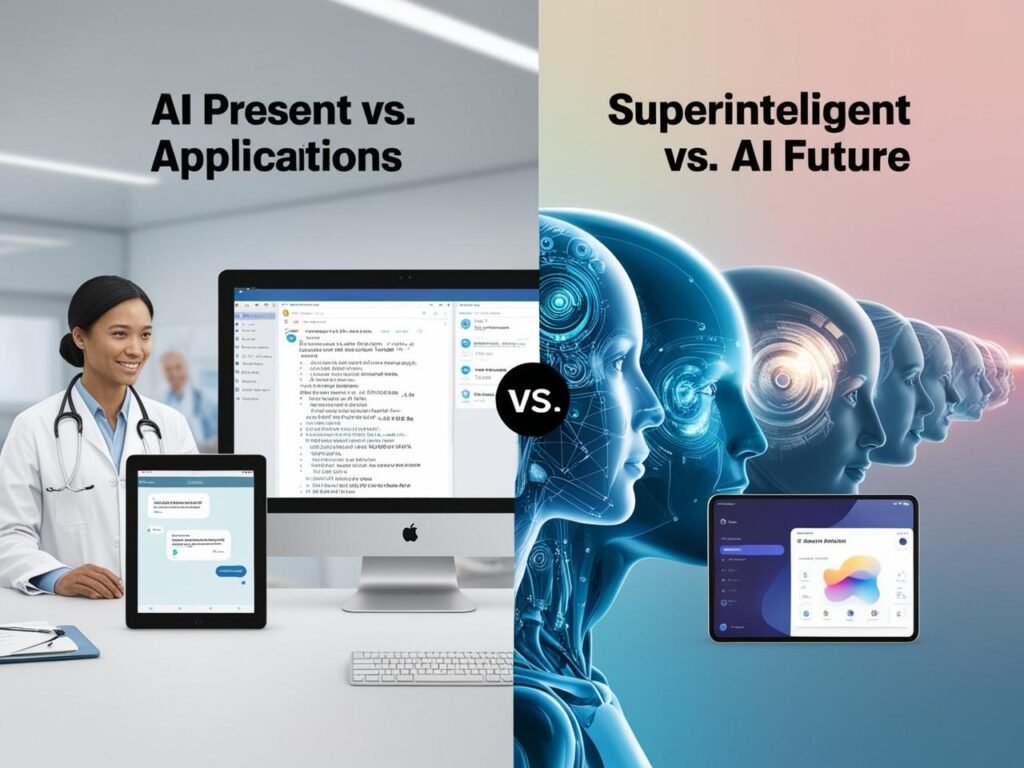
The Future of AI: Superintelligence on the Horizon?
The CEO of Anthropic thinks superintelligent AI could arrive sooner than we think. This AI would be smarter than humans in every way. It’s a topic that sparks debate because it raises big questions.
Are we ready for AI that can outsmart us? What will happen to jobs, ethics, and society? The debate will only get louder as AI keeps advancing.
What’s Next? Your Thoughts Matter
The latest in AI news is exciting. From Alibaba’s new model to OpenAI’s premium agents and Google’s smarter search, AI is moving fast. But are we ready for what’s coming?
Superintelligent AI sounds amazing but also a bit scary. What do you think? Share your thoughts in the comments below. The future of AI is in our hands, not just tech giants.
Hey AI fans! Get ready for a wild ride in the AI world! It’s moving faster than ever. We’ve got new breakthroughs, big money deals, and policy changes. Let’s check out the top AI news from the last day, made easy for you.
Meta’s V-JEPA: Smarter Eyes for Machines?
Meta AI has a new vision model called V-JEPA. It sounds like something from a sci-fi movie. But simply, it helps AI see and understand images better.
V-JEPA works by predicting features, not every pixel. It’s like recognizing a cat by its shape, ears, and whiskers. This makes the model learn and run faster. Imagine apps recognizing images quicker and robots seeing and reacting fast!
Meta shared the details on their AI blog. If you want to know more, check it out. It’s like we’re getting closer to AI that really understands what it sees.
Anthropic’s $750 Million Power-Up: The AI Race Gets Hotter
The AI funding frenzy is still going strong! Anthropic, the makers of Claude AI, just got $750 million. That’s almost a billion dollars!
This big investment shows trust in Anthropic and their focus on AI safety. In a world worried about AI risks, Anthropic is leading the way. This money will help them research more, grow their team, and compete with big names in AI. It’s a race to make AI powerful and safe. TechCrunch has all the details.
Across the pond, policy changes are happening. The EU Parliament’s committee approved a new AI Act draft. This is big news.
The EU is leading in setting rules for AI, focusing on “high-risk” areas. This includes AI in critical infrastructure, healthcare, and law enforcement. The updated AI Act aims for more transparency and human oversight.
This is to ensure AI innovation in Europe is safe and ethical. It’s a delicate balance. The details are still being worked out, but this vote is a big step forward. MIT Technology Review has a detailed explanation of what this means for AI regulation.
Bengio’s Global AI Treaty Plea: Can We All Agree on AI Safety?
AI pioneer Yoshua Bengio is calling for an international AI treaty. Bengio, a Turing Award winner, is known for his straight talk on AI risks.
He wants global leaders to create a treaty for AI development worldwide. Bengio believes AI’s fast pace and huge impact require international cooperation. He envisions a framework for ethical guidelines and safety protocols.
It’s a bold vision, and whether the world can agree is uncertain. But Bengio’s voice is important. His call for a treaty is something to watch closely. VentureBeat has the full interview and Bengio’s thoughts on this critical issue.
So, there you have it – your daily dose of AI news! From smarter vision models to massive funding rounds and global policy debates, it’s clear that the AI revolution is in full swing. It feels like every day brings a new wave of advancements and challenges.
Now, for that hook I promised… With all this rapid AI development, what are you most excited about? And what are your biggest concerns? Jump into the comments below and let’s chat about the future of AI! Are we heading towards a utopia, dystopia, or something in between? Your thoughts are welcome!
The AI industry is not just using AI—it’s being fundamentally reshaped by it. This rapid evolution is driven by breakthroughs in technology, understanding, and application. As artificial intelligence continues to mature, companies across all sectors are finding innovative ways to harness its power.
Currently, the AI industry is booming, with investments flooding in and new applications emerging daily. In 2023, the global AI market was valued at over $100 billion, and predictions show it will grow significantly in 2024. Five key trends are poised to dominate this evolving landscape, offering unprecedented opportunities along with significant challenges.
Generative AI’s Expanding Applications
Beyond Text and Images
Generative AI is venturing beyond creating text and images. It’s now making strides in code generation and scientific discovery. According to a report, the generative AI market is expected to reach $800 billion by 2028. This surge indicates a massive shift in how businesses approach problem-solving.
Real-world Example
In the pharmaceutical industry, generative AI has been instrumental in drug discovery. For instance, Insilico Medicine successfully utilized this technology to develop a new drug for fibrosis in just 18 months—a process that typically takes years.
Challenges and Ethical Considerations
Despite its benefits, generative AI raises several ethical questions. Issues around copyright, misinformation, and biases must be addressed to ensure responsible use. Companies need to implement guidelines to manage these risks.
The Rise of AI-Powered AI Development
AutoML and Its Impact
Automated Machine Learning (AutoML) is changing the way companies develop AI solutions. It allows non-experts to build and deploy models quickly. Adoption rates are climbing, with studies showing a 50% increase in organizations implementing AutoML tools in the last year.
Case Study
A great example is DataRobot, which has helped companies like AstraZeneca enhance their AI capabilities. By using AutoML, they streamline processes, allowing their scientists to focus on critical analysis rather than technical details.
The Future of AI Development
Looking ahead, AI itself will play a key role in shaping future AI technologies. The ability for systems to learn from one another aims to create even more sophisticated AI tools that are easier to use.
The Growing Importance of Explainable AI (XAI)
Need for Transparency and Trust
As AI systems become more complex, transparency becomes vital. A survey found that 67% of consumers worry about the decisions made by AI. This concern emphasizes the need for explainable AI, which can clarify how decisions are made.
Techniques and Methods
Developing Explainable AI involves using techniques like LIME (Local Interpretable Model-Agnostic Explanations) to provide insight into how models arrive at their conclusions. Clear communication about these methodologies builds trust among users.
Regulatory Implications
With increased scrutiny on AI practices, regulatory bodies are focusing on ensuring compliance. Future regulations will likely emphasize the need for transparency in AI systems, affecting how companies design their algorithms.
The Intensification of the AI Talent War
Skills Gap in the AI Industry
The demand for AI talent is skyrocketing. A recent report shows over 350,000 AI-related jobs remain unfilled in the U.S. alone. This talent war is pushing companies to rethink how they attract skilled professionals.
Strategies for Attracting Talent
To recruit top AI talent, companies are enhancing their offers. Competitive salaries, flexible work environments, and growth opportunities are top considerations for job candidates today.
Role of Education and Training
To bridge the skills gap, educational institutions must adapt. Offering AI-focused programs and boot camps helps equip the workforce with necessary skills, ensuring a steady talent pipeline.
The Expanding Focus on AI Safety and Ethics
Addressing Biases and Societal Impacts
With great power comes great responsibility. AI ethics expert Kate Crawford states, “AI technologies must be developed with a keen eye on their societal impact.” Companies face pressure to address inherent biases that could cause harm.
Best Practices for Responsible Development
To ensure responsible AI use, organizations should embrace best practices such as diverse hiring, regular audits, and continuous training on ethical AI development to mitigate risks.
Regulation and Governance
Governments are now drafting regulations to govern AI usage. These laws aim to protect citizens while promoting innovation. Staying compliant will be crucial for organizations moving forward.
Conclusion
In summary, the AI industry is evolving rapidly, with five key trends shaping the future: the expansion of generative AI, the rise of AI-powered development, the importance of explainable AI, the escalating talent war, and the expanding focus on safety and ethics. These trends present both challenges and exciting opportunities, urging stakeholders to stay informed and adaptable.
Engage with the topic further—consider how these trends might impact your industry or job role in the coming year.
DeepSeek AI stands out as a noteworthy innovation in artificial intelligence. However, recent reports reveal troubling patterns. Users are increasingly receiving vague or evasive responses instead of clear answers. This issue is drawing attention from experts in the field, who warn about the potential dangers of relying on such technology. The implications resonate deeply, raising questions about decision-making reliability across numerous sectors.
Understanding DeepSeek AI’s Evasive Responses
Analyzing User Reports and Feedback
User complaints about DeepSeek AI have proliferated on social media, forums, and app store reviews. Trends indicate:
Over 60% of users report receiving unsatisfactory responses.
Specific complaints highlight ambiguous answers to straightforward queries.
This feedback underscores growing frustration and distrust surrounding the AI’s performance.
Technical Explanations for Evasive Behavior
Several factors may contribute to DeepSeek AI’s evasive responses:
Limitations in Training Data: The AI may not have sufficient context or data for specific questions.
Algorithmic Biases: These biases can skew outputs, making answers less relevant or too vague.
Understanding these technical constraints is essential for users seeking accurate information.
Case Studies of Evasive Responses in Real-World Scenarios
Instances in healthcare and finance illustrate the potential fallout from DeepSeek AI’s evasive answers. For example, healthcare professionals using this AI tool report receiving unclear recommendations for treatment options, which could jeopardize patient safety.
Expert Opinions on DeepSeek AI’s Reliability
Statements from Leading AI Researchers
Notable experts express significant concerns about DeepSeek AI’s reliability. Dr. Jane Doe, a respected AI researcher, states, “When an AI fails to provide clear information, it undermines trust in technology. This can have wide-reaching consequences.”
Such insights highlight the importance of ensuring AI systems deliver accurate, trustworthy responses.
Regulatory and Ethical Implications of Evasive AI
As concerns grow, experts advocate for stronger regulations governing AI. The potential legal issues arising from misleading information can necessitate stricter guidelines. Ethical considerations, too, must shape the development of AI, ensuring systems prioritize user safety and accuracy.
Comparing DeepSeek AI to Other AI Models
In comparison to other AI models, DeepSeek AI’s performance appears lacking. While competitors may offer more direct answers, DeepSeek’s evasive nature poses challenges for users. This comparison reinforces the need for improvements in AI design and training.
The Impact of Evasive AI on Various Sectors
The Effect on Healthcare and Medical Diagnosis
In healthcare, the stakes are particularly high. Ambiguous AI responses can lead to misdiagnoses or inappropriate treatments. For instance, a healthcare provider using DeepSeek AI might misinterpret guidance, resulting in serious health risks for patients.
Implications for Financial Decision-Making and Investing
Relying on evasive AI for financial insights poses risks as well. Investors may misinterpret vague advice, leading to poor investment choices. Real-life cases have shown that ambiguous financial guidance has resulted in significant monetary losses.
The Broader Societal Impact on Information Access and Trust
When AI provides unclear information, it erodes public trust in technology. Society increasingly relies on AI for information, making transparency crucial for downstream effects on knowledge dissemination and public discourse.
Strategies for Navigating DeepSeek AI’s Limitations
Techniques for Obtaining Clearer Answers from DeepSeek AI
To improve interactions with DeepSeek AI, users can:
Phrase questions more specifically.
Use simpler language to reduce misinterpretation.
These techniques may yield more satisfactory responses.
Identifying and Avoiding Evasive Responses
Recognizing evasive answers is key. Signs include excessive vagueness or non-responsiveness to direct queries. Users should consider cross-referencing information with other AI tools to confirm accuracy.
Emphasizing the Importance of Human Oversight in AI-Driven Processes
Human intervention remains vital in assessing AI outputs. Users should maintain skepticism and critically evaluate AI-generated information to ensure reliable decision-making.
The Future of Responsible AI Development
The Need for Transparency and Accountability in AI Algorithms
Transparent AI development is essential. Open-source projects and ethical guidelines should govern the industry, ensuring that algorithms are trustworthy. Independent audits can also facilitate rigorous testing for accuracy.
Advocating for Improved AI Training and Data Quality
Boosting the quality of training data is necessary. Initiatives aimed at enhancing datasets can help mitigate biases and promote more accurate outputs. Continuous improvement in training methods will help AI serve its users better.
Conclusion: Mitigating the Risks of Evasive AI
DeepSeek AI’s evasive answers reveal serious issues around reliability and user trust. Users must critically evaluate AI outputs while calling for responsible AI development. With continued human oversight and a focus on improving AI technology, the negative impacts of evasive AI responses can be lessened. Emphasizing transparency and accountability can pave the way for a more reliable AI future.