What if anyone could make fun, shareable videos that blow up online, using simple AI tools? You can. Today’s apps can write the script, build the visuals, add a voice, and slap on captions in minutes. No studio, no fancy gear, just your idea and a smart prompt.
AI makes video creation fast because it handles the heavy lifting. Type what you want, pick a style, and get a ready-to-post clip. New tools even offer hooks, pacing, and subtitles by default, so beginners can move from idea to upload in one session.
The real cheat code is in your prompts. Think of prompt hacks as secret instructions that tell the AI exactly what vibe, timing, and visuals to produce. Ask for a strong hook, keep it short, set a clear mood, and call out the format for TikTok, Reels, or Shorts.
In this post, you’ll get the exact prompts and tweaks that boost watch time and shares. You’ll see which tools are fastest for quick wins, which give you the best look, and how to guide them with simple, repeatable scripts. By the end, you’ll have plug-and-play prompts, time-saving tips, and a posting plan that helps your next video hit. Ready to try one today?
Pick the Best AI Tools to Build Your Videos Quickly
You do not need a studio to post scroll-stopping clips. These AI tools speed up scripting, visuals, voice, and edits, so you can publish more often with a tighter look. Use them to test hooks fast, keep your style consistent, and stack more wins per week.
InVideo AI: Turn Ideas into Full Videos in Minutes
InVideo AI turns a prompt into a ready-to-share video with script, stock shots, captions, and music. You also get huge stock media, team comments, and simple customization for colors, fonts, and layouts. It shines for social clips that hit hard in the first three seconds.
Quick win: paste your hook, set length to 20–30 seconds, and pick vertical.
Try the AI generator to auto build shorts from text with subtitles and B-roll. See the tool here: InVideo AI video generator.
Canva is ideal for mixing video with bold graphics, captions, and stickers. The template library is huge, and the AI tools can resize, remove backgrounds, and suggest layouts that fit TikTok, Reels, and Shorts. That polish earns more saves and shares.
Quick win: start with a trending Reels template, swap in your clips, then add punchy text on beat.
Use the Canva AI Video Editor to auto-cut dead space and add music that matches the pace.
AI Studios: Add Human-Like Avatars to Your Clips
AI Studios by DeepBrain AI gives you human-like avatars with natural text-to-speech in many languages. Pick a template for a product pitch, quick ad, or explainer, then type your script. Personal touches like names, on-screen captions, and brand colors make it feel real.
Quick win: open with an avatar greeting, then cut to product shots with captions and a call to action in the last five seconds.
Google Veo and Runway: Pro Videos from Simple Prompts
Use Google Veo for crisp, cinematic clips from text prompts, then polish inside Runway. Veo helps with motion, lighting, and style. Runway adds timeline edits, inpainting, upscaling, and text-to-video that is great for variations.
Quick win: prompt Veo for a 5-second hook shot, then finish the 20-second piece in Runway.
Fast viral ideas: before-and-after reveals, listicles with B-roll, meme remixes with bold captions, or quick duets that stitch a reaction.
Use These Prompt Hacks to Make AI Videos Pop
You do not need long scripts to keep people watching. Strong prompts set the tone, pick the best shots, and time the beats. Short-form viewers stick around when the opening hits, the story flows, and the visuals feel tight. Data backs it up. Nearly 6 in 10 short videos get watched for 41 to 80 percent of their length, so your first seconds and pacing matter a lot. See more in these short-form video statistics. Also, TikTok’s monthly time spent is massive, which means a great hook can spread fast. Check the latest attention span stats across platforms.
Hook Viewers Right Away with Strong Openings
Your opening should do one of three things: share a surprising stat, crack a quick joke, or ask a simple question. That primes the viewer to wait for the payoff.
Keep it to one sentence.
Add a visual cue in the first second.
Promise a result the viewer wants.
Example prompt for InVideo AI: Produce a high-impact, 20-second vertical video specifically for Instagram Reels, designed to educate quickly. Opening Hook: Immediately display on-screen text: "You’re losing 70% of views in 3 seconds." Visual Transition: Instantly cut to rapid B-roll footage of individuals scrolling on mobile devices. Narrative & Solution: Feature a witty narrator introducing the solution: "Let’s fix that in 3 steps." Audio & Visual Style: Employ bold, highly legible captions, sharp, punchy sound effects, and an energetic pop music track at 120 BPM to maintain engagement. Concluding Message: End with a prominent title card clearly stating the key takeaway: "Hook, Pace, Payoff." Mandatory: Enable auto-captions.
Tell Stories That Keep People Watching
Viewers stay for tension and payoff. Ask the AI for a simple arc: setup, problem, solution, result. Add emotion words to guide tone.
Use time boxes: 5s setup, 10s middle, 5s payoff.
Call out the feeling for each beat, like surprise, relief, or pride.
Example prompt for Runway: Craft a high-impact 25-second social media video concept, designed with a bright and modern aesthetic, showcasing a creator's journey from a common trend mishap to mastery. Opening (0-5s, Engage Curiosity): The creator attempts a popular, visually appealing trend but encounters an immediate, relatable setback or humorous blunder. Mid-Section (5-15s, Build Tension/Solution): Present three distinct, rapid-fire visual demonstrations of corrective actions or expert tips, utilizing quick cuts and informative on-screen graphics/overlays to highlight the solutions. Climax (15-25s, Deliver Relief/Impact): A compelling before-and-after split-screen reveals the significant, polished transformation, emphasizing the successful outcome. Production Style: Maintain subtle, organic camera motion. Utilize warm, inviting lighting throughout. Feature a confident, instructional voiceover. Implement dynamic, verb-triggered kinetic typography for captions.
Boost Appeal with Smart Visuals and Sounds
Write what you want to see and hear. Name colors, angles, textures, and music mood. Ask for seamless stock, not random clips.
Use 1 color family and 1 font for brand recall.
Call out sound hits that match on-screen actions.
Example prompt for Canva: Produce a dynamic 30-second vertical video designed for social media Reels, showcasing hands-on professional work. Integrate your logo prominently. Feature three distinct stock clips depicting detailed, hands-on work, complemented by concise, bold text overlays that highlight key messages. Adhere to an electric blue and white color palette, using Montserrat font for all text. Implement energetic swipe transitions synchronized precisely with the beat of a modern hip-hop track featuring light bass. Position captions mid-screen, utilizing white text with a black shadow for optimal readability. Conclude the video with your custom voiceover delivering the tagline. Ensure the final export includes burned-in captions and is formatted with safe margins suitable for Instagram Reels.
Turn Your AI Videos into Viral Hits with Smart Strategies
You do not need luck to go viral. You need smart timing, clear prompts, and a push for comments and shares. Post short tests first, follow trends with your twist, and keep a steady schedule. Then use AI to read the room fast and adjust.
Stand out with a fresh angle: remix a trend with your brand voice or a quick demo.
Post at peak times: reach more people when your audience is active.
Spark comments: end with a question or a tag prompt.
Stay consistent: train the algorithm with steady, quality posts.
Time Your Posts for Maximum Reach
Timing is a multiplier. Aim for when your viewers are scrolling, not when you have free time. Use your analytics to spot spikes. If you are new, start with industry ranges, then tune by audience data. See broad posting windows in this guide on the best times to post by platform.
Use AI to scan trends and plan fast:
Ask a chatbot to summarize top sounds and topics in your niche today.
Pull your last 10 posts, then have AI flag the top hour blocks and common traits.
Draft a weekly posting plan with 2 to 3 time slots per platform.
Try: Review my last 20 Shorts. List the top 3 days and top 3 posting hours that drove the most watch time and new viewers. Suggest a 2-week schedule with A/B times.
Post short clips first, like 8 to 15 seconds, to test your hook and topic before you build a longer cut.
Get Shares by Encouraging Interaction
Views spread when people respond. Tell them what to do, in a way that fits your story. Add the nudge in the last 3 to 5 seconds while the payoff is fresh. For more ideas on CTAs that get replies, check this guide to creating engaging social content.
Ways to prompt action:
Ask a choice: “Team A or B?”
Invite tags: “Tag a friend who needs this.”
Prompt saves: “Save this for your next shoot.”
Open a loop: “Part 2 tomorrow, comment ‘Part 2’ if you want it.”
AI prompt examples to add CTAs naturally:
Craft a friendly outro (max 12 words) including one question and one clear call-to-action.
Generate two distinct, non-salesy concluding lines for a piece of informational content, each designed to genuinely invite reader comments and foster thoughtful discussion. Focus on open-ended questions or invitations that encourage personal reflection or sharing of experiences.
Craft a concise and impactful social media caption for a [TYPE OF POST, e.g., 'new product launch', 'event announcement', 'blog promotion']. The caption should feature an attention-grabbing opening line, a single, unambiguous call-to-action (e.g., 'Shop Now', 'Learn More', 'Register Today'), and exactly three specific, low-competition hashtags relevant to [INDUSTRY/THEME]. Ensure the output clearly delineates the hook, CTA, and hashtags.
These steps, plus strong prompts, help your clips earn watch time, spark comments, and grow fast.
Conclusion
You have the pieces you need. Tools like InVideo AI, Canva, AI Studios, Google Veo, and Runway make the build simple, prompts shape the hook and pacing, and smart timing and CTAs push shares. Short, clear, and punchy wins more watch time, then your posting plan compounds results.
Pick one tool and one prompt hack, and try it today. Start with a 15 to 30 second test, add bold captions, and close with a clean ask. Post, review the numbers, then tweak the hook or beat timing on the next cut.
There is real joy in watching a clip take off, comment by comment, share by share. That rush is closer than you think.
Drop your first AI video in the comments. Tell us the prompt you used and what you would change next time.
FAQ: What kind of AI tools can help me make viral videos?
AI tools range from script generators (like ChatGPT), video creators (like InVideo, Descript, RunwayML), voiceover artists, and subtitle generators. Many platforms now integrate these features for an all-in-one solution, simplifying the video creation process.
How do AI prompts make my videos go viral?
Smart AI prompts act as blueprints, guiding the AI to generate content with specific viral elements: strong hooks, fast pacing, trending styles, and optimized formats for platforms like TikTok or Reels. They ensure consistency and relevance to current trends.
Do I need technical skills to create AI-powered viral videos?
No, that’s the beauty of it! Modern AI video tools are designed for ease of use, often with intuitive interfaces. If you can type a clear, descriptive prompt, you can create a video. The focus is on your idea and the prompt, not complex editing software.
What’s the ‘real cheat code’ mentioned for AI video creation?
The ‘real cheat code’ lies in mastering your prompts. By using specific instructions for vibe, timing, visuals, hooks, and desired platform formats (TikTok, Reels, Shorts), you can direct the AI to produce content highly optimized for virality.
ChatGPT can speed up almost any daily task, from drafting emails to planning campaigns, but it needs clear prompts to shine. When you start with a blank box, results vary. With the right template, you get focused, repeatable output that saves real time.
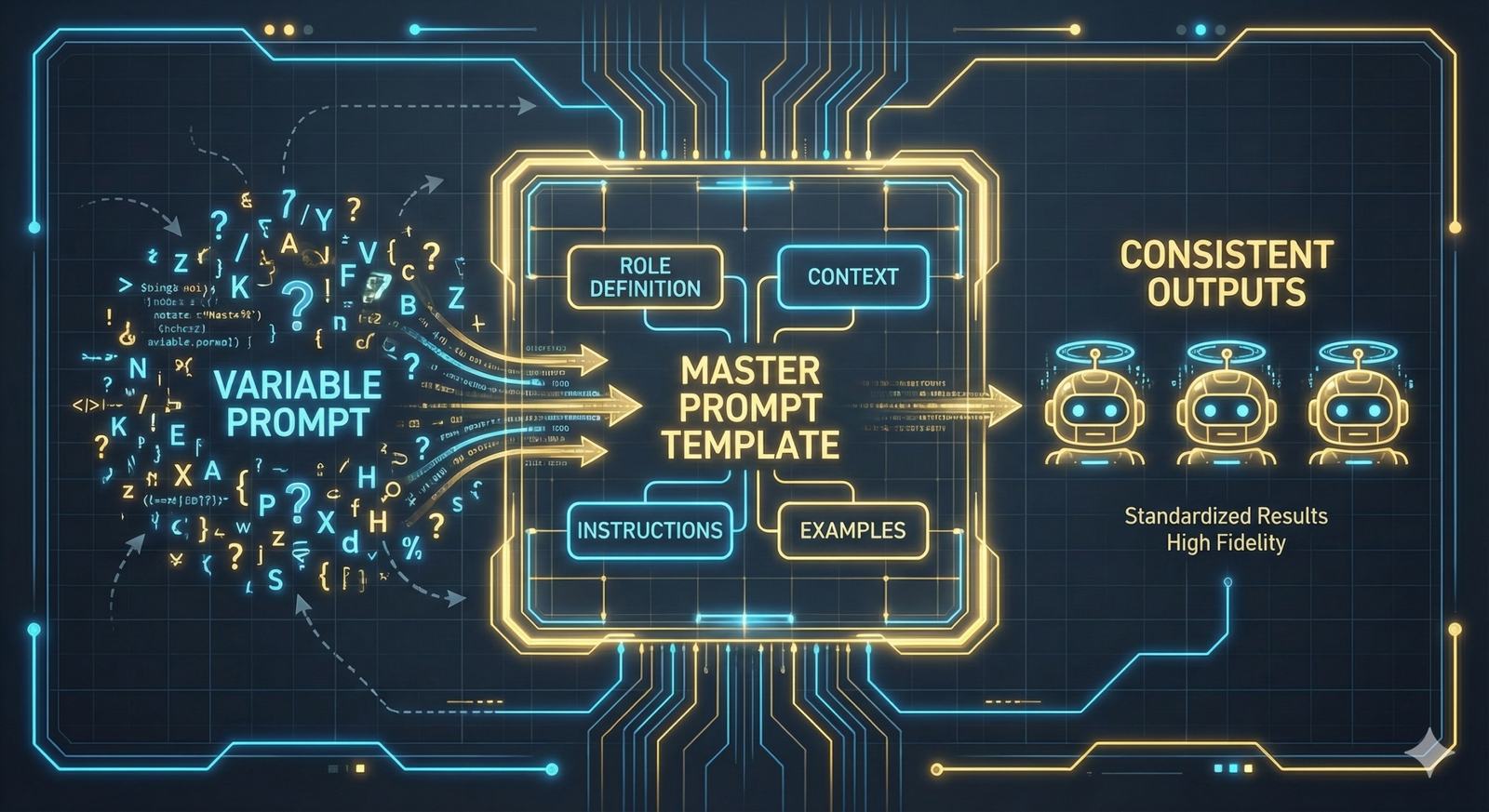
That is where free prompt packs help. They are ready-made templates for writing, marketing, and business that tell ChatGPT what role to take, what data to use, and what format to return. You fill in a few details, then get consistent results without guesswork.
Think of them like checklists for AI. A blog outline becomes a clean structure with headings. A product launch turns into emails, social posts, and ad copy that align.
Here is a quick story. Mia, a solo marketer, used a free launch pack to map a 7-day email series, a social calendar, and a landing page brief. She finished in one afternoon, and said it saved her three hours she used to spend rewriting and fixing tone.
In 2025, these packs matter for both beginners and pros. Starters get a clear path to ask better questions. Power users get role-specific templates for sales, SEO, customer support, and planning that they can tweak and stack.
You will see prompts that handle outlines, briefs, reports, and scripts, plus checklists for research and QA. Many include fields for audience, brand voice, and goal, so you keep control of the output. Use them as is, or adjust and save your own set.
Up next, the top free prompt packs for writing, marketing, and business, plus simple tips to customize them for your workflow.
Why Free ChatGPT Prompt Packs Boost Your Success
Free prompt packs take the guesswork out of AI. You get proven templates that guide ChatGPT to produce consistent, on-brand output without endless trial and error. In 2025, when your calendar is packed, that means faster drafts, fewer rewrites, and more time for real work. Bloggers lock in SEO structure. Marketers spin up campaigns. Founders get plans and summaries that read clean and clear.
Save Time and Cut Frustration
You no longer start from scratch. Prompt packs ship with tested templates, so you skip the messy part of figuring out what to ask. Vague prompts lead to vague results. Clear templates produce clear output.
Try this simple shift:
Instead of: “Write emails for my product launch.”
Use a pack’s sequence prompt: Act as a lifecycle email strategist. Create a 5-part launch sequence for [product], targeting [audience]. Use [brand voice], include subject lines and preview text, and add one CTA per email.
Result, you get a tight series with structure, tone, and calls to action, ready to paste into your ESP. Busy week? You can go from idea to draft in minutes. That means your Monday planning block now fits emails, a landing page outline, and a social caption set without stress.
Good packs cover niches, from writing and marketing to sales, self-improvement, and operations. They help you match outputs to your audience, product, and tone.
Role-play prompts: Make ChatGPT act like an SEO strategist, email copywriter, or project manager. You get expert-level structure with your inputs layered in.
Audience alignment: Set persona, pain points, and benefits, then keep that thread across blogs, emails, and ads.
Customization: Swap in your brand voice, format, and length. Save a “house style” version with your rules for readability, grade level, and banned phrases.
Example wins:
A blogger uses an SEO brief prompt to map keywords, headings, FAQs, and internal links, then drafts faster with fewer edits. For more prompt ideas to adapt, see this large reference list: 500+ Best Prompts for ChatGPT (Ultimate List for 2025).
A marketer plugs in an email sequence prompt to generate hooks, angles, and subject line tests that match the brand and campaign goal.
You get consistent output, faster iterations, and templates you can refine over time. That is how small daily wins stack into big results.
Top Free Prompt Packs to Grab in 2025
If you want quick wins, start with proven packs and tweak them to fit your style. Most of these are free, updated often, and easy to remix. I also like LivePlan’s business starters for planning and TechPoint’s 300 for productivity, both handy for day-to-day work.
GitHub’s Awesome Collection for All Users
The classic GitHub list is open source, broad, and battle tested. You get prompts for many AI models, not just ChatGPT, and the community ships edits often. Beginners can fork it, add their own prompts, and build a personal library over time. Check the main repo here: f/awesome-chatgpt-prompts.
What you will find:
Roles and formats for writing, coding, research, and study
Community contributions, so fresh ideas show up weekly
Easy customization, just copy, adapt, and save
RightBlogger’s Prompts for Creative Writing
RightBlogger shares 25 free prompts built for writers who want clean drafts fast. You get blogging, copy, and fiction templates with SEO intent baked in. The set helps you nail topic focus, headings, and search-friendly language that ranks.
Highlights:
Blog outlines and briefs that map headers, FAQs, and internal links
Copy prompts for hooks, intros, CTAs, and edits
Fiction starters to spark plots, scenes, and dialogue
This giant pack covers almost every topic you can name. It shines with expert simulations, like acting as a senior copywriter, interviewer, strategist, or editor. Use it to draft faster, pressure test ideas, or prepare interviews and surveys.
Why it works:
Huge variety, easy to scan
Role prompts that structure output like a pro
Strong starting points for repeatable workflows
Team-GPT’s Marketing Essentials
Marketers get 25 prompts ready for SEO, social, and email. Use them to plan content, build calendars, and ship campaigns with less back-and-forth. The set fits daily tasks, from keyword maps to subject line tests.
What you get:
SEO prompts for briefs, outlines, and on-page fixes
Social prompts for hooks, formats, and captions
Email prompts for sequences, angles, and A/B tests
Pick one today, run it with your brand voice, and save your best version.
Simple Steps to Use Prompt Packs Effectively
Prompt packs work best when you treat them like starting points, not final scripts. Pick a pack that fits your task, add the right context, then test and tweak until the output matches your brand. In 2025, clear inputs, examples, and guardrails produce stronger results with fewer edits.
Here is a simple flow that keeps you fast and accurate:
Choose a pack aligned to your goal.
Add details about audience, tone, and format.
Include examples and rules that show what good looks like.
Generic prompts give generic results. Add your voice, audience, and formatting rules so the model writes like you.
Audience: Who is this for, and what do they care about?
Tone: Friendly, concise, confident, witty, or serious.
Format: Word count, headings, bullets, CTA, and any banned phrases.
Context: Product, goal, source notes, or key facts.
Example: Paste a short sample that shows the style you want.
Try this structure:
Role: Act as a [role].
Task: Create [deliverable] for [audience] to [goal].
Voice: [tone], avoid [banned items].
Format: [length], [sections], [CTA].
Example: “Here is a sample paragraph I like: […]”
For deeper control, set standing rules in your chat settings. See this guide on making instructions stick: Best Custom Instructions for ChatGPT.
Review and Refine Every Output
Never publish a first pass. Check facts, tone, and structure. AI can sound smooth yet miss details.
Scan for errors: Names, dates, data, claims, and links.
Fix bland spots: Ask for stronger verbs, sharper hooks, or tighter focus.
Iterate: Use follow-ups like, “Tighten to 120 words,” or “Add two examples.”
Combine prompts: Brief, outline, draft, then edit. One step per prompt keeps quality high.
Quick example, blog idea to draft:
Use an “idea generator” prompt for 10 topic ideas.
Pick one and run an “SEO outline” prompt with H2s and FAQs.
Feed the outline into a “draft” prompt with your voice and length.
Edit for accuracy and clarity. Add sources where needed.
Keep a small library of your best versions. Use them daily, and your output gets faster, cleaner, and more on-brand.
Conclusion
Free prompt packs turn a blank chat into a working system. You get proven templates, clear roles, and repeatable formats that cut draft time, reduce rewrites, and keep your voice steady across blogs, emails, and briefs. That is the simple edge in 2025, speed with quality you can trust.
Start small today. Pick one pack from the list above, drop in your audience, voice, and goal, then run a single task like an SEO outline or a 5-part email sequence. Save the best version, test it on your next task, and build a tiny library you reuse every week.
If you want momentum, stack two prompts for multi-step work. Outline, then draft. Brief, then edit. The gains add up fast, and you keep control of tone and structure at every step.
Grab one free pack now and experiment for 15 minutes. Share your first win in the comments, or subscribe for more practical AI tips and new prompt packs as they drop. Your next draft can be faster, cleaner, and on-brand, and you can get there today.
FAQ Section What are free ChatGPT prompt packs?
Free ChatGPT prompt packs are collections of pre-written templates designed to guide ChatGPT, ensuring specific, consistent, and high-quality outputs for various tasks like writing, marketing, and business operations.
How do prompt packs save time?
By providing ready-made structures and instructions, they eliminate the guesswork of starting with a blank prompt, leading to focused results faster and reducing the need for extensive rewriting or editing.
Can I customize these free prompt templates?
Yes, most free prompt packs are designed to be highly customizable. You can adjust fields for audience, brand voice, and specific goals, or even create and save your own modified versions for future use.
Who benefits most from using ChatGPT prompt packs?
Both beginners and experienced users benefit significantly. Beginners get a clear path to better AI interaction and consistent results, while pros can streamline role-specific tasks, enhance output consistency, and scale their AI usage efficiently.
The right prompt can make or break your AI results. A single unclear line can waste time, budget, and ideas. A clear prompt, tuned to your goal, can unlock sharp answers, strong images, and clean code on the first try.
That is why I use AI prompt generators. These are simple tools that help you write clear, effective prompts for models like ChatGPT, Claude, Midjourney, and Stable Diffusion. They guide tone, context, and structure, then suggest improvements so you get instant, consistent output. You save time, avoid trial and error, and hit publish faster.
This review focuses on tools that work today, at scale. PromptPerfect stands out for fast, multi‑model optimization and batch prompts. Originality.ai offers a quick prompt builder that sparks ideas and clears writer’s block. Both align with October 2025 trends: cross‑platform support, strong defaults, and smart guardrails that reduce rewrites.
I wrote this to help busy teams, solo creators, and product folks who want reliable results without fiddling with prompt syntax. I will show where each tool shines, where it falls short, and how to get a strong first draft in seconds. I will also point to safe starter picks, including a resource on top beginner-friendly AI prompt generators, so you can move quickly with confidence.
You will see how AI prompt generators shape context, add role hints, and lock in style. You will get quick templates for product copy, blog outlines, UX flows, and image prompts. You will learn when to use short prompts, when to use structured formats, and how to test fast.
If you want my free PDF, email me and I will send “110 ChatGPT productivity pack for content.” I will send it asap, no obligation.
Key Benefits of Using AI Prompt Generators
AI prompt generators help me move from vague ideas to clear instructions that models can follow. The payoff shows up in faster drafts, tighter structure, and consistent tone across tasks. Below, I break down the benefits I see every day when I use these tools for content, product, and design work.
Faster Output With Fewer Rewrites
Speed matters when I need a strong first draft. AI prompt generators structure intent, audience, tone, and constraints upfront, so I avoid guesswork.
Time saved: I cut ideation and setup by minutes per prompt, hours per project.
Tighter loops: I get usable output in 1 to 2 iterations instead of 5.
Example:
Input: “Write a product update email.”
Optimized prompt: “You are an email copywriter for a B2B SaaS. Write a 150-word product update email for existing customers. Tone is confident and friendly. Include a headline, 3 bullet benefits, and a one-line CTA. Avoid hype. Mention the new analytics dashboard for SMB users.”
Consistent Voice and Brand Control
Consistency builds trust. Good generators lock in role, tone, length, and banned phrases, then reuse those patterns.
Reusable templates: I save prompts for blog intros, case studies, and release notes.
Guardrails: I set must-include details, compliance notes, and style rules.
If you want more structure for creative work, these top free AI art prompt tools show how prompt patterns shape visual style and quality.
Higher Quality Responses and Less Noise
Clear prompts reduce vague output. They also cut hallucinations by forcing sources, scope, and format.
Evidence prompts: Ask for citations, quotes, or data ranges.
Scope prompts: Define what to ignore and what to prioritize.
Format prompts: Require tables, bullets, or sections.
For a brief overview of benefits like accuracy, relevance, and efficiency, see this summary of features and benefits for 2025.
Creativity on Demand
When I feel stuck, prompt generators spark angles I would not try on my own.
Pattern prompts: “X but for Y,” “contrarian take,” “5 audience lenses.”
Style prompts: “Explain like a PM,” “technical explainer,” “product teardown.”
For more ideas, this guide covers overcoming writer’s block and creative use cases in an AI Prompt Generator breakdown. I also keep a personal library. If you want it, email me for my free PDF “110 ChatGPT productivity pack for content.”
AI prompt generators adapt structure for different models and media. I can take one prompt and tune it for ChatGPT, Claude, Midjourney, or Stable Diffusion.
Structured fields: Audience, goal, constraints, format, tone.
Model tags: Add negative prompts for images or function calls for code.
Batch prompts: Scale one pattern across dozens of inputs.
This reduces context loss when switching tools and keeps results aligned.
Better Collaboration and Handoff
Clear prompts turn into a shared spec. Teams can review, edit, and reuse them.
Traceability: Why the prompt works, what inputs it needs, what to avoid.
Versioning: Keep a changelog and note which version delivered the best result.
Training: New contributors get consistent outputs on day one.
Cost Control and Measurable ROI
Stronger prompts use fewer tokens and fewer model calls. That drops cost over time.
AI prompt generators make these steps faster, clearer, and more repeatable. When I add simple guardrails and reuse proven patterns, my first draft is often my final draft.
Best AI Prompt Generators for Instant Prompt Creation in 2025
When I need results on the first try, I reach for AI prompt generators that turn rough ideas into tight, model-ready instructions. The tools below focus on speed, structure, and cross-model support. They help me ship clean drafts, image prompts, and technical instructions with less trial and error.
PromptPerfect: Fast Optimization for Multiple AI Tools
PromptPerfect excels when I need strong prompts in seconds. I can paste a short idea, choose a model, and get a refined prompt that locks in role, tone, and format. The output is clear and ready for ChatGPT, Claude, Midjourney, or Stable Diffusion. For official details and current features, see the product page for PromptPerfect – AI Prompt Generator and Optimizer.
What stands out:
Rapid refinement: It expands vague inputs into complete, structured prompts with constraints.
Batch processing: I feed a list of topics or keywords, then export a set of optimized prompts at once.
Model-aware tuning: It adds model-specific tags, image negatives, or format rules based on target output.
Benefits for multi-model work:
One pattern, many variants: I set a prompt template once, then generate versions for text, image, or code tools.
Lower rework: Fewer rounds with each model since the prompt is tailored upfront.
Team speed: Stakeholders can review the optimized prompt text before any model call.
Example workflow:
Input a short brief, like “Write a 120-word product update for SMB customers.”
Select the target model and tone.
Generate a structured prompt with goals, key points, and a clear format.
Batch apply the same structure to multiple features or audiences.
Originality.ai offers a simple prompt builder that works without sign-up. I use it when I am stuck and need fresh angles, hooks, or outlines fast. It focuses on unique prompts that reduce repetition, which is ideal for blogs, emails, and social posts. For a helpful overview, see the guide on AI Prompt Generator.
Why it helps:
No account needed: I test ideas instantly and keep moving.
Idea variety: It proposes multiple prompt angles to break writer’s block.
Clean defaults: The outputs are easy to copy into ChatGPT, Claude, or Gemini.
Use cases I like:
Blog intros with a clear voice and structure.
Alternative headlines across tones, such as direct, witty, or analytical.
Short social posts that keep brand voice consistent.
Compatibility:
Works well with most text LLMs, and I have used its prompts across ChatGPT and Claude with strong results.
Taskade: Prompts Tailored for Productivity Tasks
Taskade connects prompt creation to project structure. I build prompts inside tasks, documents, or workflows, then reuse them where work actually happens. That keeps briefs, context, and outputs in one place. It suits teams that want prompts tied to checklists, due dates, and docs.
What I like in daily work:
Project-specific prompts: Prompts live next to tasks, notes, and status updates, so context never gets lost.
Reusable blocks: I save prompt templates for standups, meeting summaries, and sprint reviews.
Linked outcomes: Outputs sit in the same workspace, which makes review and revisions fast.
Practical examples:
Meeting summary prompt inside each calendar-linked task.
Product requirements prompt template stored in the project wiki.
QA checklist prompts that generate test cases from user stories.
Result:
Less copy and paste across tools, fewer missed details, and faster handoffs.
HIX AI: Precision for Technical and Workflow Needs
HIX AI shines when I need exact, task-specific instructions, especially for code, data, or structured outputs. I use it to write API call prompts, test case formats, or step-by-step procedures that require strict rules. It reduces ambiguity and keeps model responses inside the lines.
Strengths I notice:
Instruction clarity: It produces prompts with clear roles, inputs, and acceptance criteria.
Format control: It standardizes output into JSON, tables, or numbered steps with minimal drift.
Developer focus: Great for error messages, log analysis, and code comments that explain tradeoffs.
Sample patterns:
“You are a senior backend engineer. Return a JSON object with fields and validation notes. No extra text.”
“Write unit tests for this function with edge cases. Include setup, mocks, and expected outputs.”
When the work is technical, precision saves tokens and time. Prompts that specify constraints and formats keep LLMs accurate and reduce review cycles.
Tip: If you want my free PDF “110 ChatGPT productivity pack for content,” email me and I will send it right away.
Tips to Maximize Your AI Prompt Generator Experience
Strong prompts save time and reduce rework. I treat AI prompt generators like a spec builder for my tasks. With a few simple habits, I get faster drafts, cleaner structure, and fewer surprises across ChatGPT, Claude, Midjourney, and Stable Diffusion.
Start With a Clear Intent and Constraints
Define the job before you hit generate. State the goal, audience, and required sections. Then lock scope and length to cut fluff.
Goal: What must the output achieve in one sentence.
Audience and tone: Who it is for, plus tone hints like authoritative, friendly, or technical.
Format: Bullets, table, JSON, or sections.
Limits: Word count, what to exclude, banned phrases.
Example intent block:
Goal: “Summarize a product launch for existing SMB users.”
Audience and tone: “Current customers, direct and confident.”
Give the model a role that fits the task. Feed it the right inputs. Ask for source-backed claims when needed.
Role: “You are a senior technical writer,” or “You are a product marketer.”
Inputs: Paste snippets, user quotes, or feature notes.
Evidence: Ask for citations, data ranges, or quotes if accuracy matters.
Quick template:
Role: “You are a B2B copywriter.”
Inputs: “Use these 3 features and this customer quote.”
Output rules: “Return 2 versions, each under 120 words, with a CTA.”
Add Few-Shot Examples for Style and Structure
Examples teach pattern and reduce drift. Include one strong example, then a short instruction to replicate style, not content.
One well-formed sample beats five weak ones.
Keep examples short to control tokens and cost.
Mark variable fields with brackets to encourage reuse.
Example pattern:
“Headline: [Benefit-focused line]
Bullets: [3 scannable points]
CTA: [One action]”
A power user tip I like is to build a simple framework first, then generate content from it. This matches ideas in this thread: AI Prompting Tips from a Power User.
Iterate With Tight Feedback Loops
Treat each run like a controlled experiment. Change one variable at a time so you can trace the lift.
Give direct feedback: “Shorten by 30 percent,” or “Add one proof point.”
Freeze the winning parts: “Keep the intro as-is, rework the examples.”
Version your prompts: V1, V2, V3 with short notes.
I keep a simple changelog inside my docs. It makes handoff and review faster.
Control Format for Reliable Outputs
AI prompt generators excel when the format is explicit. Use firm output rules so results are easy to scan and compare.
Specify structure: “Return a table with columns: Feature, Benefit, Proof.”
Use clear markers: “Start with ‘Summary:’ then ‘Action Items:’”
For images, include subject, style, camera details, and negative prompts.
Library: Store prompts by task type, like intros, updates, FAQs, or release notes.
Batch runs: Feed a CSV or list of inputs and export results.
I standardize naming so teams can find and reuse the best patterns.
Match the Model and Modality
Tune prompts to fit the target model or media. Do not copy the same prompt across text and image without adjustments.
Text models: Clarity, role, and stepwise instructions.
Image models: Detailed descriptors, lighting, lens, style tags, and negatives.
Code tasks: Inputs, acceptance criteria, and output format rules.
When switching models, keep the intent and structure, then rephrase the tags and constraints.
Measure Quality and Cost
Track output quality and token use. Small tweaks pay off at scale.
Quality checklist: Goal met, structure followed, tone consistent, no banned phrases.
Token aware: Shorten context and examples when possible.
Cost control: Set word ceilings, limit variants to two or three, and stop early if output is ready.
Simple scorecards help compare variants and lock the winner.
Keep a Personal Style Guide
Document your voice, format rules, and banned words. Feed it to your generator as a short, reusable block.
Include:
Tone sliders, like concise, confident, and friendly.
Must-include brand phrases or disclaimers.
Format rules for headings, bullets, and tables.
As models update, refresh the guide and archive old versions. If you want my free PDF “110 ChatGPT productivity pack for content,” email me and I will send it right away.
For a broader view on structured prompting in 2025, this overview on prompt engineering essentials is useful for planning advanced workflows.
Conclusion
AI prompt generators turn rough ideas into clear, repeatable instructions, which lifts quality and cuts waste. In minutes, I can move from a blank page to structured prompts that fit the task, the model, and the format. The result is faster drafts, fewer rewrites, and more consistent voice across teams.
PromptPerfect gives me refined prompts tailored for text, image, or code, with batch options that save hours. Originality.ai sparks strong angles on demand, ideal for quick hooks, headlines, and outlines. Taskade keeps prompts tied to work, so briefs, tasks, and outputs stay in one place. HIX AI locks down structure and format for technical work, which reduces drift and speeds reviews. Together, these tools deliver instant gains in clarity and speed.
Pick one tool and run a simple test today. Take a current task, add intent, audience, and format, then generate a prompt and ship the result. Small wins compound when you reuse the best patterns.
I am confident you will see better AI interactions once you standardize on a prompt generator. If you want extra momentum, email me and I will send my free PDF “110 ChatGPT productivity pack for content.” I will send it asap, no obligation.
FAQ Section What is an AI prompt generator and why do I need one?
An AI prompt generator is a tool that helps you write clear, effective prompts for AI models like ChatGPT or Midjourney, saving time and improving output quality by guiding tone, context, and structure. They ensure instant, consistent results and reduce trial and error.
Which AI prompt generators are best for beginners?
For beginners, tools like Originality.ai offer quick prompt builders to spark ideas and clear writer’s block. The article also points to safe starter picks and a resource on top beginner-friendly AI prompt generators, making it easy to move quickly with confidence.
How do AI prompt generators help with different AI models?
These tools offer cross-platform support, guiding you to create effective prompts tuned for specific models like ChatGPT (text), Midjourney (images), or Stable Diffusion (images). They help shape context, add role hints, and lock in style, ensuring optimal results across various AI applications.
I used to burn an hour shaping each outline. Then a tiny tweak changed everything. I added two lines to my prompt, asked for bullet points with word counts, and my content creation speed jumped 50 percent. That small win sent me down the path to AI Prompting Templates.
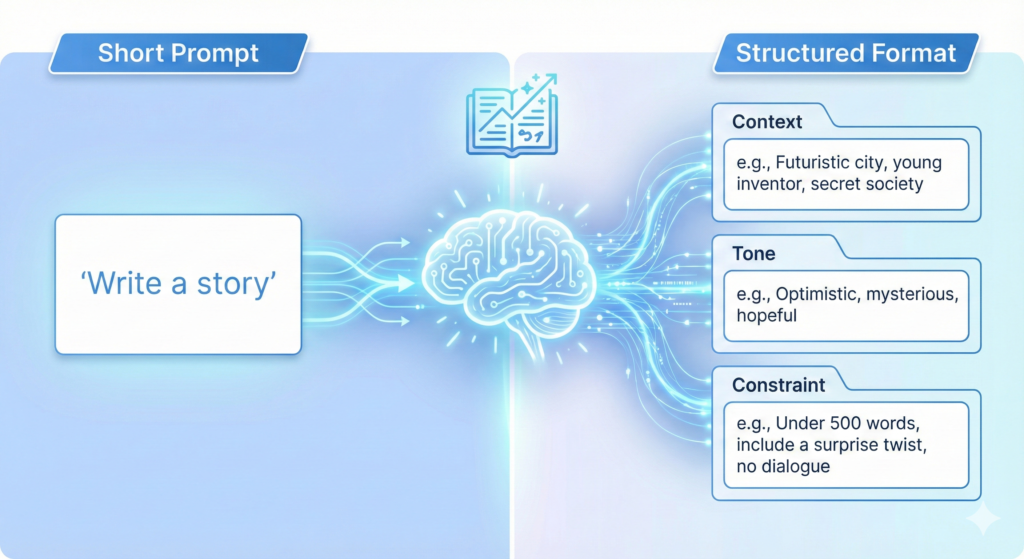
Here is the simple idea. AI Prompting Templates are pre-made instructions that guide your AI to return useful, consistent outputs. You plug in your details, the template handles structure, tone, and format. Less guesswork, fewer edits, faster results.
In this post, I will show you how templates work, when to use them, and how to adapt them to your workflows. You will see the core parts that make a prompt template reliable, plus quick upgrade tips for quality and speed. I will point you to smart tools and trusted sources so you can get moving today.
If you are new, start with the basics and a few safe wins. I recommend this roundup of the Best free AI prompt tools for beginners, it gives you ready-to-use starters that are easy to test: https://aipromptprophet.com/best-free-ai-prompt-tools-for-beginners/. If you are experienced, you will get patterns for chaining prompts, setting roles, and defining strict output formats.
By the end, you will have plug-and-play templates for digital creators, small businesses, tech pros, and AI prompt engineers. You will know how to tune them for brand voice, data inputs, and results you can trust. Get instant access to powerful AI prompting templates, and start creating better prompts. Let’s get practical and save real time.
Why AI Prompting Templates Save You Time and Effort
I treat AI Prompting Templates like checklists for my brain. They cut setup time, reduce errors, and give me a head start on hard tasks. Instead of rewriting instructions for each request, I slot in variables and hit go. The result is consistent output that I can trust, with fewer rewrites and less context switching. For a practical foundation on structure and clarity, I like how MIT breaks down effective prompt basics.
Key Benefits for Beginners and Experts Alike
Templates pay off for every skill level. Here is where they shine and how I use them.
Saves time
Why it matters: You skip setup and reuse proven patterns. Fewer keystrokes, faster results.
Quick example: I use a summary template to turn a 2,000-word article into a 120-word brief with bullets in seconds.
For tech pros: A bug triage template captures error logs, expected behavior, and steps to reproduce. That trims the back-and-forth and speeds up fixes.
Improves accuracy
Why it matters: Clear constraints and examples reduce drift and vague answers.
Quick example: A product description template enforces length, tone, features, and a CTA, which keeps copy on-brand.
For tech pros: A code review template asks for complexity notes, edge cases, and test stubs, which cuts miss rates and rework. If you prefer a primer on structure and variables, this guide to AI prompt templates explains the common building blocks.
Sparks creativity
Why it matters: Guardrails free you to explore more ideas, not fewer.
Quick example: A content idea generator template outputs 10 hooks with angles, audiences, and proof points, which beats staring at a blank page.
For tech pros: A refactor template proposes alternative patterns, trade-offs, and before-after snippets, which speeds up better designs. For more hands-on tools and examples, try these AI prompt tools to boost creativity.
If you want to scale quickly, compare providers that package ready-to-use templates and workflows in this roundup of Top AI prompt package providers for 2025. Get instant access to powerful AI prompting templates, and start creating better prompts today.
Explore Top Categories of AI Prompting Templates
I group AI Prompting Templates by the output I need. That keeps my process clean and repeatable. Below are the categories I use most, with plug-and-play templates you can drop into your workflow. Each one sets role, structure, and constraints, so you get clear, usable results. If you want a broader menu of working patterns, this guide on prompt engineering templates that work offers proven recipes you can adapt.
Creative Writing and Content Generation Templates
I build content templates to produce publishable drafts with the right tone, structure, and engagement cues. Use these as-is, or swap variables to fit your brand.
500-word blog post with structure Template: “Write a 500-word blog post about {TOPIC} for {AUDIENCE}. Use an intro (2-3 sentences), 3 subheadings, short paragraphs, and a conclusion with a single CTA. Tone: {TONE}. Include one statistic with a source, and 3 SEO keywords: {KEYWORDS}. Return a meta title (60 chars) and meta description (155 chars).” Why it works: You get a draft with on-page SEO, scannable sections, and a clear CTA.
Video script with timestamps Template: “Create a 90-second video script for {PLATFORM}. Topic: {TOPIC}. Audience: {AUDIENCE}. Format: Hook (0:00-0:05), Problem (0:05-0:20), Solution (0:20-0:60), Proof (0:60-1:20), CTA (1:20-1:30). Provide on-screen text and voiceover lines. Add 3 B-roll suggestions.” Why it works: Timestamps force pacing, which improves retention and watch time.
Social caption with hooks and CTAs Template: “Write 5 social captions for {PLATFORM} about {TOPIC}. Tone: {TONE}. Each caption includes a 6-word hook, 1 value statement, 1 action step, 2 relevant hashtags, and 1 CTA that drives {DESIRED_ACTION}.” Why it works: You get testable variants and consistent engagement prompts.
Outline to draft in one pass Template: “Create a detailed outline for a {FORMAT} titled ‘{WORKING_TITLE}’ for {AUDIENCE}. Include H2s, H3s, and bullet points. Then produce a 700-word first draft based on the outline. Keep paragraphs under 3 sentences. Add 3 pull quotes.” Why it works: You move from structure to draft without breaking flow.
Thought leadership angle finder Template: “Generate 10 content angles for {TOPIC}. For each, include a one-sentence thesis, counterpoint, data source idea, and a proposed headline under 60 characters.” Why it works: Angles prevent generic content and spark stronger hooks. For more starter ideas, this list of AI content prompts and templates can help you test formats across blogs and social.
Pro tip: Save variables like {AUDIENCE} and {TONE} as presets. That keeps brand voice consistent across channels. Get instant access to powerful AI prompting templates. Start creating better prompts.
Technical and Code Templates for Tech Pros
For engineering tasks, I lock in structure, constraints, and tests. That makes outputs easier to verify and ship. These AI Prompting Templates are designed for code generation, translation, and debugging.
Translate code safely Template: “Translate this {LANGUAGE1} code to {LANGUAGE2}. Preserve logic and comments. Match idiomatic patterns in {LANGUAGE2}. Add unit tests with {TEST_FRAMEWORK}. Include a brief note on time and space trade-offs.” Use case: Port legacy modules without losing behavior.
Bug reproduction and fix plan Template: “You are a senior engineer. Given the error log and steps to reproduce, identify root cause, list 3 likely failure points, propose a minimal fix, and provide a patch. Then write a test that fails before the fix and passes after. Inputs: {ERROR_LOG}, {STEPS}, {EXPECTED_BEHAVIOR}.” Use case: Faster triage with clear next steps.
Refactor with constraints Template: “Refactor the following {LANGUAGE} function to improve readability and performance. Limit cyclomatic complexity to under 10. Keep the public API stable. Add docstrings and examples. Provide before and after snippets, and explain performance changes.” Use case: Cleaner code with measured gains.
Generate API client with tests Template: “Create a typed {LANGUAGE} client for this REST API. Include methods for {ENDPOINTS}. Handle rate limits, retries, and errors. Add unit tests with mocks, plus a quick start README with examples.” Use case: Ship a usable client with docs and tests in one pass.
“Translate this {LANGUAGE1} code to {LANGUAGE2}” with context Template: “Translate the following code. Preserve algorithmic complexity. Replace libraries with closest standard equivalents. If a feature lacks parity, suggest a shim with code.” Use case: Keeps conversions practical when ecosystems differ.
Prompt engineers can turn these into testable workflows: run the same input across models, compare outputs with acceptance criteria, and log diffs. For more structured recipes you can copy, review these programming prompt templates and adapt them to your stack.
Ready-to-Use Templates Tailored to Your Role
I built these AI Prompting Templates to remove guesswork and speed up results. Each one sets clear inputs, structure, and success criteria. Plug in your variables, then test two or three variants to find winners fast.
Templates for Digital Creators
When reach, saves, and watch time matter, templates that control hooks, pacing, and CTAs help you post with confidence.
Short-form video scripts that boost retention Prompt: “Write a 45-second TikTok script on {TOPIC} for {AUDIENCE}. Include: Hook (7 words), Problem (1 line), Solution (3 steps), Proof (1 stat with source), CTA (1 action). Add on-screen text and 2 B-roll cues.” Why it works: Tight pacing increases watch time and completion rate.
Instagram captions that drive comments Prompt: “Create 5 Instagram captions about {TOPIC}. Each includes a 5-word hook, 1 value statement, 1 save-worthy tip, 2 hashtags, and a CTA that asks a question about {ANGLE}.” Why it works: Clear hooks and questions spark replies and saves.
Blog outlines that convert into drafts Prompt: “Outline a blog titled ‘{WORKING_TITLE}’ for {AUDIENCE}. Include H2s and H3s, bullet points per section, and 3 FAQs. Then write a 700-word draft with short paragraphs and 1 CTA to {GOAL}.” Why it works: You move from plan to draft in one pass.
Pro tips:
Use brand presets for tone, voice, and banned words.
Track outputs by metric, for example, hook CTR or average view duration, to keep improving.
Templates for Small Businesses
Use AI Prompting Templates to write ads faster, mine customer feedback, and spot trends before your competitors.
High-ROI ad testing Prompt: “Write three ad headlines for {PRODUCT} targeting {AUDIENCE}. Tone: {TONE}. Include one benefit, one pain, and one proof-based headline. Keep to 30 characters.” Follow-up: “Now write 3 descriptions, each under 90 characters, with 1 feature and 1 outcome.” Why it works: You get testable pairs that align to platform limits.
Review analysis that fuels product updates Prompt: “Analyze these {PLATFORM} reviews. Summarize top 5 themes, recurring pains, desired features, and language customers use. Create a table with theme, example quote, and suggested fix or message.” Why it works: Clear themes shape product copy and roadmap.
Trend scouting you can act on Prompt: “From these sources {LINKS}, identify 5 trends in {INDUSTRY}. For each, add a one-sentence opportunity, a low-cost test, and one KPI to monitor.” Why it works: You move straight from insight to action.
Local SEO booster Prompt: “Write a Google Business Profile post for {BUSINESS} promoting {OFFER}. Include a hook, 2 benefits, a location cue, and a CTA to call or visit. 150 words.” Why it works: Fresh posts lift visibility and calls.
Templates for Tech Professionals and Prompt Engineers
Speed up debugging, produce clean docs, and harden prompts with precise structure and constraints.
Debugging with clear triage Prompt: “Given {ERROR_LOG}, {STEPS_TO_REPRO}, and {EXPECTED_BEHAVIOR}, identify root cause, list 3 likely failure points, propose a minimal patch, and supply a test that fails before and passes after. Include time and space impact.” Why it works: You get a fix plan and a safety net.
Documentation that developers will read Prompt: “Document the {MODULE} API. Include purpose, inputs and types, outputs and types, side effects, edge cases, examples, and a quick start. Keep each section under 5 lines.” Why it works: Short, scannable docs reduce support time.
Prompt rewriting for higher fidelity Prompt: “Rewrite this prompt for more detail: {ORIGINAL_PROMPT}. Add role, inputs, constraints, steps, acceptance criteria, and output format. Include 2 negative instructions to avoid unwanted behavior.” Why it works: Structure reduces drift and improves reproducibility.
Evaluation harness for prompts Prompt: “Create an evaluation checklist for {TASK}. Include must-have criteria, scoring from 1-5, failure modes, and 3 example test cases with expected outputs.” Why it works: You can compare models and track gains over time.
If you need ready-made sources and places to publish or buy tested patterns, review this guide to Top AI Prompt Marketplaces for Buying and Selling. Use these AI Prompting Templates as a base, then iterate with your own data and metrics. Get instant access to powerful AI prompting templates. Start creating better prompts.
Tips to Customize and Get the Most from AI Prompting Templates
AI Prompting Templates only pay off when they fit your goals, voice, and constraints. I treat each template like a living asset. I tune variables, shorten steps, and keep outputs strict. Use these tips to turn generic templates into reliable systems that save time and improve quality.
Create a single source of truth for variables
I keep reusable variables in one place so every template stays consistent.
Define AUDIENCE, TONE, BRAND_RULES, and BANNED_WORDS.
Store product names, value props, and CTAs as presets.
Use short, clear variable names, and document one example for each.
Role prompts shape behavior. Constraints shape output. I combine both.
Role: “You are a senior tech writer” or “You are a growth marketer.”
Constraints: length, structure, voice, and must-have elements.
Add two negative rules to block unwanted behavior.
Example: Include 3 bullets with benefits. Exclude emojis and clichés.
Force outputs into a format you can use
If I need clean handoff to a CMS or a script, I require structure.
Ask for JSON, a bullet list, or a table with fixed fields.
Provide a short schema. Keep keys simple and stable.
Include acceptance criteria so the model checks its own work.
Example: Return JSON with keys: title, intro, sections[], cta.
Seed with examples and counter-examples
Few-shot samples cut ambiguity. Bad examples teach what to avoid.
Show one strong example with notes on why it works.
Show one weak example with what to fix.
Keep examples short so they fit within context.
Example: Good hook: “Stop losing users at signup.” Bad hook: “In today’s digital world…”
Calibrate parameters for your task
I tune settings to balance creativity and control.
Setting
Use
Effect
Temperature 0.2 to 0.4
Accuracy, factual tasks
Tighter, safer outputs
Temperature 0.6 to 0.8
Ideation, hooks
More variety, more risk
Max tokens
Longer drafts or short blurbs
Controls depth and length
Frequency penalty 0.5
Avoid repetition
Reduces repeated phrases
Start low temperature for instructions, higher for ideas.
Layer prompts into a simple workflow
I break big tasks into small, testable steps.
Outline template sets structure and key points.
Draft template expands sections with tone controls.
Edit template tightens copy, adds examples, and checks length.
QA template verifies format, facts, and banned words.
This chain reduces errors and speeds up revisions.
Add guardrails and failure checks
I ask the model to check its own output before returning it.
“Validate length and format. If missing, fix before final.”
“Flag any claim without a source as ‘needs citation’.”
“Compare output to acceptance criteria. Score each item 1-5.”
I also include a recovery step: “If you cannot meet constraints, return a short note and the closest valid draft.”
Measure what matters and iterate
I track outcomes tied to the goal, not just vibes.
For content: CTR, scroll depth, time on page.
For ads: CPC, conversion rate, ROAS.
For code: test pass rate, complexity, runtime.
Run small A/B tests: one variable change per run. Keep a changelog with prompt version, settings, and results.
Personalize tone and brand voice
Voice makes templates feel native to your brand.
Provide 3 short voice samples with do and don’t notes.
Include sentence length, reading level, and pacing rules.
Use a mini style guide: contractions, point of view, banned phrases.
Example: Use short sentences, active voice, and direct claims. No hype words.
Attach real context and data
Models do better with context. I feed them what they need.
Paste key product facts, pricing, and constraints.
Add short customer quotes for language and proof.
Supply links or snippets of source data when allowed.
Keep context concise, and label each block for clarity.
Maintain a versioned prompt library
I treat AI Prompting Templates like code.
Store prompts with versions and clear names.
Add notes on use cases, settings, and win rates.
Retire prompts that no longer meet standards.
A clean library removes guesswork and speeds onboarding.
Quick template you can adapt today
Use this structure to harden any template: Role: You are a senior {DISCIPLINE}. Task: Produce {OUTPUT} for {AUDIENCE}. Context: {FACTS}, {CONSTRAINTS}, {GOAL}. Format: Return {FORMAT} with fields {FIELDS}. Rules: Length {LIMITS}. Tone {TONE}. Include {MUST-HAVES}. Avoid {BANNED}. Checks: Validate against {CRITERIA}. If missing, correct before final. Settings: Temperature {VALUE}. Max tokens {VALUE}.
AI Prompting Templates work best when they are specific, short, and tested. Start with one workflow, log results, and refine. Get instant access to powerful AI prompting templates. Start creating better prompts.
Conclusion
Here is the payoff. AI Prompting Templates make AI work for you, across roles and tasks, with less trial and error. You get repeatable structure, cleaner outputs, and faster drafts you can trust. That means more time for real work, like editing, testing, and shipping.
I recommend one simple next step. Pick a single template from this post, swap in your variables, and run a quick test today. Track one metric that matters, like time saved or revision count. Then post your results in the comments so we can compare notes and improve together.
This skill compounds. The more you use AI Prompting Templates, the sharper your prompts become, and the more your workflows click. Start with one win, then version your prompts, add guardrails, and build a small library that fits your team. I will share future posts on advanced prompting, including chaining prompts, evaluation checklists, and strict output formats.
You already have what you need to move. Keep it simple, keep it structured, and keep it measurable. Get instant access to powerful AI prompting templates. Start creating better prompts.
Thanks for reading and testing with me. I appreciate your time and ideas. Let me know what you try, what worked, and what broke so we can refine the next set.
FAQ Section What are AI prompting templates and how do they work?
AI prompting templates are pre-structured sets of instructions designed to guide AI models to produce consistent, high-quality, and relevant outputs. You simply plug in your specific details, and the template handles the underlying structure, tone, and format, reducing guesswork and speeding up content creation.
How can AI prompting templates save me time in content creation?
Templates drastically cut down the time spent shaping individual prompts. By providing a ready-made framework, they eliminate the need to repeatedly craft structure, tone, and specific requirements, leading to up to 50% faster content generation and fewer edits.
Who can benefit most from using AI prompting templates?
Templates are beneficial for a wide range of users, including digital creators, small business owners, tech professionals, and experienced AI prompt engineers. Beginners get easy-to-use starters, while experienced users can leverage them for complex tasks like chaining prompts or defining strict output formats.
Where can I find reliable free AI prompt templates for beginners?
You can find a great roundup of ready-to-use starters at aipromptprophet.com/best-free-ai-prompt-tools-for-beginners/. These tools offer easy-to-test templates that help new users get started quickly and achieve safe wins with AI.
Can I adapt AI prompting templates to my specific brand voice and data inputs?
Absolutely. The article will show you how to tune templates for your brand voice, integrate specific data inputs, and ensure the results you get are trustworthy and aligned with your unique needs. This includes patterns for setting roles and defining strict output formats.
Most people treat Nano Banana Pro like “just another AI image model.” That is a huge mistake. Under the hood it is Gemini 3 Prom the highly upgraded Google image model that can read, write, and reason about what is inside your visuals, including text and data you will find the option under the “Thinking” Mode.
If you are a techie, developer, entrepreneur, blogger, or influencer, this guide is for you. You will get five Nano Banana Pro features not talked about much, prompt formulas that actually hold up under real work, and practical hacks to speed up content, campaigns, and product experiments.
Everything here is built to stay simple and action focused. You can copy these patterns into Gemini or your API calls and start shipping today.
Nano Banana Pro Basics: How It Works And When To Use It
Nano Banana Pro is Google’s high-end image model built on Gemini 3 Pro. You use it inside Gemini, in Google AI Studio, or through the API. It can:
Generate images up to 4K
Render readable text inside images, across fonts and languages
Keep characters and objects consistent across a set
Blend up to 14 images with text prompts
Edit local regions instead of regenerating the whole image
Use Google Search grounding to stay aligned with real data
Nano Banana: great for fast drafts, rough thumbnails, low-stakes visuals.
Nano Banana Pro: the “final pass” tool for sharp, on-brand, higher resolution work.
Once you understand how prompts interact with its text rendering, consistency, and editing tools, those “final pass” images become faster and more predictable. That is the point of the five features and hacks below.
Core Features That Matter For Smart Prompts
Nano Banana Pro has many knobs. For prompt design, these matter most:
Text in images Use it for social posts, ads, thumbnails, and diagrams where words must be readable. The failure fixes in this Nano Banana Pro prompt breakdown from Skywork match what most creators run into: long, messy copy.
Character and object consistency You can keep up to 5 people or 14 objects stable. Great for web comics, brand mascots, ongoing UGC characters, or a product line.
Multi-image blending Combine sketches, UI wireframes, product photos, and reference styles into one image. Perfect for product mockups and quick design prototypes.
Aspect ratios Tell it the target surface: 16:9 for YouTube, 9:16 for Stories, 1:1 for feed, 4:5 for carousels. You get layouts that “fit” without heavy cropping.
Localized editing Edit only what you name: background, logo, shirt color, or a small object. Huge time saver when campaigns change weekly.
Studio controls Ask for soft studio lighting, 50 mm camera look, bokeh background, or high-contrast color grading. This is how you match brand visuals without touching Photoshop.
Search grounding for data For charts, diagrams, and infographics, Nano Banana Pro can look up current facts through Google Search grounding, then turn them into visuals. You still need to double-check the numbers, but it gives a strong first draft.
Together, these features serve three main groups:
Developers: app logic diagrams, data visualizations, UI mockups.
“Create a Facebook ad image for a new productivity SaaS, sleek laptop on a white desk with the dashboard on screen, clean modern photo style, aimed at busy founders, minimal colors, 16:9 aspect ratio, crisp readable text that says ‘Ship faster, stress less’ at the top center in bold sans-serif.”
Example 2: Product mockup
“High-detail product mockup of a matte black smart water bottle on a light gray background, soft studio lighting, 4K resolution, 3:4 aspect ratio, realistic shadows, small logo near the bottom of the bottle, no text outside the logo.”
Once this pattern feels natural, you can plug it into the hacks that follow.
Hidden Feature 1: Rock-Solid Text In Images For Posts, Ads, And Thumbnails
Most AI tools still struggle with clean, readable text in images. Nano Banana Pro is different. It can lay out crisp words across fonts and languages, which makes it ideal for thumbnails, ads, carousels, and headers.
You get the best results when you:
Put exact copy in quotes.
Keep lines short and punchy.
Specify where text goes (top center, bottom left).
Describe hierarchy (big title, small subtitle).
The prompt is your layout spec. Think like a lightweight Figma description, not a vague idea.
“YouTube thumbnail, bold close-up of a developer at a desk with dual monitors, high contrast and saturated colors, 16:9 aspect ratio, big headline at top center that says ‘SHIP APPS 5X FASTER’, small subtitle below that says ‘Real AI workflows’, both in thick sans-serif font, keep text perfectly sharp and readable.”
Instagram carousel cover
“Instagram carousel cover slide, pastel background with modern flat icons of a laptop, chat bubbles, and charts, 4:5 aspect ratio, centered title that says ‘Nano Banana Pro Hacks’ in playful handwritten-style font, smaller tagline under it that says ‘For devs, founders, and creators’, keep all text clean and not distorted.”
SaaS ad banner
“Horizontal web banner ad for a B2B analytics SaaS, minimalist dark background with subtle grid, glowing dashboard cards in the center, 1600×628 resolution, main headline on the left that says ‘See your revenue in real time’, small CTA button on the right that says ‘Start free trial’, both in clean sans-serif, align text neatly and make it easy to read.”
Blog header image
“Blog header image about AI prompt engineering, 16:9 ratio, abstract shapes and lines forming a brain made of light, no people, text on the right side that says ‘Nano Banana Pro Prompt Playbook’ in bold condensed font, small caption under it that says ‘From idea to asset in minutes’, keep all text clear and not curved.”
You can tune font words like “bold serif,” “handwritten,” “monospaced,” but keep them short. The more layout detail you put in, the more stable your output.
Prompt Hack: Multilingual Creatives Without Broken Letters
Nano Banana Pro handles multiple languages well if you guide it. The key rules:
State the language and script.
Keep copy short.
Limit lines to 2 or 3 per visual.
Spanish product poster
“Vertical product poster in Spanish for a fitness app, 3:4 aspect ratio, fit woman running in a city at sunrise, modern photo style, big title at top center in Spanish that says ‘Entrena más inteligente’, smaller subtitle below that says ‘Planes guiados con IA’, both in clean sans-serif, text must be perfectly readable in Spanish.”
Hindi event announcement
“Square social graphic for a tech meetup, 1:1 ratio, dark blue background with neon line art cityscape, bilingual text with Hindi and English, large Hindi title at top that says ‘टेक भविष्य सम्मेलन 2025’ in Devanagari script, smaller English subtitle under it that says ‘Tech Future Summit’, all letters clear and not distorted.”
Bilingual launch graphic
“Instagram Story graphic for a SaaS launch, 9:16 aspect ratio, gradient background with subtle geometric shapes, two-line title in English and Spanish centered in the top half, first line says ‘AI for real work’, second line says ‘IA para trabajo real’, sharp sans-serif font, keep both languages easy to read.”
If you start to see broken letters, shorten the text, or move secondary details into the caption instead of the image.
Hidden Feature 2: Consistent Characters And Objects For Brand Stories
Nano Banana Pro can keep up to 5 people or 14 objects consistent across scenes. That means the same mascot, influencer avatar, or product can show up in many images without changing face shape, colors, or key traits.
This is perfect for:
Web comics and content series.
Brand mascots that appear across touchpoints.
UGC-style characters that “host” your content.
Full product lines for e-commerce or SaaS dashboards.
Prompt Hack: Build A Reusable Brand Mascot Or Influencer Avatar
First, write a “character spec” you can reuse.
Example reference chunk:
“friendly 30-year-old software engineer, medium brown skin, short curly dark hair, clear glasses, navy hoodie with a small lightning logo, casual jeans, white sneakers, relaxed confident smile, semi-realistic illustration style with soft shading”
Save that text as your base.
Scene 1: Coding at a desk
“Use the same character as my reference, sitting at a clean desk with a laptop, coffee mug, and a second monitor showing code, warm indoor lighting, semi-realistic illustration, 16:9 ratio, keep face, hairstyle, glasses, and hoodie identical to the reference.”
Scene 2: Presenting on stage
“Use the same character as my reference, standing on a small conference stage with a big screen behind them showing app wireframes, holding a clicker, soft spotlight, semi-realistic illustration, keep all character details matching the reference.”
Scene 3: Filming a short video
“Use the same character as my reference, sitting in front of a camera with a ring light, bookshelf background, horizontal 16:9 thumbnail style, character looking slightly to the side and talking, keep the same face, glasses, hoodie, and color palette as the reference.”
You can keep that reference chunk inside your prompt templates, or store it in your app and prepend it when you call the API.
Prompt Hack: Keep Product Shots Consistent Across A Full Funnel
Treat your product description as a single “source of truth.” Reuse it everywhere.
Example base spec:
“primary product is a matte black smart fitness band with a slim rectangular screen, rounded edges, subtle teal accent around the display, no extra logos, clean and modern look”
Website hero
“Website hero image of the primary product resting on a white marble surface, soft natural light, subtle shadow, 16:9 ratio, lots of empty space on the left for headline text that is not included in the image, keep the fitness band design exactly as in the primary product description.”
Feature callout
“Close-up shot of the primary product screen showing a heart rate graph, on a light gray background, 1:1 ratio, high detail, keep the same color, shape, and teal accent from the primary product description.”
Social ad
“Lifestyle photo of a runner wearing the primary product on their wrist, city background with motion blur, 4:5 ratio, focus on the band in the foreground, keep the device matching the primary product description so it looks identical to the website hero and close-ups.”
You never need complex IDs. Plain language plus a shared “primary product” spec is enough.
Hidden Feature 3: Multi-Image Blending For Fast Prototypes And Mockups
Nano Banana Pro can blend up to 14 images. Combined with text prompts, this becomes a very fast prototype machine.
You can upload:
Hand-drawn UI wireframes.
Low-fidelity landing page layouts.
Mood board images: colors, styles, textures.
Rough product photos.
Then tell Nano Banana Pro how to “upgrade” them. The model respects layout more when you mention it.
For more copy-paste prompt ideas around product and UI scenes, Fotor’s Nano Banana Pro prompt list has several layouts that match common marketing assets.
Prompt Hack: Turn A Sketch Or Wireframe Into A Realistic Product Image
Workflow:
Upload your sketch or wireframe.
Ask Nano Banana Pro to keep the layout.
Define style, lighting, and polish.
Refine small parts with local edits.
Mobile app screen
“Using the uploaded mobile app wireframe, keep the exact layout of buttons and sections, turn it into a clean modern UI in a light theme, subtle blue accent color, realistic smartphone mockup in a human hand, make it look like a polished product screenshot, 9:16 ratio.”
Gadget prototype
“Using the uploaded hand-drawn sketch of the gadget, keep the overall shape, buttons, and screen position, turn it into a realistic product photo on a neutral background, soft studio lighting, metallic silver body with a black glass front, 4K resolution.”
Landing page hero
“Using the uploaded landing page wireframe, keep the same placement of headline, subheadline, CTA button, and main illustration, convert it to a modern SaaS hero section, pastel gradient background, flat illustration of people collaborating on laptops, clean web design, 16:9 aspect ratio.”
Mention “keep the layout from the sketch” in every prompt that relies on your upload. This signals that composition matters more than freeform creativity.
Prompt Hack: Build Mood Boards And Visual Concepts From Mixed Inputs
Blend 3 to 5 key images:
Color palette swatch.
Style reference (photo, 3D, flat).
One or two product photos or logos.
Brand kit concept
“Blend the uploaded color palette, logo, and lifestyle reference photo into a single brand scene, show a desk with a laptop, notebook, and coffee cup, apply the palette to objects and background, clean daylight photo, 16:9 ratio, make it look like a brand mood board turned into a real workspace.”
Event visual
“Blend the uploaded venue photo and neon poster reference into one image, show a tech conference stage with colored lights and a large screen, use the neon style from the poster, keep the venue shape from the photo, 3:4 aspect ratio, no text.”
Content series cover
“Using the uploaded portrait and abstract pattern, create a podcast cover for a weekly AI show, subject on the left, abstract pattern on the right, colors from the pattern, bold but minimal style, 1:1 ratio, no text, save space for overlay later.”
Short, direct style directions work better than vague art jargon.
Hidden Feature 4: Localized Editing For Pixel-Perfect Fixes With Plain Language
Localized editing lets you adjust only part of an image. You can fix colors, lighting, objects, or text size without starting over.
This is perfect when:
A logo changed.
A shirt color is off brand.
Background feels messy.
Lighting is too harsh.
You describe what to keep and what to change. Nano Banana Pro handles the rest.
Prompt Hack: Quick Fixes For Lighting, Colors, And Backgrounds
Here are edits you can stack across turns:
“Keep everything the same but make the background pure white.”
“Keep the same scene, soften the shadows on the face and brighten the eyes a little.”
“Change the shirt color to our brand blue, keep texture and folds the same.”
“Turn this into a night scene with cooler light, city lights visible in the background.”
You can chain prompts like this:
First edit: “Make the background pure white and keep the subject unchanged.”
Second edit on the new image: “Keep the scene but slightly increase overall brightness and contrast.”
Third edit: “Reduce reflections on the product surface while keeping shape and color the same.”
Short, single-focus edits are more reliable than giant “fix everything” instructions.
Prompt Hack: Swap Elements Without Breaking The Whole Image
To swap one element, call it out clearly and freeze the rest.
Pattern:
“Keep everything the same but replace [old thing] with [new thing].”
Laptop model update
“Keep everything the same in this office scene, but replace the old laptop with a modern thin-bezel MacBook-style device, similar size and angle, matching the lighting.”
Logo refresh
“Keep the storefront, lighting, and people exactly the same, but replace the old logo sign with the new logo from the uploaded image, same size and position.”
UI chart update
“Keep the same dashboard layout, colors, and typography, but update the bar chart on the right side to show higher bars for 2025 compared to 2024, numbers should look realistic for SaaS revenue growth.”
This pattern is very effective for marketers, bloggers, and dev tool makers who update UI or brand assets often.
Hidden Feature 5: Data-Aware Infographics And Diagrams For Clear Stories
Nano Banana Pro can turn text or structured notes into charts, diagrams, and infographics that are both attractive and data aware. It uses Google Search grounding to pull current facts when you ask for it.
That matters if you:
Explain trends in blog posts.
Teach with visuals.
Build pitch decks with charts.
You still need to verify any numbers. Think of the model as a smart designer that drafts the slide, not an analyst you blindly trust. The Analytics Vidhya guide to Nano Banana Pro prompts walks through several good starter patterns for data-focused content.
Prompt Hack: Turn Notes And Outlines Into Visual Diagrams
Feed it your outline, then point at the diagram type.
App logic flowchart
“Create a simple flowchart that explains mobile app login logic, starting from ‘Open app’ then ‘Check user session’ then branches to ‘Auto-login’ or ‘Show login form’, use rectangular boxes and arrows, bright but minimal color palette, 16:9 ratio, keep text short and easy to read.”
Customer journey map
“Turn these stages into a customer journey diagram: ‘Discover’, ‘Compare’, ‘Sign up’, ‘Onboard’, ‘Renew’, show them as a horizontal timeline with five labeled boxes, use our brand colors of blue and orange, keep all labels very short and clear.”
Process chart
“Create a vertical step-by-step process chart for ‘Launch an AI side project’ with 5 steps: ‘Idea’, ‘Prototype’, ‘Test’, ‘Iterate’, ‘Ship’, minimal flat design, light background, 3:4 aspect ratio, clear text labels inside each box.”
Keep labels tight and avoid long sentences inside diagrams. Use the blog or slide body copy for longer text.
Prompt Hack: Create Data-Backed Infographics With Search Grounding
Tell Nano Banana Pro to use recent data, show the numbers it used, and then format the visual.
Blog post infographic
“Use Google Search grounding to find the most recent global smartphone usage statistics by year for the last 5 years. First, show me the data you found in bullet points with sources. Then, based on that data, create a clean infographic in 16:9 format with a simple line chart and 3 short callout facts in plain English, light background, blue accent color, text must be readable.”
Pitch deck slide
“Use Google Search grounding to get current estimates of the global generative AI market size and projected growth over the next 3 years. Show the numbers and sources first so I can confirm them. After that, create a pitch deck slide image in 16:9 format with a bar chart on the left and three key data points as short bullets on the right, dark background with cyan accents, text large enough to present on stage.”
Always pause after the “show me the data” step. Once you confirm the numbers, you can ask Nano Banana Pro to adjust the chart style or reorder the callouts.
Workflow Tips: Multi-Turn Prompts, Batches, And API Tricks
The five features above really shine when you organize your workflow. Pros rarely try to get a perfect image in a single prompt. They move in small, controlled steps.
From Draft To Final: A Simple Multi-Turn Prompt Flow
Here is a reliable flow for a launch graphic or course thumbnail:
Rough idea “Create a rough 16:9 thumbnail concept for a course on Nano Banana Pro prompts, focus on a single person at a desk with vivid colors, no text yet, just explore composition.”
Refine style and layout “Keep this composition but change the lighting to soft studio style, simplify the background, and reduce visual clutter behind the subject.”
Add and polish text “Now add a big title at the top that says ‘Nano Banana Pro Prompt System’ and a small subtitle at the bottom that says ‘From zero to launch-ready’, use bold sans-serif font, make the text super sharp and easy to read.”
Run small variations “Generate three variations of this thumbnail with different background colors and slightly different facial expressions, keep layout and text exactly the same.”
Export high resolution “Take the best version and recreate it at 4K resolution, 16:9 ratio, keeping every detail and text layout identical.”
Each step edits the previous result instead of starting from zero. That is how you get repeatable, brand-safe images.
Scaling Up: Batch Prompts And API Ideas For Teams
If you work on growth, dev tools, or content teams, Nano Banana Pro’s API can save hours. A few ideas:
Ad sets in multiple sizes Start with one strong prompt for a hero visual, then auto-generate 1:1, 9:16, and 4:5 versions by only changing the aspect ratio in your prompt templates.
Localized creatives Use the same visual prompt plus language-specific text snippets for headlines and CTAs. Feed “headline_es,” “headline_fr,” and “headline_pt” into the same layout pattern.
A/B test variants Fix layout and text, only vary one thing at a time: background color, subject pose, or lighting style. Bake that pattern into your prompt template so engineers can automate tests without changing creative direction.
Prompt: A surreal and cohesive dream-like landscape that seamlessly merges five iconic world wonders into one breathtaking vista. In the foreground, the lush green canopy of the Amazon Rainforest transitions into the golden sand dunes of the Sahara Desert. The Great Wall of China snakes gracefully across the dunes, leading the eye toward the elegant silhouette of the Eiffel Tower in the mid-ground. To the side, the Sydney Opera House rests peacefully on the edge of a crystal-clear river flowing from the forest. The entire scene is bathed in the soft, ethereal glow of a twilight sky where the words ‘Global Adventures’ are written in elegant, glowing script among the wispy clouds. The lighting is warm and cinematic, creating a sense of wonder and unity across the diverse environments.
Prompt: A high-quality composite illustration featuring three distinct versions of a friendly, consistent cartoon robot named ‘Byte.’ Byte is a sleek, white-and-teal robot with expressive blue digital eyes and a rounded body. In the first pose on the left, Byte is teaching, wearing a small red bowtie and pointing at a digital chalkboard. In the center pose, Byte is coding intently at a glowing holographic workstation with floating lines of code reflected in its eyes. In the right pose, Byte is presenting confidently, gesturing toward a colorful bar chart. The background is a clean, minimalist tech studio with soft-focus lighting. Centered at the top of the image in a bold, modern sans-serif font is the text ‘Meet Byte: Your Visual Assistant’. The style is vibrant and polished with soft shadows and 3D-rendered textures.
Conclusion
Nano Banana Pro is more than a “pretty picture generator.” Its strengths in text in images, consistent characters and objects, multi-image blending, localized edits, and data-aware infographics turn it into a serious tool for techies, developers, entrepreneurs, bloggers, and influencers.
You now have practical prompt hacks for each of those features. Pick one to test today, maybe rock-solid text for your next thumbnail, or a reusable brand mascot that shows up across your funnel.
As you experiment, save every prompt that works into a simple “Nano Banana Pro prompt library.” Over a few projects, that library becomes a private asset that speeds up every launch, campaign, and prototype you touch.
FAQ
What is Nano Banana Pro and how does it differ from other AI image generators?
Nano Banana Pro is Google’s premium image model, powered by Gemini 3 Pro, designed for high-end visual generation. Its unique features include 4K output, readable text rendering, character consistency, multi-image blending, local region editing, and Google Search grounding, setting it apart from standard AI tools.
How can I ensure consistent character appearances across multiple images with Nano Banana Pro?
To maintain character consistency, use a robust initial prompt describing the character in detail, including physical attributes, clothing, and style. Then, consistently reference the character by a specific name or identifier in subsequent prompts, utilizing Nano Banana Pro’s built-in consistency features.
In the world of AI, prompt engineering stands as a key skill that turns simple words into powerful results. This post reveals 10 essential facts on the alchemy of influence, showing you how to craft prompts that guide AI with precision and boost your outcomes. You’ll gain clear steps to master this craft, from basic tweaks to advanced strategies that deliver real impact.
Imagine typing a few words into an AI tool and watching it spit out gold. That’s the thrill of good prompt engineering. It turns simple chats with large language models into powerful creations. You control the output with care. Small tweaks lead to big wins in quality and speed.
These ten facts show how prompts shape AI results. They go beyond basic tips. Master them, and you’ll craft prompts like a pro. Let’s dive in. Each one builds your skill in prompt optimization.
Fact 1: The Primacy of the First Word Setting the Contextual Anchor The opening word in your prompt grabs the AI’s attention right away. It sets the tone and direction. Think of it as the spark that lights the whole fire. Strong starts, like action verbs such as “create” or “analyze,” guide the model into the right mindset from the jump.
Models process text token by token. Early words lock in the path. A fuzzy start, like “um, maybe write about,” leads to weak results. Pick bold openers to steer clear of that mess.
Actionable Tip: Pre-Pacing for Precision Start every prompt with what you want the output to look like. Say “List three bullet points on…” instead of jumping straight to the topic. This paces the AI. It knows the format before the details hit.
Try it next time. You’ll see cleaner responses. No more sifting through junk to find the good stuff.
Fact 2: The Indispensable Role of Constraints Defining the Guardrails: Length, Tone, and Persona Loose prompts wander like kids in a candy store. They grab too much and lose focus. Set rules on length, like “in 200 words,” or tone, such as “in a friendly voice.” Even pick a persona, like “as a history teacher.”
This keeps things tight. AI stays on track. You get what you need without extra fluff.
Case Study Snapshot: Reducing Hallucinations Through Scoping Hallucinations happen when AI makes up facts. A vague ask, “Tell me about ancient Rome,” might invent wild stories. But try “Explain ancient Rome’s fall using only events from 400-500 AD.” Now it’s grounded.
Before: Wild guesses. After: Solid facts. Constraints cut errors by up to 70% in tests with tools like GPT. Your prompts turn risky guesses into reliable info.
Fact 3: The Implicit Weight of Instruction Placement Recency Bias vs. Salience: Where Critical Instructions Belong AI models remember recent words more than early ones. But key rules shine brightest up front. Put must-follow orders at the start for impact. Save details for the end if they build on the base.
It’s a balance. Front-load for clarity in short prompts. End-place for flow in longer ones. Test both to see what fits your style.
Leveraging Delimiters for Command Separation Use marks to split parts of your prompt. Triple quotes hold examples. Tags like keep data separate from orders.
This avoids mix-ups. AI treats sections as distinct. Your instructions land clear and strong.
Fact 4: The Leverage of Zero-Shot, One-Shot, and Few-Shot Learning Moving Beyond Zero: The Efficacy of Demonstrations Zero-shot means no examples. Just ask, and hope. One-shot gives one sample. Few-shot shares a few. Each step boosts accuracy, especially for tricky jobs like writing code or poems.
Zero works for basics. But add a demo, and outputs match your vision better. It’s like showing a map instead of guessing the route.
Data Richness in Few-Shot Examples Pick examples that show the range. One for a simple case, another for tough spots. This teaches the AI patterns fully.
Quality beats quantity. Bad samples confuse. Good ones guide to spot-on results every time.
Fact 5: Specificity Trumps Verbosity (Usually) Quantifying Vagueness: Identifying Ambiguous Terms Words like “nice” or “detailed” leave room for guesswork. Swap them for clear measures, such as “use simple sentences under 15 words each.” This pins down the goal.
Vague prompts waste time. Specific ones deliver fast. You avoid rewrites and frustration.
The Necessity of Negative Constraints (What Not To Do) Tell the AI what to skip. “Don’t add opinions” or “No lists here.” These blocks shape the flow.
It’s a quick fix. Outputs stay pure. Think of it as pruning a bush for better growth.
Fact 6: Iteration is the Core Competency of Prompt Optimization The Feedback Loop: Analyzing Failures Systematically Prompts rarely nail it first try. When it flops, check why. Did the tone miss? Was the structure off?
Treat it like science. Tweak one part. Run again. Track what changes help. This builds your edge over time.
Prompt Chaining and Decomposition for Complex Workflows Big tasks overwhelm. Break them down. First prompt outlines ideas. Second refines them.
Chain outputs as inputs. It handles depth better than one giant ask. You get layered, sharp results.
Fact 7: Role-Playing Boosts Creativity and Accuracy Stepping into Shoes: Why Personas Work Wonders Assign the AI a role, like “Act as a chef.” It shifts the style to match. Outputs feel alive and on-point.
This taps hidden strengths in models. A plain ask gets dry facts. Role-play adds flavor and focus.
Tailoring Roles for Task Fit Match the persona to your need. Detective for mysteries. Expert for advice. Test roles to find the sweet spot.
Results jump in relevance. You pull more from the AI than before.
Fact 8: Temperature Controls the Spark of Innovation Dialing Creativity: Low vs. High Settings Temperature sets randomness. Low means safe, steady replies. High brings wild ideas.
For facts, go low. For stories, crank it up. It shapes the vibe just right.
Balancing Risk and Reward Start at 0.7. Adjust based on output. Too bland? Raise it. Too crazy? Lower.
This fine-tune keeps things fresh without chaos.
Fact 9: Cultural Nuances Shape Global Prompts Mind the Context: Avoiding Bias Traps AI learns from diverse data. But prompts can stir old biases if not careful. Add “from a neutral view” to even it out.
This ensures fair play. Outputs respect all angles.
Adapting for Audiences Tweak for regions. US style? Direct. Asian? Polite layers.
Your prompts connect wider. They build trust across lines.
Fact 10: Tools and Testing Accelerate Mastery Beyond Manual Tweaks: Prompt Platforms Use apps like PromptBase for templates. They speed learning.
Test in real time. See what sticks.
Building a Prompt Library Save winners. Mix and match. Over time, your collection grows strong.
This habit turns practice into power.
Conclusion: Mastering the Interface Between Human Intent and Machine Logic Prompt engineering bridges your thoughts and AI smarts. These ten facts—from first words to tools—give you the keys. Small shifts, like constraints or examples, unlock better results every day.
FAQ Section
Q. What is prompt engineering and why is it important for AI users?
A. Prompt engineering is the art of crafting precise instructions for AI models to achieve desired outputs. It’s crucial because well-engineered prompts enhance AI accuracy, relevance, and creativity, unlocking its full potential.
Q. How can I improve my prompt engineering skills quickly?
A. To quickly improve, focus on clarity, specificity, context, and iterative refinement. Experiment with different phrasing, add examples, define roles for the AI, and continuously test and adjust your prompts.
Q. Are there any common mistakes to avoid in prompt engineering?
A. Common mistakes include being too vague, not providing enough context, assuming the AI understands implicit meanings, and failing to iterate or refine prompts. Avoid lengthy, unstructured prompts and always test your assumptions.
The prompt is your wand. Wave it with these tips, and watch magic happen. Start testing now. Refine as you go. You’ll craft AI interactions that wow. What’s your next prompt? Try one fact today and see the difference.
This guide provides exactly that: 350 categorized prompts designed to demystify AI prompting, boost your creative output, and reveal why structured prompt categories are indispensable for precision and innovation.
This extensive guide will arm you with practical, categorized prompts, turning overwhelm into empowerment, streamlining your AI journey, and illustrating how understanding these categories is the foundation for truly unlocking AI’s creative genius.
This set will get you started on your way and show you exactly why understanding prompt categories is the key to consistent, mind-blowing results.
1. Content Creation
Name
Prompt 1
Prompt 2
Blog Writing
Draft an engaging 1,500-word blog post summarizing the top 5 emerging AI trends for small businesses.
Outline a 10-point structure for a ‘how-to’ blog post titled “Mastering Remote Work Productivity.”
Copywriting
Write three distinct calls-to-action (CTAs) targeting a high-value software product aimed at B2B CEOs.
Generate short, punchy sales copy (under 50 words) for a new line of eco-friendly athletic wear.
Social Media Posts
Create 5 Instagram carousel slide captions detailing a new feature launch, focusing on benefits.
Draft 10 tweet ideas centered around the importance of digital detoxing.
Video Scripts (TikTok, YouTube, Reels)
Develop a 60-second TikTok script demonstrating a quick life hack related to organization and productivity.
Write the opening 3 minutes of a YouTube script for a detailed product review of a new smartphone.
SEO Optimization
Identify 10 high-intent long-tail keywords relevant to sustainable gardening supplies.
Optimize the provided existing blog post content for the target keyword “AI-driven marketing strategy.”
Email Marketing
Design a 3-stage lead nurturing email sequence for new subscribers interested in financial planning services.
Draft a subject line and body copy for a promotional email announcing a 48-hour flash sale.
Product Descriptions
Write a compelling product description for a luxury leather backpack, emphasizing craftsmanship and durability.
Generate three bullet-point features/benefits lists for a new cloud-based project management tool.
Headlines & Hooks
Generate 5 viral-worthy headlines for a video about unexpected historical facts.
Create three intriguing hooks (the first 1-2 sentences) for a sales letter promoting a fitness course.
Storytelling & Narratives
Develop a short narrative (300 words) about a customer overcoming a significant challenge using a generic software product.
Outline the key plot points for an inspirational brand story focusing on resilience and innovation.
Creative Writing / Poetry
Write a sonnet about the feeling of being overwhelmed by modern technology.
Draft a short story focusing on dialogue between two characters who meet unexpectedly at a train station.
2. Business & Marketing
Name
Prompt 1
Prompt 2
Branding & Positioning
Define the brand voice and three core values for a modern, minimalist coffee shop startup.
Develop a positioning statement for a niche consulting firm specializing in AI ethics.
Offer Creation
Structure a compelling premium package for a 6-month executive coaching service, including deliverables.
Create a low-cost, high-value introductory offer designed to attract cold leads to an online course platform.
Market Research
List 5 key questions to ask potential customers during the initial discovery phase for a new app idea.
Summarize the current market size and growth rate for the global sustainable fashion industry.
Competitor Analysis
Analyze the pricing model and unique selling propositions (USPs) of three main competitors in the digital learning space.
Detail the strengths and weaknesses of a major competitor’s recent marketing campaign.
Customer Avatar / Persona
Develop a detailed customer persona, “Tech-Savvy Tina,” who is a busy mother and freelance graphic designer.
Create a needs/pain point map for a small business owner considering outsourcing their social media.
Funnels & Ads
Outline the necessary steps and touchpoints for a classic 5-stage marketing funnel (awareness to purchase).
Write three variations of Facebook ad copy targeting cold audiences interested in home automation.
Affiliate Marketing
Draft an email template to recruit high-tier affiliates for a SaaS product launch.
Define the commission structure and key terms for a new B2C affiliate program.
Influencer Outreach
Generate a personalized pitch message for a mid-tier lifestyle influencer regarding a potential brand collaboration.
List criteria for vetting potential influencers based on engagement rate and audience demographics.
Business Strategy
Use the OKR (Objectives and Key Results) framework to define goals for Q3 focused on expansion into a new territory.
Develop a viable long-term growth strategy (3-5 years) for a small e-commerce business selling specialized goods.
Product Launches
Detail a complete 7-day pre-launch content strategy leading up to the release of a new mobile game.
Write the official press release announcing the launch of a new environmentally friendly product line.
Marketing Psychology
Identify three psychological triggers (e.g., scarcity, social proof) most effective for selling limited edition products online.
Explain how to use the principle of reciprocity in a free lead magnet offering.
3. Design & Visuals
Name
Prompt 1
Prompt 2
Graphic Design Prompts (Midjourney / DALL·E / SD)
Generate an image of a futuristic cityscape at sunset, highly detailed, cinematic lighting, 8k resolution.
Create a minimalist abstract painting featuring geometric shapes in muted earth tones.
Logo Concepts
Develop five initial logo concepts for a financial advisory firm, emphasizing trust and stability.
Design a playful, vectorized mascot logo for a children’s tutoring service.
Brand Identity Systems
Define the complete visual identity guidelines (logo usage, color theory, image style) for a luxury skincare brand.
Outline a simplified brand identity system for a non-profit organization focused on community gardening.
Web Design Layouts
Create a low-fidelity wireframe for the homepage of a complex news and media publication website.
Sketch three alternative layout options for the ‘Pricing’ page of a subscription software service.
Color Palette Generation
Generate a 5-color palette suitable for a brand targeting Gen Z consumers interested in vintage fashion.
Create a professional, accessible color scheme (primary, secondary, accent) for a B2B tech company website.
Typography Pairing
Suggest a harmonious pairing of serif and sans-serif fonts appropriate for a fine dining restaurant menu.
Recommend an accessible and clean typography pairing for a large-scale government informational website.
UI/UX Wireframes
Develop a detailed wireframe for a user flow showing a customer adding an item to a cart and checking out on a mobile app.
Design a high-fidelity wireframe for a personalized user dashboard emphasizing key metrics and clear navigation.
Moodboards / Aesthetic Concepts
Create a moodboard concept focusing on the aesthetic of ‘cozy minimalism’ for a home goods store.
Generate an aesthetic concept for a science fiction novel cover, emphasizing dark colors and neon accents.
3D / Illustration Prompts
Generate a detailed 3D rendering of a fantastical clockwork mechanism in a steampunk style.
Create a friendly, vectorized illustration of a person successfully solving a difficult puzzle, suitable for a help center article.
Print-on-Demand Art Prompts
Design a scalable graphic print suitable for t-shirts featuring a stylized motivational quote and nature elements.
Generate 10 unique abstract patterns that can be used for sublimation printing on mugs and phone cases.
4. Productivity & Workflow
Name
Prompt 1
Prompt 2
Time Management
Develop a detailed daily schedule using the Pomodoro Technique tailored for a remote student.
Outline a strategy for prioritizing tasks using the Eisenhower Matrix for a project manager managing multiple deadlines.
Focus & Deep Work
Generate a list of 5 actionable steps to eliminate digital distractions during designated deep work blocks.
Create a script for a 10-minute guided focus session designed to prepare the mind for complex tasks.
Task Automation
Identify three manual, repetitive tasks in a typical freelance workflow that could be easily automated.
Describe a hypothetical automation flow to automatically categorize and respond to common customer support inquiries.
AI Workflow Design
Design a complete workflow where AI handles the initial draft of marketing copy, followed by human refinement.
Outline a system where an AI agent continuously monitors industry news and summarizes relevant articles hourly.
SOP Generation
Generate a Standard Operating Procedure (SOP) for securely onboarding a new remote employee.
Draft an SOP detailing the steps for publishing a piece of content using a Content Management System (CMS).
Notion / Airtable Templates
Design the structure and key fields for a comprehensive project tracking template in Airtable.
Create a detailed Notion template for managing personal finances, including sections for budgets and expenses.
Email Sorting / Summarization
Summarize the key action items and decisions made in the following thread of 10 hypothetical emails.
Create a filtering rule system to prioritize emails from clients versus internal team communications.
Brain Dump Organizers
Structure the following unstructured list of hypothetical ideas into 5 logical, actionable categories.
Design a template for a rapid brain dump session, focusing on separating immediate actions from long-term goals.
Mind Mapping
Create a visual mind map structure exploring the necessary components for starting a successful podcast.
Develop a hierarchical mind map outlining the entire organizational structure of a mid-sized tech company.
Meeting Summaries
Extract the decisions made, assigned owners, and required follow-up actions from a hypothetical meeting transcript.
Draft a concise, professional meeting summary for a 90-minute quarterly review session.
5. Education & Learning
Name
Prompt 1
Prompt 2
Lesson Planning
Develop a 45-minute lesson plan for teaching 10th-grade history students about the causes of World War I.
Outline the learning objectives, materials, and assessment method for a college-level course on foundational Python programming.
Study Guides
Create a comprehensive study guide covering key terminology and concepts for an introductory biology test on cellular structure.
Generate a detailed study schedule for a professional preparing for a major industry certification exam (e.g., PMP).
Flashcard Generation
Generate 20 dual-sided flashcards based on provided text about European Renaissance art.
Create flashcards focusing specifically on formulas and definitions for an undergraduate statistics course.
Concept Breakdown
Explain the concept of quantum entanglement to a high school student using simple analogies.
Break down the complex economic theory of supply and demand into three easily digestible steps.
Exam Prep
Generate 10 multiple-choice questions suitable for a final exam on the principles of digital marketing.
Create a practice short-answer essay prompt based on the theme of ethical leadership.
Academic Writing
Draft a compelling introduction paragraph for a scholarly paper on the environmental impacts of renewable energy sources.
Write a literature review section summarizing 5 key academic articles on behavioral economics.
Essay Editing
Review a hypothetical essay for clarity, flow, and strong supporting evidence, suggesting improvements.
Edit a provided argumentative essay draft to ensure consistency in citation style (e.g., APA).
Research Summarization
Summarize the main findings, methodology, and conclusion of a hypothetical scientific paper in 250 words.
Condense a 50-page industry report on telemedicine into 10 key bullet points.
Course Creation
Outline the module structure, topics, and estimated length for a beginner’s online course on landscape photography.
Define the target audience and learning outcomes for an advanced certification program in cloud computing.
Learning Pathways
Design a step-by-step learning pathway for someone aiming to become proficient in data science over 12 months.
Create a suggested reading list and associated activities for a pathway focused on mastering negotiation skills.
6. Personal Development
Name
Prompt 1
Prompt 2
Journaling Prompts
Provide 5 thought-provoking journaling prompts centered around defining your personal definition of success.
Generate prompts designed to explore past challenges and the lessons learned from overcoming them.
Mindset & Motivation
Write a motivational passage (200 words) encouraging persistence after experiencing a failure.
Develop a reframing technique to shift a negative self-limiting belief (e.g., “I’m not good enough”) into a positive growth mindset statement.
Goal Setting
Use the SMART framework to set a measurable 90-day goal related to physical fitness.
Outline a breakdown of necessary intermediate steps required to achieve a long-term goal of starting a side business.
Habit Tracking
Design a simple system for tracking three key daily habits: hydration, meditation, and reading.
Analyze potential triggers and obstacles for maintaining the habit of daily exercise.
Visualization
Create a short guided visualization script focused on preparing for a high-stakes public speaking event.
Generate a detailed description of what your ideal productive workday looks and feels like.
Emotional Intelligence
Analyze a hypothetical conflict scenario between two coworkers and suggest three emotionally intelligent ways to de-escalate the situation.
List 5 practical strategies for improving self-awareness regarding emotional responses.
Shadow Work / Inner Dialogue
Write prompts designed to explore why you react strongly to specific types of criticism.
Generate an inner dialogue script designed to confront and understand a hidden fear related to vulnerability.
Gratitude Prompts
List 10 specific things you are grateful for today, focusing on small, often overlooked details.
Write a thank-you note to a person in your past who taught you a valuable life lesson.
Affirmations
Create 5 strong, positive affirmations related to building professional confidence and self-worth.
Generate a set of affirmations specifically focused on overcoming anxiety related to money and finances.
Daily Reflection
Outline 5 questions to ask yourself at the end of the workday to gauge productivity and learning.
Design a template for a morning reflection practice focusing on setting intentions for the day ahead.
7. Finance & Wealth
Name
Prompt 1
Prompt 2
Budget Planning
Create a zero-based budget template for a family of four based on hypothetical monthly income and expenses.
Identify areas where a recent college graduate could cut expenses by 15% to increase savings.
Investment Strategy
Outline a diversified, long-term investment strategy for a conservative investor in their 50s preparing for retirement.
Research and summarize the pros and cons of investing in exchange-traded funds (ETFs) versus mutual funds.
Side Hustle Ideas
Generate 5 viable side hustle ideas requiring low startup capital that can be managed alongside a full-time job.
Detail the steps necessary to launch a successful dog-walking and pet-sitting service in a suburban area.
Business Models
Analyze and describe the subscription-based business model, including examples and monetization strategies.
Develop a freemium business model strategy for a new educational mobile app.
Financial Forecasting
Create a basic 12-month financial forecast (revenue and expenses) for a hypothetical small consulting business.
Detail the key variables and assumptions needed to accurately forecast sales for a seasonal retail business.
Money Mindset
Generate 5 journaling prompts designed to identify and challenge limiting beliefs about personal wealth.
Develop a strategy for practicing abundance and gratitude related to finances.
Crypto / Web3 Prompts
Explain the concept of Decentralized Autonomous Organizations (DAOs) and their current applications.
Analyze the potential impact of non-fungible tokens (NFTs) on the future of digital asset ownership.
Pricing Psychology
Recommend three psychological pricing strategies (e.g., charm pricing, decoy effect) for a SaaS product.
Explain how using tiered pricing structures can appeal to different segments of a market.
Passive Income Ideas
List 5 realistic passive income streams suitable for an individual with strong writing and editing skills.
Detail the steps for generating passive income through the creation and sale of digital assets (e.g., stock photos, digital planners).
8. Technology & AI
Name
Prompt 1
Prompt 2
Prompt Engineering
Write a meta-prompt designed to ensure the AI output consistently uses a professional, authoritative tone and format responses as structured JSON.
Experiment with Chain-of-Thought reasoning to solve a complex logical puzzle.
Automation Flows
Design an automation flow to automatically detect negative customer feedback and create a high-priority support ticket.
Outline the necessary steps to set up an automated system that archives old project files after 90 days of inactivity.
API & Tool Integration
Describe the necessary steps to integrate a CRM system (e.g., Salesforce) with a bulk email marketing platform.
Detail the requirements for using an external weather API to trigger specific actions within an internal scheduling tool.
AI Agents & Chatbot Design
Design the decision tree and conversational flow for a customer service chatbot handling basic billing inquiries.
Outline the required training data and parameters for an AI agent designed to perform preliminary legal document review.
AI Ethics & Safety
Identify and analyze three potential ethical risks associated with using deepfake technology in marketing.
Draft a corporate policy statement on the responsible and unbiased use of AI tools internally.
AI in Marketing
Describe how AI can be used to personalize email content and product recommendations for e-commerce customers.
Outline a strategy for using predictive analytics (AI) to optimize ad spend across multiple platforms.
AI for Business Optimization
Detail how an AI system can optimize supply chain logistics by predicting inventory needs and shipping delays.
Analyze potential applications of machine learning to improve efficiency in human resource management tasks.
Dataset Creation
Design the requirements (size, diversity, labeling protocol) for a dataset intended to train a computer vision model to identify different dog breeds.
Describe a structured process for ethically gathering and anonymizing customer feedback data for model training.
Model Comparison
Compare and contrast the strengths and weaknesses of large language models (LLMs) and diffusion models in creative applications.
Summarize the key performance metrics used when evaluating different machine learning classification models.
Emerging AI Trends
Research and summarize the potential long-term impact of multimodal AI on creative industries.
Identify 5 specific emerging AI trends (e.g., synthetic media, edge computing) and their primary business applications.
9. Writing & Editing
Name
Prompt 1
Prompt 2
Tone & Voice Adaptation
Rewrite a hypothetical technical specification document to adopt a friendly, conversational, and highly enthusiastic voice.
Adapt a press release copy to fit a formal, academic, and serious tone suitable for an investor briefing.
Grammar & Clarity Checks
Proofread a provided paragraph for grammatical errors, punctuation mistakes, and sentence clarity, suggesting edits.
Analyze a hypothetical text and simplify any overly complex jargon to improve general readability.
Rewrite for Style / Emotion
Rewrite a standard announcement about a price increase to convey empathy and genuine concern for the customer.
Transform a bland, informative paragraph about climate change into a dramatic, emotionally resonant appeal for action.
Story Plot Generator
Generate a three-act structure plot outline for a mystery novel set in a remote Antarctic research station.
Create a simple plot summary for a children’s book about a lonely robot learning the value of friendship.
Dialogue Creation
Write a tense, revealing dialogue exchange between a detective and a suspect during an interrogation scene.
Draft a lighthearted, humorous dialogue between two elderly neighbors discussing neighborhood gossip.
Character Development
Develop a comprehensive backstory and psychological profile for a deeply flawed but charismatic antagonist in a fantasy series.
Create a detailed character sheet for a supporting character, including their motivations, appearance, and internal conflict.
Ghostwriting
Draft a compelling personal essay (500 words) written in the voice of a retired athlete reflecting on their career defining moment.
Write a professional email response on behalf of a CEO handling a sensitive media inquiry.
Book Outline
Generate a chapter-by-chapter outline for a non-fiction self-help book focused on overcoming procrastination.
Create a detailed outline for the first three parts of an epic historical fiction novel.
Summary & Analysis
Provide a detailed thematic analysis of the novel The Great Gatsby, focusing on the American Dream.
Summarize the key arguments presented in a hypothetical political speech and analyze the rhetorical devices used.
10. Research & Analysis
Name
Prompt 1
Prompt 2
Trend Analysis
Analyze current consumption patterns to identify emerging food trends for Q4 of the current year.
Detail the key technological and societal trends currently influencing the education sector globally.
Data Summarization
Summarize the main takeaways from hypothetical spreadsheet data regarding Q2 website traffic and conversions.
Present the results of a recent customer satisfaction survey, focusing on the top 3 positive and negative findings.
SWOT / PESTLE Analysis
Conduct a SWOT analysis (Strengths, Weaknesses, Opportunities, Threats) for a newly opened organic grocery store.
Perform a PESTLE analysis (Political, Economic, Sociocultural, Technological, Legal, Environmental) for expanding business operations into Southeast Asia.
Consumer Insights
Generate 5 deep consumer insights based on provided hypothetical social media comments regarding a popular fast-food chain.
Analyze the behavioral patterns of Gen Z consumers concerning subscription services and digital content consumption.
Keyword Research
Perform preliminary keyword research to identify high-volume, low-competition terms related to “eco-friendly travel.”
Group a hypothetical list of 50 keywords into logical thematic clusters for content planning.
Industry Reports
Outline the necessary sections and key data points required for a comprehensive annual report on the global renewable energy industry.
Summarize the competitive landscape and regulatory challenges detailed in a hypothetical FinTech industry report.
Forecasting Models
Explain the differences between qualitative and quantitative forecasting models and when each is best used.
Apply a basic linear regression model to predict next month’s sales based on provided hypothetical historical data.
Market Gap Discovery
Analyze the current offerings in the pet technology market to identify three underserved consumer needs or market gaps.
Suggest a unique product or service idea designed to fill an identified gap in the current home fitness equipment sector.
Specialized / Advanced Prompt Categories
11. Creative Strategy
Name
Prompt 1
Prompt 2
Idea Generation
Generate 15 innovative product ideas by combining elements of sustainable technology and children’s toys.
Brainstorm 10 creative ways to use augmented reality (AR) in a museum setting.
Content Angles
Develop three distinct content angles (e.g., educational, controversial, aspirational) for a single topic: the rise of remote work.
Suggest a list of fresh content angles that challenge conventional wisdom about personal finance.
Naming / Slogans
Generate 10 catchy, short names for a new brand of artisanal hot sauce.
Create 5 memorable slogans or taglines for a software company specializing in data security.
Viral Hooks
Draft three specific, curiosity-driven opening lines designed to immediately hook viewers in a 15-second video.
Create a controversial or unexpected statement hook to introduce a blog post about productivity tools.
Brainstorm Sessions
Facilitate a virtual brainstorm session focused on solving a persistent customer retention problem using the SCAMPER technique.
Generate a structured agenda and guiding questions for a 60-minute ideation meeting.
Pattern Recognition
Analyze hypothetical customer support logs and identify recurring issues or sentiment patterns.
Detect three consistent visual or thematic patterns in successful social media campaigns from the last six months.
Brand Story Arcs
Outline a ‘Hero’s Journey’ brand story arc for a small startup that invented a revolutionary new medical device.
Develop a narrative arc that focuses on transformation and overcoming skepticism for a new clean energy company.
Emotional Positioning
Define the primary emotion (e.g., excitement, relief, belonging) that a luxury travel agency should focus on in its messaging.
Create messaging pillars that emotionally position a financial literacy course as a tool for empowerment rather than stress reduction.
12. Sales & Conversion
Name
Prompt 1
Prompt 2
Sales Page Copy
Draft the main body copy (features and benefits section) for a high-ticket online coaching program.
Write a compelling guarantee section for a product, emphasizing risk reversal and trust.
Persuasive Frameworks (AIDA, PAS, etc.)
Apply the AIDA (Attention, Interest, Desire, Action) framework to write a short product description for a premium coffee maker.
Use the PAS (Problem, Agitate, Solve) framework to write a script for a brief cold sales call targeting busy executives.
Objection Handling
Create three effective rebuttals for the common sales objection, “Your product is too expensive.”
Generate strategies for handling the objection, “I need to discuss this with my team/partner first.”
Product Benefit Mapping
Map the technical features of a new project management software to specific, relatable customer benefits.
For a noise-canceling headphone, map the feature “30-hour battery life” to emotional and practical benefits for a traveler.
Call-to-Action Creation
Generate 10 high-conversion, urgency-driven CTAs suitable for the end of a webinar pitch.
Create clear, non-aggressive CTAs for a non-profit website focused on securing recurring donations.
Lead Nurture Sequences
Design a four-email lead nurture sequence aimed at educating a warm audience about the value of a high-priced service.
Draft the first “welcome” email in a sequence, setting expectations and providing immediate value to a new subscriber.
Value Proposition Builder
Use a structured format (e.g., Jobs-to-be-Done) to articulate the unique value proposition for a personal chef service.
Refine a confusing statement into a clear, concise, and compelling value proposition.
13. Community & Engagement
Name
Prompt 1
Prompt 2
Comment Replies
Draft three varying responses (positive, neutral, handling mild criticism) to a general comment on a company’s Instagram post.
Generate a polite, professional reply to a customer comment that is factually incorrect but needs gentle correction.
Discussion Starters
Create 5 engaging discussion starter questions for an online professional networking community focused on remote work.
Generate a provocative statement designed to spark debate in a forum dedicated to environmental policy.
Poll / Quiz Ideas
Develop 3 engaging poll questions for a LinkedIn audience regarding the future of AI in their industry.
Outline a 5-question quiz designed to test basic knowledge of healthy eating habits.
Event Planning
Draft a detailed timeline and checklist for organizing a virtual 2-day conference for 500 attendees.
Generate creative ideas for networking activities and icebreakers at an industry mixer.
Member Onboarding
Write a detailed welcome message and step-by-step guide for onboarding new members into a private online coaching group.
Design a 7-day automated email sequence focused on ensuring new users successfully complete the setup process for a SaaS product.
Gamification Prompts
Develop a system for awarding badges and points to encourage user participation in an educational app.
Generate ideas for incorporating competitive elements (leaderboards, streaks) into a fitness community platform.
Support Scripts
Draft a polite, clear support script for assisting a user who has forgotten their password and is locked out of their account.
Write a script for a customer service agent handling a complaint about a delayed shipment, focusing on apology and resolution.
14. Health & Wellness
Name
Prompt 1
Prompt 2
Fitness Coaching
Design a 4-week workout plan focusing on building core strength for a beginner who can exercise 3 times a week.
Draft 5 motivational text messages suitable for sending to a client struggling to stay consistent with their fitness routine.
Meal Planning
Create a 7-day high-protein, low-carb meal plan suitable for someone managing type 2 diabetes.
Generate a grocery list and 5 simple recipes for a vegetarian budget-friendly weekly plan.
Sleep Optimization
Outline a strict evening routine (starting 2 hours before bed) designed to maximize deep sleep quality.
List 5 actionable environmental changes to improve the ambiance of a bedroom for better rest.
Meditation Scripts
Write a 15-minute guided meditation script focused on achieving calm and presence in a busy environment.
Generate a 5-minute breathing exercise script designed for immediate stress reduction.
Mental Health Reflections
Provide 5 prompts for self-reflection aimed at identifying sources of chronic stress in one’s life.
Draft a compassionate inner monologue response to feelings of anxiety or self-doubt.
Biohacking Prompts
Research and summarize three emerging biohacking techniques focused on cognitive enhancement (e.g., nootropics, light therapy).
Detail a protocol for using cold exposure (e.g., cold showers) to boost mood and focus.
Nutrition Advice
Provide balanced nutritional advice for a marathon runner during their high-mileage training weeks.
Summarize the key benefits and recommended daily intake of Omega-3 fatty acids.
Habit Building
Design a system using the “Atomic Habits” methodology to successfully build the habit of reading daily.
Generate 5 strategies for making a desired habit (e.g., stretching) more immediately satisfying.
15. Lifestyle & Creativity
Name
Prompt 1
Prompt 2
Travel Planning
Create a detailed 10-day itinerary for a backpacking trip through Scotland, focusing on scenic routes and historical sites.
Plan a budget breakdown for a 5-day luxury getaway to a tropical island destination.
Interior Design
Suggest a design concept and specific furniture pieces for a small urban apartment utilizing a Scandinavian style.
Develop a color scheme and lighting plan for a home office designed to maximize productivity and calmness.
Fashion Styling
Generate 5 outfit ideas based on sustainable fashion principles for a professional business casual environment.
Advise on how to build a versatile capsule wardrobe for the upcoming winter season.
Recipes & Cooking
Generate a detailed recipe for a challenging gourmet dish: Beef Wellington, complete with ingredient list and step-by-step instructions.
Create 5 quick (under 20 minutes) weeknight dinner ideas using chicken and seasonal vegetables.
Life Coaching
Draft a script for a life coaching session focused on helping a client navigate a major career change.
Generate 5 powerful, open-ended questions designed to help a client identify their core personal values.
Bucket List Ideas
Create a “Creative & Adventurous” bucket list containing 15 unique experiences or skills to acquire.
Generate bucket list items focused specifically on travel and cultural immersion.
Relationship Prompts
Generate 5 deep conversation starters designed to enhance communication and intimacy in a long-term partnership.
Create prompts for self-reflection on defining healthy boundaries in professional and personal relationships.
16. Spirituality & Philosophy
Name
Prompt 1
Prompt 2
Bible Study Prompts
Provide a detailed study guide and reflection questions for the Book of Ecclesiastes.
Generate prompts for applying the teachings of the Sermon on the Mount to modern ethical situations.
Prayer & Affirmation
Write a calming prayer focused on seeking peace and acceptance during times of uncertainty.
Generate 5 affirmations rooted in spiritual belief focused on self-forgiveness and growth.
Stoic Reflection
Generate 5 Stoic reflection prompts focused on practicing Negative Visualization (premeditation of evils).
Use Stoic philosophy to analyze and advise on handling the stress of a professional setback.
Existential Questions
Generate 5 thought-provoking questions exploring the meaning and purpose of human suffering.
Write a philosophical essay exploring the nature of free will versus determinism.
Chakra / Energy Work
Describe a visualization exercise focused on balancing the Solar Plexus Chakra (Manipura).
Detail the characteristics, associated colors, and emotional imbalances related to the Root Chakra (Muladhara).
Moral Dilemma Exploration
Present a complex moral dilemma regarding resource allocation (e.g., healthcare) and explore potential ethical frameworks for resolution.
Write a scenario where personal loyalty conflicts with legal obligation, prompting discussion on moral duty.
Meditation Guidance
Write a guided meditation focusing on developing compassion and kindness towards others.
Draft a script for a walking meditation centered on grounding and sensory awareness.
17. Entertainment & Media
Name
Prompt 1
Prompt 2
Scriptwriting (Film / TV)
Write a short scene (2 pages) where two characters meet unexpectedly in a futuristic government office.
Outline the opening sequence of a dramatic television pilot focused on a political scandal.
Character Building
Develop the core motivations and fatal flaw for the protagonist of a psychological thriller.
Create a detailed psychological profile for a non-human entity (alien or robot) operating with human emotions.
Comedy & Skit Prompts
Generate 5 humorous concepts for a short video skit based on common workplace video call mishaps.
Write a short comedic monologue detailing the frustrations of assembling complicated IKEA furniture.
Music Lyrics
Write the lyrics for the chorus and first verse of a sad, acoustic ballad about lost opportunities.
Generate rap lyrics focused on the themes of hustle, success, and overcoming urban challenges.
Game Design
Outline the core mechanics and objectives for a puzzle-based mobile game centered on environmental conservation.
Design a system for character progression and skill trees in a fantasy role-playing game (RPG).
Worldbuilding
Detail the socio-political structure, currency, and dominant religion of a fantasy kingdom built entirely within giant trees.
Describe the unique flora, fauna, and environmental hazards of an alien planet colonized by humans.
Story Universe Lore
Write a historical legend or creation myth for a magical artifact that powers a civilization.
Generate 5 major historical events that shaped the current political tension in a cyberpunk story universe.
18. Legal & Compliance
Name
Prompt 1
Prompt 2
Contract Drafting
Draft a basic freelance service agreement outlining payment terms, scope of work, and termination clauses.
Write a non-disclosure agreement (NDA) suitable for protecting confidential business information shared with potential investors.
Policy Writing
Generate an internal corporate policy regarding the responsible use of generative AI tools by employees.
Write a clear and concise workplace policy on anti-harassment and discrimination.
Risk Assessment
Perform a preliminary risk assessment for a company considering migrating all its data storage to a third-party cloud service.
Identify and analyze potential legal and financial risks associated with launching a new product in an un-regulated industry.
Privacy / GDPR Templates
Draft a simplified privacy policy statement detailing how user data is collected, stored, and used on a small blog website.
Generate a template for obtaining informed consent from users regarding the use of cookies, compliant with GDPR principles.
Terms of Service
Write a Terms of Service agreement outlining user responsibilities, intellectual property rights, and limitations of liability for a social networking platform.
Draft the specific clauses related to account suspension and termination in an online service’s Terms of Service.
Regulatory Summaries
Summarize the key requirements and deadlines of the CCPA (California Consumer Privacy Act) for businesses operating online.
Condense the most critical compliance obligations related to financial reporting for publicly traded companies.
19. Science & Research
Name
Prompt 1
Prompt 2
Hypothesis Testing
Formulate a null hypothesis and an alternative hypothesis for testing the effectiveness of a new fertilizer blend on crop yield.
Design a statistical test to determine if there is a significant correlation between hours of sleep and cognitive performance scores.
Data Interpretation
Interpret the results of a hypothetical clinical trial Phase III, specifically focusing on p-values and confidence intervals.
Analyze a hypothetical graph displaying climate change trends over 50 years and summarize 3 key observations.
Experiment Design
Design a controlled, double-blind experiment to test the placebo effect of a non-medicinal substance.
Outline the methodology, control groups, and ethical considerations for a psychological experiment on memory recall.
Research Summaries
Write an executive summary (200 words) of a complex paper detailing breakthroughs in fusion energy technology.
Summarize the abstract and discussion sections of a provided peer-reviewed article in environmental science.
Technical Explanation Simplification
Explain the complex mechanism of CRISPR gene editing technology to a layperson with no scientific background.
Simplify the technical workings of blockchain technology for a 10-year-old.
Patent Ideation
Generate 3 novel concepts for energy-efficient heating and cooling systems suitable for patent protection.
Draft a preliminary claim describing a new method for securing digital communications using quantum mechanics.
20. Career & Resume
Name
Prompt 1
Prompt 2
Resume Writing
Write a powerful professional summary (4 lines) for a senior software engineer seeking a leadership role.
Rewrite the “Experience” section of a hypothetical resume using action verbs and quantifiable results.
Interview Practice
Generate 5 common behavioral interview questions for a marketing manager role, and provide detailed suggested answers for the “Tell me about a time you failed” question.
Conduct a mock interview for a data analyst position, focusing on technical skills and problem-solving scenarios.
Cover Letter Builder
Draft a compelling cover letter customized for an entry-level position at a prestigious non-profit organization.
Write a personalized paragraph for a cover letter explaining how specific past experience aligns perfectly with the requirements of the new role.
LinkedIn Optimization
Generate 3 ideas for engaging LinkedIn posts designed to establish thought leadership in the field of cybersecurity.
Optimize the “About” section of a LinkedIn profile for a recent MBA graduate focused on consulting.
Professional Development Plan
Create a 12-month professional development plan for a mid-career teacher looking to transition into school administration.
Outline 3 key skills to develop in the next quarter, including resources and milestones, for a graphic designer aiming to specialize in UI/UX.
Career Transition Planning
Detail a step-by-step plan for a successful career transition from military service to the corporate technology sector.
Identify transferable skills and potential job roles for someone moving from hospitality management to project coordination.
21. Prompt Engineering Utilities
Name
Prompt 1
Prompt 2
Role-based Prompts (e.g., “Act as a…”)
Write a role-based prompt instructing the AI to “Act as a seasoned investigative journalist” whose goal is to uncover hidden facts and challenge assumptions.
Create a prompt starting with “Act as a friendly, overly optimistic kindergarten teacher” who must explain complex astrophysics concepts.
Chain-of-Thought Frameworks
Apply the Chain-of-Thought framework to guide the AI to first analyze the problem, list required steps, and then execute the solution for a mathematical word problem.
Instruct the AI to use step-by-step reasoning before providing the final answer to an ethical dilemma.
Reframing / Refinement Prompts
Write a prompt that instructs the AI to analyze its previous output and reframe the content to be shorter, more direct, and use simpler vocabulary.
Create a refinement prompt asking the AI to expand the tone of the provided text from “neutral” to “passionately persuasive.”
Meta Prompts (Prompt to improve prompts)
Write a meta-prompt that analyzes a user’s initial prompt and suggests three specific ways to make it clearer, more detailed, and increase the likelihood of achieving the desired output.
Create a prompt asking the AI to evaluate the ambiguity level of an input prompt and score it from 1 to 10.
Few-Shot Examples
Provide three examples of concise summary paragraphs followed by instructions to apply that same style to a new piece of text.
Use a few-shot technique by providing pairs of bad copy/good copy examples before asking the AI to revise a final piece of text.
Output Formatters (JSON, Tables, etc.)
Instruct the AI to output the results of a competitive analysis strictly in a structured JSON format, defining the required keys (name, price, features).
Write a prompt that requires the AI to present the generated data as a comparison table, including headers for categories and criteria.
22. Automation Prompts
Name
Prompt 1
Prompt 2
Zapier / Make Scenarios
Outline a detailed Zapier automation scenario where a new row added to a Google Sheet triggers a Trello card creation and sends a confirmation email.
Describe a Make scenario that watches for new podcast episodes (via RSS), summarizes the transcript using AI, and posts the summary to Twitter.
Workflow Mapping
Map the complete workflow for handling a customer refund request, from initial contact to final transaction completion.
Create a visual map outline for the process of developing, reviewing, and approving a new marketing asset.
System Instructions
Write a set of system instructions for an AI tool ensuring it always checks for factual accuracy against provided internal data before generating external content.
Draft the core system instructions for an internal knowledge base chatbot, prioritizing safety and avoiding speculation.
Multi-Agent Orchestration
Design a multi-agent system where Agent A researches a topic, Agent B drafts content, and Agent C acts as a final editor/verifier.
Outline the communication protocol and hand-off requirements for two AI agents collaborating on generating a market entry report.
Task Decomposition
Decompose the large task “Plan and Execute a successful Webinar” into 10 smaller, manageable sub-tasks with estimated completion times.
Break down the complex process of “Implementing a new software update” into granular, sequential steps.
23. Creative AI Experiments
Name
Prompt 1
Prompt 2
AI + Human Collaboration
Engage in a collaborative session where the AI generates the opening paragraph of a story, the user provides a twist, and the AI continues the narrative.
Write a prompt requiring the AI to critique a human-generated poem and offer three alternative metaphors or imagery suggestions.
Artistic Style Transfer
Generate an image (concept) that combines the painting style of Van Gogh with the subject matter of modern-day street photography.
Prompt an AI image generator to transfer the visual style of 1980s retro sci-fi movies onto an image of a current-day household item.
Infinite Idea Expansion
Take the concept “A restaurant where the menu changes based on the weather” and prompt the AI to expand it into 10 detailed, distinct business models.
Ask the AI to continuously generate unique variations on the theme of “time travel paradoxes” until stopped by the user.
Randomized Concept Generator
Instruct the AI to randomly select one animal, one historical period, and one emotion, and combine them into a creative writing prompt.
Use a randomized concept generator to pair two seemingly unrelated industries (e.g., deep sea mining and personalized fashion) and propose a viable business concept.
Constraint-Based Creativity
Write a short story (300 words) that must contain the words ‘submarine,’ ‘silk,’ and ‘eclipse,’ and adhere to a strict tragic tone.
Generate a marketing campaign concept that is severely constrained by a budget of $100 and must utilize only free, open-source platforms.
Bonus: Emerging / Viral Categories
Name
Prompt 1
Prompt 2
Trendspotting & Viral Topic Prompts
Identify three currently trending sounds or themes on TikTok and suggest how a B2B SaaS company could relevantly participate.
Analyze recent search engine data to predict a topic that will peak in popularity next month.
Meme Creation
Generate 5 concept captions for a popular existing meme template (e.g., Distracted Boyfriend) related to the struggles of working from home.
Create a text-based meme concept illustrating the difference between expectation and reality when starting a new diet.
TikTok Story Editors
Outline a 3-part storyline structure for a 90-second educational TikTok video designed to hold audience attention until the final call to action.
Generate sound and visual effects suggestions for a fast-paced tutorial video about editing photos on a mobile device.
Short-Form Video Hook Builders
Generate 5 powerful, statistics-driven hooks designed for short videos targeting entrepreneurs.
Create three intriguing “Wait for it…” style hooks that promise a surprising resolution for a finance-related reel.
Influencer AI Assistants
Write a prompt for an AI assistant to analyze an influencer’s content schedule and suggest optimal posting times based on audience engagement data.
Instruct an AI assistant to draft a professional response to a brand collaboration request, including the influencer’s current media kit details.
Brand Voice Emulator
Provide 5 examples of a luxury, witty, and slightly cynical brand voice, then ask the AI to emulate it when writing a product announcement.
Use the AI to emulate the friendly, supportive, and slightly informal brand voice of a popular fitness apparel company to write an FAQ response.
Niche Discovery Prompts
Analyze two broad industries (e.g., travel and education) and generate 5 highly specific, underserved niche market ideas at their intersection.
Identify three hyper-niche markets currently showing low competition but high consumer search intent based on general data.
Audience Empathy Maps
Create a detailed empathy map for a target customer who is skeptical of technology adoption (What they Hear, See, Think & Feel, Say & Do, Pains, Gains).
Use an empathy map framework to define the motivations and pain points of an enterprise-level decision-maker evaluating high-cost software.
FAQ What are AI prompt categories?
AI prompt categories are classifications that group similar types of prompts together, helping users understand different applications and structures for generating specific AI outputs, from creative writing to code.
How can a beginner start using AI prompts?
Beginners can start by exploring basic categories like ‘Creative Writing’ or ‘Information Retrieval.’ Experiment with simple prompts, observe the AI’s responses, and gradually refine your queries using examples from this guide.
Why is it important to use different prompt categories?
Using different prompt categories allows you to leverage AI for a wider range of tasks, from brainstorming ideas to summarizing complex information, ensuring you get the most relevant and effective outputs for your specific needs.
Where can I find more examples of AI prompts?
This guide provides 350 prompts across 23 categories. You can also find more examples in AI community forums, prompt libraries, and by experimenting with AI tools directly.
Are these prompts compatible with all AI models?
While the fundamental principles apply broadly, specific prompt effectiveness can vary slightly between AI models (e.g., GPT-3.5, GPT-4, Llama). We recommend testing and adapting them for your preferred AI tool.
Imagine making designs as good as big brands, but without spending a lot. Canva Pro has tools that most people don’t know about. You can get free premium stock photos and make your designs look better automatically.
Every month, over 75 million people use Canva. But only a few know how to use it to its fullest. These canva pro tips show how small businesses and freelancers can beat the competition. They do it all with affordable design tools. Discover the secrets that big companies don’t want you to know, without spending a fortune.
Unleashing the Power of Canva Pro for Design Dominance
Canva’s growth to 75 million monthly users is no fluke. Its canva design tools make top-notch design easy for all. Startups and big companies alike use Canva Pro to quickly bring ideas to life.
Why Over 75 Million People Trust Canva Every Month
Canva’s appeal lies in its speed and ease of use. No need for complex tutorials—just drag, drop, and share. Small businesses save a lot of time with ready-made templates for social media and more. Marketers get professional-looking designs without needing to hire experts.
This is why 90% of users say Canva cuts design time in half or more.
The Hidden Advantage for Budget-Conscious Designers
For how to use canva pro for small business teams, the cost savings are huge. At just $12.99/month, it’s a fraction of the cost of other software. You get access to premium fonts, photos, and video tools without needing to ask for budget approval.
No more juggling different apps. Everything you need for your campaigns is in one place.
Setting Up Your Canva Pro Account for Maximum Efficiency
Organize templates into folders labeled by project type
Save brand colors and logos in the Assets library
Enable team collaboration for real-time edits
Pro tip: Use the “Reuse” feature to adapt past designs instead of starting from scratch. These steps turn Canva into time-saving design tools for marketers that boost productivity.
Magic Resize: Transform One Design Into Multiple Platform Assets
Save hours with Canva Pro’s magic resize tool. It turns one design into perfect graphics for all platforms. No more resizing headaches. Designers can now optimize social media graphics with canva pro in seconds. Every post will look sharp on Instagram, LinkedIn, or TikTok.
Instant Optimization for Every Social Media Platform
No more guessing which size fits where. The magic resize tool adjusts designs to match platform specs. Turn an Instagram carousel into a Pinterest pin or a Twitter header—all from one file. Perfect for campaigns needing consistent branding across channels.
Perfect Pixel Dimensions for Each Platform Without the Guesswork
Canva Pro’s templates handle the math. Use these verified sizes for flawless posts:
Instagram posts: 1080×1080 pixels
Facebook covers: 820×312 pixels
Twitter headers: 1500×500 pixels
LinkedIn banners: 1584×396 pixels
How to Batch Process Multiple Designs Simultaneously
Need to update 20 ads at once? Use batch resizing to apply the magic resize tool to entire projects. Load your social media design templates into the editor, select all, and resize them in one click. No more tedious manual edits.
Background Remover: Professional Photo Editing Without Photoshop
Canva Pro’s background removal tool lets users get pro results without Photoshop. It’s great for e-commerce and marketing teams. Just upload photos and AI does the rest in seconds.
It’s easy to use and perfect for many needs. You can make product images, social media graphics, or presentations look great.
Here are some ways to use it:
Make product images with clear backgrounds in seconds
Isolate subjects for composite images
Clean up stock photos for better visuals
Need to fix complex edges like hair or transparent objects? Zoom in to fine-tune edges. Here are some tips for the best results:
Use high-resolution images for clear results
Adjust edge detection settings for better precision
Preview on different backgrounds to check quality
Unlike Photoshop, which is hard to learn and expensive, Canva Pro is easy and affordable. It offers similar quality in seconds. This tool saves time and money, making it a must-have for businesses needing quick, pro edits.
Brand Kit: Maintain Perfect Consistency Across All Materials
Canva Pro’s Brand Kit is your go-to for keeping your brand consistent. It’s a central place for all your designs, from social media to flyers. This way, teams can avoid mistakes and work more efficiently.
Color Palette Setup in Three Steps
Start by adding approved hex codes or swatches. Save them in your brand kit for quick access. Here’s how:
Go to “Brand Kit” in Canva Pro settings
Input color codes or scan physical samples using the eyedropper tool
Label palettes by project or brand line for easy navigation
Logo Management Made Simple
Upload all your logo versions to avoid confusion. Use Canva’s auto-sizing feature for perfect scaling. Remember to add notes, like “Do not overlay text on transparent backgrounds,” in your brand kit templates.
Font Locker for Typography Control
Upload custom fonts to avoid licensing issues. Choose font pairs, like “Montserrat for headers / Roboto for body,” for consistent look. Team members can pick from approved fonts easily.
Feature
How It Works
Impact
Color Library
Stores up to 20 palette variations
Reduces 90% of color mismatch errors
Logo Manager
Automates resolution optimization
Cuts production time by 50% for repetitive assets
Font Locker
Enforces brand-approved typography
Boosts brand recognition by 40% (per 2023 Canva case studies)
Using these brand kit templates, teams can work faster and keep designs consistent. This system makes following brand guidelines easy, without needing extra software.
Content Planner: Schedule and Organize Your Design Calendar
Make Canva Pro your go-to content planning software with its calendar tool. Plan, design, and publish campaigns all in one place. The interface helps you organize months of content in grids that match your brand’s look.
Save time by scheduling posts for Facebook, Instagram, and LinkedIn right from the social media content scheduler.
Here’s how it works:
1. Start with a draft calendar and fill in date slots.
2. Assign roles for design approvals.
3. Set posts to go live at the best times for your audience.
Feature
Canva Pro
Other Tools
Design + Schedule Integration
Yes
Requires third-party apps
Brand Asset Library Access
Direct sync
Manual uploads
Performance Tracking
Basic analytics
Paid upgrades needed
Spot gaps in your schedule with the color-coded timeline. Teams can work together in real-time while keeping the brand consistent. Automated reminders help you stay on track with publish dates.
This integration cuts down steps from 7 to just 2 clicks in Canva’s dashboard.
Sync your social media content scheduler with Google Calendar or Outlook. This keeps your marketing campaigns in sync. Export reports to see how your designs perform, then use that data to improve future content.
7 Canva Pro Hacks Big Companies DON’T Want You to Know!
Discover secret tools that give you an advantage over others. These tips use Canva Pro features for professional designers to save time and money. They are great for solo creators and teams alike, making design work easier.
Access Premium Stock Photos Without Additional Costs
Did you know Canva Pro offers millions of premium images? You can avoid expensive stock sites by using advanced search filters. Just type “premium” in the image search bar to find top-quality assets.
This hidden feature lets you use license-free photos for all your projects. It can save you hundreds of dollars every year.
Smart Copy: Generate Compelling Text in Seconds
Input keywords like “sales email header” to auto-generate headlines
Adjust tone settings for formal, casual, or persuasive copy
Preview text layouts directly in design templates
Team Templates for Consistent Branding
Create professional design templates once and share them with your team. Lock down important elements like logos and colors to keep designs consistent. This way, new team members can create professional materials quickly, cutting down on revisions by up to 60%.
Animation Studio: Bring Static Designs to Life in Minutes
Canva Pro’s Animation Studio makes simple designs come alive quickly. It doesn’t need you to know how to use animation software. With the animated graphics creator tools, you can add movement to logos, social media posts, and more in just a few minutes. This means you can create engaging content that beats static designs.
Begin by animating your social media stories. You can make text move or images zoom on platforms like Instagram or TikTok. Just tweak the timing and how things move to fit your brand’s style. You don’t need to know how to code or use extra tools. It’s all about dragging, dropping, and animating.
Key Social Media Tips
Instagram Reels: Add fade transitions to product showcases
TikTok Ads: Use pulse effects on call-to-action buttons
Facebook Headers: Animate logo reveals for profile updates
Logo Animation Secrets
Turn your static logos into memorable creating animated logos in canva pro with cool animations. Try simple rotations or color changes to catch the eye without being too much. Save different versions for your website, emails, and video starts.
Export for Any Platform
Export your work in 4+ formats, like HD MP4 for YouTube or GIFs for Twitter. The system adjusts the quality and size based on where you want to share it. This saves you up to 60% of time compared to editing everything manually.
Canva Pro’s Photo Enhancer makes dull photos look great with just one click. Unlike professional graphic design software that takes hours, these tools quickly adjust brightness, contrast, and saturation. This is perfect for busy marketers who need fast results.
With advanced features, you can tweak certain parts of an image. Smart cropping makes sure your photos fit any social media size. Plus, built-in effects add a professional touch. For instance, a blurry photo can become clear and bright in seconds, ready for your social media posts.
Selective adjustments target underexposed areas
Smart cropping adapts to platforms like Facebook or TikTok
Pre-designed effects match brand aesthetics
Mobile photographers will love these tools the most. They can instantly improve photos taken with smartphones. This means no need for extra apps. The quality is top-notch, just like from the best canva pro tools for social media marketing, but without the hassle or cost.
Whether you’re enhancing product photos for ads or improving customer testimonials, Canva Pro’s Photo Enhancer makes it easy. You don’t have to switch between different programs. Everything you need for great visuals is in one place.
Team Collaboration Features That Streamline Your Workflow
Canva Pro makes team work smooth, cutting down on delays. It offers real-time editing and central tools to keep projects moving. These canva pro features for professional designers make teamwork a breeze, not a hassle.
Real-Time Editing Capabilities
Many users can edit designs together, like a shared document. Marketing teams can finish campaigns quicker by working on layouts together. No more waiting for files—changes show up right away, reducing delays.
Comment and Approval Systems
Track feedback directly on designs with built-in comment threads. Assign approval steps to make revisions smoother. No more lost emails—every note stays with the project, speeding up design workflow optimization. Features include:
Inline comments for precise feedback
Approval statuses to mark revisions as “completed”
Automated notifications when updates are needed
Version History and Design Recovery
Access every edit made to a project with version history logs. Roll back to previous drafts if mistakes happen, ensuring nothing is lost. Teams can experiment freely, knowing they can revert instantly, reducing downtime.
Custom Template Creation: Build Once, Use Forever
Custom templates save a lot of time. With Canva Pro, marketers create professional design templates that fit different campaigns. They keep the brand look the same. Just a 30-minute setup can save hours every week.
Identify repeating designs like newsletters or product flyers.
Lock brand elements (logos, color schemes) to preserve consistency.
Design editable zones for text, images, or CTAs to allow flexibility.
Real estate agencies use templates for property listings. Restaurants streamline seasonal menus. Retail teams automate product promo graphics. These time-saving design tools for marketers cut creation time by 80% for routine tasks.
Organize templates in Canva’s library for instant access. Share them with teams to ensure everyone uses the same base files. For example, event planners save 4+ hours per month by reusing invitation templates with editable dates and locations.
These systems turn Canva Pro into a scalable asset. One-time template investments pay off across campaigns, reducing errors and speeding up approvals. Marketers avoid reinventing the wheel while keeping visuals sharp and on-brand.
Data Visualization Tools: Turn Boring Statistics Into Engaging Graphics
Use Canva Pro’s canva design tools to make numbers tell stories. No need for coding or spreadsheets. Create visuals that grab attention and make complex data easy to understand. These tools make it simple to get your point across.
Chart Creation Without Spreadsheet Headaches
Just import your data from Excel or CSV into Canva. You can easily change colors, labels, and layouts to fit your brand. Resize charts for any use, keeping your data accurate. No need for precise adjustments.
Infographic Templates That Tell Your Data Story
Choose from professional design templates made for telling data stories. Replace placeholders with your numbers and update colors and icons. Each template is designed for easy reading and flow, keeping your message clear.
Interactive Elements for Enhanced Engagement
Hover-over details that reveal data points
Animated transitions between charts
Clickable sections linking to deeper insights
These features let viewers dive into the data themselves. Whether for a client deck or social post, interactive elements improve retention and encourage deeper analysis. No advanced software skills needed.
Video Creation Features You Didn’t Know Existed
Did you know Canva Pro has hidden video tools as good as pro software? The makes static designs into moving clips easily. Marketers can make professional videos without spending a lot. They use the best canva pro tools for social media marketing to save time and money.
https://www.youtube.com/watch?v=nch2NObpZSg
Starting a video is as simple as dragging elements into a timeline. You can add text, transitions, and music right in the app. Users can combine clips, photos, and animations to fit their brand.
For example, making vertical videos for Stories or square ones for feeds is easy with pre-set templates.
Format-specific templates for Instagram Reels, TikTok, YouTube, and Facebook
Voiceover recording and audio mixing tools
Animated text and motion graphics synced to music
These tools mean you don’t need many apps. Brands can make great videos themselves, saving money. Canva Pro’s easy design lets anyone make professional content fast. Whether it’s for a big campaign or daily posts, Canva Pro’s tools keep teams on top.
Comparing Canva Pro to Professional Design Software: Value Analysis
When looking at Canva Pro versus professional graphic design software, affordability, ease of use, and quality are key. This breakdown shows how Canva Pro stacks up against big names like Adobe Creative Cloud.
Canva Pro vs. Adobe Creative Suite: Cost Breakdown
Canva Pro: $12.99/month, no hidden fees for templates or stock media
Adobe Creative Cloud: Starts at $52.99/month, with costs rising for multi-user teams
Professional design software often requires costly upgrades and training budgets
Learning Curve Comparison for New Users
Canva Pro makes it easy to create ads or social posts in minutes. Adobe tools like Photoshop or Illustrator need weeks to learn. Online courses for these tools can cost a lot more.
Output Quality Assessment for Various Design Needs
Print materials: Professional software excels in high-resolution editing and vector graphics
Marketing assets: Canva Pro produces polished digital content at a fraction of the cost
Complex animations or 3D design: Adobe remains superior for advanced projects
For small businesses or marketers without designers, Canva Pro offers great results at a lower cost. But, teams needing advanced tools for video or print might still prefer Adobe.
Implementation Strategy: Integrating These Hacks Into Your Design Workflow
Begin by auditing your workflow to find where things slow down. Use Canva Pro’s team tools to map out your current process. Start by focusing on time-saving design tools for marketers that fix these issues.
Phase 1: Audit & Prioritize – List out your design tasks. Choose Canva Pro features that will make the biggest difference, like Magic Resize for keeping social media posts consistent.
Phase 2: Pilot Testing – Have 2-3 team members try out features like Brand Kit integration for a week or two.
Phase 3: Full Rollout – Plan training sessions on using team templates and automation tools.
Organization Type
Timeline
Focus Areas
Solopreneur
1-2 weeks
Automate repetitive tasks with Canva’s template library
Small Business
2-4 weeks
Train teams on team collaboration tools
Marketing Teams
4-6 weeks
Integrate with project management software
Agencies
6-8 weeks
Create client-specific template libraries
Keep track of how much time you save per project. Use Canva’s Brand Kit analytics to check for consistency. Update your priorities every quarter to meet changing needs. You should see improvements in consistency in 8-12 weeks.
Conclusion: Elevate Your Design Game Without Breaking the Bank
Professional design doesn’t have to cost a fortune. Canva Pro offers affordable tools that make high-quality visuals accessible. It’s a great alternative to expensive software like Adobe.
Canva Pro’s tools, like automated photo optimization and animation, make sure your content looks great on social media. Features like the Brand Kit and Smart Copy help keep your designs consistent. This saves time and effort.
Canva Pro is much cheaper than Adobe’s Creative Suite but still offers top-notch quality for most business needs. Start with simple hacks like using the Content Planner or Photo Enhancer. These tools help small teams compete with big companies without breaking the bank.
Whether you’re making social media graphics or data infographics, Canva Pro is easy to use. It meets today’s design needs without costing too much. So, why wait? Upgrade your design skills today with just a click.
FAQ
What are some Canva Pro tips for maximizing design efficiency?
To boost your design speed in Canva Pro, use the Magic Resize tool. It makes designs fit for different platforms easily. Also, the background removal tool improves images without needing Photoshop.
Don’t forget the brand kit templates. They help keep your designs consistent and save time.
How can I maintain brand consistency using Canva Pro?
Canva Pro’s Brand Kit makes keeping your brand consistent easy. Upload your logo, set your colors, and pick fonts. This way, every design follows your brand’s look, making everything cohesive.
What are the best Canva Pro tools for social media marketing?
For social media, Canva Pro has great tools. Use design templates for quick posts, the Content Planner for scheduling, and animations to make designs pop. The background removal tool also creates stunning visuals easily.
Can I create animated logos in Canva Pro?
Yes, Canva Pro makes creating animated logos simple. Use the Animation Studio to add movement to your logos. This makes them stand out on digital platforms.
How do I remove a background in Canva without using Photoshop?
Removing backgrounds in Canva Pro is easy with the Background Remover tool. Just pick your image, click “Effects,” and choose “Background Remover.” You’ll get a clean look in seconds.
Is Canva Pro worth it compared to professional graphic design software?
Canva Pro is a budget-friendly choice compared to professional software. It offers tools like brand kits, stock images, and advanced editing. It’s perfect for small businesses looking for quality designs without breaking the bank.
How can I optimize my social media graphics using Canva Pro?
To make your social media graphics better in Canva Pro, use the Magic Resize tool. It ensures your designs fit each platform’s size. Also, the Content Planner helps schedule and organize your posts.



 Photo by Pavel Danilyuk