
Tag: entrepreneurship

  • Top 5 AI Strategies for Small Businesses to Boost Profit

    Top 5 AI Strategies for Small Businesses to Boost Profit

    AI Strategies for Small Businesses: Smart Growth Hacks

    Let’s talk about something that might seem a bit scary but is actually really exciting for us small business owners: AI. Forget the sci-fi movies and the big tech companies; AI isn’t just for them anymore. It’s truly becoming a big help, even a secret tool, for businesses just like yours and mine.

    You know, the business world moves fast, right? And sometimes, it feels like we’re constantly doing many things at once, trying to keep up, stay current, and, most importantly, make good money. That’s where AI steps in, not to replace you, but to help you do more, to make your life a little easier, and your business a whole lot smarter.

    Think of AI not as complex tech, but as a very smart helper who can handle the boring, time-consuming tasks, find useful ideas from lots of information, and even help you connect with your customers in ways you never thought possible. It’s about using these AI strategies for small business to work better, make customers happier, and, in the end, put more money in your pocket.

    So, if you’ve been wondering if AI is too complicated or too expensive for your small operation, let’s prove that wrong right now. Many powerful AI tools for small businesses are affordable, easy to use, and made specifically to help you do well. Ready to jump in and see how we can put AI to work for your profit? Let’s explore five fantastic ways AI can help your small business earn more.

    1. Boost Your Marketing with Personalized AI

    Imagine this: every single one of your customers feels like you know them personally. You’re sending them offers they really want, showing them products they’ve been secretly wishing for, and talking to them in a way that truly connects with them. Sounds like a dream, right? Well, AI makes it a real possibility.

    This isn’t just about sending out a general email to everyone and hoping for the best anymore. AI helps you understand your customers much better. It can look at what they’ve viewed online, what they’ve bought before, even how they interact with your emails and social media posts. With this lot of useful information, AI can then sort your customers into very specific groups.

    How is AI used in business strategies like marketing? Let’s say you run a small online clothing shop. Instead of sending an email about your whole new collection to everyone, AI can find customers who often buy dresses and send them a special selection of new dresses. Or, it can spot customers who’ve left items in their online cart and send them a friendly, personal reminder, perhaps with a small discount. This kind of personal touch makes it much more likely they’ll buy.

    AI tools for business development in this area are easier to get than you think. Many email marketing platforms (like Mailchimp or ActiveCampaign) now have AI features that help you write better email titles, find the best times to send emails, and even suggest what to write. Customer relationship systems like HubSpot often use AI to help you follow what customers do and guess what they’ll do next. There are also AI-powered ad platforms that can change your ads and pictures on the fly based on who’s seeing them, making sure your marketing money is used better.

    The benefit here is clear: more sales, customers who stick with you, and a much smarter marketing budget. When your marketing feels less like just yelling out there and more like a friendly, relevant chat, your customers are more likely to listen – and buy. This is a big boost for small business AI profit.

    2. Give Your Customers 24/7 Care with AI-Powered Support

    Honestly, as a small business owner, you can’t be everywhere at once. Your phone isn’t glued to your ear all the time, and your team (if you have one) probably isn’t working around the clock. But your customers? Their questions and needs don’t always stick to business hours. This is where AI comes in to save the day.

    Imagine a customer landing on your website at 11 PM on a Sunday, wondering about your return policy or their order status. Instead of them having to wait until Monday morning for an answer (and possibly getting frustrated and leaving), an AI-powered chatbot can give them the answer right away.

    These aren’t those old, annoying chatbots. Modern AI chatbots are very smart. They can understand how people talk, learn from past chats, and give correct, helpful answers to many common questions. They can guide customers through your website, help them fix small problems, and even get details for bigger problems before a person takes over.

    AI tools for business management in customer service are a huge help. Platforms like Intercom, Zendesk, or even simple chatbot options available through website builders (like Shopify or WordPress plugins) can set up an online helper in no time. This means your customers get quick answers, leading to higher satisfaction and trust.

    But it’s not just about happy customers. Think about the time it frees up for you and your team. Instead of repeatedly answering the same basic questions, your staff can focus on more complex, important tasks that truly need a human touch. This is a massive boost to getting things done and directly means you save money and get more done, really helping your AI automation for small businesses plan. Happy customers and a less stressed team? That’s a win-win for your money.

    3. Make Your Operations Smoother and Save Big with AI Automation

    AI running a warehouse with profit margins climbing with efficiency

    Running a small business often involves a lot of tasks that you do over and over, right? From managing items in stock and scheduling appointments to processing bills and updating customer records, these things take up important time that could be spent on growth and new ideas. This is where AI becomes your best helper for getting things done fast.

    How is AI used in business strategies for operations? AI can take over many of those boring, simple tasks, doing them faster, more correctly, and without getting bored! Think about managing stock: AI can look at sales data, guess how much people will want, and even order more items by itself when levels get low. This stops you from running out of items (missing sales!) and having too many (wasting money!).

    Or consider scheduling. If you run a service business, AI can make your team’s work times best, thinking about travel, what clients like, and when staff are free, making sure you’re getting the most work done that you can charge for, and less wasted time. Even something as simple as entering data can be totally changed; AI can pull info from papers and put it into your computer systems, getting rid of mistakes people make and speeding up processes.

    There are fantastic AI tools for small businesses made specifically for working better. Many accounting software packages now have AI features that can sort expenses and match up bank records. Project management tools (like Asana or Monday.com) are adding AI to help assign tasks, track progress, and find things that might slow you down. Even your online store platform likely has AI features for guessing stock needs or spotting fraud.

    The immediate benefit of this AI automation for small businesses is a big drop in how much it costs to run your business. Less time spent on manual tasks means fewer labor hours, less waste, and smoother workflows. It allows you to do more with less, freeing up money and time that can be put back into other parts of your business or, even better, directly increasing your small business AI profit. It’s like having a hidden team of very fast workers working tirelessly behind the scenes!

    4. Find Secret Useful Information for Smarter Decisions with AI Data Analysis

    Ever feel like you’re making decisions based on hunches or not enough information? Small businesses often don’t have the money for dedicated data experts. But in today’s world full of data, making informed decisions is key to staying ahead and getting bigger. This is where AI steps in as your personal data expert.

    Your business makes a lot of information every single day – sales figures, website visits, social media likes and comments, customer feedback, market trends. By themselves, these pieces might not tell you much. But when AI gets its hands on them, it can find trends, connections, and useful ideas that a person might not even notice.

    How is AI used in business strategies for decision-making? Imagine AI looking through what rivals do, market news, and social media talks to find new trends or customer groups you haven’t reached yet. It could tell you which products are likely to be popular next season, or how your rivals price things to get an advantage. It can look at your sales data to guess future income, helping you make better plans for spending and investing.

    For example, an AI tool could look at your customer reviews and social media comments to find main problems or good feedback, giving you clear ideas on how to make your product or service better. Or, it could look at your marketing campaign data to show you exactly which ways of advertising and messages are making the most money back.

    You don’t need a supercomputer for this. Tools like Google Analytics already offer smart insights from AI, showing important changes or patterns in your website traffic. There are also more special tools that show business information (some even free) that use AI to show complicated data in simple pictures.

    By turning basic data into useful ideas you can act on, AI helps you make smart plans ahead of time, instead of just reacting. You can find opportunities before your rivals do, lower risks before they cause trouble, and use your money and time much better. This smart edge is super important for making small business AI profit and growing steadily.

    5. Become a Great Content Creator (Without Getting Tired Out) with AI

    In the digital age, content is super important, right? Whether it’s blog posts, social media updates, email newsletters, or website text, keeping a constant flow of interesting content going is key to getting and keeping customers. But let’s be real, always thinking of new ideas and writing well can be tiring, especially when you’re a small team.

    Here’s where AI becomes your creative helper. It’s not about AI writing everything for you (though it can certainly help with that!), but about it being a powerful assistant for thinking of ideas, making plans, and writing first versions.

    What are the best AI tools for business development when it comes to content? AI tools that create content like ChatGPT, Jasper, or Copy.ai can be a huge help. Stuck for blog post ideas? Ask AI for 10 catchy titles on a specific topic. Need a good social media caption for your latest product? AI can make a few choices quickly. Can’t think of what to write for an email newsletter? AI can provide a plan or even a first draft that you can then make your own and make better.

    It can also help you use content in new ways. Turn a long blog post into several social media snippets, or an old webinar into a series of email tips. AI can even help you translate your content into different languages, opening up new markets without hiring a whole new team.

    The beauty of using AI for content creation is twofold. First, it saves you a lot of time and brainpower. Instead of looking at an empty page for an hour, you’ve got a good place to begin in minutes. Second, it helps you maintain a steady and good online look, which is crucial for making your brand seem expert and trustworthy.

    By quickly making more interesting content, you can attract more visitors to your website, grow your social media following, and guide potential customers better. This directly helps your marketing, brings more people to your site, and ultimately helps boost your small business AI profit. Think of AI as your always patient, very fast junior writer who never stops!

    Your AI Journey Starts Now: Don’t Be Shy!

    So, there you have it: five powerful ways AI can truly change your small business for the better, making it work better, more focused on customers, and much more profitable. It’s easy to feel a bit swamped by how fast technology is changing, but remember, the goal here isn’t to become an AI expert overnight. It’s about taking small, easy steps to add AI strategies for small business into what you already do.

    You don’t need to do all five strategies at once. Pick one area where you feel the biggest problem or see the best chance. Maybe it’s customer service, or perhaps you’re struggling with content creation. Start there. Explore a few AI tools for small businesses that fit your budget and needs. Many offer free trials, so you can try it without having to buy it.

    The beauty of AI for small businesses is its ability to make things fair. It gives you access to things only big companies with lots of money could do. By cleverly using AI automation for small businesses, you can get your time back, spend less, make customers happy, and make better choices – all leading to a much better profit for your small business with AI.

    This isn’t just about keeping up with the times; it’s about being in front. It’s about helping your small business work as fast and smart as a big company, but still keeping that personal feel that makes your business special. So, what are you waiting for? Your future with AI is waiting!


    Isometric 3D illustration of a small business ecosystem powered by AI: customers, inventory, analytics, automation all connected with glowing light trails
  • 25 Profitable AI Online Side Hustles You Can Start Today

    25 Profitable AI Online Side Hustles You Can Start Today

    Ready to turn AI into extra cash this October 2025? With tools like ChatGPT and Midjourney, you can start fast, even with zero experience. All you need is a laptop or phone, a simple plan, and a bit of curiosity.

    This guide rounds up 25 AI-powered side hustles that are perfect for beginners. We picked ideas that pay, scale, and do not require special skills. You’ll see what each one is, who it fits, and the first steps to get started today.

    You’ll find quick wins like AI content writing, prompt packs, and faceless video. You’ll also see design with Midjourney, thumbnails that sell, and low-lift AI websites for local businesses. If you want higher pay, there are simple automations, basic chatbots, and AI tutoring for everyday tools.

    The best part, AI does the heavy lifting. ChatGPT drafts, rewrites, and plans, Midjourney creates eye-catching visuals, and easy builders launch sites in hours. You learn by doing, then improve with templates and prompts we’ll share.

    By the end, you’ll know where to start, how to price, and what to avoid. Follow the short steps, ship your first offer, and get paid online faster than you thought. Let’s pick your first hustle and make it real today.

    AI Content Creation Hustles That Pay Quick

    AI turns long writing tasks into fast client wins. You can draft, edit, and polish in a fraction of the time, then ship work that looks pro. Use tools like ChatGPT, Jasper, and Grammarly to produce clean copy fast. Pitch small projects, keep your scope tight, and deliver within 24 to 72 hours. Clients love speed and clarity, you love repeat orders.

    Write Blogs and Posts with AI Help

    Offer blog posts, social media captions, or product descriptions. Keep the work scoped, fast, and repeatable.

    • Tools to use: ChatGPT for drafts, Jasper for templates, Grammarly for polish, Hemingway for readability, SurferSEO for on-page suggestions.
    • Prompt tips:
      • Role + goal: “You are an SEO writer. Draft a 900-word post on ‘eco-friendly cleaning tips’ for moms, friendly tone.”
      • Structure: “Add H2s for intro, 5 tips, and a short FAQ. Include a meta description, 155 characters.”
      • Voice sample: Paste 2 paragraphs of the client’s tone, ask to match it.
    • How to start on Upwork or Fiverr:
      1. Create 3 gig packages, 600 words, 1,200 words, and 2,000 words.
      2. Add 3 samples with clean formatting and clear headings.
      3. Offer 48-hour delivery on the base package, with a rush upsell.
      4. Ask new clients 5 questions upfront, topic, audience, angle, keywords, and examples they like.
    • Earnings: $20 to $60 per short post, $60 to $100 for 1,500 to 2,000 words.
    • Stand-out tip: Share a simple content brief template. Clients feel guided and come back for more.

    Sell Smart Prompts for AI Tools

    Turn effective prompts into products or services. Sell prompt packs, or build custom prompt systems for teams.

    • What to sell:
      • Niche packs: “50 Instagram prompts for fitness coaches,” “Ecommerce product description prompts,” “Coding helper prompts for Python.”
      • Services: Set up a prompt library inside a client’s Notion or Google Doc.
    • Tools to use: ChatGPT to generate and refine prompts, Notion to organize, Canva for covers.
    • Real-world examples: Learn from a creator’s experiment in selling AI prompts for 60 days. For store ideas, this guide on using ChatGPT for Etsy shop prompts can spark product titles and listings.
    • Pricing and earnings: Common price points are $5 to $25 per pack. With 4 to 5 daily sales, you can hit $20 to $100 per day.
    • How to start on Etsy or Fiverr:
      1. Pick one niche and build a tight, outcome-focused pack.
      2. Include a quick-start page, copy, paste, and customize.
      3. Add 3 screenshots showing real outputs from your prompts.
      4. Offer a custom add-on for businesses that want brand voice tuning.
    • Stand-out tip: Add “prompt chaining” examples, step one to three workflows that guide users from idea to final draft.

    Script Podcasts Using AI Magic

    Person earning money from profitable AI online side hustles on a laptop.

    Podcast scripts sell fast because hosts want clear structure and strong hooks. You can create episode outlines, intros, outros, and full scripts.

    • Tools to use: ChatGPT for script drafts, Notion or Google Docs for structure, ElevenLabs or Play.ht for sample voiceovers, Auphonic for audio leveling.
    • Offer types:
      • Solo show script, 10 to 15 minutes with intro, 3 key points, CTA.
      • Interview prep, 10 research questions, transitions, sponsor read.
      • Series kit, 5-episode outline with hooks and titles.
    • Where to sell: Fiverr for scripts, Gumroad for downloadable packs, “10 podcast hooks,” “50 sponsor read templates.”
    • Earnings: $20 to $50 for a short script, $60 to $100 for longer or research-heavy episodes.
    • Stand-out tip: Include a 30-second cold open with a cliffhanger. Clients love it when listeners stay to the end.

    Build Resumes and Letters Fast

    Use AI templates to turn rough work history into clean resumes and tailored cover letters that pass ATS scans.

    • Tools to use: ChatGPT for drafts, a resume ATS checker, Grammarly for tone, Google Docs for shareable edits.
    • Fast workflow:
      1. Ask for 3 target job links and a raw resume.
      2. Extract keywords from the job posts, mirror them in the resume.
      3. Add 3 quantified bullets per role, try “action verb + measurable result.”
      4. Write a tailored cover letter, 180 to 220 words.
    • Client finding: Post before and after samples on LinkedIn, share 1 resume tip daily, and answer job-seeker posts. Offer a free headline rewrite to start chats.
    • Earnings: $20 to $60 for a resume refresh, $60 to $100 for resume plus cover letter and LinkedIn summary.
    • Quick-win outcomes: Many clients get interview invites within days when keywords match the posting and the formatting is clean.
    • Stand-out tip: Deliver a short “how to tailor in 5 minutes” guide so clients can keep updating on their own.

    Boost Sites with AI SEO Tricks

    Small businesses want traffic and leads. Offer fast SEO wins they can feel this week.

    • What you deliver:
      • Keyword list: 10 low-competition topics with search intent.
      • Content fixes: Titles, meta descriptions, H2s, internal links.
      • Briefs: 1-page outlines writers can follow.
    • Tools to use: ChatGPT for brief drafts and FAQ ideas, Ahrefs with AI features for keyword and content gaps, SurferSEO for on-page suggestions.
    • How to start on Upwork or Fiverr:
      1. Create a “SEO quick tune-up” gig with a 72-hour delivery.
      2. Include a sample audit, before and after title tags and meta.
      3. Offer a content calendar upsell, 8 posts with titles and outlines.
    • Earnings: $40 to $100 per quick audit or content brief bundle.
    • 2025 outlook: More small teams will use AI to publish faster, which raises demand for strong briefs and on-page fixes.
    • Stand-out tip: Show a one-page report with three wins, one priority, one next step. Busy owners love simple plans.

    Pick one of these and test it this week. Keep it simple, ship fast, and collect feedback. A few $20 to $100 gigs turn into steady work when you deliver clean results and clear communication. Ready to post your first offer today?

    Design and Art Side Gigs Powered by AI

    Diverse people collaborating on profitable AI  music side hustles online.

    AI art tools open doors for anyone, even if you do not draw. You can create bold visuals, clean logos, and fun books in hours, not weeks. The trick is simple prompts, fast edits, and clear offers. Below are five design ideas you can ship this week.

    Design Graphics and Logos Easily

    Create client-ready graphics or sell premade packs while you sleep. Use AI to produce options fast, then refine for brand fit.

    • Tools to try: Midjourney, DALL·E, Ideogram, Canva, Kittl, Adobe Express. For logo help, see this review of AI logo generators in 2025. For image models and strengths, this guide on the best AI image generators is helpful.
    • Where to sell: Fiverr, Upwork, Etsy, Creative Market, Gumroad.
    • Customization tips:
      • Lock a color palette and font set first.
      • Generate 6 to 12 variations, then combine the best parts.
      • Use vector traces for clean logo edges before delivery.
    • Earnings: $50 to $500 per logo or brand kit, $15 to $50 per premade pack.
    • Beginner steps:
      1. Pick one niche, for example, coffee shops or fitness coaches.
      2. Draft a simple prompt style and export three polished samples.
      3. Post a Fiverr gig with clear tiers, deliver 24 to 72 hours.
      4. Offer a one-time brand sheet, logo, colors, and usage tips.

    For a practical prompt workflow using multiple models, this breakdown of testing models for logo creation is a useful read: I tested all of the big AI models for logos.

    Make Coloring Books for Kids

    Line art is perfect for AI. You can batch hundreds of pages, then publish once and sell for years with print on demand.

    • Tools to try: Midjourney or DALL·E for line art, Photoshop or Photopea for cleanup, Canva for interiors and covers.
    • Themes that sell: Animals, dinosaurs, unicorns, cars and trucks, space, farm life, ocean scenes, holiday packs.
    • Where to sell: Amazon KDP, Etsy printables, Gumroad bundles.
    • Earnings: $50 to $300 per book, plus steady long-tail sales.
    • Beginner steps:
      1. Create a 30 to 60 page set, consistent style and line weight.
      2. Keep lines bold, 2 to 4 mm, and avoid tiny details.
      3. Export in high-contrast black and white, 8.5 x 11 inches.
      4. Upload to KDP with a clean cover, title, and keywords.

    Offer Custom AI Portraits

    Sell stylized portraits for gifts, avatars, pets, or couples. Fast delivery wins repeat buyers.

    • Tools to try: Midjourney or Ideogram for styles, Photoshop or GIMP for touch-ups, Topaz Photo AI for upscaling.
    • Offer types: Pet portraits, fantasy RPG looks, wedding illustrations, family cartoons, corporate headshot refresh.
    • Where to sell: Etsy, Instagram DMs, TikTok Shop, Fiverr.
    • Earnings: $50 to $200 per portrait, more for bundles or print add-ons.
    • Beginner steps:
      1. Build a style menu, for example, watercolor, comic, oil paint.
      2. Ask buyers for 2 to 3 photos and a short vibe note.
      3. Render 3 looks, refine the best one, then export print size.
      4. Share before and afters on Reels and tag customer favorites.

    Craft Storybooks with AI Illustrations

    Create charming children’s books with AI art and short stories. Parents love quick, cozy reads with bright pages.

    • Tools to try: ChatGPT for drafts and edits, Midjourney or DALL·E for consistent art, Canva for layout, Vellum or Atticus for formatting.
    • Where to publish: Amazon KDP print and Kindle, Etsy PDFs, Gumroad bundles.
    • Family-friendly tips:
      • Keep 24 to 36 pages, 50 to 120 words per page.
      • Maintain character consistency, reuse poses, and color palettes.
      • Add a moral or fun fact page at the end.
    • Earnings: $100 to $500 per book package, plus ongoing royalties.
    • Beginner steps:
      1. Pick one theme, for example, “A shy fox learns to share.”
      2. Draft a tight outline, hook, three scenes, sweet ending.
      3. Generate a character sheet first, then all scenes to match it.
      4. Publish on KDP and upload a PDF to Etsy for instant downloads.

    Generate Music and Sounds for Creators

    Short tracks and sound packs sell to YouTubers, podcasters, and indie devs. Keep licensing clean and royalty-free.

    • Tools to try: AIVA or Beatoven.ai for AI compositions, BandLab or GarageBand for arranging, Audacity for edits, LMMS for beats.
    • What to sell: 15 to 60 second intros, loopable background beds, UI clicks, whooshes, retro game packs, ambient soundscapes.
    • Where to sell: Etsy digital, Gumroad, Itch.io for game devs, Fiverr gigs.
    • Earnings: $50 to $300 per pack or track, higher for custom cues.
    • Beginner steps:
      1. Pick one niche, for example, cozy vlog music or pixel game SFX.
      2. Produce a 10 to 20 item pack, same key vibe and loudness.
      3. Export WAV and MP3, include a simple commercial license text.
      4. Post demo reels on YouTube Shorts and link to your shop.

    Ready to try one idea this week? Pick a niche, post a clear offer, and share your best samples on social. Consistent posts build trust, and a few small wins stack into steady income.

    Tech and Education AI Hustles for Extra Cash

    AI side gigs do not have to be complex. These ideas are tech-light, pay well, and fit busy schedules. You can start small, help real people, and grow to $100 to $1,000 per month with simple systems. Pick one, follow the steps, and ship a quick win this week.

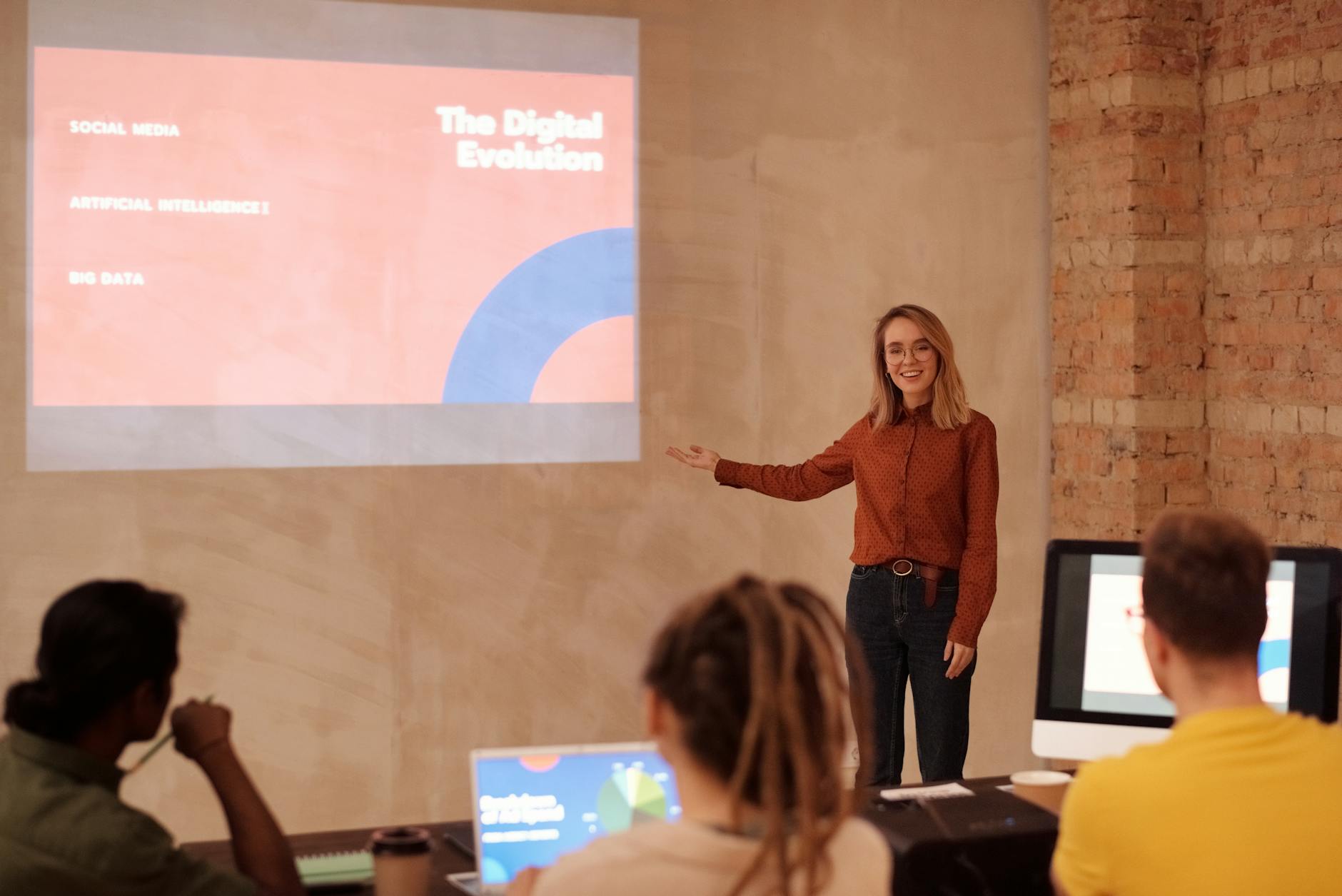
    Young woman presenting on digital evolution concepts like AI and big data in a seminar. Photo by Mikael Blomkvist

    Build Simple Chatbots for Shops

    Ecommerce owners want fast answers for buyers. No-code chatbot tools make it simple to set up product Q&A, order status checks, and lead capture forms without coding.

    • Good no-code picks: Zapier Chatbots, Tidio, and Botpress. This roundup of the best chatbot builders in 2025 shows options for beginners and power users.
    • Where it shines: FAQs, shipping details, size guides, and upsell prompts. Add a name and email field at the end to capture leads before handoff to live chat.
    • Lead capture wins:
      • Offer a discount code after email capture.
      • Save common questions, then email a weekly tips series.
      • Tag buyers by interest, for example, “running shoes” or “gifting.”

    How to launch in 48 hours:

    1. Pick one store niche, for example, skincare or pet supplies.
    2. List 15 FAQs from product pages and support emails.
    3. Build a bot flow, greet, 3 quick buttons, human handoff, and a lead form.
    4. Add it to the homepage and the top 5 product pages.
    5. Check logs daily and refine answers.

    Pricing and earnings:

    • Starter setup: $99 to $250 for one bot and 3 flows.
    • Care plan: $49 to $149 per month for tweaks and reports.
    • Outcome to sell: More email signups and faster pre-sale replies.

    For more builder options, compare interfaces in Tidio’s guide to chatbot builders for 2025.

    Create Videos Without Showing Your Face

    Faceless YouTube channels work when you keep a tight topic and a clean system. AI helps you write scripts, record voices, and edit faster.

    • Stack that works: ChatGPT for scripts, a text-to-speech tool for voice, and a simple editor like CapCut or Filmora.
    • Smart niches:
      • Quick tips, for example, Excel tricks or phone hacks.
      • Product roundups, best budget backpacks or kitchen tools.
      • Calm content, bedtime stories or ambient video with facts.
    • Monetize:
      • YouTube ads after meeting requirements.
      • Affiliate links in descriptions.
      • Digital products, templates or checklists.

    Fast workflow:

    1. Research 10 keywords with search intent and low competition.
    2. Draft a 5 to 7 minute script, hook, three points, summary, CTA.
    3. Record an AI voice, then add stock clips and B-roll.
    4. Export, upload, and write a clear title and thumbnail text.
    5. Post 2 to 3 times per week for 30 days.

    Helpful reads: See a practical roundup of tools in this guide to faceless YouTube video tools in 2025.

    Expected earnings:

    • New channels: $100 to $400 per month after consistent posting.
    • Growth stage: $500 to $1,000 per month with ads and affiliates.

    Freelance AI Code Help

    You do not need to be a senior engineer to earn here. Use AI coding assistants to take on small tasks for busy devs and solo founders.

    Beginner-friendly projects:

    • Fix simple bugs in HTML, CSS, or JavaScript.
    • Convert a Figma mockup to a basic landing page.
    • Add a contact form with email notifications.
    • Write unit tests for a few functions.
    • Clean up README files and install steps.
    • Build small scripts, CSV merge, renaming files, image resize.

    How to start this week:

    1. Pick one stack you can support, for example, React front ends or Python scripts.
    2. Create 3 fixed-price offers, $49 bug fix, $99 landing tweak, $149 script.
    3. Use an assistant to propose solutions, then test locally and document steps.
    4. Deliver with a short loom walkthrough and a clear change log.
    5. Ask for a one-line testimonial and a referral intro.

    Earnings snapshot:

    • 4 to 8 small tickets per month, $200 to $800.
    • With retainers for updates, $500 to $1,000 per month.

    Stand-out tip: Sell speed. Same-day fixes with clean notes make clients stick.

    Analyze Data with AI Insights

    Many small teams sit on spreadsheets they never use. Turn numbers into clear charts and simple actions with AI-assisted analysis.

    What you deliver:

    • A one-page snapshot, top 3 insights, one priority, next steps.
    • Clear visuals, weekly trends, top products, channel mix, refund rates.
    • A short call to explain findings and set a 30-day metric.

    Tools you can use:

    • Google Sheets with AI helpers to draft formulas and summaries.
    • Built-in AI in BI tools for quick chart suggestions.
    • CSVs and dashboards that update weekly.

    Use cases:

    • Ecommerce, spot products with high views and low conversions.
    • Local service, find peak inquiry times and top ZIP codes.
    • Content, identify posts with strong saves but weak clicks.

    Launch in 5 steps:

    1. Ask for a sample CSV and goal, for example, more add to carts.
    2. Clean columns, fix dates, and remove blanks.
    3. Create 5 to 7 charts that match the goal.
    4. Write a plain-language brief with actions, change titles, create a bundle, fix pages.
    5. Share a template so the client can refresh it monthly.

    Pricing and earnings:

    • One-time report: $149 to $350.
    • Monthly review: $99 to $249.
    • Hitting one clear metric keeps renewals strong.

    Teach AI Skills in Workshops

    People pay for hands-on help with common tools. Short, live workshops on Zoom sell fast when the outcomes are clear.

    Great topics for beginners:

    • ChatGPT for email, outlines, and meeting notes.
    • AI for resumes, keyword match and quick edits.
    • AI video basics, scripts, B-roll, and voiceover.
    • No-code chatbots for ecommerce FAQs.

    How to fill your first session:

    1. Pick a single outcome, for example, write a resume that passes ATS.
    2. Create a 60-minute outline, intro, steps, practice, Q&A.
    3. Post on LinkedIn and local Facebook groups with a clear promise.
    4. Price the first run at $19 to $39 to get traction.
    5. Record, then sell the replay as a mini course.

    Simple course outline example:

    • 0 to 10 minutes, what we will build and tool setup.
    • 10 to 35 minutes, live demo with a template.
    • 35 to 50 minutes, attendee practice time with prompts.
    • 50 to 60 minutes, Q&A and next steps.

    Earnings path:

    • 20 seats at $29 equals $580 for one live hour.
    • Add replays and templates to reach $500 to $1,000 per month.

    Pro tip: Send a checklist before the session, then a replay and a one-page cheat sheet after. This raises trust and referrals.

    Unique AI Product and Niche Hustles

    You can sell smart digital goods and tiny tools that solve real problems, all from your laptop. Most offers land in the $10 to $300 range per sale, with simple systems that scale. Use marketplaces like Etsy and Gumroad, or teach on Teachable. Set up automation for delivery and follow-up emails, then improve your best sellers with small updates.

    A focused individual types on a laptop running AI software indoors. Photo by Matheus Bertelli

    Sell Digital Downloads Made by AI

    Turn AI output into polished products people buy on repeat. Think templates, planners, and toolkits that save time.

    • Strong evergreen ideas:
      • Budget planners: Monthly, weekly, and sinking funds trackers.
      • Business templates: Client onboarding forms, SOP checklists, proposal kits.
      • Content calendars: 30 to 90 day post plans with prompts.
      • Study aids: Flashcards, summary sheets, revision planners.
      • Wellness trackers: Habit logs, meal plans, sleep and workout sheets.

    How to build and automate:

    1. Draft inside Google Docs or Notion, then design covers in Canva.
    2. Export clean PDFs or editable files for Canva or Sheets.
    3. List on Etsy or Gumroad with 5 to 7 mockups and a clear outcome.
    4. Automate delivery and add a welcome email with a quick-start guide.
    5. Ask buyers one question by email, what did this help you do, and collect ideas for version 2.

    Smart pricing:

    • Mini packs at $10 to $19, core kits at $25 to $49, premium bundles at $79 to $149.
    • Offer a storewide bundle at $199 to $299 for power users.

    Quick product map

    NicheProductTarget Price
    Personal finance12-month zero-based budget planner$19 to $39
    CoachesClient intake and session notes pack$29 to $79
    Content creators90-day content calendar with prompts$25 to $59

    Provide Fast Translation Services

    Mix AI speed with human edits to deliver clear, on-brand translations. Focus on industries that value accuracy and fast turnaround, like ecommerce, SaaS, and travel.

    • Your workflow:
      1. Run a first pass with AI to draft the translation.
      2. Edit for tone, idioms, and brand voice. Fix dates, numbers, and units.
      3. Add a short glossary and guidelines for repeat clients.
    • Target global clients:
      • Pitch ecommerce sellers, newsletter teams, and course creators.
      • Post samples and before and after snippets on LinkedIn.
      • List on 2 to 3 marketplaces to get early orders.
    • Pricing tip:
      • Charge per word with a minimum fee. Common ranges are $0.04 to $0.12 per word, with higher rates for technical or urgent work.

    Helpful reads:

    Offer ideas you can sell today:

    • Product page and email translations for Shopify stores.
    • App store listings and release notes for mobile apps.
    • Short legal disclaimers and FAQs with a client-approved glossary.

    Give AI Finance Advice

    Offer simple, personalized budgets and money tips that everyday people can use. Keep it clear, friendly, and focused on small wins. This is educational, not investment advice.

    • What to deliver:
      • Custom monthly budget based on income and fixed bills.
      • Debt payoff plan with snowball or avalanche method.
      • Savings roadmap, emergency fund and sinking funds.
      • Spending insights, 3 habits to change this month.
    • Easy tool stack:
      • Google Sheets for templates and charts.
      • ChatGPT to summarize patterns and suggest actions.
      • Loom for a 5-minute walkthrough of the file.
    • Simple 3-step setup:
      1. Ask for last month’s spending by category, income, and goals.
      2. Load numbers into a sheet, then auto-calc targets and timelines.
      3. Send a one-page action plan with due dates and a check-in invite.
    • Pricing:
      • Starter plan: $29 to $59 for a one-time budget.
      • Plus plan: $99 to $199 with a 30-day check-in and tweaks.

    Stand-out tip: Add a one-tap duplicate link so clients can update next month without help.

    Monetize Custom ChatGPT Setups

    Package AI workflows that save pros hours each week. You build the system once, then sell the file or offer a setup service.

    Good targets:

    • Real estate agents: Listing description generator, showing follow-up emails, and CMA summary prompts.
    • Consultants: Proposal drafts, meeting notes, and scope checks.
    • Ecommerce teams: Product copy, ad variants, UGC brief prompts, and customer support macros.

    How to sell:

    1. Create a clean prompt library with role, goal, and examples.
    2. Add step-by-step instructions and 2 sample outputs.
    3. Share as a Notion or Google Doc, then sell on Gumroad.
    4. Offer a premium tier with brand voice tuning and one live call.

    Pricing ideas:

    • Pack only: $29 to $79.
    • Pack plus setup call: $149 to $299.
    • Team version with SOPs and training video: $249 to $499.

    Pro move: Include a short troubleshooting section, what to tweak when results feel generic.

    Launch Tiny AI Apps for Niches

    Build a micro SaaS that fixes one pain point and charges a small subscription. No-code tools and APIs make this fast, even for beginners.

    Pick a narrow problem:

    • Scheduling aid for tutors with smart reminder texts.
    • Listing optimizer for marketplace sellers with title and tag suggestions.
    • FAQ answerer for nonprofit sites with simple report exports.
    • Email rewriter for sales reps with tone presets.

    Build and ship:

    1. Choose a no-code builder or a simple stack you know.
    2. Sketch flows on paper, sign up, set up payments, then connect AI.
    3. Ship a v1 in 7 to 10 days with one core feature.
    4. Add usage caps on the base plan, then upsell higher limits.

    Monetization:

    • Starter at $9 to $19 per month, Pro at $29 to $49, Team at $79 to $149.
    • Offer a free trial and a yearly discount to improve conversions.

    Scale tips:

    • Add a help center and in-app tips.
    • Watch support emails, then ship fixes that cut tickets.
    • Partner with niche creators for demos and reviews.

    These five ideas fit a simple path. Create a useful item once, list it on a trusted platform, and add small improvements each month. Sales stack up when your offer is clear, priced right, and easy to buy.

    Conclusion

    You now have 25 clear paths to earn with AI, from quick content gigs and prompt packs to faceless video, chatbots, data snapshots, workshops, and tiny apps. Each one is beginner friendly in 2025 thanks to simple tools, clean tutorials, and fast templates. The stack is ready, ChatGPT for words, Midjourney for visuals, no-code for flows, and easy checkouts for sales.

    Pick one idea, set a small scope, and ship this week. Share your first win in the comments, or try a free AI tool today and post your results. Keep notes, tighten your offer, and raise your price as outcomes improve.

    Small steps compound when you publish often and deliver on time. Start now, build momentum, and let your best offers stack into steady income. Flexible work, real skills, and scalable products are within reach. Your next pay bump can start today.