Tag: Future of AI

  • Unlocking AI: How Microsoft’s Mu Makes Intelligence Simpler and Smarter

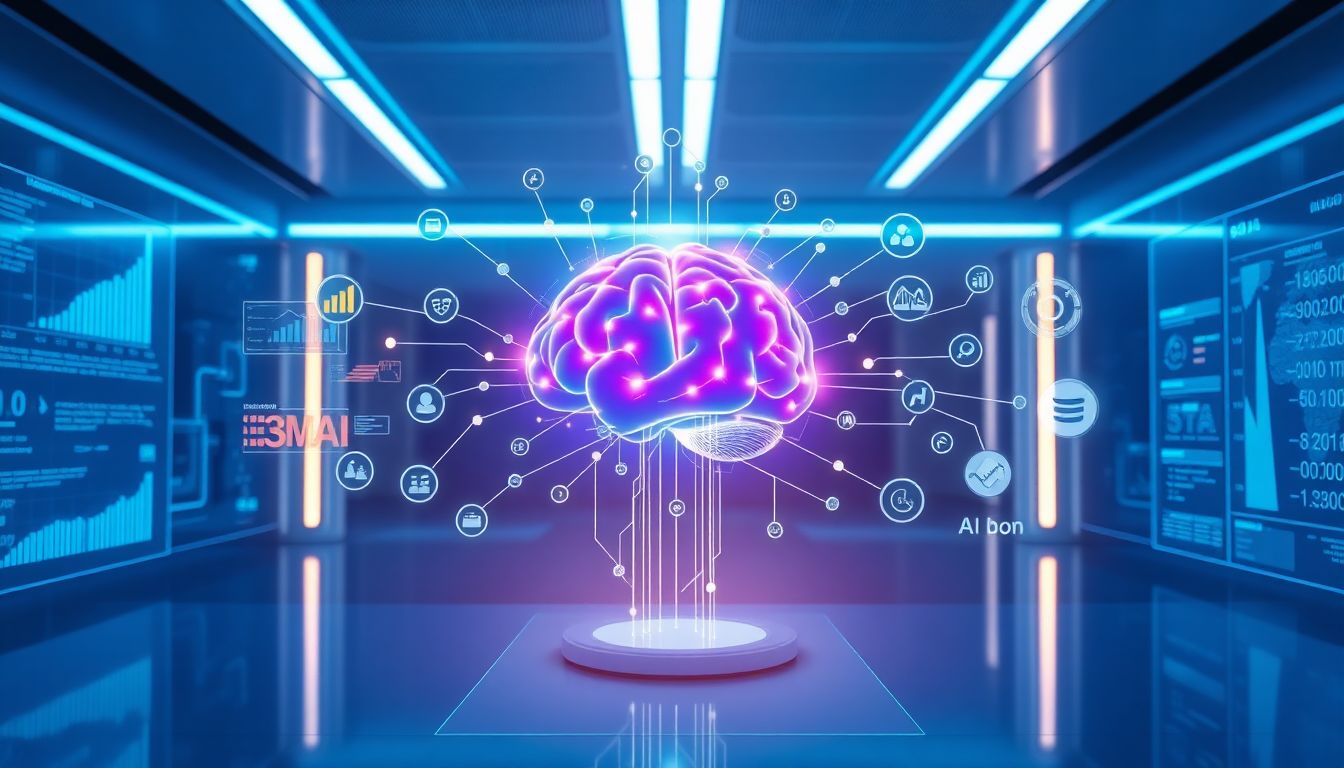
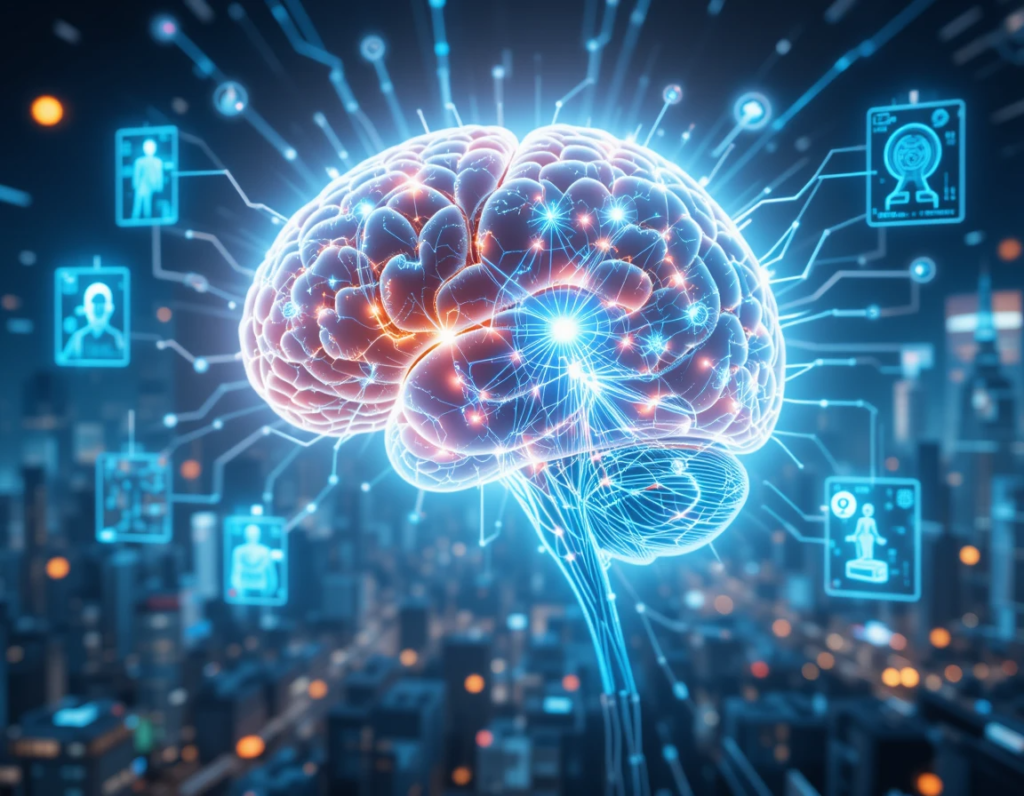
    Digital brain representing Microsoft Mu simplifying complex AI processes.

    Learn how this innovation is unlocking new possibilities in artificial intelligence.

    Clara’s desk was cluttered, but her monitor’s colors were always off. She spent her mornings searching for the brightness slider in Windows Settings. “It’s always just there,” she’d say, frustrated, “but where is there today?” This search took away from her creative time, leaving her drained before she even started.

    Her old PC couldn’t handle her needs for quick system tweaks.

    Then, she got a new Copilot+ PC, promising a new era of on-device AI.

    The world of artificial intelligence is changing fast. It’s moving from experiments to real changes in our lives. Microsoft is leading this change with AI that’s safe and secure. Microsoft Mu is a big step in this direction, bringing AI to your PC.

    Mu is not just an update. It’s a big change in how we use technology. It works fast and locally, making AI experiences better and more private. You don’t need the internet to use it.

    The Imperative of On-Device AI: Why Mu Matters Now

    AI has promised a lot, but it’s often been frustrating. Clara, a digital artist, spent hours in Windows Settings trying to fix her monitor’s colors. Her old PC couldn’t handle simple tasks, wasting her time.

    Microsoft Mu solves these problems. It works well on your PC, even when you’re offline. It makes everyday tasks easier and keeps your data safe.

    Decoding Mu: Understanding This Micro-Sized Powerhouse

    So, what is Mu? It’s a small, but powerful language model. Despite its size, it’s very capable. Mu is designed for small PCs and works fast, even offline.

    The Engineering Marvel: Mu’s Architectural Innovations for Peak Performance

    Mu’s design is truly brilliant. It’s small but powerful, thanks to its engineering.

    Encoder-Decoder Architecture: The Efficiency Game-Changer

    Mu uses a special architecture that’s different from old models. It has an encoder that changes your input into a fixed size, and then a decoder makes output tokens from that. This makes Mu very efficient, using less computation and memory.

    On devices like Qualcomm Hexagon NPU, Mu is much faster. It’s about 47% quicker for the first token and 4.7 times faster for decoding. These improvements are key for AI that needs to work fast.

    Mu was made to work well on NPUs and edge devices. It was carefully designed to fit the NPU’s needs. For example, it uses the right sizes for operations to run smoothly.

    Mu also saves memory by sharing weights in certain parts. It only uses operators that the NPU can speed up. This makes the most of the NPU’s power.

    To get better accuracy and speed, Mu has three transformer upgrades:

    Dual LayerNorm (pre- and post-LN) stabilizes training without adding much overhead.

    Rotary Positional Embeddings (RoPE) help the model understand long sequences better. It can handle sequences longer than it was trained on.

    Grouped-Query Attention (GQA) reduces memory and latency by sharing keys and values. This makes the model faster and uses less power.

    Mu was trained on many GPUs and learned from other models. It started with pre-training on educational tokens. Then, it learned from Microsoft’s Phi models.

    Low-rank adaption (LoRA) methods helped Mu get even better. This made it very efficient in learning from task-specific data.
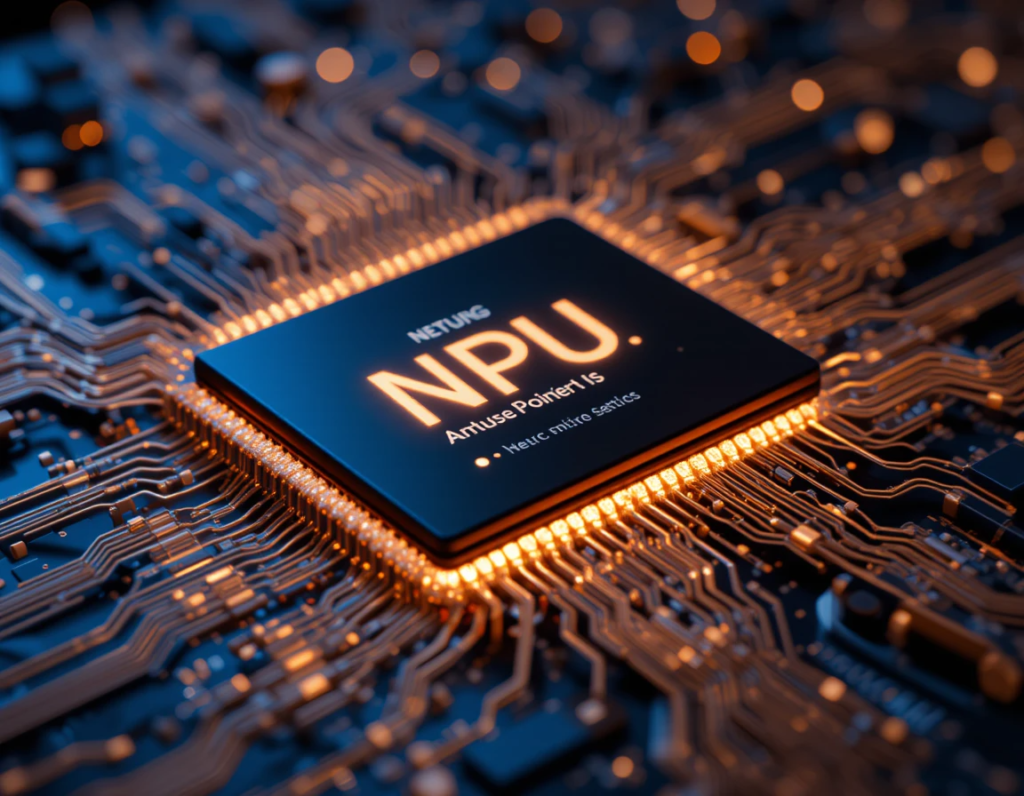
    Microsoft used advanced techniques to make Mu run well on devices. They changed the model’s weights and activations to use less memory and compute. This made Mu fast and efficient.

    Mu is now part of the Windows Settings AI agent. It helps change system settings easily. This makes it simpler to find and change settings.

    Mu’s AI agent is integrated into the Settings app. It responds quickly to user queries. For example, it can change settings in under 500 milliseconds.

    Remember Clara’s struggle with her monitor settings? She got a new Copilot+ PC and typed into the Settings search box: “Make my secondary monitor colors warmer” [conversation history]. Mu, the AI agent, quickly suggested adjusting the color temperature. With one click, her monitor’s colors were perfect [conversation history].

    She then asked for more complex settings: “Set my notifications to only show from my art software when I’m in fullscreen mode, and mute everything else.” Mu, designed for complex tasks, understood her query well. It offered a precise solution [conversation history, 37, 38]. Mu worked fast, processing over 100 tokens per second [conversation history, 44, 59].

    To achieve this precision, the Settings Agent’s training was carefully refined. Microsoft increased training samples by 1300 times and expanded settings coverage. They used synthetic labeling and diverse phrasing to improve the model. This way, the agent can handle short or partial-word inputs and multi-word queries for precise responses.

    The Mu-powered AI agent is now available to Windows Insiders in the Dev Channel. It works with Copilot+ PCs running Windows 11 Build 26120.3964 (KB5058496) or higher.

    The Broader Impact: Beyond Settings to a Transformed Future

    Microsoft Mu is more than a single feature. It’s a step towards a future where AI is part of our daily lives.

    The Rise of Intelligent Agents:

    Mu is part of a new generation of AI agents. These agents can handle complex tasks and work on your behalf. They are seen as the “apps of the AI era,” changing how we work and live. Microsoft ensures human oversight is key in this AI-powered world.

    AI Companions for Everyday Life:

    Outside work, Microsoft Copilot, powered by Mu, will be your AI companion. It will simplify daily tasks, save time, and protect your privacy. Imagine Copilot Daily summarizing news or Copilot Vision understanding web pages to help you.

    Efficiency and Sustainability at Scale:

    As AI grows, so does its need for resources. Microsoft is working to make AI more efficient and sustainable. They’re using custom silicon and liquid cooling for large AI systems. Microsoft aims to be carbon negative, water positive, and zero waste by 2030.

    Accelerating Scientific Breakthroughs:

    AI is also changing scientific research and innovation. It’s driving advances in supercomputing and biomolecular science. AI models like Mu are solving big problems, leading to new discoveries in drug development and sustainable materials.

    Conclusion: A New Era of Personal Computing

    Microsoft Mu is a big step in on-device AI, making AI experiences powerful and efficient on your PC. Its architecture and training show Microsoft’s commitment to AI advancements. Mu is changing how we interact with technology, making it more intelligent and seamless. This is a step towards a future where technology is deeply integrated into our lives, safely and securely.

    Take the Leap: Experience On-Device AI with Mu

    Are you ready to experience the next generation of personal computing?

    For Windows Insiders:

    If you have a Copilot+ PC, you can try out the Mu-powered AI agent in Windows Settings right now. Just install Windows 11 Build 26120.3964 (KB5058496) or higher. Provide your feedback to Microsoft as they continue to refine this groundbreaking experience! Explore Copilot+ PCs: Learn more about the hardware designed to unleash the full potential of these powerful on-device AI capabilities.

  • Top 5 AI Breakthroughs to Watch in 2025: The Future Is Now

    The AI Revolution Accelerates in 2025

    As of March 12, 2025, the artificial intelligence (AI) landscape is buzzing with potential. We’re not just tweaking existing models anymore—we’re on the cusp of paradigm shifts in healthcare, business, generative AI and customer service that could redefine how we live, work, and explore the universe. Drawing from current trends, research trajectories, and the ambitious ethos of innovators like xAI, I’ve zeroed in on five AI breakthroughs that could dominate headlines by year’s end. From machines that think like humans to systems that rewrite their own code, here’s what’s coming—and why it matters.

    1. Unified Multimodal AI: The All-Seeing, All-Knowing Machine

    Imagine an AI that doesn’t just read text or generate images but fuses every sensory input—text, visuals, audio, maybe even touch—into a seamless reasoning powerhouse. By late 2025, I predict we’ll see unified multimodal AI take center stage. Unified Multimodal AI is poised to become a transformative force, integrating diverse data types—text, images, audio, and video—to create systems that are more intuitive, capable, and contextually aware.This isn’t about stitching together separate modules (like today’s GPT-4o or Google’s Gemini); it’s a holistic brain that processes a video, hears the dialogue, and critiques the plot with uncanny insight, much like the new platform from China called “Manus.”

    2. Quantum-Powered AI Training: Speed Meets Scale

    Training today’s massive AI models takes months and guzzles energy like a small city. Enter quantum-powered AI training, a breakthrough I’d bet on for 2025. Driven by breakthroughs in hardware, hybrid systems, and algorithmic innovation. Here’s how this convergence is reshaping AI development and Quantum computing, long a sci-fi tease, is maturing—IBM and Google are pushing the envelope—and pairing it with AI could slash training times to days while tackling problems too complex for classical computers.

    Picture this: a trillion-parameter model for climate prediction or drug discovery, trained in a weekend. The trend’s clear—quantum supremacy is nearing practical use, and AI’s computational hunger makes it a perfect match. This could unlock hyper-specialized tools, making 2025 the year AI goes from “big” to “unthinkable.” By late 2025, expect wider adoption of quantum-inspired AI models that blend classical and quantum techniques

    3. Self-Improving AI: The Machine That Evolves Itself

    What if an AI didn’t need humans to get smarter? By 2025, I expect self-improving AI—sometimes called recursive intelligence—to step into the spotlight. This is a system that spots its own flaws (say, a reasoning bias) and rewrites its code to fix them, all without a programmer’s nudge.

    We’re already seeing hints with AutoML and meta-learning, but 2025 could bring a leap where AI iterates autonomously. xAI’s mission to fast-track human discovery aligns perfectly here—imagine an AI that evolves to crack physics puzzles overnight. Ethics debates will flare (how do you control a self-upgrading brain?), but the potential’s staggering.

    4. AI-Driven Biological Interfaces: Merging Mind and Machine

     "Digital illustration of an AI-driven biological interface connecting a human brain to technology in a futuristic setting."

    Elon Musk’s Neuralink is just the tip of the iceberg. By 2025, AI-driven biological interfaces could crack real-time neural signal translation—turning brainwaves into commands or thoughts into text. Picture an AI that learns your neural patterns via reinforcement learning, then powers intuitive prosthetics or lets paralyzed individuals “speak” through thought alone.

    The trend’s building: non-invasive brain tech is advancing, and AI’s pattern-decoding skills are sharpening. This could bridge the human-machine divide, making 2025 a milestone for accessibility and transhumanism. Sci-fi? Sure. But it’s closer than you think.

    5. Energy-Efficient AI at Scale: Green Tech Goes Big

    AI’s dirty secret? It’s an energy hog—training one model can match a car’s lifetime carbon footprint. I’m forecasting a 2025 breakthrough in energy-efficient AI, where sparse neural networks or neuromorphic chips cut power use dramatically. Think models that run on a fraction of today’s juice without sacrificing punch.

    Why 2025? Climate pressure’s mounting, and Big Tech’s racing to innovate—Google’s already teasing sustainable AI frameworks. This could democratize the field, letting startups wield monster models without bankrupting the planet. It’s practical, urgent, and overdue.

    Why These Breakthroughs Matter

    These aren’t standalone wins—they’ll amplify each other. They are paving the way for a future where AI is more intuitive, efficient, and impactful across every aspect of society. Multimodal AI could leverage quantum training for speed, self-improving systems could optimize biological interfaces, and energy-efficient designs could make it all scalable. By December 2025, we might look back and say this was the year AI stopped mimicking humans and started outpacing us.

    For society, the stakes are high. Jobs, ethics, and equity will shift—fast. A Mars rover with multimodal smarts could redefine exploration, while brain-linked AI could transform healthcare. But with great power comes great debate: who controls self-improving AI? How do we regulate quantum leaps?

    What do you think? Are you rooting for a mind-melding AI or a quantum-powered leap? Drop your thoughts below—I’d love to hear your take. The future’s unwritten, but 2025’s shaping up to be one hell of a chapter.

  • What’s New in AI for 2025? Key Trends to Watch

    What’s New in AI for 2025? Key Trends to Watch

    As we enter 2025, artificial intelligence (ai) is changing fast, thanks to machine learning. Everyone wants to know: what’s new in ai for 2025 that will change our lives and work? With innovation speeding up, it’s key to keep up and learn about the new trends in artificial intelligence.

    The mix of artificial intelligence and machine learning is leading to cool new things. We’ll look at the latest trends and breakthroughs in ai for 2025. These changes are making big waves in industries and shaping the future of artificial intelligence.

    Key Takeaways

    • Artificial intelligence (ai) is advancing rapidly, driven by machine learning innovations
    • What’s new in ai for 2025 includes emerging trends in natural language processing and computer vision
    • Machine learning is playing a crucial role in shaping the future of artificial intelligence
    • The intersection of ai and machine learning is transforming industries and revolutionizing the way we live and work
    • Staying informed about the latest developments in artificial intelligence is essential for businesses and individuals alike
    • What’s new in ai for 2025 will have a significant impact on the future of technology and innovation

    The Evolving Landscape of Artificial Intelligence in 2025

    As we explore the latest in AI, we see big steps forward in multimodal ai, ai governance, and ai ethics. These areas are key to AI’s future and its use in many fields.

    Current State of AI Technology

    AI tech is advancing fast, with big leaps in natural language, computer vision, and machine learning. Multimodal ai models, which handle different types of data, are now key in chatbots and virtual assistants.

    Major Shifts in AI Development

    AI development is changing, focusing more on responsible AI, better computing, and ai governance. This change aims for AI that’s clear, fair, and trustworthy for everyone.

    Impact Across Industries

    These changes are affecting many sectors, like healthcare, finance, education, and transport. Ai ethics is now a big deal, making sure AI systems respect human values and do good for society.

    As AI keeps growing, it’s vital to focus on ai governance, ai ethics, and responsible AI. This way, we can enjoy AI’s benefits while avoiding its downsides.

    Industry AI Application Impact
    Healthcare Medical diagnosis Improved accuracy and patient outcomes
    Finance Risk management Enhanced risk assessment and mitigation
    Education Personalized learning Customized learning experiences for students

    Breakthrough Developments in Multimodal AI Models

    Artificial intelligence has seen big leaps forward, thanks to multimodal AI models. These models can now understand and create language like humans. Large language models are leading this charge, making AI systems better and faster. Adding sustainable AI and edge computing boosts their abilities even more.

    These models bring many benefits, like better language skills. They can help in many fields, like healthcare, finance, and education. For example, they can read medical texts or handle big data fast with edge computing.

    • Ability to process and generate human-like language
    • Integration with sustainable AI practices
    • Edge computing capabilities for real-time data processing

    Businesses and organizations are drawn to multimodal AI models for their AI power. As the tech grows, we’ll see more cool uses of large language models, sustainable AI, and edge computing.

    AI Model Application Benefits
    Large Language Models Language Translation Improved accuracy and efficiency
    Edge Computing Real-time Data Processing Enhanced speed and reduced latency
    Sustainable AI Environmental Monitoring Increased accuracy and reduced carbon footprint

    Looking ahead, we must keep exploring multimodal AI models. By using large language models, sustainable AI, and edge computing, we can make AI better and more useful. This will lead to a more efficient and effective AI world.

    What’s New in AI for 2025? Key Trends Reshaping the Industry

    The AI industry is changing fast, thanks to new tech in ai infrastructure, neural networks, and making AI more accessible. This means AI is now used in many fields, making things easier and more efficient.

    If you work in tech, lead a business, or just love AI, you need to know the latest. Some big changes include:

    • Advanced natural language processing, making it easier to understand and create language
    • Computer vision getting better, helping us recognize and analyze images and videos
    • Improvements in audio and speech recognition, making voice commands and audio inputs more useful

    These changes come from better ai infrastructure and more powerful neural networks. Also, making AI easier for everyone to use, no matter their size or budget.

    As AI keeps getting better, we’ll see new and exciting ways it’s used. Keeping up with AI trends helps you stay ahead in this fast-changing field.

    The future of AI looks bright, full of possibilities and benefits. With ongoing improvements in ai infrastructure, neural networks, and making AI more accessible, AI will play a bigger role in our lives and work.

    AI Governance and Regulatory Framework Evolution

    Artificial intelligence is growing fast and becoming more common. This makes it crucial to have good rules and governance for AI. For business AI, the risks and benefits are huge. It’s key to keep AI safe to avoid problems.

    Creating global AI policies is a big task. It involves governments, businesses, and groups that care about society. We need rules, ethics, and to be open and accountable. This way, we can use AI’s good sides while avoiding its bad ones.

    • Creating strong AI safety plans
    • Setting clear rules for AI making and using
    • Making sure AI decisions are open and fair
    • Keeping human rights safe and avoiding AI bias

    By teaming up to tackle these issues, we can make AI work for everyone. This way, AI’s benefits will grow, and its downsides will shrink.

    Sustainable and Efficient Computing Solutions

    The need for sustainable and efficient computing grows as artificial intelligence demand increases. Generative ai plays a key role here, making ai systems more efficient. It’s also important to focus on responsible ai development for sustainability and efficiency.

    Key benefits of these solutions include:

    • Reduced energy consumption
    • Lower costs
    • Increased ai efficiency

    These advantages are vital for ai technology adoption. They can be achieved with generative ai and responsible ai development.

    By focusing on sustainable computing, we can ensure a greener ai future. This means prioritizing ai efficiency and using responsible ai development practices.

    As we progress, developing sustainable computing solutions is crucial. This will help us fully utilize ai while reducing its environmental footprint. By combining generative ai, responsible ai development, and ai efficiency, we can build a sustainable ai future.

    Enterprise AI Integration and Implementation

    Businesses are always looking for better ways to work. AI integration helps them do this by making operations smoother and decisions smarter. Deep learning lets companies automate hard tasks and understand their data better.

    AI innovation brings many benefits to businesses. They can make better choices, serve customers better, and work more efficiently. AI is changing many areas, including:

    • Business process automation: automating repetitive and mundane tasks to free up resources for more strategic initiatives
    • Decision support systems: providing data-driven insights to inform business decisions
    • AI-powered analytics: uncovering hidden patterns and trends in data to drive business growth

    By using AI and deep learning, companies can lead the way. They can work better and grow more. The possibilities with AI are endless and very promising.

    ai integration

    Benefits of AI Integration Description
    Improved Efficiency Automating repetitive tasks to free up resources
    Enhanced Decision-Making Providing data-driven insights to inform business decisions
    Increased Productivity Streamlining operations and improving overall performance

    Democratization of AI Technologies

    AI is becoming more accessible and affordable for everyone. This change is thanks to ai trends 2025, which make AI easier to use. Now, businesses and individuals can use AI to improve their work and decisions.

    AI offers many benefits, including:

    • Improved efficiency and productivity
    • Enhanced customer experience
    • Data-driven decision making

    These advantages will lead to more companies using AI in 2025. This will help them stay ahead in the market.

    The future of AI looks bright, with many uses in healthcare, finance, and education. As AI gets better, we’ll see new ways to change our lives and work.

    The spread of AI technology will greatly impact the future. It will make AI more available and affordable for all.

    AI Trend Description
    AI-powered automation Automating repetitive tasks to improve efficiency
    AI-driven decision making Using AI to analyze data and make informed decisions
    AI-enhanced customer experience Using AI to personalize customer interactions

    Safety and Responsible AI Development Practices

    As we see more ai advancements in 2025, safety and responsible AI development are key. New ai technologies are changing our lives, from healthcare to finance. It’s important to develop these systems with care.

    The latest in risk assessment, bias mitigation, and transparency are crucial. They help make sure 2025 ai innovations help society, not harm it.

    AI has made many industries more efficient and productive. But, it also brings risks. We need strong risk assessment frameworks and bias mitigation strategies. This ensures ai is fair and safe for everyone.

    Risk Assessment Frameworks

    Risk assessment frameworks are vital for ai safety. They help identify and reduce risks. These frameworks should assess risks and benefits of new ai technologies.

    Bias Mitigation Strategies

    Bias mitigation strategies are key for fair ai. They help detect and reduce bias in ai systems. This makes sure ai is fair for everyone.

    ai advancements 2025

    Transparency Initiatives

    Transparency is crucial for responsible ai use. It provides clear info about ai development and use. This helps users make informed choices.

    Conclusion: The Future Trajectory of AI Innovation

    The world of artificial intelligence is changing fast in 2025. AI growth predictions show we’ll see more progress. This progress will change how we live and work, making our lives better.

    AI is getting smarter, with new tools like AI analytics and computer vision. These tools will open up new possibilities for us. We’ll see big changes in many areas, like healthcare and finance.

    But, there are challenges ahead. We must use AI wisely and follow ethical rules. This way, AI can help us build a better world. The future of AI is full of promise, and it’s exciting to see what’s coming.