
Tag: GoogleAI

  • Why Did They Name It “Nano-Banana Pro”?

    Why Did They Name It “Nano-Banana Pro”?

    Most tech names sound like license plates. A few letters, a number, maybe “v2,” and everyone moves on. That’s why “Nano-Banana Pro” sticks out. It sounds like a snack, not software, and yet it became a real label people use when talking about a serious image model.

    In simple terms, Nano-Banana Pro is tied to the image model many people first met as “Nano Banana,” a nickname that circulated more widely than the technical name (often referenced as Gemini 2.5 Flash Image in developer conversations). This post explains the Nano Banana meaning, why is Nano Banana called that, and why the name later picked up a “Pro” tag.

    What “Nano-Banana Pro” refers to in plain English

    “Nano Banana” started as a human-friendly name for something that, on paper, reads like a spec sheet. In many technical references, the underlying model is associated with Gemini and its “Flash” family, which is meant to be quick and practical for day-to-day use. For background on the broader Gemini model family, see Gemini’s model overview [https://en.wikipedia.org/wiki/Gemini_(language_model)].

    So where does “Nano-Banana Pro” fit?

    • “Nano Banana” is the sticky nickname, the one people remember and repeat.
    • “Pro” usually signals a higher-tier option, like a more capable version, a premium mode inside an app, or a label that helps separate “the one everyone memes” from “the one teams build on.”

    The label also matches how people actually use these tools. The popular use cases are not abstract. They are practical, visual tasks that are easy to show in a screenshot:

    Image edits that don’t fall apart: Small changes like swapping a background, adjusting lighting, or changing an outfit without rewriting the whole scene.

    Consistent characters: Keeping the same person or mascot recognizable across multiple images, instead of getting a “new face” every time.

    Remixing photos: Turning a real photo into a poster, a comic style frame, or a cleaner restoration-like look.

    Readable text in images: Adding signs, labels, and short headlines that look intentional, not like scrambled letters.

    “Pro” fits because it signals expectation. People read it as “the version meant for heavier use,” even if the exact feature list depends on where it’s offered.

    Nano Banana meaning, “nano” plus “banana,” and why it sounds memorable

    At face value, the Nano Banana meaning is almost comically simple: nano suggests something tiny, lightweight, or fast, and banana is… a banana. It is silly on purpose.

    That silliness is the whole point. A name like “Gemini 2.5 Flash Image” is accurate, but it’s hard to repeat in a group chat. “Nano Banana” is short, rhythmic, and weird enough to stand out. It also avoids a common problem in AI naming: confusion. Many models sound the same, but nobody mixes up “Nano Banana” with anything else.

    It functions like a bright sticker on a plain box. The sticker does not explain everything inside, but people remember it.

    Why is Nano Banana called that, the short answer before the deeper story

    The short version is that “Nano Banana” began as a rushed codename used for blind testing, then it escaped into public talk because people liked both the results and the name. It wasn’t designed as a polished marketing brand first. The full story is more personal than most folks expect.
    The real origin story, a 2:30 a.m. codename made for LMArena

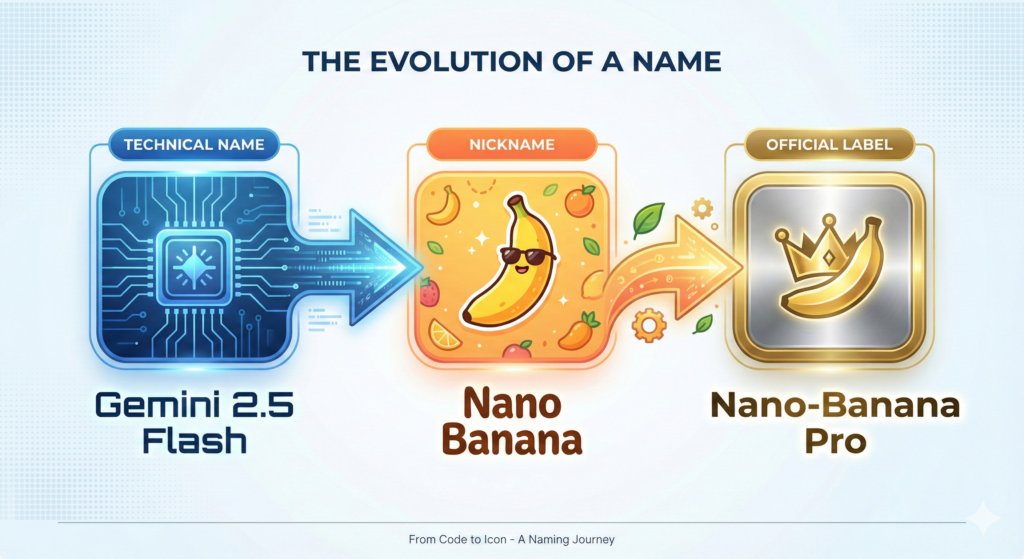
    The clearest explanation comes from Google itself. In Google’s account of the name’s origin, the codename was picked under pressure, late at night, because the team needed something to label a model for a public evaluation setting. That setting is often described as side-by-side testing, where models appear under hidden identities so users judge outputs without bias. In that kind of environment, a codename is a practical necessity, not a branding exercise.

    Google tells the story in How Nano Banana got its name [https://blog.google/products-and-platforms/products/gemini/how-nano-banana-got-its-name/]. The key point is simple: the name was born from the need to move fast, not from a long naming workshop.

    That timing mattered. The model’s performance started getting attention, and the name acted like a handle people could grab. When a model shows up in a testing arena and produces surprisingly good images, the community needs a quick label to compare notes. A catchy codename makes that easy.

    This is also where the “Pro” add-on makes sense later. Once a nickname becomes the common word people use, it’s hard to replace it with something bland. Over time, product naming tends to bend toward what users already say out loud.

    A mashup of personal nicknames, “Nano” plus “Naina Banana”

    The most human part of the story is that “Nano Banana” was not pulled from a random-word generator. It grew out of personal nicknames connected to Product Manager Naina Raisinghani, as Google describes in its write-up.

    Friends called her “Naina Banana,” and “Nano” was used as shorthand tied to her height and her love of computers. Put those together in a late-night sprint, and “Nano Banana” appears. It sounds like a joke because, in a way, it was. It just happened to be a joke that shipped.

    That’s also why the name feels oddly warm compared to standard AI labels. It has an inside-story vibe, like a scribble on a whiteboard that never got erased.

    Why “Nano” didn’t feel totally random for a “Flash” style model

    Even with the personal origin, “nano” also reads like it belongs in a technical family. “Nano” has long been used in tech to suggest smaller scale or lighter footprint, whether or not the model is literally tiny. For a “Flash” style model, which is framed around speed and practicality, “Nano” feels like a natural fit. It hints at quickness and efficiency, even if it started as a nickname first.

    So the name worked on two levels at once: personal and plausible. That combination is rare, and it helps explain why it stuck.

    How a placeholder name turned into the brand people actually use

    Viral names usually need two ingredients: something worth sharing, and a label that makes sharing effortless. “Nano Banana” had both.

    First, people were impressed by the outputs they could show immediately. Image models spread through examples, not through spec sheets. A single before-and-after edit or a consistent character across scenes tells the story faster than paragraphs ever could.

    Second, the name did the marketing work by itself. “Nano Banana” is easy to type, easy to remember, and funny without trying too hard. That makes it travel. A long technical name tends to get shortened anyway, and this one arrived pre-shortened.

    Coverage from January 2026 continued to amplify the story, including a recap of how the name was chosen and how widely it circulated after launch. PCMag’s reporting is one example, in here’s how the Nano Banana AI model got its name [https://au.pcmag.com/ai/115383/heres-how-googles-nano-banana-ai-model-got-its-name].

    Once a nickname becomes the default term, teams face a choice: fight it, or adopt it. Adoption often wins.

    The model’s edits got attention, the name made it easy to spread

    There is a simple pattern behind many tech nicknames. If the thing works, people talk about it. If the name is fun, more people join the conversation.

    In this case, users needed a quick label for comparisons, prompts, and shared results. “Nano Banana” became the shorthand for a specific “look” and behavior people recognized, even when the official references used more formal model names.

    That’s why the question “Why is Nano Banana called that” keeps coming up. The name sounds like a meme, but it points to a real tool people were actively using and discussing.

    “Pro” is the signal that it’s not just a meme anymore

    Adding “Pro” changes the tone. It tells users and buyers that this is meant to be taken seriously, even if the core name is playful.

    In product naming, “Pro” usually communicates one or more of these ideas:

    A higher tier: More capability, more control, or fewer limits than a base mode.

    A clearer lane: A way to separate casual use from creator or developer use.

    A stable label: Something that can become a line of products over time, not a one-off nickname.

    So “Nano-Banana Pro” reads like a bridge between two worlds: the internet’s favorite nickname, and a naming system that can live on pricing pages and in app menus.
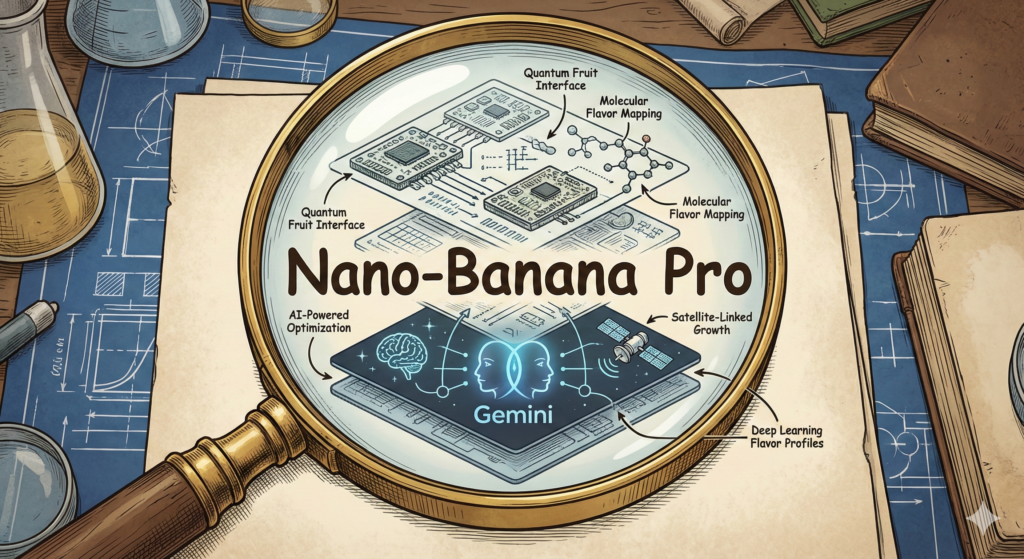
    An infographic showing a clear flow from 'Technical Name (Gemini 2.5 Flash)' to 'Nano Banana (Nickname)' to 'Nano-Banana Pro (Official Label)', using playful yet professional graphics.

    Conclusion

    Nano-Banana Pro has a strange name for a straightforward reason. It started as a rushed codename for public testing, it came from personal nicknames, and it also happened to match the “fast and practical” feel people associate with Flash-style models. Once the model impressed users, the name spread because it was easy to repeat.

    The Nano Banana meaning is simple: small, fast energy plus a silly banana hook. And that answers the main question of why it’s called that. In AI, a name people remember can matter almost as much as the benchmarks, because memory is what turns a tool into a habit.

    FAQ:


    What exactly does “Nano-Banana Pro” refer to?

    Nano-Banana Pro is the human-friendly and widely recognized nickname for a specific, serious image model, technically associated with the Gemini 2.5 Flash family. It’s designed for quick and practical day-to-day use in image generation.

    Why was the name “Nano Banana” chosen initially?

    The name ‘Nano Banana’ emerged as a more accessible and memorable alternative to the complex technical specifications of the underlying AI model. It helped make the model relatable and easier to discuss among a broader audience.

    What does the ‘Pro’ addition signify in ‘Nano-Banana Pro’?

    The ‘Pro’ tag typically indicates an enhanced, professional, or more advanced version of the original ‘Nano Banana’ concept. It denotes improvements, specific features, or a refined iteration within the model’s development.

    Is Nano-Banana Pro related to Google’s Gemini AI?

    Yes, Nano-Banana Pro is directly tied to the Gemini model family, specifically within its ‘Flash’ series. This series is characterized by its efficiency and practicality for various image-related tasks.

  • Stop Prompting, Start Architecting: The 2026 Blueprint for AI Mastery

    Stop Prompting, Start Architecting: The 2026 Blueprint for AI Mastery

    If you are still trying to find the “perfect magic words” to make ChatGPT or Claude behave, you are living in 2024. Welcome to January 2026, where the game has fundamentally changed. We aren’t just “prompting” anymore; we are orchestrating intelligence.
    The “Prompt Engineer” job title that everyone obsessed over two years ago? It’s evolving into something much more powerful: the AI Behavior Architect. We’ve moved past the era of “acting as a professional copywriter” and entered the era of agentic workflows, perceptual anchoring, and self-healing systems.
    This week, the AI world was rocked by three massive shifts that redefine how you interact with silicon. If you want to stay ahead of the curve, you need to understand why your old “hacks” are failing and what the new 2026 standard looks like.

    1. The “Say What You See” Revolution: Google’s SWYS Breakthrough
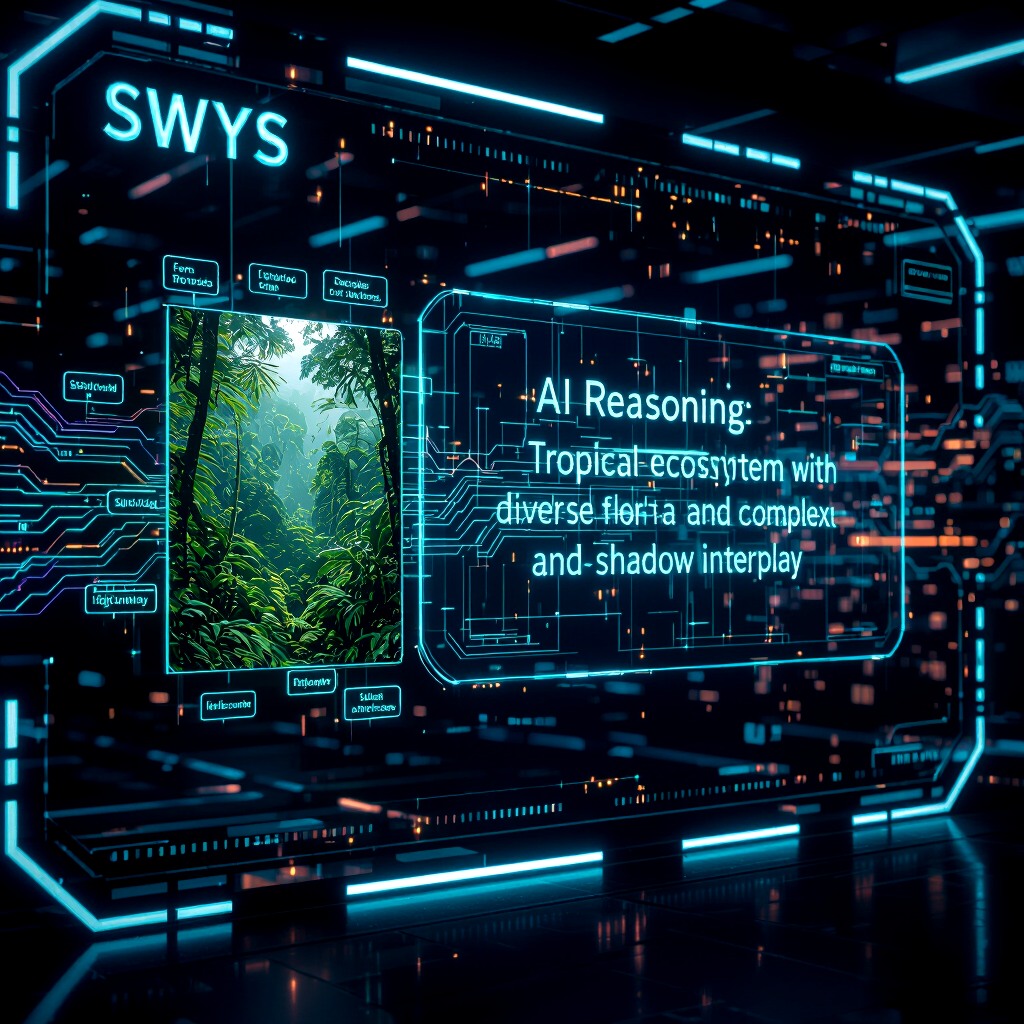
      Just days ago, a technique dubbed SWYS (Say What You See) went viral across the developer community, promising—and delivering—a staggering 76% gain in LLM accuracy for complex reasoning tasks.
      For years, we thought the key to better output was more complex instructions. We wrote paragraphs of “Chain-of-Thought” logic, hoping the model wouldn’t hallucinate. But Google’s latest research suggests we were looking at the problem backward. Instead of telling the AI how to think, SWYS forces the AI to verbally anchor its perception before it attempts a task.
      The technique is deceptively simple: You ask the AI to describe every component of the input data in excruciating detail before asking for a solution. It’s the digital equivalent of a detective narrating everything they see at a crime scene before making a deduction.

    The SWYS Framework in Action


    Instead of: “Analyze this financial spreadsheet and find the three biggest risks.”
    The 2026 SWYS Prompt looks like:
    “First, identify every column header and row category in the provided data. Describe the data types and any visual outliers you notice. Once you have mapped the ‘landscape’ of the data, then—and only then—analyze the top three risks.”

    Why This Matters:
    It’s about latent signal activation. By forcing the model to “Say What It Sees,” you are activating multimodal training signals that stay dormant during standard text processing. This reduces “glance-over” errors—those annoying moments where the AI misses a line of text or a specific number right in front of its face. In the high-stakes world of 2026, where AI manages our medical records and legal contracts, a 76% accuracy jump isn’t just a “nice to have”—it’s the difference between a successful automation and a catastrophic failure.

    1. From “Prompting” to “Agentic Scaffolding”: The Claude Code Shift
      We’ve seen a massive shift in how Anthropic’s Claude handles complex tasks this month. The data from the latest Anthropic Economic Index shows that we have officially crossed the “Human-in-the-Loop” Rubicon.
      Six months ago, a tool like Claude Code could handle maybe 10 autonomous actions before it needed a human to nudge it. As of January 2026, that number has doubled to 21+ consecutive tool calls. What does that mean for you? It means “Prompt Engineering” is being replaced by Agentic Scaffolding.
      You are no longer writing a prompt for a chatbot; you are writing a Mission Briefing for an agent that can browse your files, run terminal commands, call APIs, and self-correct its own errors.
    human hand orchestrating multiple AI agents on a holographic interface

    The Shift in Strategy


    In 2026, the best “prompts” aren’t prose; they are environment definitions. You aren’t telling the AI what to write; you are telling the AI what tools it has access to and what the success criteria (Evals) look like.
    Key Term: Evals (Evaluations). In 2026, if you aren’t providing the AI with a way to “grade itself,” your prompt is incomplete. Modern architects use “Self-Correction Loops” where the prompt includes a step: “Run a validation check on your output against [Standard X] and if it fails, iterate until it passes.”

    Why This Matters:
    Efficiency is the new currency. Anthropic’s data shows that while we are delegating less of our total work, the complexity of what we delegate has skyrocketed. We are moving from “Help me write this email” to “Build and deploy this microservice.” If you don’t master Agentic Scaffolding, you will be stuck doing the “papercut” tasks while the AI-literate workforce is building entire ecosystems with a single command.

    1. The Rise of “Tree of Thoughts” (ToT) at Scale
      If you’ve been following the latest benchmarks, you know that Standard Prompting is currently sitting at a measly 7.3% success rate for highly complex, multi-variable problems. Meanwhile, Tree of Thoughts (ToT) is hitting 74%.
      ToT is the 2026 evolution of Chain-of-Thought. Instead of a single linear path of reasoning, the AI explores multiple “branches” of thought simultaneously, evaluates them, and “prunes” the ones that don’t lead to a solution.

    The “Expert Panel” Prompt Template
    To leverage this, viral strategists are using the Multi-Expert Persona approach.
    Instead of: “Give me a marketing strategy for my new app.”
    The ToT Prompt looks like:
    “Act as a panel of three experts: a Growth Hacker, a Brand Strategist, and a Financial Analyst.

    • Each expert proposes one distinct strategy.
    • The experts then critique each other’s strategies for flaws.
    • Based on the critique, synthesize the most robust, risk-mitigated plan.”
      Why This Matters
      We are seeing the end of “Single-Model Bias.” By forcing the AI to simulate internal conflict and debate, we bypass the “path of least resistance” that models often take. This is how you get System 2 thinking (slow, deliberate, logical) out of a system that defaults to System 1 (fast, intuitive, sometimes wrong).
    1. The 2026 Viral Prompting Cheat Sheet (The “Architect” Method)
      To help you dominate this new landscape, I’ve distilled the “hottest” 2026 techniques into a quick-reference guide. Stop using “Please” and “Thank you”—start using
    A vast digital landscape stretches toward a dark horizon, filled with thousands of floating blue geometric prisms representing data points. In the center of the frame, a pair of ethereal, translucent hands made of shimmering white light reach out to grasp a single, intensely glowing golden cube. The golden cube is labeled with the text 'GROUND TRUTH' in a clean, sans-serif font. The light from the cube casts a warm radiance across the translucent fingers of the AI hands, highlighting their intricate, circuit-like internal structures. The background features a faint, receding grid of cyan lines on a deep black floor. The scene is rendered in a sharp, cinematic 3D style with a shallow depth of field that keeps the focus on the moment of contact.

    Structural Constraints.


    Technique
    How to Use It 2026 Viral Power Level Verbal Anchoring

    • “List all facts in the source text before summarizing.”
      Negative Constraints
    • “Do NOT use corporate buzzwords, passive voice, or introductions.
    • “Dynamic JSON Output” Output the response strictly in a JSON schema for [App Name].
    • “Recursive Refinement”Rewrite your previous answer three times, making it 10% more concise each time.”Contextual Grounding”Access the [Project Archive] and use only verified data from the 2025 Q4 report.”
    1. The “Invisible” Prompt: AI Embedded in Everything
      Finally, we have to talk about the “Death of the Chat Window.” In 2026, the most successful prompt engineering is the kind the user never sees.
      With Google Workspace Studio and OpenAI’s ChatGPT Atlas, prompts are being baked into the UI. You aren’t typing into a box; you are clicking a “Refactor” button that triggers a 500-word meta-prompt in the background.
      The takeaway for you? If you are building tools or content, focus on Context Engineering. The real “moat” in 2026 isn’t the model you use; it’s the proprietary context you feed it. Whoever has the best-organized data wins, because the AI is finally smart enough to use it.

    Conclusion:
    The era of “guessing” what the AI wants is over. We have the frameworks, we have the agentic tools, and we have the benchmarks. The transition from Prompt Engineer to AI Behavior Architect is the most significant career pivot of the decade.
    Don’t just talk to the machine. Design its reality. Define its tools. Scaffold its thoughts. In 2026, the power belongs not to the one who speaks the loudest, but to the one who structures the most effectively.
    Are you ready to stop prompting and start architecting?

    FAQ:
    What is AI Behavior Architecture and how does it differ from traditional prompt engineering?

    AI Behavior Architecture is the evolved approach beyond simple prompting, focusing on designing and orchestrating complex agentic workflows, perceptual anchoring, and self-healing systems for AIs. Unlike traditional prompt engineering that seeks ‘magic words,’ behavior architecture aims to define how an AI thinks, perceives, and acts over time.

    What is Google’s ‘Say What You See’ (SWYS) technique and why is it a game-changer?

    SWYS (Say What You See) is a Google breakthrough that forces an AI to verbally describe every component of its input data in excruciating detail before attempting a task. This perceptual anchoring leads to a staggering 76% gain in LLM accuracy for complex reasoning by ensuring the AI fully ‘sees’ and processes all information before generating a solution.

    Why are my old AI ‘hacks’ and prompting strategies failing in 2026?

    Old prompting ‘hacks’ are failing because the AI landscape has fundamentally shifted by 2026. We’ve moved past single-turn interactions to agentic workflows, and AIs require more sophisticated methods like perceptual anchoring (e.g., SWYS) to ground their understanding and prevent hallucinations, making simplistic prompting obsolete.

    How can I start implementing AI Behavior Architecture and SWYS in my projects?

    To implement AI Behavior Architecture, begin by understanding agentic design patterns and breaking down complex tasks into manageable AI sub-tasks. For SWYS, integrate an initial step where the AI meticulously describes its input. Experiment with feedback loops to create self-healing systems and continuously refine your AI’s behavioral design.

    References

    • Google Research (Jan 13, 2026): “Say What You See: Unlocking 76% Accuracy in LLM Perception.”
    • Anthropic Economic Index (Jan 2026): “The Shift from Automation to Augmentation in the Global Workforce.”
    • OpenAI Developer Community: “Tree of Thoughts vs. Chain of Thought: The 2026 Performance Gap.”
    • VentureBeat: “The Rise of the AI Behavior Architect.”