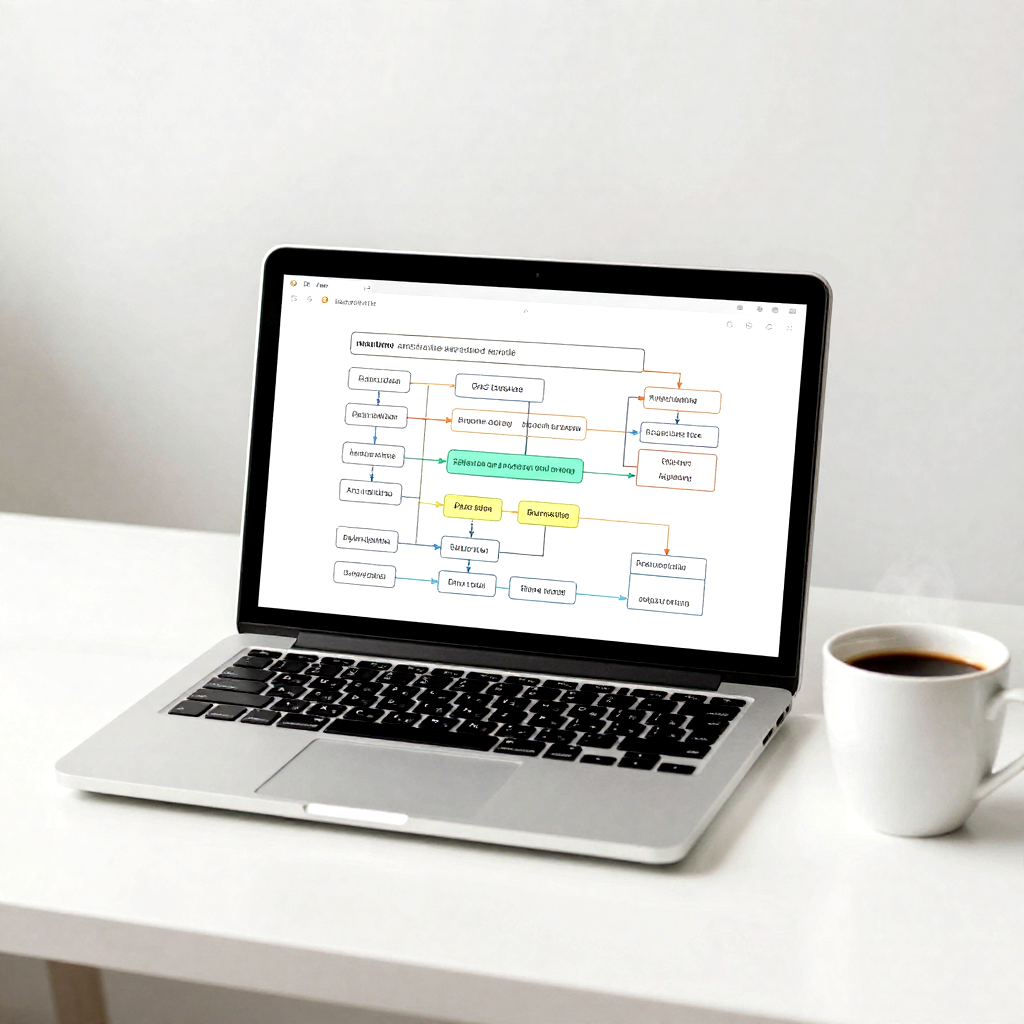

Automate Your SEO With Automated Synthesis AI: Engineering and Synthesis, End to End
A chatbox is a great demo and a bad system. It’s fine for brainstorming, but it falls apart the moment you need repeatable work, shared outputs, and audit trails. If your SEO process depends on copy-pasting exports into a prompt window, you’ve turned a supercomputer into a typewriter.
Engineering and synthesis fixes that. Engineering means connecting real data sources (GSC, crawls, SERP notes, competitor lists), running the same steps every time, and logging what happened. Synthesis means turning that input into structured outputs your team can ship, like content briefs, technical tickets, and internal-link plans, not random paragraphs that change with every prompt.
This post shows how to automate SEO work from data pull to content brief using automated synthesis AI. The payoff is simple: faster cycles, fewer mistakes, easy version control, and consistent output across a team.
The death of manual prompting, why copy-pasting caps your SEO growth
Manual prompting feels productive because it’s immediate. Then the backlog hits. Audits, refreshes, internal links, reporting, and “quick checks” pile up, and the only scaling plan is more tabs and more paste.
That’s the trap. A chat workflow makes SEO look like writing, when most of the job is data work. You’re joining tables, filtering noise, spotting patterns, and then turning those patterns into decisions.
The best reason to automate is not speed, it’s repeatability. When your process repeats weekly or monthly, the system should run it. Humans should review and approve.
If you want a sober take on what to automate (and what not to), the risks and tradeoffs are explained well in this overview of SEO automation strategies and workflows.
The hidden costs, context switching, inconsistency, and data errors
Every time you Alt-Tab, you pay a tax. You reformat CSVs, trim columns, and paste “just the top 50 rows.” Then someone else does the same task with different filters and different prompts.
Small copy mistakes become bad recommendations. One wrong URL, one missing canonical column, or one misread GSC time range, and you ship the wrong fix. Teams feel this hardest because there’s no shared “truth.” Prompts live in DMs, outputs live in docs, and nobody can diff changes like code.
From prompt engineering to prompt programming (the mindset shift)
Prompt engineering chases the perfect prompt. Prompt programming designs a flow: inputs, rules, and outputs. You still write prompts, but you treat them like templates with variables and a strict schema.
That shift unlocks basic software hygiene:
- Store prompt templates in Git.
- Add “golden” test cases (known inputs with known expected outputs).
- Version the output format, so downstream tools don’t break.
- Log every run, so you can explain why a recommendation appeared.
If a teammate can’t reproduce your result tomorrow, it’s not automation. It’s improvisation.
Architecture overview, connect Google Search Console and Screaming Frog to LLM pipelines
Think of the system as a conveyor belt. Data enters on one side, decisions come out the other side, and every step has a known shape. Your goal is not “better writing.” Your goal is structured output that other tools can use.
A practical pipeline usually has these stages:
- Pull performance data (GSC).
- Pull site reality (crawl exports).
- Normalize and join (Python).
- Add controlled context (SERP notes, competitor URLs, brand rules).
- Synthesize into a schema (briefs, tickets, tables).
- Publish outputs where work happens (Sheets, Notion, Jira, Git).
If you want a concrete example that starts with exports and ends with automation, this Google Sheets, GSC, and ChatGPT API workflow maps well to how many teams bootstrap a pipeline before they harden it in code.
What data you should pull first (and why it matters)
Start with the minimum set that supports decisions.
From GSC, pull: queries, pages, clicks, impressions, CTR, average position, and date ranges that match your release cadence. If you can, include page indexing and coverage signals too, because performance without indexability is a dead end.
From Screaming Frog (or any crawler export), pull: status codes, canonicals, titles, H1s, word count, indexability, internal inlinks, and schema presence. Also capture performance-related fields where you can, because slow pages often underperform even with good content.
Each field earns its place:
- Impressions high, CTR low points to snippet or intent mismatch.
- Position drops often signal content decay, SERP shifts, or competitors improving.
- Thin pages with overlapping queries are merge candidates.
- Internal-link gaps show why good pages plateau.
The pipeline pattern: retrieval, reasoning, and structured output
Automated synthesis AI works best when you separate concerns:
- Retrieval: fetch trusted rows and documents.
- Reasoning: apply rules over that data.
- Structured output: emit a consistent format.
Keep math in code when possible. Let the model explain, group, and draft, but don’t ask it to compute your KPI deltas from raw tables. Also force the model to cite which rows it used, even if citations are internal (row IDs, URLs, query strings).
Automated synthesis frameworks, turn raw keyword data into semantic content maps
Keyword dumps aren’t plans. A plan tells a writer what to write, an editor what to check, and an SEO what to measure. The fastest way to get there is to synthesize around intent first, then structure the output so it becomes work.
In 2026, more teams are standardizing these pipelines with a mix of scripts, workflow tools, and SEO platforms. If you’re comparing options, this roundup of SEO automation tools that support Google Search Console gives a useful cross-section of how vendors package similar building blocks.
Cluster by intent, then name topics like a human would
Start with intent buckets that map to real pages:
- Learn: definitions, how-to, troubleshooting.
- Compare: alternatives, best-of, versus.
- Buy: pricing, product-led pages, integrations.
- Validate: reviews, specs, compliance, migration.
Only then cluster by similarity. You can use shared terms, SERP overlap, or embeddings, but don’t over-cluster. If two queries want different page types, split them even if the words look close.
Name topics like a human would. “INP optimization for React apps” beats “INP speed score improve.”
Build a content map that includes pages you should update, not just new ones
New pages are exciting, updates are profitable. Your content map should call out quick wins, slipping pages, cannibalization, and merge targets.
Here’s the kind of table that makes automated synthesis AI outputs instantly usable:
| Page / Topic | Primary intent | What’s missing | Internal links to add | Priority |
|---|---|---|---|---|
| /feature/x | Buy | Pricing context, objections | Link from /pricing, /compare | High |
| /guides/y | Learn | Step order, examples, FAQ | Link from /docs, /blog hubs | High |
| /blog/z | Learn | Updated screenshots, 2026 notes | Link to /feature/x | Medium |
| /compare/a-vs-b | Compare | Decision matrix, “who it’s for” | Link from /alternatives | Medium |
The takeaway: a content map is a backlog, not a brainstorm. It tells you what to ship next week.
Build the pipeline with Python and Zapier, automate competitor gap analysis end to end
You don’t need a big platform to start. A weekend build can cover 80 percent of the value if you focus on plumbing and output shape.
Also, decide what runs on a schedule versus on demand. Scheduled runs catch trends early (decay, drops, anomalies). On-demand runs support launches, migrations, and big refreshes.
If you want an example of pairing crawl data with AI analysis, this walkthrough on automating optimization with Screaming Frog and ChatGPT shows the general pattern: export, enrich, and synthesize into actions.

A simple workflow you can ship in a weekend
A practical flow looks like this:
- Scheduled export from GSC to a sheet or database.
- Run a Screaming Frog crawl (or ingest a crawl export on a cadence).
- Pull competitor top URLs from your SEO tool export or a curated list.
- Normalize in Python (clean columns, de-dupe, join by topic or URL patterns).
- Send packed context to the model, with hard limits and a schema.
- Write results to where work happens (Sheets, Notion, Jira, or a Git repo).
Don’t skip the unsexy parts: retries, rate limits, and logs. Silent failure creates fake confidence, which is worse than no automation.
Make the output “machine-ready” so it plugs into briefs, tickets, and dashboards
Machine-ready means consistent fields, clear priorities, and links back to evidence. A good synthesis output should read like a ticket, not like a blog comment.
Require fields like: recommendation, affected URL, evidence (GSC rows and crawl findings), effort estimate, expected impact, owner, and due date. When every item has the same shape, you can sort, filter, and assign without meetings.
Case study, generate 500 data-driven content briefs in under 10 minutes
Here’s a realistic way teams scale briefs without trashing quality.
Inputs: keyword clusters (by intent), top SERP notes (titles and headings), GSC metrics per target page, crawl data for on-page reality, and a small set of brand rules (audience, tone, claims policy). Then the pipeline generates 500 briefs in batch, each as a structured object.
The time saver isn’t the writing. It’s eliminating the setup work that humans repeat: pulling pages, copying headings, summarizing competitors, and formatting a brief template.
Inputs, rules, and guardrails that keep quality high at scale
Guardrails are what make automated synthesis AI trustworthy:
- Force each brief to cite the input rows it used (URLs, query strings, metrics).
- Reject briefs that look too similar (overlap detection).
- Flag missing sections (no H2s, no target question, no internal links).
- Keep “unknown” as an allowed value, so the model doesn’t invent facts.
For technical tasks, teams often start with a narrow win, like bulk alt text. This example of automating alt text with Screaming Frog and OpenAI highlights why constraints matter: the model needs the image context, the field length, and a consistency rule.
The fastest way to reduce hallucinations is to require evidence fields and allow “not enough data” as an answer.
What the briefs contain so writers and editors move fast
A brief that scales has a predictable spine:
- One-sentence answer first (BLUF).
- Target intent and “who it’s for.”
- Suggested H2s and H3s with short notes.
- Must-cover points (facts, examples, edge cases).
- Things to avoid (unsupported claims, wrong audience).
- Internal links to add (source page and target page).
- Schema suggestions when relevant.
- Success metric (rank change, CTR lift, lead action).
Because the output is structured, you can auto-create tasks in your PM tool and attach the brief as fields, not as a messy doc.
Future-proof your SEO career with an engineering mindset
The long-term value isn’t typing better prompts. It’s building reliable systems that other people can run. When output is consistent and auditable, teams trust it, and leadership funds it.
The new core skills: systems thinking, data comfort, and evaluation
Start small and stack skills in the order that pays off:
- APIs and exports (GSC, analytics, crawl tools)
- Basic Python for cleaning and joins
- Data models and schemas (what fields exist, what types)
- Logging and alerts (so runs don’t fail quietly)
- Evaluation (spot checks, benchmarks, acceptance criteria)
Treat your synthesis prompt like code: tests, versions, and clear contracts.
A quick self-audit to find your biggest “human-in-the-loop” bottlenecks
Run this quick audit today and pick one fix:
- Where do you copy-paste the same export every week?
- Where do you reformat columns just to make a prompt work?
- Where does output vary by person, even with “the same task”?
- Where do you lose track of why a recommendation was made?
Your first automation should remove one repeatable pain, like turning weekly GSC drops into pre-written refresh tickets. If you want a forcing function, create a one-page “Automated Synthesis Maturity Model” and an architecture diagram your team can agree on.
FAQ
Is automated synthesis AI the same as RAG?
Not exactly. Retrieval-augmented generation is one way to feed fresh context, often from a vector database. Automated synthesis AI is broader. It includes retrieval, rule-based reasoning, and strict structured output, even when you don’t use embeddings.
Do I need LangChain or LlamaIndex to do this?
No. A simple script plus an API call can work. Orchestration frameworks help when you have multiple steps, tools, and retries. Add them after you’ve proven the workflow.
How do I stop the model from making things up?
Require evidence fields that point back to your dataset. Also keep calculations in code, and allow “unknown” outputs. Finally, add sampling checks and fail the run when required fields are missing.
What should I automate first for SEO?
Start with something high-volume and low-drama: internal-link suggestions from crawl data, content refresh candidates from GSC, or brief generation from clusters. Avoid automating page edits until you trust your inputs.
Can a small team do this without a data engineer?
Yes, if you keep scope tight. Use exports first, then move to APIs, then add scheduling and logs. The system can grow with you.

Conclusion
If your SEO depends on a chat window, you’re stuck at the speed of copy-paste. Automated synthesis AI flips the workflow: automate retrieval, standardize reasoning, and enforce structured outputs. The result is faster shipping, fewer errors, and cleaner collaboration across content and engineering. Pick one workflow (gap analysis or briefs), connect GSC plus crawl data, then add guardrails so the system stays trustworthy.