Tag: TechTrends

  • Unlock AI Profit With Nano-Banana Pro Prompts (25 High-Yield Themes)

    Unlock AI Profit With Nano-Banana Pro Prompts (25 High-Yield Themes)

    Top Prompts for Creators…

    Most people don’t need “better AI.” They need outputs they can ship: a landing page that converts, an email sequence that sells, a product image set that looks consistent, a proposal that wins the deal.

    That’s what Nano-Banana Pro Prompts are for. “Nano” is the mindset of small, efficient prompting, fewer tokens, more signal. “Banana” is a creative persona mode that pushes specificity, style, and bold choices, without slipping into sloppy or risky claims. Put them together and you get fast, repeatable work you can sell.

    If you want AI profit, these AI prompt themes are built for conversion-focused assets, not random idea dumps. Pick a theme, produce one deliverable, package it, repeat.

    The Nano-Banana method: small prompts, big signal, less fluff

    Nano-Banana works because it forces clarity. Instead of asking for “copy for my offer,” you define role, constraints, and the exact deliverable. You also stop the model from filling space with vague advice.

    Here are the core rules that keep outputs sharp:

    • Define the role (copy chief, performance marketer, e-commerce merchandiser, creative director).
    • Set constraints (length, reading level, tone, banned claims, required sections).
    • Provide inputs (offer, audience, price, proof, objections, brand voice).
    • Specify the output format (a wireframe, an email series, a checklist, a table).
    • Add acceptance criteria (must include one primary CTA, must include FAQs, must include 3 objections plus rebuttals).

    This is the main idea: your prompt should read like a mini-brief, not a chat message.

    “Done” is not “good ideas.” Done is a deliverable you can sell or ship today, like a 7-email welcome series, a landing page draft with FAQ, or a set of 12 ad variants.

    If you’re using Nano-Banana for visuals, the same rules apply. Visual work sells when it’s consistent. That’s why features like reliable text rendering and character consistency matter for business assets. Tools and guides in the Nano Banana ecosystem have put a lot of focus on brand-ready outputs such as consistent characters and readable text inside images, which is a big reason creators are selling visual packs and product images faster (see examples in Nano Banana Pro marketing prompts).

    A simple structure that keeps results consistent

    You don’t need a long prompt. You need a repeatable shape. Use labeled sections so you can swap inputs without rewriting everything.

    A clean structure looks like this:

    FieldWhat to includeExample detail
    ContextWhat you’re selling and why now“New bundle, limited-time bonus”
    TaskThe deliverable“Write a landing page wireframe + copy”
    InputsAudience, offer, proof, price“Freelance designers, $49”
    RulesConstraints and must-haves“No made-up stats, 8th-grade reading level”
    Output formatHow to present it“Headlines, sections, FAQs, CTA button text”
    Quality checksAcceptance criteria“Include 3 objections with rebuttals”

    One small trick: write your acceptance criteria like a checklist. It keeps the model from wandering, and it makes it easier to review work quickly.

    Safety, brand, and client-ready rules that prevent mistakes

    If you want approvals fast (and fewer revisions), add guardrails that match real client expectations:

    No made-up facts: If you didn’t provide numbers, require “proof placeholders” instead of invented stats.
    Flag uncertainty: If something is unknown, the output should say “needs confirmation” and list what to verify.
    Avoid trademark misuse: Ask for “inspired-by” language when needed, and avoid logos unless you have rights.
    Add disclaimers for finance and health: Simple, clear disclaimers reduce risk and back-and-forth.
    Keep one voice: Define tone and banned phrases, then require consistency across every asset.

    This isn’t about being cautious for its own sake. It’s about protecting your time. Fewer fixes equals more deliverables per week, which is how AI profit becomes real.

    For more inspiration on prompt patterns people share and reuse, scan a practical breakdown like viral Nano Banana prompt structures, then adapt those ideas into client-safe workflows.

    25 Nano-Banana prompt themes you can monetize this week

    Below are 25 AI prompt themes grouped by intent. Each one includes what it produces, who buys it, and how to package it so it feels like a product, not a random file.

    Offer and funnel builders (themes 1 to 9)

    1. Irresistible offer generator: Produces offer stack, bonuses, guarantee, urgency. Buyers: coaches, course creators. Package: “10 offer angles” bundle.
    2. Landing page wireframe plus copy: Produces section order, headlines, body copy, FAQ, CTA. Buyers: founders, agencies. Package: funnel-in-a-box draft.
    3. Upsell and order bump mapper: Produces order bump ideas, upsell sequence, price ladder. Buyers: e-commerce, info products. Package: “cart value booster” kit.
    4. Webinar or VSL script builder: Produces hook, big promise, story, proof, CTA loops. Buyers: educators, high-ticket sellers. Package: 20-minute VSL script plus outline.
    5. Lead magnet outline creator: Produces checklist, mini-guide, or email course outline. Buyers: newsletter operators. Package: 3 lead magnets, pick one.
    6. Email welcome sequence (5 to 7 emails): Produces subject lines, CTAs, segmentation tags. Buyers: SaaS, creators. Package: “Welcome Series + 2 resend variants.”
    7. Abandoned cart recovery set: Produces 3 emails plus 2 SMS drafts. Buyers: Shopify brands. Package: plug-and-play flows for one product line.
    8. Objection crusher pack: Produces top objections, rebuttals, proof ideas, risk-reversal lines. Buyers: anyone selling. Package: “10 objections, 3 rebuttals each.”
    9. Conversion audit checklist: Produces prioritized fixes for a page, with impact and effort notes. Buyers: agencies, solopreneurs. Package: monthly retainer audit.

    A lot of creators monetize this by being the “implementation specialist,” not the idea person. Real buyers pay for finished assets. For examples of monetizable Nano Banana business paths, see AI business models built around Nano Banana.

    Content that sells (themes 10 to 17)

    1. Short-form video script factory: Produces 15 to 45-second scripts with 5 hooks. Buyers: creators, local businesses. Package: 30 scripts per month.
    2. Carousel and thread builder: Produces swipeable structure, punchy lines, CTA slide. Buyers: LinkedIn and X creators. Package: “12 carousels, 4 threads.”
    3. SEO blog brief plus outline: Produces search intent, headings, FAQs, internal link ideas. Buyers: SaaS and affiliates. Package: content calendar + 4 briefs.
    4. Product-led storytelling posts: Produces case-study style posts with before/after and proof placeholders. Buyers: apps, service providers. Package: weekly story series.
    5. Authority positioning kit: Produces bio, founder story, talking points, podcast pitch angles. Buyers: consultants. Package: one-page brand doc + 10 talking points.
    6. Swipe file remixer (ethical): Produces original angles based on patterns, not copying. Buyers: marketers. Package: “20 fresh hooks from 5 reference ads.”
    7. Comment-to-DM conversion scripts: Produces polite, non-spammy replies that move to DM with consent. Buyers: social sellers. Package: script library by scenario.
    8. Repurposing map: Produces a plan to turn one video into 10 assets across platforms. Buyers: busy founders. Package: Notion board plus weekly map.

    This category is where bursty output pays off. You can generate variety fast, but still keep one voice by locking rules and acceptance criteria.

    Products, creative assets, and visuals (themes 18 to 25)

    1. E-commerce product listing pack: Produces title, bullets, description, FAQ, review response templates. Buyers: Amazon and Shopify sellers. Package: 10 listings, one niche.
    2. Product photography prompt blueprint: Produces consistent lighting, angles, backgrounds, and “do-not-change” rules. Buyers: e-commerce brands. Package: 20-shot list per product.
    3. Mockup and prototype visual prompts: Produces prompt sets for device mockups, packaging mockups, logo placement rules. Buyers: designers, agencies. Package: brand-ready mockup bundle.
    4. Ad creative variants: Produces 5 angles, 5 headlines, 5 visual directions, plus CTAs. Buyers: performance teams. Package: monthly ad refresh pack.
    5. Course slide deck outline: Produces lesson flow, slide-by-slide outline, quiz questions, workbook prompts. Buyers: educators. Package: “Module 1 complete” deliverable.
    6. Brand voice and style guide generator: Produces do and don’t list, words to use, words to avoid, sample paragraphs. Buyers: small brands. Package: voice guide + 10 examples.
    7. Localization and cultural rewrite kit: Produces US-to-UK or US-to-AU versions, simpler reading level, local terms. Buyers: SaaS, e-commerce. Package: 5 key pages localized.
    8. Client proposal and scope builder: Produces scope, timeline, deliverables, revision limits, and assumptions. Buyers: freelancers. Package: proposal template plus 3 scope tiers.

    If you want a deeper library of visual styles you can adapt into client-safe prompt packs, browse a catalog like Nano Banana image prompt styles and translate style names into brand guidelines your clients can approve.

    Turn prompt themes into paid “prompt packs” and services

    The biggest shift is mental: stop selling prompts as “cool tricks.” Sell them as repeatable production systems. Your buyer doesn’t want a prompt, they want a result with less time and fewer edits.

    Practical monetization paths that work without hype:

    Freelancing (asset delivery): You deliver the landing page, emails, ad set, or product visuals. Prompting stays behind the scenes.
    Productized services (fixed scope): “7-email welcome sequence in 72 hours” or “20 product images in 48 hours.”
    Template packs (DIY): Sell Nano-Banana Pro Prompts as a kit with brief forms, examples, and usage notes.
    Retainers: Monthly content packs, ad variants, or conversion audits.
    Bundles: Combine themes, like “Offer + Landing Page + Welcome Emails,” so the value feels obvious.

    Pricing gets easier when you anchor it to outcomes and time saved. A $300 prompt pack feels expensive. A $300 “Funnel Copy Starter Kit” that replaces a week of work feels cheap.

    If you need prompt inspiration for visual and marketing use cases, a curated collection like Nano Banana Pro prompt examples can help you see how others package consistent outputs, then you can write your own prompts in your own voice.

    Three easy packaging plays: done-for-you, done-with-you, DIY

    Done-for-you: You deliver final assets. Include an intake form, one round of revisions, and “proof placeholders” the client can fill.
    Done-with-you: A live session plus templates. Include a workshop agenda, the prompt set, and a shared doc where you run prompts together.
    DIY: Sell prompt packs. Include brief prompts, main prompts, QA checks, and example outputs so buyers don’t get stuck.

    The best part: you can build one theme once, then sell it in three formats.

    Quality checks that protect results and your reputation

    A simple QA checklist catches most problems before a client sees them:

    • Clear goal and one target audience
    • One primary CTA (not five)
    • Consistent voice across every asset
    • No false claims, no invented numbers
    • Proof placeholders where evidence is needed
    • Compliance notes for sensitive topics
    • Final formatting exactly as requested (headings, bullets, length)

    Keep a reusable “client intake” prompt too. Better inputs mean fewer reruns, which is the quiet engine behind steady AI profit.

    Conclusion

    Pick one of the 25 AI prompt themes and create one deliverable in the next 60 minutes. Keep it small, keep it structured, and make “done” look like something a buyer can use today.

    That’s the point of Nano-Banana Pro Prompts: small prompts, strong constraints, client-ready outputs. Start with one theme, package it, sell it, then expand into a full prompt pack that fits your niche.

    FAQ:


    What are “Nano-Banana” pro prompts?

    Nano-Banana prompts refer to highly efficient, low-token prompt engineering techniques (‘Nano’) combined with methods to achieve creative, unrestricted, or distinct AI outputs (‘Banana’), often bypassing generic responses and limitations.

    How do these prompts help unlock AI profit?

    By generating highly specific, conversion-focused, and unique content, these prompts enable users to create valuable AI-powered assets for marketing, sales, content creation, and more, leading to tangible business outcomes and increased profit margins.

    Are these high-yield prompts suitable for beginners in AI?

    While the article focuses on advanced, high-yield themes, many concepts can be adapted for beginners. However, professionals with some foundational prompt engineering experience will likely gain the most immediate and profound benefits.

    Where can I apply these Nano-Banana prompt themes?

    These themes can be applied across various AI models and platforms for diverse tasks such as copywriting, social media content, product descriptions, market research analysis, content outlines, generating unique creative narratives, and developing distinct AI personas.

  • Stop Prompting, Start Architecting: The 2026 Blueprint for AI Mastery

    Stop Prompting, Start Architecting: The 2026 Blueprint for AI Mastery

    If you are still trying to find the “perfect magic words” to make ChatGPT or Claude behave, you are living in 2024. Welcome to January 2026, where the game has fundamentally changed. We aren’t just “prompting” anymore; we are orchestrating intelligence.
    The “Prompt Engineer” job title that everyone obsessed over two years ago? It’s evolving into something much more powerful: the AI Behavior Architect. We’ve moved past the era of “acting as a professional copywriter” and entered the era of agentic workflows, perceptual anchoring, and self-healing systems.
    This week, the AI world was rocked by three massive shifts that redefine how you interact with silicon. If you want to stay ahead of the curve, you need to understand why your old “hacks” are failing and what the new 2026 standard looks like.

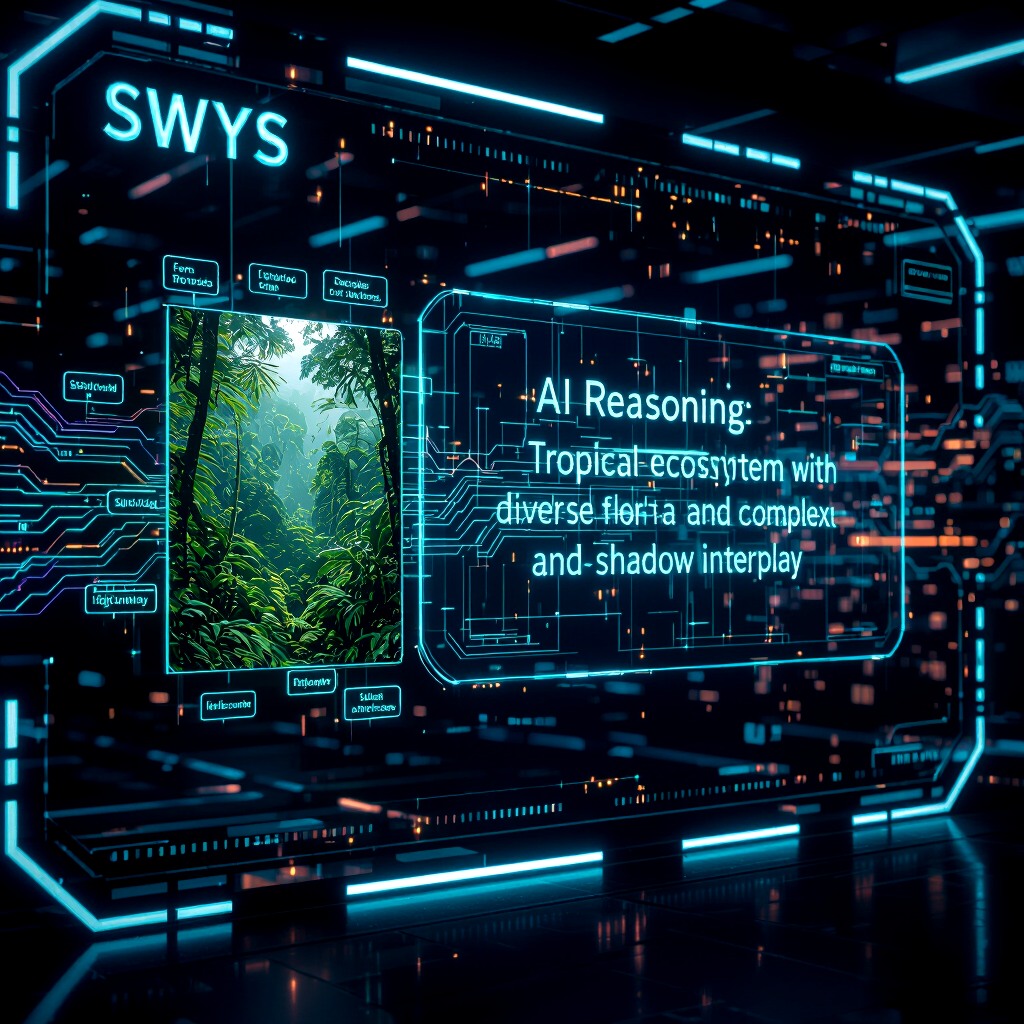
    1. The “Say What You See” Revolution: Google’s SWYS Breakthrough
      Just days ago, a technique dubbed SWYS (Say What You See) went viral across the developer community, promising—and delivering—a staggering 76% gain in LLM accuracy for complex reasoning tasks.
      For years, we thought the key to better output was more complex instructions. We wrote paragraphs of “Chain-of-Thought” logic, hoping the model wouldn’t hallucinate. But Google’s latest research suggests we were looking at the problem backward. Instead of telling the AI how to think, SWYS forces the AI to verbally anchor its perception before it attempts a task.
      The technique is deceptively simple: You ask the AI to describe every component of the input data in excruciating detail before asking for a solution. It’s the digital equivalent of a detective narrating everything they see at a crime scene before making a deduction.

    The SWYS Framework in Action


    Instead of: “Analyze this financial spreadsheet and find the three biggest risks.”
    The 2026 SWYS Prompt looks like:
    “First, identify every column header and row category in the provided data. Describe the data types and any visual outliers you notice. Once you have mapped the ‘landscape’ of the data, then—and only then—analyze the top three risks.”

    Why This Matters:
    It’s about latent signal activation. By forcing the model to “Say What It Sees,” you are activating multimodal training signals that stay dormant during standard text processing. This reduces “glance-over” errors—those annoying moments where the AI misses a line of text or a specific number right in front of its face. In the high-stakes world of 2026, where AI manages our medical records and legal contracts, a 76% accuracy jump isn’t just a “nice to have”—it’s the difference between a successful automation and a catastrophic failure.

    1. From “Prompting” to “Agentic Scaffolding”: The Claude Code Shift
      We’ve seen a massive shift in how Anthropic’s Claude handles complex tasks this month. The data from the latest Anthropic Economic Index shows that we have officially crossed the “Human-in-the-Loop” Rubicon.
      Six months ago, a tool like Claude Code could handle maybe 10 autonomous actions before it needed a human to nudge it. As of January 2026, that number has doubled to 21+ consecutive tool calls. What does that mean for you? It means “Prompt Engineering” is being replaced by Agentic Scaffolding.
      You are no longer writing a prompt for a chatbot; you are writing a Mission Briefing for an agent that can browse your files, run terminal commands, call APIs, and self-correct its own errors.
    human hand orchestrating multiple AI agents on a holographic interface

    The Shift in Strategy


    In 2026, the best “prompts” aren’t prose; they are environment definitions. You aren’t telling the AI what to write; you are telling the AI what tools it has access to and what the success criteria (Evals) look like.
    Key Term: Evals (Evaluations). In 2026, if you aren’t providing the AI with a way to “grade itself,” your prompt is incomplete. Modern architects use “Self-Correction Loops” where the prompt includes a step: “Run a validation check on your output against [Standard X] and if it fails, iterate until it passes.”

    Why This Matters:
    Efficiency is the new currency. Anthropic’s data shows that while we are delegating less of our total work, the complexity of what we delegate has skyrocketed. We are moving from “Help me write this email” to “Build and deploy this microservice.” If you don’t master Agentic Scaffolding, you will be stuck doing the “papercut” tasks while the AI-literate workforce is building entire ecosystems with a single command.

    1. The Rise of “Tree of Thoughts” (ToT) at Scale
      If you’ve been following the latest benchmarks, you know that Standard Prompting is currently sitting at a measly 7.3% success rate for highly complex, multi-variable problems. Meanwhile, Tree of Thoughts (ToT) is hitting 74%.
      ToT is the 2026 evolution of Chain-of-Thought. Instead of a single linear path of reasoning, the AI explores multiple “branches” of thought simultaneously, evaluates them, and “prunes” the ones that don’t lead to a solution.

    The “Expert Panel” Prompt Template
    To leverage this, viral strategists are using the Multi-Expert Persona approach.
    Instead of: “Give me a marketing strategy for my new app.”
    The ToT Prompt looks like:
    “Act as a panel of three experts: a Growth Hacker, a Brand Strategist, and a Financial Analyst.

    • Each expert proposes one distinct strategy.
    • The experts then critique each other’s strategies for flaws.
    • Based on the critique, synthesize the most robust, risk-mitigated plan.”
      Why This Matters
      We are seeing the end of “Single-Model Bias.” By forcing the AI to simulate internal conflict and debate, we bypass the “path of least resistance” that models often take. This is how you get System 2 thinking (slow, deliberate, logical) out of a system that defaults to System 1 (fast, intuitive, sometimes wrong).
    1. The 2026 Viral Prompting Cheat Sheet (The “Architect” Method)
      To help you dominate this new landscape, I’ve distilled the “hottest” 2026 techniques into a quick-reference guide. Stop using “Please” and “Thank you”—start using
    A vast digital landscape stretches toward a dark horizon, filled with thousands of floating blue geometric prisms representing data points. In the center of the frame, a pair of ethereal, translucent hands made of shimmering white light reach out to grasp a single, intensely glowing golden cube. The golden cube is labeled with the text 'GROUND TRUTH' in a clean, sans-serif font. The light from the cube casts a warm radiance across the translucent fingers of the AI hands, highlighting their intricate, circuit-like internal structures. The background features a faint, receding grid of cyan lines on a deep black floor. The scene is rendered in a sharp, cinematic 3D style with a shallow depth of field that keeps the focus on the moment of contact.

    Structural Constraints.


    Technique
    How to Use It 2026 Viral Power Level Verbal Anchoring

    • “List all facts in the source text before summarizing.”
      Negative Constraints
    • “Do NOT use corporate buzzwords, passive voice, or introductions.
    • “Dynamic JSON Output” Output the response strictly in a JSON schema for [App Name].
    • “Recursive Refinement”Rewrite your previous answer three times, making it 10% more concise each time.”Contextual Grounding”Access the [Project Archive] and use only verified data from the 2025 Q4 report.”
    1. The “Invisible” Prompt: AI Embedded in Everything
      Finally, we have to talk about the “Death of the Chat Window.” In 2026, the most successful prompt engineering is the kind the user never sees.
      With Google Workspace Studio and OpenAI’s ChatGPT Atlas, prompts are being baked into the UI. You aren’t typing into a box; you are clicking a “Refactor” button that triggers a 500-word meta-prompt in the background.
      The takeaway for you? If you are building tools or content, focus on Context Engineering. The real “moat” in 2026 isn’t the model you use; it’s the proprietary context you feed it. Whoever has the best-organized data wins, because the AI is finally smart enough to use it.

    Conclusion:
    The era of “guessing” what the AI wants is over. We have the frameworks, we have the agentic tools, and we have the benchmarks. The transition from Prompt Engineer to AI Behavior Architect is the most significant career pivot of the decade.
    Don’t just talk to the machine. Design its reality. Define its tools. Scaffold its thoughts. In 2026, the power belongs not to the one who speaks the loudest, but to the one who structures the most effectively.
    Are you ready to stop prompting and start architecting?

    FAQ:
    What is AI Behavior Architecture and how does it differ from traditional prompt engineering?

    AI Behavior Architecture is the evolved approach beyond simple prompting, focusing on designing and orchestrating complex agentic workflows, perceptual anchoring, and self-healing systems for AIs. Unlike traditional prompt engineering that seeks ‘magic words,’ behavior architecture aims to define how an AI thinks, perceives, and acts over time.

    What is Google’s ‘Say What You See’ (SWYS) technique and why is it a game-changer?

    SWYS (Say What You See) is a Google breakthrough that forces an AI to verbally describe every component of its input data in excruciating detail before attempting a task. This perceptual anchoring leads to a staggering 76% gain in LLM accuracy for complex reasoning by ensuring the AI fully ‘sees’ and processes all information before generating a solution.

    Why are my old AI ‘hacks’ and prompting strategies failing in 2026?

    Old prompting ‘hacks’ are failing because the AI landscape has fundamentally shifted by 2026. We’ve moved past single-turn interactions to agentic workflows, and AIs require more sophisticated methods like perceptual anchoring (e.g., SWYS) to ground their understanding and prevent hallucinations, making simplistic prompting obsolete.

    How can I start implementing AI Behavior Architecture and SWYS in my projects?

    To implement AI Behavior Architecture, begin by understanding agentic design patterns and breaking down complex tasks into manageable AI sub-tasks. For SWYS, integrate an initial step where the AI meticulously describes its input. Experiment with feedback loops to create self-healing systems and continuously refine your AI’s behavioral design.

    References

    • Google Research (Jan 13, 2026): “Say What You See: Unlocking 76% Accuracy in LLM Perception.”
    • Anthropic Economic Index (Jan 2026): “The Shift from Automation to Augmentation in the Global Workforce.”
    • OpenAI Developer Community: “Tree of Thoughts vs. Chain of Thought: The 2026 Performance Gap.”
    • VentureBeat: “The Rise of the AI Behavior Architect.”
  • Vibe-Coding: Unlocking AI’s Reasoning Juice with GPT-5 and

    Vibe-Coding: Unlocking AI’s Reasoning Juice with GPT-5 and

    GPT-5 & AI: Vibe-Coding Unleashed

    The world of AI is changing fast. We’re moving away from rigid rules and stiff commands. Instead, we are finding a more natural way to tell machines what we want. This exciting shift is all about “vibe-coding.”

    So, what is vibe-coding? It means you speak to AI in plain language. You tell it your goals and what you want to achieve. The AI then figures out the complex code needed. Think about it: you describe the feeling or “vibe” of what you need. Then the AI makes it real. This is very different from old coding, which used strict rules. New AI models like a rumored GPT-5 will truly understand these broad instructions. They will bring out their amazing “reasoning juice,” leading to breakthroughs we’ve only dreamed of.

    The Evolution of Code Generation

    From Syntax to Semantics

    Early computer programs were tough. Developers had to use very specific commands. These rules were for the machine, not for humans. Every tiny mistake would break the code. It was like speaking a secret language with no room for error.

    Over time, programming languages got easier. We moved to “high-level” languages. These let us write code that looked more like English. Developers could focus on bigger ideas. They didn’t have to worry about every small machine step.

    Then, AI stepped in. At first, AI helped with small tasks. It would finish a line of code or suggest a basic snippet. But a human was always in charge. The AI still needed a lot of guidance.

    The “Vibe-Coding” Paradigm Shift

    Vibe-coding is a big leap forward. It focuses on the behavior you want. It’s about the final outcome of the code. You don’t tell the AI how to build it piece by piece. You describe the vision.

    Natural language is the new code. Smart AI can now understand our normal speech. This lets developers explain their wishes more clearly. It’s like talking to a very smart assistant.

    Imagine you want to sort a list. With vibe-coding, you might say, “Make a function that sorts this list from biggest to smallest. Make sure it doesn’t crash if the list is empty.” You don’t have to name the exact sorting method. The AI figures it out. This makes coding feel more like a conversation.

    Unlocking AI’s Reasoning Juice

    Beyond Pattern Matching

    Today’s AI models are very powerful. They can spot patterns in huge amounts of data. This helps them write text or create images. But they often struggle with new problems. They might not truly understand what they are doing. They are great at repeating what they’ve learned. They aren’t always great at deep thinking.

    “Reasoning juice” is the AI’s ability to think. It’s their power to solve problems and use what they know in new ways. This is more than just repeating facts. It’s about deep logic and smart choices.

    Vibe-coding helps unlock this reasoning. When you give AI a high-level goal, you challenge it. The AI must use its smarts to fill in the gaps. It needs to connect your broad idea to real code steps. This forces the AI to truly reason.

    The Role of GPT-5 and Future Models

    Reports suggest GPT-5 will be a game-changer. It may have much better logical thinking. Its memory for context could grow. This would help it understand subtle commands. Such power would make vibe-coding incredibly effective.

    Future models might even understand more than just words. Imagine showing an AI a drawing. Or you could speak your ideas aloud. The AI could use these hints as part of the “vibe.” This is called multimodal understanding.

    These advanced AI tools won’t just write code. They will be like smart partners. They can help design your project. They can solve tough problems with you. It’s a true team effort between humans and AI.

    Practical Applications and Benefits

    Increased Developer Productivity

    Vibe-coding can speed up your work. You can create early code quickly. This helps you test ideas faster. It’s great for making quick prototypes.

    AI can handle the boring parts of coding. It writes the standard setup for many tasks. This frees up developers. They can focus on the unique, important parts of their projects.

    This new way of coding also opens doors. People with great ideas but less coding practice can now build things. It makes coding more open to everyone. This lowers the barrier for creative minds.

    Enhanced Code Quality and Innovation

    AI might find better ways to write code. With a clear “vibe,” it can suggest smart or new solutions. This can lead to more efficient programs.

    Models that understand the whole project are even better. They can make code that fits perfectly. This leads to cleaner, more integrated systems.

    Picture this: A designer explains an animation’s flow. “I want this menu to slide out smoothly, with a slight bounce at the end.” The AI could then write the exact code for that animation. It translates feeling into function.

    Challenges and Considerations

    The Nuance of “Vibe”

    Natural language can be tricky. Words have many meanings. What one person means by “fast” might differ for another. This can cause misunderstandings.

    Vibe-coding still needs clear prompts. You must clearly state your goal. The more precise your description, the better the AI’s results. It’s about clear thinking, even in plain words.

    Sometimes, AI can make up answers. This is called “hallucinations.” The AI might give code that looks right but doesn’t work. Or it might be very inefficient. Always check the AI’s work.

    Ethical and Security Implications

    AI learns from data. If the data has biases, the code it makes might have them too. This could lead to unfair or unhelpful results. We must be careful about AI’s training.

    AI-generated code needs strong security checks. Bad code could create weaknesses. Rigorous testing is always key, no matter who or what writes the code.

    Who owns the code an AI writes? These questions are new. Laws and rules are still catching up. It’s important to think about who gets credit and responsibility.

    The Future of Coding: A Human-AI Symphony

    Actionable Tips for Embracing Vibe-Coding

    To get the most from vibe-coding, start smart. First, know exactly what you want the code to do. Define your outcome clearly before you ask the AI.

    Treat AI-generated code as a first draft. It’s a starting point. Give the AI feedback. Make changes yourself. This back-and-forth makes the final product better.

    Don’t just run the code. Try to understand why the AI wrote it that way. Learn the logic behind its choices. This will make you a better problem-solver.

    Experiment with your words. Try different ways to describe your idea. You’ll find which phrases work best for different tasks. It’s a skill you develop over time.

    Expert Quotes/References

    Leading AI researchers and software developers are eagerly watching this shift. They believe these advanced models will redefine how we build technology. Discussions often center on the potential for more creative problem-solving and greater access to powerful tools. Many see this as a pivotal moment for innovation in software.

    The Road Ahead

    AI models will keep getting better. They will understand more complex tasks. Their code generation will become even more precise.

    Expect new tools to pop up. These will make vibe-coding even easier. They will help developers work seamlessly with AI. This new era will bring new frameworks and platforms.

    The skills needed for developers will change. Less time on basic syntax means more time on big ideas. Focus will shift to designing systems. Talking effectively with AI will become a core skill.

    Conclusion

    Vibe-coding is changing how we create software. It moves us toward a more intuitive way of building. You tell the AI your desired outcome. It then writes the underlying code. This approach unlocks new levels of productivity. It also boosts creativity. And it makes software development open to more people. Dive in and start experimenting. The future of AI-powered coding is here.

  • Warning: China’s AI-Powered Factories Reshaping Global Economics!

    Warning: China’s AI-Powered Factories Reshaping Global Economics!

    Imagine a factory that operates 24/7 without any human intervention. Welcome to the era of “dark factories”—fully automated, AI-driven manufacturing facilities that are transforming industries worldwide. China is at the forefront of this revolution, with companies like Xiaomi leading the charge.

    Take Xiaomi’s Changping factory as a prime example. This state-of-the-art facility produces one smartphone every second, showcasing unprecedented efficiency. The elimination of human error is a significant advantage, but it also raises concerns about traditional employment roles.

    These advancements are not just about speed; they represent a fundamental shift in how goods are produced. AI and robotics are integrating into production models, driving innovation and reshaping investment patterns. As industries adapt, global trade balances are being influenced in unprecedented ways.

    However, this transformation isn’t without challenges. Countries are struggling to balance economic growth with new regulatory frameworks. The integration of AI in manufacturing is a double-edged sword, offering immense benefits while posing significant societal questions.

    Key Takeaways

    • AI-powered factories, known as “dark factories,” are revolutionizing global manufacturing.
    • China leads in adopting AI-driven manufacturing, with companies like Xiaomi at the forefront.
    • Xiaomi’s Changping factory exemplifies efficiency, producing one smartphone every second.
    • While AI eliminates human error, it raises concerns about job displacement.
    • Global industries and investments are being reshaped by these technological advancements.
    • Regulatory challenges arise as countries balance growth with ethical considerations.

    Dark Factories: The Emerging Manufacturing Revolution in China

    Step into a world where production lines hum 24/7, guided by artificial intelligence and robotics. These “dark factories” are redefining manufacturing, operating without human intervention. At the heart of this revolution is Xiaomi’s Changping factory, a marvel of modern tech that produces a smartphone every second.

    Dark Factories

    This facility exemplifies how AI integration slashes human error and turbocharges production speed. Investors and industry reports highlight the remarkable efficiency of these operations, with systems designed for continuous production and minimal downtime.

    The rise of dark factories is reshaping global trade dynamics. They’re not just about speed; they’re about building a competitive edge through time-efficient production. These advancements are setting new benchmarks, influencing manufacturing practices worldwide.

    Warning: China’s AI-Powered Factories Are Reshaping the Global Economy!

    The rise of AI-driven manufacturing in China is sounding the alarm for global economic structures. These advanced factories are becoming powerful tools for technological and production efficiency, significantly impacting various sectors worldwide. By integrating intelligence and automation, they’re setting new benchmarks for manufacturing processes.

    Continuous automation is at the heart of this transformation. Factories now operate with minimal human oversight, driving efficiency and reducing errors. This shift isn’t just about speed; it’s about building a competitive edge that influences global trade dynamics. Over the past few years, the manufacturing landscape has seen dramatic changes, with China leading the charge.

    Manufacturing Transformation

    The balance between technological advancement and control is a growing concern. As automation becomes more prevalent, maintaining control over these complex systems is crucial. Countries and industries worldwide are feeling the impact, adapting their strategies to stay competitive. Intelligence plays a key role in ensuring these systems operate safely and effectively.

    Country Manufacturing Growth AI Adoption Rate
    China 30% by 2025 70% by 2025
    United States 20% by 2030 50% by 2030
    Germany 15% by 2027 60% by 2028

    These advancements are reshaping investment patterns and influencing economic policies. The integration of AI in manufacturing is a double-edged sword, offering benefits like increased productivity but also raising concerns about job displacement and economic inequality. As the world adapts to these changes, the focus remains on harnessing the power of automation while ensuring sustainable growth.

    Global Regulatory and Economic Concerns

    The rapid rise of AI-powered manufacturing has sparked significant regulatory and economic concerns worldwide. Chinese companies are at the forefront of this technological advancement, influencing international trade policies and tariffs. Governments are struggling to balance the benefits of AI-driven efficiency with the potential risks to employment and market stability.

    The EU’s AI Act and U.S. bans on certain Chinese AI apps, like DeepSeek, highlight the regulatory challenges. These measures aim to manage risks while fostering innovation. However, compliance issues are delaying the launch of AI products in Europe, affecting businesses and stock markets.

    Stock markets are feeling the impact as investors weigh the benefits of AI against potential disruptions. Businesses are adapting by investing in AI-driven solutions, with companies like Amazon and Walmart partnering with AI-focused firms. This shift is reshaping service sectors and creating new opportunities.

    Governments face significant effort to safely integrate AI into existing systems. The balance between technological advancement and regulatory oversight is crucial. As Chinese companies continue to lead in AI, global economies must adapt to maintain stability and competitiveness in an ever-evolving landscape.

    Conclusion

    In conclusion, the rise of AI-driven manufacturing, particularly in China, is a transformative force in the global economy. These advancements bring significant benefits, such as enhanced efficiency and productivity, but also pose challenges like job displacement and regulatory complexities. As industries evolve, strategic planning and policies are essential to navigate this new landscape.

    Research indicates that AI could add $15.7 trillion to the global economy by 2030. However, balancing progress with ethical considerations is crucial. Governments and businesses must collaborate to develop frameworks that support innovation while safeguarding employment and stability. The integration of AI into manufacturing is not just about technology; it’s about creating a sustainable future for all.

    Looking ahead, the focus should be on harnessing AI’s potential responsibly. By investing in research and developing robust policies, we can ensure that technological advancements benefit both economies and societies. The journey ahead requires careful planning to navigate the opportunities and risks AI presents.

  • Download Perplexity DeepSeek R1: Your Guide to Enhanced Search

    Download Perplexity DeepSeek R1: Your Guide to Enhanced Search

    Introduction: Unveiling the Power of DeepSeek R1

    The Search for Superior Search: Why DeepSeek R1 Matters

    In a sea of information, finding what you need can be overwhelming. Perplexity DeepSeek R1 presents a solution. This advanced search tool harnesses the power of artificial intelligence, elevating the way you retrieve information. With its enhanced capabilities, users can pinpoint relevant data faster and more effectively.

    Perplexity AI and its Revolutionary Approach to Information Retrieval

    Perplexity AI is at the forefront of search technology. It transforms traditional search methods through deep learning techniques. By understanding language and context better, it provides tailored search results that often surpass those of mainstream engines. This innovative approach shifts the paradigm of how we access and engage with information.

    What to Expect from this DeepSeek R1 Download Guide

    This guide aims to simplify the process of downloading and using DeepSeek R1. Whether you want to explore its features or enhance your productivity, this article covers it all. Discover how to efficiently install and customize DeepSeek R1, and learn the best practices for maximizing its potential.

    Understanding Perplexity DeepSeek R1’s Capabilities

    Deep Learning and Natural Language Processing: The Technology Behind DeepSeek R1

    DeepSeek R1 utilizes cutting-edge technology, relying on deep learning and natural language processing (NLP). These advanced methods allow the tool to comprehend queries more thoroughly. By analyzing context and semantics, it offers results that align closely with user intentions.

    Enhanced Search Precision and Efficiency: How DeepSeek R1 Improves Results

    One of the key advantages of DeepSeek R1 is its precision. Traditional search engines often yield irrelevant results, wasting valuable time. DeepSeek R1 narrows down searches sharply, increasing the likelihood of finding what you need on the first attempt.

    Key Features and Benefits: A Comprehensive Overview

    • Natural Language Understanding: Interact in plain language.
    • Contextual Relevance: Results based on context rather than keywords alone.
    • User-Friendly Interface: Navigate easily, even for beginners.
    • Rapid Information Retrieval: Access information in seconds, not minutes.

    Step-by-Step DeepSeek R1 Download and Installation Guide

    System Requirements and Compatibility: Ensuring a Smooth Download

    To install DeepSeek R1, make sure your system meets these requirements:

    • Operating System: Windows 10 or later, macOS, or Linux.
    • RAM: 4GB minimum recommended.
    • Internet Connection: Required for activation and updates.

    Downloading DeepSeek R1: A Simple, Step-by-Step Process

    1. Visit the official Perplexity website.
    2. Find the DeepSeek R1 download link.
    3. Click on the link to begin downloading.
    4. Save the file to your preferred location.

    Installation and Setup: A Quick Guide to Getting Started

    1. Locate the downloaded file and double-click to open.
    2. Follow the on-screen instructions.
    3. Once installed, launch the application.
    4. Complete the setup wizard to personalize your experience.

    Mastering DeepSeek R1: Tips and Tricks for Optimal Performance

    Advanced Search Techniques: Unlocking DeepSeek R1’s Full Potential

    Maximize your search results by using phrases instead of single words. For example, instead of “cats,” try “best cat care tips.” This helps the engine understand your intent better.

    Customizing Your DeepSeek R1 Experience: Personalized Settings

    DeepSeek R1 allows you to tweak settings based on your preferences. Adjust filters, save favorite searches, or set criteria to receive alerts on specific topics of interest.

    Troubleshooting Common Issues: Resolving Download and Usage Problems

    Having issues? Here are a few quick fixes:

    • Download Problems: Check your internet connection and try again.
    • Installation Errors: Ensure system requirements are met. Restart your computer if needed.
    • Search Result Questions: Rephrase your query for better accuracy.

    DeepSeek R1 vs. Other Search Engines: A Comparative Analysis

    Direct attention to Comparative analysis of two search engines

    Comparing Search Accuracy and Speed: DeepSeek R1 Benchmarks

    In tests comparing search accuracy, DeepSeek R1 consistently outperformed competitors in retrieving relevant information quickly. Users benefit from less time sifting through irrelevant results.

    Feature Comparison: DeepSeek R1 vs. Google, Bing, and Others

    • DeepSeek R1: Contextual results with deeper understanding.
    • Google: Robust network but often overwhelmed by ads.
    • Bing: Good for image searches but lacks nuance in language understanding.

    User Experience and Interface: A Comparative Look

    DeepSeek R1’s interface is clean and intuitive. Users find their desired information without getting lost in complicated menus. This ease of use sets it apart from more congested alternatives.

    Real-World Applications and Use Cases of DeepSeek R1

    Academic Research and Information Gathering: DeepSeek R1’s Role

    Students and researchers can utilize DeepSeek R1 to find relevant academic papers and publications quickly. It streamlines the research process, saving you valuable time.

    Professional Use Cases: Enhancing Productivity and Efficiency

    In a work environment, DeepSeek R1 can assist with project-based inquiries. Whether it’s gathering data or compiling reports, its efficiency helps professionals stay focused and productive.

    Personal Use: DeepSeek R1 for Everyday Information Needs

    From recipe searches to DIY projects, DeepSeek R1 caters to everyday users. Its ability to understand conversational queries makes it perfect for casual searches.

    Key Takeaways: Maximizing Your DeepSeek R1 Experience

    Utilize advanced techniques like natural language queries. Personalize settings to fit your needs and troubleshoot common issues quickly for an optimal experience.

    Future of Perplexity AI and DeepSeek: What’s Next?

    As technology evolves, expect frequent updates enhancing DeepSeek R1’s capabilities. Future versions may include even more advanced features, reinforcing its position as a top search tool.

    Call to Action: Download DeepSeek R1 Today

    Ready to enhance your search experience? Download DeepSeek R1 today and discover the potential of a smarter search tool. Don’t miss out on the benefits that Perplexity AI has to offer!