

You feel stuck writing posts at 11 p.m., just like Maya, a boutique owner who dreaded marketing day. She tried prompts from random threads, got bland results, and lost hours. Then she switched to business AI prompt packages and her weekly content plan took 30 minutes, not three hours.
These are ready-made instructions for AI tools that handle tasks like ad ideas, SEO briefs, email sequences, support replies, and launch plans. You plug in your details and the AI follows proven steps, so outputs stay sharp, on-brand, and consistent.
In 2025, the best kits use longer context windows, multimodal inputs, and role-based workflows for marketing, sales, and support. Think of them as plug-and-play systems designed for growth, efficiency, and a real competitive edge, even if you do not have a big team.
You will see how to pick the right stack and vendors, plus what to automate first. If you want a quick shortlist of trusted providers, scan this resource: Best Picks for Business AI Prompt Packages.
Video primer to get ideas flowing: https://www.youtube.com/watch?v=l0m94seyuHs
By the end, you will know how to roll out business AI prompt packages, measure time saved, and keep improving prompts with feedback. You will turn scattered tasks into a repeatable workflow that scales with your goals.
Discover the Power of Business AI Prompt Packages
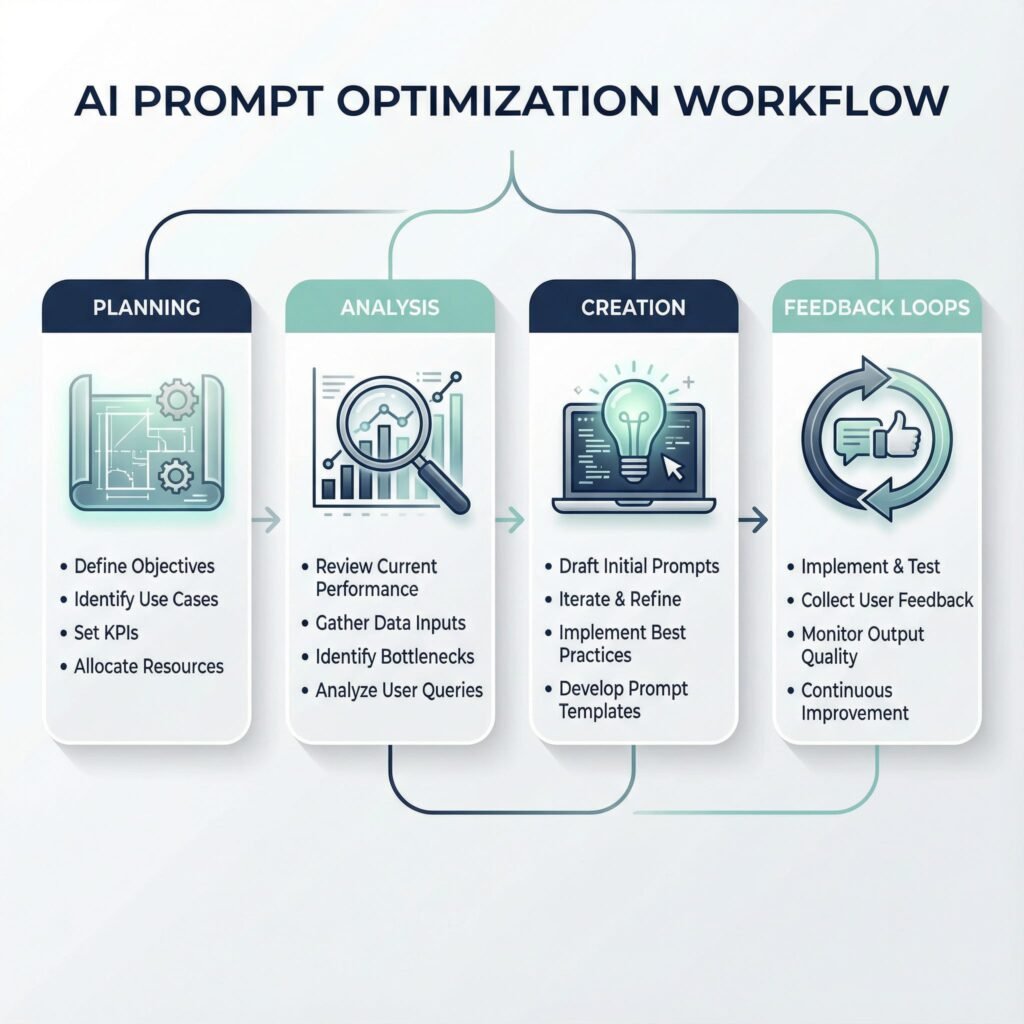
Business AI prompt packages give you ready-to-run workflows for planning, analysis, and creation. You get reusable prompts that pull context from your numbers, your offers, and your customers, so you work faster and make clear decisions. Use them to reduce guesswork, standardize processes, and move from idea to output in minutes.
Examples Tailored for Entrepreneurs
Use these prompt templates to expand, analyze, and plan without hiring a data team. Plug in your metrics, target market, and constraints. Then run the prompts in sequence to get a clean action plan.
- Market entry brief:
Act as a market analyst. Compare [your product] with the top 3 competitors in [new region]. List buyer segments, pricing ranges, and barriers to entry. Suggest the lowest-risk entry strategy for the first 90 days.
What you get: a focused plan with segments, price points, and a go-to-market path. - Sales pattern finder:
Given these last 90 days of sales by SKU, channel, and discount level, find trends and anomalies. Flag products with high return rates or margin erosion. Recommend three pricing or bundling tests.
Benefit: better decisions from data insights, not hunches. - Inventory optimizer:
Using sales velocity and lead times, forecast stockouts for the next 8 weeks. Recommend reorder points, safety stock, and suppliers to contact. Output a simple table: SKU, Forecasted Demand, Reorder Point, Safety Stock, Action.
Result: fewer stockouts and less cash trapped in slow movers. - Expansion math:
Model three scenarios for entering [market]. Use assumptions for CAC, AOV, and conversion rate. Show breakeven month, payback period, and required budget.
Outcome: a clear yes or no with numbers you can defend. - Sales call script builder:
Create a consultative sales script for [buyer persona] with questions to qualify budget, authority, need, and timing. Include objection handling for price, timing, and competitors.
Value: consistent calls that surface real objections.
How to use these efficiently:
- Collect a single CSV or spreadsheet with the past 90 days of sales and inventory.
- Paste key rows into the prompts, or upload the file if your AI tool supports it.
- Run planning prompts weekly, then track results in a simple sheet.
- Update the prompts with what worked, so the system gets sharper over time.
If you want real-world examples of prompts that reveal profit leaks and sales gaps, study this walkthrough on using ChatGPT to improve a business, including sales process checks: I Used ChatGPT to Transform My Business With These Prompts.
Quick wins you will notice:
- Faster planning: weekly plans in under 30 minutes.
- Cleaner insights: trends and anomalies you would miss by eye.
- Confident decisions: numbers-backed steps for pricing, stock, and offers.
Boosts for Digital Creators and Designers
For creators and designers, business AI prompt packages help you spin up content ideas, on-brand posts, and production-ready visuals. You keep your tone, speed up drafts, and test more concepts.
- Idea engine for weekly content:
List 20 content angles for [niche and audience], mapped to awareness stages: problem-aware, solution-aware, product-aware. Add hook, takeaway, and CTA.
Use it to shape your calendar and avoid repeating themes. - Social post builder:
Write 5 variations of a LinkedIn post that promotes [offer] to [persona]. Include a crisp hook, a proof line, and a clear CTA. Add 3 hashtag options.
Paste, schedule, and track which style pulls the most saves. - Email personalization:
Given this subscriber segment description and product benefit, write an email that addresses their main obstacle. Keep it under 120 words, add a P.S. with a time-bound incentive.
Result: higher opens and replies with minimal edits. - Design prototype prompts for Midjourney:
brand identity, [industry] startup, minimal logo mark, flat vector, high contrast, negative space, black on white, style guide sample, --v 6product mockup, lifestyle setting, soft natural light, shallow depth of field, photorealistic, for Instagram carousel, --v 6
These help you test directions fast. For deeper prompt structures and realism tips, review this guide on realistic photo prompts for Midjourney: 55+ Midjourney Prompts for Realistic Photos.
- Ad creative matrix:
Generate 6 ad concepts for [product] targeting [persona]. For each, provide headline, body, visual concept, and scroll-stopping hook. Map to pain, dream, and proof angles.
Hand this to your designer or use it to draft carousels.
Speed tips you can apply today:
- Start with one content prompt, one email prompt, and one design prompt. Make them your base kit.
- Save the winners as templates inside your tool, then clone and tweak each week.
- Track post saves, CTR, and session length. Keep prompts that move those metrics.
With the right business AI prompt packages, you create more output with less effort, keep brand quality tight, and test ideas faster than your competitors.
Unlock Growth Benefits with AI Prompts
You want faster output, fewer bottlenecks, and consistent quality. Business AI prompt packages give you reusable instructions that turn messy tasks into clean workflows. With the right setup, you move from manual grunt work to predictable systems that free your time and fuel growth. If you need a reliable source for ready-made prompts, browse the Top AI Prompt Marketplaces for Buying and Selling.
Save Time and Scale Your Operations
AI prompts take on repetitive work, so you can handle more clients, campaigns, or SKUs without adding headcount. You set the rules once, then run them daily.
What this looks like in practice:
- Automated email flows: Use prompts to draft replies, route tickets, and prioritize by intent. Feed in FAQs, policies, and tone of voice. Get inbox zero by lunch.
- Personalized outreach at scale: Generate cold emails and follow-ups that reference industry pain points and buyer role. Keep variables like name, company, and trigger event in a simple sheet.
- Faster reporting and analysis: Paste your metrics, then run prompts that summarize week-over-week changes, highlight anomalies, and suggest next steps. Add charts if your tool supports it.
- Launch acceleration: Spin up landing copy, ad angles, and onboarding emails in one session. Use prompts that map messages to buyer stages, so you keep the story tight across channels.
A simple workflow you can copy:
- Export key data, such as support tags, sales by channel, and ad spend.
- Run your analysis prompts to find trends, winners, and waste.
- Trigger email and ad prompts that reflect those insights.
- Ship. Then review results and refine the prompts.
Companies that scale AI into daily work see tangible gains. See the takeaways in PwC’s 2025 AI business predictions for productivity and decision quality. For shared services and operations, this aligns with findings on speed and cost from The Hackett Group’s report on scaling GenAI for advantage in 2025.
Pro tip: build a small library of your best-performing prompts, then schedule them. You will create a repeatable production line for emails, reports, and launches.
Spark Creativity and Engage Customers
Prompts do not replace your taste. They multiply it. You get more ideas, faster iteration, and sharper content that feels made for your audience.
Ways to use prompts for standout creative:
- Concept sprints: Ask for 20 hooks, 10 visual angles, and 5 headlines per offer. Pick the top three and refine. Think of it like a rapid-fire writer’s room.
- Audience-tailored content: Prompt for different segments and buyer stages. Keep variables for pain, dream outcome, objection, and proof. Outputs stay relevant and human.
- Design direction: Feed brand rules, then generate moodboards, color stories, and layout notes. Your designer moves from blank page to viable directions in minutes.
- Conversational touchpoints: Use prompts to shape scripts for DMs, comment replies, and chat assistants. Consistent tone builds trust across every interaction.
If you plan to add chat assistants, study how AI agents can understand context and complete tasks after a conversation in McKinsey’s 2025 report on AI in the workplace. This level of handoff helps you turn engagement into actions, like booking a call or sending a quote.
Quick creative stack you can deploy today:
- One prompt to generate hooks and angles for your next campaign.
- One prompt to adapt messages by persona and stage.
- One prompt to outline a carousel, short video script, or email sequence.
- One prompt to polish and tighten voice for final review.
If you are just getting started, try a lightweight toolkit to practice and refine your approach with the Free AI Prompt Tools Ideal for Beginners.
With business AI prompt packages, you turn blank-page moments into structured ideation, produce more on-brand content, and keep customers engaged across each touchpoint.
Get Started with AI Prompt Packages Today
You can start small and win fast. Business AI prompt packages work best when you tailor them to your brand, plug them into your current tools, and track results in plain numbers. Keep a tight feedback loop and your prompts will pay for themselves.
Tips for Entrepreneurs and Creators
Treat your prompts like playbooks, not one-off scripts. Use these steps to get working value in days, not weeks.
- Customize for your offers and tone
- Swap in your product names, audience, guarantees, and price points.
- Add voice rules, such as short sentences, plain language, and a no-hype style.
- Include constraints, like character limits or compliance notes, so outputs are usable.
- Build a simple prompt stack
- Core set: strategy brief, ad angle generator, email sequence, social post builder, support reply guide.
- Keep versions for each buyer stage. Early stage needs education, late stage needs proof and urgency.
- Save winning outputs as templates. Reuse, then tweak based on data.
- Combine with tools you already use
- Pair prompts with Jasper for draft speed, content briefs, and brand voice memories.
- Pipe outputs into your CMS, email tool, or ad manager so you move from idea to shipped.
- For growth experiments, review these practical ideas in Entrepreneur’s guide on using AI for startups, including A/B testing and on-site personalization: How to Use AI to Master Growth.
- Feed real context to boost accuracy
- Add your FAQs, product specs, competitor claims, and recent performance data.
- Share a short customer profile with pains, outcomes, and objections.
- Attach examples of your best conversions. Ask the AI to mirror style and structure.
- Ship in weekly sprints
- Monday: run analysis prompts on sales, ad spend, and support tags.
- Tuesday: generate angles, scripts, and visuals based on findings.
- Wednesday: publish and schedule. Keep one variable per test.
- Friday: review results and update prompts. Archive losers, promote winners.
- Measure what matters
- Marketing: hook rate, click-through, cost per lead, saves, and replies.
- Sales: call booked rate, proposal acceptance, average order value, time to close.
- Support: first response time, resolution rate, CSAT, and ticket deflection.
- Keep a light governance layer
- Set a review checklist for claims, tone, and compliance.
- Require human sign-off on ads, emails, and pricing.
- Version prompts with dates and notes so you know what changed.
Example starter table to guide your setup:
| Goal | Prompt Use | Primary Metric |
|---|---|---|
| Fill pipeline | Cold email and LinkedIn prompts with 3 pain angles | Meetings booked |
| Raise ROAS | Ad angle matrix mapped to buyer stages | Cost per purchase |
| Improve retention | Renewal and win-back email flows | Repeat purchase rate |
| Reduce support load | Intent-based reply templates + FAQ context | Ticket deflection |
Pro move for idea validation and fast planning: study these prompt structures and adapt them to your niche with Bernard Marr’s examples on idea testing and outreach: 5 Powerful AI Prompts That Can Boost Any Business Idea.
Quick setup checklist you can run today:
- Define your brand voice in 5 lines. Set tone, reading level, and banned phrases.
- Pick 5 prompts from your business AI prompt packages. Cover strategy, ads, email, social, and support.
- Connect to Jasper for drafting and rephrasing. Use brand voice settings for consistency.
- Ship one test per channel. Track a single metric per test.
- Review on Friday. Keep what moved numbers, refine what fell flat.
If you are solo or part-time, start with one hour per week. Tight inputs, clear metrics, and a short review loop will compound results.
Conclusion
You now have a clear path to faster work, sharper output, and steady growth. With business AI prompt packages, you turn messy tasks into repeatable systems that cut time, raise quality, and keep your voice on point.
Use your data, ship in weekly sprints, and refine from results. The same prompts that speed operations also fuel creativity, from ad angles to design directions, so you test more, learn faster, and win more often.
Start today with a small stack tailored to your offers and metrics. Commit to a short feedback loop, then scale what works. Explore AI prompts now to lock in real business gains, built for growth, efficiency, and competitive advantage.
FAQ:
What exactly are business AI prompt packages?
Business AI prompt packages are collections of pre-designed, context-aware AI prompts organized into structured workflows. They are tailored for specific business tasks like planning, analysis, or content creation, enabling repeatable, efficient, and standardized use of AI.
How can AI prompt packages help my business save time and reduce guesswork?
By providing ready-to-run prompts that pull context from your specific business data (numbers, offers, customers), these packages eliminate the need to craft prompts from scratch. This standardizes processes, minimizes trial-and-error, and significantly accelerates the journey from an idea to a tangible output.
Can I customize the prompts within these packages to fit my unique business needs?
Yes, the core benefit of effective AI prompt packages is their flexibility. While they offer a robust framework, they are designed to be adapted. You can easily modify, extend, and integrate your unique business context into the prompts to ensure outputs are highly relevant and tailored to your specific requirements.
Leave a Reply