
Category: AI Apps

  • 90 Free ChatGPT Prompts for Job Seekers (Resumes, Cover Letters, Interviews)

    90 Free ChatGPT Prompts for Job Seekers (Resumes, Cover Letters, Interviews)

    Hiring in 2025 is tough. Unemployment sits near 4 percent, yet openings swing by sector, and skills gaps slow callbacks. AI reshapes roles, which adds noise to every search. You need an edge that does not cost money.

    These 90 free ChatGPT prompts give you that edge. They help you write stronger resumes, sharper cover letters, and tighter interview answers. You save time, tailor every application, and sound confident on paper and in person. The result is simple, more responses and faster interviews.

    Here is what you will get. Prompts that turn duties into impact bullets with numbers. Prompts that align your resume with a job post and ATS keywords. Prompts that draft a clear, human cover letter in your voice. Prompts that build STAR stories and practice tough interview questions.

    Expect a clean path from first draft to final send. We start with resume prompts, then move to cover letters, then interview prep. You will also see prompts for follow-ups and quick LinkedIn tweaks. Each prompt includes a fill-in format, with a short example you can copy.

    Use them as a checklist. Paste a prompt, add your facts, and let ChatGPT do the heavy lift. Keep the parts that sound like you, and cut the rest. You will ship better applications in minutes, not hours.

    If you want more interviews this month, start here. Pick three prompts, update one resume section, and draft one cover letter. Then run two interview drills with STAR prompts. You will feel ready, your message will land, and your inbox will show it.

    Kickstart Your Job Search: 20 ChatGPT Prompts for Career Exploration and Finding Opportunities

    Use these prompts to uncover roles that fit your strengths, speed up your research, and aim your applications where they will land. You save hours of guesswork and move faster toward interviews. For deeper self-assessments, you can pair these with tools like the free Skills Matcher from CareerOneStop and the O*NET Career Exploration Tools.

    Assess Your Skills and Match Them to Dream Jobs

    Build a tight skills map first, then match it to real roles. Clarity here makes every resume and cover letter easier.

    1. Paste your resume and a job post, then ask: “Compare my experience to this role. List gaps and matches, with priority fixes.”
      • You get a clear checklist for targeted updates.
    2. “From my resume, extract my top 10 skills, group them into technical and soft skills, and rate them by strength.”
      • This turns a messy history into a simple skills inventory.
    3. “Using these three job ads, identify shared keywords and skills, then propose a core profile summary that fits all.”
      • You build one strong profile you can tailor fast.
    4. “Map my achievements to the main duties of [target role]. Suggest 5 impact bullets with numbers.”
      • You turn tasks into proof that wins attention.
    5. “Review these certifications, courses, and tools I know. Suggest the top 5 dream jobs they qualify me for today.”
      • You see realistic targets, not wish lists.

    Why it matters: You write stronger applications because you know what to feature and what to fix.

    Discover Unexpected Career Paths with Your Background

    Your skills cross over more than you think. Ask for fresh angles that widen your pipeline.

    1. “Given my skills and interests, list 10 non-obvious roles I could do next. Explain the match for each in one sentence.”
      • You get ideas you would not find in a basic search.
    2. “I have experience in [industry]. Suggest roles in adjacent fields that value these skills, and rank them by transferability.”
      • You spot near moves that keep pay and momentum.
    3. “Turn these tasks into transferable skills, then show three industries where they are in demand.”
    4. “Propose 5 freelance or contract roles that match my background, with one-line pitch angles for each.”
      • You open faster entry points and test markets.
    5. “From this list of hobbies and volunteer work, suggest 5 roles that could value them and why.”
      • You surface hidden proof of fit that others miss.

    Why it matters: More options mean more shots on goal and faster traction.

    Research Companies and Roles That Fit You Best

    Aim at teams that match your values and work style. Focus beats volume.

    1. “Compare [Role A] vs [Role B] for my skills and goals. Summarize differences in responsibilities, pay drivers, and growth paths.”
      • You choose with facts, not guesses.
    2. “Analyze these three companies. Summarize mission, products, hiring pace, and common skill requirements for my role.”
      • You learn where you are most likely to get a yes.
    3. “Using my preferences (size, remote, industry), compile a shortlist of 15 companies to target, with reasons.”
      • You get a clean outreach list that fits you.
    4. “Review this company’s job descriptions and careers page. Extract repeated keywords and cultural cues I should mirror.”
      • You tailor language that aligns with their signals.
    5. “Based on recent trends in [field], list 10 emerging job titles I should track, with sample responsibilities.”

    Why it matters: Better targeting raises response rates and saves time.

    Build a Targeted Job Search Strategy

    Turn insights into a simple weekly plan. Prioritize actions that move you closer to interviews.

    1. “Create a 30-day job search plan with weekly goals, daily actions, and output targets for my field.”
      • You get structure that keeps you moving.
    2. “Generate keyword strings for job boards based on my skills, including synonyms and seniority variants.”
      • You uncover roles that basic searches miss.
    3. “Draft a 5-message outreach sequence for warm contacts and a 3-message sequence for cold contacts.”
      • You start more conversations without overthinking.
    4. “Build a tracker template with columns for company, job link, keywords used, resume version, status, and next step.”
      • You stay organized and avoid dropped leads.
    5. “Design a weekly review ritual. List metrics to track and quick fixes if numbers are low.”
      • You adjust early, so results improve faster. If you want ideas for unique roles to widen your search, scan this list of unique careers and translate relevant duties into your keywords.

    Why it matters: A clear plan reduces drift and creates steady momentum.

    Tip: Pair these prompts with a short assessment session using Skills Assessment by CareerOneStop or the curated list at It’s Your Yale: Career Assessment Tools. Then plug those results into your prompts to get sharper, faster answers.

    Craft a Standout Resume: 25 ChatGPT Prompts to Showcase Your Value

    Your resume has one job, get you interviews. These prompts help you tailor for each role, add proof with numbers, and polish the layout for quick scans. You pass ATS checks and hook busy recruiters fast. For deeper keyword tips, review this clear guide on how to create an ATS-friendly resume in 2025.

    Tailor Your Resume to Beat Applicant Tracking Systems

    ATS software scans for exact keywords, standard headings, and clean formatting. These prompts pull target terms from the job post and weave them into your resume naturally, so it reaches human eyes.

    1. Paste the job post and your resume. Ask: “Extract core keywords and update my bullets to reflect them without changing facts.” Tip: Keep verbs and tools identical to the posting.
    2. “List required tools, certifications, and soft skills from this ad. Tell me where to place each in my summary, skills, or experience.” Tip: Use exact names, not synonyms.
    3. “Rewrite my professional summary to mirror this role’s top requirements in 3 to 4 lines.” Tip: Lead with the job title and 2 to 3 standout skills.
    4. “Compare my resume to this job. Identify missing keywords and add one line per role to close gaps.” Tip: Use results-focused phrasing to avoid keyword stuffing.
    5. “Standardize headings for ATS parsing: Summary, Skills, Work Experience, Education, Certifications. Reformat my content accordingly.” Tip: Avoid tables, text boxes, and graphics.
    6. “Create a ‘Core Competencies’ line with 10 skills that match this post, ordered by importance.” Tip: Keep it tight and scannable in one line.

    Why this works: ATS ranks matches by keyword alignment and clarity. You show fit upfront, so recruiters read on.

    Highlight Achievements with Power-Packed Bullet Points

    Hiring teams skip duty lists and hunt for proof. Use numbers to show scale, speed, savings, or growth. These prompts turn tasks into results that land.

    1. “Turn this task into a metric bullet: [paste duty]. Use the ‘increased X by Y percent through Z’ pattern.” Tip: Add timeframe to show speed.
    2. “From my last role, draft 4 bullets with a strong verb, what I did, and a number.” Tip: Use percent, dollar, time, or volume metrics.
    3. “Quantify leadership. Add team size, cross-functional partners, and delivery timeline to this bullet.” Tip: Show scope and coordination.
    4. “Rewrite my sales or growth bullets using before and after numbers.” Tip: Include baseline and outcome for clarity.
    5. “Create two bullets that show efficiency gains, such as time saved or error reduction, with data.” Tip: Use tools or processes as the ‘how.’
    6. “For CX or creative work, add engagement, CSAT, NPS, reach, or output metrics to each bullet.” Tip: If no data, estimate range and label it.

    Why this works: Numbers build trust and help hiring managers picture your impact. They also make you memorable in a fast skim.

    Format and Structure for Maximum Impact

    A clean structure helps both ATS and humans. Put the most relevant details first, keep sections simple, and avoid design traps.

    1. “Build a one-page layout for [target role] ordered by impact: Summary, Skills, Work Experience, Education, Certifications.” Tip: Shift sections based on your strengths.
    2. “Write a 3 to 4 line summary that names the role, top skills, and one quantified win.” Tip: Cut fluff, keep it job-focused.
    3. “Create a skills section with 10 to 12 items grouped into Technical and Soft Skills.” Tip: Bold two or three that match the post.
    4. “Format each job entry with title, company, location, dates, and 4 impact bullets.” Tip: Use reverse chronological order.
    5. “Design a projects section with 3 entries: name, tools, and a one-line outcome.” Tip: Ideal for career changers or students.
    6. “Write an education entry with degree, school, location, and one relevant detail (GPA, coursework, or honor).” Tip: Place above experience only if you are early career.
    7. “Suggest fonts, sizes, and spacing that pass ATS and read clean.” Tip: Use a simple font, clear headings, and consistent spacing.

    Why this works: Recruiters scan in seconds. Clear visual hierarchy and standard sections guide them to the right details, fast.

    Handle Gaps or Career Changes Smoothly

    Gaps and pivots are normal. Context, activity, and relevance calm concerns. These prompts help you frame breaks as growth and changes as smart moves.

    1. “Write a one-line gap explanation for [reason], plus one skill or activity gained.” Tip: Keep it brief and positive.
    2. “Add freelance, contract, or volunteer entries to cover [dates]. Include a result tied to the target role.” Tip: Show outcomes, not just duties.
    3. “Create a career change summary that links 4 transferable skills from [old field] to [new field].” Tip: Mirror the new job’s language.
    4. “Group short gaps across a period into one line, then highlight recent steady roles.” Tip: Emphasize momentum.
    5. “Update bullets to show how past wins support new goals, with metrics where possible.” Tip: Add tools or methods used in the new field.
    6. “For a long break, build a functional skills section first, then add concise chronology.” Tip: Lead with value, then timeline.

    Want more ideas on gap wording and options? This guide on how to explain employment gaps offers practical examples.

    These 25 prompts make your resume job-specific, numbers-driven, and easy to scan. That combination gets you past ATS filters and into more interviews.

    Write Winning Cover Letters: 20 ChatGPT Prompts to Connect with Hiring Managers

    “Laptop screen showing ChatGPT rewriting a resume with AI prompts for job seekers.”

    A strong cover letter sounds like you. It links your story to the role, proves you solve their problems, and ends with a clear next step. Use the prompts below to build letters that feel personal, show fit, and move hiring managers to reply. For extra guidance on structure and tone, skim this helpful breakdown on 29 ChatGPT cover letter prompts for 2025.

    Hook Them from the First Line

    Openings set the pace. Aim for one tight line that ties who you are to what they need.

    1. “Write a first line that links my turning point story [short event] to [job title] at [company], in one sentence.”
      • Why it works: You share motive and fit fast.
    2. “Start with a result I am proud of [achievement with metric], then connect it to [team’s goal from job post]. Keep it under 25 words.”
      • Why it works: Numbers grab attention.
    3. “Use a quick contrast: before [problem], after [result]. Tie it to [company mission or product] in one punchy line.”
      • Why it works: Clear change shows value.
    4. “Open with a customer moment: ‘A [customer type] told me [insight].’ Link that insight to [role] impact at [company].”
      • Why it works: Shows empathy and market sense.
    5. “Write a first line that mirrors [company slogan or value] and matches my win in [skill area], no fluff.”
      • Why it works: Signals culture match without buzzwords.

    Example: “I doubled trial-to-paid in 90 days, and I am ready to do it for your Growth team.”

    Show How You Solve Their Problems

    Shift from you to them. Use the job post to match skills to needs, then forecast quick wins. For more prompt ideas and structure, see this step-by-step guide on how to use ChatGPT for cover letters.

    1. “From this job post, list their top 3 pains in plain language, then write one sentence each on how my wins address them.”
      • Why it works: Direct alignment beats generic claims.
    2. “Link my skill in [tool or method] to their KPI [metric in job post], with a short example and number.”
      • Why it works: Tools plus numbers show proof.
    3. “Turn these three bullets from my resume into outcomes that map to [team goal], not duties.”
      • Why it works: Outcomes show impact and speed.
    4. “Write a mini case: problem, action, result, in three short lines, using my [project] example for [company’s similar challenge].”
      • Why it works: Simple story structure sticks.
    5. “Translate my background in [industry A] to [industry B] by naming 3 transferable wins that match their roadmap.”
      • Why it works: Connects dots for the reader.
    6. “Propose a 30-60-90 day value sketch based on the posting: what I would audit, fix, and scale.”
      • Why it works: You look ready to start fast.

    Tip: Keep verbs strong. Write “cut churn by 18 percent,” not “responsible for churn reduction.”

    End with a Confident Call to Action

    Close with clarity. Ask for the meeting, show respect for their time, and set an easy next step.

    1. “Write a closing line that requests a 20-minute call to discuss [specific initiative from posting], polite and confident.”
      • Why it works: Clear ask, low-friction next step.
    2. “Close by restating one key result [metric], linking it to [team goal], and asking about next week’s availability.”
      • Why it works: Repeats value at the finish.
    3. “Offer one useful asset, like a brief plan or portfolio, and invite them to review it before a call.”
      • Why it works: Adds proof without pressure.
    4. “Write a courteous thank-you plus a scheduling nudge, 20 words max.”
      • Why it works: Respectful and direct.
    5. “Create a sign-off that matches their tone, with my name, role target, and contact info on one line.”
      • Why it works: Clean finish helps quick replies.

    Example: “Thanks for your time. Can we schedule a 20-minute call next week to review my 30-day plan for your onboarding KPI?”

    Personalize for Every Application

    Generic letters get skipped. Pull in the right details so your letter sounds like it was written for one team only. For quick prompt templates, the WSU guide on best AI prompts for cover letters is useful.

    1. “Scan [company site or job post] and draft two lines that reference a product update, press note, or value that ties to my skills.”
      • Why it works: Shows you did real homework.
    2. “Mirror their language by extracting 5 repeated terms from the posting and weaving them into my summary naturally.”
      • Why it works: Familiar words signal fit.
    3. “Write a short line that names the team, the hiring manager if known, and a current company goal from public sources.”
      • Why it works: Personal and precise.
    4. “Tailor my opener and one body line to match [office location, market, or customer segment] mentioned in the ad.”
      • Why it works: Context proves you understand their world.

    Quick personalization checklist: name the team, echo two keywords, tie one metric to one goal, end with a clear ask. Letters that do this feel human, focused, and worth a reply.

    Ace Your Interviews: 25 ChatGPT Prompts for Confident Preparation and Practice

    Confident job candidate in interview with two hiring managers in a modern office setting.”

    A clear plan beats guesswork on interview day. Use these prompts to practice out loud, shape tight STAR stories, and rehearse technical and role-specific answers. You will calm nerves, speak with proof, and move the conversation toward an offer. If you want a quick refresher on STAR structure, scan this guide on the STAR interview response technique.

    Prepare for Common Behavioral Questions

    Use STAR to turn experiences into short, clear stories. Keep each answer under 90 seconds. Lead with the result.

    • “Act as an interview coach. Ask a behavioral question about teamwork. Then help me shape a STAR answer using this experience: [brief situation]. Give me one tighter version for a second try.”
    • “I faced a conflict with a coworker over [topic]. Build a STAR answer that shows calm, clear action, and a positive result. Keep it under 120 words.”
    • “Create 3 STAR bullets for a time I missed a deadline. Use data for the result and show how I fixed the root cause.”
    • “Draft a STAR story for problem-solving. Situation: [context]. Task: [goal]. Action: [steps]. Result: [metric]. Add one sentence on what I learned.”
    • “Turn this leadership moment into STAR: I led [size] team to deliver [project] under [constraint]. Include numbers and a customer impact line.”
    • “Write a STAR answer for handling pressure. Show how I set priorities, protected quality, and hit [metric]. End with a short follow-up I can ask.”
    • “Build a STAR story for dealing with a difficult stakeholder. Focus on listening, clarity, and a measurable outcome like time saved or risk reduced.”

    Example STAR for teamwork:

    • Situation: Our release slipped due to QA bottlenecks.
    • Task: Ship within two weeks without cutting scope.
    • Action: Reworked test plan, split runs by risk, added nightly smoke tests.
    • Result: Shipped in 10 days, cut defects in prod by 32 percent.

    For more examples, you can also review this quick overview of the STAR Method of Behavioral Interviewing.

    Tackle Technical and Role-Specific Queries

    Show how you think, not just what you know. Walk through steps, tradeoffs, and results. For deeper tech prep, the Tech Interview Handbook is a useful reference.

    • “I am interviewing for [role]. Ask me 5 core technical questions based on this job post. Grade my answers for clarity, accuracy, and depth. Suggest improvements in one line each.”
    • “Create a whiteboard-style walkthrough for [system or process]. I will explain design choices, constraints, and tradeoffs. Give feedback on missed risks.”
    • “For [tool or framework], quiz me with 5 applied questions. Ask follow-ups that test judgment, not trivia. Then write one sample strong answer.”
    • “Write a concise case prompt for my field: context, constraints, data. Let me respond in 2 minutes. Score by business impact and logic.”
    • “Turn this project into a brief ‘how’ story: problem, approach, metrics, and one pitfall I handled. Keep it under 60 seconds.”
    • “Generate 6 lightning questions I may get in [industry], with one-sentence model answers that show expertise and plain language.”

    Master Follow-Up and Thank-You Notes

    A sharp note keeps you top of mind. Reinforce fit, recap strengths, and ask for next steps.

    • “Draft a thank-you email to [interviewer name] within 150 words. Mention [topic discussed], restate my strength in [skill], and ask about next steps next week.”
    • “Write a follow-up note that highlights one insight from the interview and ties it to my result [metric]. Keep tone warm and confident.”
    • “Create a thank-you email to the panel. Personalize one line per person: [name, topic]. End with a short 30-60-90 value line.”
    • “I missed a question on [topic]. Draft a brief follow-up that adds a clear answer and a link to a sample or resource.”
    • “Write a polite check-in if I have not heard back after [timeframe]. Reaffirm interest, cite one strength, and ask for an update.”
    • “Compose a note after a rejection that keeps the door open. Thank them, request brief feedback, and ask to stay in touch for future roles.”

    Build Confidence Through Mock Sessions

    Practice out loud to lock in pace and presence. Record yourself. Focus on tone, pauses, and clean endings.

    • “Run a 25-minute mock interview for [role]. Mix behavioral and technical questions. After each answer, give two fix points and one strong line I can reuse.”
    • “Simulate a phone screen. Ask 8 quick questions on background, skills, pay, and start date. Coach me on concise, direct replies.”
    • “Do a stress round with short follow-ups and interruptions. Help me keep answers under 60 seconds and end with a clear result.”
    • “Host a panel-style mock. Rotate perspectives: hiring manager, peer, recruiter. Provide feedback on clarity and presence.”
    • “Time-box a final round case: 10 minutes to think, 5 to present. Score structure, numbers, and executive summary.”
    • “Create a warm-up script I can read for 3 minutes before any interview. Include a brief intro, two STAR summaries, and one closing ask.”

    Tip for every prompt: speak, do not just type. Rehearse answers twice. On the second run, cut filler, lead with results, and keep eye contact with the camera or the person across the table. Consistent practice lowers anxiety and boosts recall, which raises your odds of an offer.

    Conclusion

    These 90 prompts give you speed, clarity, and control. You save hours on drafts, tailor every line to the job, and turn past work into proof with numbers. The payoff is real, more callbacks, better interviews, and a cleaner story across your resume, cover letters, and practice sessions. You started this post because hiring in 2025 is noisy. Now you have a simple system that cuts through it.

    Start today. Pick three prompts, update one resume section, and draft one cover letter. Then run two interview drills and send one follow-up. Small steps stack into offers when you move with focus. Share what works for you in the comments, and subscribe for more prompt sets and job search playbooks.

    Keep your momentum. Keep your voice. Keep your wins front and center. Your next role is closer than it feels, and consistent action in 2025 will move you there faster.


  • Best AI Prompt Package Providers in 2025 (Top Picks)

    Enterprise team using AI prompt management platform for collaboration and efficiency

    ChatGPT now sits in daily workflows, from drafting emails to shaping product ideas. Creators and teams use it to move faster, test more, and push out better work with less friction.

    AI prompt packages supercharge that flow. They are ready-made sets of prompts, templates, or services that guide models to produce clear, on-brand results. Think “Write a product brief from these bullet notes” or “Turn this meeting transcript into action items with owners.” You plug them in, you get strong output, you save time.

    The value is simple. Good prompts cut trial and error, reduce rewrites, and lift quality across tasks. They help non-experts get expert-level results, and they give experts a consistent baseline to improve.

    Demand is soaring in both business and personal use. Marketing teams want reliable SEO briefs and ad angles. Support teams want strong first drafts for replies. Freelancers want consistent client-ready copy. Founders want quick product docs, FAQs, and user stories that do not need heavy edits.

    Not all providers focus on the same needs, which is why choosing well matters. Some offer large, tested libraries inside ChatGPT. Others sell one-time prompt bundles with examples and use cases. Some focus on workflow speed with hardware shortcuts. Developer-first options add control for complex projects.

    In this guide, you will see how the top providers compare on features, ease, and value. We will cover AIPRM for built-in libraries, Promptrr for one-time packs, Logi AI Prompt Builder for quick access, AI Parabellum for structured prompt design, Microsoft Azure OpenAI Service for enterprise needs, and Hugging Face for developer control. You will leave with clear picks for your goals, budget, and team size.

    What Makes a Great AI Prompt Package Provider

    A person uses ChatGPT on a smartphone outdoors, showcasing technology in daily life. Photo by Sanket Mishra

    Choosing the right provider saves time, cuts errors, and lifts output quality. Look for a mix of easy onboarding, strong model support, clear pricing, and real help when you need it. The best picks fit both quick tests and serious team workflows.

    Focus on User-Friendly Features

    A simple interface helps you get value in minutes. Tools like AI Parabellum’s free prompt generator offer no-signup access, so you can draft and refine prompts without friction. The OpenAI Playground is great for quick tests across models, temperature, and system prompts.

    Why this matters:

    • Faster project starts, less time in setup menus.
    • Lower learning curve for non-technical teammates.
    • Clear prompt previews and examples that reduce guesswork.

    Look for clean editing, version history, and copy-ready outputs. These small touches help both beginners and pros move faster.

    Check Pricing and Scalability

    Start small, grow on demand. Free options like basic Hugging Face spaces work well for trials. Paid plans from tools like PromptPerfect add depth with prompt optimization at scale. Enterprise platforms such as Microsoft Azure OpenAI bring quotas, SSO, and regional hosting for larger teams.

    What to compare:

    • Free tier limits and overage costs.
    • Seats, workspaces, and audit logs.
    • Data retention and model access (GPT-4, GPT-4o, Claude, Llama).

    Smart scaling cuts hidden costs over time. You avoid tooling churn and costly migrations as usage rises.

    Look for Strong Support and Integration

    Great providers back you with guidance and smooth workflows. Firms like STS Software deliver custom setup and support. Platforms like LangSmith help you track prompts, evaluate runs, and fix failures before they reach users. Management layers such as PromptLayer add prompt versioning and analytics. Expert services like Krazimo can tailor prompts to your brand voice and domain.

    Integration wins:

    • Connect to docs, CRM, and chat tools to reduce copy-paste.
    • Use webhooks and APIs for repeatable pipelines.
    • Centralize prompts, tests, and approvals for team speed.

    Tip: Match the provider to your needs. Developers benefit from robust APIs and eval tools. Content teams want templates, guardrails, and clear reviews. Security-conscious orgs should prioritize SOC 2, data controls, and tenant isolation to avoid poor results and risk.

    Top AI Prompt Package Providers to Try Now

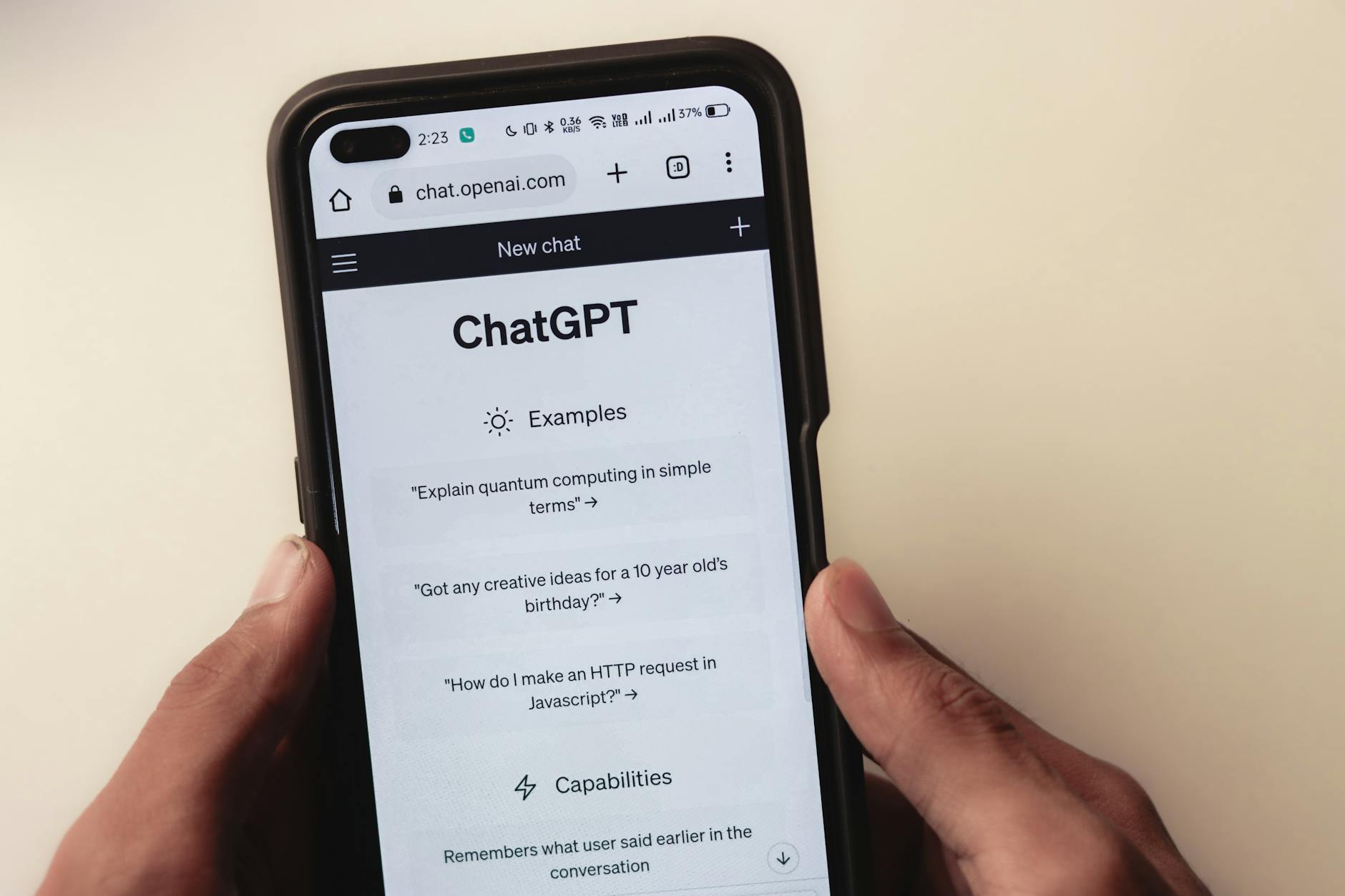
    Close-up of hands holding a smartphone displaying the ChatGPT application interface on the screen. Photo by Sanket Mishra

    You have two strong paths here. Hire expert services to design and maintain prompts for your workflows, or use focused tools to optimize, test, and deploy at speed. If you want a broader market view before choosing, skim this current AI prompt engineering companies list. Below are practical picks that work well in 2025 across different needs.

    Krazimo Private Limited: Expert Services for Businesses

    Krazimo pairs big‑tech‑trained engineers with domain experts to build custom prompt systems, RAG flows, and safety checks. Their onshore-offshore model keeps quality high and costs predictable. You get workshops, prompt libraries, and ongoing tuning for live use.

    • Pros: Senior talent, custom builds, clear delivery. Good cost control with mixed staffing.
    • Cons: Services take time to scope and implement. Less DIY.
    • Best for: Companies that want done-for-you prompt design and governance with measurable outcomes.

    Tip: Review their approach and case themes on the official site at Krazimo.

    PromptLayer: Best for Prompt Management and Testing

    PromptLayer is a workbench for AI engineering. It tracks prompts and versions, runs evaluations, and supports deployment across major models. Teams get shared workspaces, access controls, and analytics to improve outputs over time.

    • Pros: Versioning, evals, observability, and broad model support. Strong team features.
    • Cons: Requires setup and discipline to get full value.
    • Best for: Developers and data teams refining prompts, tests, and releases.

    Explore features and plans on the PromptLayer website.

    PromptPerfect: Auto-Optimize Your Prompts

    PromptPerfect automatically rewrites prompts to improve clarity and recall. You paste your goal, it returns optimized prompts you can run in your stack. Pricing tiers fit solo users, small teams, and power users.

    • Pros: Fast quality gains, minimal learning curve, strong for non-technical users.
    • Cons: Less control than hand-tuned engineering for edge cases.
    • Best for: Quick upgrades to drafts, briefs, support macros, and research prompts.

    Example: Feed a rough content brief and get a tighter, structured prompt ready for GPT-4.

    AI Parabellum: Free and Simple for Beginners

    AI Parabellum offers a no‑registration prompt generator with a clean UI. You can test ideas, structure prompts, and copy results in seconds. It is ideal for learning the basics without cost.

    • Pros: Free, frictionless, helpful templates for common tasks.
    • Cons: Limited depth for complex projects.
    • Best for: New users, students, and teams validating ideas before a larger rollout.

    Microsoft Azure OpenAI: Secure Choices for Teams

    Azure OpenAI provides GPT‑4 access with enterprise controls, SSO, logging, and regional hosting. You pay as you go, integrate via API, and add guardrails with Azure services. Compliance and data boundaries fit strict industries.

    • Pros: Security, governance, quotas, and reliable scaling. Strong integration with Azure.
    • Cons: Heavier setup, requires cloud administration.
    • Best for: Large teams that need secure LLM access, audit trails, and stable capacity.

    How to Choose and Start with Your Provider

    Close-up of a smartphone with ChatGPT interface on a speckled surface, highlighting technology and AI. Photo by Airam Dato-on

    Picking a provider is simpler when you map your needs, test fast, and scale in steps. Use the criteria above as your scorecard. Your goal is a tool or service that fits your work today and will not slow you down as usage grows.

    Map Your Needs First

    Start with a quick profile. Write it down so choices stay clear.

    • Solo or team, and who will use it daily.
    • Primary use cases, like SEO briefs, support replies, sales enablement, or docs.
    • Required models, data rules, and security needs.
    • Budget range and any must-have integrations.

    Tip: If you only need prompt libraries and light editing, a simple library or optimizer fits. If you need governance, versioning, and audits, pick a management platform.

    Run Quick Tests Before You Commit

    Use free tiers and sandboxes to validate the basics. The OpenAI Playground is perfect for fast checks on prompt behavior, temperature, and output style. Save a small set of test tasks that reflect real work, then score outputs for clarity, tone, and factual accuracy.

    For a broader view of tool trade-offs and stack choices, scan this concise guide on choosing AI tools in 2025: The Definitive Field Guide to Choosing AI Models ….

    Compare Providers With a Simple Matrix

    Make a short table or checklist and rate each option 1 to 5.

    • Ease of use, onboarding time, and learning curve.
    • Prompt quality and templates, plus model support.
    • Pricing clarity, overage costs, and team features.
    • Security, audit logs, and data boundaries.
    • Support quality and documentation.

    If you want a quick market snapshot of prompt platforms used by product teams, review this roundup: 7 Best AI Prompt Platforms That Product Teams Are Using ….

    Start Small, Then Scale

    Begin with one workflow, like weekly SEO briefs or support macros. Set a success metric, such as time saved per task or edit rate. If results hold for two weeks, add a second workflow and enable team seats or approvals.

    Prompt Basics That Work Everywhere

    Strong prompts cut errors across providers.

    • Use plain language and state the goal first.
    • Add inputs in bullets, not walls of text.
    • Specify format, length, and voice.
    • Provide one example. Example: “Write a 120-word product update, friendly tone, with 3 bullets and a CTA.”

    Make the Call

    Pick the provider that wins your test set and fits your budget. Lock a 30-day review to confirm results and adjust scope. Then standardize prompts, share templates, and keep iterating as your needs grow.

    FAQ…

    Q: What are AI prompt packages?
    A: AI prompt packages are ready-made collections of prompts, templates, or services designed to help businesses and individuals get consistent, high-quality outputs from AI models like ChatGPT and GPT-4 without extensive trial and error.

    Q: How much do AI prompt packages cost?
    A: Pricing varies widely. Free options like AI Parabellum exist for basic use. Mid-tier tools like PromptPerfect range from $10-50/month. Enterprise solutions like Azure OpenAI and custom services from Krazimo use usage-based or project pricing.

    Q: What is the difference between a prompt marketplace and a prompt package provider?
    A: Marketplaces like PromptBase sell individual prompts created by various sellers. Package providers offer managed libraries, optimization tools, versioning, and enterprise features designed for teams and workflows.

    Q: Which AI prompt package is best for businesses?
    A: It depends on your needs. PromptLayer excels for teams needing version control and testing. PromptPerfect works well for automated optimization. Krazimo provides custom engineering services. Azure OpenAI fits enterprises with strict compliance requirements.

    Q: Do I need technical skills to use AI prompt packages?
    A: Not necessarily. Tools like AI Parabellum and PromptPerfect are designed for non-technical users. Developer-focused platforms like PromptLayer require some technical knowledge for full utilization.

    Conclusion

    Good prompts set the floor for quality, speed, and consistency. Tools like PromptLayer help teams manage versions, tests, and rollouts, while Krazimo brings expert services for complex, high-stakes workflows.

    Pick one provider that fits your goals, then run a two-week pilot on a single workflow. Demand for prompt systems is rising fast in 2025, so small wins now compound into big gains later. These packages make AI more accessible, more reliable, and more useful for real work. If you would like my PDF “110 ChatGPT Prompts For Content Creation.” Email me at neondoodledesigns@gmail.com

  • PromptBase Alternatives for Buying AI Prompts in 2025

    You know that feeling, right? You’re pouring your heart into a prompt, dreaming of digital masterpieces or prose so good it’d make Shakespeare shed a tear. But what do you get back? Something that looks like it was generated by a toaster oven on a Tuesday morning. If that rings a bell, then welcome aboard, fellow AI adventurer! You’ve just stumbled upon the single most important skill in this wild new world: prompting.

    Prompting is both an art and a science – it’s about learning how to talk to your AI models to get truly mind-blowing results. Think of it as the secret handshake, the magic spell, the key that unlocks the difference between asking for “a cat” and getting “a fluffy ginger cat wearing a tiny pirate hat, gazing wistfully at a galaxy made of yarn, rendered in the style of Van Gogh.” Quite a jump, isn’t it?

    But here’s the thing: mastering this skill takes time, practice, and a good dose of mad scientist experimentation. And honestly, who has endless hours for trial and error when you’ve got content to create, art to generate, and a digital empire to build?

    That’s where AI prompt marketplaces come in! Picture them as your personal cheat sheet, a fast track to becoming an AI wizard. These platforms are packed with expertly designed prompts, ready to plug in and use. They’ll save you countless hours of head-scratching and help bring your AI dreams to life. PromptBase has been a big name in this area for a while – sort of the original prompt supplier. But just like there’s more than one flavor of ice cream (thank goodness!), there’s a whole universe of fantastic alternatives out there, just waiting for you to discover.

    So, let’s take a look into the best PromptBase alternatives, looking at what makes each one special, how they’re priced, and the quality of their offerings. The goal? To help you find your perfect prompt paradise. Say goodbye to the frustrating prompt struggle; your AI journey is about to get a whole lot smoother, and more productive!

    Why Explore Beyond PromptBase? (It’s Not You, It’s The Ever-Changing AI World!)

    Look, PromptBase has been great; it really helped introduce prompt engineering to a wider audience. But the AI world moves at lightning speed! Different platforms are built for different AI models (think ChatGPT, Midjourney, Stable Diffusion, DALL-E), they offer unique community perks, or they specialize in specific kinds of prompts. So, checking out alternatives can mean:

    More Variety: You’ll discover a wider array of styles, specific niches, and fresh creative approaches.
    Better Value: You might find more competitive pricing or subscription plans that genuinely fit how you work.
    Niche Focus: Some platforms are absolute pros in specific areas, whether that’s dazzling image generation or super-smart text content.
    Innovative Features: Expect cool new tools for building prompts, interacting with others, or even testing your prompts before you commit.

    Ultimately, it’s about finding the perfect fit for your AI journey. Let’s jump into some of the best options out there!

    Ready for the Grand Tour? Here are the PromptBase Alternatives You Should Know!

    We’re about to explore a few key players in the prompt marketplace game. Each one brings something special to the table, so keep an eye out for what aligns best with your personal AI goals.

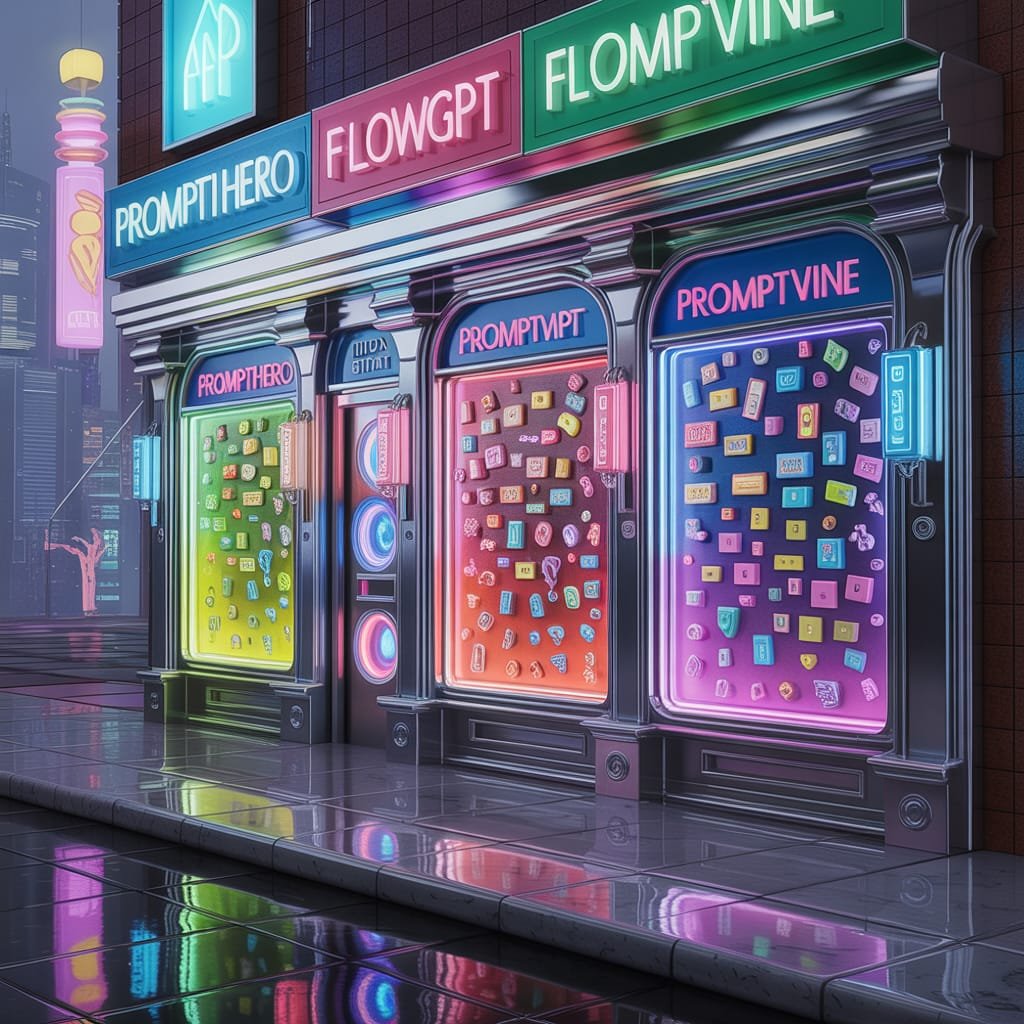
    1. PromptHero: Your Go-To for Stunning AI Art

    If you’re all about creating breathtaking visuals with AI – think Midjourney, Stable Diffusion, or DALL-E – then PromptHero is likely to become your new favorite spot. It’s like a massive online art gallery filled with incredible AI-generated images, and the best part? Every single one comes with the prompt that made it happen.

    What’s so great about it?

    Purely Visual: PromptHero lives and breathes image generation prompts. You’ll discover an astonishing variety of styles, subjects, and artistic directions.
    A Creative Community: It’s more than just a marketplace; it’s a bustling hub where artists show off their creations and the prompts they used. Think of it as a giant, interactive inspiration board.
    Explore and Create: You can browse trending prompts, easily filter by your preferred AI model, or even use their built-in builder to start crafting your own unique masterpieces.
    Mix of Free and Premium: Loads of prompts are shared freely by the community, which is fantastic for learning and experimenting without spending a dime. Plus, there’s a marketplace for those premium, perfectly tuned prompts.
    Model-Specific: Everything is clearly organized by AI model (Midjourney, Stable Diffusion, DALL-E 2, etc.), so finding exactly what you need is a breeze.

    Pricing: You can explore a huge library of community-shared prompts for free. If you want premium, curated prompts, prices usually range from a few dollars for simpler ones to a bit more for highly complex or specialized creations. They also offer a Pro subscription if you’re looking for advanced features like prompt history or private prompts.

    Quality: Generally, the quality is excellent, especially for the paid options. The community plays a big role here, with users rating and commenting on prompts, which acts as a helpful peer review system. And since it’s so visual, you can actually see the results before you commit, which is a massive advantage.

    The Good Stuff:

    Absolutely unbeatable for image generation prompts.
    A vibrant community and an endless gallery of inspiration.
    Fantastic filtering and search tools.
    You get both free and paid options.
    You can preview the output before you buy!

    The Not-So-Good Stuff:

    Not really built for text-based LLM prompts (like ChatGPT).
    The sheer volume of choices can feel a bit overwhelming at first.

    Who’s it for? Artists, designers, content creators who depend on AI for visual content, or anyone eager to push the limits of AI image generation. If your AI-generated cat absolutely needs a tiny pirate hat and a galaxy made of yarn, this is where you’ll find the magic.

    1. FlowGPT: The Word Wizard’s Secret Weapon for LLMs

    If your AI goals lean more towards crafting amazing stories, churning out marketing copy, brainstorming fresh ideas, or simply having a super-smart conversation, then FlowGPT is a name you absolutely need to put on your radar. This platform is perfectly designed for Large Language Models (LLMs) like ChatGPT, putting the incredible power of words right at your fingertips.

    What makes it stand out?

    Purely Text-Based: Forget images – FlowGPT is all about text. You’ll discover prompts for just about anything: writing blog posts, social media updates, coding help, academic research, and even creative storytelling.
    Super Organized: Prompts are neatly tucked into clear categories like “Marketing,” “Writing,” “Coding,” “Education,” and “Fun,” so finding your way around is a breeze.
    Community-Powered: This platform thrives on its community, with users sharing their best prompts. There’s also a careful curation process to showcase the highest quality and most popular ones.
    Test Before You Use: Many prompts let you “try” them right on the platform, so you can get a feel for the output before you commit.
    Handy Collections: Users can put together and share collections of related prompts, giving you comprehensive solutions for specific projects or tasks.

    Pricing: FlowGPT uses a freemium model. You’ll find a huge number of excellent prompts available for free, all shared by the community. For more advanced features, private prompts, or access to special collections, they offer subscription plans. The vibe here is definitely about sharing and learning together.

    Quality: Since it’s user-contributed, quality can sometimes vary. However, the rating and review systems are really helpful for finding the best prompts. The popular, highly-rated ones are almost always fantastic, and being able to “try” prompts beforehand lets you check the quality for yourself.

    The Good Stuff:

    Absolutely brilliant for ChatGPT and other LLM prompts.
    An enormous, diverse library of text-based prompts.
    A strong, active community with helpful ratings and comments.
    You can test prompts directly on the platform.
    A fantastic resource for anyone learning text-based prompt engineering.

    The Not-So-Good Stuff:

    Zero focus on image generation prompts.
    Quality can be a bit hit-or-miss with less popular prompts.

    Who’s it for? Writers, marketers, content creators, students, developers, customer service pros – basically, anyone who regularly uses LLMs for text. If you need your AI to whip up a witty limerick or a killer sales email, FlowGPT is your new best friend.

    1. PromptVine: The “Something for Everyone” Marketplace

    Picture a busy digital general store, but for prompts. You can find a little bit of everything here – from stunning image generation prompts to powerful text commands. That’s the feeling you get with PromptVine, a growing platform that aims to be your one-stop shop for all things AI prompts.

    What makes it special?

    Covers All Bases: PromptVine isn’t picky. You’ll discover prompts for Midjourney, Stable Diffusion, DALL-E, ChatGPT, and many other popular AI models, all neatly gathered in one place.
    Easy to Use: Its clean, intuitive design means even new users can browse, search, and buy prompts without getting tangled in confusing tech jargon.
    Curated Bundles: They often highlight curated collections or bundles of prompts, which offer excellent value if you’re working on specific projects (like a “Fantasy Art Pack” or a “Social Media Content Bundle”).
    Empowering Sellers: PromptVine really supports prompt engineers who want to sell their creations, providing them with tools and analytics. This focus often leads to a wonderfully diverse and constantly updated catalog.
    Ratings and Reviews: Just like other marketplaces, user feedback is key here, helping you quickly spot the high-quality prompts from the less effective ones.

    Pricing: Similar to PromptBase, PromptVine usually works on a per-prompt purchase model. Prices will depend on how complex or valuable a prompt is, typically ranging from a few dollars to more for premium, multi-part prompt bundles. Keep an eye out for occasional discounts or special promotional bundles too!

    Quality: You’ll generally find good quality here, as sellers are motivated to create effective prompts to get sales and positive reviews. The platform’s curation also helps ensure a solid standard. My advice? Always double-check those reviews before you buy!

    The Good Stuff:

    Perfect if you switch between different AI models (for both text and images).
    A clean, straightforward interface that’s a joy to navigate.
    Does a great job supporting prompt sellers, which means a wider, more varied selection for you.
    Always getting fresh prompts and new collections.

    The Not-So-Good Stuff:

    Won’t have the intense specialization you’d find in PromptHero for images or FlowGPT for text.
    It’s mainly a paid marketplace, so fewer free options compared to community-focused sites.

    Who’s it for? Generalists, freelancers, small businesses, or anyone who juggles various AI tools for different tasks. If your afternoon involves needing a Midjourney logo prompt and a ChatGPT marketing slogan, PromptVine offers a super convenient, all-in-one solution.

    How to Pick Your Perfect Prompt Paradise: A Quick Guide

    Okay, you’ve seen the delicious buffet of options! Now, how do you choose the perfect plate for you? Don’t just pick the first one you see. Take a moment to think about these key questions:

    1. Which AI tool do you use most often? Are you a Midjourney maestro or a ChatGPT wizard? Your main AI companion should definitely guide your choice of prompt marketplace.
    2. What’s your budget like? Are you hunting for freebies to get started, or are you ready to invest in premium prompts that save you serious time? Remember, some platforms thrive on free community contributions, while others are mainly paid.
    3. What kind of prompts do you need? Get specific! Are we talking niche, general, images, text, coding, marketing?
    4. How important are community features to you? Do you love connecting with other prompt engineers, sharing your creations, and learning from their experiences? Some platforms have a much stronger community vibe than others.
    5. What’s your learning style? Do you prefer seeing visual examples, reading detailed explanations, or getting hands-on and testing prompts interactively?

    By thinking through these points, you’ll easily narrow down your options and discover a marketplace that genuinely levels up your AI game.

    Maximizing Your Prompt Marketplace Experience: Pro Tips!

    Buying prompts is just the beginning. To truly get ahead, here’s how to squeeze every last drop of value from your chosen prompt haven:

    Don’t Just Buy – Learn! Take purchased prompts apart. Figure out what makes them tick. How are parameters used effectively? Try to reverse-engineer the magic behind them!
    Experiment and Iterate: Think of bought prompts as a launchpad, not the finish line. Tweak them, mash them up, and see what happens when you make small changes.
    Read Reviews (and Write Them!): User reviews are incredibly valuable. They tell you if a prompt actually delivers on its promise. And once you’ve tried one, do others a favor and share your honest feedback.
    Think About Selling Your Own: Once you get really good at prompt engineering, you might start creating prompts so brilliant that others would gladly pay for them! Many of these platforms make it easy to become a seller yourself.
    Stay Curious: The AI world is constantly evolving. Keep an eye out for new platforms, features, and fresh prompt engineering techniques.

    Discover the best PromptBase alternatives in 2025. Compare PromptHero, FlowGPT, and PromptVine to find your perfect AI prompt marketplace for ChatGPT and Midjourney.

    The Final Prompt: Your AI Journey Starts Now!

    The world of AI prompting is truly your oyster, and these marketplaces are here to help you find the pearls. While PromptBase has been a great starting point for many, the innovative alternatives we’ve explored offer specialized tools, thriving communities, and fresh ideas to truly elevate your AI creations.

    No more frustrated conversations with that smart, but sometimes stubborn, AI. With the perfect prompt marketplace by your side, you’re not just using AI; you’re mastering it. So, go forth, explore, create, and let your AI handle the heavy lifting, all guided by the best prompts you can find!

    Want to dive even deeper into AI content creation?
    Grab my free PDF, “ChatGPT Prompts Bundle for Content Creators!” Just send me an email.

  • The Best AI Prompt Marketplaces to Buy and Sell Quality Prompts

    The Best AI Prompt Marketplaces to Buy and Sell Quality Prompts

    Ready to Supercharge Your AI? Discover the Best Prompt Marketplaces!

    In today’s fast-paced AI world, the difference between a “meh” output and a masterpiece often boils down to one crucial thing: the prompt. As AI tools like ChatGPT, Midjourney, Stable Diffusion, and DALL-E become essential for creators, marketers, developers, and businesses, the demand for high-quality, effective prompts has skyrocketed. It’s not just a niche curiosity anymore; crafting precise and powerful prompts is a valuable skill.

    But what if you don’t have the time, expertise, or inspiration to engineer the perfect prompt every single time? Or perhaps you’ve mastered the art of prompt crafting and are looking to make some cash from your unique talent? That’s where AI prompt marketplaces come in – exciting hubs where innovation meets commerce, allowing you to buy and sell expertly designed prompts that truly unlock AI’s potential.

    This guide will dive deep into the world of AI prompt marketplaces, showing you the top platforms where you can find premium prompts or start your journey as a prompt seller today. Get ready to elevate your AI game!

    Why Quality AI Prompts Are Your New Secret Weapon

    Imagine your AI as a super-smart, incredibly versatile assistant that sometimes needs a little direction. Without clear, concise, and well-structured instructions, even the most advanced AI can produce generic, irrelevant, or just plain uninspiring results. A quality prompt is like the steering wheel, guiding your AI exactly where you want it to go, with precision and creativity.

    Why bother with premium prompts? Well, they help you:

    Save Time: No more spending hours on trial-and-error prompt engineering.
    Achieve Superior Results: Get access to prompts proven to generate high-quality, specific outputs.
    Unlock New Possibilities: Discover creative ways to use AI you might not have considered.
    Boost Efficiency: Streamline your workflows for content creation, image generation, code development, and more.

    Basically, great prompts fuel your AI’s performance, transforming it from a general tool into your personal, super-efficient, specialized assistant.

    The Rise of the AI Prompt Marketplace

    The AI boom naturally led to prompt marketplaces. Once “prompt engineer” became a legitimate and highly sought-after role, it was clear we needed platforms where these valuable digital tools could be exchanged. These marketplaces are great for two main reasons:

    For Buyers: They offer a curated selection of prompts for various AI models and use cases, often categorized and reviewed. This makes it super easy to find exactly what you need. From intricate Midjourney prompts for photorealistic art to sophisticated ChatGPT prompts for marketing copy, the options are vast.
    For Sellers: They provide a platform to earn money from your prompt engineering skills. If you’re great at getting incredible results from AI, you can package and sell your best prompts, earning passive income from your expertise. It’s a fantastic way to contribute to the AI community while being rewarded for your creativity.

    These aren’t just shops; they’re communities where prompt engineers share their best work, learn from each other, and push AI’s limits.

    Top AI Prompt Marketplaces to Explore

    Ready to explore? Here are the top platforms to find and sell awesome prompts, each with its own vibe and community.

    1. PromptBase: The Gold Standard for High-Quality Prompts

    If you’re looking for a dedicated AI prompt marketplace, PromptBase is usually the first name that comes up. They kicked things off aiming to make prompt selling a real profession, and offer a sleek interface with a strong emphasis on quality.

    For Buyers: PromptBase has a huge selection of prompts for popular AI models like ChatGPT, Midjourney, Stable Diffusion, DALL-E, and even specific applications like Claude and Llama. Prompts are well-categorized, often include example outputs, and are designed for specific outcomes – from “realistic photography” to “professional blog post outlines.” Because they’re so selective, you’re pretty much guaranteed to find top-notch, tested prompts.
    For Sellers: If you have a knack for crafting effective prompts, PromptBase offers an excellent opportunity to sell them. They have a strict submission and approval process, ensuring a high standard of quality. Sellers set their own prices, and PromptBase takes a cut (typically 20%). It’s a fantastic platform for prompt engineers to showcase their skills and earn income.

    Why it’s a Top Pick: Its focus on premium quality, user-friendly interface, and robust support for both buyers and sellers make PromptBase a leading contender in the AI prompt marketplace arena.

    1. PromptHero: A Huge Community with Premium Perks

    PromptHero started as a massive library of free AI art prompts, allowing users to browse and get inspiration for Midjourney, Stable Diffusion, and other image generators. While it still offers a significant free section, it has now evolved to include premium options too, making it a full-fledged AI prompt marketplace.

    For Buyers: You can explore millions of prompts, many shared by the community for free. This is perfect for learning and experimenting. For those seeking more refined or niche prompts, PromptHero also features a “Pro” section where creators can sell their best work. The ability to filter by AI model, style, and even specific artists makes finding what you need incredibly efficient.
    For Sellers: PromptHero allows creators to build a profile, share their prompts (both free and premium), and get noticed by a huge community. While lots of free content can mean more competition, it’s an excellent platform for building a reputation and eventually directing users to your premium offerings.

    Why it’s a Top Pick: Its blend of a vast free prompt library with growing premium options, coupled with a highly active community, makes PromptHero a powerful resource for both inspiration and commerce.

    1. FlowGPT: For Complex Tasks and Smart Workflows

    FlowGPT is special because it’s not just about single prompts, but “flows” – like a chain of prompts, or even whole AI workflows designed for bigger, more complex jobs. This AI prompt marketplace is particularly great for anyone wanting to automate multi-step processes or get super specific, detailed results.

    For Buyers: If you’re looking to generate a series of interconnected content pieces, develop a complex narrative, or implement a multi-stage creative process, FlowGPT is an excellent resource. Prompts here are often more elaborate, complete with instructions for iterating and refining. They cater to a more advanced user base who wants to push the boundaries of AI automation.
    For Sellers: Crafting effective “flows” requires really understanding AI and how to string prompts together. If you excel at designing comprehensive AI solutions, FlowGPT offers a unique platform to sell these intricate prompt chains. The community aspect, with upvoting and comments, helps quality flows rise to the top.

    Why it’s a Top Pick: Its emphasis on multi-step prompts and workflows differentiates it, making it ideal for users and sellers focused on advanced AI applications and automation.

    Comparison of top AI prompt marketplace platforms on various devices
    1. General Marketplaces: Gumroad & Etsy

    Even though they aren’t just for AI prompts, platforms like Gumroad and Etsy have become popular spots for creators to sell their digital goods.

    Gumroad: This e-commerce platform is a favorite among independent creators for selling digital stuff straight to their fans. Many prompt engineers create bundles or specialized prompt guides and sell them through Gumroad. It offers more control over branding and pricing.
    Etsy: Known for handmade and unique items, Etsy has also seen a surge in digital product sales, including AI prompts. Sellers often make attractive listings for prompt bundles, especially for image generation AIs, appealing to a creative audience.

    Pros of General Marketplaces: More control, potentially lower fees (depending on volume), direct relationship with customers.
    Cons of General Marketplaces: Less built-in discovery for prompts specifically, requires more self-promotion.

    These platforms are excellent alternatives for sellers who want more autonomy and for buyers who prefer to support individual creators directly.

    How to Buy Prompts Effectively

    Shopping for prompts can be fun, but a little strategy goes a long way:

    1. Know what you need: Which AI are you using? What specific output are you trying to achieve? (e.g., “Midjourney prompt for cyberpunk cityscapes,” “ChatGPT prompt for LinkedIn post ideas”).
    2. Read descriptions carefully: Look for clarity, examples of outputs, and instructions on how to use the prompt effectively.
    3. Check reviews and ratings: Community feedback is invaluable for assessing a prompt’s quality and effectiveness.
    4. Consider the price vs. value: While some prompts might seem expensive, think about the time and effort they save you, and the quality of output they enable.
    5. Try it out and tweak it: Once purchased, experiment with the prompt. You might need to make minor adjustments to perfectly align it with your specific requirements.

    How to Sell Prompts Successfully

    Thinking of selling your prompts on an AI prompt marketplace? Here’s how to hit it big:

    1. Become a pro: Get exceptionally good at prompt engineering for at least one AI model. Understand its nuances, strengths, and weaknesses.
    2. Find your niche: Instead of generic prompts, focus on specific use cases or aesthetics (e.g., “vintage sci-fi art prompts,” “SEO-optimized blog intro prompts”).
    3. Make amazing prompts: Your prompts should be clear, concise, and consistently produce excellent results. Test them rigorously.
    4. Write clear descriptions: Explain what your prompt does, what AI model it’s for, and include multiple example outputs. Clear instructions for use are crucial.
    5. Price smart: Research what similar prompts are selling for. Price competitively but also value your expertise.
    6. Be helpful: Be prepared to answer questions from buyers. Good customer service can lead to repeat business and positive reviews.
    7. Get the word out: Even within a marketplace, promote your listings on social media, your website, or relevant forums.

    Conclusion: Your Gateway to AI Excellence

    AI prompt marketplaces are more than just places to swap digital files; they’re a testament to the amazing collaboration and innovation fueling the AI revolution. Whether you’re an AI pro streamlining your work, a budding creator looking for ideas, or a skilled prompt engineer ready to earn from your talent, these platforms open up incredible doors.

    With great, well-chosen prompts, you can boost your AI efficiency, creativity, and precision like never before. Jump in, see what’s out there, and totally change how you use AI!

    Content creator earning money by selling AI prompts online

    Ready to supercharge your content creation with AI? Message me to get my pdf “ChatGPT Prompts Bundle for Content Creators”!

  • 10 AI Prompt Tools to Make You More Creative. (And Over 50 Free Prompts to try them out!)

    10 AI Prompt Tools to Make You More Creative. (And Over 50 Free Prompts to try them out!)

    The world of Artificial Intelligence is booming, but the key to unlocking its true power lies in one crucial skill: prompting. A well-crafted prompt can be the difference between generic, unusable text and a masterpiece of marketing copy, efficient code, or stunning art. But mastering this skill takes time. That’s where specialized AI prompting tools come in. They are the force multipliers for the modern creator, marketer, and developer. This curated list will guide you through the best tools on the market, helping you cut through the noise and choose the perfect solution to elevate your AI interactions, boost your output, and ultimately, save you precious time and mental energy. As an extra bonus I’ve included 50 prompts at the end to give these tools a try for yourselves. You’re welcome to copy and paste and use for whatever!

    1. Jasper

    Brief Overview: Jasper is a powerful, all-in-one AI content platform designed specifically for marketers and businesses to scale their content creation.

    Key Features & Benefits:
    Brand Voice Consistency: Teach Jasper your brand’s style and tone, and it will apply it across all content, ensuring a unified brand identity.
    SEO Mode Integration: Built-in SEO suggestions (via SurferSEO) help you create content that ranks higher on search engines right from the start.
    Long-Form Document Editor: Go beyond short snippets and craft full-length blog posts, reports, and stories with a intuitive, word processor-like interface.
    Templates for Everything: Access over 50 templates for everything from Facebook ads and email subject lines to video scripts and creative stories.

    Why We Love It: Jasper feels like having a professional copywriter on your team who never sleeps. Its focus on marketing-specific use cases makes it incredibly practical.

    Affiliate Angle: If you’re frustrated with the disjointed nature of generating ideas in one tool, outlines in another, and final copy in a third, Jasper is your solution. It streamlines the entire content workflow into a single, powerful platform, making it an indispensable tool for agencies and content teams serious about scaling their output without sacrificing quality or brand voice. It’s the ultimate ROI play for content-driven businesses.

    1. Copy.ai

    Brief Overview: Copy.ai is a user-friendly AI writing assistant focused on generating high-converting marketing copy, social media content, and sales collateral at incredible speed.

    Key Features & Benefits:
    Freemium Model: Get started immediately with a free plan that offers generous credits, making it perfect for beginners and those on a tight budget.
    Workflow Automation (“Infinity Mode”): Create custom workflows to generate not just one piece of content, but an entire series of related assets (e.g., a blog post, a social media carousel, and an email newsletter) from a single prompt.
    Vast Template Library: An extensive collection of templates for digital marketing needs, including cold emails, product descriptions, and LinkedIn bios.
    Multi-Language Support: Create content in over 25 languages, a huge advantage for global teams and marketers.

    Why We Love It: Its incredibly low barrier to entry and focus on quick, effective copy make it a go-to for solopreneurs and social media managers.

    Affiliate Angle: For anyone who needs to beat writer’s block and produce a week’s worth of social media posts or ad copy in an afternoon, Copy.ai is a game-changer. The free plan allows you to test its value risk-free, and the workflow automation features save so much time that the paid version quickly pays for itself. It’s the ultimate tool for maximizing your content output while minimizing effort.

    1. ChatGPT Plus (by OpenAI)

    Brief Overview: The subscription tier for the world’s most famous AI chatbot, ChatGPT Plus gives you reliable access to the advanced GPT-4 model, even during peak times.

    Key Features & Benefits:
    Access to GPT-4: Experience significantly improved reasoning, creativity, and accuracy compared to the free GPT-3.5 model, handling complex prompts with ease.
    General-Purpose Powerhouse: Unlike niche tools, ChatGPT is a jack-of-all-trades, capable of assisting with coding, creative writing, brainstorming, analysis, and casual conversation.
    Priority Access: Skip the queue during high-demand periods, ensuring you can use the tool whenever inspiration strikes.
    Plugins & Browsing (Beta): Extend its capabilities with plugins for specific tasks (e.g., Expedia, Kayak, Wolfram) and allow it to access current web information.

    Why We Love It: It’s the most versatile AI assistant available, acting as a Swiss Army knife for a huge range of intellectual tasks.

    Affiliate Angle: If you’ve been disappointed by the downtime or limitations of the free version of ChatGPT, upgrading to Plus is a no-brainer. The leap in capability with GPT-4 is substantial, transforming it from a novelty into a truly professional-grade tool. For developers, writers, and researchers who need dependable, top-tier AI performance, the monthly fee is a minimal investment for a massive productivity boost.

    1. Midjourney

    Brief Overview: Midjourney is an AI program and service that generates stunning, high-resolution images from text descriptions (prompts) through a Discord channel.

    Key Features & Benefits:
    Unmatched Aesthetic Quality: Widely regarded as producing the most artistic, visually beautiful, and photorealistic images of any mainstream AI image generator.
    Strong Community Aspect:** Learning happens in public on Discord, allowing you to see the prompts behind other users’ amazing creations and improve your own skills.
    High Customization: Use parameters to finely control aspect ratios, stylization, chaos, and specific models to get exactly the look you want.
    Iterative Refinement: Easily create variations and upscale chosen images to high resolution for practical use.

    Why We Love It: For artists, designers, and concept creators, Midjourney is pure magic. The quality of output consistently inspires awe.

    Affiliate Angle: Struggling to find the perfect stock image or commission expensive custom artwork? Midjourney puts the power of a digital artist in your hands. While there’s a learning curve to crafting the perfect prompt, the ability to generate completely unique, royalty-free visual assets for branding, blog posts, and mood boards is an incredible value. It’s not just a tool; it’s a source of unlimited creative inspiration.

    1. PromptHero

    Brief Overview: PromptHero is not a generator itself but a massive search engine for AI art prompts, allowing users to discover the prompts used to create specific images from DALL-E, Midjourney, and Stable Diffusion.

    Key Features & Benefits:
    Reverse Image & Prompt Search: Find images similar to one you have or love, and see the exact prompt used to create them.
    Massive Learning Database: Deconstruct successful AI art to understand how specific keywords and phrases affect the final output.
    Community Rankings: See which prompts and images are most popular and effective, giving you a curated list of proven formulas.
    Save & Organize: Build collections of your favorite prompts and images for future projects.

    Why We Love It: It dramatically shortens the learning curve for AI image generation by showing you what works, not just telling you.

    Affiliate Angle: If you’ve ever wasted credits on failed image generations because you couldn’t find the right words, PromptHero is your secret weapon. It pays for itself by saving you time and subscription fees on your AI art tools. This is the ultimate resource for going from an AI art novice to a proficient prompt engineer, ensuring you get usable results every time.

    Of course. Here are the remaining five products to complete your comprehensive roundup article.

    1. Claude AI (by Anthropic)

    Brief Overview: Claude is a next-generation AI assistant known for its conversational depth, long-context capabilities, and strong focus on safety and constitutional AI principles.

    Key Features & Benefits:
    Massive Context Window: Claude can process and remember information from extremely long documents (up to 200K tokens), making it ideal for analyzing lengthy reports, contracts, or entire books.
    Nuanced Dialogue: Excels at complex reasoning, summarization, and open-ended conversation with a noticeably natural and helpful tone.
    Reduced Harmful Outputs: Built with a strong constitutional AI framework to be more cautious, honest, and less prone to generating harmful or biased content.
    Document Analysis: You can upload PDFs, Word docs, and other text files directly for Claude to read, summarize, and answer questions about.

    Why We Love It: Claude feels like a thoughtful, intelligent partner, especially for deep work involving large amounts of text. Its ability to “remember” context over long conversations is unparalleled.

    Affiliate Angle: If you’re working with dense legal documents, lengthy technical papers, or need to synthesize information from multiple large sources, Claude is your indispensable research assistant. It saves you hours of manual reading and analysis, allowing you to focus on strategic decision-making instead of information gathering. For professionals who value accuracy and depth, Claude offers a uniquely reliable AI experience.

    1. Perplexity AI

    Brief Overview: Perplexity AI is an AI-powered answer engine that combines the capabilities of a chatbot with the accuracy of a search engine, providing detailed answers with cited sources.

    Key Features & Benefits:
    Source-Cited Answers: Every response includes footnotes linking directly to the sources it pulled information from, allowing for instant fact-checking and deeper research.
    Proactive Search: Instead of just answering your question, it often asks clarifying follow-ups to provide the most relevant and comprehensive answer possible.
    Focus & Search Modes: Tailor your search to specific domains like academic papers, computational knowledge, or general web search.
    Copilot Feature: An interactive AI guide that helps you explore topics thoroughly by asking you questions to narrow down your search.

    Why We Love It* It eliminates the guesswork and frustration of verifying AI-generated information, making it the ultimate tool for researchers, students, and journalists.

    Affiliate Angle: Tired of AI chatbots that confidently state misinformation? Perplexity solves the biggest trust issue in AI today. It’s the perfect tool for anyone who needs fast, accurate, and verifiable information without having to wade through pages of search results. For content creators who need to back up their work with credible sources, Perplexity isn’t just a nice-to-have; it’s a critical part of a responsible workflow.

    1. Stable Diffusion (via DreamStudio)

    Brief Overview: Stable Diffusion is a powerful open-source AI image generation model, and DreamStudio is its official, user-friendly web interface created by Stability AI.

    Key Features & Benefits:
    Unprecedented Control: Offers a wide array of settings to fine-tune your generated images, including negative prompts (what not to include), sampler types, and step counts.
    Open-Source Foundation: Because the core model is open-source, it has a massive community constantly creating custom models and styles (e.g., generating photorealistic people, anime styles, 3D icons).
    Cost-Effective Credits: DreamStudio operates on a pay-as-you-go credit system, which can be very economical for users who don’t need a unlimited monthly subscription.
    Image-to-Image Editing: Upload an existing image and use a prompt to modify it, alter its style, or fill in parts of the picture.

    Why We Love It: It offers the best balance of power, control, and affordability for serious AI art enthusiasts who want to tweak every aspect of the generation process.

    Affiliate Angle: For the AI artist who has outgrown the constraints of simpler tools and wants granular control over their creations, Stable Diffusion through DreamStudio is the next step. The ability to use negative prompts alone is a game-changer for fixing common AI image errors. If you want to develop a unique artistic style and leverage the power of community-trained models, this platform offers a professional-grade toolkit without a hefty subscription fee.

    1. Writer

    Brief Overview: Writer is a full-stack generative AI platform built for the enterprise, focusing on secure, brand-consistent, and governed content creation at scale.

    Key Features & Benefits:
    Enterprise-Grade Security & Governance:** Offers robust data encryption, strict access controls, and guarantees that your data is never used to train public models.
    Knowledge Graph: Teach Writer your company’s specific terminology, product details, and style guidelines, and it will adhere to them religiously.
    Workflow Integrations: Seamlessly integrates into existing workflows via APIs, Chrome extension, and direct plugins for tools like Figma, Slack, and Word.
    Built-in Fact Checking: Includes features designed to help verify claims and reduce hallucinations in generated text.

    Why We Love It: It’s the most secure and customizable platform for large organizations that need to maintain strict brand voice and data security.

    Affiliate Angle: If your legal and compliance teams are hesitant about adopting public AI tools, Writer provides a secure, auditable, and controlled solution. It’s not just a writing tool; it’s a knowledge management system that ensures every piece of content, from marketing to internal comms, is on-brand and accurate. For regulated industries and large teams, Writer mitigates the risks of AI while maximizing its benefits for productivity.

    1. NovelAI

    Brief Overview: NovelAI is a monthly subscription service for AI-assisted authorship, storytelling, and virtual companionship, with a strong focus on unfiltered creative freedom.

    Key Features & Benefits:
    Uncensored Storytelling: Specifically designed to avoid the heavy-handed content restrictions of other AIs, allowing for a wider range of creative genres and themes.
    Memory & Lorebook: Powerful features that let you build a persistent world. The Memory section keeps track of key plot details, while the Lorebook is a wiki for your characters, settings, and rules.
    Image Generation: Includes a powerful image gen module (trained on anime/illustrative styles) perfectly suited for creating character art and scene illustrations for your stories.
    Customizable AI Personas:** Adjust the AI’s prose style, verbosity, and genre adherence to match your specific needs.

    Why We Love It: It’s a sanctuary for writers of fiction and role-play who have been frustrated by other AIs refusing to follow their creative lead.

    Affiliate Angle: Have you ever had an AI suddenly moralize or shut down a creative story idea? NovelAI is built on the principle that the user is the author, offering unparalleled freedom for storytellers, game masters, and writers exploring niche genres. Its unique Lorebook system ensures your story’s world remains consistent chapter after chapter. If you want an AI that collaborates on your terms without judgment, this is the ultimate creative sandbox.

    How to Choose the Right AI Prompting Tool for You

    Selecting the best tool depends entirely on your primary need:
    For Marketers & Bloggers: Jasper, Copy.ai, and Writer.com are top choices.
    For Developers & Analysts: ChatGPT Plus and Claude.ai excel.
    For Artists & Designers: Midjourney and Stable Diffusion are industry leaders.
    For Researchers & Curious Minds: Perplexity.ai and ChatGPT Plus are incredible resources.
    For Enterprises with Security Needs: Writer is the standout platform.
    For Fiction Writers & Role-Play: NovelAI is in a class of its own.

    Most tools offer free trials or freemium plans—we highly recommend testing a few to see which interface and output style resonate with you.

    Here are some image prompts to use to try the image generation platforms:

    A hovering over ethereal massive huge moon. Mixed media of hyper-detailed digital illustration, a luminous painting inspired by William Blake, in a masterpiece with smooth clear clean edges

    A deciphering bioluminescent crystal ball. Mixed media of hyper-detailed vector art, a mystical painting inspired by Salvador Dalí, in a masterpiece with smooth clear clean edges

    A summoning ornate ancient ruins. Mixed media of hyper-detailed oil painting, a haunting painting inspired by Hieronymus Bosch, in a masterpiece with smooth clear clean edges

    A sailing through holographic sci-fi city. Mixed media of hyper-detailed neon art, a futuristic painting inspired by Syd Mead, in a masterpiece with smooth clear clean edges

    A repairing fractured dimension portal. Mixed media of hyper-detailed etching, a surreal painting inspired by M.C. Escher, in a masterpiece with smooth clear clean edges

    A discovering whimsical enchanted forest. Mixed media of hyper-detailed watercolor painting, a dreamlike painting inspired by Arthur Rackham, in a masterpiece with smooth clear clean edges

    A transforming cybernetic organism. Mixed media of hyper-detailed 3D rendering, a metallic painting inspired by H.R. Giger, in a masterpiece with smooth clear clean edges

    A defending celestial nebula. Mixed media of hyper-detailed acrylic painting, a cosmic painting inspired by Chesley Bonestell, in a masterpiece with smooth clear clean edges

    A conjuring iridescent mystical island. Mixed media of hyper-detailed mixed media artwork, a fantastical painting inspired by Alan Lee, in a masterpiece with smooth clear clean edges

    A evoking melancholic abandoned laboratory. Mixed media of hyper-detailed charcoal sketch, a dramatic painting inspired by Zdzisław Beksiński, in a masterpiece with smooth clear clean edges

    A navigating steampunk city. Mixed media of hyper-detailed collage, a vintage painting inspired by Jules Verne, in a masterpiece with smooth clear clean edges

    A igniting glowing alien landscape. Mixed media of hyper-detailed digital Photoshop creation, an otherworldly painting inspired by Wayne Barlowe, in a masterpiece with smooth clear clean edges

    A avenging cursed vampire castle. Mixed media of hyper-detailed ink drawing, a gothic painting inspired by Brom, in a masterpiece with smooth clear clean edges

    A building colossal giant robot. Mixed media of hyper-detailed technical drawing, a mechanical painting inspired by Hayao Miyazaki, in a masterpiece with smooth clear clean edges

    A banishing shadowy figure. Mixed media of hyper-detailed pen and ink drawing, a haunting painting inspired by Edward Gorey, in a masterpiece with smooth clear clean edges

    A exploring bioluminescent bay. Mixed media of hyper-detailed pastel artwork, an ethereal painting inspired by Rebecca Guay, in a masterpiece with smooth clear clean edges

    A revealing sacred shrine. Mixed media of hyper-detailed gold leaf art, a divine painting inspired by Klimt, in a masterpiece with smooth clear clean edges

    A dancing in flamboyant ballroom. Mixed media of hyper-detailed art deco painting, an elegant painting inspired by Tamara de Lempicka, in a masterpiece with smooth clear clean edges

    A repairing fractured time machine. Mixed media of hyper-detailed schematic, a retro-futuristic painting inspired by Moebius, in a masterpiece with smooth clear clean edges

    A observing prismatic parallel universe. Mixed media of hyper-detailed op art, a psychedelic painting inspired by Alex Grey, in a masterpiece with smooth clear clean edges

    A sculpting frozen ice fortress. Mixed media of hyper-detailed ice sculpture, a crystalline painting inspired by Andy Goldsworthy, in a masterpiece with smooth clear clean edges

    A chasing luminous firefly. Mixed media of hyper-detailed miniature painting, a whimsical painting inspired by Beatrix Potter, in a masterpiece with smooth clear clean edges

    A weaving intricate tapestry. Mixed media of hyper-detailed textile art, a textile painting inspired by Anni Albers, in a masterpiece with smooth clear clean edges

    A decoding arcane manuscript. Mixed media of hyper-detailed calligraphy, an esoteric painting inspired by Aubrey Beardsley, in a masterpiece with smooth clear clean edges

    A ascending colossal celestial event. Mixed media of hyper-detailed astronomical illustration, a cosmic painting inspired by Chesley Bonestell, in a masterpiece with smooth clear clean edges

    A vaporizing ethereal dragonfly. Mixed media of hyper-detailed stained glass art, a luminescent painting inspired by Louis Comfort Tiffany, in a masterpiece with smooth clear clean edges

    A navigating colossal steampunk city. Mixed media of hyper-detailed etching, an intricate painting inspired by Hayao Miyazaki, in a masterpiece with smooth clear clean edges

    A healing fractured crystal ball. Mixed media of hyper-detailed watercolor painting, a serene painting inspired by Alphonse Mucha, in a masterpiece with smooth clear clean edges

    A dismantling cybernetic organism. Mixed media of hyper-detailed technical drawing, a metallic painting inspired by H.R. Giger, in a masterpiece with smooth clear clean edges

    A discovering bioluminescent bay. Mixed media of hyper-detailed digital illustration, an ethereal painting inspired by James Cameron, in a masterpiece with smooth clear clean edges

    A conjuring iridescent mushroom. Mixed media of hyper-detailed macro photography, a psychedelic painting inspired by Alex Grey, in a masterpiece with smooth clear clean edges

    A defending ancient manuscript. Mixed media of hyper-detailed calligraphy, a mystical painting inspired by John Howe, in a masterpiece with smooth clear clean edges

    A ascending parallel universe. Mixed media of hyper-detailed astronomical illustration, a cosmic painting inspired by Chesley Bonestell, in a masterpiece with smooth clear clean edges

    A repairing time machine. Mixed media of hyper-detailed schematic, a retro-futuristic painting inspired by Moebius, in a masterpiece with smooth clear clean edges

    A evoking melancholic abandoned laboratory. Mixed media of hyper-detailed charcoal sketch, a haunting painting inspired by Zdzisław Beksiński, in a masterpiece with smooth clear clean edges

    A weaving intricate tapestry. Mixed media of hyper-detailed textile art, a textile painting inspired by Anni Albers, in a masterpiece with smooth clear clean edges

    A decoding arcane shrine. Mixed media of hyper-detailed gold leaf art, a divine painting inspired by Gustav Klimt, in a masterpiece with smooth clear clean edges

    A chasing luminous firefly. Mixed media of hyper-detailed miniature painting, a whimsical painting inspired by Beatrix Potter, in a masterpiece with smooth clear clean edges

    A sculpting frozen ice fortress. Mixed media of hyper-detailed ice sculpture, a crystalline painting inspired by Andy Goldsworthy, in a masterpiece with smooth clear clean edges

    A observing prismatic nebula. Mixed media of hyper-detailed op art, a psychedelic painting inspired by Bridget Riley, in a masterpiece with smooth clear clean edges

    A summoning ornate vampire castle. Mixed media of hyper-detailed ink drawing, a gothic painting inspired by Brom, in a masterpiece with smooth clear clean edges

    A transforming holographic alien landscape. Mixed media of hyper-detailed neon art, a futuristic painting inspired by Syd Mead, in a masterpiece with smooth clear clean edges

    A banishing shadowy figure. Mixed media of hyper-detailed pen and ink drawing, a haunting painting inspired by Edward Gorey, in a masterpiece with smooth clear clean edges

    A navigating colossal celestial event. Mixed media of hyper-detailed astronomical illustration, a cosmic painting inspired by Chesley Bonestell, in a masterpiece with smooth clear clean edges

    A deciphering fractured dimension portal. Mixed media of hyper-detailed etching, a surreal painting inspired by M.C. Escher, in a masterpiece with smooth clear clean edges

    A igniting glowing enchanted forest. Mixed media of hyper-detailed digital Photoshop creation, a fantastical painting inspired by Alan Lee, in a masterpiece with smooth clear clean edges

    A avenging cursed time machine. Mixed media of hyper-detailed technical drawing, a retro-futuristic painting inspired by Jules Verne, in a masterpiece with smooth clear clean edges

    A discovering whimsical mushroom. Mixed media of hyper-detailed watercolor painting, a dreamlike painting inspired by Arthur Rackham, in a masterpiece with smooth clear clean edges

    A hovering over ethereal massive huge moon. Mixed media of hyper-detailed vector art, a luminous painting inspired by William Blake, in a masterpiece with smooth clear clean edges

    A repairing cybernetic organism. Mixed media of hyper-detailed 3D rendering, a metallic painting inspired by Masamune Shirow, in a masterpiece with smooth clear clean edges

    A crystallizing luminous dragonfly. Mixed media of hyper-detailed stained glass art, a prismatic painting inspired by Louis Comfort Tiffany, in a masterpiece with smooth clear clean edges

    A unraveling bioluminescent mushroom. Mixed media of hyper-detailed macro photography, a psychedelic painting inspired by Alex Grey, in a masterpiece with smooth clear clean edges

    A resurrecting fractured ancient ruins. Mixed media of hyper-detailed charcoal sketch, a haunting painting inspired by Zdzisław Beksiński, in a masterpiece with smooth clear clean edges

    A navigating colossal steampunk city. Mixed media of hyper-detailed etching, an intricate painting inspired by Hayao Miyazaki, in a masterpiece with smooth clear clean edges

    A decoding iridescent crystal ball. Mixed media of hyper-detailed calligraphy, a mystical painting inspired by John Howe, in a masterpiece with smooth clear clean edges

    A weaving ethereal tapestry. Mixed media of hyper-detailed textile art, a textile painting inspired by Anni Albers, in a masterpiece with smooth clear clean edges

    A summoning ornate vampire castle. Mixed media of hyper-detailed ink drawing, a gothic painting inspired by Brom, in a masterpiece with smooth clear clean edges

    A transforming holographic alien landscape. Mixed media of hyper-detailed neon art, a futuristic painting inspired by Syd Mead, in a masterpiece with smooth clear clean edges

    A banishing shadowy figure. Mixed media of hyper-detailed pen and ink drawing, a haunting painting inspired by Edward Gorey, in a masterpiece with smooth clear clean edges

    A sculpting frozen ice fortress. Mixed media of hyper-detailed ice sculpture, a crystalline painting inspired by Andy Goldsworthy, in a masterpiece with smooth clear clean edges

    A observing prismatic nebula. Mixed media of hyper-detailed op art, a psychedelic painting inspired by Bridget Riley, in a masterpiece with smooth clear clean edges

    A igniting glowing enchanted forest. Mixed media of hyper-detailed digital Photoshop creation, a fantastical painting inspired by Alan Lee, in a masterpiece with smooth clear clean edges

    A avenging cursed time machine. Mixed media of hyper-detailed technical drawing, a retro-futuristic painting inspired by Jules Verne, in a masterpiece with smooth clear clean edges

    A discovering whimsical mushroom. Mixed media of hyper-detailed watercolor painting, a dreamlike painting inspired by Arthur Rackham, in a masterpiece with smooth clear clean edges

    A hovering over ethereal massive huge moon. Mixed media of hyper-detailed vector art, a luminous painting inspired by William Blake, in a masterpiece with smooth clear clean edges

    A repairing cybernetic organism. Mixed media of hyper-detailed 3D rendering, a metallic painting inspired by Masamune Shirow, in a masterpiece with smooth clear clean edges

    A evaporating luminous firefly. Mixed media of hyper-detailed miniature painting, a whimsical painting inspired by Beatrix Potter, in a masterpiece with smooth clear clean edges

    A ascending parallel universe. Mixed media of hyper-detailed astronomical illustration, a cosmic painting inspired by Chesley Bonestell, in a masterpiece with smooth clear clean edges

    A deciphering fractured dimension portal. Mixed media of hyper-detailed etching, a surreal painting inspired by M.C. Escher, in a masterpiece with smooth clear clean edges

    A healing bioluminescent bay. Mixed media of hyper-detailed digital illustration, an ethereal painting inspired by James Cameron, in a masterpiece with smooth clear clean edges

    A dismantling cybernetic organism. Mixed media of hyper-detailed technical drawing, a metallic painting inspired by H.R. Giger, in a masterpiece with smooth clear clean edges

    A conjuring iridescent mystical island. Mixed media of hyper-detailed mixed media artwork, a fantastical painting inspired by Alan Lee, in a masterpiece with smooth clear clean edges

    A defending celestial nebula. Mixed media of hyper-detailed acrylic painting, a cosmic painting inspired by Chesley Bonestell, in a masterpiece with smooth clear clean edges

    A evoking melancholic abandoned laboratory. Mixed media of hyper-detailed charcoal sketch, a dramatic painting inspired by Zdzisław Beksiński, in a masterpiece with smooth clear clean edges

    A navigating colossal celestial event. Mixed media of hyper-detailed astronomical illustration, a cosmic painting inspired by Chesley Bonestell, in a masterpiece with smooth clear clean edges

    1|CONTENT STRATEGY / WRITING PROMPTS

    Prompt: “Act as a social media strategist. Create a 30-day content calendar for Instagram Reels and Carousels in the [your niche] space with hooks that grab attention.’”

    2 VIRAL HOOKS

    Prompt: “Generate 25 viral-style hooks for social media posts, keeping them short, bold, and curiosity-driven.”

    3 SCRIPT WRITER

    Prompt: “Write engaging 30-second scripts for Instagram Reels based on these 5 topics: [insert topics]. Keep them punchy and fast- paced.”

    4ICAPTION BUILDER

    Prompt: “Write captions for Instagram Reels that expand on the scriot. include storytelling, and finish with a strong CTA to follow me.”

    5 1 DESIGN IDEA GENERATOR

    Prompt: “Suggest creative visual ideas for a carousel post on [topic] including layout, colors, and text placement.”

    6 I VIDEO EDITOR

    Prompt: “Give me editing instructions for a viral-style Reel, including transitions, text overlays, and trending effects.”

    7 ISCHEDULER

    Prompt: “Organize this content into a posting schedule, optimized for reach in US/UK/Canada time zones.’”

    Final Thoughts

    The right AI prompting tool doesn’t replace your creativity; it amplifies it. By handling the heavy lifting, these platforms free you to focus on strategy, refinement, and big-picture thinking. Investing in one is an investment in your own productivity and creative potential. Explore the options on this list, find the one that best fits your workflow, and start creating smarter, not harder.

    Ready to transform how you work? Click on any tool above to visit their website and start your free trial today!

  • Pay Once, Generate Forever: 10 AI Image Tools That Give Lifetime Access for a Single Price

    Pay Once, Generate Forever: 10 AI Image Tools That Give Lifetime Access for a Single Price

    Laptop on a dark workspace with glowing screens of AI art tools, digital dollar bills turning into bright pixels, text overlay reading ‘Pay Once, Create Forever,’ in neon purple and navy tones.”


    Tired of the endless cycle of monthly AI subscriptions eating away at your creative budget? Whether you’re a freelancer, marketer, or a casual creator, you want dependable, high-quality image generation—without the commitment of recurring fees. Good news: a wave of AI platforms now offer lifetime access with a one-time payment. Imagine unlocking powerful image generation tools and using them forever—no subscriptions, no renewals, just creative freedom. In this post, we’ll explore 10 such platforms that deliver exactly that. Each one lets you pay once, generate indefinitely, and keep your wallet happy. Ready to future‑proof your design workflow? Let’s dive in—and don’t forget to grab your favorite deal before it expires!


    1. Imagiyo AI – Standard Plan (Lifetime)

    • What’s on offer: Lifetime access to Imagiyo’s full image generator with high-res outputs, NSFW/SFW options, multiple sizes, and full commercial rights.
    • Price: Currently just $39.97, down from $495—a whopping 92% discount.
    • Why it rocks: Built with Stable Diffusion and FLUX AI, it delivers clean, versatile visuals fast—perfect for marketers, creators, and anyone who needs pro-quality visuals on demand.

    2. Imagiyo AI – Basic Plan (Lifetime)

    • Offer: Lifetime access to create up to 250 images per month, watermark-free, ad‑free, and with full commercial use. Uses FLUX Schnell and Modelslab Stable Diffusion for smooth, detailed results Flux AI+15SFGATE+15CO/AI+15.
    • Price: Now just $29 (regularly $345)—a solid 91% off.
    • Why it works: Ideal for solo content creators and small teams needing reliable output volume—with no subscription hassle.

    3. Imagiyo AI – Standard Deal (Latest)

    • Offer: Same as entry #1, but with an updated limited‑time deal.
    • Price: $49 for lifetime Standard Plan access—a full 90% off the regular $495 cost.
    • Why it matters: Great if you’re looking for flexibility—still high‑powered, but on sale longer than the $39 deal. Act fast!

    4. Flux Pro AI – One-Time Credit Packs

    • Offer: Credit-based image generation using potent Flux AI models (Schnell, Dev, Pro, etc.) with no recurring fees. Two one‑time tiers:
      • $20 → 400 credits
      • $50 → 1,000 credits
        Permanent history and no subscription required.
    • Why it’s valuable: Pay once, use credits at your pace. Great if you prefer control over how many generations you need, without locking into monthly plans.

    5. ArtSpace AI – Lifetime Deal

    • Offer: One-time purchase unlocks pro models for image/art creation, including features like face-swapping and 4K upscaling.
    • Price: Usually around $77 (often discounted from $297)—though may fluctuate—so check the latest on their site.
    • Why it stands out: Excellent for artists and designers who want high-resolution tools and creative flexibility without ongoing costs.
    • (I personally use this platform and love it!)

    6. PromptsGenii – Lifetime Prompt Guide Access

    • Offer: Lifetime access to expert-crafted prompt guides that help you generate sharper, more accurate results with AI image tools.
    • Price: Around $39, marked down from $780—an eye-watering 95% discount.
    • Why use it: Perfect if you’re new to prompt engineering or want to polish your prompt game once and for all.

    7. Artistly – Unlimited Lifetime License

    • Offer: One-time purchase unlocks unlimited image creation with commercial license included—no caps, no monthly limits.
    • Price: “Low one-time price” (varies; check artistly.ai for current deals).
    • Why it’s useful: Ultimate simplicity—buy it, use it, never pay again.

    8. 1min.AI – Pro Lifetime Subscription (Multi-Tool)

    • Offer: Lifetime access to a full AI toolkit—image, text, audio, and video generation—credit-based model using top engines like ChatGPT and Gemini.
    • Price: About $29.97, down from $234.
    • Why it’s cool: Freelancer? Marketer? You get everything in one platform for under $30.

    9. Luminar Neo – Lifetime Bundled AI Editing

    • Offer: Full suite of AI-powered editing tools (Skyᴬᴵ, Skinᴬᴵ, Relightᴬᴵ, overlays, tutorials).
    • Price: ~$119.99 (discounted from $682).
    • Why photographers/designers love it: Not just image generation—but intelligent editing with lifetime access.

    10. Photomator – AI Photo Editor (Lifetime License)

    • Offer: Non-destructive batch editing with AI enhancements—still available as a one-time purchase for Mac users.
    • Price: Around $99.
    • Why it fits: If you’re looking to level up photo editing without future fees, this is a solid choice.

    Picking Your Best Lifetime Deal

    Ask yourself:

    • How many images do you generate monthly?
    • Do you need upscaling, editing tools, or just content generation?
    • Is commercial use required?
    • Do you value credit flexibility or simply want unlimited access?

    Pick your deal:

    • Imagiyo Basic or Standard → Best for creators needing consistent image output.
    • Flux Pro credit packs → Great when you want flexibility without ongoing payments.
    • ArtSpace or Luminar Neo → Go-to if you care deeply about high-res or editing features.
    • 1min.AI → All-in-one solution for multi-format content creators.
    • PromptsGenii → Bonus tool to boost results across any platform.

    Final Thoughts 

    Say goodbye to nickel-and-diming subscriptions and hello to creative freedom. These one-time deals let you pay once, unlock lifetime access, and generate without limits—saving you money and headaches. Ready to pick the best value? Grab your favorite platform now before the deal vanishes—your future self (and creative projects) will thank you.

  • Vibe-Coding: Unlocking AI’s Reasoning Juice with GPT-5 and

    Vibe-Coding: Unlocking AI’s Reasoning Juice with GPT-5 and

    GPT-5 & AI: Vibe-Coding Unleashed

    The world of AI is changing fast. We’re moving away from rigid rules and stiff commands. Instead, we are finding a more natural way to tell machines what we want. This exciting shift is all about “vibe-coding.”

    So, what is vibe-coding? It means you speak to AI in plain language. You tell it your goals and what you want to achieve. The AI then figures out the complex code needed. Think about it: you describe the feeling or “vibe” of what you need. Then the AI makes it real. This is very different from old coding, which used strict rules. New AI models like a rumored GPT-5 will truly understand these broad instructions. They will bring out their amazing “reasoning juice,” leading to breakthroughs we’ve only dreamed of.

    The Evolution of Code Generation

    From Syntax to Semantics

    Early computer programs were tough. Developers had to use very specific commands. These rules were for the machine, not for humans. Every tiny mistake would break the code. It was like speaking a secret language with no room for error.

    Over time, programming languages got easier. We moved to “high-level” languages. These let us write code that looked more like English. Developers could focus on bigger ideas. They didn’t have to worry about every small machine step.

    Then, AI stepped in. At first, AI helped with small tasks. It would finish a line of code or suggest a basic snippet. But a human was always in charge. The AI still needed a lot of guidance.

    The “Vibe-Coding” Paradigm Shift

    Vibe-coding is a big leap forward. It focuses on the behavior you want. It’s about the final outcome of the code. You don’t tell the AI how to build it piece by piece. You describe the vision.

    Natural language is the new code. Smart AI can now understand our normal speech. This lets developers explain their wishes more clearly. It’s like talking to a very smart assistant.

    Imagine you want to sort a list. With vibe-coding, you might say, “Make a function that sorts this list from biggest to smallest. Make sure it doesn’t crash if the list is empty.” You don’t have to name the exact sorting method. The AI figures it out. This makes coding feel more like a conversation.

    Unlocking AI’s Reasoning Juice

    Beyond Pattern Matching

    Today’s AI models are very powerful. They can spot patterns in huge amounts of data. This helps them write text or create images. But they often struggle with new problems. They might not truly understand what they are doing. They are great at repeating what they’ve learned. They aren’t always great at deep thinking.

    “Reasoning juice” is the AI’s ability to think. It’s their power to solve problems and use what they know in new ways. This is more than just repeating facts. It’s about deep logic and smart choices.

    Vibe-coding helps unlock this reasoning. When you give AI a high-level goal, you challenge it. The AI must use its smarts to fill in the gaps. It needs to connect your broad idea to real code steps. This forces the AI to truly reason.

    The Role of GPT-5 and Future Models

    Reports suggest GPT-5 will be a game-changer. It may have much better logical thinking. Its memory for context could grow. This would help it understand subtle commands. Such power would make vibe-coding incredibly effective.

    Future models might even understand more than just words. Imagine showing an AI a drawing. Or you could speak your ideas aloud. The AI could use these hints as part of the “vibe.” This is called multimodal understanding.

    These advanced AI tools won’t just write code. They will be like smart partners. They can help design your project. They can solve tough problems with you. It’s a true team effort between humans and AI.

    Practical Applications and Benefits

    Increased Developer Productivity

    Vibe-coding can speed up your work. You can create early code quickly. This helps you test ideas faster. It’s great for making quick prototypes.

    AI can handle the boring parts of coding. It writes the standard setup for many tasks. This frees up developers. They can focus on the unique, important parts of their projects.

    This new way of coding also opens doors. People with great ideas but less coding practice can now build things. It makes coding more open to everyone. This lowers the barrier for creative minds.

    Enhanced Code Quality and Innovation

    AI might find better ways to write code. With a clear “vibe,” it can suggest smart or new solutions. This can lead to more efficient programs.

    Models that understand the whole project are even better. They can make code that fits perfectly. This leads to cleaner, more integrated systems.

    Picture this: A designer explains an animation’s flow. “I want this menu to slide out smoothly, with a slight bounce at the end.” The AI could then write the exact code for that animation. It translates feeling into function.

    Challenges and Considerations

    The Nuance of “Vibe”

    Natural language can be tricky. Words have many meanings. What one person means by “fast” might differ for another. This can cause misunderstandings.

    Vibe-coding still needs clear prompts. You must clearly state your goal. The more precise your description, the better the AI’s results. It’s about clear thinking, even in plain words.

    Sometimes, AI can make up answers. This is called “hallucinations.” The AI might give code that looks right but doesn’t work. Or it might be very inefficient. Always check the AI’s work.

    Ethical and Security Implications

    AI learns from data. If the data has biases, the code it makes might have them too. This could lead to unfair or unhelpful results. We must be careful about AI’s training.

    AI-generated code needs strong security checks. Bad code could create weaknesses. Rigorous testing is always key, no matter who or what writes the code.

    Who owns the code an AI writes? These questions are new. Laws and rules are still catching up. It’s important to think about who gets credit and responsibility.

    The Future of Coding: A Human-AI Symphony

    Actionable Tips for Embracing Vibe-Coding

    To get the most from vibe-coding, start smart. First, know exactly what you want the code to do. Define your outcome clearly before you ask the AI.

    Treat AI-generated code as a first draft. It’s a starting point. Give the AI feedback. Make changes yourself. This back-and-forth makes the final product better.

    Don’t just run the code. Try to understand why the AI wrote it that way. Learn the logic behind its choices. This will make you a better problem-solver.

    Experiment with your words. Try different ways to describe your idea. You’ll find which phrases work best for different tasks. It’s a skill you develop over time.

    Expert Quotes/References

    Leading AI researchers and software developers are eagerly watching this shift. They believe these advanced models will redefine how we build technology. Discussions often center on the potential for more creative problem-solving and greater access to powerful tools. Many see this as a pivotal moment for innovation in software.

    The Road Ahead

    AI models will keep getting better. They will understand more complex tasks. Their code generation will become even more precise.

    Expect new tools to pop up. These will make vibe-coding even easier. They will help developers work seamlessly with AI. This new era will bring new frameworks and platforms.

    The skills needed for developers will change. Less time on basic syntax means more time on big ideas. Focus will shift to designing systems. Talking effectively with AI will become a core skill.

    Conclusion

    Vibe-coding is changing how we create software. It moves us toward a more intuitive way of building. You tell the AI your desired outcome. It then writes the underlying code. This approach unlocks new levels of productivity. It also boosts creativity. And it makes software development open to more people. Dive in and start experimenting. The future of AI-powered coding is here.

  • Unlocking the Secrets: How NotebookLM Hacks Revolutionized My Business

    "Split-screen comparison showing a cluttered desk with multiple open laptops, scattered papers, and sticky notes on the left, versus a clean, organized workspace with a single laptop displaying NotebookLM interface and organized digital notebooks on the right"

    This AI-powered research assistant has literally saved me many hours per week and helped me create better. I can confidently say that mastering NotebookLM isn’t just helpful – it’s essential if you want to stay competitive in today’s fast-paced digital landscape.

    Why NotebookLM is Perfect for Content Creators and Business Owners

    Here’s the thing about running a content business: you’re constantly juggling multiple projects, each requiring deep research and unique insights. Whether you’re creating YouTube videos, writing blog posts, developing courses, or crafting social media campaigns, the ability to quickly synthesize information and generate fresh perspectives is what separates successful creators from the rest.

    NotebookLM solves this problem beautifully. Unlike other AI tools that give you generic responses based on general training data, NotebookLM becomes an expert on YOUR specific materials. Upload your research documents, client briefs, industry reports, and even your own content – and suddenly you have a personalized AI assistant that understands your niche better than most humans.

    The privacy aspect is huge too. Your uploaded content stays private and isn’t used to train the model. For us business owners handling sensitive client information or proprietary research, this peace of mind is invaluable.

    The Real-World Impact on My Business

    Before NotebookLM, my typical research process looked like this: open 20+ browser tabs, take scattered notes across different documents, try to remember which source said what, and spend hours trying to connect the dots. Sound familiar?

    Now? I upload everything to a project-specific notebook, ask targeted questions, and get comprehensive answers with proper citations. The audio overview feature has been particularly incredible – I can turn complex research into engaging podcasts that I listen to while walking my dog or commuting. It’s like having a personal research team that never sleeps.

    My content quality has improved dramatically because I’m able to go deeper into topics without getting overwhelmed by information overload. Plus, the citations feature means I can always trace back to original sources, which adds credibility to my work.

    10 Practical NotebookLM Hacks for Daily Workflow Success

    Alright, let’s get into the specific techniques that have transformed my productivity. These aren’t just theoretical tips – they’re battle-tested strategies I use every single day.

    1. Create Your “Everything Notebook” Master Hub

    Start by creating one comprehensive notebook that contains your core business knowledge. I upload my brand guidelines, client testimonials, industry reports, competitor analysis, and even my own best-performing content. This becomes your go-to resource for quick insights and maintains consistency across all your projects.

    Pro tip: Include inspirational content and quotes that align with your brand voice. When you need creative inspiration, just ask your notebook for relevant quotes or concepts.

    2. Master the Project-Specific Notebook Strategy

    For each major project or client, create a dedicated notebook. Upload the client brief, relevant research, previous work examples, and any reference materials. This keeps everything organized and ensures you’re always working with the most relevant information.

    I name my notebooks with a clear convention: “Client_ProjectType_Date” (e.g., “TechStartup_ContentStrategy_Dec2024”). This makes finding specific projects effortless.

    3. Use the Feynman Technique Prompt for Complex Topics

    When dealing with complicated subjects, I use this prompt to break things down:

    Prompt:

    “Explain [TOPIC] using simple terms that a 12-year-old would understand. Identify any knowledge gaps, then provide real-world examples and create practice questions to test understanding.”

    This approach helps me create content that’s accessible to my audience while ensuring I truly understand the material myself.

    4. Generate Multiple Content Formats from One Source

    Here’s a massive time-saver: upload your research materials and ask NotebookLM to generate different content formats. I regularly ask for:

    – Blog post outlines

    – Social media captions

    – Email newsletter topics

    – Video script ideas

    – FAQ sections

     "Professional business person sitting at a modern desk with holographic AI assistant interface floating above, showing document analysis, audio waveforms, and interconnected knowledge graphs representing personalized research synthesis"

    One research session becomes the foundation for weeks of content across multiple platforms.

    5. Leverage Audio Overviews for Mobile Learning

    The audio overview feature is pure gold for busy creators. I generate audio discussions of my research materials and listen while exercising, commuting, or doing mundane tasks. It’s like having a personalized podcast about your exact niche.

    For variety, I customize the audio with prompts like: 

    Prompt:

    “Make this discussion more conversational and include practical examples that a small business owner would find relevant.”

    6. Create Template Prompts for Recurring Tasks

    I’ve developed a library of go-to prompts for common tasks:

    – “Generate 10 content ideas based on the uploaded materials”

    – “Create a comprehensive FAQ from these sources”

    – “Identify the top 5 trends mentioned across these documents”

    – “Summarize this information for a beginner audience”

    Having these templates saves time and ensures consistency in my workflow.

    7. Use NotebookLM for Competitive Research

    Upload your competitors’ content, industry reports, and market research to understand your competitive landscape better. Ask questions like:

    – “What content gaps exist in this market?”

    – “What are the common pain points mentioned across these sources?”

    – “What unique angles haven’t been covered yet?”

    This helps me identify opportunities and create content that stands out.

    8. Combine Tools for Maximum Efficiency

    I use NotebookLM alongside other tools for enhanced productivity:

    – Research and synthesize in NotebookLM

    – Refine ideas in ChatGPT

    – Create visuals in Canva

    – Build presentations in Gamma

    This tool combination creates a powerful content creation pipeline.

    9. Generate Study Materials for Skill Development

    As a business owner, continuous learning is crucial. I upload courses, articles, and industry resources to NotebookLM and generate:

    – Flashcards for key concepts

    – Study guides with main points

    – Audio overviews for review

    – Practice questions to test knowledge

    This has accelerated my learning curve significantly.

    10. Build Client Presentation Materials

    When preparing for client meetings or creating proposals, I upload relevant case studies, industry data, and project requirements. Then I ask NotebookLM to:

    – Create executive summaries

    – Generate compelling statistics

    – Identify key selling points

    – Develop presentation outlines

    This ensures my presentations are data-driven and highly relevant to each client’s needs.

    Making NotebookLM Work for Your Business

    The key to success with NotebookLM isn’t just knowing these techniques – it’s consistently applying them and adapting them to your specific needs. Start with one or two hacks that address your biggest pain points, then gradually incorporate more advanced techniques.

    Remember, the goal isn’t to use every feature available, but to find the combination that makes your workflow more efficient and your content more valuable. Some creators might focus heavily on audio overviews, while others might prefer the research synthesis capabilities.

    Here are five more prompts to get you started on your way to better more effective research and content creation:

    Understanding & Summarizing Prompts
    1. “Summarize this document in 5 bullet points.” 
    2. “What are the key takeaways from this article?” 
    3. “Explain this text like I’m a beginner.” 
    4. “Create a glossary of important terms from this document.” 
    5. “What questions would a teacher ask about this material?”

    The Bottom Line

    NotebookLM isn’t just another AI tool – it’s a fundamental shift in how we approach research, content creation, and knowledge management. In a world where information overload is the norm, having a tool that can intelligently synthesize and analyze YOUR specific materials is incredibly powerful.

    For content creators and business owners, time is money. Every hour you save on research is an hour you can spend creating, marketing, or growing your business. NotebookLM doesn’t just save time – it improves the quality of your work by helping you uncover insights and connections you might have missed.

     "Isometric illustration of a content creator's workflow showing documents being uploaded to NotebookLM, transforming into multiple content formats (blog posts, social media graphics, audio podcasts, video scripts) flowing outward like a creative pipeline"

    If you haven’t started using NotebookLM yet, you’re missing out on a massive competitive advantage. And if you’re already using it, hopefully these hacks will help you unlock even more value from this incredible tool.

    Trust me, once you experience the power of having a personalized AI research assistant, you’ll wonder how you ever managed without it. Your future self will thank you for making the investment in mastering these techniques today.

    What’s your biggest challenge with research and content creation? Have you tried NotebookLM yet? Let me know in the comments – I’d love to hear about your experiences and share more specific tips!

  • The Truth About DolphinGemma and Communicating With Dolphins

    The Truth About DolphinGemma and Communicating With Dolphins

    Dolphins hold a special place in many minds. Their playful nature and bright intelligence make them seem almost human. Some people believe dolphins can understand and even talk with us. Over time, a few individuals claim to have unlocked the secret to dolphin communication. Among them is DolphinGemma, a popular figure online. But what is the truth? How much of her story is real, and how much is made up?

    This article explores these questions. We’ll look at what science says about dolphin talk and whether DolphinGemma’s claims hold water. Read on to discover the real deal behind dolphin communication.

    Who is DolphinGemma? A Closer Look at the Persona and Claims
    Background and biography of DolphinGemma

    DolphinGemma first gained fame through social media, where she shares videos and stories about her experiences with dolphins. She often claims to have special abilities to understand what dolphins are thinking. Her followers grow daily, drawn by her confident approach. Details about her training and background are sparse, but she emphasizes her deep connection to these marine mammals.

    The nature of her claims and services offered

    DolphinGemma offers workshops, courses, and retreats. She promises that participants will learn how to communicate with dolphins clearly. She suggests her methods can unlock a spiritual bond with marine life. Many testimonials celebrate her as a “dolphin whisperer” who can hear their thoughts and feelings. She also claims her techniques are scientifically backed and spiritual at once.

    Public reception and controversies

    While some supporters praise her work, many experts and skeptics question her claims. Critics often see her as promoting false hope or exploiting animals for money. Scientists warn that genuine dolphin communication is much more complex than what she suggests. There are even concerns about whether her methods are ethical or just a marketing ploy. Legal or scientific investigations haven’t found any solid evidence backing her abilities.

    The Science of Dolphin Communication
    The complexity of dolphin vocalizations and behaviors

    Dolphins are incredibly smart. They use sounds like whistles, clicks, and squeaks. These noises help them find food, talk to each other, and stay safe. Echolocation — where they send out sound waves and listen for echoes — is a prime example of their skill. They also use gestures and body language that all have meaning. Scientists know dolphins are capable of understanding complex social signals, but how they do it is still not fully understood.

    Scientific methods used to study dolphin language

    Researchers use many tools to learn about dolphin talk. They record sounds with underwater microphones, analyze patterns, and perform playback experiments. Sometimes they observe dolphin groups interact naturally. These methods have helped unlock tiny bits of their language. But the challenge remains: dolphins are silent, intricate, and unpredictable. Scientists believe full understanding is still out of reach.

    Can humans truly “talk” to dolphins?

    So, can we really have conversations with dolphins? Not quite yet. While some dolphins respond to human cues and commands, true cross-species “talking” isn’t proven. There are a few cases of mutual understanding, especially with trained animals, but these are limited. Think of it like trying to decode a language you just don’t fully speak — the gap remains large.

    Separating Myth from Reality: Evaluating DolphinGemma’s Claims
    Analyzing the authenticity of her communication abilities

    There’s little scientific proof that DolphinGemma can truly understand dolphins in the way she describes. Many experts argue her claims are exaggerated or misunderstood. While she might be good at reading animal behaviors, claiming to speak dolphin is a bigger leap. No credible evidence supports her abilities as a psychic or spiritual communicator.

    The role of intuition and spiritual beliefs

    A lot of dolphin communication stories rely on intuition or personal belief. People often feel a “connection” because they want to believe. Spiritual practices may influence perceptions, but they don’t replace scientific facts. It’s important to differentiate between feeling a bond and scientifically understanding dolphin language.

    Ethical considerations in dolphin communication practices

    Using animals for entertainment or profit raises ethical questions. Training dolphins for demonstrations or workshops should prioritize animal welfare. Pushing images of magical communication might encourage people to get closer than animals are comfortable with. Respect for marine life is key — always choose responsible, eco-friendly options.

    Authentic Ways to Connect and Communicate with Dolphins
    Supported techniques and approaches
    Observe Dolphins Respectfully: Book eco-tourism trips where you watch dolphins from a distance.
    Join Scientific Programs: Participate in research projects that study dolphin communication.
    Avoid Exploitative Practices: Steer clear of shows or activities that harm dolphins or break rules.
    Enhancing understanding through research and education

    Reading books like The Social Behavior of Dolphins or watching documentaries such as Dolphins: Spy in the Pod can boost your knowledge. Courses led by marine biologists teach you how dolphins communicate naturally. Volunteering at aquariums or marine research centers gives firsthand experience.

    Tips for aspiring dolphin enthusiasts
    Be patient and respectful. Building trust with marine life takes time.
    Practice empathy — animals sense your intentions.
    Protect environments where dolphins live. Support preservation efforts.
    Key Takeaways and Final Thoughts

    Understanding dolphins isn’t about magical conversations but about respecting their true abilities. While figures like DolphinGemma make bold claims, science remains our best guide. Responsible, ethical encounters with dolphins promote their well-being—and your understanding. Always question hype and look for credible information. As science advances, we’ll learn more about these amazing creatures. Until then, approach dolphin communication with curiosity, not assumption.

    Final Words

    Dolphins are incredible, but not quite telepathic. Genuine connection comes through understanding and respect, not shortcuts or special abilities. Keep exploring, stay curious, and you’ll discover that the real magic is in the natural bond we can build with these intelligent mammals. Remember — science, kindness, and curiosity are your best tools in the journey to communicate with dolphins.

  • Unlock the Secrets: What Your Pet is Really Saying with AI!

    Unlock the Secrets: What Your Pet is Really Saying with AI!

    Intro: Exploring how AI technology is revolutionizing pet communication by translating animal behaviors and vocalizations into human-understandable insights. It covers the science behind pet communication, current AI tools available, practical implementation tips, and future possibilities while addressing ethical considerations.

    Ever curious about what your pet thinks? Wonder if a wag means happiness or a bark danger? Pets communicate well, but we often miss their signals. AI technology now makes understanding them easier.
    These tools translate animal behaviors into words we get. They’re changing how we care for and connect with our pets. This makes our bonds stronger and more meaningful.

    The Science Behind Pet Communication and AI


    How Pets Express Themselves Through Behavior and Vocalizations
    Animals don’t speak our language, but they send clear signals. A wagging tail shows joy, a growl means threat, and hiding shows fear. Body language, sounds, and scent cues tell us what’s happening inside their minds.
    For example, a stretching cat feels relaxed, while a hunched dog is scared. These signs can be subtle. If you’re not paying attention, you might miss what they’re trying to say.
    The Role of AI in Decoding Animal Signals
    AI brings new magic to animal communication. It uses machine learning and pattern recognition to analyze behaviors and sounds. By studying thousands of pet recordings and actions, AI systems learn to spot patterns.
    Recent research shows AI can identify specific emotional states with surprising accuracy. This technology gives pet owners a new way to understand their animals better. It’s like having a translator for your pet’s thoughts.

    Limitations and Challenges of Current Technology

    But it’s not perfect. AI can get confused by context or unusual behaviors. It might misinterpret a yawn or a specific bark if it’s not trained well.
    Animal behavior experts say AI is still evolving. It needs more data and refinement. We shouldn’t think of it as a crystal ball, but as a helpful tool. Its future is bright, and as it improves, so will its ability to read pets’ minds more accurately.
    Leading AI Tools for Understanding Your Pet
    Popular Devices and Apps in the Market
    Many companies now offer AI-powered pet translation tools. Notables include Furbo, PetPiper, and NoMoreWoofs. These devices serve different needs — some focus on real-time translation, others on analyzing behavior over time.
    Features often include automatic alerts for distress, health issues, or unusual activity. These tools make understanding pets easier and more reliable than ever before.
    How These Tools Work: From Data Collection to Interpretation
    Here’s how it all works: You set up a device near your pet. It captures sounds like barking, meowing, or whining, and monitors body language. The system uses voice recognition and cameras to analyze behavior.
    After processing, it translates signals into simple insights, delivered straight to your phone. Think of it as a digital interpreter that turns a bark into “I’m excited” or a swipe into “I’m nervous.”

    Advantages of Using AI-Powered Pet Communication Tools

    The benefits are clear. You gain a deeper understanding of your pet’s needs. This means better care, happier pets, and fewer surprises.
    These tools can also alert you if your pet shows signs of stress, illness, or discomfort. Plus, they strengthen your bond because you connect on a new level. Knowing what your pet really feels makes caring more personal.
    Practical Tips for Pet Owners Using AI to Decode Pet Talk
    Setting Up the Technology Correctly
    Proper setup is key. Place devices in quiet spots, away from distractions. Calibrate sensors according to instructions for the best results.
    Keep your pet comfortable — no one wants a stranger’s device staring at them all day. Also, check privacy settings to protect your data from outsiders.
    Interpreting the Data Accurately
    AI provides clues, but it’s up to you to interpret them. Use traditional pet knowledge — like habits and mood — combined with AI insights.
    If your pet’s behaviors seem unusual and AI warns you, consider seeing a vet. No device can replace professional advice.
    Using AI Insights for Better Pet Care
    Take AI feedback seriously. Adjust your training routines or home environment based on what you learn. If your pet shows signs of anxiety or pain, address it early.
    These tools can even help create more fun and engaging daily routines. This improves your pet’s overall well-being.
    Ethical Considerations and Future Outlook
    Animal Welfare and Privacy Concerns
    More monitoring means more data on your pet. Some worry about privacy or over-surveillance. It’s key to use these tools wisely — keep data safe and avoid being too invasive. It’s about respecting your pet’s dignity while learning more about them.

    The Future of AI in Pet Communication

    The future is bright. New AI features will detect emotions better and offer personalized care plans. Imagine a smart home that changes to match your pet’s mood or health. These advancements could strengthen our bond with pets and make caring for them more thoughtful and caring.
    Conclusion
    AI is opening new ways to understand your pet’s world. It’s like finding a secret language that brings us closer. These tools help us care better, respond quicker, and love more deeply. Whether you’re new to pet ownership or have been caring for animals for years, AI can be a game-changer.
    By embracing technology, we can build stronger, more caring relationships with our pets. When we truly understand each other, we all benefit.