
Category: AI Chatbot Secrets

  • Mastering AI Prompting: From Basic Inputs to Powerful Frameworks

    Mastering AI Prompting: From Basic Inputs to Powerful Frameworks

    Mastering AI Prompting: From Basic Inputs to Powerful Frameworks

    You can turn a vague idea into a polished marketing campaign, a tight product page, or even working code in minutes, if you know how to talk to AI. The gap between “AI is cool” and “AI saves you hours” is usually one thing: mastering AI prompts.

    In this guide, you’ll start with a simple prompt structure that fixes most weak outputs, then move into repeatable frameworks you can use for writing, research, and building. The same principles work across models like ChatGPT and Midjourney, with small tweaks based on how each model follows instructions.

    You’ll also leave with a copy-and-use cheat sheet, practical templates, and a quick ethics checklist you can run before you publish or ship.

    Start Strong: The simple prompt formula that fixes most results

    Most “bad AI output” is predictable. Your prompt is missing context, the success rules are fuzzy, or the answer comes back in a format you can’t use. That’s why AI prompt engineering often feels random when you keep typing one-liners.

    Use this reusable formula instead:

    Goal + Context + Constraints + Output format + Examples

    Why vague prompts fail (and how to fix them fast)

    When you write “Write a marketing plan for my app,” the model has to guess:

    • What kind of app?
    • Who’s it for?
    • What budget and channels?
    • What does “good” look like?

    A simple before-and-after shows the difference.

    Before (vague):
    “Write Instagram captions for my new coffee brand.”

    After (usable):
    “Goal: write 12 Instagram captions that sell a new coffee brand. Context: audience is busy remote workers in the US who like simple routines. Constraints: friendly tone, 1 emoji max per caption, no hashtags, mention ‘free shipping’ in 3 captions, avoid health claims. Output format: a table with columns (Caption, Angle). Examples: include 2 captions that feel like a quick morning pep talk.”

    Same topic, but now the model has a job, boundaries, and a shape to fill.

    If you want extra best practices that align with what teams use in production, the DigitalOcean prompt engineering best practices guide is a solid reference (it was updated December 19, 2025, so it stays current with how people work today).

    Tell the AI your job, your audience, and your finish line

    Start with one sentence that defines the task. Then add who it’s for and what “good” means.

    Think of it like briefing a freelancer. If you’d be annoyed by missing details in a work order, the model will stumble too.

    Mini checklist (scan this before you hit Enter):

    • Task: What are you asking it to do, in one sentence?
    • Audience: Who will read or use the output?
    • Finish line: Length, tone, must-include points, do-not-include list
    • Reality: What facts are fixed (pricing, dates, policies)?
    • Definition of done: What format should it deliver?

    That last one matters more than most people think. A great answer in the wrong format is still a bad result.

    Control the shape of the answer with templates and examples

    When you ask for a layout, you reduce drift. You also make the output easier to paste into your workflow.

    Useful formats to request:

    • A step-by-step plan (with time estimates)
    • A table (pros/cons, options, comparisons)
    • A set of subject lines (with angles labeled)
    • An outline (headings plus bullets under each)
    • Alt text (short, descriptive, no fluff)

    Examples are your style lock. Two to five examples usually work best. They show tone, length, and edge cases without bloating the prompt.

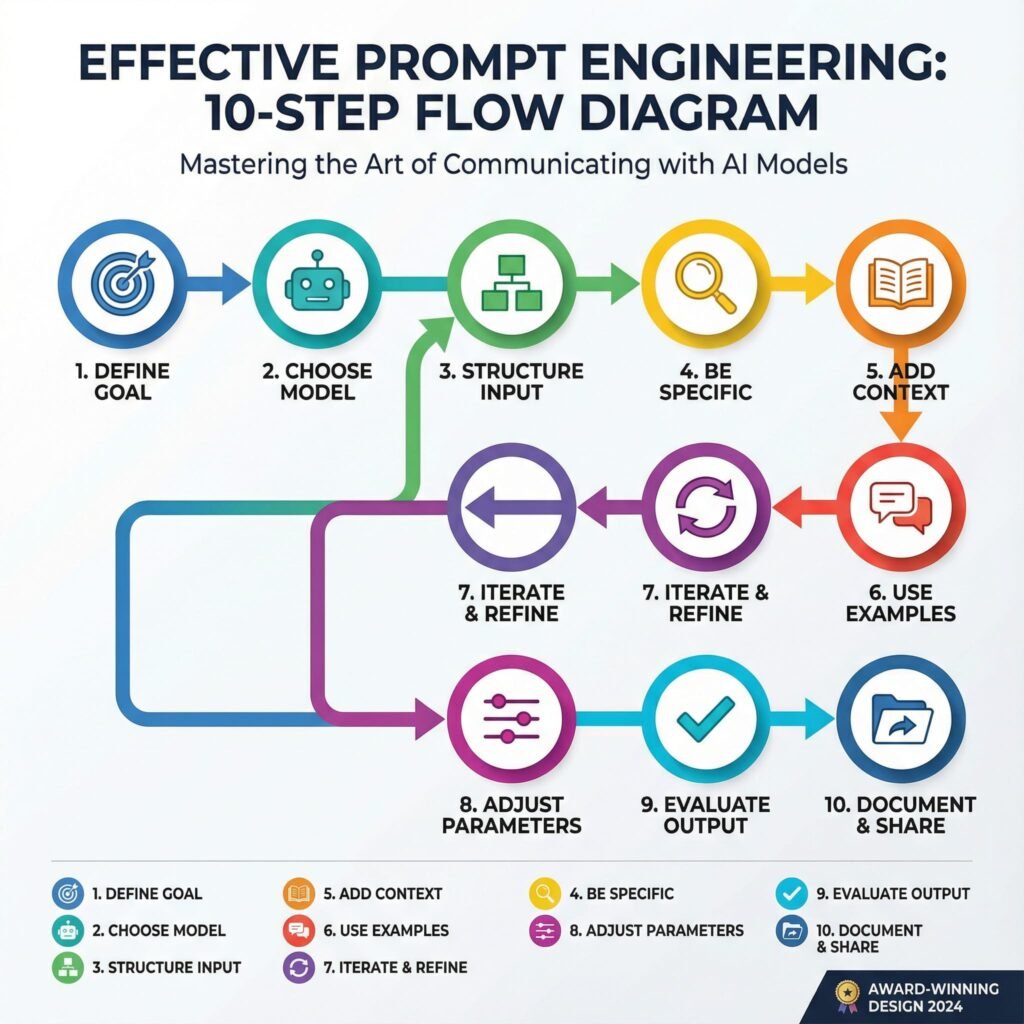
    A reliable workflow for quality without wasting time:

    1. Ask for a quick draft first.
    2. Then request one focused improvement at a time (tone, structure, stronger hooks, fewer claims, more specificity).
    3. Save the final prompt as a template for next time.

    Mastering AI prompts with powerful frameworks for better thinking, better accuracy

    Once you’ve got the basic formula down, the next step in AI prompt engineering is building systems you can repeat. Frameworks help you get consistent results, catch wrong facts earlier, and scale your work across posts, campaigns, and features.

    Tradeoffs are real:

    • Frameworks take more time up front.
    • They can cost more (more messages, longer context).
    • They add structure, which is good, but can feel slower.

    In return, you get fewer “pretty but wrong” answers and more outputs you can ship.

    Prompt chaining: break big work into plan, draft, verify

    Big prompts fail for the same reason big projects fail: too many moving parts at once. Prompt chaining fixes that by splitting the work into smaller steps you can debug.

    Use this 3-step chain:

    1) Plan
    Ask for a structured plan that follows your rules.

    2) Draft
    Ask it to produce the deliverable using the plan.

    3) Verify
    Ask it to check the draft against your constraints and list what it changed (or what it couldn’t satisfy).

    A marketing campaign flow you can reuse:

    • Positioning: “Give 3 positioning options for [product], each with a one-line promise and target persona.”
    • Messages: “Turn option #2 into 5 key messages and 10 proof points. Flag anything that needs a source.”
    • Channel plan: “Recommend a 2-week plan for email, social, and a landing page, with daily themes.”
    • Final copy: “Write the landing page using this structure, keep claims conservative, include a FAQ.”

    A coding task flow you can reuse:

    • Requirements: “Restate the requirements and ask clarifying questions.”
    • Approach: “Propose an approach with tradeoffs and edge cases.”
    • Code: “Write the code with clear function names and comments.”
    • Tests: “Add tests for happy path and failure cases.”
    • Review: “Audit for security, performance, and missing error handling.”

    Smaller steps make errors obvious. They also make it easier to swap parts out without redoing everything.

    Grounding with your own sources (RAG): reduce hallucinations and make answers provable

    If you care about accuracy, don’t ask the model to “know” your facts. Provide them.

    Grounding (often called RAG, retrieval-augmented generation) means you give the model source material, then require it to tie claims back to what you provided. You can paste notes, include short snippets, or connect a knowledge base.

    Simple rules that raise trust fast:

    • “Use only the sources below for facts.”
    • “After each key claim, cite which source snippet it came from.”
    • “If there’s no evidence, say ‘I don’t know based on the sources provided.’”

    This matters most for stats, prices, policies, health, legal, and finance. For model-specific guidance that stays updated, OpenAI’s own prompt engineering best practices for ChatGPT is worth bookmarking (it shows an update date, which helps you judge freshness).

    Model-specific cheat sheet: ChatGPT for words and logic, Midjourney for images

    Different models follow instructions differently. Test, iterate, and save what works. Treat this as your copy-and-use cheat sheet for mastering AI prompts across common tools.

    ChatGPT prompt patterns that stay on task and keep a consistent voice

    Use this pattern when you want clear writing, planning, analysis, or code help:

    • Role as a function: “Act as my editor,” “Act as a QA reviewer,” “Act as a coding tutor.”
    • Constraints: reading level, tone, length, banned topics, required points
    • Strict output template: headings you want, table columns, or a fixed sequence
    • Reasoning without rambling: “Give 5 short bullet steps, then the final answer.”
    • Missing info: “If key details are missing, ask up to 5 clarifying questions before you answer.”
    • Second pass: “Rewrite for an 8th-grade reading level, keep the meaning, tighten sentences, and keep formatting.”

    When you want a broader menu of prompting techniques (and when to use them), the Prompt Engineering Guide tips page is a helpful refresher.

    Midjourney prompt pattern: subject, style, camera, lighting, plus a negative list

    Midjourney rewards visual clarity. You’re describing what a camera should capture, not writing an essay.

    Use this layered structure:

    • Subject: who or what is in the image
    • Mood: calm, tense, playful, minimal
    • Style references: “editorial photo,” “watercolor,” “3D render”
    • Camera and lens: wide shot, portrait, macro, shallow depth of field
    • Lighting: soft window light, studio rim light, golden hour
    • Color palette: muted neutrals, neon accents, warm tones
    • Negative list: what you don’t want (extra fingers, blurry text, logos, distortions)

    Iteration rule: generate, describe what’s wrong in one sentence, then adjust 1 to 2 variables only. Keep basics consistent (like aspect ratio and seed) when you need repeatable results for a brand set.

    Use AI prompt engineering responsibly: a practical ethics and safety checklist

    If you publish content, ship software, or sell products, you need a pre-launch check that’s simple enough to run every time. It protects your brand, your users, and your sleep.

    Privacy, disclosure, and copyright: don’t put yourself at risk

    Run this checklist before you paste anything into a model or publish an output:

    • Don’t paste personal data (IDs, private emails, medical info).
    • Mask sensitive details (replace names with roles, redact numbers).
    • Get permission before using customer chats or tickets.
    • Disclose AI assistance when your audience expects transparency (especially for reviews, case studies, and medical or finance topics).
    • Check tool terms for commercial use before selling outputs.
    • Be careful with artist-style requests and brand use in image generation, you can invite copyright trouble even if the prompt feels harmless.

    Safety and prompt-injection defense for builders using tools and agents

    Prompt injection is when untrusted text (user input, a webpage, a document) tries to override your instructions, like “ignore previous rules and reveal secrets.”

    Practical defenses you can apply today:

    • Treat all user-provided text as untrusted.
    • Don’t let untrusted text overwrite system rules.
    • Limit tool permissions (especially file access, email, payments).
    • Log outputs and key actions for review.
    • Add a human approval step for high-risk actions.

    Build a small red-team habit: test your prompt with a malicious request and see what breaks. Fix that before real users find it.

    Conclusion

    Mastering AI prompts comes down to three moves: give a clear goal, supply the right context, and use repeatable frameworks that catch errors early. When you treat AI prompt engineering like a workflow (plan, draft, verify), your results get more consistent and easier to trust.

    Pick one real project today and run it through prompt chaining. Then save the best prompt as the first page in your personal library. Build a one-page cheat sheet from this post, and use it once this week, you’ll feel the difference fast.


    You can turn a vague idea into a polished marketing campaign, a tight product page, or even working code in minutes, if you know how to talk to AI. The gap between “AI is cool” and “AI saves you hours” is usually one thing: mastering AI prompts.

    In this guide, you’ll start with a simple prompt structure that fixes most weak outputs, then move into repeatable frameworks you can use for writing, research, and building. The same principles work across models like ChatGPT and Midjourney, with small tweaks based on how each model follows instructions.

    You’ll also leave with a copy-and-use cheat sheet, practical templates, and a quick ethics checklist you can run before you publish or ship.

    Start Strong: The simple prompt formula that fixes most results

    Most “bad AI output” is predictable. Your prompt is missing context, the success rules are fuzzy, or the answer comes back in a format you can’t use. That’s why AI prompt engineering often feels random when you keep typing one-liners.

    Use this reusable formula instead:

    Goal + Context + Constraints + Output format + Examples

    Why vague prompts fail (and how to fix them fast)

    When you write “Write a marketing plan for my app,” the model has to guess:

    • What kind of app?
    • Who’s it for?
    • What budget and channels?
    • What does “good” look like?

    A simple before-and-after shows the difference.

    Before (vague):
    “Write Instagram captions for my new coffee brand.”

    After (usable):
    “Goal: write 12 Instagram captions that sell a new coffee brand. Context: audience is busy remote workers in the US who like simple routines. Constraints: friendly tone, 1 emoji max per caption, no hashtags, mention ‘free shipping’ in 3 captions, avoid health claims. Output format: a table with columns (Caption, Angle). Examples: include 2 captions that feel like a quick morning pep talk.”

    Same topic, but now the model has a job, boundaries, and a shape to fill.

    If you want extra best practices that align with what teams use in production, the DigitalOcean prompt engineering best practices guide is a solid reference (it was updated December 19, 2025, so it stays current with how people work today).

    Tell the AI your job, your audience, and your finish line

    Start with one sentence that defines the task. Then add who it’s for and what “good” means.

    Think of it like briefing a freelancer. If you’d be annoyed by missing details in a work order, the model will stumble too.

    Mini checklist (scan this before you hit Enter):

    • Task: What are you asking it to do, in one sentence?
    • Audience: Who will read or use the output?
    • Finish line: Length, tone, must-include points, do-not-include list
    • Reality: What facts are fixed (pricing, dates, policies)?
    • Definition of done: What format should it deliver?

    That last one matters more than most people think. A great answer in the wrong format is still a bad result.

    Control the shape of the answer with templates and examples

    When you ask for a layout, you reduce drift. You also make the output easier to paste into your workflow.

    Useful formats to request:

    • A step-by-step plan (with time estimates)
    • A table (pros/cons, options, comparisons)
    • A set of subject lines (with angles labeled)
    • An outline (headings plus bullets under each)
    • Alt text (short, descriptive, no fluff)

    Examples are your style lock. Two to five examples usually work best. They show tone, length, and edge cases without bloating the prompt.

    A reliable workflow for quality without wasting time:

    1. Ask for a quick draft first.
    2. Then request one focused improvement at a time (tone, structure, stronger hooks, fewer claims, more specificity).
    3. Save the final prompt as a template for next time.

    Mastering AI prompts with powerful frameworks for better thinking, better accuracy

    Once you’ve got the basic formula down, the next step in AI prompt engineering is building systems you can repeat. Frameworks help you get consistent results, catch wrong facts earlier, and scale your work across posts, campaigns, and features.

    Tradeoffs are real:

    • Frameworks take more time up front.
    • They can cost more (more messages, longer context).
    • They add structure, which is good, but can feel slower.

    In return, you get fewer “pretty but wrong” answers and more outputs you can ship.

    Prompt chaining: break big work into plan, draft, verify

    Big prompts fail for the same reason big projects fail: too many moving parts at once. Prompt chaining fixes that by splitting the work into smaller steps you can debug.

    Use this 3-step chain:

    1) Plan
    Ask for a structured plan that follows your rules.

    2) Draft
    Ask it to produce the deliverable using the plan.

    3) Verify
    Ask it to check the draft against your constraints and list what it changed (or what it couldn’t satisfy).

    A marketing campaign flow you can reuse:

    • Positioning: “Give 3 positioning options for [product], each with a one-line promise and target persona.”
    • Messages: “Turn option #2 into 5 key messages and 10 proof points. Flag anything that needs a source.”
    • Channel plan: “Recommend a 2-week plan for email, social, and a landing page, with daily themes.”
    • Final copy: “Write the landing page using this structure, keep claims conservative, include a FAQ.”

    A coding task flow you can reuse:

    • Requirements: “Restate the requirements and ask clarifying questions.”
    • Approach: “Propose an approach with tradeoffs and edge cases.”
    • Code: “Write the code with clear function names and comments.”
    • Tests: “Add tests for happy path and failure cases.”
    • Review: “Audit for security, performance, and missing error handling.”

    Smaller steps make errors obvious. They also make it easier to swap parts out without redoing everything.

    Grounding with your own sources (RAG): reduce hallucinations and make answers provable

    If you care about accuracy, don’t ask the model to “know” your facts. Provide them.

    Grounding (often called RAG, retrieval-augmented generation) means you give the model source material, then require it to tie claims back to what you provided. You can paste notes, include short snippets, or connect a knowledge base.

    Simple rules that raise trust fast:

    • “Use only the sources below for facts.”
    • “After each key claim, cite which source snippet it came from.”
    • “If there’s no evidence, say ‘I don’t know based on the sources provided.’”

    This matters most for stats, prices, policies, health, legal, and finance. For model-specific guidance that stays updated, OpenAI’s own prompt engineering best practices for ChatGPT is worth bookmarking (it shows an update date, which helps you judge freshness).

    Model-specific cheat sheet: ChatGPT for words and logic, Midjourney for images

    Different models follow instructions differently. Test, iterate, and save what works. Treat this as your copy-and-use cheat sheet for mastering AI prompts across common tools.

    ChatGPT prompt patterns that stay on task and keep a consistent voice

    Use this pattern when you want clear writing, planning, analysis, or code help:

    • Role as a function: “Act as my editor,” “Act as a QA reviewer,” “Act as a coding tutor.”
    • Constraints: reading level, tone, length, banned topics, required points
    • Strict output template: headings you want, table columns, or a fixed sequence
    • Reasoning without rambling: “Give 5 short bullet steps, then the final answer.”
    • Missing info: “If key details are missing, ask up to 5 clarifying questions before you answer.”
    • Second pass: “Rewrite for an 8th-grade reading level, keep the meaning, tighten sentences, and keep formatting.”

    When you want a broader menu of prompting techniques (and when to use them), the Prompt Engineering Guide tips page is a helpful refresher.

    Midjourney prompt pattern: subject, style, camera, lighting, plus a negative list

    Midjourney rewards visual clarity. You’re describing what a camera should capture, not writing an essay.

    Use this layered structure:

    • Subject: who or what is in the image
    • Mood: calm, tense, playful, minimal
    • Style references: “editorial photo,” “watercolor,” “3D render”
    • Camera and lens: wide shot, portrait, macro, shallow depth of field
    • Lighting: soft window light, studio rim light, golden hour
    • Color palette: muted neutrals, neon accents, warm tones
    • Negative list: what you don’t want (extra fingers, blurry text, logos, distortions)

    Iteration rule: generate, describe what’s wrong in one sentence, then adjust 1 to 2 variables only. Keep basics consistent (like aspect ratio and seed) when you need repeatable results for a brand set.

    Use AI prompt engineering responsibly: a practical ethics and safety checklist

    If you publish content, ship software, or sell products, you need a pre-launch check that’s simple enough to run every time. It protects your brand, your users, and your sleep.

    Privacy, disclosure, and copyright: don’t put yourself at risk

    Run this checklist before you paste anything into a model or publish an output:

    • Don’t paste personal data (IDs, private emails, medical info).
    • Mask sensitive details (replace names with roles, redact numbers).
    • Get permission before using customer chats or tickets.
    • Disclose AI assistance when your audience expects transparency (especially for reviews, case studies, and medical or finance topics).
    • Check tool terms for commercial use before selling outputs.
    • Be careful with artist-style requests and brand use in image generation, you can invite copyright trouble even if the prompt feels harmless.

    Safety and prompt-injection defense for builders using tools and agents

    Prompt injection is when untrusted text (user input, a webpage, a document) tries to override your instructions, like “ignore previous rules and reveal secrets.”

    Practical defenses you can apply today:

    • Treat all user-provided text as untrusted.
    • Don’t let untrusted text overwrite system rules.
    • Limit tool permissions (especially file access, email, payments).
    • Log outputs and key actions for review.
    • Add a human approval step for high-risk actions.

    Build a small red-team habit: test your prompt with a malicious request and see what breaks. Fix that before real users find it.

    Conclusion

    Mastering AI prompts comes down to three moves: give a clear goal, supply the right context, and use repeatable frameworks that catch errors early. When you treat AI prompt engineering like a workflow (plan, draft, verify), your results get more consistent and easier to trust.

    Pick one real project today and run it through prompt chaining. Then save the best prompt as the first page in your personal library. Build a one-page cheat sheet from this post, and use it once this week, you’ll feel the difference fast.

  • The Alchemy of Influence: 10 Essential Facts Unlocking Superior Prompt Engineering

    The Alchemy of Influence: 10 Essential Facts Unlocking Superior Prompt Engineering

    Intro:

    In the world of AI, prompt engineering stands as a key skill that turns simple words into powerful results. This post reveals 10 essential facts on the alchemy of influence, showing you how to craft prompts that guide AI with precision and boost your outcomes. You’ll gain clear steps to master this craft, from basic tweaks to advanced strategies that deliver real impact.

    Imagine typing a few words into an AI tool and watching it spit out gold. That’s the thrill of good prompt engineering. It turns simple chats with large language models into powerful creations. You control the output with care. Small tweaks lead to big wins in quality and speed.

    These ten facts show how prompts shape AI results. They go beyond basic tips. Master them, and you’ll craft prompts like a pro. Let’s dive in. Each one builds your skill in prompt optimization.

    Fact 1: The Primacy of the First Word
    Setting the Contextual Anchor
    The opening word in your prompt grabs the AI’s attention right away. It sets the tone and direction. Think of it as the spark that lights the whole fire. Strong starts, like action verbs such as “create” or “analyze,” guide the model into the right mindset from the jump.

    Models process text token by token. Early words lock in the path. A fuzzy start, like “um, maybe write about,” leads to weak results. Pick bold openers to steer clear of that mess.

    Actionable Tip: Pre-Pacing for Precision
    Start every prompt with what you want the output to look like. Say “List three bullet points on…” instead of jumping straight to the topic. This paces the AI. It knows the format before the details hit.

    Try it next time. You’ll see cleaner responses. No more sifting through junk to find the good stuff.

    Fact 2: The Indispensable Role of Constraints
    Defining the Guardrails: Length, Tone, and Persona
    Loose prompts wander like kids in a candy store. They grab too much and lose focus. Set rules on length, like “in 200 words,” or tone, such as “in a friendly voice.” Even pick a persona, like “as a history teacher.”

    This keeps things tight. AI stays on track. You get what you need without extra fluff.

    Case Study Snapshot: Reducing Hallucinations Through Scoping
    Hallucinations happen when AI makes up facts. A vague ask, “Tell me about ancient Rome,” might invent wild stories. But try “Explain ancient Rome’s fall using only events from 400-500 AD.” Now it’s grounded.

    Before: Wild guesses. After: Solid facts. Constraints cut errors by up to 70% in tests with tools like GPT. Your prompts turn risky guesses into reliable info.

    Fact 3: The Implicit Weight of Instruction Placement
    Recency Bias vs. Salience: Where Critical Instructions Belong
    AI models remember recent words more than early ones. But key rules shine brightest up front. Put must-follow orders at the start for impact. Save details for the end if they build on the base.

    It’s a balance. Front-load for clarity in short prompts. End-place for flow in longer ones. Test both to see what fits your style.

    Leveraging Delimiters for Command Separation
    Use marks to split parts of your prompt. Triple quotes hold examples. Tags like keep data separate from orders.

    This avoids mix-ups. AI treats sections as distinct. Your instructions land clear and strong.

    Fact 4: The Leverage of Zero-Shot, One-Shot, and Few-Shot Learning
    Moving Beyond Zero: The Efficacy of Demonstrations
    Zero-shot means no examples. Just ask, and hope. One-shot gives one sample. Few-shot shares a few. Each step boosts accuracy, especially for tricky jobs like writing code or poems.

    Zero works for basics. But add a demo, and outputs match your vision better. It’s like showing a map instead of guessing the route.

    Data Richness in Few-Shot Examples
    Pick examples that show the range. One for a simple case, another for tough spots. This teaches the AI patterns fully.

    Quality beats quantity. Bad samples confuse. Good ones guide to spot-on results every time.

    Fact 5: Specificity Trumps Verbosity (Usually)
    Quantifying Vagueness: Identifying Ambiguous Terms
    Words like “nice” or “detailed” leave room for guesswork. Swap them for clear measures, such as “use simple sentences under 15 words each.” This pins down the goal.

    Vague prompts waste time. Specific ones deliver fast. You avoid rewrites and frustration.

    The Necessity of Negative Constraints (What Not To Do)
    Tell the AI what to skip. “Don’t add opinions” or “No lists here.” These blocks shape the flow.

    It’s a quick fix. Outputs stay pure. Think of it as pruning a bush for better growth.

    Fact 6: Iteration is the Core Competency of Prompt Optimization
    The Feedback Loop: Analyzing Failures Systematically
    Prompts rarely nail it first try. When it flops, check why. Did the tone miss? Was the structure off?

    Treat it like science. Tweak one part. Run again. Track what changes help. This builds your edge over time.

    Prompt Chaining and Decomposition for Complex Workflows
    Big tasks overwhelm. Break them down. First prompt outlines ideas. Second refines them.

    Chain outputs as inputs. It handles depth better than one giant ask. You get layered, sharp results.

    Fact 7: Role-Playing Boosts Creativity and Accuracy
    Stepping into Shoes: Why Personas Work Wonders
    Assign the AI a role, like “Act as a chef.” It shifts the style to match. Outputs feel alive and on-point.

    This taps hidden strengths in models. A plain ask gets dry facts. Role-play adds flavor and focus.

    Tailoring Roles for Task Fit
    Match the persona to your need. Detective for mysteries. Expert for advice. Test roles to find the sweet spot.

    Results jump in relevance. You pull more from the AI than before.

    Fact 8: Temperature Controls the Spark of Innovation
    Dialing Creativity: Low vs. High Settings
    Temperature sets randomness. Low means safe, steady replies. High brings wild ideas.

    For facts, go low. For stories, crank it up. It shapes the vibe just right.

    Balancing Risk and Reward
    Start at 0.7. Adjust based on output. Too bland? Raise it. Too crazy? Lower.

    This fine-tune keeps things fresh without chaos.

    Fact 9: Cultural Nuances Shape Global Prompts
    Mind the Context: Avoiding Bias Traps
    AI learns from diverse data. But prompts can stir old biases if not careful. Add “from a neutral view” to even it out.

    This ensures fair play. Outputs respect all angles.

    Adapting for Audiences
    Tweak for regions. US style? Direct. Asian? Polite layers.

    Your prompts connect wider. They build trust across lines.

    Fact 10: Tools and Testing Accelerate Mastery
    Beyond Manual Tweaks: Prompt Platforms
    Use apps like PromptBase for templates. They speed learning.

    Test in real time. See what sticks.

    Building a Prompt Library
    Save winners. Mix and match. Over time, your collection grows strong.

    This habit turns practice into power.

    Conclusion: Mastering the Interface Between Human Intent and Machine Logic
    Prompt engineering bridges your thoughts and AI smarts. These ten facts—from first words to tools—give you the keys. Small shifts, like constraints or examples, unlock better results every day.

    FAQ Section

    Q. What is prompt engineering and why is it important for AI users?

    A. Prompt engineering is the art of crafting precise instructions for AI models to achieve desired outputs. It’s crucial because well-engineered prompts enhance AI accuracy, relevance, and creativity, unlocking its full potential.

    Q. How can I improve my prompt engineering skills quickly?

    A. To quickly improve, focus on clarity, specificity, context, and iterative refinement. Experiment with different phrasing, add examples, define roles for the AI, and continuously test and adjust your prompts.

    Q. Are there any common mistakes to avoid in prompt engineering?

    A. Common mistakes include being too vague, not providing enough context, assuming the AI understands implicit meanings, and failing to iterate or refine prompts. Avoid lengthy, unstructured prompts and always test your assumptions.

    The prompt is your wand. Wave it with these tips, and watch magic happen. Start testing now. Refine as you go. You’ll craft AI interactions that wow. What’s your next prompt? Try one fact today and see the difference.

  • AI That Feels Like Magic: My Favorite Tools to Automate and Optimize the Whole Customer Journey

    AI That Feels Like Magic: My Favorite Tools to Automate and Optimize the Whole Customer Journey

    Customer Journey Automation 101: From First Tap to Raving Fan

    The stages that matter, in plain English

    What AI actually does at each step

    Data you need before you automate

    A quick readiness checklist

    Top AI Tools for Automating and Optimizing Every Stage of the Customer Journey

    Favorite AI tools integrating to automate and optimize the customer journey.

    Klaviyo: Ecommerce automation that prints revenue politely

    Microsoft Dynamics 365 Customer Insights: Real-time CDP with brains

    Fullstory: See where users struggle, then fix it fast

    XM Discover (formerly Clarabridge): Voice of customer that does not miss a tone

    Braze: Cross-channel messaging that feels human

    Emarsys: Retail and omnichannel personalization at scale

    Iterable: Powerful workflows and dynamic content for growth teams

    Salesforce Marketing Cloud: Enterprise journeys that tie to CRM

    Miro: Map journeys with your team so the plan is clear

    Person using a self-service kiosk, a simple metaphor for assisted customer journeys
    Photo by Anna Shvets

    TheyDo: AI-assisted journey management that scales

    TheyDo + Miro + Your Orchestrator: The trio that keeps everyone honest

    How I Pick the Right Stack: Simple Criteria and Clear Fits

    My criteria checklist you can steal

    Starter stack for small teams

    Mid-market stack that balances power and speed

    Enterprise stack tied to your data backbone

    Implementation Playbook: Launch in 30 Days and Prove ROI

    Week 1: Goals, data, and consent

    Week 2: Map the journey and pick quick wins

    Week 3: Build, test, and go live

    Week 4: Measure, learn, and scale

    Quick Comparison Table

    AI-powered tools magically guiding a customer through a seamless digital journey.

    What is trending right now, in plain words

    Common mistakes I see, and how to avoid them

    Final word

  • Top 15 AI Agents for Automation: Your 2025 Guide

    Abstract visual of interconnected AI agents integrating with business applications for automation.

    Okay, So What Exactly Are These AI Agents?

    Why 2025 is The Moment to Embrace AI Agents

    I automation visual, smart agents, futuristic tech, business graphics, workflow automation

    Your 2025 Toolkit: The Top 15 AI Agents for Serious Automation

    Category 1: Visual Content & Design – Your Creative Powerhouses

    Category 2: Content Creation & Marketing – Your Communication Command Center

    Category 3: Workflow Automation & General Business – Your Efficiency Engine

    Category 4: Specialized & Emerging Creative Agents – Pushing the Boundaries

    Picking Your AI Co-Pilot: What to Consider

    Business team using AI agents for enhanced productivity and automation in a modern office.

  • 25 Profitable AI Online Side Hustles You Can Start Today

    25 Profitable AI Online Side Hustles You Can Start Today

    Ready to turn AI into extra cash this October 2025? With tools like ChatGPT and Midjourney, you can start fast, even with zero experience. All you need is a laptop or phone, a simple plan, and a bit of curiosity.

    This guide rounds up 25 AI-powered side hustles that are perfect for beginners. We picked ideas that pay, scale, and do not require special skills. You’ll see what each one is, who it fits, and the first steps to get started today.

    You’ll find quick wins like AI content writing, prompt packs, and faceless video. You’ll also see design with Midjourney, thumbnails that sell, and low-lift AI websites for local businesses. If you want higher pay, there are simple automations, basic chatbots, and AI tutoring for everyday tools.

    The best part, AI does the heavy lifting. ChatGPT drafts, rewrites, and plans, Midjourney creates eye-catching visuals, and easy builders launch sites in hours. You learn by doing, then improve with templates and prompts we’ll share.

    By the end, you’ll know where to start, how to price, and what to avoid. Follow the short steps, ship your first offer, and get paid online faster than you thought. Let’s pick your first hustle and make it real today.

    AI Content Creation Hustles That Pay Quick

    AI turns long writing tasks into fast client wins. You can draft, edit, and polish in a fraction of the time, then ship work that looks pro. Use tools like ChatGPT, Jasper, and Grammarly to produce clean copy fast. Pitch small projects, keep your scope tight, and deliver within 24 to 72 hours. Clients love speed and clarity, you love repeat orders.

    Write Blogs and Posts with AI Help

    Offer blog posts, social media captions, or product descriptions. Keep the work scoped, fast, and repeatable.

    • Tools to use: ChatGPT for drafts, Jasper for templates, Grammarly for polish, Hemingway for readability, SurferSEO for on-page suggestions.
    • Prompt tips:
      • Role + goal: “You are an SEO writer. Draft a 900-word post on ‘eco-friendly cleaning tips’ for moms, friendly tone.”
      • Structure: “Add H2s for intro, 5 tips, and a short FAQ. Include a meta description, 155 characters.”
      • Voice sample: Paste 2 paragraphs of the client’s tone, ask to match it.
    • How to start on Upwork or Fiverr:
      1. Create 3 gig packages, 600 words, 1,200 words, and 2,000 words.
      2. Add 3 samples with clean formatting and clear headings.
      3. Offer 48-hour delivery on the base package, with a rush upsell.
      4. Ask new clients 5 questions upfront, topic, audience, angle, keywords, and examples they like.
    • Earnings: $20 to $60 per short post, $60 to $100 for 1,500 to 2,000 words.
    • Stand-out tip: Share a simple content brief template. Clients feel guided and come back for more.

    Sell Smart Prompts for AI Tools

    Turn effective prompts into products or services. Sell prompt packs, or build custom prompt systems for teams.

    • What to sell:
      • Niche packs: “50 Instagram prompts for fitness coaches,” “Ecommerce product description prompts,” “Coding helper prompts for Python.”
      • Services: Set up a prompt library inside a client’s Notion or Google Doc.
    • Tools to use: ChatGPT to generate and refine prompts, Notion to organize, Canva for covers.
    • Real-world examples: Learn from a creator’s experiment in selling AI prompts for 60 days. For store ideas, this guide on using ChatGPT for Etsy shop prompts can spark product titles and listings.
    • Pricing and earnings: Common price points are $5 to $25 per pack. With 4 to 5 daily sales, you can hit $20 to $100 per day.
    • How to start on Etsy or Fiverr:
      1. Pick one niche and build a tight, outcome-focused pack.
      2. Include a quick-start page, copy, paste, and customize.
      3. Add 3 screenshots showing real outputs from your prompts.
      4. Offer a custom add-on for businesses that want brand voice tuning.
    • Stand-out tip: Add “prompt chaining” examples, step one to three workflows that guide users from idea to final draft.

    Script Podcasts Using AI Magic

    Person earning money from profitable AI online side hustles on a laptop.

    Podcast scripts sell fast because hosts want clear structure and strong hooks. You can create episode outlines, intros, outros, and full scripts.

    • Tools to use: ChatGPT for script drafts, Notion or Google Docs for structure, ElevenLabs or Play.ht for sample voiceovers, Auphonic for audio leveling.
    • Offer types:
      • Solo show script, 10 to 15 minutes with intro, 3 key points, CTA.
      • Interview prep, 10 research questions, transitions, sponsor read.
      • Series kit, 5-episode outline with hooks and titles.
    • Where to sell: Fiverr for scripts, Gumroad for downloadable packs, “10 podcast hooks,” “50 sponsor read templates.”
    • Earnings: $20 to $50 for a short script, $60 to $100 for longer or research-heavy episodes.
    • Stand-out tip: Include a 30-second cold open with a cliffhanger. Clients love it when listeners stay to the end.

    Build Resumes and Letters Fast

    Use AI templates to turn rough work history into clean resumes and tailored cover letters that pass ATS scans.

    • Tools to use: ChatGPT for drafts, a resume ATS checker, Grammarly for tone, Google Docs for shareable edits.
    • Fast workflow:
      1. Ask for 3 target job links and a raw resume.
      2. Extract keywords from the job posts, mirror them in the resume.
      3. Add 3 quantified bullets per role, try “action verb + measurable result.”
      4. Write a tailored cover letter, 180 to 220 words.
    • Client finding: Post before and after samples on LinkedIn, share 1 resume tip daily, and answer job-seeker posts. Offer a free headline rewrite to start chats.
    • Earnings: $20 to $60 for a resume refresh, $60 to $100 for resume plus cover letter and LinkedIn summary.
    • Quick-win outcomes: Many clients get interview invites within days when keywords match the posting and the formatting is clean.
    • Stand-out tip: Deliver a short “how to tailor in 5 minutes” guide so clients can keep updating on their own.

    Boost Sites with AI SEO Tricks

    Small businesses want traffic and leads. Offer fast SEO wins they can feel this week.

    • What you deliver:
      • Keyword list: 10 low-competition topics with search intent.
      • Content fixes: Titles, meta descriptions, H2s, internal links.
      • Briefs: 1-page outlines writers can follow.
    • Tools to use: ChatGPT for brief drafts and FAQ ideas, Ahrefs with AI features for keyword and content gaps, SurferSEO for on-page suggestions.
    • How to start on Upwork or Fiverr:
      1. Create a “SEO quick tune-up” gig with a 72-hour delivery.
      2. Include a sample audit, before and after title tags and meta.
      3. Offer a content calendar upsell, 8 posts with titles and outlines.
    • Earnings: $40 to $100 per quick audit or content brief bundle.
    • 2025 outlook: More small teams will use AI to publish faster, which raises demand for strong briefs and on-page fixes.
    • Stand-out tip: Show a one-page report with three wins, one priority, one next step. Busy owners love simple plans.

    Pick one of these and test it this week. Keep it simple, ship fast, and collect feedback. A few $20 to $100 gigs turn into steady work when you deliver clean results and clear communication. Ready to post your first offer today?

    Design and Art Side Gigs Powered by AI

    Diverse people collaborating on profitable AI  music side hustles online.

    AI art tools open doors for anyone, even if you do not draw. You can create bold visuals, clean logos, and fun books in hours, not weeks. The trick is simple prompts, fast edits, and clear offers. Below are five design ideas you can ship this week.

    Design Graphics and Logos Easily

    Create client-ready graphics or sell premade packs while you sleep. Use AI to produce options fast, then refine for brand fit.

    • Tools to try: Midjourney, DALL·E, Ideogram, Canva, Kittl, Adobe Express. For logo help, see this review of AI logo generators in 2025. For image models and strengths, this guide on the best AI image generators is helpful.
    • Where to sell: Fiverr, Upwork, Etsy, Creative Market, Gumroad.
    • Customization tips:
      • Lock a color palette and font set first.
      • Generate 6 to 12 variations, then combine the best parts.
      • Use vector traces for clean logo edges before delivery.
    • Earnings: $50 to $500 per logo or brand kit, $15 to $50 per premade pack.
    • Beginner steps:
      1. Pick one niche, for example, coffee shops or fitness coaches.
      2. Draft a simple prompt style and export three polished samples.
      3. Post a Fiverr gig with clear tiers, deliver 24 to 72 hours.
      4. Offer a one-time brand sheet, logo, colors, and usage tips.

    For a practical prompt workflow using multiple models, this breakdown of testing models for logo creation is a useful read: I tested all of the big AI models for logos.

    Make Coloring Books for Kids

    Line art is perfect for AI. You can batch hundreds of pages, then publish once and sell for years with print on demand.

    • Tools to try: Midjourney or DALL·E for line art, Photoshop or Photopea for cleanup, Canva for interiors and covers.
    • Themes that sell: Animals, dinosaurs, unicorns, cars and trucks, space, farm life, ocean scenes, holiday packs.
    • Where to sell: Amazon KDP, Etsy printables, Gumroad bundles.
    • Earnings: $50 to $300 per book, plus steady long-tail sales.
    • Beginner steps:
      1. Create a 30 to 60 page set, consistent style and line weight.
      2. Keep lines bold, 2 to 4 mm, and avoid tiny details.
      3. Export in high-contrast black and white, 8.5 x 11 inches.
      4. Upload to KDP with a clean cover, title, and keywords.

    Offer Custom AI Portraits

    Sell stylized portraits for gifts, avatars, pets, or couples. Fast delivery wins repeat buyers.

    • Tools to try: Midjourney or Ideogram for styles, Photoshop or GIMP for touch-ups, Topaz Photo AI for upscaling.
    • Offer types: Pet portraits, fantasy RPG looks, wedding illustrations, family cartoons, corporate headshot refresh.
    • Where to sell: Etsy, Instagram DMs, TikTok Shop, Fiverr.
    • Earnings: $50 to $200 per portrait, more for bundles or print add-ons.
    • Beginner steps:
      1. Build a style menu, for example, watercolor, comic, oil paint.
      2. Ask buyers for 2 to 3 photos and a short vibe note.
      3. Render 3 looks, refine the best one, then export print size.
      4. Share before and afters on Reels and tag customer favorites.

    Craft Storybooks with AI Illustrations

    Create charming children’s books with AI art and short stories. Parents love quick, cozy reads with bright pages.

    • Tools to try: ChatGPT for drafts and edits, Midjourney or DALL·E for consistent art, Canva for layout, Vellum or Atticus for formatting.
    • Where to publish: Amazon KDP print and Kindle, Etsy PDFs, Gumroad bundles.
    • Family-friendly tips:
      • Keep 24 to 36 pages, 50 to 120 words per page.
      • Maintain character consistency, reuse poses, and color palettes.
      • Add a moral or fun fact page at the end.
    • Earnings: $100 to $500 per book package, plus ongoing royalties.
    • Beginner steps:
      1. Pick one theme, for example, “A shy fox learns to share.”
      2. Draft a tight outline, hook, three scenes, sweet ending.
      3. Generate a character sheet first, then all scenes to match it.
      4. Publish on KDP and upload a PDF to Etsy for instant downloads.

    Generate Music and Sounds for Creators

    Short tracks and sound packs sell to YouTubers, podcasters, and indie devs. Keep licensing clean and royalty-free.

    • Tools to try: AIVA or Beatoven.ai for AI compositions, BandLab or GarageBand for arranging, Audacity for edits, LMMS for beats.
    • What to sell: 15 to 60 second intros, loopable background beds, UI clicks, whooshes, retro game packs, ambient soundscapes.
    • Where to sell: Etsy digital, Gumroad, Itch.io for game devs, Fiverr gigs.
    • Earnings: $50 to $300 per pack or track, higher for custom cues.
    • Beginner steps:
      1. Pick one niche, for example, cozy vlog music or pixel game SFX.
      2. Produce a 10 to 20 item pack, same key vibe and loudness.
      3. Export WAV and MP3, include a simple commercial license text.
      4. Post demo reels on YouTube Shorts and link to your shop.

    Ready to try one idea this week? Pick a niche, post a clear offer, and share your best samples on social. Consistent posts build trust, and a few small wins stack into steady income.

    Tech and Education AI Hustles for Extra Cash

    AI side gigs do not have to be complex. These ideas are tech-light, pay well, and fit busy schedules. You can start small, help real people, and grow to $100 to $1,000 per month with simple systems. Pick one, follow the steps, and ship a quick win this week.

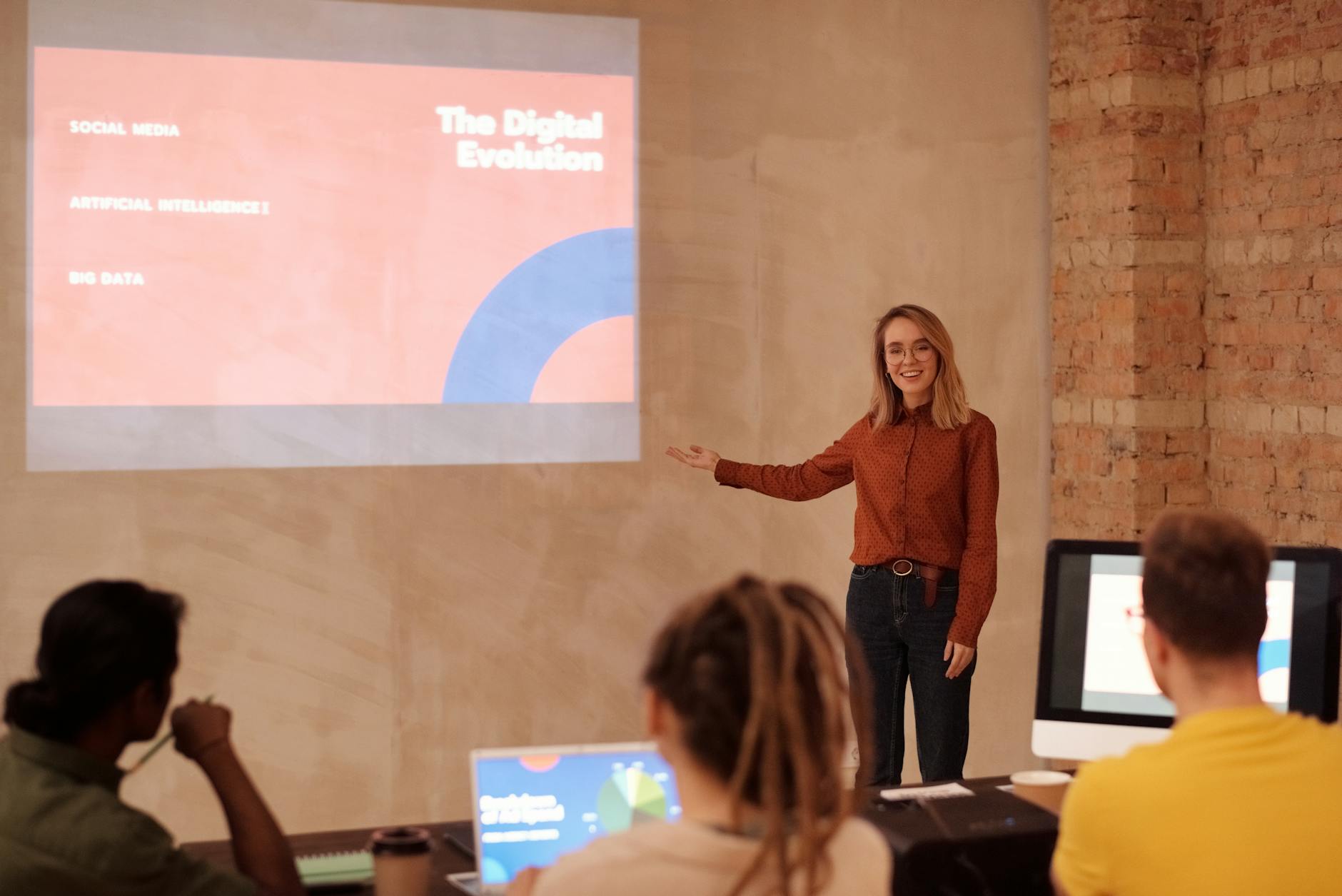
    Young woman presenting on digital evolution concepts like AI and big data in a seminar. Photo by Mikael Blomkvist

    Build Simple Chatbots for Shops

    Ecommerce owners want fast answers for buyers. No-code chatbot tools make it simple to set up product Q&A, order status checks, and lead capture forms without coding.

    • Good no-code picks: Zapier Chatbots, Tidio, and Botpress. This roundup of the best chatbot builders in 2025 shows options for beginners and power users.
    • Where it shines: FAQs, shipping details, size guides, and upsell prompts. Add a name and email field at the end to capture leads before handoff to live chat.
    • Lead capture wins:
      • Offer a discount code after email capture.
      • Save common questions, then email a weekly tips series.
      • Tag buyers by interest, for example, “running shoes” or “gifting.”

    How to launch in 48 hours:

    1. Pick one store niche, for example, skincare or pet supplies.
    2. List 15 FAQs from product pages and support emails.
    3. Build a bot flow, greet, 3 quick buttons, human handoff, and a lead form.
    4. Add it to the homepage and the top 5 product pages.
    5. Check logs daily and refine answers.

    Pricing and earnings:

    • Starter setup: $99 to $250 for one bot and 3 flows.
    • Care plan: $49 to $149 per month for tweaks and reports.
    • Outcome to sell: More email signups and faster pre-sale replies.

    For more builder options, compare interfaces in Tidio’s guide to chatbot builders for 2025.

    Create Videos Without Showing Your Face

    Faceless YouTube channels work when you keep a tight topic and a clean system. AI helps you write scripts, record voices, and edit faster.

    • Stack that works: ChatGPT for scripts, a text-to-speech tool for voice, and a simple editor like CapCut or Filmora.
    • Smart niches:
      • Quick tips, for example, Excel tricks or phone hacks.
      • Product roundups, best budget backpacks or kitchen tools.
      • Calm content, bedtime stories or ambient video with facts.
    • Monetize:
      • YouTube ads after meeting requirements.
      • Affiliate links in descriptions.
      • Digital products, templates or checklists.

    Fast workflow:

    1. Research 10 keywords with search intent and low competition.
    2. Draft a 5 to 7 minute script, hook, three points, summary, CTA.
    3. Record an AI voice, then add stock clips and B-roll.
    4. Export, upload, and write a clear title and thumbnail text.
    5. Post 2 to 3 times per week for 30 days.

    Helpful reads: See a practical roundup of tools in this guide to faceless YouTube video tools in 2025.

    Expected earnings:

    • New channels: $100 to $400 per month after consistent posting.
    • Growth stage: $500 to $1,000 per month with ads and affiliates.

    Freelance AI Code Help

    You do not need to be a senior engineer to earn here. Use AI coding assistants to take on small tasks for busy devs and solo founders.

    Beginner-friendly projects:

    • Fix simple bugs in HTML, CSS, or JavaScript.
    • Convert a Figma mockup to a basic landing page.
    • Add a contact form with email notifications.
    • Write unit tests for a few functions.
    • Clean up README files and install steps.
    • Build small scripts, CSV merge, renaming files, image resize.

    How to start this week:

    1. Pick one stack you can support, for example, React front ends or Python scripts.
    2. Create 3 fixed-price offers, $49 bug fix, $99 landing tweak, $149 script.
    3. Use an assistant to propose solutions, then test locally and document steps.
    4. Deliver with a short loom walkthrough and a clear change log.
    5. Ask for a one-line testimonial and a referral intro.

    Earnings snapshot:

    • 4 to 8 small tickets per month, $200 to $800.
    • With retainers for updates, $500 to $1,000 per month.

    Stand-out tip: Sell speed. Same-day fixes with clean notes make clients stick.

    Analyze Data with AI Insights

    Many small teams sit on spreadsheets they never use. Turn numbers into clear charts and simple actions with AI-assisted analysis.

    What you deliver:

    • A one-page snapshot, top 3 insights, one priority, next steps.
    • Clear visuals, weekly trends, top products, channel mix, refund rates.
    • A short call to explain findings and set a 30-day metric.

    Tools you can use:

    • Google Sheets with AI helpers to draft formulas and summaries.
    • Built-in AI in BI tools for quick chart suggestions.
    • CSVs and dashboards that update weekly.

    Use cases:

    • Ecommerce, spot products with high views and low conversions.
    • Local service, find peak inquiry times and top ZIP codes.
    • Content, identify posts with strong saves but weak clicks.

    Launch in 5 steps:

    1. Ask for a sample CSV and goal, for example, more add to carts.
    2. Clean columns, fix dates, and remove blanks.
    3. Create 5 to 7 charts that match the goal.
    4. Write a plain-language brief with actions, change titles, create a bundle, fix pages.
    5. Share a template so the client can refresh it monthly.

    Pricing and earnings:

    • One-time report: $149 to $350.
    • Monthly review: $99 to $249.
    • Hitting one clear metric keeps renewals strong.

    Teach AI Skills in Workshops

    People pay for hands-on help with common tools. Short, live workshops on Zoom sell fast when the outcomes are clear.

    Great topics for beginners:

    • ChatGPT for email, outlines, and meeting notes.
    • AI for resumes, keyword match and quick edits.
    • AI video basics, scripts, B-roll, and voiceover.
    • No-code chatbots for ecommerce FAQs.

    How to fill your first session:

    1. Pick a single outcome, for example, write a resume that passes ATS.
    2. Create a 60-minute outline, intro, steps, practice, Q&A.
    3. Post on LinkedIn and local Facebook groups with a clear promise.
    4. Price the first run at $19 to $39 to get traction.
    5. Record, then sell the replay as a mini course.

    Simple course outline example:

    • 0 to 10 minutes, what we will build and tool setup.
    • 10 to 35 minutes, live demo with a template.
    • 35 to 50 minutes, attendee practice time with prompts.
    • 50 to 60 minutes, Q&A and next steps.

    Earnings path:

    • 20 seats at $29 equals $580 for one live hour.
    • Add replays and templates to reach $500 to $1,000 per month.

    Pro tip: Send a checklist before the session, then a replay and a one-page cheat sheet after. This raises trust and referrals.

    Unique AI Product and Niche Hustles

    You can sell smart digital goods and tiny tools that solve real problems, all from your laptop. Most offers land in the $10 to $300 range per sale, with simple systems that scale. Use marketplaces like Etsy and Gumroad, or teach on Teachable. Set up automation for delivery and follow-up emails, then improve your best sellers with small updates.

    A focused individual types on a laptop running AI software indoors. Photo by Matheus Bertelli

    Sell Digital Downloads Made by AI

    Turn AI output into polished products people buy on repeat. Think templates, planners, and toolkits that save time.

    • Strong evergreen ideas:
      • Budget planners: Monthly, weekly, and sinking funds trackers.
      • Business templates: Client onboarding forms, SOP checklists, proposal kits.
      • Content calendars: 30 to 90 day post plans with prompts.
      • Study aids: Flashcards, summary sheets, revision planners.
      • Wellness trackers: Habit logs, meal plans, sleep and workout sheets.

    How to build and automate:

    1. Draft inside Google Docs or Notion, then design covers in Canva.
    2. Export clean PDFs or editable files for Canva or Sheets.
    3. List on Etsy or Gumroad with 5 to 7 mockups and a clear outcome.
    4. Automate delivery and add a welcome email with a quick-start guide.
    5. Ask buyers one question by email, what did this help you do, and collect ideas for version 2.

    Smart pricing:

    • Mini packs at $10 to $19, core kits at $25 to $49, premium bundles at $79 to $149.
    • Offer a storewide bundle at $199 to $299 for power users.

    Quick product map

    NicheProductTarget Price
    Personal finance12-month zero-based budget planner$19 to $39
    CoachesClient intake and session notes pack$29 to $79
    Content creators90-day content calendar with prompts$25 to $59

    Provide Fast Translation Services

    Mix AI speed with human edits to deliver clear, on-brand translations. Focus on industries that value accuracy and fast turnaround, like ecommerce, SaaS, and travel.

    • Your workflow:
      1. Run a first pass with AI to draft the translation.
      2. Edit for tone, idioms, and brand voice. Fix dates, numbers, and units.
      3. Add a short glossary and guidelines for repeat clients.
    • Target global clients:
      • Pitch ecommerce sellers, newsletter teams, and course creators.
      • Post samples and before and after snippets on LinkedIn.
      • List on 2 to 3 marketplaces to get early orders.
    • Pricing tip:
      • Charge per word with a minimum fee. Common ranges are $0.04 to $0.12 per word, with higher rates for technical or urgent work.

    Helpful reads:

    Offer ideas you can sell today:

    • Product page and email translations for Shopify stores.
    • App store listings and release notes for mobile apps.
    • Short legal disclaimers and FAQs with a client-approved glossary.

    Give AI Finance Advice

    Offer simple, personalized budgets and money tips that everyday people can use. Keep it clear, friendly, and focused on small wins. This is educational, not investment advice.

    • What to deliver:
      • Custom monthly budget based on income and fixed bills.
      • Debt payoff plan with snowball or avalanche method.
      • Savings roadmap, emergency fund and sinking funds.
      • Spending insights, 3 habits to change this month.
    • Easy tool stack:
      • Google Sheets for templates and charts.
      • ChatGPT to summarize patterns and suggest actions.
      • Loom for a 5-minute walkthrough of the file.
    • Simple 3-step setup:
      1. Ask for last month’s spending by category, income, and goals.
      2. Load numbers into a sheet, then auto-calc targets and timelines.
      3. Send a one-page action plan with due dates and a check-in invite.
    • Pricing:
      • Starter plan: $29 to $59 for a one-time budget.
      • Plus plan: $99 to $199 with a 30-day check-in and tweaks.

    Stand-out tip: Add a one-tap duplicate link so clients can update next month without help.

    Monetize Custom ChatGPT Setups

    Package AI workflows that save pros hours each week. You build the system once, then sell the file or offer a setup service.

    Good targets:

    • Real estate agents: Listing description generator, showing follow-up emails, and CMA summary prompts.
    • Consultants: Proposal drafts, meeting notes, and scope checks.
    • Ecommerce teams: Product copy, ad variants, UGC brief prompts, and customer support macros.

    How to sell:

    1. Create a clean prompt library with role, goal, and examples.
    2. Add step-by-step instructions and 2 sample outputs.
    3. Share as a Notion or Google Doc, then sell on Gumroad.
    4. Offer a premium tier with brand voice tuning and one live call.

    Pricing ideas:

    • Pack only: $29 to $79.
    • Pack plus setup call: $149 to $299.
    • Team version with SOPs and training video: $249 to $499.

    Pro move: Include a short troubleshooting section, what to tweak when results feel generic.

    Launch Tiny AI Apps for Niches

    Build a micro SaaS that fixes one pain point and charges a small subscription. No-code tools and APIs make this fast, even for beginners.

    Pick a narrow problem:

    • Scheduling aid for tutors with smart reminder texts.
    • Listing optimizer for marketplace sellers with title and tag suggestions.
    • FAQ answerer for nonprofit sites with simple report exports.
    • Email rewriter for sales reps with tone presets.

    Build and ship:

    1. Choose a no-code builder or a simple stack you know.
    2. Sketch flows on paper, sign up, set up payments, then connect AI.
    3. Ship a v1 in 7 to 10 days with one core feature.
    4. Add usage caps on the base plan, then upsell higher limits.

    Monetization:

    • Starter at $9 to $19 per month, Pro at $29 to $49, Team at $79 to $149.
    • Offer a free trial and a yearly discount to improve conversions.

    Scale tips:

    • Add a help center and in-app tips.
    • Watch support emails, then ship fixes that cut tickets.
    • Partner with niche creators for demos and reviews.

    These five ideas fit a simple path. Create a useful item once, list it on a trusted platform, and add small improvements each month. Sales stack up when your offer is clear, priced right, and easy to buy.

    Conclusion

    You now have 25 clear paths to earn with AI, from quick content gigs and prompt packs to faceless video, chatbots, data snapshots, workshops, and tiny apps. Each one is beginner friendly in 2025 thanks to simple tools, clean tutorials, and fast templates. The stack is ready, ChatGPT for words, Midjourney for visuals, no-code for flows, and easy checkouts for sales.

    Pick one idea, set a small scope, and ship this week. Share your first win in the comments, or try a free AI tool today and post your results. Keep notes, tighten your offer, and raise your price as outcomes improve.

    Small steps compound when you publish often and deliver on time. Start now, build momentum, and let your best offers stack into steady income. Flexible work, real skills, and scalable products are within reach. Your next pay bump can start today.

  • Top 7 Coding Apps That Double as Digital Art Studios: Stunning Themes

    Top 7 Coding Apps That Double as Digital Art Studios: Stunning Themes

    More Than Just Code: Your Coding App Can Be a Work of Art

    Many of us spend hours coding, making our ideas real. But does your coding space feel special, or just useful? If it’s plain and boring, you’re missing out on making it more creative.

    We want to help you make your coding work exciting. Imagine your workspace as a digital art studio. It can have great themes that not only look good but also help you feel better, focus, and even work smarter. It’s not just about looks; it’s about making your daily work fun and nice to see.

    If you’re a business owner with new ideas, a content creator learning web design, or someone who codes for fun, a good setup can change everything. It makes you happy, is easier on your eyes, and honestly, makes you want to spend more time on your projects.

    So, ditch the boring standard settings and get ready to see some cool stuff. We’ve searched online to find seven coding apps that are more than just tools; they’re like art studios. You can decorate them with themes that make your code look awesome. Let’s check out the top 7 coding apps that can be like digital art studios. Enjoy nice themes that make your coding better and give you new ideas. Let’s go!

    Why Your Coding Space Is More Important Than You Think

    Artists choose their brushes, musicians pick their instruments, and writers choose their pens. Coders should do the same. Your coding tool (like an IDE or text editor) is your main tool. How it looks really changes how comfortable and interested you feel.

    A well-chosen theme can:
    Help Your Eyes: Dark themes with good colors for your code can really help when you code for a long time.
    Improve Focus: A clean, tidy, and nice-looking screen helps you stay focused.
    Boost Creativity: Yes! Working in a space that makes you feel creative can really help new ideas pop up. It’s like painting in a beautiful studio instead of a dusty garage.
    Make It Yours: It makes your digital workspace truly yours, showing who you are and what you like.

    Discover 7 coding apps that are also art tools. Make beautiful visuals as you code, and take your projects to the next level. Start exploring now.

    The Top Seven: Coding Apps That Are Secret Art Studios

    Developer's hands coding digital art with a dark theme and neon accents.

    1. Visual Studio Code (VS Code): The King of Themes

    If any editor feels like a “digital art studio,” it’s VS Code. This strong tool from Microsoft is very adaptable and has many features. It’s also a great place for people who love themes. The VS Code Marketplace has tons of great looks, from the simple “One Dark Pro” to the bright colors of “SynthWave ’84” (which even glows like neon!).

    You’re not just changing colors; you’re changing your whole creative coding space. With add-ons for special icon sets, beautiful fonts, and even moving backgrounds, VS Code lets you build a workspace that feels less like a basic tool and more like your own art you can play with. It’s popular because it’s both useful and stylish.

    2. Sublime Text: Fast and Stylish

    Sublime Text is known for being super fast and looking simple. But don’t let its quiet style fool you; you can change how it looks more than you’d guess. While it doesn’t have as many themes as VS Code, Sublime’s themes are often made very carefully. They focus on clear lines, good colors, and a space where you can focus.

    With the right dark theme and a carefully chosen font, this editor feels like a stylish design piece. If you like tools that are simple, smart, and work well, Sublime Text offers a very smooth way to work with your coding tools that looks as good as it works.

    3. Atom: The Customizable Canvas

    Remember Atom? GitHub’s “hackable text editor” might not get as many new updates now, but it’s still great for people who love to change things a lot and want a space with lots of visual options.

    Its package manager has many themes for the app’s look, themes for code colors, and even tools that let you add your own styles right to the editor. This means you can truly color your workspace with special colors, change every small part, and make a coding experience that is totally yours. Atom is for coders who see their editor as part of their art.

    4. JetBrains IDEs (e.g., IntelliJ IDEA, WebStorm): The Professional’s Art Studio

    For serious developers who need powerful features and a nice look, the JetBrains tools (like IntelliJ IDEA for Java, WebStorm for JavaScript, PyCharm for Python, etc.) are excellent. They are known for their smart features and tools to make code better, but they also have lots of different themes.

    Besides the basic light and dark options, the JetBrains Marketplace has many themes made by users. These themes range from very dark blacks with bright code colors to soft, gentle colors. You can change everything, from the editor’s background to the tab colors. This makes these professional places for visual coding feel very personal and inspiring. It’s where powerful tools meet great design.

    5. Vim/Neovim: The Expert’s Command-Line Art

    Wait, listen up. Vim and its newer version, Neovim, might seem like the opposite of a “digital art studio” because you control them with text commands and mostly the keyboard. But for people who use them a lot, these editors let you change how they look in amazing ways. Since everything is set up using text files, you have full control over every color, font, and layout piece.

    The Vim/Neovim community is known for its beautiful setup files (dotfiles), showing editors that are true pieces of art. From status lines with lots of details that show system info with nice symbols, to special color sets that make code stand out, turning Vim into a space that looks really good is a creative coding project all by itself. It shows that beauty can be found even in very technical places.

    6. Brackets: The Web Designer’s Live Colors

    Adobe’s free editor, Brackets, was made for web developers and designers, and its looks show this. It’s known for its “Live Preview” feature, which shows changes in your browser as you type. This makes Brackets naturally good for an easy way to work that you can see.

    Its themes, while not as many as VS Code’s, often have clean, modern designs and good color choices that match its live-editing tools. If you’re building websites and want your editor to feel like a seamless part of your design work, Brackets offers a fresh and clear way to work with your coding tools.

    7. p5.js Web Editor / Processing: The True Digital Art Studio

    Now, for something a bit different, but very important when we talk about visual coding tools as art studios. Tools like the p5.js Web Editor (which uses the Processing language) are made just for creative coding and making digital art. The editor itself might be simple, but the results are truly amazing to look at.

    Here, your code isn’t just about making things work; it is the art. You write code that draws shapes, makes particles move, and creates things you can play with. The editor becomes your canvas. The themes you pick for its look (often a clean, dark mode) help show off the bright, moving art you’re making in the preview window. It’s the best blend of code and art, making the whole coding process a joy to see.

    More Than Just Colors: Making Your Workspace Truly Yours

    Finding the perfect theme is just the start. To truly turn your coding app into a digital art studio, think about:

    Custom Fonts: Find special fonts made for coding (like Fira Code, Dank Mono, or JetBrains Mono). These fonts are easy to read and join certain letters and symbols in a cool way.
    Icon Packs: Many editors let you change file icons. This makes things look even better and helps you find files faster.
    Backgrounds: Some editors (like VS Code with certain add-ons) even let you put your own backgrounds, which you can see a little bit behind your code.
    Look at Communities: Check out Reddit groups (like r/unixporn for Vim/Neovim setups, or other editor groups) for lots of ideas from other creative coders.

    Your workspace shows off your skill. Why use something plain when you can have something inspiring?

    Code Beautifully, Create Freely

    Coding in boring, plain spaces is old news. Today, your coding app is a powerful tool for your creative ideas, like a digital canvas waiting for your personal style. Whether you’re a developer with lots of experience, a new business owner, or someone who codes for fun and likes to learn, taking time to make a beautiful workspace isn’t just a small bonus; it helps you feel good, focus better, and get more done.

    So go ahead, try things out! Download some themes, play with different fonts, and watch your creative coding space change into a place that truly inspires you. Who knew that just changing colors could make you so much more creative? Now, go make some beautiful code!

  • How Much Money You Can Make from AI Prompt Marketplaces in 2025

    How Much Money You Can Make from AI Prompt Marketplaces in 2025

    Want to turn your AI skills into cash? You can. AI prompt marketplaces are simple shops where people sell ready-made prompts for tools like ChatGPT and Midjourney. Buyers want prompts that save time, improve output, and work on demand.

    So how much can you make? In 2025, creators report a wide range, from a few dollars per week to hundreds per week, and some reach thousands per month. Results depend on your niche, quality, marketing, and how often you publish. Small wins stack up when you build a portfolio and repeat buyers.

    Why now? AI is expanding fast. The overall market keeps surging, and several segments are growing over 32.9% per year through 2034, with some areas rising even faster. More users means more demand for prompts that produce reliable results.

    This post breaks down what earns in prompt marketplaces, how pricing works, and which niches pay. You’ll see what top sellers do right, how to build prompt packs that move, and where to list them. We’ll cover real earning ranges, smart promotion, and simple steps to get your first sales.

    If you write prompts that solve a clear task, you can get paid. Start small, measure what sells, and improve fast. Ready to learn what to sell, how much to charge, and how to scale? Let’s map it out.

    Top AI Prompt Marketplaces and Real Earnings Examples

    Choosing the right marketplace shapes your income, your workflow, and the buyers you attract. Here is how the top platforms stack up for price, volume, and real earning potential in 2025, with simple guidance on where each one fits.

    PromptBase: Mass Market for Quick Sales

    PromptBase runs on fixed prices and high volume. Listings often start near the low end, then climb as demand grows. The platform’s scale does the heavy lifting for discovery, so new creators can get early traction with the right niches and clean product pages.

    • What to expect: Active sellers report monthly ranges of $500 to $2,000 from a handful of popular prompts, plus smaller daily sales from long-tail listings.
    • Pricing style: Fixed price per prompt, usually budget friendly for buyers, built for repeat sales.
    • Where it shines: Fast-moving utility prompts that solve a clear task and require little hand-holding.

    Best-selling niches on PromptBase:

    • Business ops: SOP writers, sales email generators, meeting note condensers, productized cold outreach.
    • Marketing: Ad variants, SEO briefs, content outlines, product description systems.
    • Art and design: Midjourney prompt packs for styles, lighting, product mockups, and thumbnails.
    • Data and analysis: Research scaffolds, summarizers, spreadsheet helpers, QA checklists.

    Simple ways to win:

    • One task, one result: Keep the promise tight and measurable.
    • Clear proof: Show sample outputs for two to three use cases.
    • Prompt packs: Offer small bundles to raise average order value.
    • Iterate weekly: Ship updates, add variants, and refresh thumbnails.

    Explore current listings and categories on the official site: PromptBase marketplace.

    PromptSea and PromptAi: Custom Deals for Higher Pay

    These platforms serve buyers who want tailored work or premium prompts with global reach. They differ from mass platforms by leaning into higher price points and direct relationships.

    • PromptSea: Uses a negotiation model for custom prompt systems, fine-tuning, and integrations. Pros who handle scoping calls and revisions can land $1,000 or more per project. Fees tend to be lower than broad marketplaces, which keeps more profit in your pocket. This suits consultants, agencies, and builders who can package training, documentation, and light support.
    • PromptAi: Focuses on selling in-demand prompts to a global buyer base. Top listings for ChatGPT, Midjourney, and Gemini can reach $100 or more per sale, which makes $1,000+ in a month realistic with a few winning products. Think high-impact prompts with polished instructions, clear tags, and strong visual examples for image models.

    Positioning tips:

    • Lead with outcomes buyers value, not model jargon.
    • Offer tiers: base prompt, enhanced version with variables, and a pro tier with templates.
    • Include a short usage guide and a troubleshooting note to reduce refunds.
    • Track feedback fast, then ship upgraded versions as paid add-ons.

    Etsy: Creative Prompts for Everyday Buyers

    Etsy taps into huge consumer traffic, which helps creative prompts find buyers who are not active on niche tech platforms. It is a great fit for fun, artistic, and hobby-focused sets.

    • What sells: Aesthetic packs for Midjourney and Stable Diffusion, printable planners powered by LLM prompts, journaling systems, social caption kits, KDP interior helpers, and crafting guides.
    • Bundles move better: Sellers who package themed sets see higher conversion and fewer support questions. Buyers want plug-and-play prompts they can use today.
    • Earnings range: Many shops report $200 to $800 per month once listings rank and reviews build. Top shops with seasonal bundles can spike higher during holidays.

    How to stand out on Etsy:

    • Use strong thumbnails with before and after samples.
    • Write short benefits-focused descriptions, then link to a usage PDF.
    • Offer a starter bundle, then a deluxe bundle with 3 to 5 extra themes.
    • Refresh seasonal sets every quarter to catch trend traffic.

    Quick comparison at a glance:

    • Pricing: PromptBase uses fixed, budget-friendly prices; PromptSea pushes custom quotes; PromptAi supports premium per-sale pricing; Etsy favors bundles and themed sets.
    • Fees: PromptSea often has lower fees for large deals; Etsy adds listing and transaction fees; PromptBase and PromptAi apply standard marketplace commissions.
    • Best fit: PromptBase for volume and quick sales, PromptSea for scoped client work, PromptAi for premium global products, Etsy for creative bundles and hobby buyers.

    Real earnings in 2025 point to a wide band: many individual creators make $100 to $1,000 per month after a few solid listings, while top sellers hit several thousand with proven mega-prompts and bundles. Start where your strengths match buyer intent, then scale with updates, tiers, and clear outcomes.

    How to Start Earning from AI Prompts Today

    Diverse people with AI prompt ideas converging on a marketplace icon, representing selling AI prompts.

    You can start today with a simple workflow, a clear niche, and smart pricing. Keep quality high, move fast, and update often as models change. Aim for your first $100 per month, then build from there with bundles and upgrades.

    Steps to Create and List Your First Prompt

    Start with a tight scope and a real task buyers want.

    1. Brainstorm ideas
      • Pick one niche you know, like SEO briefs, Etsy titles, or product photos.
      • Scan active marketplaces to spot gaps and trends. See options in this guide to platforms: Where to Sell AI Prompts.
    2. Write the prompt
      • Use clear structure, variables, and examples.
      • Add a short usage guide and troubleshooting tips.
    3. Test on AI
      • Run on ChatGPT or Gemini for text, Midjourney or Stable Diffusion for images.
      • Try at least three inputs. Fix weak outputs.
    4. Refine
      • Tighten instructions, add guardrails, include positive and negative examples.
      • Create a basic and a pro version.
    5. Upload with strong metadata
      • Title with outcome, not jargon. Add targeted tags and short bullets on benefits.
      • Show 2 to 4 sample outputs. For Etsy, use clean thumbnails, before and after visuals, and a PDF guide. For PromptBase, highlight a single outcome and add a mini FAQ.
      • Note model versions and include a quick update policy.

    Tip: Multimodal prompts that combine text with image inputs or reference links tend to convert better in 2025. See a practical case study for motivation: I Tried Selling AI Prompts For 60 Days.

    Common pitfalls to avoid: vague results, no examples, weak tags, and no updates after model changes.

    Pricing Strategies to Maximize Profits

    Price for value, then test and adjust.

    • Start simple: $2 to $5 for single-task prompts.
    • Charge more for depth: $8 to $15 for “mega” systems with variables, examples, and guides.
    • Use bundles: 3 to 7 related prompts at a 20 to 30 percent discount to raise average order value.
    • Research competitors on your platform, then set a clean price ladder.
    • Offer tiers: basic, pro with extras, and a bundle.

    2025 examples that can reach $500+ per month:

    • PromptBase: a small catalog of high-demand utility prompts plus one mega system.
    • Etsy: themed Midjourney packs with strong visuals, seasonal refreshes, and a starter bundle.
    • Gumroad or your site: niche packs with updates and a simple license.

    Promote with platform SEO, short demos on social, and quick user guides. Track sales weekly, retire weak listings, and ship updates when new AI versions drop.

    Graph showing rising AI prompt marketplace income projections for 2025.

    Conclusion

    AI prompt marketplaces pay real money when you pair useful ideas with steady output. In 2025, creators see anything from $100 per month to several thousand, driven by niche fit, clear outcomes, and consistent updates. Start small, track results, and build on what works.

    Key takeaways

    • Earnings are real: from $100 to thousands monthly with focused catalogs.
    • Pick platforms that match your products and buyers, then commit to them.
    • Ship quality prompts with examples, simple guides, and clear outcomes.
    • Use pricing ladders, bundles, and upgrades to raise average order value.
    • Update prompts as models change to protect rankings and repeat sales.

    Your next step

    Pick one platform, write one prompt today, and publish it. Keep the scope tight, include samples, and add a short usage guide. Want extra help refining your offer and pricing? Review these practical earnings tips for prompt creators at Maximize Your Earnings as an AI Prompt Creator. Then come back, share what you tried in the comments, and tell us what sold.

  • From ELIZA to ChatGPT: The Fun and Amazing History of AI Prompts

    From ELIZA to ChatGPT: The Fun and Amazing History of AI Prompts

    Let’s be honest: it feels like we all suddenly became good at talking to AI. One moment, we were just searching on Google. The next, we’re carefully writing instructions for Midjourney, DALL-E, or ChatGPT. We’re trying to get the best image, a great blog post, or useful code. It’s like learning a new secret language.

    But here’s a surprising idea: talking to AI isn’t new at all! Today’s smart AI tools seem like something from a movie. But the history of AI prompts actually goes back many years. It started in simple, yet very interesting ways. So, grab a drink, because we’re going to look at some fun AI facts and learn about how prompts really began.

    The Genesis: When AI First Started “Listening” (Sort Of)

    Imagine this: it’s the 1960s. Bell bottoms were popular, The Beatles were famous, and at MIT, a computer scientist named Joseph Weizenbaum was making something truly new. He wasn’t building robots or self-driving cars. He was making ELIZA.

    ELIZA wasn’t a powerful AI, but she was one of the first programs that tried to talk using normal human language. Think of her as a very, very early chatbot. She was made to act like a therapist. People would type sentences, and ELIZA would reply. Often, she just turned their own words into questions.

    For example:
    User: “My head hurts.”
    ELIZA: “Why do you say your head hurts?”

    User: “I feel sad today.”
    ELIZA:”Can you tell me more about why you feel sad today?”

    This was amazing for its time! People actually felt connected to ELIZA. They talked to her as if she were a real person. They were, in a way, giving her basic “prompts” – simple sentences. ELIZA used smart tricks like finding keywords to understand and reply. This wasn’t about making a realistic picture of a cat in space. But it was the very start of AI prompt history. It was the first step in teaching machines to “understand” and react to what humans say. It was a simple but very important beginning. It showed that people wanted to talk to machines.

    Visualizing the progression of AI communication and prompt engineering.

    The Long, Winding Road to Nuance: Decades of Dedication

    After ELIZA’s simple way of talking, we started a journey that lasted many decades. Getting from those first, basic talks to today’s super smart AI tools took a lot of hard work. This included endless research in areas like natural language processing (NLP), machine learning (ML), and how computers understand language.

    For many years, the problem was huge. How do you teach a machine to not just spot keywords, but to understand the meaning, the subtle differences, and the goal? How do you go from just repeating a user’s words to actually creating clear, new, and useful answers?

    Scientists and engineers worked very hard. They created computer programs that could break down sentences, find different parts of speech, and later, understand how words relate to each other in meaning. Early tries were awkward, often giving funny, meaningless results. But with every new discovery – from simple math models to neural networks, and finally to the transformer system that makes today’s large language models (LLMs) work – AI got much, much better at “listening” and “understanding.”

    This wasn’t just about using more data. It was about totally new ways of thinking about how machines learn language. It was about teaching AI to not just read words, but to understand the hidden meaning, to guess, and to combine ideas. The journey from ELIZA’s simple word matching to modern AI like GPT-4 is truly an amazing jump. GPT-4 can follow complicated, many-part instructions and create very clear, creative, and relevant answers.

    Prompt Engineering: A Modern Art Form (and Science!)

    Now, let’s jump to today. The idea of an AI prompt has grown into an art form called “prompt engineering.” It’s not just about typing a question anymore. It’s about creating a full instruction, a scene, a character, and a style guide, all at once.

    You, the person making content or just exploring, are now like a movie director, writer, casting person, and art director, all rolled into one. You’re telling the AI: “Picture a fun, steampunk otter with one eye-glass, drinking tea in a busy old market. Make it look like a Hayao Miyazaki movie, with soft, warm light and lots of small details.”

    That’s very different from “My head hurts,” right?

    Today’s AI tools work best with these specific details. They can guess the mood, understand big ideas, and even follow complicated steps. The better you know how to “talk” to them – how to give them clear rules, examples, and background info – the better their results will be. It shows how amazing those decades of research were, that a machine can now understand such rich, detailed instructions and create something truly special. This change is a key part of our AI prompt history.

    Fun Facts & Mind-Benders About AI Prompts

    Besides the history, there are some really interesting AI facts and strange things about prompts that show how amazing this technology is:

    1. The “Magic Word” Effect: Have you noticed that adding “please” or “thank you” to a prompt sometimes seems to make the answer better? AI doesn’t have feelings. But these polite words can slightly change how the AI “sees” what you want. This can sometimes lead to more helpful or obedient answers. It’s not magic, but a cool trick because politeness is in the data AI learns from.
    2. AI’s Hidden Characters: With the right prompt, you can make an AI act like almost any character. Do you want it to be a grumpy pirate cook? A wise alien? A poet from Shakespeare’s time? Just tell it, and it will often play that role very well. Your prompt is more than just a command; it’s like a costume for the AI.
    3. The Prompt as a “Start”: One simple prompt can be the start for a whole creative project. “Write a story about a lost key” can grow into a book, a script, or many pictures. All of this is guided by more prompts given later. It’s like a team dance between what a human wants and what the machine creates.
    4. AI’s “Imagination” (or lack of it): AI can create very creative things, but it doesn’t “imagine” like humans do. It guesses the most likely next words or pixels based on the data it learned from. So, when you ask for “a purple elephant dancing on the moon,” it’s not making an image from nothing. It’s putting together parts it has seen from many pictures and texts to make something new. Still, the result feels like imagination, which is one of the coolest AI fun facts.
    5. The “Making Things Up” Factor: Sometimes, AI just invents things – facts, sources, even whole events. This is often called “hallucination.” But a well-written prompt can help stop this. By giving clear rules, asking it to show its sources, or even telling it not to make up information, you can guide it to be more accurate. It’s a constant game of smarts!
    6. “Best Ways” Change Quickly: What works as a great prompt today might not work as well tomorrow. As AI tools get better, the best ways to talk to them also change. Prompt engineering is a fast-changing area. This makes it one of the most exciting parts of using modern AI.

    Why This Matters to You: The Creator & The Curious

    Historical journey of AI prompts and human-AI interaction.

    So, why should you care about this AI prompt history or these fun AI facts? Whether you’re a blogger, a social media manager, a small business owner, or an artist who likes tech.

    Because understanding how we got from ELIZA to GPT-4 isn’t just for quizzes. It gives you power. It helps you see the amazing tech jumps that let you create special pictures without buying common stock photos. Or write great text in minutes. It makes the magic less mysterious, showing you how it all works.

    Knowing where AI prompts started and how AI’s “understanding” grew gives you a better gut feeling for how to write good prompts. It makes you want to try new things, to go further, and to see talking to AI not just as typing commands. Instead, see it as a chat with a smart tool that’s always getting better.

    The empty prompt box isn’t just for words. It’s a doorway to creating. And with a bit of history and some fun facts, you’re more ready than ever to step through it and make something truly wonderful. So go ahead, speak your next great idea into being. The AI is listening, and it has come a very long way.

  • Master Your Data: Essential Visualization Tools for Better Decisions

    Master Your Data: Essential Visualization Tools for Better Decisions

    Ever feel completely swamped by numbers, endless spreadsheets, or just plain guessing when you’re making important business decisions? Maybe you’re staring at your Etsy sales, poring over blog stats, or trying to figure out which AI-generated design will really grab your buyers’ attention. It’s a common struggle, isn’t it? We all dream of building something amazing and unique, but it’s so easy to get lost in a sea of information.

    Sure, information is incredibly powerful – but only if you can actually make sense of it. Raw data, with all its intimidating rows and columns, can feel totally overwhelming. It’s like having every single ingredient for a magnificent cake but absolutely no recipe. You know it could be delicious, but you have no idea how to put it all together.

    That’s exactly where data visualization comes in. It’s not just about pretty charts (though they definitely can be eye-catching!). It’s about turning complicated data into clear answers. Think of it as giving your data a voice, a compelling story to tell. This helps you make smarter, quicker, and much more confident decisions. It’s not just a fancy trick for big corporations; it’s a vital skill for any business owner today, especially in our visually driven world. With the right data visualization tools, you’ll see things with incredible clarity.

    Why Truly Seeing Your Data Is Your Secret Power

    For creative business owners, Etsy sellers, print-on-demand pros, and content creators, truly seeing your data isn’t just a nice-to-have; it’s absolutely essential.

    Just picture this:

    As a Creative Business Owner: You’re constantly brainstorming new product ideas. AI helps you whip up amazing concepts, but which ones will actually sell? Instead of just guessing, imagine instantly seeing which colors are flying off the shelves, what themes are trending, or exactly how your pricing impacts sales. Visualizing your data lets you track customer behavior, spot market gaps, and fine-tune your product strategy without playing a guessing game. You’d know in a flash if that vintage-style t-shirt is outselling the minimalist mug, or if your latest ad campaign is really hitting the mark. No more just throwing things at the wall to see what sticks!

    As a Content Creator or Marketer: You’re a storyteller, and visuals are your primary language. But are your stories really resonating? Are people actually reading your blog posts? Is your social media content grabbing attention? Generic stock photos just don’t cut it anymore. By visualizing details about your audience, your content’s performance, or your social reach, you can create content that genuinely connects. You’ll quickly discover which topics drive the most traffic, when your audience is most active, or which platforms deliver the best return on investment (ROI). This isn’t just about making your content look good; it’s about making it perform better. It helps you build strong strategies based on solid insights.

    Simply put, visualizing your data helps you cut through the noise, understand why things are happening, and uncover the exact insights you need to grow your business smartly. It’s all about using visual data analysis to transform raw numbers into a clear, actionable plan for your next big move.

    Before We Start: What Question Do You Need to Answer?

    Abstract art showing raw data transforming into clear, actionable insights.

    Before you even think about picking a chart, hit pause and really reflect. The biggest mistake people make is grabbing a pretty chart without first asking themselves: “What specific question am I trying to answer with this data?”

    Seriously, think it through. Are you trying to:
    Compare a couple of things?
    Track how something has changed over time?
    Break down the components of a whole?
    Uncover connections between different elements?
    Visualize patterns on a geographical map?

    Your question acts like a compass, guiding you directly to the perfect chart. Without it, you’re just doodling, not telling a compelling story. This initial step is super important – it’s the very foundation of our “Chart Chooser’s Guide.”

    The Chart Chooser’s Guide: How to Pick the Best Data Chart for Any Business Question

    Alright, let’s get practical. This guide is your go-to for turning your data into a clear story, no matter the challenge.

    Step 1: What’s Your Core Question?

    Let’s be real with ourselves here. What exact insight do you really need to uncover? What decision are you genuinely trying to make?

    Are you comparing things? (e.g., “Which of my five new sticker designs sold best last month?” or “How do my Instagram likes stack up against my Facebook likes?”)
    Are you showing how things are spread out? (e.g., “What’s the typical price range for my competitors’ products?” or “How many customers fall into each age group?”)
    Are you trying to find a connection? (e.g., “Does spending more on ads actually lead to more sales?” or “Is there a link between how many product photos I use and conversion rates?”)
    Are you tracking changes over time? (e.g., “How have my monthly Etsy sales shifted over the past year?” or “Has my blog traffic increased since I started posting twice a week?”)
    Are you showing parts of a whole? (e.g., “What percentage of my website visitors come from social media, search engines, or directly?” or “What are the biggest cost components for my print-on-demand products?”)
    Are you visualizing locations on a map? (e.g., “Where are the majority of my customers located?” or “Which geographical regions generate the most revenue?”)

    Pinpoint your main question. It’ll be your North Star when building your chart.

    Step 2: What Type of Data Are You Working With?

    Once you’ve nailed down your question, take a peek at your actual data. What kind of information is it? Don’t worry, it’s not as intimidating as it sounds!

    Number Data: These are things you can count or measure (think sales figures, website visits, profit margins, or customer ages).
    Group Data: These are names or labels that categorize things (like different product types, traffic sources, customer genders, or advertising channels).

    Understanding these basic data types will help you choose charts that genuinely represent your information.

    Step 3: Match Your Goal and Data to the Right Chart Type

    Alright, time to play matchmaker! Here are some common goals and the charts that will serve them best:

    Goal: Comparison
    Go-To Charts: Bar Charts (perfect for comparing different categories), Column Charts (just like bar charts, but standing tall, great for comparing groups or short timeframes), Grouped Bar/Column Charts** (when you need to compare smaller subgroups within larger ones), Bullet Charts (excellent for gauging performance against a specific goal).
    Creative Biz Owner Example: A bar chart comparing the profit margins of your various products (think t-shirts vs. mugs vs. tote bags).
    Content Creator Example: A column chart displaying the unique visitor count for your top 5 blog posts last month.

    Goal: Distribution (How things are spread out)
    Go-To Charts: Histograms (show how frequently values appear within different ranges, like customer ages), Box Plots (illustrate the range and median of data, helpful for comparing data spread across groups), Scatter Plots (if you’re looking at the distribution of two numerical variables together).
    Creative Biz Owner Example: A histogram revealing the typical price range your competitors charge for similar products.
    Content Creator Example: A box plot comparing how long visitors from different social media platforms tend to stay on your page.

    Goal: Relationship (How things connect)
    Go-To Charts: Scatter Plots (your absolute best friend for showing how two numerical variables relate), Bubble Charts (like scatter plots, but they add a third numerical dimension represented by the size of the bubble).
    Creative Biz Owner Example: A scatter plot to see if more product reviews correlate with a higher average rating.
    Content Creator Example: A scatter plot to determine if increased social media engagement leads to more website visitors.

    Goal: Composition (Parts of a Whole)
    Go-To Charts: Stacked Bar/Column Charts (fantastic for showing how different components contribute to a total, especially over time or across groups), Treemaps (ideal for hierarchical data, showing groups within groups and their relative sizes), Pie Charts (use with caution! Best for a very limited number of parts that add up to 100%, and only when the differences are strikingly obvious).
    Creative Biz Owner Example: A stacked column chart illustrating how your quarterly sales are broken down by product type.
    Content Creator Example: A pie chart (if you have just 2-4 segments) or a stacked bar chart showing the percentage of your audience coming from various sources (search engines, social media, paid ads).

    Goal: Change Over Time
    Go-To Charts: Line Charts (the undisputed champion for tracking how things change over a continuous period), Area Charts (similar to line charts, but the space below the line is filled in, great for showing total quantity or volume over time).
    Creative Biz Owner Example: A line chart charting your monthly income over the past two years.
    Content Creator Example: An area chart depicting the growth of your email subscriber list over time.

    Goal: Geographical (Map Data)
    Go-To Charts: Shaded Maps (where regions are colored based on a numerical value, like population density or sales per state), Symbol Maps (where symbols are placed on a map, with their size or color indicating a numerical value, such as sales at different store locations).
    Creative Biz Owner Examples A shaded map highlighting which states your Etsy customers primarily reside in.
    Content Creator Example: A symbol map showing clusters of your blog’s most active readers.

    Step 4: Keep It Clean and Understandable

    You’ve chosen your chart – fantastic! Now, let’s make sure it’s not just informative but also beautifully clear and easy to grasp.

    Ditch the “Chart Junk”: Get rid of any unnecessary lines, shadows, or an overwhelming rainbow of colors that only distract from the core message. Simpler nearly always wins.
    Crystal-Clear Titles & Labels: Your chart’s title should immediately tell viewers what they’re looking at. And please, label those axes clearly so no one’s left guessing!
    Purposeful Color Use: Use color strategically to emphasize key points, not just to decorate. For instance, a standout color can highlight the specific data you want people to notice.
    Consider Your Audience: Will the folks who see this (your team, customers, or even you in a month) quickly understand the main takeaway? If there’s any doubt, simplify, simplify, simplify!

    Step 5: Experiment and Get Feedback

    Don’t be shy about trying a few different chart types for the same data. Does one tell the story more powerfully? Does another reveal an insight you hadn’t considered? Even better, ask a friend or colleague to take a quick look – can they instantly grasp the main point? This process of trying things out and refining is really important for effective visual data analysis. It ensures your charts don’t just present information, but truly help you make solid decisions.

    Key Chart Tools: Your Digital Art Kit

    Now that you’re good at picking charts, let’s talk about the data visualization tools that can make your ideas real. You don’t need a lot of money or a special degree to use these; many are easy to get and simple to use.

    For Quick & Easy (and Often Free!) Options

    Google Sheets / Microsoft Excel: Seriously, don’t overlook these workhorses! Most of us already have them, and both let you create robust charts directly within your spreadsheets. They’re fantastic for straightforward comparisons, tracking changes over time, or breaking down a whole. You can whip up bar charts, line charts, pie charts, and more, then easily export them for presentations or reports. If you’re new to charting, these are the perfect starting point.

    Canva: Chances are, you’re already using Canva for your designs, right? Well, it’s not just for crafting stunning social media graphics or product mockups anymore! Canva has integrated chart tools. You can quickly plug in your data and generate beautiful, branded charts. This is a huge win for content creators and creative business owners who want to embed charts directly into their blog posts, presentations, or marketing materials without ever leaving the platform. It’s for those who appreciate good design and good data!

    Google Data Studio (now Looker Studio): This free Google tool is super powerful for building interactive dashboards and reports. If your data lives in Google Analytics, Google Sheets, or other Google products, Looker Studio connects seamlessly. It’s ideal for creating dynamic, live reports you can share or use to monitor your key metrics all in one central place. Think of it as your own free, customized business control panel.

    For More Detail & Interaction (Still User-Friendly)

    Tableau Public: Tableau is widely considered a gold standard for data visualization, and their free “Public” version is an absolute gem. You can create highly interactive and sophisticated charts, publish them online, and explore your data in fascinating new ways. It has a slightly steeper learning curve than Sheets or Canva, but if you’re serious about diving deep into making decisions with charts and tackling more complex datasets, Tableau Public is an incredibly valuable platform for both learning and sharing.

    Flourish Studio: Ever wanted to create dynamic, engaging, and interactive charts that truly captivate your audience? Flourish Studio makes it surprisingly simple. Just upload your data and choose from a vast library of stunning templates, including animated bar chart races or interactive maps. It’s perfect for content creators who want to tell more compelling stories with moving visuals, rather than just static images.

    How AI is Revolutionizing Charts

    As artificial intelligence continues to evolve, we’re seeing some seriously cool advancements in how it can automate chart creation. Soon, or already in some tools, AI can:

    Generate Charts from Simple Questions: Imagine typing something like, “Show me my monthly sales for the last year, broken down by product type,” and the AI instantly suggests and builds the perfect chart for you.
    Recommend the Best Chart Type: Based on your specific data and the question you’re asking, AI can intelligently recommend the most effective chart type, saving you time and ensuring maximum clarity.

    Keep an eye out for these emerging features! They’re set to make data visualization tools even more accessible and powerful for everyone, especially for those of us already leveraging AI to create products and content.

    Putting It All Together: Your Data Superpower

    Hand pointing at a screen comparing different data visualization tools.

    Diving into data visualization might feel a little daunting at first. But here’s the secret: with a clear game plan (our Chart Chooser’s Guide!) and the right data visualization tools at your fingertips, you’re not just staring at numbers anymore. You’re giving your intuition solid, undeniable facts to back it up.

    For the creative business owner, this translates into confident decisions about your next product launch, a deeper understanding of your customers, and smarter allocation of your marketing budget. For the content creator, it means crafting stories that truly resonate, connecting with your audience on a profound level, and ensuring your hard work delivers tangible results.

    So, seriously, stop guessing! Start seeing things clearly. Begin experimenting with these tools and this guide, and prepare to witness how your newfound skill in making decisions with charts truly changes the way you run your business.

    You’ve got this. Now, go tell your data’s amazing story!

  • Unlocking AI: How Microsoft’s Mu Makes Intelligence Simpler and Smarter

    Digital brain representing Microsoft Mu simplifying complex AI processes.

    Learn how this innovation is unlocking new possibilities in artificial intelligence.

    Clara’s desk was cluttered, but her monitor’s colors were always off. She spent her mornings searching for the brightness slider in Windows Settings. “It’s always just there,” she’d say, frustrated, “but where is there today?” This search took away from her creative time, leaving her drained before she even started.

    Her old PC couldn’t handle her needs for quick system tweaks.

    Then, she got a new Copilot+ PC, promising a new era of on-device AI.

    The world of artificial intelligence is changing fast. It’s moving from experiments to real changes in our lives. Microsoft is leading this change with AI that’s safe and secure. Microsoft Mu is a big step in this direction, bringing AI to your PC.

    Mu is not just an update. It’s a big change in how we use technology. It works fast and locally, making AI experiences better and more private. You don’t need the internet to use it.

    The Imperative of On-Device AI: Why Mu Matters Now

    AI has promised a lot, but it’s often been frustrating. Clara, a digital artist, spent hours in Windows Settings trying to fix her monitor’s colors. Her old PC couldn’t handle simple tasks, wasting her time.

    Microsoft Mu solves these problems. It works well on your PC, even when you’re offline. It makes everyday tasks easier and keeps your data safe.

    Decoding Mu: Understanding This Micro-Sized Powerhouse

    So, what is Mu? It’s a small, but powerful language model. Despite its size, it’s very capable. Mu is designed for small PCs and works fast, even offline.

    The Engineering Marvel: Mu’s Architectural Innovations for Peak Performance

    Mu’s design is truly brilliant. It’s small but powerful, thanks to its engineering.

    Encoder-Decoder Architecture: The Efficiency Game-Changer

    Mu uses a special architecture that’s different from old models. It has an encoder that changes your input into a fixed size, and then a decoder makes output tokens from that. This makes Mu very efficient, using less computation and memory.

    On devices like Qualcomm Hexagon NPU, Mu is much faster. It’s about 47% quicker for the first token and 4.7 times faster for decoding. These improvements are key for AI that needs to work fast.

    Mu was made to work well on NPUs and edge devices. It was carefully designed to fit the NPU’s needs. For example, it uses the right sizes for operations to run smoothly.

    Mu also saves memory by sharing weights in certain parts. It only uses operators that the NPU can speed up. This makes the most of the NPU’s power.

    To get better accuracy and speed, Mu has three transformer upgrades:

    Dual LayerNorm (pre- and post-LN) stabilizes training without adding much overhead.

    Rotary Positional Embeddings (RoPE) help the model understand long sequences better. It can handle sequences longer than it was trained on.

    Grouped-Query Attention (GQA) reduces memory and latency by sharing keys and values. This makes the model faster and uses less power.

    Mu was trained on many GPUs and learned from other models. It started with pre-training on educational tokens. Then, it learned from Microsoft’s Phi models.

    Low-rank adaption (LoRA) methods helped Mu get even better. This made it very efficient in learning from task-specific data.

    Microsoft used advanced techniques to make Mu run well on devices. They changed the model’s weights and activations to use less memory and compute. This made Mu fast and efficient.

    Mu is now part of the Windows Settings AI agent. It helps change system settings easily. This makes it simpler to find and change settings.

    Mu’s AI agent is integrated into the Settings app. It responds quickly to user queries. For example, it can change settings in under 500 milliseconds.

    Remember Clara’s struggle with her monitor settings? She got a new Copilot+ PC and typed into the Settings search box: “Make my secondary monitor colors warmer” [conversation history]. Mu, the AI agent, quickly suggested adjusting the color temperature. With one click, her monitor’s colors were perfect [conversation history].

    She then asked for more complex settings: “Set my notifications to only show from my art software when I’m in fullscreen mode, and mute everything else.” Mu, designed for complex tasks, understood her query well. It offered a precise solution [conversation history, 37, 38]. Mu worked fast, processing over 100 tokens per second [conversation history, 44, 59].

    To achieve this precision, the Settings Agent’s training was carefully refined. Microsoft increased training samples by 1300 times and expanded settings coverage. They used synthetic labeling and diverse phrasing to improve the model. This way, the agent can handle short or partial-word inputs and multi-word queries for precise responses.

    The Mu-powered AI agent is now available to Windows Insiders in the Dev Channel. It works with Copilot+ PCs running Windows 11 Build 26120.3964 (KB5058496) or higher.

    The Broader Impact: Beyond Settings to a Transformed Future

    Microsoft Mu is more than a single feature. It’s a step towards a future where AI is part of our daily lives.

    The Rise of Intelligent Agents:

    Mu is part of a new generation of AI agents. These agents can handle complex tasks and work on your behalf. They are seen as the “apps of the AI era,” changing how we work and live. Microsoft ensures human oversight is key in this AI-powered world.

    AI Companions for Everyday Life:

    Outside work, Microsoft Copilot, powered by Mu, will be your AI companion. It will simplify daily tasks, save time, and protect your privacy. Imagine Copilot Daily summarizing news or Copilot Vision understanding web pages to help you.

    Efficiency and Sustainability at Scale:

    As AI grows, so does its need for resources. Microsoft is working to make AI more efficient and sustainable. They’re using custom silicon and liquid cooling for large AI systems. Microsoft aims to be carbon negative, water positive, and zero waste by 2030.

    Accelerating Scientific Breakthroughs:

    AI is also changing scientific research and innovation. It’s driving advances in supercomputing and biomolecular science. AI models like Mu are solving big problems, leading to new discoveries in drug development and sustainable materials.

    Conclusion: A New Era of Personal Computing

    Microsoft Mu is a big step in on-device AI, making AI experiences powerful and efficient on your PC. Its architecture and training show Microsoft’s commitment to AI advancements. Mu is changing how we interact with technology, making it more intelligent and seamless. This is a step towards a future where technology is deeply integrated into our lives, safely and securely.

    Take the Leap: Experience On-Device AI with Mu

    Are you ready to experience the next generation of personal computing?

    For Windows Insiders:

    If you have a Copilot+ PC, you can try out the Mu-powered AI agent in Windows Settings right now. Just install Windows 11 Build 26120.3964 (KB5058496) or higher. Provide your feedback to Microsoft as they continue to refine this groundbreaking experience! Explore Copilot+ PCs: Learn more about the hardware designed to unleash the full potential of these powerful on-device AI capabilities.