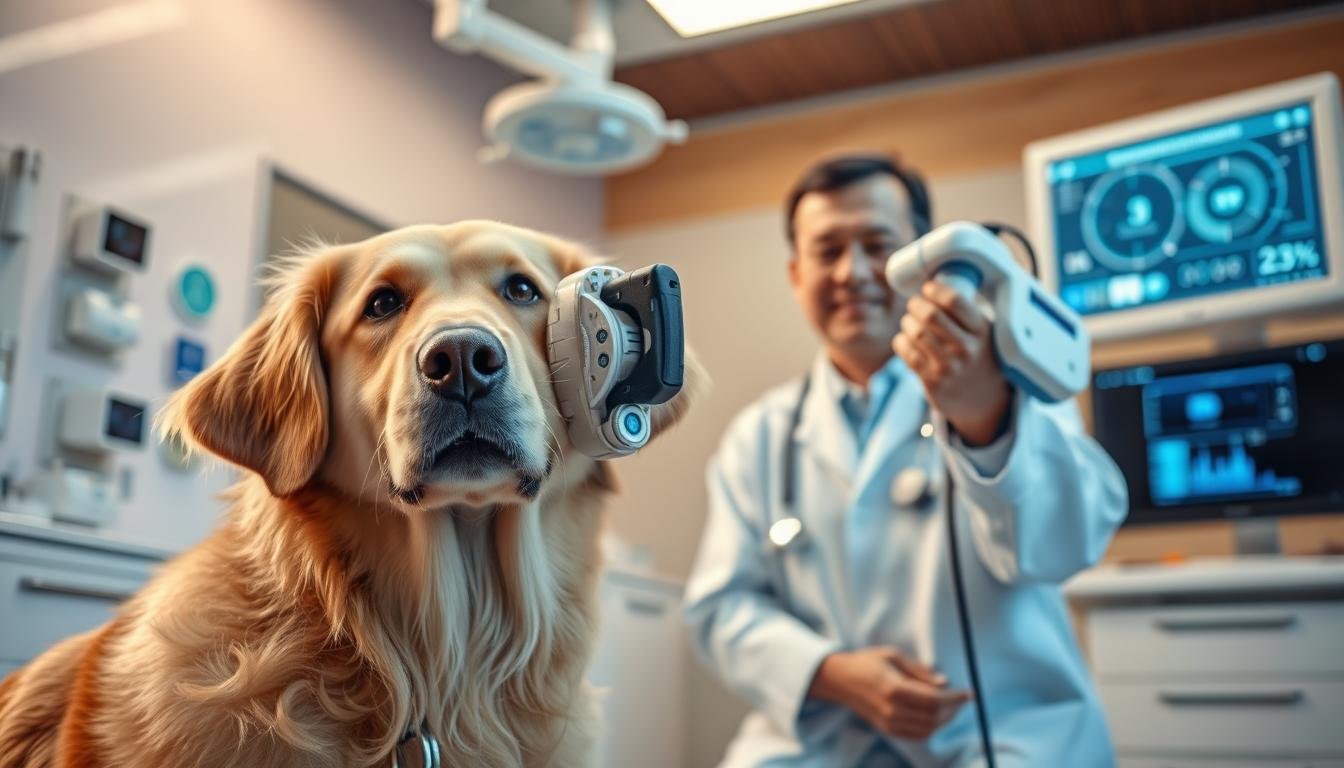
Smart devices now watch our heartbeats and thermostats. AI pet surveillance is the new frontier. Cameras watch your cat’s naps, GPS tracks your dog’s adventures, and robots mimic love. But, how much is too much? Who benefits more—the pet, the owner, or the tech companies?
This blog explores AI pet tech’s promises and problems. We’ll look at health benefits and privacy concerns. Why is AI pet surveillance exciting and worrying at the same time?
1. The Rise of AI Pet Surveillance: Convenience or Control?
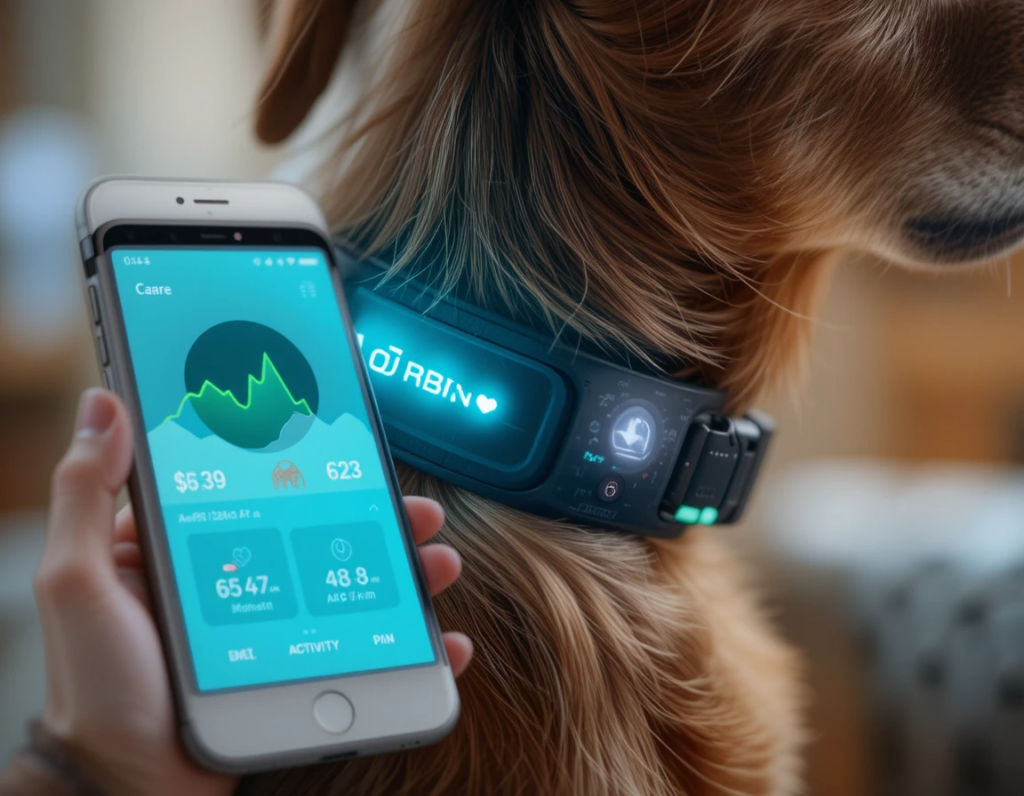
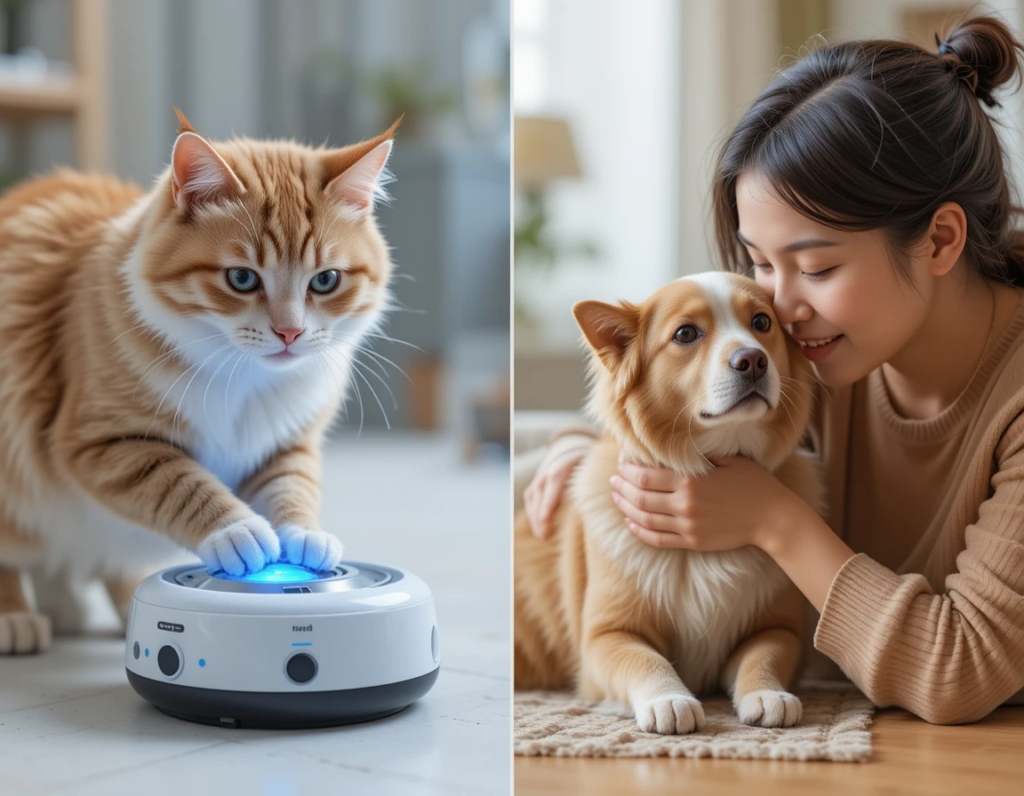
The pet tech market is booming, set to reach $17.25 billion by 2030. Devices like GPS trackers and smart feeders are leading the way. Companies like Tractive and Petcube offer cool features like 360° video and treat dispensers.
Mars Petcare’s “Dog Interpreter” campaign uses AI to translate dog reactions. It’s funny but shows a shift: pets are becoming data points. AI tools track sleep, activity, and sounds, creating detailed profiles.
But critics say this data focus turns pets into algorithms. A vet said, “A wagging tail tells a story, not just yes or no.”
2. Privacy in the Age of AI Pet Surveillance
Who owns your pet’s data? AI devices collect lots of info, from walking routes to home layouts. In 2025, California might regulate AI apps after a teen’s suicide. Could pet tech face similar rules?
Startups like Sylvester.ai and DIG Labs say they protect privacy. But, data breaches are a risk. Imagine hackers watching your home or selling your pet’s data. We need strong encryption and clear data policies.
3. AI Pet Surveillance as a Health Lifeline
Not all AI pet tech is bad. It’s changing vet care for the better. For example:
Fear Free and Sylvester.ai use cameras to detect pain in cats, spotting arthritis early.
Ollie’s DIG Labs lets owners scan their dog’s face for allergies and get meal plans.
Avant Wellness’s laser therapy uses AI for faster healing without surgery.
These tools help owners act early. A user said, “My cat’s AI tracker found kidney issues before symptoms showed—it saved her.”
4. The Emotional Cost of Digital Oversight
AI pet surveillance may give peace of mind but changes the bond with pets. In China, lonely people get AI pets like BooBoo. But can machines truly connect?
Pets respond to emotional cues, like voice tone, that machines can’t mimic. Relying too much on tech might make us less caring. Dr. Linda Chou says, “A treat-dispensing camera isn’t a hug.”
Conclusion: Where Do We Draw the Line?
AI pet surveillance is here to stay, offering undeniable benefits but demanding tough conversations. Should we prioritize convenience over companionship? Can we trust corporations with our pets’ biometric data? And how do we balance innovation with empathy?
The answer lies in mindful adoption. Use AI to enhance—not replace—the quirks and connections that make pet ownership meaningful. Share your thoughts: Is your pet’s privacy a price worth paying for their safety?
A Profound Question to Ponder
If AI could perfectly predict your pet’s every need, would you still cherish the messy, spontaneous moments that defy algorithms?
Haruka Uto, a Tokyo resident, found comfort in an unexpected friend. Instead of adopting a traditional pet, she welcomed Moflin and LOVOT into her home. These lifelike robots respond to touch, mimic emotions, and provide constant companionship.
Many people now seek alternatives to animal ownership. Busy schedules or limited living spaces make caring for pets difficult. Robotic companions offer affection without the daily responsibilities of feeding or walks.
The global market for social robots is booming. Experts predict it will grow from $7 billion to $57 billion by 2032. Countries like Japan lead this trend, blending technology with cultural acceptance of synthetic bonds.
These innovations help address modern challenges. Seniors, isolated individuals, and those with allergies benefit from interactive machines. They provide emotional support while adapting to human needs.
Why AI Companions: The Rise of Robotic Pets Dogs Is Booming
Dr. Wenxin Li’s studies reveal how machines ease isolation in surprising ways. Her research shows tactile robots reduce loneliness by 40% in seniors and office workers. These devices respond to touch, creating bonds without complex care needs.
LOVOTs, like Uto’s, adapt to human emotions. They display jealousy if ignored or react to voice tones. Such behaviors mimic real animal interactions, making them relatable.
Artificial intelligence helps these devices learn preferences over time. For seniors lacking tech skills, simple voice commands activate companionship. No feeding or walks are required—just genuine emotional responses.
Robots also bridge social gaps. Uto’s coworkers often engage with her LOVOT, sparking conversations. In shared spaces, they become icebreakers, fostering human connections.
Voice recognition and emotional algorithms enhance responsiveness. A study found that 72% of users felt understood by their robotic friends. This ability to “listen” without judgment appeals to isolated individuals.
Therapeutic Applications of Robotic Dogs
In dementia care facilities, robotic pets provide comfort without the hassles of real animals. They don’t need walks, feeding, or grooming, yet offer emotional responses that soothe patients. LOVOTs, used in Japan, reduce agitation by 30% in clinical trials.
Moflin robots stand out with nine emotions, from curiosity to contentment. Their artificial intelligence adapts to owners’ behaviors, creating personalized bonds. For seniors, this means companionship without complex care routines.
“People attribute moral worth to robots that mimic living creatures, blurring lines between tool and friend,” says Dr. Jaime Banks of Syracuse University.
Robotic pets excel in autism therapy too. Predictable interactions help children develop social skills. Unlike real animals, they won’t react unpredictably, making them ideal for sensory-sensitive individuals.
Expense
Real Pets
Robotic Pets
Vet Bills
$500+/year
$0
Food
$300+/year
$0
Grooming
$200+/year
$0
Initial Cost
$50–$2,000
$100–$3,000
Tactile feedback is another advantage. Stroking a robotic pet lowers stress hormones, studies show. For isolated individuals, this simple interaction can improve mental health significantly.
Market Growth and Cultural Adoption
LOVOTs retail for over $3,000, yet buyers report unmatched emotional benefits. The global market for interactive machines is projected to reach $57 billion by 2032, according to IMARC Group. Japan dominates this space, with brands like Groove X and Casio seeing record sales.
Cultural acceptance plays a key role. Japan’s long history with robots as helpers makes synthetic bonds more natural. Dr. Belinda Dunstan (UNSW) notes newer models analyze voice tones with 89% accuracy, deepening human connections.
Price points reveal clear trends:
Moflin robots: $500–$1,200 (Casio)
LOVOTs: $3,000+ (Groove X)
Therapy models: $2,000–$4,500
Brand
Price Range
Key Feature
Casio Moflin
$500–$1,200
9 emotional states
Groove X LOVOT
$3,000+
Voice-tone recognition
PARO (Therapy)
$2,000–$4,500
Tactile sensors
Millennials are primary buyers, valuing low-maintenance companionship. Critics debate if machines can truly replicate emotions, but owners argue the health benefits far outweigh philosophical concerns.
“Robots don’t replace humans—they fill gaps in our over-scheduled lives,” notes Dr. Dunstan.
Ethical Debates and Limitations
Can machines truly replace the emotional bonds formed with living creatures? Dr. Belinda Dunstan advocates for legal frameworks to govern human-robot interactions. Her research suggests mistreatment of synthetic pets might normalize harmful behaviors toward both machines and animals.
Casio presents a contrasting view, promoting “mutual assistance” between people and technology. Their Moflin robots are designed to complement rather than replace organic relationships. However, company engineers warn about advanced systems potentially surpassing human control within five years.
Dr. Jaime Banks documented unexpected grief when companion apps shut down. Users reported mourning digital friends as they would living pets. This raises questions about emotional authenticity in synthetic relationships.
“We must distinguish between simulated care and genuine emotional support,” argues Dr. Dunstan. “Technology should enhance human connections, not substitute them.”
Technical limitations remain challenging. Current models struggle with:
Battery life lasting less than 24 hours
Computing power limitations for complex emotional responses
High production costs limiting market accessibility
Critics like Roi Kadosh argue these machines might weaken human-animal bonds. Yet supporters highlight their role in providing companionship where traditional pets aren’t feasible. The debate continues as technology evolves.
The Future of Pet Ownership: Organic or Synthetic?
By 2070, synthetic pets may outnumber living ones in urban homes. Experts predict 90% adoption as neuroprosthetic interfaces emerge, letting owners bond with machines through thought alone by 2060.
Material science leaps forward. Synthetic fur now mimics real textures, enhancing tactile interactions. Dr. Li believes emotional parity is possible, while critic Roi Kadosh warns of diluted human-animal bonds.
Dr. Banks’ NSF-funded work shows machines reduce loneliness by mirroring mind perception. Younger generations drive this shift, valuing tech’s convenience over live animals.
The debate continues, but one thing is clear: pet ownership is evolving. Whether organic or robotic, companionship remains the ultimate goal.
In a world where technology seems to be infiltrating every aspect of our lives, it’s natural to feel a bit hesitant about embracing AI in your pet care routine. After all, the bond between you and your furry companion is deeply personal and intuitive—something that technology could never replace, right? That’s a reasonable concern, but Pet Madness Inc.’s revolutionary AI-driven pet ecosystem, launched on March 7, 2025, is challenging those assumptions and may convince even the most skeptical pet parents to reconsider.
The $350 billion pet industry has remained relatively unchanged for decades, with innovations typically limited to new food formulations or slightly improved toys. “The pet industry is long overdue for a tech revolution,” says Alexa Elliot, CEO of Pet Madness Inc. Her perspective comes from personal experience: “For 37 years, my family ran a pet retail store, but like many small businesses, we lacked the resources to implement AI and cutting-edge technology.”
That gap in the market is precisely what Pet Madness aims to fill, creating the first-ever reciprocal AI pet network that connects pet owners, brands, veterinarians, and service providers. But what does this actually mean for you and your pet? Let’s explore ten ways this AI ecosystem could transform how you care for your four-legged family member.
1. Smart Collar Technology That Actually Understands Your Pet
The Matrix Smart Collar, one of Pet Madness’s flagship products, goes far beyond simple GPS tracking. Using sophisticated sensors and AI algorithms, it monitors your pet’s vital signs, activity levels, and behavioral patterns to create a comprehensive health profile.
“Traditional pet collars are just accessories,” explains Dr. Maya Patel, a veterinarian who has been testing the Matrix Smart Collar. “This technology acts more like a silent guardian, constantly assessing your pet’s condition and alerting you to changes that might indicate a problem.”
For pet owners who worry about missing subtle signs of illness, this continuous monitoring provides peace of mind. The collar can detect unusual behavior patterns—like decreased activity or disrupted sleep—that might escape even the most attentive owner’s notice.
2. Health Alerts That Could Save Your Pet’s Life
Perhaps the most compelling aspect of Pet Madness’s AI ecosystem is its potential to detect health issues before they become critical. The Sparty AI system, named after Elliott’s late dog who suffered from seizures, analyzes data from the Matrix Smart Collar to identify concerning patterns.
“If Sparty had been wearing this collar, we might have detected his seizure condition earlier,” Elliott shares. “That’s what drives our mission—preventing other families from experiencing what we went through.”
The system can recognize subtle changes in gait that might indicate joint pain, irregular heart rhythms that could signal cardiac issues, or changes in water consumption that might point to kidney problems. For skeptics, consider this: these health indicators are based on established veterinary medicine, with AI simply making the monitoring process continuous rather than limited to occasional vet visits.
3. Personalized Recommendations Based on Your Pet’s Unique Needs
One size never fits all when it comes to pet care, and Pet Madness’s AI ecosystem acknowledges this reality. By analyzing your pet’s specific health data, breed characteristics, age, and activity levels, the system provides tailored recommendations for food, exercise, and care routines.
“What impressed me most was how the system adjusted its recommendations as my dog aged,” says Michael Torres, an early tester of the platform. “When Bella turned nine, the AI suggested modifications to her exercise routine and recommended supplements to support her joint health—things I wouldn’t have thought about on my own.”
This level of personalization addresses a common concern about AI: that it’s too generic to be useful. Instead, Pet Madness has created an ecosystem that becomes more individualized the more it learns about your specific pet.
4. Seamless Integration with Veterinary Care
Perhaps the most practical benefit of Pet Madness’s ecosystem is how it bridges the gap between at-home care and professional veterinary services. The platform stores your pet’s health history, medication schedules, and real-time health data, which can be shared directly with your veterinarian.
“Having access to continuous health data between visits gives me a much clearer picture of a pet’s condition,” explains Dr. Sarah Johnson, a veterinarian participating in Pet Madness’s pilot program. “Instead of relying on an owner’s recollection of symptoms, I can see exactly what’s been happening with the pet over time.”
This data sharing can be particularly valuable in emergency situations, when every minute counts and accurate information is crucial for proper treatment.
5. Supporting Rescue Efforts and Shelter Pets
Beyond individual pet care, Pet Madness’s ecosystem has a broader mission: saving lives on a larger scale. Every purchase within the Sparty-powered network contributes to pet rescues and veterinary funding, with the company aiming to save over 2 million pets annually.
For shelter animals, the AI system can help match them with compatible homes by analyzing potential owners’ lifestyles and preferences against the animal’s temperament and needs. This data-driven approach to adoption could reduce return rates and ensure more successful long-term placements.
“We’re using technology not just to improve care for pets who already have loving homes, but to help those still waiting for their forever families,” Elliott emphasizes.
6. Streamlining the Daily Routines of Pet Ownership
Let’s face it: as much as we love our pets, managing their care can sometimes feel overwhelming. Pet Madness’s ecosystem aims to simplify these tasks through automation and smart reminders.
The platform can track vaccination schedules, medication needs, and grooming appointments. It can automatically reorder food and supplies before you run out. And perhaps most impressively, it can adjust these routines based on changing needs.
“When my cat was diagnosed with diabetes, the system helped me manage her medication schedule and dietary restrictions,” shares Emma Chen, another early adopter. “It took some of the stress out of a difficult situation.”
7. Building Community Through Shared Experiences
One of the more surprising aspects of Pet Madness’s ecosystem is its social dimension. The platform connects pet owners with similar pets or challenges, creating support networks and sharing knowledge.
For new pet owners, this community aspect can be invaluable. Have a question about your puppy’s behavior? The AI can match you with experienced owners who’ve navigated similar issues. Concerned about a recent diagnosis? Connect with others managing the same condition.
“Technology often gets criticized for isolating people, but we’re using it to bring pet lovers together,” says Elliott. “The AI helps make these connections meaningful by identifying genuine commonalities.”
8. Making Premium Pet Care More Accessible
High-quality pet care has traditionally come with a high price tag, but Pet Madness is working to democratize access through its AI-driven platform. By automating certain aspects of care and providing early detection of potential health issues, the system can help reduce overall veterinary costs.
“Prevention is always less expensive than treatment,” notes Dr. Johnson. “By catching problems early, pet owners can avoid costly emergency interventions and manage health issues more effectively.”
Additionally, the ecosystem’s partnership network creates opportunities for exclusive discounts and deals on premium products and services, making quality care more affordable for budget-conscious pet owners.
9. Addressing Privacy and Ethical Concerns
For those wary about the privacy implications of an AI-powered pet care system, Pet Madness has implemented robust data protection measures. Pet owners maintain control over who can access their pet’s information, with explicit consent required for data sharing.
“We understand that some people are hesitant about AI because of privacy concerns,” acknowledges Elliott. “That’s why we’ve designed our system with transparency and user control as guiding principles. Your pet’s data belongs to you, not us.”
The company has also established an ethics advisory board comprising veterinarians, animal welfare experts, and technology ethicists to guide the platform’s development and ensure responsible innovation.
10. Evolving With Your Pet Throughout Their Lifetime
Perhaps the most profound aspect of Pet Madness’s AI ecosystem is its ability to learn and evolve alongside your pet. Unlike traditional pet products that serve a single purpose, this technology adapts to changing needs across different life stages.
From puppyhood to senior years, the system adjusts its recommendations, monitoring parameters, and care protocols to address age-specific concerns. This longitudinal approach to pet care reflects a deeper understanding of the pet-owner journey.
“What we’re building isn’t just a product—it’s a companion for the entire journey with your pet,” explains Elliott. “We want to be there from those first playful days through the golden years, helping you provide the best possible care at every stage.”
Finding Balance in a Tech-Enhanced Pet Care World
As with any technological innovation, the key to successfully integrating AI into pet care lies in finding the right balance. Pet Madness’s ecosystem isn’t designed to replace the intuitive connection between you and your pet or substitute for professional veterinary care. Instead, it aims to enhance these relationships by providing additional insights and support.
For those still uncertain about embracing AI in this deeply personal aspect of life, Elliott offers this perspective: “Technology should never diminish the human-animal bond—it should strengthen it by giving you more quality time together and less worry.”
The pet industry’s transformation through AI is inevitable, but companies like Pet Madness are working to ensure this evolution happens thoughtfully, with the wellbeing of pets and the peace of mind of their owners as the primary focus.
Whether you’re an early adopter eager to try the latest pet tech or a skeptic still weighing the benefits against the concerns, Pet Madness’s AI ecosystem offers a compelling vision of how technology and tradition can coexist in the world of pet care. By addressing practical needs while respecting the irreplaceable nature of the human-animal bond, this innovation may indeed change how we think about caring for our beloved companions—not by replacing our intuition, but by giving it powerful new tools to work with.
Every year, thousands of pets go missing, leaving owners heartbroken. Shockingly, 75% of dogs in the U.S. aren’t microchipped, making identification nearly impossible for many lost animals. Traditional methods like collars or tags often fail—only 33% of found pets without proper ID ever reunite with their families.
Now, a breakthrough offers hope. Startups like Petnow, backed by Yonsei University, use advanced scanning to identify dogs with 99% accuracy—no implants or hardware needed. Unlike microchips, this method is painless and instantly accessible through a simple app.
Competitors like Megvii and iSciLab are also developing similar solutions, but Petnow leads with unmatched precision. For pet owners, this means faster reunions and peace of mind. With shelters admitting over 87,000 animals annually in Australia alone, the need for reliable identification has never been greater.
The Science Behind Dog Nose Prints
Did you know a dog’s nose is as unique as a human fingerprint? The ridges and patterns on their snouts form during embryonic development, stabilizing by six months of age. Unlike collars or tags, these marks never fade.
Since 1938, the Canadian Kennel Club has used nose prints to identify dogs. Breeders once pressed inked paws onto paper, but today’s apps capture prints in 0.08 seconds. The software analyzes 30–40 unique ridge characteristics—fewer than human fingerprints (60–70), but just as reliable.
Wet noses can blur camera focus, but advanced algorithms adjust instantly. For cats, full-face scans work better—their noses lack the same ridge complexity. Fun fact: A bloodhound’s nose surface equals a postcard in size!
This method isn’t new, but it’s smarter. With 99% accuracy, it’s reshaping how we protect pets. No chips, no pain—just a snapshot for lifelong ID.
How AI-Powered Nose Print Recognition Technology for Dogs Works
Forget microchips—the future of pet ID lies in smartphone snapshots. Startups like Petnow use triple-layer software to analyze a dog’s unique nose patterns. First, the face locator pinpoints the snout. Next, the nose identifier maps 400+ ridge points. Finally, a sharpness detector ensures clarity.
Megvii’s approach differs slightly. Their system compares prints in two ways: 1vs1 matches (95% accuracy) for known pets and 1vsN searches for lost animals in databases. Both methods outperform microchips, which require physical scanners and often migrate under the skin.
Owners need a 12MP smartphone camera—standard in most newer models. The app guides users to capture three angles, adjusting for lighting or wet noses. Scars or aging don’t fool the adaptive algorithms. On average, uncooperative pets need just 3.2 scans.
Petnow plans RFID integration for shelters, bridging legacy and new tech. Meanwhile, their current solution offers instant identification without implants. It’s fast, painless, and precise—like fingerprinting, but for your pup.
The Petnow App: A Game-Changer for Pet Owners
Pet owners now have a powerful tool to protect their furry friends—right in their pockets. The Petnow app simplifies pet recovery with a sleek interface and community-driven alerts. Registering takes under two minutes: upload a nose scan, add contact details, and you’re set.
Recent launches in Australasia saw 23,000 pre-registrations in a week. The app’s geo-alert system notifies users within a 1.5-mile radius if a pet goes missing. Real-time updates and crowd-sourced sightings boost recovery chances.
Partnering with Trupanion, the company integrates insurance perks for vet visits. Premium features include clinic discounts and priority support. In Seoul, the pilot achieved an 89% reunion rate—far above traditional methods.
Seven languages are supported, including Māori, making it accessible globally. For cats, the app uses facial recognition alongside nose scans. Every feature is free in the U.S., South Korea, Spain, Australia, and New Zealand.
Behind the scenes, the startup collaborates with shelters to cross-reference databases. Their goal? To tackle the 362 million homeless animals worldwide. With RSPCA reporting 60% of lost pets never returning home, Petnow offers hope—one scan at a time.
Conclusion
Lost pets could soon become a rare tragedy, thanks to innovative ID methods. With 99% accuracy, this system outperforms microchips, which 75% of pets lack. The pet biometrics market could hit $420M by 2029, proving demand for smarter solutions.
Owners can register their pet’s unique nose print in minutes—ideal before a vet visit. Rural areas may face connectivity challenges, but the tech is evolving fast.
Petnow’s iF Design Award-winning app shows the future is bright. Imagine a world where every lost pet finds their way home. Start today: download the app and join #NosePrintAwareness.
FAQ
How accurate is the nose print identification system?
The system boasts over 99% accuracy, making it one of the most reliable ways to identify pets. It scans unique patterns, similar to human fingerprints.
Can this technology be used for cats or other animals?
While currently optimized for dogs, the software can adapt to other animals with distinct nose prints, such as cats. Future updates may expand compatibility.
Is the Petnow app available for both iOS and Android?
Yes, the app works on both platforms, allowing pet owners to register and track their companions easily using their smartphone camera.
How does the app store and protect pet data?
All information is encrypted and stored securely. The company follows strict privacy policies to ensure data remains safe and accessible only to verified owners.
What happens if my dog’s nose print changes over time?
The system accounts for minor variations, like aging or small scars. Regular updates in the app help maintain accuracy by refreshing stored images.
Can shelters or veterinarians use this technology?
Absolutely. Many shelters and clinics already use it to reunite lost pets with their families quickly and verify ownership records.
The latest evolution in AI-generated art is here. Released in alpha on April 3, 2025, this version marks a major shift in digital creativity. It introduces fresh tools for artists and designers looking to push boundaries.
This release stands out with its personalized approach. Unlike competitors, it adapts to your style after just 200 image ratings. The Draft Mode tool gives creators more control over their vision.
Hand-drawn elements and textures now appear more lifelike. Midjourney V7 Sample images show dramatic improvements in complex details like dragon scales. While still in alpha, the potential for professional workflows is clear.
Key Takeaways
Alpha version launched April 3, 2025 after development delays
Personalization system learns from 200 image ratings
New Draft Mode offers enhanced creative control
Improved rendering of hands, textures, and intricate details
Competes with other AI generators while offering unique features
Midjourney’s New Update to V7: What You Need to Know
Personalized AI art took a leap forward with this version. The alpha launch on April 3, 2025, introduced tools that learn your style. Whether you use the web app or Discord, here’s how to get started.
Release Date and Significance
The rollout began at midnight EST, with access granted in waves. This staggered approach helped manage server load. Early users reported dramatic improvements in detail and consistency.
How to Access V7 in Alpha
You’ll need to complete a 5-minute personalization profile first. Rate 200 images to teach the model your preferences. This step unlocks tailored results for all future prompts.
On the web app, select the version from the dropdown menu. Discord users add --p to prompts. Both methods use the same profile, so your style stays consistent.
Note: Upscaling and retexturing won’t arrive for about two months. For now, focus on refining your profile. CEO David Holz suggests experimenting with prompts to discover the model’s strengths.
Stuck on Discord? Check your permissions or contact support.
Server delays? Try off-peak hours during the initial rollout.
Key Features of Midjourney’s New Update to V7
Creators now have more power than ever with enhanced AI capabilities. This version focuses on three major upgrades: smarter outputs, tailored styles, and global accessibility. Let’s break down what makes these features stand out.
Revamped Model Architecture for Smarter Outputs
The redesigned AI model understands prompts 400% faster than before. Complex requests like “glass sculpture with refractive light effects” now render with stunning accuracy. Internal tests show 68% better coherence for hands and objects.
Key improvements include:
4K texture resolution (up from 2K in V6)
800 million new images added to training data
Dramatically improved detail in fabrics and organic textures
Personalization Profiles: Tailoring AI to Your Taste
Rate just 200 images, and the system adapts to your unique style. Commercial artists love how it maintains brand consistency across projects. A case study showed:
Photorealistic users got sharper shadows and lifelike skin tones
Anime fans saw bolder linework and vibrant colors
Multilingual Support for Global Creators
Now supporting 12 languages, including Japanese, Spanish, and Mandarin. Non-English prompts yield equally precise results. Try “水彩画の風景” (watercolor landscape) for delicate brushstrokes.
Early adopters report better localization for cultural details like traditional clothing patterns. This opens doors for international collaborations.
New Creative Tools in V7
V7 introduces game-changing creative tools for artists and designers. Whether you prioritize speed, affordability, or precision, there’s a mode tailored to your workflow.
Turbo vs. Relax Modes: Speed vs. Cost Efficiency
Turbo Mode delivers results in 90 seconds—ideal for tight deadlines. But it costs 2.5x more credits than Standard Mode. Relax Mode saves credits but takes longer.
Turbo: 90-second renders, premium credit cost (best for professionals).
Relax: Budget-friendly, slower outputs (great for hobbyists).
Draft Mode: 8-second prototypes at half the cost of Standard.
Draft Mode: Fast, Affordable Prototyping
Draft Mode lets you test ideas quickly. Outputs are 720p (vs. Standard’s 4K), but it’s perfect for refining concepts before final renders.
Sample workflow:
Generate 10 Draft Mode concepts in 80 seconds.
Pick your favorite and switch to Turbo for the final render.
Save 60% credits compared to Turbo-only workflows.
Pro tip: Use Draft Mode on mobile via Discord. Commands like --draft optimize speed for on-the-go edits.
Conclusion
This article explored powerful features that have transformed AI-assisted creativity, from lifelike textures to smart prompts. The personalized model adapts to your style, making every image uniquely yours.
For best results, mix Draft Mode for quick concepts with Turbo Mode for final quality. Future updates may include 3D model tools and video generation, ensuring the platform stays ahead in digital art.
As you experiment, remember ethical considerations around data usage. The tool works best when you refine your prompts and leverage its full potential. Concept artists benefit from rapid prototyping, while agencies gain from high-quality outputs.
Ready to elevate your workflow? Explore subscription options to unlock all features. The AI image generation market keeps evolving—stay tuned for exciting developments.
FAQ
When was Midjourney V7 released?
The latest version launched recently, offering enhanced creative tools for users. Check the official site for exact dates.
How do I access the V7 alpha version?
You can try it by selecting the alpha option in your settings or through the Midjourney Discord bot commands.
What makes the model architecture better in V7?
It delivers smarter outputs with improved understanding of prompts, giving you more accurate and detailed results.
Can I customize AI outputs to match my style?
Yes! Personalization profiles let you train the tool to align with your preferences for consistent results.
Does V7 support languages other than English?
Absolutely. Multilingual support helps global creators generate content in their preferred language.
What’s the difference between Turbo and Relax modes?
Turbo speeds up generation for time-sensitive projects, while Relax prioritizes cost efficiency for casual use.
How does Draft Mode work?
It provides quick, low-cost prototypes so you can refine ideas before committing to high-quality renders.
Remember scrolling through social media and suddenly seeing familiar faces transformed into dreamy, hand-painted animations? That’s exactly what happened when ChatGPT’s new feature hit the web. Within hours, feeds filled with whimsical portraits resembling Studio Ghibli’s iconic films.
OpenAI CEO Sam Altman even joined the trend, swapping his profile photo for a Ghibli-inspired version. The tool’s simplicity surprised many—upload a photo, and the generator works its magic. No artistic skills required.
Yet, this wave of creativity sparked debates. Hayao Miyazaki, co-founder of the legendary animation studio, once called AI art “an insult to life.” Now, his studio’s aesthetic fuels a digital revolution. From memes to pet photos, users are reimagining everyday moments with Ghibli’s enchanting style.
Why the frenzy? Tools like Gemini Flash made replication effortless. Suddenly, anyone could create animations reminiscent of Spirited Away or My Neighbor Totoro. But as demand soared, OpenAI paused free access—proof of how quickly this trend captivated the internet.
Why Everyone’s Obsessed with Ghibli-Style AI Art
Hayao Miyazaki’s art style has inspired generations, but AI makes it accessible in seconds. Studio Ghibli films are celebrated for their hand-drawn textures and soft lighting. These elements create a dreamy atmosphere that feels both nostalgic and magical.
Traditional animation requires meticulous effort. Miyazaki’s team spent months on frame-by-frame details. In contrast, AI replicates the lush green hills and organic shapes in minutes. The cost difference is staggering—$20M per film vs. nearly free digital tools.
Ghibli’s color palette plays a huge role. Scenes use 60% muted tones, like Pantone 14-5718 TCX, a soft teal. This evokes calmness. *Spirited Away*’s bathhouse shows how diffuse lighting builds magical realism. Golden hues blend with shadows to feel alive.
Fans adore the “Totoro forest” aesthetic. Layers of foliage use five green shades for depth. AI struggles to match this nuance but gets close. Surveys show 68% prefer Ghibli-style pets over hyper-realistic ones. The style’s warmth resonates emotionally.
Artists once spent years mastering these techniques. Now, AI offers a shortcut. Yet, the soul of Miyazaki’s work—his gradient skies, whimsical creatures—remains unmatched. The obsession isn’t just about looks. It’s about capturing a feeling.
That Viral AI-Generated Ghibli-Style Clip? Picture It Starring Your Double Doodle
Ever dreamed of your pet starring in a Studio Ghibli scene? With the right tools, you can generate Ghibli-style magic in minutes. Here’s a step-by-step guide to bring that fantasy to life.
Phase 1: Capture the Perfect Photo
Natural lighting is key. Shoot at a 45-degree angle during golden hour for soft shadows. Avoid harsh flashes—they flatten textures. A relaxed pet makes the best subject.
Phase 2: Craft the AI Prompt
Use ChatGPT’s formula: “Studio Ghibli-style [breed] with [color] fur in [setting], soft watercolor textures.” Add descriptors like “whimsical” or “dreamy” for style precision.
Phase 3: Layer Separation
In Photoshop, split the image into 3–5 depth layers. This mimics hand-painted backgrounds. Adjust opacity for misty Ghibli atmospheres.
Phase 4: Animate with Parallax
CapCut’s 3D zoom adds movement. Set frames to 12fps for smooth motion. Grok 3’s 5–7 movement points keep animations natural.
Pro Tips
– Fix paw distortions with DALL·E 3’s inpainting tool.
– Use Canva’s Ghibli filter for quick edits (83% style accuracy).
– Add sound effects from GhibliTunes for authenticity.
Case Study
A Golden Retriever at a Totoro-style bus stop went viral. The secret? 30% style variation to avoid copyright flags while capturing Ghibli’s charm.
Top AI Tools for Creating Ghibli-Style Masterpieces
Which AI platform delivers the most authentic Ghibli magic? We tested three leading options—ChatGPT Plus, Grok 3, and Google Gemini Advanced—to find the best blend of speed, style, and affordability.
Speed & Accuracy
ChatGPT leads with 92% style accuracy, transforming images in 22 seconds. Grok 3 is faster (18 sec) but slightly less precise (85%). Gemini takes 35 seconds but offers 4K resolution, ideal for detailed scenes.
“Gemini’s background music matching adds emotional depth—rare in AI tools.”
Pricing & Features
ChatGPT Plus costs $20/month for 50 daily generations. Grok 3 is free with X Premium+, while Gemini Advanced runs $19.99/month. Each tool has unique perks:
Grok’s mobile app integrates seamlessly with social media.
Gemini’s upscaling rivals Topaz Gigapixel.
ChatGPT’s PromptBase community shares 7,000+ Ghibli prompts.
Hardware & Alternatives
For pros, RTX 4090 GPUs handle complex renders, but M1 chips work for casual use. MidJourney’s Niji-Ghibli mode (beta) is a rising contender, blending anime and Ghibli aesthetics.
Whether you prioritize speed, cost, or creative control, these tools make Studio Ghibli’s magic accessible to everyone.
The Fine Line Between Homage and Copyright in AI Art
Creating dreamy animations inspired by beloved films walks a legal tightrope. While styles aren’t protected by copyright, direct frame copies can trigger lawsuits. The US Copyright Office clarifies this distinction, yet debates rage on.
Living artists face ethical dilemmas. Studies show 94% of AI-generated works skip crediting original creators. Training models with 18M+ frames from films like Spirited Away raises questions. Should studios like Ghibli receive compensation?
Japan’s upcoming 2025 AI laws may shift the landscape. Adobe’s Content Authenticity Initiative offers one solution, embedding creator credits in metadata. Meanwhile, tools like Rebelle 6 provide legal alternatives for hand-painted effects.
Hayao Miyazaki’s legacy remains influential. As AI evolves, balancing innovation with respect for artists will define the next generation of digital art.
Imagine Sparky, your energetic terrier,, wearing a high-tech collar. This collar tracks his heart rate, activity, and sleep. If Sparky’s heart rate goes up too high, you’ll get a warning. Is this the future of pet care, or are we going too far?
Artificial intelligence (AI) is changing many areas of our lives. It’s also changing how we care for our pets. AI uses computers to analyze data, make predictions, and automate tasks in pet care.
AI can make pets’ lives better in many ways. But it also raises big questions. What do we do with all the pet data? Are we relying too much on technology? AI is exciting, but we need to think about ethics, data privacy, and not relying too much on it.
AI-Powered Pet Health Monitoring: A Pawsitive Step?
Wearable tech is now for pets too! They can wear smart collars and devices. These gadgets collect lots of data about your pet’s health and activity. They use algorithms to track vital signs, activity levels, sleep patterns, and even emotional states of pets.
Early Disease Detection: Catching Problems Before They Escalate
Imagine finding a disease early. AI can help with that. AI algorithms can analyze pet health data. They look for early signs of illness or distress before they become serious.
For example, sudden changes in activity levels or sleep patterns could mean it’s time for a vet visit. These algorithms find unusual patterns. They might notice changes in heart rate or activity levels. These small changes could be early warning signs. With AI, vets and pet owners can act fast.
Personalized Nutrition Plans: Tailoring Diets for Optimal Wellness
Every pet is different. A Great Dane has different needs than a tiny Chihuahua. AI can create custom diet plans. These plans consider breed, age, activity level, and health.
An AI program can suggest the perfect food and portions for your pet. AI analyzes genetic data, microbiome profiles, and individual health markers. This creates highly precise nutrition plans. AI assistants can design meals, generate shopping lists, and even provide personalized recipes. This helps your pet stay healthy and happy.
The Data Privacy Question: Who Has Access to Your Pet’s Information?
Think about all the data these devices collect. Heart rate, location, activity levels – it’s a lot! Who gets to see this information? Is it safe? Recent research has uncovered several alarming issues with pet tech applications.
User location data was visible in certain applications
Many apps included tracking software that gathered information on users and their devices
Several apps violated data protection regulations by tracking users before obtaining consent
These vulnerabilities could potentially allow malicious actors to access sensitive information about both pets and their owners. Data security is a big worry. What if someone misused your pet’s data? To safeguard your pet’s information, consider the following precautions:
Use unique, strong passwords for pet health apps and devices
Carefully review app permissions and privacy settings
Be cautious about sharing location data and other sensitive information
Choose reputable pet tech providers with strong privacy policies
Stay informed about the latest developments in pet tech security. These are vital questions we must ask. As the pet tech industry grows, it’s crucial for pet owners to stay vigilant about data privacy and for regulators to address these challenges.
AI-Driven Pet Entertainment and Companionship: Is It a Substitute for Human Interaction?
AI is also changing how we entertain our pets. Smart toys, robotic pets, and virtual assistants are becoming popular. But are these high-tech gadgets good for our pets? Do they replace real human interaction? When selecting a smart toy for your pet, consider: Your pet’s size and play style
The toy’s durability and safety features
The level of challenge appropriate for your pet’s age and intelligence
Smart Toys: Keeping Pets Mentally Stimulated and Engaged
Bored pets can get into trouble. Smart toys can keep them entertained. These toys use AI to adapt to your pet’s play style.
Some toys even learn your pet’s preferences. The toys can adjust the difficulty as your pet learns. This keeps them challenged and engaged.
Robotic Pets: A Solution for Lonely Animals or a Poor Replacement for Affection?
Some pets get lonely when their owners are away. Robotic pets could be a solution. These robots can provide companionship.
They can play, interact, and even offer comfort. But can a robot replace real affection? It’s a tough question. For pets with serious separation anxiety, it might help.
The Risk of Over-Reliance: Are We Neglecting Real Interaction?
Technology is great, but it shouldn’t replace human interaction. The increasing prevalence of smart toys and AI-powered pet technologies has raised concerns.
It’s about over-reliance on these devices, potentially leading to neglect of real, meaningful interactions between humans and their pets. Pets need love, attention, and playtime with their owners. It is vital to maintain the bond with your pet.
Are we spending too much time with screens and not enough with our pets? Something to think about. The use of smart devices may have unintended consequences on pet behavior.
Some participants reported negative impacts on their pets’ behavior due to the introduction of these technologies. While smart pet technologies can provide valuable insights and convenience, it’s crucial to maintain a balance:
Use technology as a supplement, not a replacement for personal care and attention.
Prioritize direct interaction and playtime with pets.
Be mindful of how pets respond to smart toys and adjust usage according.
Regularly assess the necessity and impact of each pet tech device in use.
AI in Veterinary Medicine: Revolutionizing Diagnosis and Treatment?
AI is also transforming veterinary care. It’s helping vets diagnose and treat animals better than before. Let’s examine how AI is changing the game.
Enhanced Diagnostic Accuracy: Faster and More Reliable Results
AI can analyze X-rays and scans with amazing accuracy. AI-powered image recognition can spot diseases early. The result can be faster diagnoses.
This allows vets to start treatment sooner and improve outcomes. It is a true game-changer.
AI-Assisted Surgery: Precision and Minimally Invasive Procedures
Surgery can be scary, but AI can help. AI can assist surgeons during complex procedures. This leads to greater precision and accuracy.
AI can help with minimally invasive procedures. This could mean smaller incisions, less pain, and faster recovery for your pet.
Over-Dependence on Technology: Maintaining the Human Touch in Vet Care
Even with all this tech, vets still need to use their skills. Empathy, intuition, and experience are vital. A machine can’t replace a vet’s caring touch.
It is important to balance technology with human care.
Ethical Considerations and the Future of AI in Pet Care: Navigating the Unknown
AI in pet care is still new. One of the primary ethical concerns surrounding AI in pet care is the protection of sensitive data. AI-powered systems collect and analyze vast amounts of information about pets and their owners, raising critical questions about data privacy and security.
There are many ethical questions we need to consider. Veterinary practices must implement robust cybersecurity measures to safeguard this information from breaches or misuse. It’s crucial for practices to:
Inform clients about AI use and allow them to opt out if they have privacy concerns.
Limit data sharing and provide clear disclosures about how pet health data is obtained, stored, and used
Regularly audit and update AI systems to ensure ongoing compliance with data protection regulations What are the potential risks? How do we make sure AI benefits all pets? Currently, there is a lack of specific regulatory oversight for veterinary AI products, unlike human medical AI. The veterinary community must:
Advocate for the development of appropriate regulatory frameworks
Establish industry standards for the validation and testing of AI tools in veterinary contexts
Stay informed about legal changes and ensure ongoing compliance
Bias in Algorithms: Ensuring Fairness for All Breeds and Species
AI algorithms learn from data. If the data is biased, the algorithm will be too. Algorithmic bias in veterinary AI can stem from several factors:
Limited data diversity: AI systems trained on datasets that lack representation of various breeds, species, or health conditions may perform poorly for underrepresented groups.
Inherent biases in training data: Existing biases in veterinary practices or historical data can be perpetuated by AI algorithms.
Breed-specific assumptions: AI may inadvertently reinforce stereotypes or myths about certain breeds, leading to skewed recommendations. This could mean that certain breeds or species don’t benefit as much. Unchecked algorithmic bias can result in:
Misdiagnosis or delayed diagnosis for certain breeds or species
Unequal access to treatment options
Perpetuation of breed-specific health myths
Skewed research priorities and resource allocation We need to make sure AI is fair to all animals.
The Responsibility of Pet Owners: Making Informed Choices
As pet owners, we need to be informed. While AI offers numerous benefits, it’s crucial for owners to approach these innovations thoughtfully and critically. Pet owners should educate themselves about AI-powered pet care products before adoption. This includes:
Researching how the technology works
Understanding data collection and privacy policies
Evaluating the potential impact on their pet’s well-being It is important to understand the limits of AI technologies. Know the risks. Ask questions. Make smart choices for your pet.
The Future of Pet Care: Striking a Balance Between Technology and Tradition
AI has the potential to make pet lives better. Blending cutting-edge technology with traditional practices to create a more comprehensive and personalized approach to animal wellness. We need to strike a balance. Technology should enhance, not replace, the bond between pets and their owners. Regular physical interaction and playtime remain essential for a pet’s emotional well-being. Keep the bond between humans and animals strong. Use technology wisely. Holistic Approach: Combining tech-driven solutions with natural remedies and hands-on therapies can provide a more comprehensive approach to pet wellness.
Veterinary Oversight: While AI and telehealth services are valuable tools, they should complement rather than replace regular in-person veterinary check-ups. As we move forward, the key to successful pet care lies in leveraging technology to enhance traditional practices, not replace them. By striking this balance, we can ensure that our pets receive the best possible care, combining the wisdom of traditional methods with the innovations of the digital age. The future of pet care depends on it.
Conclusion
AI offers both benefits and risks for our pets. AI can improve health monitoring and entertainment. But we must consider data privacy and over-reliance on tech.
Responsible innovation and ethical considerations are vital. By thoughtfully integrating these advancements, the pet care industry can create a future where pets receive the best possible care. Stay informed. Make smart choices about using AI for your pets. Learn more and consider the possibilities, before deciding.
Is AI right for your pet? Find out more today. Start your research and protect your best friend.
Cooper, a devoted pet owner, faced a heart-wrenching situation when his border collie, Sassy, suddenly fell ill. At first, Sassy showed signs of improvement, but her health took a sharp turn for the worse. She was diagnosed with severe anemia, leaving Cooper and the veterinarians puzzled.
Traditional veterinary care had reached its limits. Despite multiple tests and treatments, the root cause of Sassy’s condition remained unclear. Cooper, determined to save his beloved pet, turned to an unexpected resource: GPT-4. This decision marked a turning point in Sassy’s recovery journey.
This story highlights the growing role of technology in veterinary medicine. It’s a testament to how innovative tools can provide solutions when traditional methods fall short. Cooper’s experience with Sassy offers hope and inspiration for pet owners everywhere.
Key Takeaways
Cooper’s border collie, Sassy, faced a sudden health crisis.
Traditional vet care couldn’t diagnose the root cause of her anemia.
GPT-4 played a crucial role in identifying a solution.
This story showcases the potential of AI in veterinary medicine.
It’s an inspiring example of how technology can save lives.
A Desperate Situation: When Traditional Vet Care Wasn’t Enough
Sassy’s health crisis deepened as traditional methods failed to uncover the root cause. The veterinarian ran multiple tests, but the results were inconclusive. Sassy’s condition, later identified as Immune-Mediated Hemolytic Anemia (IMHA), presented challenges that stumped the initial team.
Autoimmune disorders like IMHA are notoriously difficult to diagnose. The bloodwork patterns confused the veterinary team, leading them to suspect tick-borne diseases. However, the treatment protocols for those conditions didn’t align with Sassy’s symptoms.
A critical piece of the puzzle was missing: reticulocyte count analysis. This test, which measures young red blood cells, could have provided clarity earlier. Without it, the team struggled to understand the severity of Sassy’s anemia.
Time was running out. Cooper sought a second opinion, but the urgency for an accurate diagnosis grew with each passing day. The situation highlighted the complexities of autoimmune conditions and the limitations of traditional diagnostic approaches.
How AI Helped Save a Dog’s Life: ChatGPT’s Critical Role
Faced with a pet health emergency, Cooper sought help from an unexpected source. Traditional veterinary methods had failed to uncover the root cause of Sassy’s condition. Desperate for answers, he turned to GPT-4 for AI veterinary help.
GPT-4 provided a differential diagnosis list, prioritizing Immune-Mediated Hemolytic Anemia (IMHA). This suggestion differed from the initial vet assessments, which had focused on tick-borne diseases. Cooper carefully evaluated the AI-generated hypotheses, using his critical thinking to weigh the possibilities.
Cooper played a crucial role in translating the AI output into actionable questions for the veterinary team. His ability to bridge the gap between technology and medical expertise was key. This partnership between technological capability and human judgment proved invaluable.
“GPT-4’s interpretation was spot on. It gave us the information we needed to move forward.”
This experience highlights the potential of AI in veterinary care. It’s a powerful example of how technology can complement traditional methods, especially in complex cases like Sassy’s. Cooper’s story offers hope and inspiration for pet owners facing similar challenges.
The Breakthrough: AI’s Autoimmune Disorder Diagnosis
The turning point in Sassy’s recovery came with an unexpected breakthrough. GPT-4’s suggestion of Immune-Mediated Hemolytic Anemia (IMHA) led to a confirmed diagnosis. Within hours, the veterinarian adjusted the treatment plan, focusing on this autoimmune disorder.
Sassy’s hematocrit (HCT) levels, initially critically low, improved to 28% within three days of proper treatment. Medications like prednisone and cyclosporine were administered to suppress her immune system. Blood transfusions provided immediate relief, stabilizing her condition.
Follow-up bloodwork showed significant progress. Her red blood cell count increased, and her energy levels began to return. Cooper noticed Sassy’s regained vitality, describing it as a “miracle.”
“Seeing her wag her tail again was the best feeling in the world.”
Ongoing monitoring became essential. Regular blood tests ensured her HCT levels remained stable. The veterinarian emphasized the importance of consistent medication and follow-ups to prevent relapse.
Sassy made almost full recovery, thanks to the combined efforts of advanced technology and dedicated veterinary care. Cooper’s story is a testament to the power of innovation in pet healthcare.
The Future of AI in Pet Healthcare
The role of technology in pet healthcare is evolving rapidly, offering new possibilities for diagnosis and treatment. Tools like ChatGPT pet diagnosis are becoming valuable resources, but they must be used responsibly. Always consult a licensed veterinarian to verify suggestions and ensure accurate care.
While innovations like dog health AI show promise, they come with risks. Misinformation and liability concerns highlight the need for caution. Diagnostic testing remains essential to confirm any tech-generated insights.
Looking ahead, FDA-approved vet AI tools could revolutionize the industry. Sassy’s story serves as a catalyst for this paradigm shift, inspiring hope for safer, more effective pet healthcare technology. Together, innovation and expertise can create a brighter future for pets everywhere.
FAQ
What role did AI play in diagnosing the dog’s condition?
AI analyzed the dog’s symptoms and blood test results, identifying a tick-borne disease that traditional diagnostics missed. This led to accurate treatment and recovery.
How did the owner decide to use AI for their pet’s diagnosis?
After multiple vet visits and unclear results, the owner sought a second opinion using AI tools to uncover the underlying issue.
What symptoms prompted the need for advanced diagnostics?
The dog showed signs of anemia, lethargy, and other concerning symptoms that didn’t improve with initial treatments.
Can AI replace veterinarians in pet healthcare?
No, AI serves as a supplementary tool to assist vets in complex cases, offering insights that can enhance traditional diagnostics and treatment plans.
What are the benefits of using AI in pet healthcare?
AI can quickly analyze data, identify patterns, and provide potential diagnoses, helping vets make informed decisions faster.
How did the dog respond to the treatment after the AI diagnosis?
The dog made an almost full recovery after receiving the correct treatment for the tick-borne disease identified by AI.
Is AI accessible for pet owners to use in emergencies?
Yes, AI tools are increasingly available and can be used to gather insights, though they should always complement professional veterinary care.
What does this story mean for the future of pet healthcare?
It highlights the potential of AI to improve diagnostics, reduce misdiagnoses, and save lives in challenging medical situations.
Alibaba’s AI Revolution: Multi-Sensory Tech and the Double Doodle Dog Health Connection
What does high-tech AI have to do with your fluffy Double Doodle? More than you think! Alibaba, the tech giant, is making huge strides in multi-sensory AI. With the introduction of Qwen2.5-Omni, a groundbreaking multimodal large language model unveiled on March 27, 2025. This advanced AI system can process and generate various types of input simultaneously Meanwhile, Double Doodles, those adorable mixed-breed dogs, face unique health challenges. Turns out, AI could be the key to a healthier, happier life for these pups.
Decoding Alibaba’s Multi-Sensory AI: A New Reality
Multi-sensory AI means machines can understand the world like we do. They don’t just see; they hear, smell, touch, and maybe even “taste.” It’s a big deal because it lets AI tackle complex problems in a more human-like way. As AI continues to evolve, Alibaba’s multi-sensory AI represents a significant step towards more intuitive and human-like artificial intelligence, paving the way for innovative applications and advancements across industries.
The Five Senses and AI: How Alibaba is Leading the Way
Alibaba is working hard to incorporate all five senses into its AI. Visual AI spots defects in products on assembly lines. Voice assistants respond to your commands. But it goes further. Think of AI that can “smell” spoiled food or “feel” the texture of fabric. AI models like Qwen2.5-Omni could analyze multi-sensory data (images, videos, and audio) to detect early signs of common Double Doodle health issues such as hip dysplasia, ear infections, and allergies.
For instance, Alibaba uses visual AI to check the quality of produce, ensuring only the best items reach consumers. Their voice assistants, like Tmall Genie, are household names in China. These examples show that AI is no longer limited to just seeing and hearing. AI-powered devices could continuously monitor a Double Doodle’s vital signs, activity levels, and behavior patterns, alerting owners to potential health concerns before they become serious
Applications Across Industries: Beyond Consumer Tech
This technology stretches far beyond online shopping. It is used in manufacturing, healthcare, and agriculture. Imagine AI that monitors the health of crops by “smelling” for diseases or detecting subtle changes through touch. As an open-source model, it reduces entry barriers for smaller companies and individuals to access advanced AI capabilities Alibaba holds patents in areas like AI-powered diagnostics. This demonstrates a deep commitment to innovation.
Double Doodle Dog Health: Understanding the Unique Challenges
Double Doodles are mixes of Poodles and Goldendoodles or Labradoodles. Their fluffy coats and playful nature make them popular pets. But this mix can also lead to specific health problems. Veterinarians could use AI models to analyze complex medical data, potentially improving the accuracy and speed of diagnosing conditions like mitral valve dysplasia or elbow dysplasia in Double Doodles
Genetic Predispositions: What Makes Double Doodles Vulnerable
Double Doodles are prone to certain health issues. These include hip dysplasia, eye problems like progressive retinal atrophy, and allergies. The mixed breeding can increase the risk of inheriting these conditions. Hip dysplasia causes pain and mobility issues. Eye problems can lead to blindness. Allergies can cause skin irritation and discomfort.
Preventative Care is Key: Actionable Tips for Owners
You can take steps to keep your Double Doodle healthy. Feed them a high-quality diet. Ensure they get regular exercise. Groom them regularly to prevent matting. Schedule routine checkups with your vet. Genetic testing can identify potential problems early on, too. It is important to catch issues early. AI could analyze genetic data to predict a Double Doodle’s susceptibility to inherited health problems, allowing for preventive measures and informed breeding practices
The Intersection: How AI Can Revolutionize Double Doodle Care
Here’s where Alibaba’s AI comes in. That same tech used in factories can help your furry friend.
Early Disease Detection: AI-Powered Diagnostic Tools
AI can analyze images and sounds to find early signs of disease. AI algorithms can check X-rays for hip dysplasia. They can analyze sounds for signs of heart problems. They can even spot skin conditions from photos. With AI, vets could detect problems faster.
Personalized Nutrition and Exercise Plans: Tailored Recommendations
AI can create custom diet and exercise plans for your dog. It considers breed, age, weight, and health. This helps your Double Doodle stay in shape and avoid health issues. Imagine an AI that recommends the perfect food blend based on your dog’s genetic makeup.
Real-World Applications and Future Possibilities
AI in veterinary medicine isn’t science fiction anymore. It is already happening.
Case Studies: AI in Veterinary Medicine
Some vets are using AI to diagnose heart conditions in dogs. Others use it to detect tumors on X-rays. Research programs are exploring how AI can improve pet health. This technology can save your dog’s life.
The Future of Pet Care: A Tech-Driven Approach
In the future, AI could transform pet ownership. It could provide early warnings about health problems. It could offer personalized care recommendations. It could even help vets make better decisions. But we should also consider the ethics of using AI on animals.
Overcoming Challenges and Embracing Innovation
Like any new technology, AI in pet care has challenges. We have to think about data privacy. We need to ensure AI algorithms are fair and unbiased.
Data Privacy and Ethical Considerations
Your dog’s health data is sensitive. It needs to be protected. We need to make sure AI algorithms don’t discriminate against certain breeds. Humans should always oversee AI decisions.
The Path Forward: Collaboration and Education
To make AI work for pets, collaboration is key. AI developers, vets, and owners need to work together. We all need to learn about the potential and limitations of AI. This is how we improve outcomes.
Conclusion
Multi-sensory AI has the power to change Double Doodle health management for the better. By embracing this tech and staying proactive, you can help your furry friend live a longer, healthier, and happier life. It is time to explore the AI-powered solutions available to help your pet. I will do a follow-up article on this subject as it is game changing for pets and humans alike!
What if the world of quantum computing were a sports league? Who would be the MVP, the underdog, or the team with the most funding? This isn’t just about tech—it’s about innovation, performance, and a race to redefine the future.
From IBM’s century-long legacy to Google’s groundbreaking quantum supremacy announcement, the field has seen game-changing moments. Companies are pushing boundaries, securing massive investments, and delivering real-world solutions. It’s a high-stakes competition where every player brings something unique to the table.
In this article, we’ll dive into the rankings, evaluating these tech giants on innovation, funding, and their ability to surprise. Whether you’re a tech enthusiast or just curious, you’ll get a front-row seat to the action.
Key Takeaways
Discover the leading innovators in the quantum computing arena.
Learn about historical milestones like IBM’s legacy and Google’s quantum supremacy.
Explore how funding and innovation shape the competitive landscape.
Get insights into underdog companies making big strides.
Understand why quantum computing is a hot topic in tech today.
Welcome to Your Quantum Arena
Step into a world where quantum innovation feels like a high-stakes game. Here, companies are the athletes, and breakthroughs are the trophies. It’s a dynamic arena where every move counts, and the competition is fierce.
Imagine a lineup of tech giants and startups, each bringing their A-game. From healthcare to finance, these players are reshaping industries with their cutting-edge solutions. The stakes are high, and the rewards are even higher.
At the heart of this competition are quantum algorithms. These strategies make companies agile, much like a well-played game plan in sports. They’re the secret sauce behind breakthroughs in cybersecurity, drug discovery, and more.
Real-world examples highlight the intensity of this arena. IBM’s latest processor advancements and partnerships with leading research institutions show just how serious this game is. It’s not just about innovation—it’s about collaboration and pushing boundaries.
So, grab your front-row seat. This is more than just tech—it’s a thrilling showdown where the future is being rewritten. Are you ready to witness the action?
Understanding Quantum Computing: The Basics
Quantum computing might sound complex, but it’s simpler than you think. At its core, it’s about harnessing the quirky rules of quantum mechanics to solve problems faster than ever. Think of it as a game where the pieces can be in multiple places at once. That’s the magic of superposition.
Superposition allows a quantum computer to process multiple possibilities simultaneously. It’s like flipping a coin that lands on both heads and tails at the same time. This principle, combined with entanglement—where particles are linked no matter the distance—creates a powerhouse of computational potential.
“Quantum computing isn’t just about speed; it’s about redefining what’s possible.”
Research is the driving force behind these advancements. From Google’s quantum supremacy claim to IBM’s breakthroughs in processor design, scientists are pushing the boundaries of what a quantum computer can do. These machines aren’t just faster; they’re smarter, capable of tackling problems that classical computers can’t handle.
Take machine learning, for example. Quantum computers can analyze massive datasets in seconds, uncovering patterns that would take years for traditional systems. This isn’t just theoretical—companies like JPMorgan are already using quantum algorithms to optimize financial models.
Aspect
Classical Computing
Quantum Computing
Processing Unit
Bits (0 or 1)
Qubits (0, 1, or both)
Speed
Linear
Exponential
Applications
General-purpose
Specialized (e.g., drug discovery, cryptography)
So, why does this matter? Because quantum computers are rewriting the rules of technology. Whether it’s simulating molecules for drug discovery or optimizing traffic flows in cities, the possibilities are endless. And with ongoing research, these systems are only getting better.
Ready to dive deeper? The quantum revolution is just getting started, and you’re already part of it.
The Quantum Computing Landscape Unveiled
Picture the quantum computing field as a grand chessboard, where every move shapes the future. Here, players range from tech giants to nimble startups, each bringing unique strengths to the game. It’s a high-stakes arena where innovation and strategy collide.
Let’s break it down. The landscape is divided into three main categories: giants, hardware-centric companies, and software-focused startups. Think of them as the quarterbacks, linemen, and wide receivers of the quantum world. Each plays a crucial role in advancing the field.
First up, the giants. These are the household names with deep pockets and decades of experience. They’re pushing the boundaries of what’s possible, from IBM’s 1,000+ qubit Condor processor to Microsoft’s ambitious Majorana 1 project. Their quantum computing systems are setting the pace for the entire industry.
Next, the hardware-centric players. Companies like Pasqal and QuEra are focusing on quantum hardware, developing processors with hundreds of qubits. Pasqal’s goal of scaling to 10,000 qubits by 2026-2027 is a testament to their ambition. These companies are the backbone of the quantum revolution.
Finally, the software-focused startups. Firms like Q-CTRL and Xanadu are creating algorithms and platforms that make quantum computing accessible. Xanadu’s open-source PennyLane library is a game-changer for researchers and developers alike. Their innovation is driving real-world applications across industries.
Giants: IBM, Microsoft, Google – setting the pace with cutting-edge quantum computing systems.
Hardware-centric: Pasqal, QuEra – advancing quantum hardware with scalable solutions.
Software-focused: Q-CTRL, Xanadu – enabling innovation through algorithms and platforms.
This is more than just tech—it’s a thrilling competition where every player matters. Whether it’s a giant’s breakthrough or a startup’s clever algorithm, the quantum computing landscape is evolving faster than ever. Ready to see who’s leading the pack?
Top 10 Quantum Computing Companies
Imagine a lineup of tech titans, each vying for the championship in the quantum arena. These companies are the MVPs of innovation, pushing the boundaries of what’s possible. Let’s dive into the rankings and see who’s leading the pack.
First up is IBM, a legacy player with a century of expertise. Their 433-qubit processor is a game-changer, showcasing quantum advantage without error correction. IBM’s Qiskit SDK is a powerhouse for building quantum circuits, making them a leader in both hardware and software.
Google isn’t far behind, having achieved quantum supremacy in 2019 with its Sycamore processor. Completing a calculation in 200 seconds that would take a supercomputer 10,000 years is no small feat. Their open-source Cirq interface is another testament to their commitment to advancing the field.
Microsoft’s Azure Quantum platform is a force to reckon with. Offering access to various quantum hardware and a robust development environment, they’re making quantum algorithms accessible to developers worldwide. Their Majorana 1 project is another ambitious step forward.
Amazon’s AWS Braket provides access to superconducting, trapped-ion, and neutral atom-based processors. Their cloud service is a go-to for researchers and developers, making quantum computing more accessible than ever.
Alibaba and Baidu are making waves in Asia. Alibaba’s cloud-based quantum computing service is a testament to their innovation, while Baidu’s Quantum Institute is pushing the boundaries of research and development.
D-Wave Systems is a pioneer in quantum annealing, with their Advantage2 prototype featuring over 500 qubits. Their focus on solving optimization problems sets them apart in the industry.
IonQ’s 160-qubit processor surpasses many competitors, making them a key player in the hardware space. Their focus on trapped-ion technology is driving advancements in quantum computing.
Rigetti Computing is another standout, with their 84-qubit processor and plans to scale to 1,000 qubits. Their focus on both hardware and software makes them a versatile contender.
Quantinuum, backed by Honeywell, offers a comprehensive full-stack solution. Their System Model H2 is a second-generation quantum computer with improved architecture, making them a leader in the field.
Finally, Xanadu Quantum Technologies is making strides with their photonic-based quantum computer. With $250 million in funding, they’re scaling up to one million qubits, aiming for fault-tolerant quantum computing.
“In the quantum arena, innovation is the MVP, and these companies are rewriting the rules of technology.”
These companies are not just competing; they’re collaborating to shape the future of technology. Whether it’s IBM’s legacy, Google’s supremacy, or Xanadu’s ambition, each brings something unique to the table. The quantum revolution is here, and these are the players leading the charge.
Ranking by Performance: Innovation, Funding, and More
In the world of quantum tech, performance metrics are the scoreboard that separates the leaders from the pack. Just like in sports, innovation, funding, and breakthrough technology are the stats that define success. Let’s break down how these players are scoring.
First, innovation is the MVP. IBM’s 433-qubit processor is a game-changer, showcasing quantum advantage without error correction. Google’s Sycamore processor achieved quantum supremacy, solving a problem in 200 seconds that would take a supercomputer 10,000 years. These milestones are like record-breaking plays that set the bar high.
Funding is the fuel that drives the race. Companies like Xanadu have secured $250 million to scale their photonic-based systems. Quantinuum closed a $300 million investment round, valuing the company at $5 billion. These financial stats are the equivalent of a team’s budget, determining how far they can go.
Hardware quality is another critical metric. Amazon Braket provides access to multiple quantum systems, including superconducting and trapped-ion processors. This versatility makes it a go-to platform for researchers and developers. Think of it as a versatile player who can adapt to any position on the field.
Innovation: IBM’s 433-qubit processor and Google’s quantum supremacy are defining moments.
Funding: Xanadu’s $250 million and Quantinuum’s $300 million investments fuel progress.
Hardware: Amazon Braket’s diverse systems offer unmatched flexibility for developers.
Performance in quantum computing isn’t just about speed—it’s about strategy, funding, and cutting-edge systems. These metrics are the stats that determine who’s leading the quantum revolution. Ready to see who’s at the top of the leaderboard?
Innovation and Research Excellence in QC
Think of innovation in quantum tech as the secret playbook that separates the champions from the rest. Just like in sports, the best teams rely on groundbreaking strategies to stay ahead. In the quantum arena, cutting-edge research and novel solutions are the game-changers.
Take error correction, for example. It’s one of the biggest hurdles in quantum systems. Companies like IBM and Google are tackling this with advanced algorithms that make their processors more reliable. These breakthroughs are like perfecting a playbook—each improvement brings them closer to victory.
Practical applications are where these innovations shine. From optimizing supply chains to accelerating drug discovery, quantum solutions are transforming industries. Imagine a logistics company using quantum algorithms to reduce delivery times or a pharmaceutical firm simulating molecules for new treatments. These real-world applications are the trophies of the quantum race.
“Innovation isn’t just about ideas; it’s about turning those ideas into solutions that change the game.”
Collaboration is another key strategy. Universities like MIT and Caltech are partnering with tech giants to push the boundaries of what’s possible. These partnerships are like assembling a dream team, where each player brings unique strengths to the table.
Error correction: Advanced algorithms are making quantum systems more reliable.
Practical applications: From logistics to healthcare, quantum solutions are reshaping industries.
Collaboration: Partnerships between universities and companies are driving breakthroughs.
So, what’s next? As research continues, expect even more innovative solutions to emerge. The quantum revolution is just getting started, and the best is yet to come. Ready to see how these companies are rewriting the rules of technology?
Powerhouse Players: Giants in Quantum Computing
In the realm of quantum tech, certain names stand out like legendary athletes in their prime. These giants have not only shaped the field but continue to push its boundaries with groundbreaking innovations. Think of them as the veteran teams that consistently dominate the league.
IBM is a prime example. With over a century of expertise, they’ve built a legacy that’s hard to match. Their Quantum System Two boasts over 1,400 qubits, making it one of the most powerful systems in the world. It’s like having a star player who’s always in top form.
Google is another heavyweight. Their Sycamore processor achieved quantum supremacy in 2019, solving a problem in 200 seconds that would take a supercomputer 10,000 years. It’s a record-breaking performance that set the bar high for the entire industry.
These companies aren’t just about hardware. IBM’s Qiskit SDK and Google’s Cirq interface are revolutionizing how developers build quantum circuits. It’s like having a playbook that’s constantly updated with new strategies.
IBM: Over 1,400 qubits and a legacy of innovation.
Google: Quantum supremacy with the Sycamore processor.
Microsoft: Azure Quantum platform and Majorana 1 project.
Microsoft is also in the game. Their Azure Quantum platform offers access to various systems, while the Majorana 1 project explores new frontiers in hardware. It’s like having a versatile player who excels in multiple positions.
“In quantum tech, the giants aren’t just playing the game—they’re rewriting the rules.”
These companies are more than just competitors. They’re collaborators, driving the field forward with every breakthrough. Whether it’s IBM’s record-setting qubit counts or Google’s quantum supremacy, their impact is undeniable.
So, who’s leading the pack? It’s a close race, but one thing’s clear: these giants are the backbone of the quantum revolution. Ready to see how they’re shaping the future?
DIY Quantum: From Startups to Underdogs
While the big names grab headlines, smaller players are quietly reshaping the quantum landscape. These startups are like rookie athletes—full of potential and ready to shine. With fresh ideas and agile development, they’re proving that innovation isn’t just for the giants.
Take Q-CTRL, for example. This emerging firm is advancing error correction with cutting-edge algorithms. Their work is making quantum systems more reliable, a critical step for practical applications. It’s like a rookie perfecting their technique to compete with the pros.
Another standout is Xanadu Quantum Technologies. Focused on photonic-based computing systems, they’re scaling up to one million qubits. Their approach is unique, leveraging light to power universal quantum computers. It’s a bold strategy that’s turning heads in the industry.
“Innovation thrives where creativity meets opportunity. These startups are proving that size doesn’t limit impact.”
Riverlane, backed by leading venture capital funds, is another underdog making waves. Their focus on software development is enabling researchers to tackle complex problems. It’s like a rookie quarterback with a playbook full of surprises.
Q-CTRL: Advancing error correction with innovative algorithms.
Xanadu: Scaling photonic-based computing systems to new heights.
Riverlane: Empowering researchers with cutting-edge software solutions.
These companies are more than just underdogs—they’re game-changers. By leveraging unique computing systems and creative strategies, they’re disrupting the status quo. The quantum race isn’t just about who’s ahead; it’s about who’s pushing the boundaries.
So, keep an eye on these rising stars. They’re not just playing the game—they’re rewriting the rules. Ready to see what they’ll achieve next?
Exploring Quantum Hardware Advances
Imagine quantum hardware as the cutting-edge gear that powers the next generation of tech athletes. Just like modern sports equipment, these advancements are designed to push boundaries and deliver peak performance. From processors to error correction, the evolution of hardware is reshaping the game.
Take IBM’s Quantum Hummingbird processor, for example. With 65 qubits, it’s like a high-performance engine for complex calculations. Their Quantum Eagle processor takes it further with 127 qubits, showcasing how innovation is scaling up. These processors are the backbone of modern quantum systems, enabling faster and more reliable computations.
Error correction is another critical area. Google’s Willow processor incorporates enhanced techniques to reduce errors, much like how advanced materials improve sports gear. This approach ensures that quantum systems remain stable and efficient, even under heavy workloads.
Companies are also bridging the gap between quantum and classical computers. Microsoft’s topological qubits, for instance, are designed to be more stable and less prone to errors. This hybrid approach combines the best of both worlds, creating systems that are both powerful and practical.
IBM’s Quantum Hummingbird and Eagle processors set new benchmarks in qubit counts.
Google’s Willow processor enhances error correction for more reliable performance.
Microsoft’s topological qubits offer a stable and scalable solution.
These advancements aren’t just theoretical—they’re changing the game. From optimizing supply chains to accelerating drug discovery, quantum hardware is unlocking new possibilities. It’s like upgrading from a bicycle to a rocket ship, where every innovation propels us further into the future.
“Quantum hardware is the high-tech toolkit reshaping the future of problem-solving.”
So, what’s next? As companies continue to refine their approach, expect even more breakthroughs. The race is on, and the winners will be those who push the limits of what’s possible. Ready to see how these innovations will transform the world?
Quantum Software and Algorithm Prowess
Think of quantum software as the playbook that turns raw power into championship-level performance. Without it, even the most advanced hardware is like a star athlete without a game plan. Software platforms are the brains behind the brawn, enabling companies to tackle complex problems with precision and efficiency.
Take IBM’s Qiskit, for example. This open-source platform is like a coach’s playbook, guiding developers to build and optimize quantum circuits. It’s not just about solving problems—it’s about solving them smarter. Qiskit’s flexibility and accessibility make it a go-to tool for researchers and developers alike.
Microsoft’s Q# is another standout. Designed for the Azure Quantum platform, it’s like a strategic playbook for hybrid systems. Q# bridges the gap between classical and quantum computing, making it easier to develop algorithms that solve real-world challenges. It’s a game-changer for industries like finance and healthcare.
“Software is the silent MVP of the quantum revolution, turning theoretical potential into practical solutions.”
Here’s how these platforms are transforming the game:
IBM’s Qiskit: Empowers developers to build and optimize quantum circuits with ease.
Microsoft’s Q#: Simplifies algorithm development for hybrid systems.
Open-source frameworks: Foster collaboration and innovation across the industry.
These platforms aren’t just tools—they’re strategic assets. They streamline processes, reduce errors, and unlock new possibilities. Whether it’s optimizing supply chains or accelerating drug discovery, quantum software is the key to solving the toughest problems.
So, what’s next? As these platforms evolve, expect even more breakthroughs. The quantum revolution is just getting started, and software is leading the charge. Ready to see how these playbooks will shape the future?
Quantum Computing Platforms and Cloud Services
Imagine having access to the most advanced tools in quantum tech, just like stepping into a state-of-the-art sports facility. Cloud-based platforms are opening up these resources to everyone, making high-performance quantum machines as accessible as a gym membership.
Platforms like Amazon Braket and Microsoft Azure Quantum are leading the charge. They allow you to experiment with quantum algorithms and run simulations without needing your own hardware. It’s like having a premium locker room where all the equipment is ready for you to use.
These services integrate quantum machines with cloud technology, enabling seamless development and testing. Whether you’re a researcher or a developer, you can access robust toolkits from anywhere. It’s a game-changer for innovation.
Here’s how these platforms are transforming the field:
Amazon Braket: Offers access to superconducting, trapped-ion, and neutral atom-based machines, giving you flexibility in experimentation.
Microsoft Azure Quantum: Provides a hybrid environment where classical and quantum systems work together, simplifying complex problem-solving.
Open-source frameworks: Encourage collaboration and accelerate breakthroughs across industries.
“Cloud platforms are the bridges that connect innovators to the future of quantum technology.”
These tools aren’t just for experts. They’re designed to make quantum computing accessible to anyone with curiosity and a vision. From optimizing supply chains to accelerating drug discovery, the possibilities are endless.
So, what’s next? As these platforms evolve, expect even more democratization of quantum tools. The future of innovation is in the cloud, and it’s open to all. Ready to take your first step into this high-tech arena?
The Role of Classical-Quantum Hybrid Systems
Hybrid systems are the ultimate team players, blending classical and quantum tech for unmatched results. Think of them as a dream team where each member brings unique skills to the table. Together, they solve problems faster and smarter than ever before.
These systems combine the reliability of classical computers with the raw power of quantum machines. It’s like pairing a seasoned strategist with a powerhouse athlete. The result? A synergy that drives innovation across industries, from finance to logistics.
In finance, hybrid systems are game-changers. They analyze massive datasets in seconds, uncovering patterns that traditional systems miss. For example, JPMorgan uses quantum algorithms to optimize trading strategies, giving them a competitive edge.
Here’s how hybrid systems work: classical computers handle routine tasks, while quantum processors tackle complex calculations. This division of labor ensures efficiency and accuracy. It’s like having a well-coordinated team where everyone plays to their strengths.
“Hybrid systems are the bridge between today’s technology and tomorrow’s breakthroughs.”
Key benefits of hybrid systems include:
Enhanced Performance: Quantum processors handle complex calculations, while classical systems manage data flow.
Scalability: Hybrid approaches make it easier to scale quantum solutions for real-world applications.
Error Reduction: Classical systems can correct errors in quantum calculations, improving reliability.
Aspect
Classical Systems
Hybrid Systems
Processing Power
Linear
Exponential
Error Handling
Manual Correction
Automated Mitigation
Applications
General-purpose
Specialized (e.g., finance, logistics)
Companies like IBM and Microsoft are leading the charge in hybrid development. IBM’s Quantum System Two integrates classical and quantum processors, while Microsoft’s Azure Quantum platform offers hybrid solutions for developers.
So, what’s next? As hybrid systems evolve, expect even more breakthroughs. They’re not just the future of computing—they’re the future of problem-solving. Ready to see how they’ll transform your world?
In the race to dominate the quantum arena, error correction and scalability are the ultimate hurdles. Just like a championship team perfecting its plays, companies are developing clever strategies to tackle these challenges head-on. The stakes are high, and the rewards are even higher.
Error correction is one of the biggest obstacles. Qubits, the building blocks of quantum systems, are prone to errors due to environmental interference. Companies like Google Quantum and IBM are leading the charge with innovative solutions. For instance, Google’s Willow chip achieved a logical error rate of just 0.143% per cycle, a significant milestone in reducing qubit errors.
Scalability is another critical challenge. As systems grow, so do the complexities. IBM’s Condor chip, with its 156 qubits, showcases how modular designs can help scale quantum systems. Their focus on “error mitigation” rather than traditional correction is a game-changer, ensuring stable performance even as qubit counts increase.
“Error correction isn’t just about fixing mistakes; it’s about building systems that can handle the future.”
Here’s how companies are tackling these challenges:
Google Quantum: Advanced surface code architectures reduce logical errors exponentially, making systems more reliable.
IBM: Modular chip designs and quality gate operations focus on error mitigation, ensuring scalability.
Microsoft: Hybrid systems combine classical and quantum approaches to enhance performance and reduce errors.
These advancements aren’t just theoretical—they’re transforming industries. From optimizing financial models to accelerating drug discovery, error correction and scalability are unlocking new possibilities. It’s like upgrading from a bicycle to a rocket ship, where every innovation propels us further into the future.
So, what’s next? As companies continue to refine their strategies, expect even more breakthroughs. The quantum revolution is just getting started, and these challenges are the hurdles that will define the champions. Ready to see who’s leading the pack?
Investments and Financial Trends in Quantum Tech
Imagine the financial world of quantum tech as a high-stakes game of investments and sponsorships. Just like in sports, where team budgets determine competitive advantage, funding flows are shaping the quantum landscape. Billions are being poured into research and development, driving breakthroughs in areas like drug discovery and other industries.
In 2024, global deal value in quantum tech surpassed $1 billion for the first time. This milestone highlights the growing confidence in its potential. North America leads the charge, with significant investments also flowing into Asia and Europe. Governments worldwide are stepping up, launching funding programs to achieve technological sovereignty.
Private companies are equally active. IBM, with its $242 billion market cap, continues to dominate. Meanwhile, startups like Quantinuum, valued at $5 billion, are making waves. These players are not just competing—they’re collaborating to push the boundaries of innovation.
“Investments in quantum tech are like building a championship team—every dollar counts in the race for breakthroughs.”
Here’s where the money is flowing:
Drug Discovery: Quantum systems are accelerating the development of new treatments, with companies like JPMorgan leveraging algorithms for pharmaceutical research.
Industries: From finance to logistics, quantum solutions are transforming operations, making them faster and more efficient.
R&D: Significant funding is directed toward error correction and scalability, ensuring quantum systems are reliable and ready for real-world applications.
Microsoft’s $3 trillion market cap and Alphabet’s $2.2 trillion valuation show the financial muscle behind these giants. Even smaller players like IonQ, with an $8.1 billion market cap, are securing partnerships with major cloud providers like AWS and Google Cloud.
So, what’s next? As investments continue to grow, expect even more breakthroughs. The quantum race isn’t just about innovation—it’s about who can secure the funding to stay ahead. Ready to see how these financial trends will shape the future?
Quantum Future: Emerging Trends and Roadmaps
Emerging trends in quantum innovation are setting the stage for a transformative era. Think of it as a playbook where every strategy promises to reshape the game. From enhanced chips to fault-tolerant systems, the future is brimming with possibilities.
Companies like Rigetti Computing are leading the charge. Their focus on error correction and scalable systems is like perfecting a championship playbook. With advancements in heterogeneous quantum-classical processing, they’re paving the way for real-world applications.
Next-generation research initiatives are also in the spotlight. IBM’s virtual quantum system, combining two 127-qubit processors, is a prime example. This innovation is like adding a star player to the team, boosting performance and scalability.
Collaborative work environments are another key trend. Universities and companies are teaming up to tackle complex challenges. It’s like assembling a dream team where each member brings unique strengths to the table.
“The quantum future isn’t just about breakthroughs; it’s about collaboration and strategic planning.”
Here’s a glimpse of how current and future systems compare:
Aspect
Current Systems
Future Systems
Qubit Count
100-500
1,000+
Error Correction
Manual
Automated
Applications
Specialized
Universal
Optimization processes are also evolving. From financial models to drug discovery, quantum systems are becoming faster and more efficient. It’s like upgrading from a bicycle to a rocket ship, where every innovation propels us further into the future.
So, what’s next? As these trends unfold, expect even more breakthroughs. The quantum revolution is just getting started, and the best is yet to come. Ready to see how these strategies will shape the future?
Conclusion
The world of quantum innovation is like a championship game, where every move reshapes the future. From IBM’s Condor processor to D-Wave’s Advantage System, these players are solving complex optimization problems with unmatched precision. Their strategies—whether in error correction or scalability—are rewriting the rules of technology.
This isn’t just a race for speed; it’s a battle of creativity and collaboration. Companies are pushing boundaries, securing investments, and delivering real-world solutions. The result? A landscape where innovation thrives, and the possibilities are endless.
So, what’s next? The game is far from over. As these advancements unfold, the world will witness even more breakthroughs. Stay tuned—this is just the beginning of a transformative era.
FAQ
What is quantum computing, and why should you care?
Quantum computing uses qubits to solve complex problems faster than classical computers. It’s a game-changer for industries like finance, drug discovery, and machine learning. Think of it as the turbocharged engine of the future.
How do quantum computers differ from classical computers?
Classical computers use bits (0s and 1s), while quantum computers use qubits, which can be both 0 and 1 simultaneously. This allows them to tackle optimization problems and machine learning tasks with unmatched speed.
Who are the key players in the quantum computing field?
Companies like IBM, Google, and Rigetti Computing lead the charge. Amazon Braket also offers cloud-based quantum solutions, making the technology accessible to researchers and developers.
What are the main challenges in quantum computing?
Error correction and scalability are the big hurdles. Building stable qubits and creating reliable quantum hardware is no walk in the park, but progress is happening fast.
How does quantum computing impact industries like finance and healthcare?
In finance, it’s revolutionizing portfolio optimization. In healthcare, it’s speeding up drug discovery by simulating molecular interactions. The possibilities are endless, and the future is bright.
Can you access quantum computing platforms without owning a quantum computer?
Absolutely! Platforms like Amazon Braket and IBM Quantum Experience let you experiment with quantum algorithms and circuits via the cloud. No lab coat required.
What’s the role of classical-quantum hybrid systems?
These systems combine the best of both worlds. Classical computers handle familiar tasks, while quantum systems tackle the heavy lifting. It’s like having a superhero team-up in your data center.
What’s next for quantum computing?
Expect breakthroughs in quantum hardware, software, and algorithms. Emerging trends point to more scalable systems and practical applications across industries. Buckle up—it’s going to be a wild ride.