
Tag: Machine learning

  • The 48-Hour AI Portfolio: A Rapid Deployment Framework for SaaS Founders

    The 48-Hour AI Portfolio for SaaS Founders

    In SaaS, AI claims don’t carry much weight anymore. Investors and enterprise buyers want proof of AI maturity, and they want it fast.

    That puts founders in a tight spot. You need something more convincing than a chatbot tab, but you also can’t disappear into a six-week build cycle. A tight SaaS deployment framework solves that problem by turning AI into a visible, testable portfolio in two days.

    FAQ

    Why does every SaaS founder need an AI portfolio fast?

    A single AI feature rarely changes how people judge your company. It may look clever, but it doesn’t show depth. A real AI portfolio shows range, product judgment, and the ability to deploy safely.

    That matters more in April 2026 than it did a year ago. Trend data now points to vertical AI companies taking more than 40% of startup funding, while 75% of SaaS firms are expected to ship AI automation this year. Buyers have moved from “Do you have AI?” to “How mature is your AI layer?”

    Investors rarely reward one flashy AI trick. They reward evidence that your product can apply AI across a real workflow.

    For a founder, an AI portfolio means three connected proofs. First, AI can reduce user effort. Second, it can work with your product’s own data. Third, it can fit inside a sensible delivery process. That’s why a one-off feature often fails. It looks isolated, and isolated features are easy to copy.

    This is also where valuation changes. If your product shows a believable path to AI-assisted retention, expansion, or lower service cost, the story gets stronger for Series A and B conversations. You don’t need a giant platform in week one. You need a compact portfolio that signals you know where AI belongs in your product.

    Focused SaaS founder in home office at night views dual monitors with valuation charts and trend graphs, coffee mug and notebook nearby.

    Fast matters because deep engineering comes later. The first 48 hours are for validation, narrative, and proof. That’s why AI-native founders keep gravitating toward starter systems like VelocityKit, which help them reach a first deploy without rebuilding the same plumbing every time.

    What should happen in hours 0-12 of this SaaS deployment framework?

    The first block is about selection, not speed for its own sake. If you pick the wrong use case, you can move fast and still waste two days.

    Start with your existing data moat. Look for customer tickets, call notes, CRM records, usage logs, docs, contracts, or internal templates. Proprietary context is what makes your AI portfolio hard to imitate. Then map that data against the friction your users already feel. Good targets include slow setup, unclear reporting, repetitive support work, or messy handoffs.

    This quick table keeps the sprint grounded:

    Time blockFocusOutput
    0-4 hoursAudit data and workflowsShort list of usable data sources
    4-8 hoursMatch friction to LLM tasks5 to 7 candidate features
    8-12 hoursNarrow and scope3 demo-ready AI features

    The best three-feature mix usually shows breadth. Pick one assistant feature, one generation feature, and one analysis feature. For example, a sales SaaS might build call-summary drafting, proposal generation, and churn-risk analysis. Together, they tell a stronger story than three similar helpers.

    SaaS founder at desk with laptop showing mind map, arms crossed in thought, sticky notes and coffee nearby.

    Keep scope tight. Each feature should have one trigger, one output, and one clear win for the user. If the flow needs three integrations and a permissions rewrite, cut it.

    A lot of founders now follow a hybrid path, which means using AI tools to validate first and hardening the product later. That pattern is laid out well in this 2026 guide to building an MVP with AI agents, and it fits this 48-hour sprint.

    What stack works best in hours 12-24 for rapid AI prototyping?

    Now you build the fastest believable version.

    For many founders, the stack is simple. Use OpenAI API for model calls, LangChain for prompt flows or tool routing, and Vercel for fast deployment. If the main goal is a live demo, Streamlit or Gradio can give you an interactive frontend in hours, not days. That mix is practical because it cuts setup work while keeping enough control for real testing.

    Mock your data pipeline if needed. Pull a scrubbed export, synthetic sample, or read-only replica into a separate environment. Don’t connect a rough prompt chain to your production database on day one. Speed is good, but speed with a rollback plan is better.

    High-angle view of modern executive desk with laptop showing node-based AI diagram and nearby iPad with prototype interface in morning sunlight.

    This is where a good SaaS deployment framework pays off. The build path should be modular enough that each demo feature can stand alone, but close enough that the portfolio still feels like one product. Shared auth, shared layout, shared prompt logging, and one analytics view go a long way.

    If you’re tired of spending a week on setup before the first user flow exists, an AI SaaS boilerplate for Next.js can remove that drag.

    Before you write more code, map your use cases, data sources, prompt flows, and guardrails in a free 48-Hour AI Architecture Template in Figma or Miro.

    How do you turn raw prototypes into one strong AI story in hours 24-36?

    A portfolio fails when it feels like a stack of unrelated demos. It works when each feature feels like part of one user journey.

    So this block is less about code and more about product framing. Put your three AI features behind one dashboard. Use the same input pattern, status feedback, and result view across each module. That gives stakeholders a sense of system design, not just prompt experiments.

    Then focus on “magic moments,” the few seconds when the user sees real value. Maybe the app turns a 30-minute onboarding task into a 2-minute draft. Maybe it flags risk in a customer account before the manager spots it. That moment should be easy to trigger during a live demo and easy to explain in plain English.

    Documentation matters here too. Write one page per feature with five items: problem, input, output, source data, and known limits. That makes the portfolio legible to buyers, investors, and your own team. If you want a practical example of how teams package a fast build for demo and handoff, this write-up on a custom AI MVP in 48 hours is worth scanning.

    What has to happen in hours 36-48 before you show it to investors or buyers?

    The last block is where speed can hurt you if you get careless. A working prototype still needs a clean deploy, basic guardrails, and a demo that doesn’t wander.

    Put each service in a container or use a platform that abstracts that step cleanly. Host it in an isolated environment with locked-down secrets and test accounts. You don’t need enterprise-grade infrastructure for a sprint build, but you do need basic security hygiene.

    Then stress-test your prompts. Feed them bad inputs, empty fields, long text, odd formatting, and edge cases from real customer data. Add simple guardrails for refusal behavior, PII handling, source references, and fallback responses. If the model fails, the product should fail politely.

    Finally, record a hero demo. Keep it under three minutes. Show the problem first, then the trigger, then the result, then the business impact. Founders often ramble here because they know the build too well. A script keeps the story sharp.

    If you want more speed at this stage, tools like DeployFrame can help you get a polished AI app live without rebuilding every deployment step.

    Conclusion

    The fastest founders aren’t winning because they build more AI. They win because they can package proof faster than everyone else.

    A solid SaaS deployment framework gives you that proof in 48 hours: three useful features, one product story, one safe demo environment, and one narrative that holds up in a pitch. That is enough to validate interest before you commit months of engineering time.

    If your next board meeting, customer pitch, or fundraise is close, book a strategic AI integration consultation or subscribe to advanced SaaS AI blueprints before you add another random feature.

  • 25 ‘Ready-to-deploy’ IT automation prompt workflows in Kore.ai Marketplace

    25 ‘Ready-to-deploy’ IT automation prompt workflows in Kore.ai Marketplace

    Kore.ai IT Automation for Service Desks: 25 Ready-to-Deploy Prompt Workflows from the Marketplace

    Service desks don’t usually fall behind because teams don’t care. They fall behind because the work never stops. The same password resets, access requests, and “VPN isn’t working” tickets keep coming, while MTTR creeps up and hiring stays tight. Meanwhile, manual steps create risk, because a tired tech at 2 a.m. can click the wrong thing.

    Kore.ai IT automation tackles that pressure with “ready-to-deploy prompt workflows” you can pull from a Marketplace and put into production quickly. In plain terms, these are pre-made automation recipes: prompts, decision steps, and tool connections that guide a request from intake to completion, with logging and guardrails.

    This post maps 25 practical workflows by category, what each one does, and how to roll them out from the Kore.ai Marketplace without turning automation into a new source of incidents.

    Why Kore.ai IT automation beats building every service desk workflow from scratch

    Building custom automations feels safe, because you control every line. In practice, it’s slow. A “simple” workflow often turns into weeks of meetings, edge cases, and rework once it hits real tickets. By the time it ships, the queue has already changed.

    Pre-built Marketplace workflows flip the timeline. Instead of designing everything, you start from a working pattern, then tailor it. That matters for a Senior IT Ops Manager because you’re measured on outcomes, like fewer escalations and faster restores, not on how elegant the flowchart looked.

    Here’s the business case that usually lands:

    • Faster time-to-value: start with high-volume L1 tasks and expand.
    • Fewer L1 and L2 touches: the workflow gathers details, runs checks, and only escalates when needed.
    • Consistent execution: the same steps happen every time, even on weekends.
    • Better auditability: actions can be logged back to tickets and change records.

    The hidden costs of manual work add up quickly: context switching between chat and tickets, copy-pasting error logs, missed fields that trigger re-triage, escalations that bounce between teams, and after-hours pages caused by “quick fixes” that weren’t tracked.

    If you want a vendor-level view of what Kore.ai positions as its workflow approach, see its overview of intelligent process automation.

    What “ready-to-deploy” really means in the Kore.ai Marketplace

    “Ready-to-deploy” shouldn’t mean “works in the demo.” In this context, it typically means the workflow already includes the pieces that take the longest to design:

    • Prompts and conversation paths that ask for the right details (device, error, urgency, impact).
    • Decision steps to route work based on policy (role, app, environment, change window).
    • Connector mappings to common enterprise systems (ITSM, IAM, cloud, security tools).
    • Basic guardrails, so risky actions don’t run without checks.

    Kore.ai also emphasizes multi-agent orchestration for IT work, where different agents can handle different task types, and route between them without the user feeling the handoff. In March 2026, Kore.ai also highlights pre-built templates at scale (it publicly references dozens of templates and broad enterprise integrations). For background, Kore.ai describes its library of pre-built process templates and how they speed up common automation patterns.

    You still customize, but you customize what matters: language, routing rules, approvals, and ticket fields, without turning every request into a mini software project.

    Governance and safety basics, so automation does not create new risk

    Automation that can change systems must behave like a careful engineer, not an eager intern. Start with a few basics that keep security and audit teams calm:

    • Role-based access control: only allow approved groups to run workflows that change state (restart services, isolate endpoints, scale storage).
    • Approvals for risky actions: especially for production changes and anything disruptive.
    • Audit logs: capture who requested what, what the bot did, and what it changed.
    • Environment limits: keep “do the thing” actions restricted to dev or staging until you explicitly allow prod.

    Human-in-the-loop (HITL) is the simplest safety net. The assistant prepares the action and the change summary, then a person confirms. That’s a clean way to enforce policies like least privilege, “ticket required for change,” and change-window rules.

    A useful rule: let the bot gather, verify, and propose by default. Allow it to execute only when policy and permissions make it low-risk.

    For more context on Kore.ai’s Marketplace positioning and how it packages enterprise-grade agents and templates, review the Kore.ai Marketplace overview.

    The 25 Kore.ai Marketplace workflows that deflect tickets and speed up resolution

    The workflows below are grouped the way most ops teams actually work: ITSM first, then stability, then identity, then security, then the “busywork” category that quietly drains senior engineers. Each workflow lists what it automates, likely triggers, common systems, and the outcome you can measure.

    ITSM and helpdesk quick wins, 5 workflows that shrink the queue first

    Modern IT service desk featuring an agent viewing workflow steps on screen for automated chat handling password reset request in softly lit professional office, exactly one person, realistic style.
    1. Password reset (self-service): Trigger chat portal, touches IAM directory, outcome is ticket deflection and fewer L1 calls.
    2. New ticket creation with smart fields: Trigger chat or email intake, touches ServiceNow or Jira Service Management, outcome is better routing and fewer back-and-forths.
    3. Account unlock: Trigger chat, touches AD or identity provider, outcome is faster restores and fewer escalations.
    4. Ticket status lookup and next update: Trigger chat, reads ITSM, outcome is fewer “any update?” tickets.
    5. Smart escalation with summarization: Trigger aging ticket or unhappy user signal, posts summary and steps tried to ITSM, outcome is faster L2 start and lower reopen rate.

    Best practice: verify identity before resets, capture device and error details up front, summarize what was attempted, and write actions back to the ticket. Those four habits alone can cut re-triage.

    If you want another deployment path beyond Kore.ai’s own Marketplace, Kore.ai also appears in enterprise catalogs like Microsoft AppSource for ITAssist, which can help procurement and approvals in Microsoft-heavy shops.

    Cloud and infrastructure stability, 5 workflows that reduce downtime

    Cloud infrastructure dashboard displaying automated VM provisioning workflow in progress, with server racks in the background and holographic status overlays, in a futuristic realistic tech style under natural lighting. 6. VM provisioning request: Trigger chat or catalog request, touches AWS, Azure, or GCP plus CMDB, outcome is faster delivery with standard tags.


    7. Automated backup verification: Trigger schedule, checks backup jobs and alerts on failures, outcome is fewer “we found out during restore” surprises.
    8. Restart service with pre-checks: Trigger alert or ticket, touches Kubernetes, systemd, or cloud runbooks, outcome is shorter incident time for known failure modes.
    9. Storage scaling request with approvals: Trigger ticket, touches cloud storage, outcome is fewer capacity pages and controlled growth.
    10. System health checks and daily digest: Trigger schedule, pulls health metrics and posts summary to ops channel, outcome is fewer blind spots.

    Safe defaults matter here. Restrict who can run scale actions, require approvals for production, and include rollback steps when possible. For restarts, add guardrails like “only restart once per X minutes” and “do not restart during maintenance freeze unless approved.”

    Identity and access at scale, 5 workflows that cut onboarding and access delays

    1. Employee onboarding checklist: Trigger HR event or ticket, touches Okta or Microsoft Entra ID, outcome is day-one readiness and fewer manual tasks.
    2. Offboarding and access removal: Trigger HR termination event, disables accounts and removes group access, outcome is lower security exposure and stronger audits.
    3. App access request with approvals: Trigger chat, routes to manager and app owner, outcome is faster access with policy-compliant approvals.
    4. MFA reset with identity proofing: Trigger chat, touches IAM, outcome is quick restores without social-engineering gaps.
    5. Role change request (least-privilege templates): Trigger ticket, maps to role bundles, outcome is fewer one-off entitlements and cleaner access reviews.

    Keep these workflows zero-trust minded: time-bound access where possible, manager approval, audit trails, and role templates instead of ad hoc group adds. When exceptions happen, force an explicit reason field so you can report on it later.

    For a sense of what Kore.ai says it’s releasing and improving around enterprise productivity and agents, its update posts can be helpful context, such as Kore.ai AI for Work feature updates.

    Security operations that move fast, 5 workflows for incident response support

    1. Phishing alert triage intake: Trigger user report in chat, collects headers and indicators, outcome is faster triage and fewer incomplete reports.
    2. Endpoint isolation request (HITL): Trigger SOC chat or incident ticket, proposes isolation, requires analyst approval, outcome is quicker containment with control.
    3. Vulnerability scan kickoff: Trigger schedule or change ticket, starts scan and posts results, outcome is tighter patch loops.
    4. Log retrieval for an incident ticket: Trigger incident workflow, pulls relevant logs and attaches them, outcome is less swivel-chair investigation.
    5. Mass incident notifications and status updates: Trigger major incident declaration, sends updates and keeps a timeline, outcome is fewer inbound pings and clearer comms.

    These flows should bridge to SIEM and SOAR tools at a high level, but keep destructive actions gated. A good design principle: the assistant can enrich and summarize freely, but it executes containment only with approvals.

    Network, asset, and software busywork, 5 workflows that free up engineer time

    1. Software deployment request intake and approvals: Trigger chat, routes to app owner, then triggers deployment tool, outcome is fewer manual installs.
    2. VPN troubleshooting guided flow: Trigger chat, runs checks (client version, auth, network), outcome is fewer escalations to networking.
    3. License audit reporting: Trigger schedule, reconciles users and licenses, outcome is fewer true-up surprises.
    4. Asset tracking updates: Trigger user self-report or warehouse scan event, updates asset system, outcome is cleaner inventory.
    5. Network diagnostics runbook: Trigger ticket or chat, runs ping, DNS checks, traceroute collection, outcome is faster isolation of “network vs app” issues.

    Think of this bucket as a conversational command center: one place to request actions and get answers, with every step logged. Also, Marketplace prompts should be treated as a starting point, then tailored to your naming, tools, and policies without weakening approvals and access controls.

    Deploy a Kore.ai Marketplace workflow in minutes, a practical rollout plan that sticks

    Fast deployment only matters if it stays live. The rollout that usually works is boring on purpose: pick one high-volume use case, ship it with guardrails, measure, then expand. That approach also helps with change management because agents and users can build trust one workflow at a time.

    An IT manager in a modern office deploys a Kore.ai Marketplace workflow on a laptop, with a step-by-step interface visible on the slightly angled screen, coffee mug on desk, and soft window light.

    Treat your first workflow like a product release. Assign an owner, set a success metric, and test in a safe environment. Then make the self-service entry point obvious, such as Teams, Slack, a portal widget, or the ITSM catalog.

    If your org prefers buying through cloud marketplaces, Kore.ai also lists offerings in places like the AWS Marketplace AI for Service listing, which can simplify procurement in some enterprises.

    From selection to go-live, a clear checklist for first deployment

    • Pick one high-volume use case (password reset, unlock, ticket intake).
    • Define one success metric (deflection rate or handle time).
    • Confirm data sources (knowledge articles, policy docs, ticket fields).
    • Connect your ITSM (ServiceNow, Jira Service Management, or Zendesk).
    • Configure auth securely (scoped tokens, least privilege, rotation plan).
    • Map fields and outputs (summary, category, CI, impact, resolution notes).
    • Set approval rules for risky steps (prod changes, access grants, isolation).
    • Run test tickets in a sandbox and capture failure patterns.
    • Pilot with one team for one to two weeks, then expand.
    • Train agents and announce self-service, and keep a clear fallback path to a human.

    How to measure ROI in the first 30 days without fancy math

    Skip complex models. Use simple, defensible metrics you can explain in a staff meeting:

    • Ticket deflection rate: how many requests ended without an agent touching the ticket.
    • Average handle time (AHT): how long agents spend per ticket when they do engage.
    • Time-to-first-response: especially important for chat-based intake.
    • MTTR: best for incident workflows and restarts.
    • Reopen rate: catches “quick fix, wrong fix” automation.
    • Escalation rate: shows whether intake and summaries improved.
    • After-hours pages: a practical signal that stability workflows are working.

    Set a weekly review cadence: top failure reasons, prompt tweaks, routing tweaks, and knowledge gaps to fix. Include an audit and compliance spot-check in that review so your controls don’t drift over time.

    FAQ (Frequently Asked Questions From Readers)

    Do I need to automate everything to see results?

    No. Start with one workflow that represents a big slice of volume, like password resets or ticket intake. Then expand once metrics prove it.

    Will automation frustrate users if the bot gets it wrong?

    It can, so design for graceful exits. Make it easy to route to a human with a clean summary, not a blank handoff.

    How do approvals work for risky actions?

    Use HITL for disruptive actions, like endpoint isolation or production scaling. The assistant proposes the action and a person confirms.

    Where does knowledge come from for troubleshooting flows?

    Good workflows pull from your internal docs and ticket history patterns. Keep the source set small at first, then broaden after you see consistent answers.

    What’s the fastest place to begin in Kore.ai IT automation?

    Begin with an ITSM workflow that collects better details and logs actions back to tickets. That improves outcomes even before you automate “doer” actions.

    Conclusion

    If your service desk feels like a treadmill that keeps speeding up, you don’t need a year-long rebuild. Pick one or two ITSM quick wins, deploy them with approvals and audit logs, and measure impact for 30 days. After that, expand into IAM and cloud stability, where small delays and manual steps often create the biggest risk.

    The practical promise of Kore.ai IT automation is simple: faster time-to-value using ready-to-deploy Marketplace workflows, less manual work, and more consistent support. Choose a workflow tied to a real pain point, run a focused proof-of-concept, and let the results decide what you automate next.

  • 5 AI Automation Hacks Your Competitors Are Using to Scale Right Now

    5 AI Automation Hacks Your Competitors Are Using to Scale Right Now

    5 AI Automation Hacks Your Competitors Use to Scale Business With AI Right Now

    Your inbox is full. A lead asks for pricing, a customer wants an update, and someone replies to last week’s proposal with one new detail. You copy, paste, tag, and forward, then open the CRM and type the same info again. It feels productive, but it’s slow work.

    Meanwhile, your competitors aren’t “better at email.” They’ve wired AI into the boring parts, so every customer signal gets routed, tagged, and acted on within minutes. No missed follow-ups. No messy spreadsheets. No “we’ll circle back” that never happens.

    That gap turns into real money. Slower response times reduce close rates. Manual SEO work limits how much you can publish. Small errors add up, and your team pays for it with late nights.

    Here are five less-talked-about automation moves that help you scale business with AI without hiring a bigger team. You’ll walk away with:

    • A clean workflow for intent-based keyword clustering
    • A safe way to publish at scale with programmatic SEO
    • Internal linking rules that compound rankings over time
    • Bulk metadata and technical fixes that lift clicks
    • A closed-loop system that routes leads and follow-ups on autopilot

    Hack 1: Cluster keywords by meaning so you stop guessing what to publish next

    Traditional keyword lists fail for one reason: they’re literal. You end up with 500 rows that “look different,” but they map to the same search intent. As a result, teams publish duplicate pages, split authority, and wonder why rankings stall.

    Semantic clustering fixes that. Instead of grouping by matching words, you group by meaning and intent. In plain English, you’re sorting queries by what the searcher wants: to learn, compare, or buy.

    The workflow is simple:

    1. Export keywords from Google Search Console and your paid tools.
    2. Cluster by intent, not by shared terms.
    3. Choose one “main page” per cluster.
    4. Assign supporting articles that answer side questions.

    A lot of teams start with tool lists and never build a map. If you want a quick scan of what’s popular right now, this roundup of keyword clustering tools in 2026 is useful context. The goal isn’t the tool, it’s the outcome: one cluster equals one primary URL, with clear support content around it.

    A simple intent map that turns one messy list into a publish plan

    Here’s what a single theme can look like once it’s clustered:

    Cluster themeSearcher intentPrimary page typeSupporting content examples
    AI CRM automationCompare and buy“Best tools” pagePricing guide, setup checklist, templates
    AI CRM automationLearn“How to” guideWorkflows by industry, pitfalls, examples
    AI CRM automationEvaluate“X vs Y” comparisonAlternatives, feature matrix, migration tips
    AI CRM automationDo it nowTemplatesEmail triage rules, CRM field mapping

    A quick way to keep this tight is to set three rules: label intent, assign one primary URL, and score priority (impact versus effort). The most common mistake is publishing two pages that answer the same question with different titles. That’s content cannibalization with extra steps.

    The competitor move most teams miss: build clusters from real SERP patterns

    Competitors don’t cluster in a vacuum. They look at what already ranks and mirror Google’s current grouping.

    Try this first: grab 20 to 50 competitor URLs that rank for your core offers, then feed those pages into your clustering process. Extract headings and repeated subtopics, then merge that with your keyword list. You’ll spot gaps fast, especially “comparison” and “pricing” intents that teams skip because they feel too close to sales.

    The win is alignment. When your content map matches the SERP’s natural buckets, you spend less time guessing and more time shipping.

    Hack 2: Programmatic SEO that ships thousands of pages without sounding like a robot

    Programmatic SEO is not “publish 10,000 AI pages.” It’s a template system fueled by structured data, where each page targets a real, repeatable need.

    Think of page types like:

    • “[Service] in [city]” pages for agencies
    • “[Tool] alternatives” pages for SaaS
    • “Best [category] for [industry]” pages
    • Integration directories and partner pages

    Competitors scale this because the template does the heavy lifting and the dataset keeps each page grounded in specifics. If you want a practical reference point for the tooling and common setups, this guide on programmatic SEO tools lays out the categories teams use in 2026.

    A safe pipeline looks like this:

    1. Pick one repeatable page type tied to revenue.
    2. Build a dataset (sheet or CSV) with real fields.
    3. Write a page blueprint with strict section rules.
    4. Generate drafts with AI, then review a sample set.
    5. Publish in batches, measure, and iterate.

    This is how you scale business with AI while keeping headcount flat.

    The “template plus dataset” formula that makes pages feel custom

    A template only works when each page has “fresh air” in it. Require unique fields per page, such as local examples, integration steps, pricing notes, common objections, and FAQs.

    One simple outline for a “[city] + service” page:

    • Who the service is for in that city
    • Common problems and typical timelines
    • Local proof points (industries served, constraints, compliance)
    • A short process section (3 to 5 steps)
    • FAQs tailored to that city
    • One clear next step (call, quote, audit)

    Guardrails matter. Ban filler phrases. Require at least two page-specific facts from your dataset. Add a validation step before bulk publishing.

    Quality control at scale: how to prevent thin pages and duplicate content

    Competitors avoid penalties by treating QA like a production line. Start with deduping titles and meta descriptions. Next, run a similarity check across drafts. If pages look too close, hold them back.

    A simple rule works well: if a page doesn’t target one clear intent cluster, it doesn’t ship. Also, don’t be afraid to noindex weak pages until they meet your standard. That’s better than flooding your site with near-duplicates that hurt trust.

    a tech entrepreneur in a sunlit, glass-walled modern office, captured mid-laugh as they point at a glowing laptop screen.

    Hack 3: Automated semantic internal linking that pushes your best pages up

    Internal links are your site’s road signs. They tell Google what matters and help people find the next answer without bouncing back to search.

    Manual internal linking breaks as your site grows. People forget older posts, link to whatever they remember, and over-link the same “money page” with the same anchor text. Competitors automate link suggestions based on meaning, not exact words.

    That semantic layer is the difference. You can link “CRM auto-tagging” to “lead routing rules” even when the keywords don’t match.

    If you’re evaluating tooling, this write-up on AI internal linking tools is a good overview of what’s available in 2026. The main point is the workflow: clusters first, hubs second, then automated suggestions with human approval.

    A safe linking rule set your team can apply in under an hour

    Keep it boring and consistent:

    • Add 2 to 5 contextual links per article.
    • Link up to the hub page, then sideways to sibling pages.
    • Vary anchor text naturally, based on the sentence.
    • Don’t force links where the reader wouldn’t click.
    • Link to the best next answer, not the page you want to rank.

    Measure impact in plain metrics: crawl frequency, time on page, and hub rankings. If hubs rise and new pages index faster, it’s working.

    The overlooked win: post-publish link audits that compound results

    The compounding effect comes from one habit: every new page should strengthen older pages.

    Set a monthly routine. Scan new content, add missing cluster links, fix broken links, and update anchors that no longer match the target page’s purpose. Also, keep key pages within a few clicks of the homepage by adding hub pages that act like category rails.

    You don’t need perfection. You need repetition.

    Hack 4: Bulk metadata and technical SEO fixes that raise clicks without extra traffic

    Your title tag and meta description are your search ad. Even if you rank, weak metadata can bleed clicks to competitors.

    Doing this manually is a trap. Teams tweak one page, then forget the other 500. Competitors generate metadata in bulk, but they do it with intent-based patterns.

    They separate rules for:

    • How-to pages (promise a clear outcome)
    • Pricing pages (make it obvious what’s included)
    • Comparisons (help the reader choose)
    • Alternatives (name who it’s for and why)

    On the technical side, they also automate checks for broken links, redirect chains, canonical mistakes, sitemap issues, and schema errors. For a sense of what modern “AI-assisted technical SEO” tooling looks like, this overview on AI tools for technical SEO captures the direction the market is moving.

    Write titles that match what the searcher wants, not what you want to say

    Here are simple formulas that work because they’re clear:

    • Best X for Y (2026)
    • X Pricing, Plans, and What It Includes
    • X vs Y: What to Choose
    • How to X (Steps, Time, Cost)

    A quick check before you publish: does the title say what the page delivers, in plain words? If not, fix it. Clarity beats cleverness.

    Automate technical checks so small issues do not quietly kill growth

    Set lightweight alerts for the stuff that actually hurts:

    • Index coverage changes
    • Sudden traffic drops by page group
    • Duplicate canonicals
    • Slow templates after site updates
    • Schema errors after plugin changes

    Use a simple cadence: weekly alerts, monthly deep audit, then a “fix first” list. Start with indexing, then cannibalization, then speed, then schema. This order keeps you focused on the biggest constraints.

    A professional executive in a tailored suit standing in a modern, high-ceiling glass office overlooking a digital city. The executive is interacting with a clean, semi-transparent holographic interface that displays exponential growth charts and AI workflow icons.

    Hack 5: Plug AI into the whole marketing lifecycle so nothing falls through the cracks

    SEO automation is only half the story. The real advantage comes when content, leads, and follow-up run as one system.

    Competitors build a closed loop:

    1. Intent research drives content plans.
    2. Content drives form fills and inbound emails.
    3. AI classifies intent and creates clean CRM records.
    4. Follow-ups trigger automatically, with human review.
    5. Outcomes feed back into what to publish next.

    That’s how they scale business with AI without adding layers of coordinators.

    If you’re comparing platforms that bake AI into CRM workflows, this list of AI CRM software for 2026 is a solid starting point. The key is not the brand name. It’s the behavior: faster routing, cleaner fields, and fewer dropped balls.

    A “closed loop” workflow from search intent to booked calls

    Here’s an end-to-end example you can implement without heavy engineering:

    A visitor lands on a comparison page and fills out a form. AI reads the message and labels it (pricing, support, enterprise, or partner). Then it extracts fields like company size, timeline, budget range, and the product they mentioned. Next, it creates or updates the CRM record, assigns an owner, and drafts a reply that matches the intent. Finally, it schedules a follow-up task if the lead doesn’t respond.

    Track three KPIs for proof: time to first response, lead-to-meeting rate, and cost per published page. When response time drops, meeting rates usually rise.

    If a lead waits 24 hours, you’re competing on luck. If they get a tailored reply in 5 minutes, you’re competing on process.

    Start small: one automation per week that saves real hours

    A simple rollout plan keeps momentum:

    1. Week 1: Build your intent-based keyword cluster map.
    2. Week 2: Launch one programmatic template, publish 50 pages.
    3. Week 3: Apply semantic internal linking rules, run a link audit.
    4. Week 4: Refresh metadata in bulk for your top pages.
    5. Week 5: Automate lead routing from email and forms into your CRM.

    One caution: don’t automate a broken process. Standardize the steps first, even if it’s just a one-page SOP.

    FAQ

    Are these automations only for big teams?

    No. Smaller teams benefit more because they feel the time savings faster. Start with one workflow, prove it, then expand.

    Will programmatic SEO get my site penalized?

    It can if you publish thin, duplicate pages. Use a real dataset, strict templates, and a sample QA review before bulk publishing.

    Do I need to replace my writers or SEO team?

    You need to shift their work. Let AI handle clustering, drafts, linking suggestions, and bulk metadata. Keep humans on strategy, editing, and proof.

    What’s the fastest hack to implement this week?

    Keyword clustering by intent. It removes guesswork and stops you from writing duplicate content.

    How do I know automation is paying off?

    Watch cycle time. Content production speed, indexation speed, and lead response time all move quickly when the system works.

    Close-up candid shot of a focused professional in a minimalist home office during the blue hour, illuminated primarily by the cool glow of a large monitor displaying automation workflows.

    Conclusion

    These five hacks all point to the same outcome: speed with fewer errors. Semantic clustering gives you a publish plan, programmatic SEO multiplies output safely, internal linking compounds authority, bulk metadata boosts clicks, and closed-loop lead routing keeps revenue moving. Your competitors aren’t smarter, they’re just automated.

    If you want to keep pace, pick one hack and implement it this week. Then sign up for the weekly newsletter for practical AI marketing updates, and download the “AI Automation Blueprint” to get the exact tools and workflows to scale.

  • From Stagnant to Prolific: The 15-Minute Daily Ideation Framework

    From Stagnant to Prolific: The 15-Minute Daily Ideation Framework

    From Creative Burnout to Idea Machine: The 15-Minute Ritual for High-Performers

    Staring at a blinking cursor is the nightmare of every creator, even the ones with a full calendar and a real track record. You can be a sharp operator and still freeze when it’s time to write, record, or pitch. It’s not a talent problem. It’s bandwidth.

    When you run a company, lead a team, or carry a market point of view, your brain is already spending its best fuel on decisions. By the time you sit down to create, you’re stuck with decision fatigue, too many options, and the quiet pressure to be brilliant on demand.

    Amateurs wait for inspiration to strike. Professionals build systems so inspiration isn’t required. A daily ideation framework doesn’t need to be dramatic or time-heavy. It just needs to be consistent, small, and easy enough to run on your worst day.

    This post gives you a calm, repeatable 15-minute routine that turns scattered thoughts into an idea pipeline. You’ll collect better inputs, create useful collisions, and keep only the ideas worth building, without adding hustle to your life.

    The 15-minute daily ideation framework, split into research, expansion, and validation

    The goal of this daily ideation framework is simple: collect inputs, create collisions, then filter for signal. You’re not trying to write content in 15 minutes. You’re trying to make tomorrow’s writing obvious.

    Run it at the same time each day. Morning works well because your brain hasn’t been sandblasted by meetings yet, but pick what you can protect. Consistency beats intensity.

    Also, capture ideas in one place. One note app, one notebook, one doc. Not ten. The fastest way to kill output is to scatter your raw material across tabs, DMs, and half-saved drafts.

    If you like having a reference point for daily idea practice, this is adjacent to George Kao’s Daily Idea List Exercise, but the routine below is built for busy leaders who want an idea pipeline, not another open-ended journal habit.

    Minutes 0 to 5: Research with an “input audit” (stop doom-scrolling, start mining)

    An input audit means you review what you already consumed and extract the best pieces, on purpose. You’re turning passive intake into usable material.

    Open whatever you touched in the last day or two: a saved article, a call note, a customer email thread, a comment you got on LinkedIn, a doc you edited, a sales objection, a hiring loop insight. You’re not hunting for “new.” You’re mining for patterns.

    Use a tight pull list. In five minutes, capture:

    • 1 surprising stat: A number that changes the frame (even if you later verify it).
    • 1 strong hook: A first line that creates attention without hype.
    • 1 repeated problem: A phrase people keep saying in calls or messages.
    • 1 contrarian take: Something you believe that most people in your space get wrong.

    Save the raw pieces into a swipe file, not as screenshots you’ll never revisit, but as reusable parts: hooks, frameworks, story beats, and examples. If you want a simple explanation of what a swipe file is and how to keep it clean, this guide to swipe files lays out the basics.

    Minutes 5 to 10: Expansion by cross-pollinating ideas (make new angles fast)

    This is where “meh” insights become usable angles. The trick is cross-pollination: you combine two things that don’t normally sit together and force a new view.

    Pick one item from your input audit, then run one of these mix prompts:

    • Audience + obstacle: “For busy CFOs, the real problem with forecasting isn’t modeling, it’s…”
    • Common advice + exception: “Everyone says ‘post more,’ except when…”
    • Tool + mistake: “CRMs don’t fail because of the tool, they fail because teams…”

    A quick example (business leader topic):

    Your input audit finds a repeated problem: “We have plenty of ideas, but nothing ships.” That’s common, but it’s vague.

    Cross-pollinate it with a constraint: “founder bandwidth” plus “meeting load.” Now you have angles like:

    • “The hidden reason your content doesn’t ship: meeting leftovers”
    • “A one-decision-per-day rule for leaders who can’t ‘find time’ to create”
    • “Why your idea backlog is a comfort blanket, not a plan”

    Notice what happened. You didn’t become more creative. You got more specific.

    Minutes 10 to 15: Validation with a headline sprint (10 titles, then pick 1 winner)

    Validation doesn’t have to mean a big research project. It can be a fast test: can you express the idea clearly enough that someone would choose it?

    Set a timer. Write 10 rough titles. No judging, no edits, no perfection. Ugly is fine. You’re trying to outrun your inner critic.

    Then score each title from 1 to 3 on:

    • Clarity: Do I understand what this is about in five seconds?
    • Specific outcome: Do I know what I’ll get, fix, or learn?
    • Audience fit: Is it obviously for my people, not everyone?

    Pick one winner, then add a single positioning line underneath:

    “This is for X who want Y without Z.”

    That one sentence keeps you honest. It also makes the next step, a content brief, almost automatic.

    Using low-competition seeds to build high-value topic clusters that never run dry

    Daily ideation is great, but prolific output means nothing if it floats away. You want ideas that connect, compound, and build authority over time.

    That’s where seeds and clusters come in, without getting technical. A seed is a small starting phrase pulled from real customer language. Seeds become clusters when you expand them into a set of related pieces that answer the follow-up questions people naturally ask.

    In early 2026, a lot of content planning is moving toward “trust ecosystems,” meaning connected posts that support each other and prove you’re not guessing. Clusters help with that because they create a library, not a timeline.

    If you want a deeper explanation of how clusters work as a structure, this breakdown of topic clusters is a solid reference.

    Where to find seed ideas in real life (calls, inboxes, sales notes, comments)

    The best seeds rarely come from brainstorming. They come from friction.

    Here are reliable sources that don’t require extra time:

    • Customer questions in sales calls and demos
    • Objections that stall deals (price, timing, switching costs)
    • Onboarding docs and “getting started” emails
    • Support tickets and bug reports (pain has vocabulary)
    • Internal Slack threads where teams argue about priorities
    • DMs and replies to your posts, even the short ones
    • Meeting notes where decisions got stuck
    • Competitor FAQ pages and comparison requests

    Use a quick filter: choose seeds that show intent and specificity. “How do I fix X?” beats “thoughts on leadership?” every time.

    A simple “seed to cluster” method you can do in 5 minutes a day

    This fits inside your existing 15 minutes if you swap it in for expansion once or twice a week.

    1. Choose one seed, like “weekly executive updates that people read.”
    2. Add five modifiers that create clear angles, for example: beginners, mistakes, checklist, examples, template, 2026, industry-specific.
    3. Group it into a mini cluster: one core guide plus five supporting posts.

    You end up with a structure like: a main guide (the hub) and smaller posts (the spokes). Each spoke points back to the guide, and related spokes point to each other in plain language. That cross-connection is a reader benefit first, and it also prevents your ideas from becoming one-off orphans.

    If you’ve built clusters before and they didn’t perform, it’s often because the pieces were too broad or not connected tightly. These common content cluster mistakes are worth scanning so you don’t repeat the usual traps.

    From idea to content brief: a prolific workflow that protects your deep work time

    A daily ideation framework works best when it feeds a simple pipeline. The enemy isn’t effort, it’s context switching. When you sit down to write and you’re still deciding what to say, you burn time and confidence.

    The fix is lightweight: make one decision per day, then batch production later when you actually have deep work space. Your daily session produces validated titles and a short brief, not a full draft.

    This is also where modern teams are landing in 2026. Many leaders now use short daily planning bursts, sometimes with AI for quick checks, then keep the “real thinking” human and focused. The point isn’t more output. It’s less friction.

    The 4-bucket idea bank (now, next, later, incubate)

    You need an idea bank that reduces overwhelm, not one that becomes a graveyard. Use four buckets:

    Now: The next piece you will actually produce. Only 1 to 3 items.
    Next: High-confidence ideas queued for the next batch.
    Later: Good ideas with weaker timing or less urgency.
    Incubate: Ideas with promise that need more proof, more examples, or a sharper angle.

    Add two simple tags to each idea: effort (15 min, 60 min, half-day) and format (post, email, video, talk). That’s enough to plan without turning your creative work into admin work.

    The one-page content brief template that makes writing almost automatic

    A brief is your bridge between ideation and execution. Keep it to one page, and keep the language plain.

    Include:

    • Working title
    • Who it’s for
    • The problem (in their words)
    • The promise (the outcome)
    • Three key points (not seven)
    • Proof (a story, example, or internal data point)
    • CTA (what you want them to do next)
    • Related posts to link to (so the library connects)

    At about the halfway point of your article, add a simple email opt-in that delivers a 15-Minute Ideation Cheat Sheet (PDF). Keep it practical: the 3 phases, the mix prompts, and the headline scoring grid. The pitch should be “run this tomorrow,” not “join my newsletter.”

    Bonus: a 30-day topic tracking spreadsheet to measure what ideas actually work

    If you do this daily ideation framework for a month, you’ll have a real dataset, not just a feeling. The goal is to build your instincts by watching what gets a response from your market.

    Keep it lightweight. Two minutes a day is enough. Your tracking isn’t about vanity numbers. It’s about signals: clicks, saves, replies, qualified leads, and the types of hooks that pull people in.

    In 2026, distribution is messy. Some content gets “seen” in summaries and feeds without a click. That makes signal tracking more important, not less. If people reply, forward, or bring it up on a call, it worked.

    What to track each day (5 columns that matter)

    A simple sheet is fine. Here’s a clean structure:

    DateSeed topicDraft titleFormat/channelResult signal + hook note
    Feb 10“handoffs”“Why handoffs break at 50 people”LinkedIn post12 saves, “contrarian” hook
    Feb 11“pricing”“The pricing page mistake founders copy”Email9 replies, “mistake” hook

    Keep the “result signal” human. Use whatever matters for your business: replies, booked calls, qualified inbound, or team feedback.

    Weekly review rules (keep, kill, combine, or expand)

    Once a week, review the sheet and decide what happens next:

    Keep: It performed well, run a sequel or deepen it.
    Kill: No traction and unclear intent, let it go.
    Combine: Two similar ideas become one stronger piece.
    Expand: A winner becomes a cluster, build the spokes.

    A simple stability mix helps: 70 percent proven topics, 20 percent small twists, 10 percent experiments. That keeps your voice consistent while still creating room for new bets.

    Conclusion

    The blinking cursor doesn’t go away because you “try harder.” It goes away because you show up with raw material, a few strong collisions, and a fast filter. That’s the full loop: research, expansion, validation, then drop the winner into your idea bank.

    Results come from reps, not brilliance. Pick a time tomorrow, run the 15-minute session, write 10 titles, choose 1, and put it in the Now bucket. Then build the one-page brief so writing has rails.

    Add the 15-Minute Ideation Cheat Sheet (PDF) opt-in near the end of the piece too, and start your 30-day tracker. In a month, you won’t be hunting for ideas, you’ll be choosing from them.

  • Meet Claude Haiku 4.5: The Next Evolution in Compact AI

    Meet Claude Haiku 4.5: The Next Evolution in Compact AI

    Claude Haiku 4.5 compact AI core with futuristic interface design.
    Introducing Claude Haiku 4.5

    Intro:

    AI models keep getting better and cheaper. Just five months back, Claude Sonnet 4 led the pack for coding tasks. Now, Claude Haiku 4.5 matches that power at one-third the price and over twice the speed. It even beats Sonnet 4 on jobs like controlling computers, which boosts tools such as Claude for Chrome to run faster and help more. This post breaks down how these shifts open new doors for everyday users.

    The world of AI is constantly changing, always bringing us something newer, faster, and smarter. Hence, when you think you think you know the newest AI tools, still, a new one is developed that changes everything. Today, we’re not just seeing a small update; we’re seeing a big step forward in how easy and helpful AI can be, with the launch of Claude Haiku 4.5.

    Accordingly, If you like making things, coming up with ideas, and getting work done productively – like a business owner with many plans, a marketer writing interesting stories, or someone who just enjoys new tech – Furthermore, Haiku 4.5 is more than just another AI. It’s a big deal, showing us where AI is going. It helps you do more, faster, and smarter, without spending a lot of money. And honestly, it’s pretty exciting.

    A New AI Arrives: Changing How We Do Things

    Just five months ago, Claude Sonnet 4 was seen as a top AI model, truly amazing. It could do wonderful things, showing what strong AI could achieve. Now, get ready, because that same great performance is here in a smaller, yet more powerful form.

    Meet Claude Haiku 4.5. This isn’t just a tiny update; it’s a new way to think about what a strong but small AI can do. Imagine this: it can write computer code almost as well as Sonnet 4, but it costs only a third of the price and works more than twice as fast. Think about that. If you run a business, handle projects, or just use AI, these numbers are huge. They make advanced AI tools available to many more people, helping new ideas grow everywhere.

    Haiku 4.5 isn’t meant to take the place of Sonnet or Opus; while it gives us another excellent tool, AI proves that great power doesn’t always need to be big or expensive. Proving without a doubt AI is always getting better and more helpful, making a real change in how we work every day.

    Strong Performance, Low Price

    Let’s look closer. When we say Haiku 4.5 writes code “as well as” Sonnet 4, we mean it can understand difficult coding rules, write good code, fix mistakes, and even help plan how computer programs are made. For coders, it’s like having a very helpful coding friend who is always there to assist.

    But the best part is how cheap it is. Saving two-thirds of the cost for the same performance is a huge deal for businesses. Imagine all the projects you can start, the ideas you can try, and the features you can build, all without going over your budget. For business owners, this isn’t just about saving money; it’s about getting more chances. You can try things faster, test more ideas, and grow your AI tools without the high prices usually connected to new technology. This is what a great small AI model does – it makes a big difference without costing much.

    And then there’s the speed – more than twice as fast. In today’s busy world, every moment counts, so speed isn’t just good to have, it’s a must. Faster answers mean people using it have a better experience, projects get finished sooner, and work goes more smoothly. Whether you’re a coder waiting for ideas, a customer service person needing quick information, or a creator making things fast, that extra speed means you get more done and have fewer delays. It helps keep things moving and stops work from getting stuck.

    Fast, Easy to Use, and Instant Help

    Professionals discussing Claude Haiku 4.5 AI efficiency and performance.

    So, who will get the most from Haiku 4.5’s smartness and amazing speed? Think about when you need answers right now, not just quickly.

    Chatbots: Imagine a customer service chatbot that replies right away, understands tough questions, and gives good help without annoying waits. This isn’t just about speed; it’s about making customers truly happy.
    Customer Service Workers: People working in customer service who use AI to get instant information or ideas will work much faster. No more waiting for the AI; Haiku 4.5 gives answers right away, helping staff solve problems quicker and with more confidence.
    Coding Helpers: For coders, having an AI that thinks with you, suggests code, finishes common tasks, or finds mistakes as you work is a huge help. It changes coding alone into a fast, team effort, making you get more done and feel less stressed.

    This isn’t just about how strong it is; it’s about how fast it replies, making AI feel like it’s part of your own thoughts. It gets rid of delays, making everything smooth and instant. Haiku 4.5 is great in these cases, showing that being smart doesn’t mean being slow. This is an important step in AI getting better, making these tools even more useful in quick situations.

    Better Coding with Claude Code

    If you write computer code, especially if you use Claude Code, Haiku 4.5 will make coding much faster and simpler. It’s a big step forward in how you work with AI when building things.

    Think about projects that use many AI programs working together. As AI is used more in coding, getting different AI tools to work together on a tough project can be hard if they are slow. Haiku 4.5’s speed means these AI programs can talk and work together super fast, making projects finish more smoothly and quickly. It’s like making your team’s communication go from old walkie-talkies to super-fast internet – everything just works better.

    Now, for quick testing and building (making early versions), Haiku 4.5 is perfect. Imagine quickly making new features, trying different ideas, or making designs better with an AI that matches your speed. Because it replies so fast, you wait less and do more. You can go from an idea to a working test model much faster, helping creative people and tech fans build their ideas quicker than ever. This speeds up new inventions, makes it easier to create complex tools, and encourages trying new things in software. This strong but small AI truly changes how we build and test ideas.

    AI Working Together: A Smart Team

    One of the best things about Haiku 4.5 isn’t just what it can do by itself, but how it lets us use different AI models together. This is a big step forward in how we make and use AI, leading to smarter, more flexible systems.

    If you can, imagine a very good music band. Each player is skilled, but the real magic happens when a leader guides them all. Here, Claude Sonnet 4.5 can be that leader. It’s very good at deep thinking, breaking down a hard problem into many smaller steps. Sonnet is great at solving tricky problems – understanding the details, planning the best way, and showing how to do it.

    After Sonnet 4.5 makes the plan, it can then tell many Haiku 4.5s to work on different parts of the plan at the same time. Each Haiku, being super fast and cheap, can do its part of the job all at once. This way of working at the same time isn’t just faster; it’s much better at getting things done. For example, Sonnet might decide a project needs five pieces of code, three data checks, and two reports. Instead of doing them one by one, it can give each task to a separate Haiku 4.5, which then finishes them incredibly fast.

    This teamwork opens up huge chances for big projects, from looking at lots of data to making many types of content. It means you get the best of both: Sonnet’s deep thinking for planning, mixed with Haiku’s fast, cheap work for getting things done. This is where AI getting better gets really exciting, letting us build stronger, bigger, and smarter systems.

    Smart Ideas for Everyone: Easy to Get

    One of the best and most important things about Haiku 4.5 is that anyone can use it: it’s also available for free!

    This isn’t a small detail; it’s a big deal about making advanced AI available to everyone. For people who like to play with tech, it means trying out new features without paying. For new business owners, it’s a chance to try ideas, create, and build without spending money first. For people who make content and marketers, it’s a way to use strong tools to make their work better, even if they don’t have much money.

    Making such a strong small AI available to everyone, whether they pay or not, sends a clear message: we believe that giving many people access will lead to new ideas and help individuals. This step makes sure that the good things about AI getting better are not just for the rich, but for anyone with internet and an interest.

    An abstract representation of data flowing and converging into a small, powerful sphere, symbolizing compact AI processing. Dynamic lines, vibrant colors (blues, purples, greens), digital art, high resolution, energetic feel, futuristic glow.

    What’s Next: More Than Just One AI

    Claude Haiku 4.5 is more than just a new version; it shows how much AI is trying to be helpful, smart, and easy to use. It makes us think again about what a strong AI model should be, proving that sometimes the biggest steps forward come in the smallest forms.

    For creative business owners, it’s a tool that helps them do more, saves money, and speeds up turning ideas into action. For people who make content and marketers, it’s a helper that makes work easier, brings new ideas, and gets results super fast. And for curious people who like hobbies and tech, it’s a chance to explore the newest AI, to build, try things out, and dream about what’s next.

    The future of AI isn’t just about making bigger, harder-to-understand tools. It’s about making smarter, more helpful, and easier-to-use ones. Haiku 4.5 shows this idea, taking a big step toward making advanced AI a common and useful tool for everyone. It’s a quiet change, yes, but its effects will be felt everywhere, changing how we work, create, and invent for many years.

    Frequently Asked Questions

    What is Claude Haiku 4.5?

    Claude Haiku 4.5 is the latest lightweight AI model from Anthropic. It handles quick tasks like chat and code with speed and smarts. This version boosts performance on short queries while keeping costs low.

    How does Claude Haiku 4.5 differ from earlier versions?

    It runs faster than Claude 3 Haiku, with better accuracy in math and logic. Responses feel more natural, and it uses less power for everyday use. Users notice quicker replies without losing quality.

    What are the main features of Claude Haiku 4.5?

    Key perks include real-time chat, simple coding help, and data analysis. It supports multiple languages and integrates with apps easily. Safety filters prevent harmful outputs right out of the box.

    Who should use Claude Haiku 4.5?

    It’s ideal for developers, writers, and small teams needing fast AI aid. Beginners find it simple, while pros like its efficiency for prototypes. Avoid it for heavy, complex projects.

    How can I access Claude Haiku 4.5?

    Sign up through Anthropic’s website or API partners like AWS. Free trials let you test it first. Paid plans start low for high-volume needs.

    Is Claude Haiku 4.5 safe and secure?

    Yes, it follows strict rules to block bias and misuse. Data stays private with end-to-end encryption. Regular updates fix any weak spots quickly.

  • From ELIZA to ChatGPT: The Fun and Amazing History of AI Prompts

    From ELIZA to ChatGPT: The Fun and Amazing History of AI Prompts

    Let’s be honest: it feels like we all suddenly became good at talking to AI. One moment, we were just searching on Google. The next, we’re carefully writing instructions for Midjourney, DALL-E, or ChatGPT. We’re trying to get the best image, a great blog post, or useful code. It’s like learning a new secret language.

    But here’s a surprising idea: talking to AI isn’t new at all! Today’s smart AI tools seem like something from a movie. But the history of AI prompts actually goes back many years. It started in simple, yet very interesting ways. So, grab a drink, because we’re going to look at some fun AI facts and learn about how prompts really began.

    The Genesis: When AI First Started “Listening” (Sort Of)

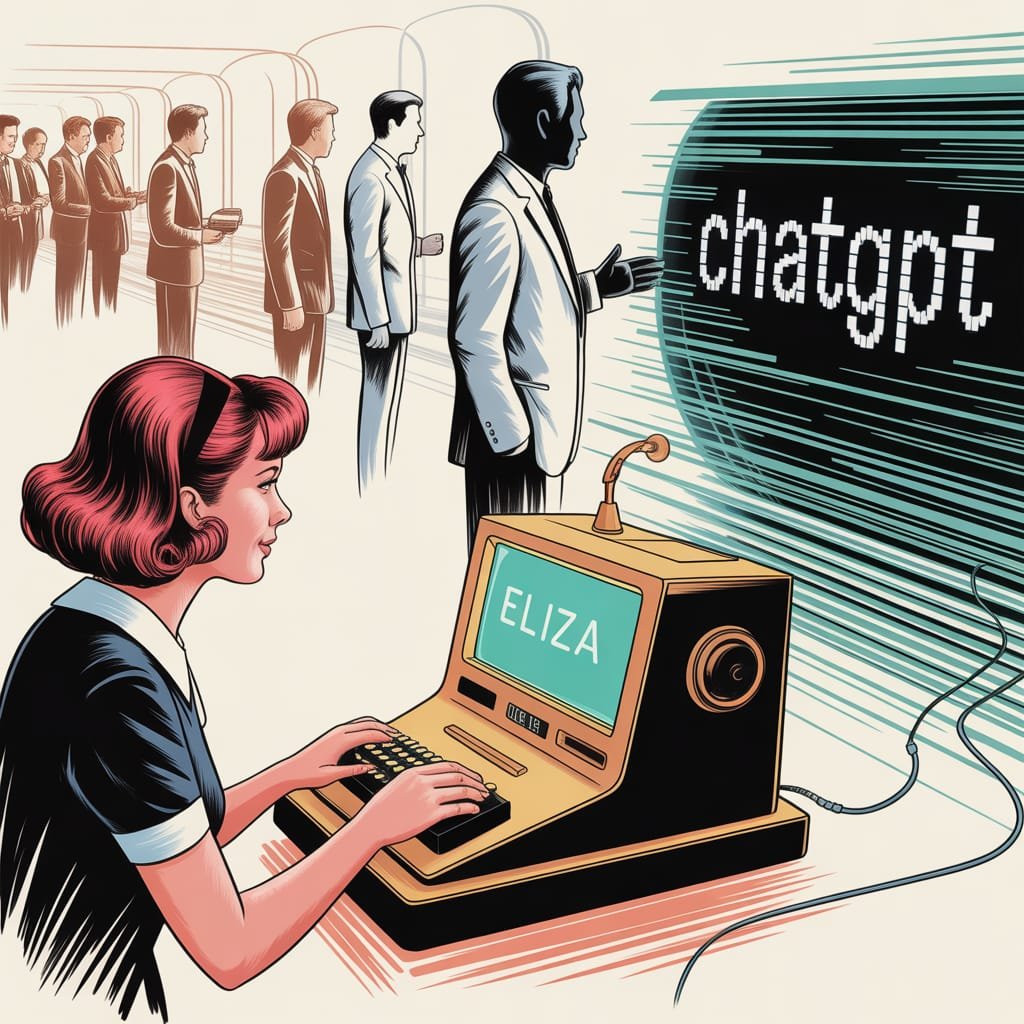
    Imagine this: it’s the 1960s. Bell bottoms were popular, The Beatles were famous, and at MIT, a computer scientist named Joseph Weizenbaum was making something truly new. He wasn’t building robots or self-driving cars. He was making ELIZA.

    ELIZA wasn’t a powerful AI, but she was one of the first programs that tried to talk using normal human language. Think of her as a very, very early chatbot. She was made to act like a therapist. People would type sentences, and ELIZA would reply. Often, she just turned their own words into questions.

    For example:
    User: “My head hurts.”
    ELIZA: “Why do you say your head hurts?”

    User: “I feel sad today.”
    ELIZA:”Can you tell me more about why you feel sad today?”

    This was amazing for its time! People actually felt connected to ELIZA. They talked to her as if she were a real person. They were, in a way, giving her basic “prompts” – simple sentences. ELIZA used smart tricks like finding keywords to understand and reply. This wasn’t about making a realistic picture of a cat in space. But it was the very start of AI prompt history. It was the first step in teaching machines to “understand” and react to what humans say. It was a simple but very important beginning. It showed that people wanted to talk to machines.

    Visualizing the progression of AI communication and prompt engineering.

    The Long, Winding Road to Nuance: Decades of Dedication

    After ELIZA’s simple way of talking, we started a journey that lasted many decades. Getting from those first, basic talks to today’s super smart AI tools took a lot of hard work. This included endless research in areas like natural language processing (NLP), machine learning (ML), and how computers understand language.

    For many years, the problem was huge. How do you teach a machine to not just spot keywords, but to understand the meaning, the subtle differences, and the goal? How do you go from just repeating a user’s words to actually creating clear, new, and useful answers?

    Scientists and engineers worked very hard. They created computer programs that could break down sentences, find different parts of speech, and later, understand how words relate to each other in meaning. Early tries were awkward, often giving funny, meaningless results. But with every new discovery – from simple math models to neural networks, and finally to the transformer system that makes today’s large language models (LLMs) work – AI got much, much better at “listening” and “understanding.”

    This wasn’t just about using more data. It was about totally new ways of thinking about how machines learn language. It was about teaching AI to not just read words, but to understand the hidden meaning, to guess, and to combine ideas. The journey from ELIZA’s simple word matching to modern AI like GPT-4 is truly an amazing jump. GPT-4 can follow complicated, many-part instructions and create very clear, creative, and relevant answers.

    Prompt Engineering: A Modern Art Form (and Science!)

    Now, let’s jump to today. The idea of an AI prompt has grown into an art form called “prompt engineering.” It’s not just about typing a question anymore. It’s about creating a full instruction, a scene, a character, and a style guide, all at once.

    You, the person making content or just exploring, are now like a movie director, writer, casting person, and art director, all rolled into one. You’re telling the AI: “Picture a fun, steampunk otter with one eye-glass, drinking tea in a busy old market. Make it look like a Hayao Miyazaki movie, with soft, warm light and lots of small details.”

    That’s very different from “My head hurts,” right?

    Today’s AI tools work best with these specific details. They can guess the mood, understand big ideas, and even follow complicated steps. The better you know how to “talk” to them – how to give them clear rules, examples, and background info – the better their results will be. It shows how amazing those decades of research were, that a machine can now understand such rich, detailed instructions and create something truly special. This change is a key part of our AI prompt history.

    Fun Facts & Mind-Benders About AI Prompts

    Besides the history, there are some really interesting AI facts and strange things about prompts that show how amazing this technology is:

    1. The “Magic Word” Effect: Have you noticed that adding “please” or “thank you” to a prompt sometimes seems to make the answer better? AI doesn’t have feelings. But these polite words can slightly change how the AI “sees” what you want. This can sometimes lead to more helpful or obedient answers. It’s not magic, but a cool trick because politeness is in the data AI learns from.
    2. AI’s Hidden Characters: With the right prompt, you can make an AI act like almost any character. Do you want it to be a grumpy pirate cook? A wise alien? A poet from Shakespeare’s time? Just tell it, and it will often play that role very well. Your prompt is more than just a command; it’s like a costume for the AI.
    3. The Prompt as a “Start”: One simple prompt can be the start for a whole creative project. “Write a story about a lost key” can grow into a book, a script, or many pictures. All of this is guided by more prompts given later. It’s like a team dance between what a human wants and what the machine creates.
    4. AI’s “Imagination” (or lack of it): AI can create very creative things, but it doesn’t “imagine” like humans do. It guesses the most likely next words or pixels based on the data it learned from. So, when you ask for “a purple elephant dancing on the moon,” it’s not making an image from nothing. It’s putting together parts it has seen from many pictures and texts to make something new. Still, the result feels like imagination, which is one of the coolest AI fun facts.
    5. The “Making Things Up” Factor: Sometimes, AI just invents things – facts, sources, even whole events. This is often called “hallucination.” But a well-written prompt can help stop this. By giving clear rules, asking it to show its sources, or even telling it not to make up information, you can guide it to be more accurate. It’s a constant game of smarts!
    6. “Best Ways” Change Quickly: What works as a great prompt today might not work as well tomorrow. As AI tools get better, the best ways to talk to them also change. Prompt engineering is a fast-changing area. This makes it one of the most exciting parts of using modern AI.

    Why This Matters to You: The Creator & The Curious

    Historical journey of AI prompts and human-AI interaction.

    So, why should you care about this AI prompt history or these fun AI facts? Whether you’re a blogger, a social media manager, a small business owner, or an artist who likes tech.

    Because understanding how we got from ELIZA to GPT-4 isn’t just for quizzes. It gives you power. It helps you see the amazing tech jumps that let you create special pictures without buying common stock photos. Or write great text in minutes. It makes the magic less mysterious, showing you how it all works.

    Knowing where AI prompts started and how AI’s “understanding” grew gives you a better gut feeling for how to write good prompts. It makes you want to try new things, to go further, and to see talking to AI not just as typing commands. Instead, see it as a chat with a smart tool that’s always getting better.

    The empty prompt box isn’t just for words. It’s a doorway to creating. And with a bit of history and some fun facts, you’re more ready than ever to step through it and make something truly wonderful. So go ahead, speak your next great idea into being. The AI is listening, and it has come a very long way.

  • Unlocking AI: How Microsoft’s Mu Makes Intelligence Simpler and Smarter

    Digital brain representing Microsoft Mu simplifying complex AI processes.

    Learn how this innovation is unlocking new possibilities in artificial intelligence.

    Clara’s desk was cluttered, but her monitor’s colors were always off. She spent her mornings searching for the brightness slider in Windows Settings. “It’s always just there,” she’d say, frustrated, “but where is there today?” This search took away from her creative time, leaving her drained before she even started.

    Her old PC couldn’t handle her needs for quick system tweaks.

    Then, she got a new Copilot+ PC, promising a new era of on-device AI.

    The world of artificial intelligence is changing fast. It’s moving from experiments to real changes in our lives. Microsoft is leading this change with AI that’s safe and secure. Microsoft Mu is a big step in this direction, bringing AI to your PC.

    Mu is not just an update. It’s a big change in how we use technology. It works fast and locally, making AI experiences better and more private. You don’t need the internet to use it.

    The Imperative of On-Device AI: Why Mu Matters Now

    AI has promised a lot, but it’s often been frustrating. Clara, a digital artist, spent hours in Windows Settings trying to fix her monitor’s colors. Her old PC couldn’t handle simple tasks, wasting her time.

    Microsoft Mu solves these problems. It works well on your PC, even when you’re offline. It makes everyday tasks easier and keeps your data safe.

    Decoding Mu: Understanding This Micro-Sized Powerhouse

    So, what is Mu? It’s a small, but powerful language model. Despite its size, it’s very capable. Mu is designed for small PCs and works fast, even offline.

    The Engineering Marvel: Mu’s Architectural Innovations for Peak Performance

    Mu’s design is truly brilliant. It’s small but powerful, thanks to its engineering.

    Encoder-Decoder Architecture: The Efficiency Game-Changer

    Mu uses a special architecture that’s different from old models. It has an encoder that changes your input into a fixed size, and then a decoder makes output tokens from that. This makes Mu very efficient, using less computation and memory.

    On devices like Qualcomm Hexagon NPU, Mu is much faster. It’s about 47% quicker for the first token and 4.7 times faster for decoding. These improvements are key for AI that needs to work fast.

    Mu was made to work well on NPUs and edge devices. It was carefully designed to fit the NPU’s needs. For example, it uses the right sizes for operations to run smoothly.

    Mu also saves memory by sharing weights in certain parts. It only uses operators that the NPU can speed up. This makes the most of the NPU’s power.

    To get better accuracy and speed, Mu has three transformer upgrades:

    Dual LayerNorm (pre- and post-LN) stabilizes training without adding much overhead.

    Rotary Positional Embeddings (RoPE) help the model understand long sequences better. It can handle sequences longer than it was trained on.

    Grouped-Query Attention (GQA) reduces memory and latency by sharing keys and values. This makes the model faster and uses less power.

    Mu was trained on many GPUs and learned from other models. It started with pre-training on educational tokens. Then, it learned from Microsoft’s Phi models.

    Low-rank adaption (LoRA) methods helped Mu get even better. This made it very efficient in learning from task-specific data.

    Microsoft used advanced techniques to make Mu run well on devices. They changed the model’s weights and activations to use less memory and compute. This made Mu fast and efficient.

    Mu is now part of the Windows Settings AI agent. It helps change system settings easily. This makes it simpler to find and change settings.

    Mu’s AI agent is integrated into the Settings app. It responds quickly to user queries. For example, it can change settings in under 500 milliseconds.

    Remember Clara’s struggle with her monitor settings? She got a new Copilot+ PC and typed into the Settings search box: “Make my secondary monitor colors warmer” [conversation history]. Mu, the AI agent, quickly suggested adjusting the color temperature. With one click, her monitor’s colors were perfect [conversation history].

    She then asked for more complex settings: “Set my notifications to only show from my art software when I’m in fullscreen mode, and mute everything else.” Mu, designed for complex tasks, understood her query well. It offered a precise solution [conversation history, 37, 38]. Mu worked fast, processing over 100 tokens per second [conversation history, 44, 59].

    To achieve this precision, the Settings Agent’s training was carefully refined. Microsoft increased training samples by 1300 times and expanded settings coverage. They used synthetic labeling and diverse phrasing to improve the model. This way, the agent can handle short or partial-word inputs and multi-word queries for precise responses.

    The Mu-powered AI agent is now available to Windows Insiders in the Dev Channel. It works with Copilot+ PCs running Windows 11 Build 26120.3964 (KB5058496) or higher.

    The Broader Impact: Beyond Settings to a Transformed Future

    Microsoft Mu is more than a single feature. It’s a step towards a future where AI is part of our daily lives.

    The Rise of Intelligent Agents:

    Mu is part of a new generation of AI agents. These agents can handle complex tasks and work on your behalf. They are seen as the “apps of the AI era,” changing how we work and live. Microsoft ensures human oversight is key in this AI-powered world.

    AI Companions for Everyday Life:

    Outside work, Microsoft Copilot, powered by Mu, will be your AI companion. It will simplify daily tasks, save time, and protect your privacy. Imagine Copilot Daily summarizing news or Copilot Vision understanding web pages to help you.

    Efficiency and Sustainability at Scale:

    As AI grows, so does its need for resources. Microsoft is working to make AI more efficient and sustainable. They’re using custom silicon and liquid cooling for large AI systems. Microsoft aims to be carbon negative, water positive, and zero waste by 2030.

    Accelerating Scientific Breakthroughs:

    AI is also changing scientific research and innovation. It’s driving advances in supercomputing and biomolecular science. AI models like Mu are solving big problems, leading to new discoveries in drug development and sustainable materials.

    Conclusion: A New Era of Personal Computing

    Microsoft Mu is a big step in on-device AI, making AI experiences powerful and efficient on your PC. Its architecture and training show Microsoft’s commitment to AI advancements. Mu is changing how we interact with technology, making it more intelligent and seamless. This is a step towards a future where technology is deeply integrated into our lives, safely and securely.

    Take the Leap: Experience On-Device AI with Mu

    Are you ready to experience the next generation of personal computing?

    For Windows Insiders:

    If you have a Copilot+ PC, you can try out the Mu-powered AI agent in Windows Settings right now. Just install Windows 11 Build 26120.3964 (KB5058496) or higher. Provide your feedback to Microsoft as they continue to refine this groundbreaking experience! Explore Copilot+ PCs: Learn more about the hardware designed to unleash the full potential of these powerful on-device AI capabilities.

  • Gemini vs ChatGPT: Which Does a Better Job With Images?

    Gemini vs ChatGPT: Which Does a Better Job With Images?

    Introduction

    AI tools that can understand and create images have grown a lot in recent years. They turn simple prompts into stunning visuals and help analyze pictures for many uses. Whether you’re in marketing, design, education, or healthcare, picking the right AI platform matters. But how do Gemini and ChatGPT compare in handling images? Are they equally good at generating, recognizing, or explaining pictures? In this article, we’ll examine their features, performance, and real-life uses. By the end, you’ll see which one fits your needs best.

    Understanding Gemini and ChatGPT: An Overview


    What is Gemini?

    Google’s Gemini is a new AI platform focused on multi-use tasks. It combines different AI models to handle images, text, and more, all in one system. Gemini was built to be a versatile tool for creative projects and accurate recognition tasks. Recent updates have added powerful image recognition and generation features. With its deep ties to Google’s cloud and data tools, Gemini aims to be a top choice for businesses needing sharp, reliable image AI.

    What is ChatGPT?

    OpenAI’s ChatGPT is best known for conversation. It started as a text-based chatbot with impressive language skills. Recently, OpenAI added vision features so ChatGPT can now interpret images. This makes it a true multimodal tool, not just a chat robot. Unlike Gemini, which is geared towards image creation and recognition, ChatGPT uses images mainly to support dialogue and analysis. It’s designed for users who want simple, integrated AI for talking about pictures, not just creating them.

    Core Image Capabilities and Feature


    Gemini: Uses advanced diffusion models and other architectures to turn text prompts into images. It excels at producing high-quality visuals, capturing style and detail well. It can generate images from simple phrases or complex scenes with good accuracy.
    ChatGPT: Has recently started creating images, but it’s still limited compared to Gemini. Its focus is more on improving understanding and discussion of visuals rather than generating complex art. When it does create images, they are basic but improve with updates.
    Image Recognition and Analysis
    Gemini: Recognizes objects and scenes with high precision. It can classify and detect elements in photos for uses like medical imaging or surveillance. Its recognition features are fast and accurate, making it ideal for professional needs.
    ChatGPT: Can analyze images embedded in conversations. It recognizes objects and can describe what it sees, helping users troubleshoot problems or understand content. Its analysis is good for general use but less precise than Gemini for detailed tasks.
    User Interface and Accessibility
    Gemini: Offers a user-friendly interface for creators and developers. Integrated into Google’s ecosystem, it works smoothly within cloud platforms. While powerful, it’s best suited for professional or enterprise users.
    ChatGPT: Known for ease of use by both casual and professional users. Its platform is simple, with API options for integration. People familiar with ChatGPT enjoy talking about images without complex tools.
    Performance and Accuracy Comparison
    Quality of Image Outputs

    Gemini produces images that often look like professional art. Their clarity, style, and relevance are top-tier. In test cases, Gemini images show high detail and creative flair. ChatGPT’s image outputs are more basic, focusing on simple scenes or icons. They work well for quick tasks but lack the polish of Gemini.

    Recognition and Analysis Precision

    Gemini’s object detection and classification are highly accurate. It can tell apart different objects and understand complex scenes. ChatGPT’s image analysis is useful in conversations. It describes images well enough but sometimes misses subtle details. Industry experts say Gemini is better for precision work, while ChatGPT is perfect for casual insights.

    Speed and Efficiency

    Both platforms handle requests quickly; Gemini can generate detailed images fast, especially in batch. ChatGPT processes images and provides explanations almost instantly. For high-volume tasks, Gemini’s specialization means faster results when creating or analyzing high-res visuals.

    Real-World Applications and Use Cases

    Marketing and Content Creation

    Gemini helps craft visuals for ads, websites, and branding. Its ability to create tailored images makes it a favorite among designers. ChatGPT excels at describing or tagging visual content, making it useful for content management and social media.

    Education and Training

    In schools, Gemini can assist in generating educational images or visual aids. It’s also used in teaching medical imaging or technical illustrations. ChatGPT helps explain images during lessons and supports learning through dialogue.

    Healthcare and Medical Imaging

    Images from Gemini and ChatGPT of the brain and who's is the best generated image from AI

    Gemini’s advanced recognition powers can aid in diagnostics and analysis of medical scans. It’s suitable for detecting anomalies or features in complex images. ChatGPT supports medical professionals by analyzing images during consultations or for quick explanations.

    Strengths and Limitations

    Gemini
    Strengths: Creates high-quality images, detects objects accurately, works well with Google’s tools.
    Limitations: Not always accessible for casual users, can be costly, and needs technical skill for advanced features.
    ChatGPT
    Strengths: Easy to use, integrates well with conversations, can analyze images within chats.
    Limitations: Still building image creation features; sometimes less accurate for complex tasks. Its recognition is simpler compared to Gemini.
    Expert Insights and Industry Perspectives

    Many AI research leaders believe multimodal AI will grow closer to human reasoning. Recent progress shows platforms like Gemini and ChatGPT are just starting to unlock their full potential. Challenges include making image recognition more precise and improving image generation quality. Experts suggest that combining both platforms’ strengths will shape future tools.

    Actionable Tips for Choosing Between Gemini and ChatGPT
    Pick Gemini if you need high-quality images, precise recognition, or professional-grade tools.
    Choose ChatGPT for easier, conversational tasks involving images, like explanations or simple analysis.
    Think about your technical skills and whether you need deep integration or just quick insights.
    Watch for upcoming updates to get even better features from both platforms.
    Conclusion

    Gemini and ChatGPT each have their strengths in handling images. Gemini shines at creating and analyzing high-quality visuals, perfect for professional tasks. ChatGPT offers a simple, conversational way to understand and work with images, great for more casual needs. To pick the best tool, consider what you need most—top-notch image quality or easy analysis. As AI advances, both systems will get even smarter. Keep an eye on their updates, and always choose the right platform for your specific tasks. With the right AI, your work with images will become faster, easier, and more creative.

  • The Secret Alibaba AI Uses to Monitor Double Doodle Health—Vets Hate This!

    Alibaba AI and Double Doodles

    Alibaba’s AI Revolution: Multi-Sensory Tech and the Double Doodle Dog Health Connection

    What does high-tech AI have to do with your fluffy Double Doodle? More than you think! Alibaba, the tech giant, is making huge strides in multi-sensory AI. With the introduction of Qwen2.5-Omni, a groundbreaking multimodal large language model unveiled on March 27, 2025. This advanced AI system can process and generate various types of input simultaneously Meanwhile, Double Doodles, those adorable mixed-breed dogs, face unique health challenges. Turns out, AI could be the key to a healthier, happier life for these pups.

    Decoding Alibaba’s Multi-Sensory AI: A New Reality

    Multi-sensory AI means machines can understand the world like we do. They don’t just see; they hear, smell, touch, and maybe even “taste.” It’s a big deal because it lets AI tackle complex problems in a more human-like way. As AI continues to evolve, Alibaba’s multi-sensory AI represents a significant step towards more intuitive and human-like artificial intelligence, paving the way for innovative applications and advancements across industries.

    The Five Senses and AI: How Alibaba is Leading the Way

    Alibaba is working hard to incorporate all five senses into its AI. Visual AI spots defects in products on assembly lines. Voice assistants respond to your commands. But it goes further. Think of AI that can “smell” spoiled food or “feel” the texture of fabric. AI models like Qwen2.5-Omni could analyze multi-sensory data (images, videos, and audio) to detect early signs of common Double Doodle health issues such as hip dysplasia, ear infections, and allergies.

    For instance, Alibaba uses visual AI to check the quality of produce, ensuring only the best items reach consumers. Their voice assistants, like Tmall Genie, are household names in China. These examples show that AI is no longer limited to just seeing and hearing. AI-powered devices could continuously monitor a Double Doodle’s vital signs, activity levels, and behavior patterns, alerting owners to potential health concerns before they become serious

    Applications Across Industries: Beyond Consumer Tech

    This technology stretches far beyond online shopping. It is used in manufacturing, healthcare, and agriculture. Imagine AI that monitors the health of crops by “smelling” for diseases or detecting subtle changes through touch. As an open-source model, it reduces entry barriers for smaller companies and individuals to access advanced AI capabilities Alibaba holds patents in areas like AI-powered diagnostics. This demonstrates a deep commitment to innovation.

    Double Doodle Dog Health: Understanding the Unique Challenges

    Double Doodles are mixes of Poodles and Goldendoodles or Labradoodles. Their fluffy coats and playful nature make them popular pets. But this mix can also lead to specific health problems. Veterinarians could use AI models to analyze complex medical data, potentially improving the accuracy and speed of diagnosing conditions like mitral valve dysplasia or elbow dysplasia in Double Doodles

    Genetic Predispositions: What Makes Double Doodles Vulnerable

    Double Doodles are prone to certain health issues. These include hip dysplasia, eye problems like progressive retinal atrophy, and allergies. The mixed breeding can increase the risk of inheriting these conditions. Hip dysplasia causes pain and mobility issues. Eye problems can lead to blindness. Allergies can cause skin irritation and discomfort.

    Preventative Care is Key: Actionable Tips for Owners

    You can take steps to keep your Double Doodle healthy. Feed them a high-quality diet. Ensure they get regular exercise. Groom them regularly to prevent matting. Schedule routine checkups with your vet. Genetic testing can identify potential problems early on, too. It is important to catch issues early. AI could analyze genetic data to predict a Double Doodle’s susceptibility to inherited health problems, allowing for preventive measures and informed breeding practices

    The Intersection: How AI Can Revolutionize Double Doodle Care

    Here’s where Alibaba’s AI comes in. That same tech used in factories can help your furry friend.

    Early Disease Detection: AI-Powered Diagnostic Tools

    AI can analyze images and sounds to find early signs of disease. AI algorithms can check X-rays for hip dysplasia. They can analyze sounds for signs of heart problems. They can even spot skin conditions from photos. With AI, vets could detect problems faster.

    Personalized Nutrition and Exercise Plans: Tailored Recommendations

    AI can create custom diet and exercise plans for your dog. It considers breed, age, weight, and health. This helps your Double Doodle stay in shape and avoid health issues. Imagine an AI that recommends the perfect food blend based on your dog’s genetic makeup.

    Real-World Applications and Future Possibilities

    AI in veterinary medicine isn’t science fiction anymore. It is already happening.

    Case Studies: AI in Veterinary Medicine

    Some vets are using AI to diagnose heart conditions in dogs. Others use it to detect tumors on X-rays. Research programs are exploring how AI can improve pet health. This technology can save your dog’s life.

    The Future of Pet Care: A Tech-Driven Approach

    In the future, AI could transform pet ownership. It could provide early warnings about health problems. It could offer personalized care recommendations. It could even help vets make better decisions. But we should also consider the ethics of using AI on animals.

    Overcoming Challenges and Embracing Innovation

    Like any new technology, AI in pet care has challenges. We have to think about data privacy. We need to ensure AI algorithms are fair and unbiased.

    Data Privacy and Ethical Considerations

    Your dog’s health data is sensitive. It needs to be protected. We need to make sure AI algorithms don’t discriminate against certain breeds. Humans should always oversee AI decisions.

    The Path Forward: Collaboration and Education

    To make AI work for pets, collaboration is key. AI developers, vets, and owners need to work together. We all need to learn about the potential and limitations of AI. This is how we improve outcomes.

    Conclusion

    Multi-sensory AI has the power to change Double Doodle health management for the better. By embracing this tech and staying proactive, you can help your furry friend live a longer, healthier, and happier life. It is time to explore the AI-powered solutions available to help your pet. I will do a follow-up article on this subject as it is game changing for pets and humans alike!

  • Synthetic Engagement: AI’s Quiet Takeover of Social Media

    Synthetic Engagement: AI’s Quiet Takeover of Social Media

    Synthetic Engagement: How AI is Quietly Taking Over Social Media

    Imagine a world where your online interactions are no longer just with real people. Synthetic engagement, a growing trend, is reshaping how we connect on social media. This phenomenon involves bots and fake accounts, creating a landscape where genuine interactions are increasingly rare.

    At the heart of this shift are digital personas like Lil Miquela, who have gained millions of followers. These AI-driven entities are changing the game, making it harder to distinguish real from artificial. The result? A digital environment where authenticity is under threat.

    The implications are profound. For everyday users, it means interacting with content that may not be human-created. For marketers, it challenges the very foundation of engagement metrics. As technology advances, the line between real and artificial continues to blur.

    Understanding this trend is crucial. The rise of synthetic engagement demands urgent attention to preserve the authenticity of social media. The future of online interactions depends on our ability to address this challenge head-on.

    Key Takeaways

    • Synthetic engagement is altering social media dynamics through bots and fake accounts.
    • Digital personas like Lil Miquela highlight the growing influence of AI in online interactions.
    • Authenticity is at risk as artificial interactions become more prevalent.
    • Marketers face challenges as engagement metrics become less reliable.
    • Addressing synthetic engagement is essential to maintaining genuine online connections.

    Understanding Synthetic Engagement and Its Impact

    Synthetic engagement refers to interactions on social media that are not genuine but are instead automated. These interactions are designed to mimic real human behavior, making it difficult to distinguish between authentic and artificial exchanges.

    Artificial intelligence models, particularly advanced tools like GPT-4, play a significant role in generating human-like content. These models use sophisticated algorithms to create posts, comments, and even entire conversations that feel real but are entirely artificial. This automation allows for the manipulation of engagement metrics, making it appear as though content has more interactions than it truly does.

    The impact of synthetic engagement is profound. As users struggle to discern between human and bot-generated interactions, trust in online platforms erodes. This erosion can lead to a decline in the overall quality of engagement, as genuine interactions become increasingly rare.

    The broader implications for public trust are significant. Synthetic engagement undermines the authenticity of social media, creating an environment where users are increasingly skeptical of the interactions they have online. This skepticism can have far-reaching consequences, affecting everything from personal relationships to business interactions.

    Synthetic Engagement: How AI is Quietly Taking Over Social Media

    On social media platforms, the line between genuine human interaction and artificial intelligence-driven activity is becoming increasingly blurred. This subtle yet pervasive phenomenon, known as synthetic engagement, is reshaping how companies and influencers achieve success online.

    One notable example is the rise of AI personas like Lil Miquela, who have amassed millions of followers and secured major brand deals. These digital entities operate under the guise of authenticity, seamlessly integrating into the social media ecosystem. By mimicking human behavior, they create an illusion of real engagement, allowing companies to appear more successful than they truly are.

    This trend challenges traditional notions of credibility and success. As synthetic engagement becomes more prevalent, the value of social media as a genuine networking space is at risk. The future of online interactions may be defined by AI-driven content, potentially redefining industry standards and changing how companies measure their success on these platforms.

    The Evolution of Social Media: From Human Connection to AI-Driven Content

    Over time, social media has transformed from a space for personal connections to a platform dominated by AI-driven content. Early platforms like Friendster and Myspace focused on helping users connect with friends and share personal updates. These services were simple, with basic tools that allowed users to share photos, leave comments, and join groups.

    In those days, the user experience was straightforward. Platforms were designed to facilitate genuine interactions, fostering a sense of community. As social media evolved, so did the tools and services available. Today, platforms use advanced algorithms to curate content, often prioritizing posts that generate the most engagement.

    This shift has led to a more superficially engaging yet synthetic user experience. Many interactions are now mediated by technology, with AI-driven content strategies shaping what users see. The rapid transformation from organic community building to AI-mediated interactions has changed how users engage with content.

    The impact on the quality of social interactions is significant. While platforms offer more advanced tools and services, the authenticity of user experiences has diminished. As social media continues to evolve, the balance between technology and genuine human connection will be crucial to maintaining meaningful online interactions.

    Spotting Synthetic Engagement Online

    Identifying synthetic engagement online requires a keen eye for detail and an understanding of the tools behind it. As chatbots become more advanced, distinguishing between genuine interactions and automated ones can be challenging. However, there are practical steps you can take to recognize synthetic content and maintain the integrity of your online network.

    One key characteristic of synthetic engagement is overly polished interactions. While humans often express themselves in imperfect ways, chatbots tend to produce uniformly structured and grammatically perfect responses. This consistency can be a red flag, especially in conversations that seem too formal or lack personal touches.

    Spotting synthetic engagement online

    Another indicator is consistent posting patterns. Synthetic accounts often follow strict schedules, posting content at precise intervals. In contrast, real users tend to have more erratic patterns, reflecting the ups and downs of daily life. Be wary of profiles that post multiple times a day without variation in timing or content style.

    Chatbots also play a dual role in this landscape. While they generate synthetic engagement, they can also be tools for detecting it. Advanced chatbots can analyze patterns in user behavior and identify anomalies that may indicate automated activity. This duality highlights the evolving nature of the technology and its impact on online interactions.

    For marketers, recognizing synthetic engagement is crucial for maintaining the power of genuine networks. By understanding the signs of automated interactions, businesses can focus on building authentic connections with their audience. This vigilance not only preserves trust but also ensures that engagement metrics reflect real user interest and product value.

    In conclusion, spotting synthetic engagement online requires a combination of awareness and the right tools. By staying vigilant and leveraging technology, we can maintain the integrity of our online networks and foster more meaningful interactions in our digital lives.

    The Economic Impact on Marketers and Advertisers

    The rise of synthetic engagement has significant economic implications for marketers and advertisers. As bots inflate engagement metrics, companies face increased costs to discern genuine interactions. This challenge directly affects their return on investment, making it harder to assess campaign effectiveness.

    Social media platforms also bear the brunt of rising costs. Verifying content authenticity requires substantial resources, which can strain operational budgets. These expenses are often passed on to advertisers, further complicating the financial landscape.

    Consumer trust plays a crucial role in this equation. When users perceive interactions as inauthentic, their trust in brands diminishes. This erosion can lead to decreased sales and brand loyalty, creating long-term economic challenges for businesses.

    The industry is grappling with these shifts, striving to balance innovation with authenticity. As synthetic engagement evolves, marketers must adapt strategies to maintain genuine connections, ensuring sustainable growth in the digital marketplace.

    The Backlash: Devaluation of Human Expression

    The rise of AI-driven content has sparked a growing backlash, as many feel it diminishes the value of genuine human expression. This shift is altering the way we perceive creativity and authenticity online. Users and creators alike are pushing back, arguing that the increasing reliance on machine-generated content overshadows the unique value of human creativity.

    Devaluation of human expression

    This cultural shift is leading to a reevaluation of what we consider valuable in online interactions. When human creativity is overshadowed by AI, it changes the way we connect and share ideas. The development of more advanced AI tools has only accelerated this trend, making it harder for authentic voices to stand out.

    Markets are also responding to this backlash. There’s a noticeable push toward platforms and tools that prioritize human-driven content. This development indicates a growing resistance to the influence of synthetic personalities and their perceived devaluation of real human connection.

    The Ethical and Social Implications

    The ethical concerns surrounding synthetic engagement spark intense debates about authenticity and human influence in the digital age. As technology advances, the production of automated content raises questions about accountability and transparency in online interactions.

    The capability of AI to generate human-like content challenges traditional notions of authenticity. Each year, as synthetic engagement grows, it becomes harder to distinguish between genuine and artificial interactions. This blur raises critical ethical issues, particularly concerning the role of human agency in digital spaces.

    One key issue is the lack of accountability in synthetic content. Unlike human creators, AI lacks personal responsibility, making it difficult to address harmful or misleading information. This gap in accountability undermines trust in online platforms and complicates efforts to maintain ethical standards.

    Moreover, the societal impact of synthetic engagement is a growing concern. As the technology evolves each year, it threatens to erode the authenticity of human connections. This shift could lead to a culture where genuine interactions are overshadowed by machine-driven content, raising philosophical questions about the future of social dynamics.

    In conclusion, the ethical and social implications of synthetic engagement are profound. Addressing these challenges requires a balanced approach that prioritizes transparency, accountability, and the preservation of human agency in the digital world.

    Technological Innovation: Generative AI and Social Media

    Generative AI is transforming how content is created and consumed on media platforms. These tools enable users to produce high-quality videos and images quickly, making content creation more accessible than ever.

    However, this innovation comes with risks. The rise of deepfakes—realistic but fake content—poses significant challenges. Traditional verification methods struggle to keep up with these advanced forgeries.

    The need for robust detection systems is growing. As deepfakes become more common, protecting consumers from misinformation is crucial. This requires advanced technologies to identify and flag synthetic content effectively.

    “The integration of generative AI in social media is a double-edged sword. While it democratizes content creation, it also introduces significant risks that we must address proactively.”

    — Industry Expert

    The digital economy is shifting rapidly. The economy is increasingly driven by synthetic content, changing how value is created and measured. This evolution brings both opportunities and challenges for businesses and consumers alike.

    The Future Prospects of Synthetic Engagement

    As we look ahead, the digital landscape is poised for significant transformation. Synthetic engagement is expected to evolve rapidly, reshaping how content is created and consumed. This shift raises important questions about the future of online interactions and the role of technology in shaping them.

    The integration of advanced systems will play a crucial role in this transformation. These systems will not only generate content but also influence how users interact with it. As a result, the line between human and machine-generated content may become even more blurred, creating new challenges and opportunities in the process.

    One major risk associated with this evolution is the potential disruption of traditional content creation methods. As synthetic engagement becomes more sophisticated, it could overshadow human creativity, leading to a homogenization of online content. This raises concerns about the diversity of ideas and the authenticity of digital interactions.

    However, there are also opportunities for innovation. Emerging systems designed to balance AI-powered content creation with authentic human expression could pave the way for new forms of digital storytelling. These systems aim to enhance creativity while maintaining the unique value of human input.

    Industry responses to these changes are already beginning to take shape. Companies are investing in technologies that can detect and mitigate the risks associated with synthetic engagement. At the same time, there is a growing emphasis on creating platforms that prioritize human-driven content, ensuring that users can still engage with authentic ideas and perspectives.

    In conclusion, the future of synthetic engagement is both promising and perilous. While it offers new possibilities for content creation and interaction, it also poses significant risks that must be addressed. By understanding these dynamics, we can work towards a digital future that balances innovation with authenticity, ensuring that human connection remains at the heart of online interactions.

    Conclusion

    As we navigate the evolving digital landscape, it’s clear that authenticity plays a pivotal role in maintaining meaningful online interactions. The rise of synthetic engagement has introduced both opportunities and challenges, particularly for creators striving to connect with their audiences on a genuine level.

    Creators must remain vigilant, ensuring that their content stands out in a world where automated interactions are becoming increasingly prevalent. By prioritizing authenticity, they can foster trust and build stronger connections with their audience, even as technology continues to advance.

    Looking ahead, the future of online interactions hinges on our ability to balance innovation with authenticity. As synthetic engagement becomes more sophisticated, it’s crucial for users, creators, and marketers to stay proactive in identifying and mitigating its risks. By doing so, we can safeguard the integrity of our online communities and ensure that genuine human connection remains at the heart of social media.