
Category: Digital

  • 7 Canva Pro Hacks Big Companies DON’T Want You to Know!

    7 Canva Pro Hacks Big Companies DON’T Want You to Know!

    Imagine making designs as good as big brands, but without spending a lot. Canva Pro has tools that most people don’t know about. You can get free premium stock photos and make your designs look better automatically.

    Every month, over 75 million people use Canva. But only a few know how to use it to its fullest. These canva pro tips show how small businesses and freelancers can beat the competition. They do it all with affordable design tools. Discover the secrets that big companies don’t want you to know, without spending a fortune.

    Unleashing the Power of Canva Pro for Design Dominance

    Canva’s growth to 75 million monthly users is no fluke. Its canva design tools make top-notch design easy for all. Startups and big companies alike use Canva Pro to quickly bring ideas to life.

    Why Over 75 Million People Trust Canva Every Month

    Canva’s appeal lies in its speed and ease of use. No need for complex tutorials—just drag, drop, and share. Small businesses save a lot of time with ready-made templates for social media and more. Marketers get professional-looking designs without needing to hire experts.

    This is why 90% of users say Canva cuts design time in half or more.

    The Hidden Advantage for Budget-Conscious Designers

    For how to use canva pro for small business teams, the cost savings are huge. At just $12.99/month, it’s a fraction of the cost of other software. You get access to premium fonts, photos, and video tools without needing to ask for budget approval.

    No more juggling different apps. Everything you need for your campaigns is in one place.

    Setting Up Your Canva Pro Account for Maximum Efficiency

    • Organize templates into folders labeled by project type
    • Save brand colors and logos in the Assets library
    • Enable team collaboration for real-time edits

    Pro tip: Use the “Reuse” feature to adapt past designs instead of starting from scratch. These steps turn Canva into time-saving design tools for marketers that boost productivity.

    Magic Resize: Transform One Design Into Multiple Platform Assets

    Save hours with Canva Pro’s magic resize tool. It turns one design into perfect graphics for all platforms. No more resizing headaches. Designers can now optimize social media graphics with canva pro in seconds. Every post will look sharp on Instagram, LinkedIn, or TikTok.

    Instant Optimization for Every Social Media Platform

    No more guessing which size fits where. The magic resize tool adjusts designs to match platform specs. Turn an Instagram carousel into a Pinterest pin or a Twitter header—all from one file. Perfect for campaigns needing consistent branding across channels.

    Perfect Pixel Dimensions for Each Platform Without the Guesswork

    Canva Pro’s templates handle the math. Use these verified sizes for flawless posts:

    • Instagram posts: 1080×1080 pixels
    • Facebook covers: 820×312 pixels
    • Twitter headers: 1500×500 pixels
    • LinkedIn banners: 1584×396 pixels

    How to Batch Process Multiple Designs Simultaneously

    Need to update 20 ads at once? Use batch resizing to apply the magic resize tool to entire projects. Load your social media design templates into the editor, select all, and resize them in one click. No more tedious manual edits.

    Background Remover: Professional Photo Editing Without Photoshop

    Canva Pro’s background removal tool lets users get pro results without Photoshop. It’s great for e-commerce and marketing teams. Just upload photos and AI does the rest in seconds.

    It’s easy to use and perfect for many needs. You can make product images, social media graphics, or presentations look great.

    Here are some ways to use it:

    • Make product images with clear backgrounds in seconds
    • Isolate subjects for composite images
    • Clean up stock photos for better visuals

    background removal tool

    Need to fix complex edges like hair or transparent objects? Zoom in to fine-tune edges. Here are some tips for the best results:

    • Use high-resolution images for clear results
    • Adjust edge detection settings for better precision
    • Preview on different backgrounds to check quality

    Unlike Photoshop, which is hard to learn and expensive, Canva Pro is easy and affordable. It offers similar quality in seconds. This tool saves time and money, making it a must-have for businesses needing quick, pro edits.

    Brand Kit: Maintain Perfect Consistency Across All Materials

    Canva Pro’s Brand Kit is your go-to for keeping your brand consistent. It’s a central place for all your designs, from social media to flyers. This way, teams can avoid mistakes and work more efficiently.

    Color Palette Setup in Three Steps

    Start by adding approved hex codes or swatches. Save them in your brand kit for quick access. Here’s how:

    1. Go to “Brand Kit” in Canva Pro settings
    2. Input color codes or scan physical samples using the eyedropper tool
    3. Label palettes by project or brand line for easy navigation

    Logo Management Made Simple

    Upload all your logo versions to avoid confusion. Use Canva’s auto-sizing feature for perfect scaling. Remember to add notes, like “Do not overlay text on transparent backgrounds,” in your brand kit templates.

    Font Locker for Typography Control

    Upload custom fonts to avoid licensing issues. Choose font pairs, like “Montserrat for headers / Roboto for body,” for consistent look. Team members can pick from approved fonts easily.

    Feature How It Works Impact
    Color Library Stores up to 20 palette variations Reduces 90% of color mismatch errors
    Logo Manager Automates resolution optimization Cuts production time by 50% for repetitive assets
    Font Locker Enforces brand-approved typography Boosts brand recognition by 40% (per 2023 Canva case studies)

    Using these brand kit templates, teams can work faster and keep designs consistent. This system makes following brand guidelines easy, without needing extra software.

    Content Planner: Schedule and Organize Your Design Calendar

    Make Canva Pro your go-to content planning software with its calendar tool. Plan, design, and publish campaigns all in one place. The interface helps you organize months of content in grids that match your brand’s look.

    Save time by scheduling posts for Facebook, Instagram, and LinkedIn right from the social media content scheduler.

    Here’s how it works:
    1. Start with a draft calendar and fill in date slots.
    2. Assign roles for design approvals.
    3. Set posts to go live at the best times for your audience.

    Feature Canva Pro Other Tools
    Design + Schedule Integration Yes Requires third-party apps
    Brand Asset Library Access Direct sync Manual uploads
    Performance Tracking Basic analytics Paid upgrades needed

    Spot gaps in your schedule with the color-coded timeline. Teams can work together in real-time while keeping the brand consistent. Automated reminders help you stay on track with publish dates.

    This integration cuts down steps from 7 to just 2 clicks in Canva’s dashboard.

    Sync your social media content scheduler with Google Calendar or Outlook. This keeps your marketing campaigns in sync. Export reports to see how your designs perform, then use that data to improve future content.

    7 Canva Pro Hacks Big Companies DON’T Want You to Know!

    Discover secret tools that give you an advantage over others. These tips use Canva Pro features for professional designers to save time and money. They are great for solo creators and teams alike, making design work easier.

    Canva Pro features for professional designers

    Access Premium Stock Photos Without Additional Costs

    Did you know Canva Pro offers millions of premium images? You can avoid expensive stock sites by using advanced search filters. Just type “premium” in the image search bar to find top-quality assets.

    This hidden feature lets you use license-free photos for all your projects. It can save you hundreds of dollars every year.

    Smart Copy: Generate Compelling Text in Seconds

    • Input keywords like “sales email header” to auto-generate headlines
    • Adjust tone settings for formal, casual, or persuasive copy
    • Preview text layouts directly in design templates

    Team Templates for Consistent Branding

    Create professional design templates once and share them with your team. Lock down important elements like logos and colors to keep designs consistent. This way, new team members can create professional materials quickly, cutting down on revisions by up to 60%.

    Animation Studio: Bring Static Designs to Life in Minutes

    Canva Pro’s Animation Studio makes simple designs come alive quickly. It doesn’t need you to know how to use animation software. With the animated graphics creator tools, you can add movement to logos, social media posts, and more in just a few minutes. This means you can create engaging content that beats static designs.

    Begin by animating your social media stories. You can make text move or images zoom on platforms like Instagram or TikTok. Just tweak the timing and how things move to fit your brand’s style. You don’t need to know how to code or use extra tools. It’s all about dragging, dropping, and animating.

    Key Social Media Tips

    • Instagram Reels: Add fade transitions to product showcases
    • TikTok Ads: Use pulse effects on call-to-action buttons
    • Facebook Headers: Animate logo reveals for profile updates

    Logo Animation Secrets

    Turn your static logos into memorable creating animated logos in canva pro with cool animations. Try simple rotations or color changes to catch the eye without being too much. Save different versions for your website, emails, and video starts.

    Export for Any Platform

    Export your work in 4+ formats, like HD MP4 for YouTube or GIFs for Twitter. The system adjusts the quality and size based on where you want to share it. This saves you up to 60% of time compared to editing everything manually.

    Photo Enhancer: Automatic Image Optimization Tools

    Canva Pro’s Photo Enhancer makes dull photos look great with just one click. Unlike professional graphic design software that takes hours, these tools quickly adjust brightness, contrast, and saturation. This is perfect for busy marketers who need fast results.

    With advanced features, you can tweak certain parts of an image. Smart cropping makes sure your photos fit any social media size. Plus, built-in effects add a professional touch. For instance, a blurry photo can become clear and bright in seconds, ready for your social media posts.

    • Selective adjustments target underexposed areas
    • Smart cropping adapts to platforms like Facebook or TikTok
    • Pre-designed effects match brand aesthetics

    Mobile photographers will love these tools the most. They can instantly improve photos taken with smartphones. This means no need for extra apps. The quality is top-notch, just like from the best canva pro tools for social media marketing, but without the hassle or cost.

    Whether you’re enhancing product photos for ads or improving customer testimonials, Canva Pro’s Photo Enhancer makes it easy. You don’t have to switch between different programs. Everything you need for great visuals is in one place.

    Team Collaboration Features That Streamline Your Workflow

    Canva Pro makes team work smooth, cutting down on delays. It offers real-time editing and central tools to keep projects moving. These canva pro features for professional designers make teamwork a breeze, not a hassle.

    Real-Time Editing Capabilities

    Many users can edit designs together, like a shared document. Marketing teams can finish campaigns quicker by working on layouts together. No more waiting for files—changes show up right away, reducing delays.

    Comment and Approval Systems

    Track feedback directly on designs with built-in comment threads. Assign approval steps to make revisions smoother. No more lost emails—every note stays with the project, speeding up design workflow optimization. Features include:

    • Inline comments for precise feedback
    • Approval statuses to mark revisions as “completed”
    • Automated notifications when updates are needed

    Version History and Design Recovery

    Access every edit made to a project with version history logs. Roll back to previous drafts if mistakes happen, ensuring nothing is lost. Teams can experiment freely, knowing they can revert instantly, reducing downtime.

    Custom Template Creation: Build Once, Use Forever

    Custom templates save a lot of time. With Canva Pro, marketers create professional design templates that fit different campaigns. They keep the brand look the same. Just a 30-minute setup can save hours every week.

    • Identify repeating designs like newsletters or product flyers.
    • Lock brand elements (logos, color schemes) to preserve consistency.
    • Design editable zones for text, images, or CTAs to allow flexibility.

    Real estate agencies use templates for property listings. Restaurants streamline seasonal menus. Retail teams automate product promo graphics. These time-saving design tools for marketers cut creation time by 80% for routine tasks.

    Organize templates in Canva’s library for instant access. Share them with teams to ensure everyone uses the same base files. For example, event planners save 4+ hours per month by reusing invitation templates with editable dates and locations.

    These systems turn Canva Pro into a scalable asset. One-time template investments pay off across campaigns, reducing errors and speeding up approvals. Marketers avoid reinventing the wheel while keeping visuals sharp and on-brand.

    Data Visualization Tools: Turn Boring Statistics Into Engaging Graphics

    Use Canva Pro’s canva design tools to make numbers tell stories. No need for coding or spreadsheets. Create visuals that grab attention and make complex data easy to understand. These tools make it simple to get your point across.

    Chart Creation Without Spreadsheet Headaches

    Just import your data from Excel or CSV into Canva. You can easily change colors, labels, and layouts to fit your brand. Resize charts for any use, keeping your data accurate. No need for precise adjustments.

    Infographic Templates That Tell Your Data Story

    Choose from professional design templates made for telling data stories. Replace placeholders with your numbers and update colors and icons. Each template is designed for easy reading and flow, keeping your message clear.

    Interactive Elements for Enhanced Engagement

    • Hover-over details that reveal data points
    • Animated transitions between charts
    • Clickable sections linking to deeper insights

    These features let viewers dive into the data themselves. Whether for a client deck or social post, interactive elements improve retention and encourage deeper analysis. No advanced software skills needed.

    Video Creation Features You Didn’t Know Existed

    Did you know Canva Pro has hidden video tools as good as pro software? The makes static designs into moving clips easily. Marketers can make professional videos without spending a lot. They use the best canva pro tools for social media marketing to save time and money.

    https://www.youtube.com/watch?v=nch2NObpZSg

    Starting a video is as simple as dragging elements into a timeline. You can add text, transitions, and music right in the app. Users can combine clips, photos, and animations to fit their brand.

    For example, making vertical videos for Stories or square ones for feeds is easy with pre-set templates.

    • Format-specific templates for Instagram Reels, TikTok, YouTube, and Facebook
    • Voiceover recording and audio mixing tools
    • Animated text and motion graphics synced to music

    These tools mean you don’t need many apps. Brands can make great videos themselves, saving money. Canva Pro’s easy design lets anyone make professional content fast. Whether it’s for a big campaign or daily posts, Canva Pro’s tools keep teams on top.

    Comparing Canva Pro to Professional Design Software: Value Analysis

    When looking at Canva Pro versus professional graphic design software, affordability, ease of use, and quality are key. This breakdown shows how Canva Pro stacks up against big names like Adobe Creative Cloud.

    Canva Pro vs. Adobe Creative Suite: Cost Breakdown

    • Canva Pro: $12.99/month, no hidden fees for templates or stock media
    • Adobe Creative Cloud: Starts at $52.99/month, with costs rising for multi-user teams
    • Professional design software often requires costly upgrades and training budgets

    Learning Curve Comparison for New Users

    Canva Pro makes it easy to create ads or social posts in minutes. Adobe tools like Photoshop or Illustrator need weeks to learn. Online courses for these tools can cost a lot more.

    Output Quality Assessment for Various Design Needs

    • Print materials: Professional software excels in high-resolution editing and vector graphics
    • Marketing assets: Canva Pro produces polished digital content at a fraction of the cost
    • Complex animations or 3D design: Adobe remains superior for advanced projects

    For small businesses or marketers without designers, Canva Pro offers great results at a lower cost. But, teams needing advanced tools for video or print might still prefer Adobe.

    Implementation Strategy: Integrating These Hacks Into Your Design Workflow

    Begin by auditing your workflow to find where things slow down. Use Canva Pro’s team tools to map out your current process. Start by focusing on time-saving design tools for marketers that fix these issues.

    1. Phase 1: Audit & Prioritize – List out your design tasks. Choose Canva Pro features that will make the biggest difference, like Magic Resize for keeping social media posts consistent.
    2. Phase 2: Pilot Testing – Have 2-3 team members try out features like Brand Kit integration for a week or two.
    3. Phase 3: Full Rollout – Plan training sessions on using team templates and automation tools.
    Organization Type Timeline Focus Areas
    Solopreneur 1-2 weeks Automate repetitive tasks with Canva’s template library
    Small Business 2-4 weeks Train teams on team collaboration tools
    Marketing Teams 4-6 weeks Integrate with project management software
    Agencies 6-8 weeks Create client-specific template libraries

    Keep track of how much time you save per project. Use Canva’s Brand Kit analytics to check for consistency. Update your priorities every quarter to meet changing needs. You should see improvements in consistency in 8-12 weeks.

    Conclusion: Elevate Your Design Game Without Breaking the Bank

    Professional design doesn’t have to cost a fortune. Canva Pro offers affordable tools that make high-quality visuals accessible. It’s a great alternative to expensive software like Adobe.

    Canva Pro’s tools, like automated photo optimization and animation, make sure your content looks great on social media. Features like the Brand Kit and Smart Copy help keep your designs consistent. This saves time and effort.

    Canva Pro is much cheaper than Adobe’s Creative Suite but still offers top-notch quality for most business needs. Start with simple hacks like using the Content Planner or Photo Enhancer. These tools help small teams compete with big companies without breaking the bank.

    Whether you’re making social media graphics or data infographics, Canva Pro is easy to use. It meets today’s design needs without costing too much. So, why wait? Upgrade your design skills today with just a click.

    FAQ

    What are some Canva Pro tips for maximizing design efficiency?

    To boost your design speed in Canva Pro, use the Magic Resize tool. It makes designs fit for different platforms easily. Also, the background removal tool improves images without needing Photoshop.

    Don’t forget the brand kit templates. They help keep your designs consistent and save time.

    How can I maintain brand consistency using Canva Pro?

    Canva Pro’s Brand Kit makes keeping your brand consistent easy. Upload your logo, set your colors, and pick fonts. This way, every design follows your brand’s look, making everything cohesive.

    What are the best Canva Pro tools for social media marketing?

    For social media, Canva Pro has great tools. Use design templates for quick posts, the Content Planner for scheduling, and animations to make designs pop. The background removal tool also creates stunning visuals easily.

    Can I create animated logos in Canva Pro?

    Yes, Canva Pro makes creating animated logos simple. Use the Animation Studio to add movement to your logos. This makes them stand out on digital platforms.

    How do I remove a background in Canva without using Photoshop?

    Removing backgrounds in Canva Pro is easy with the Background Remover tool. Just pick your image, click “Effects,” and choose “Background Remover.” You’ll get a clean look in seconds.

    Is Canva Pro worth it compared to professional graphic design software?

    Canva Pro is a budget-friendly choice compared to professional software. It offers tools like brand kits, stock images, and advanced editing. It’s perfect for small businesses looking for quality designs without breaking the bank.

    How can I optimize my social media graphics using Canva Pro?

    To make your social media graphics better in Canva Pro, use the Magic Resize tool. It ensures your designs fit each platform’s size. Also, the Content Planner helps schedule and organize your posts.


  • The Rise of the Machines: A Glimpse into the Future

    Artificial intelligence (AI) is no longer a futuristic fantasy; it’s woven into the fabric of our daily lives. From the moment we wake up to the moment we drift off to sleep, AI is silently working behind the scenes, anticipating our needs, and shaping our experiences. In this article, we’ll delve into some of the most fascinating AI advancements that are transforming our world and shaping the future.

    “Did you know your weather forecast might be powered by AI that sees the whole Earth?”

    This isn’t science fiction; it’s the reality of today. Spire Global, a leading provider of space-based data and analytics, has developed groundbreaking AI weather models in collaboration with NVIDIA. These models leverage the immense power of NVIDIA’s Omniverse Blueprint for Earth-2, allowing scientists to analyze vast amounts of data from satellites, weather stations, and other sources to create hyper-accurate forecasts.Imagine a world where weather predictions are so precise that farmers can anticipate droughts and floods with pinpoint accuracy, allowing them to adjust their planting schedules and protect their crops. Imagine emergency responders being alerted to impending natural disasters with enough lead time to evacuate vulnerable communities. This is the promise of AI-powered weather forecasting, and it’s a testament to the incredible potential of AI to improve our lives.

    AI-Powered Robots: Leaping into the Future”Robots are learning to jump like tiny superheroes—thanks to AI!”

    This headline might sound like something out of a comic book, but it’s a real-world example of how AI is pushing the boundaries of robotics. Scientists are using AI to teach robots the remarkable jumping abilities of springtails, tiny insects that can leap dozens of times their body length. By analyzing the intricate movements of these creatures, researchers are developing algorithms that enable robots to perform similarly impressive feats of agility and dexterity.This research has far-reaching implications, from creating robots that can navigate challenging terrains to developing prosthetics that mimic the natural movements of the human body. The ability to mimic the incredible agility of nature’s creatures is a testament to the power of AI to unlock new possibilities in robotics and revolutionize how we interact with the world around us.

    AI and Medicine: Decoding the Human Body, One Molecule at a Time”AI is decoding the secrets of your body, one molecule at a time!”

    This is the reality of personalized medicine, where AI is being used to analyze the complex interplay of molecules within the human body to develop targeted therapies for individual patients. MIT spinout ReviveMed is at the forefront of this revolution, using AI to analyze metabolites—the tiny molecules that are the building blocks of life—to identify unique patterns associated with specific diseases.Imagine a future where doctors can predict your risk of developing certain diseases before they even manifest, allowing you to take proactive steps to prevent them. Imagine treatments that are tailored to your specific genetic makeup, maximizing their effectiveness and minimizing side effects. This is the promise of AI-powered personalized medicine, and it’s a testament to the transformative power of AI to revolutionize healthcare.

    “AI and Cybersecurity: Protecting Your Digital World”

    Your online security might be getting an AI upgrade!” In today’s hyper-connected world, cybersecurity is more critical than ever. Wiz, a leading cybersecurity company, has partnered with Google Cloud to leverage the power of AI to defend against increasingly sophisticated cyberattacks. By analyzing vast amounts of data and identifying patterns in malicious activity, AI can help organizations proactively identify and mitigate threats, protecting their valuable data and systems.Imagine a world where your online activities are protected by an invisible shield, constantly monitoring for threats and responding in real-time. This is the vision of AI-powered cybersecurity, and it’s a testament to the power of AI to protect our digital world and ensure our safety and security in the face of evolving threats.

    “AI and the Future of AI: A Recursive Revolution”AI is helping to build AI!”

    This seemingly paradoxical statement highlights the remarkable self-improving nature of AI. NVIDIA’s advancements in AI data platforms and reasoning models are enabling the development of more sophisticated AI systems that can learn and adapt at an unprecedented rate. These AI systems are not only capable of solving complex problems but also of improving their own algorithms and architectures, leading to a virtuous cycle of innovation.This recursive process of AI developing AI has the potential to unlock unimaginable breakthroughs in fields ranging from medicine and materials science to climate change and space exploration. As AI becomes increasingly sophisticated, it will continue to push the boundaries of what’s possible, leading to a future that is both exciting and unpredictable.

    The Future of AI: A Call to ActionAs we stand on the cusp of this AI revolution, it’s crucial to ask ourselves:

    What kind of future do we want to create? How can we harness the power of AI for good, while mitigating its potential risks? The answers to these questions will shape the future of humanity, and they require thoughtful consideration and collaboration among scientists, policymakers, and the public.The journey into the future of AI is one of both excitement and uncertainty. But one thing is certain: AI is transforming our world in profound ways, and its impact will only continue to grow in the years to come. As AI enthusiasts, it’s up to us to embrace this transformative technology, guide its development, and ensure that it serves the best interests of humanity.

  • Deepfakes: The Digital Mirage – Understanding the Technology and Its Implications

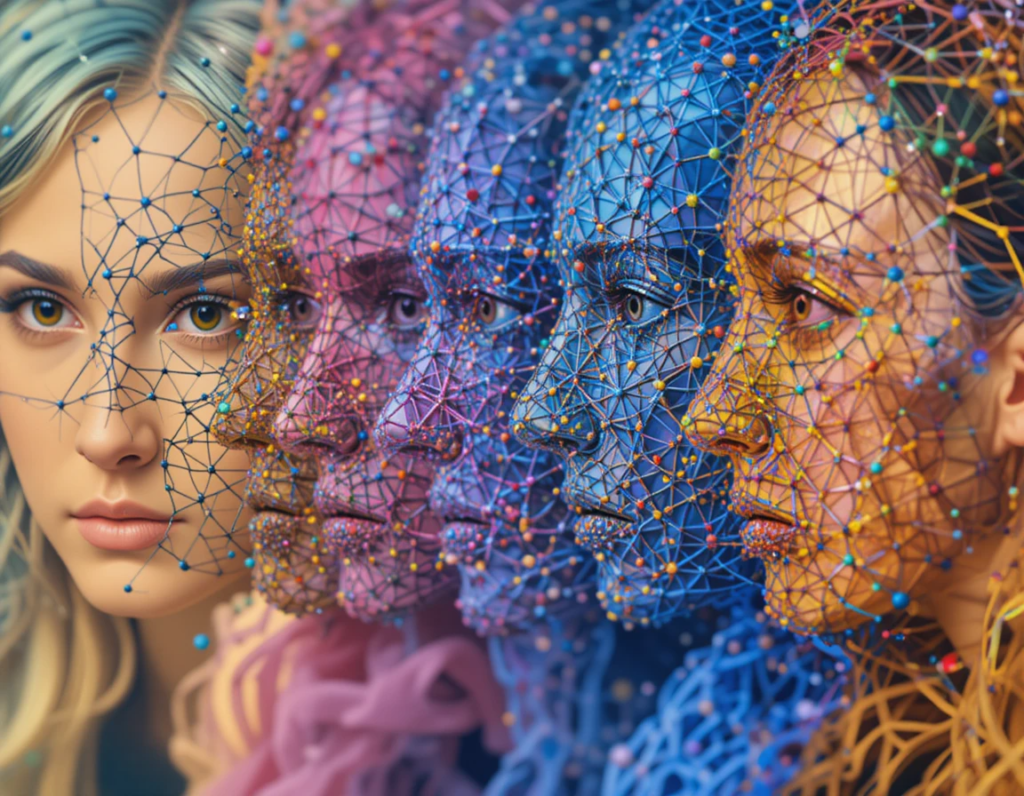
    "Side-by-side comparison of a real celebrity and their deepfake version."

    Deepfakes: The Digital Mirage – Understanding the Technology and Its Implications

    Imagine scrolling through your social media feed and stumbling upon a video of your favorite celebrity making an outrageous statement. Or, worse yet, a politician caught in a scandalous act just days before an election. What if it wasn’t real? What if it was a deepfake , a hyper-realistic fabrication powered by artificial intelligence (AI)?

    In today’s digital age, where information spreads faster than ever, deepfakes are becoming a growing concern. These AI-generated videos or images can convincingly depict people saying or doing things they never actually did. And while the technology behind them is fascinating, its implications are alarming. This article dives into the world of deepfakes, exploring how they work, their potential for both good and harm, and what they mean for our society.


    What Exactly Are Deepfakes?

    At their core, deepfakes are like digital illusions—convincing yet entirely fabricated. They use advanced computer programs to swap faces, alter expressions, or manipulate entire scenes in videos. The goal? To create something that looks authentic but is completely false. But how does this sleight-of-hand work?

    The Technology Behind Deepfakes

    The magic of deepfakes lies in artificial intelligence (AI) and machine learning (ML) . These technologies enable computers to analyze vast amounts of data—images, videos, and audio—and replicate patterns with astonishing accuracy. One of the most popular methods involves Generative Adversarial Networks (GANs) , which function like two dueling artists.

    "Diagram showing how GANs generate realistic deepfakes."

    Here’s how GANs work:

    • Generator : One neural network creates the fake content.
    • Discriminator : Another neural network tries to detect flaws in the generated content. This constant tug-of-war refines the output until the fake becomes almost indistinguishable from reality.

    How Are Deepfakes Created?

    Creating a deepfake might sound complicated, but advancements in software have made it alarmingly accessible. Here’s a step-by-step breakdown:

    1. Data Collection : Gather extensive footage of the target individual. More data means better results.
    2. Software Tools : Use specialized tools like DeepFaceLab , FaceSwap , or Avatarify . These platforms leverage AI algorithms to map facial features and movements.
    3. Training the Model : Feed the AI thousands of images and videos to teach it how the person looks and behaves.
    4. Rendering : Swap the target face onto another body in a video, adjusting lighting, angles, and expressions for realism.

    With user-friendly interfaces and pre-trained models available online, even amateurs can now create convincing deepfakes.


    The Spectrum of Deepfake Applications

    Like any powerful tool, deepfakes have dual-use potential—they can be harnessed for creativity or exploited for malicious purposes.

    Positive Uses of Deepfakes

    Believe it or not, deepfakes aren’t all doom and gloom. In fact, they hold immense creative potential:

    • Entertainment Industry : Filmmakers use deepfakes to de-age actors or resurrect deceased stars for new roles. Remember seeing a younger version of Robert Downey Jr. or Carrie Fisher in recent movies?
    • Historical Revival : Documentaries can bring historical figures back to life, offering audiences a chance to “meet” icons like Abraham Lincoln or Mahatma Gandhi.
    • Artistic Expression : Artists experiment with deepfakes to push boundaries in storytelling and visual art.

    Malicious Uses of Deepfakes

    "Detecting deepfakes requires careful scrutiny and advanced tools."

    Unfortunately, the darker side of deepfakes poses significant threats:

    • Political Manipulation : Fake videos of politicians could sway public opinion or disrupt elections. A well-timed deepfake could spark chaos during critical moments.
    • Financial Fraud : Scammers can impersonate CEOs or executives to authorize fraudulent transactions.
    • Personal Harm : Revenge porn and character assassination are disturbing realities. Victims often struggle to prove their innocence once a deepfake goes viral.

    Why Deepfakes Are a Growing Concern

    As deepfake technology advances, so do its risks. The line between truth and fiction is blurring, raising serious societal concerns.

    Eroding Trust in Media and Institutions

    When anyone can fabricate evidence, trust in media outlets, governments, and institutions erodes. People may dismiss legitimate news as fake, leading to widespread skepticism and confusion. This erosion of trust paves the way for conspiracy theories and misinformation campaigns.

    Impact on Politics and Elections

    Imagine a deepfake video surfacing hours before polling begins, falsely showing a candidate engaging in corruption. Such manipulations could influence voter behavior and undermine democratic processes. Even after debunking, the damage might already be done.

    Personal and Reputational Damage

    For individuals, the stakes are equally high. A fabricated video can ruin careers, strain relationships, and cause emotional distress. Proving innocence against such convincing fakes is challenging, especially when legal frameworks lag behind technological innovation.


    Combating the Deepfake Threat

    Addressing the deepfake dilemma requires a multi-faceted approach involving technology, legislation, and education.

    Detection Methods and Technologies

    Researchers are developing sophisticated tools to identify deepfakes. Techniques include analyzing inconsistencies in:

    • Facial Movements : Blink rates, lip-sync mismatches, and unnatural expressions.
    • Lighting and Shadows : Inconsistent lighting patterns can betray a fake.
    • Audio-Visual Sync : Mismatches between voice and mouth movements.

    However, as detection methods improve, so do deepfake creators’ techniques, creating an ongoing arms race.

    Legislation and Regulation

    Governments worldwide are grappling with how to regulate deepfakes without stifling free speech. Some countries have enacted laws criminalizing malicious deepfakes, while others emphasize collaboration across borders to combat global misuse.

    Media Literacy and Critical Thinking

    Empowering individuals to spot deepfakes is crucial. Encourage habits like:

    • Verifying sources before sharing content.
    • Questioning sensational claims.
    • Using reverse image search tools to check authenticity.

    Education initiatives targeting schools and workplaces can foster a culture of critical thinking and skepticism.


    Conclusion: Can We Outsmart AI?

    Deepfakes represent a double-edged sword—one capable of enhancing creativity and innovation while simultaneously threatening trust, integrity, and security. As AI continues to evolve, staying ahead of its misuse will require vigilance, ingenuity, and collective effort.

    The battle against deepfakes isn’t just about technology; it’s about preserving truth in a post-truth era. By investing in detection tools, enacting smart regulations, and promoting media literacy, we can mitigate the risks posed by this transformative yet treacherous technology.

    So, the next time you see a shocking video online, pause and ask yourself: Is this real—or is it just another digital mirage?

  • Unlock the $10k/Month Canva Pro User Earning Secrets

    Unlock the $10k/Month Canva Pro User Earning Secrets

    Did you know everyday people are making $10k/month with Canva Pro? It’s not just about making social media posts. Successful users are turning Canva into a business worth thousands each month.

    Canva isn’t just for freelancers. It’s for anyone who wants to make money. This article shows how designers, marketers, and entrepreneurs use Canva Pro to earn big. The difference between basic templates and huge earnings starts here.

    The Untapped Potential of Canva Pro Beyond Basic Design

    Many think Canva Pro is just for social media posts. But that’s where the real canva pro secrets start. This tool is a full-service solution for building a thriving design business. Let’s break it down.

    • Brand Kits: Create cohesive visuals for logos, websites, and print materials.
    • Content Planners: Schedule campaigns and templates for clients.
    • Team Collaboration: Manage projects with freelancers or clients in real time.

    These features turn Canva Pro into a business hub. Imagine offering brand guides to startups or designing annual reports for small businesses. That’s where the money flows. The canva pro tips pros use? They automate repetitive tasks, freeing time to focus on high-paying clients.

    “Canva isn’t a tool—it’s a revenue engine.”

    canva pro secrets for design business

    Business owners miss out when they stick to basic designs. Explore templates for eBooks, product launches, or email campaigns. Clients pay top dollar for this level of service. Start by upgrading to Canva Pro today. The hidden features are your gateway to a profitable design business.

    Canva Pro Users Are EARNING $10k/Month—Here’s Their Secret!

    Real people are making a lot of money with Canva Pro. Let’s explore canva pro success stories that show its earning potential. From small businesses to freelancers, they found ways to make good money.

    Amanda, a mom in Texas, sells social media templates and makes $12k/month. Mark, a teacher turned freelancer, earns $10k/month from client work. Jen, a marketer, sells printable planners and makes $9k/month. These stories show how to make money with canva pro in different ways.

    canva pro success stories

    What do these earners have in common? They all use automation tools to grow. Amanda uses email marketing funnels. Mark delegates tasks with project management apps. Jen’s website sells products automatically 24/7. They also focus on specific niches, not trying to appeal to everyone.

    “I never considered myself a designer, but Canva Pro let me specialize in event invitations. Now I’m quitting my day job.” – Lisa, event planner earning $8k/month

    These success stories are not just luck. They show canva pro earnings are possible with the right approach. The key is to choose a profitable niche, create repeatable processes, and market consistently. The next section will guide you on how to find your ideal path.

    The Evolution from Simple Design Tool to Income-Generating Powerhouse

    Canva’s journey has changed how creators make money online. It started with simple designs for social media and flyers. Now, Canva Pro offers advanced tools like custom templates and team collaboration. These features help freelancers and small businesses turn their designs into income.

    Year Key Feature Launch Impact on Earnings
    2013 Basic templates for social media Intro to design experimentation
    2018 Canva Pro launch Advanced editing for premium clients
    2021 Brand Kit integration Professional consistency for repeat work

    Today, earnfromhome opportunities are booming. Design portfolio builders use Canva Pro’s advanced features. Marketing agencies work more efficiently, and solopreneurs sell templates online. The platform has evolved from a simple tool to a powerful income source.

    • Team collaboration features reduce project setup time by 40%
    • Custom fonts/colors let users match client branding instantly
    • Export options at 4K resolution meet professional standards

    Creators can now make money at every stage, from idea to delivery. This approach makes it easier for those building a design portfolio to succeed on freelance platforms. The journey from beginner to earning $10k/month starts with mastering Canva Pro’s advanced tools.

    Identifying Your Most Profitable Canva Pro Service Offerings

    Solopreneurs, small businesses, and marketing agencies all focus on design that works. Finding your niche means looking at which Canva Pro services get the highest prices. Branding services like logos, color palettes, and style guides are often in high demand because they shape a client’s image for the long term.

    • Branding services: 85% of clients see cohesive branding as key to building trust
    • Social media ad templates for e-commerce brands
    • Pitch decks for startups looking to present to investors

    Start by making a list of your best design skills. Then, compare them to what’s in demand on platforms like Upwork or Fiverr. Ask yourself: “Does this service solve a common problem for my target client?” Services that are both in demand and require a special skill set are often the most profitable.

    “My $10k/month milestone came from specializing in Shopify store banners and Instagram carousels for wellness brands,” says Mia Carter, a Canva Pro freelancer with 475+ five-star reviews.

    Look for service bundles that work well together. For instance, offering website headers with email campaign templates can lead to more repeat business. Use freelance platforms to keep an eye on pricing trends. This way, you can make sure your rates are competitive and turn your design skills into a steady income without overextending yourself.

    Lucrative Digital Products You Can Create and Sell Today

    Use your Canva Pro skills to make money with digital products. Focus on items people can use right away, without needing a client project. Here’s how to begin:

    • Social media templates: Make Instagram post grids, ad sets, and Stories bundles. Start with kits priced at $15–$25. You can also sell these on Etsy or your own website.
    • Printables: Design planners, goal trackers, and worksheets. Topics like productivity, wellness, and homeschooling are in high demand. Sell PDFs for $10–$30.
    • Brand kits: Offer full branding packages with logos, color palettes, and social media graphics. Charge $50–$100 per bundle.

    “My wedding planner printables hit $3k/month in 6 months. No client calls, just repeat sales.”

    Choose marketplaces like Creative Market or Gumroad for easy access. Use keywords like “social media templates for small businesses” to get noticed. Add tutorials in ZIP files to increase value.

    Make once, sell forever. Start with 3–5 targeting niches like parenting, small business owners, or educators. Update collections seasonally to keep demand high.

    Building Your Design Business Foundation with Canva Pro

    Every successful design business starts with strong systems. Use these canva pro tips to build repeatable processes. These processes turn casual projects into a thriving income stream.

    1. Client onboarding: Create welcome kits in Canva Pro with style guides, timeline checklists, and contract templates. Use Canva’s collaboration features to streamline sign-offs.
    2. Project tracking: Design custom dashboards with milestone timelines and progress bars to keep clients informed. Shareable PDFs keep everything organized.
    3. Communication templates: Pre-made response templates for common client questions save hours each week. Store them as Canva templates for instant access.

    Use this pricing formula to calculate your rates: (Hourly cost x 3) + (project setup time x 2) = Minimum fair rate. Always present your design portfolio with client testimonials and before/after examples. This justifies premium pricing.

    Portfolio Element Basic Approach Professional Strategy
    Project showcases 3-5 generic samples 10+ case studies with client challenges/solutions
    Visual style Default Canva themes Custom color palettes + brand typography
    Contact options Email address only Live chat button + project inquiry form

    Invest time now to automate these systems. Consistent systems + a standout design portfolio = predictable revenue growth. Start with one process this week and watch your business efficiency soar.

    Turning One-Time Projects into Recurring Revenue Streams

    Many Canva Pro users make a steady income by creating repeatable systems. This move from one-off jobs to ongoing income is crucial for earning $10k/month. Here’s how successful creators achieve this:

    Retainer agreements are a top strategy. Offer monthly packages for brands needing regular design updates. For example, a lifestyle blogger pays $500/month for 10 social media posts using Canva Pro templates. Details like turnaround times and asset types are outlined upfront to avoid confusion.

    • Retainer models: Set fixed hours or deliverables per month
    • Subscription tiers: Tiered pricing for template libraries or coaching access
    • Automated billing: Simplify payments with platforms like PayPal or Stripe

    Subscription-based models unlock passive income. Consider selling access to pre-made Canva Pro templates for event planners or small businesses. One user built a $3k/month passive income stream by bundling 50+ marketing templates into a $99/month subscription. These models work because clients pay upfront for ongoing value.

    Model How It Works Canva Pro Tools Used
    Retainer Monthly design services for clients Team Library, Collaborate features
    Subscription Paywall access to template bundles Asset Library, Publish features

    Canva Pro success stories show recurring models cut the stress of chasing new clients. Focus on automating delivery and leveraging existing relationships. This approach builds predictable income while expanding your reach.

    How to Scale Your Canva Pro Business Beyond $10k/Month

    To grow your design business, you need to work with a team. Canva Pro users who make $10k/month share how to expand by adding team members. Start by using Canva’s team tools to hire freelancers or virtual assistants.

    Train them with template libraries and shared project links. This keeps your work consistent.

    Automation is key to keeping things running smoothly. Use Canva’s integrations with apps like Calendly or Trello. This makes talking to clients and tracking projects easier.

    Successful Canva Pro users automate tasks. This lets them focus on important work like meeting new clients or creating new products.

    • Assign roles: Designers handle templates; admins manage client portals
    • Use Canva’s shared team libraries for centralized assets
    • Automate invoice reminders via Zapier or QuickBooks
    Solo Mode Team-Driven
    Limited by personal time Scalable through delegation
    Single revenue stream Multiple service offerings
    Higher client workload Systemized processes

    Many Canva Pro users start making $10k/month solo but hit a wall without growing. Teams can make six-figure incomes by standardizing and automating work. The key is to create systems that increase output, not just work more hours.

    Common Pitfalls to Avoid on Your Canva Pro Income Journey

    Maximizing your canva pro secrets means avoiding hidden obstacles. Many users lose out on earning potential because of mindset traps and operational errors. These mistakes can hurt even the most skilled designers. Spot them early to improve your how to make money with canva pro plan.

    Pitfall Sign You’re Stuck Quick Fix
    Undervaluing Work Consistently undercutting competitors Research industry rates and adjust pricing tiers
    Scope Creep Projects taking 2x estimated time Use Canva Pro’s templates to set clear project limits
    Inactive Portfolio No new client inquiries in 30 days Refresh portfolio with 3 standout case studies

    Ignoring client feedback is a big earnfromhome mistake. Watch for patterns like frequent revisions or low client retention. For instance, if clients ask for free edits, update your contract terms. Use Canva Pro’s advanced features like animated graphics to stand out.

    Changing your mindset is key. Instead of thinking “I’m not good enough,” focus on data. Track how much time each project takes. Charge based on value, not hours. Avoid free design contests—these waste time without profit.

    Stay ahead by regularly reviewing your workflow. Small adjustments can unlock the full potential of canva pro secrets. By avoiding these traps, you turn stumbling blocks into stepping stones toward steady earnings.

    Conclusion: Your Roadmap to Canva Pro Financial Freedom

    Start today and plan your path to earning with Canva Pro. In the first 30 days, pick a profitable service like social media graphics or e-books. Use official tutorials to create your first templates.

    By day 60, launch three digital products and get your first clients. At 90 days, set up systems for ongoing income like subscription boxes or premium bundles.

    Join Canva’s Design School to improve your skills and meet others. Look at Canva’s marketplace for trending templates. Use Fiverr or Etsy to grow your income beyond local clients.

    Follow Canva’s success stories for real strategies. Remember, reaching $10k/month is just the start. Use Canva’s analytics to track your progress weekly.

    Adjust your pricing and offerings based on feedback. Keep up with marketing on Instagram and LinkedIn to find high-paying clients. Each step brings you closer to financial freedom through design.

  • AI News Roundup: March 13, 2025 – Breakthroughs, Industry Shifts, and Creative Frontiers

    A futuristic government office where AI robots and human apprentices collaborate, surrounded by holographic screens displaying data and policies, in a sleek, modern design with a British flag subtly in the background." Alt Text: "Futuristic UK government office with AI robots and human apprentices working together amid holographic screens

    Welcome, tech enthusiasts, to your daily dose of AI news! It’s March 13, 2025, and AI is changing the game. From government to insurance and creative studios, AI is making a big impact. In this blog post, we’ll explore today’s top AI stories and what they mean for the future. Get ready for a deep dive into the AI world!

    AI Takes the Helm in Government: Starmer’s Bold Vision

    Headline: AI Should Replace Some Work of Civil Servants, Starmer to Announce

    The UK’s politics just got a tech boost. Prime Minister Keir Starmer plans to use AI to improve government work. He wants to save billions and modernize the workforce.

    Starmer’s idea is simple: if AI can do a job better, why waste human time? He also wants to hire 2,000 tech apprentices. This could lead to a mix of human and AI work in government.

    This move could change how governments work. It might even start a global trend. Imagine AI handling routine tasks, freeing humans for more important work. This could make the public sector more efficient.

    Stay tuned for more on this exciting development.

    Insurance Goes All-In on AI: ROI or Bust

    Headline: AI Adoption in Insurance Accelerates, But ROI Pressures Loom

    The insurance sector is embracing AI with enthusiasm. A new report shows 66% of leaders believe AI will bring a good return on investment. They’re investing in AI for efficiency and better customer service.

    Why the rush? The competition is fierce, and shareholders are impatient. AI can speed up underwriting, detect fraud, and offer personalized policies. Adoption rates are up, and spending is expected to rise in 2025.

    But there’s a catch. Executives must prove these investments are worth it. If the ROI doesn’t materialize, there could be trouble.

    This is a key moment for AI in the real world. Success in insurance could lead to AI advancements in other sectors. Imagine your car insurance adjusting automatically after a rainy day. But the pressure to deliver profit keeps this story interesting. Will AI succeed, or will the bubble burst? We’re watching closely.

    AI as the Muse: Creativity Gets a Tech Boost

    Headline: Matt Moss on AI as the Tool for Idea Expression

    Now, let’s look at AI’s impact on creativity. Matt Moss sees AI as a game-changer for artists. He believes AI can enhance individuality and sustainability in various creative fields.

    Moss thinks AI can free creators from mundane tasks. It can help with drafts, visuals, and ideas quickly. This isn’t about replacing artists; it’s about empowering them. Imagine a designer or writer working with AI to create amazing content.

    For tech lovers, AI is getting very personal. It’s not just about making things faster. It’s about unlocking new possibilities. Moss’s vision shows a future where tech and creativity blend beautifully.

    What Ties It All Together?

    Today, AI is changing everything fast. It’s reshaping government, business, and creativity. Starmer’s plan to use AI in the civil service is a big step. The insurance industry is also seeing huge growth thanks to AI.

    For tech fans, this is your playground. You can code, analyze, or create with AI. But, there are big questions. Will governments use AI fairly? Can businesses meet AI’s promises? And how will creators keep their unique touch in a world of machines?

    The Bigger Picture: What’s Next for AI?

    Artist in a digital studio using AI to create colorful abstract designs on a touchscreen, surrounded by plants."

    These changes are part of a bigger story. Governments using AI could lead to smarter cities. Insurance companies might use AI to predict life events. And AI tools could change how we tell stories and make music by 2030.

    The tech world should be excited. This isn’t just science fiction. It’s real and happening now. If you want to be part of it, learn Python or try AI art. The future belongs to those who are curious. But, we also need to think about ethics and the impact on jobs.

  • AI News Summary March 12, 2025

    AI News Summary March 12, 2025

    The Women Pioneering AI: Breaking Barriers and Shaping the Future

    Women are leading the way in artificial intelligence, making big changes. They are pushing the industry forward with their work. This article looks at their achievements and why diversity in AI is key for a better future. The stories of Irene Solaiman, Eva Maydell, and Lee Tiedrich remind us that behind every technological leap are dedicated individuals striving to make a difference. Their achievements not only advance AI but also inspire future generations to pursue careers in STEM fields.

    Industry Developments: Hugging Face’s Bold Leap Into Autonomous Vehicles

    A sleek self-driving car navigating a bustling cityscape, with glowing indicators highlighting its sensors and cameras.

    Hugging Face is making big moves in AI, including in self-driving cars. They’ve added training data for these cars. This move shows Hugging Face’s big role in changing how we travel.

    Autonomous cars need smart algorithms to work well. Hugging Face’s data helps make these systems better. This means we’re getting closer to cars that drive safely and efficiently on their own.

    But, using AI in cars raises big questions. How do we make sure these systems act like humans? What safety measures do we need? These questions need answers from many experts.

    Ethical Debates & Policy Changes: Navigating the EU AI Act

    The EU AI Act is a big step in regulating AI. It’s a softer approach than before, focusing on ethical use. This shows a smart balance between innovation and safety.

    The Act has different rules for different AI uses. High-risk areas get strict checks, while low-risk ones get more freedom. This lets innovation grow without risking safety.

    Eva Maydell’s work on the Act is important. She brings different views to the table. Her efforts help make sure the Act works for everyone.

    Expert Insights: Will AI Replace Programmers?

    A developer working alongside an AI assistant projected onto a dual-monitor setup, symbolizing human-AI collaboration.

    IBM’s CEO doubts AI will replace programmers soon. He says humans are still needed for complex tasks. AI can help with some tasks, but not all.

    AI is meant to help, not replace, humans. It can make tasks easier, letting people focus on more important things. For example, AI can help with coding, freeing up time for other tasks.

    Conclusion: Building a Better Tomorrow with AI

    Irene Solaiman, Eva Maydell, and Lee Tiedrich are changing AI. Their work inspires others to get into STEM. It also shows how innovation and rules work together.

    AI can do a lot for us, like making travel safer and fairer. By celebrating diversity and working together, we can make AI better for everyone.

    Call-to-Action: Ready to dive deeper into the world of AI? Share your thoughts below or connect with fellow enthusiasts on social media using #AIInnovation2025!

  • Top 5 AI Breakthroughs to Watch in 2025: The Future Is Now

    The AI Revolution Accelerates in 2025

    As of March 12, 2025, the artificial intelligence (AI) landscape is buzzing with potential. We’re not just tweaking existing models anymore—we’re on the cusp of paradigm shifts in healthcare, business, generative AI and customer service that could redefine how we live, work, and explore the universe. Drawing from current trends, research trajectories, and the ambitious ethos of innovators like xAI, I’ve zeroed in on five AI breakthroughs that could dominate headlines by year’s end. From machines that think like humans to systems that rewrite their own code, here’s what’s coming—and why it matters.

    1. Unified Multimodal AI: The All-Seeing, All-Knowing Machine

    Imagine an AI that doesn’t just read text or generate images but fuses every sensory input—text, visuals, audio, maybe even touch—into a seamless reasoning powerhouse. By late 2025, I predict we’ll see unified multimodal AI take center stage. Unified Multimodal AI is poised to become a transformative force, integrating diverse data types—text, images, audio, and video—to create systems that are more intuitive, capable, and contextually aware.This isn’t about stitching together separate modules (like today’s GPT-4o or Google’s Gemini); it’s a holistic brain that processes a video, hears the dialogue, and critiques the plot with uncanny insight, much like the new platform from China called “Manus.”

    2. Quantum-Powered AI Training: Speed Meets Scale

    Training today’s massive AI models takes months and guzzles energy like a small city. Enter quantum-powered AI training, a breakthrough I’d bet on for 2025. Driven by breakthroughs in hardware, hybrid systems, and algorithmic innovation. Here’s how this convergence is reshaping AI development and Quantum computing, long a sci-fi tease, is maturing—IBM and Google are pushing the envelope—and pairing it with AI could slash training times to days while tackling problems too complex for classical computers.

    Picture this: a trillion-parameter model for climate prediction or drug discovery, trained in a weekend. The trend’s clear—quantum supremacy is nearing practical use, and AI’s computational hunger makes it a perfect match. This could unlock hyper-specialized tools, making 2025 the year AI goes from “big” to “unthinkable.” By late 2025, expect wider adoption of quantum-inspired AI models that blend classical and quantum techniques

    3. Self-Improving AI: The Machine That Evolves Itself

    What if an AI didn’t need humans to get smarter? By 2025, I expect self-improving AI—sometimes called recursive intelligence—to step into the spotlight. This is a system that spots its own flaws (say, a reasoning bias) and rewrites its code to fix them, all without a programmer’s nudge.

    We’re already seeing hints with AutoML and meta-learning, but 2025 could bring a leap where AI iterates autonomously. xAI’s mission to fast-track human discovery aligns perfectly here—imagine an AI that evolves to crack physics puzzles overnight. Ethics debates will flare (how do you control a self-upgrading brain?), but the potential’s staggering.

    4. AI-Driven Biological Interfaces: Merging Mind and Machine

     "Digital illustration of an AI-driven biological interface connecting a human brain to technology in a futuristic setting."

    Elon Musk’s Neuralink is just the tip of the iceberg. By 2025, AI-driven biological interfaces could crack real-time neural signal translation—turning brainwaves into commands or thoughts into text. Picture an AI that learns your neural patterns via reinforcement learning, then powers intuitive prosthetics or lets paralyzed individuals “speak” through thought alone.

    The trend’s building: non-invasive brain tech is advancing, and AI’s pattern-decoding skills are sharpening. This could bridge the human-machine divide, making 2025 a milestone for accessibility and transhumanism. Sci-fi? Sure. But it’s closer than you think.

    5. Energy-Efficient AI at Scale: Green Tech Goes Big

    AI’s dirty secret? It’s an energy hog—training one model can match a car’s lifetime carbon footprint. I’m forecasting a 2025 breakthrough in energy-efficient AI, where sparse neural networks or neuromorphic chips cut power use dramatically. Think models that run on a fraction of today’s juice without sacrificing punch.

    Why 2025? Climate pressure’s mounting, and Big Tech’s racing to innovate—Google’s already teasing sustainable AI frameworks. This could democratize the field, letting startups wield monster models without bankrupting the planet. It’s practical, urgent, and overdue.

    Why These Breakthroughs Matter

    These aren’t standalone wins—they’ll amplify each other. They are paving the way for a future where AI is more intuitive, efficient, and impactful across every aspect of society. Multimodal AI could leverage quantum training for speed, self-improving systems could optimize biological interfaces, and energy-efficient designs could make it all scalable. By December 2025, we might look back and say this was the year AI stopped mimicking humans and started outpacing us.

    For society, the stakes are high. Jobs, ethics, and equity will shift—fast. A Mars rover with multimodal smarts could redefine exploration, while brain-linked AI could transform healthcare. But with great power comes great debate: who controls self-improving AI? How do we regulate quantum leaps?

    What do you think? Are you rooting for a mind-melding AI or a quantum-powered leap? Drop your thoughts below—I’d love to hear your take. The future’s unwritten, but 2025’s shaping up to be one hell of a chapter.

  • Revolutionizing Industries: The Latest Breakthroughs in Artificial Intelligence

    Revolutionizing Industries: The Latest Breakthroughs in Artificial Intelligence

    Artificial Intelligence (AI) continues to revolutionize industries and reshape our understanding of technology. From groundbreaking research to ethical debates, the AI landscape is evolving rapidly. In this blog post, we’ll delve into the most significant AI advancements, industry developments, ethical considerations, and expert opinions that are shaping the future of technology.

    Major Research Breakthroughs

    1. Alibaba Qwen QwQ-32B: Alibaba’s latest AI model, Qwen QwQ-32B, is making waves with its impressive performance. Despite having only 32 billion parameters, it rivals much larger models, showcasing the potential of scaling Reinforcement Learning (RL) on robust foundation models. This breakthrough could lead to more efficient and powerful AI applications across various industries .

    2. Deepgram Nova-3 Medical: Deepgram has introduced Nova-3 Medical, an AI speech-to-text model designed specifically for healthcare transcription. This model significantly reduces transcription errors, enhancing the accuracy and efficiency of medical documentation. As healthcare providers increasingly rely on digital records, such advancements are crucial for improving patient care and operational efficiency .

    Industry Developments

    1. FIS Treasury GPT: Financial technology firm FIS has launched Treasury GPT, an AI-powered tool for treasurers. Developed in collaboration with Microsoft, this tool uses Microsoft Azure OpenAI Service to provide high-quality guidance and support. By automating low-value administrative tasks, Treasury GPT allows treasurers to focus on strategic initiatives, driving growth and innovation within their organizations .

    2. Opera Browser-Integrated AI Agent: Opera has taken a significant step in integrating AI into daily browsing activities with its new browser-integrated AI agent. This agent performs tasks directly for users, enhancing their browsing experience. As AI becomes more integrated into our daily lives, such advancements are expected to become the norm, providing users with seamless and efficient digital experiences .

    Ethical Debates and Policy Changes

    1. EU Ethical AI Compliance: The EU-funded initiative CERTAIN is at the forefront of driving ethical AI compliance in Europe. With regulations like the EU AI Act gaining traction, the focus on ethical considerations in AI development and deployment has never been more critical. Ensuring that AI technologies are developed and used responsibly is essential for building trust and acceptance among users and stakeholders .

    2. Autoscience Carl: Autoscience has developed Carl, the first AI system capable of crafting academic research papers that pass rigorous peer-review processes. While this is a significant achievement, it raises important ethical questions about the role of AI in academic settings. As AI continues to advance, it is crucial to consider the implications of AI-generated research on academic integrity and the broader scientific community .

    Notable Opinions from Leading AI Experts

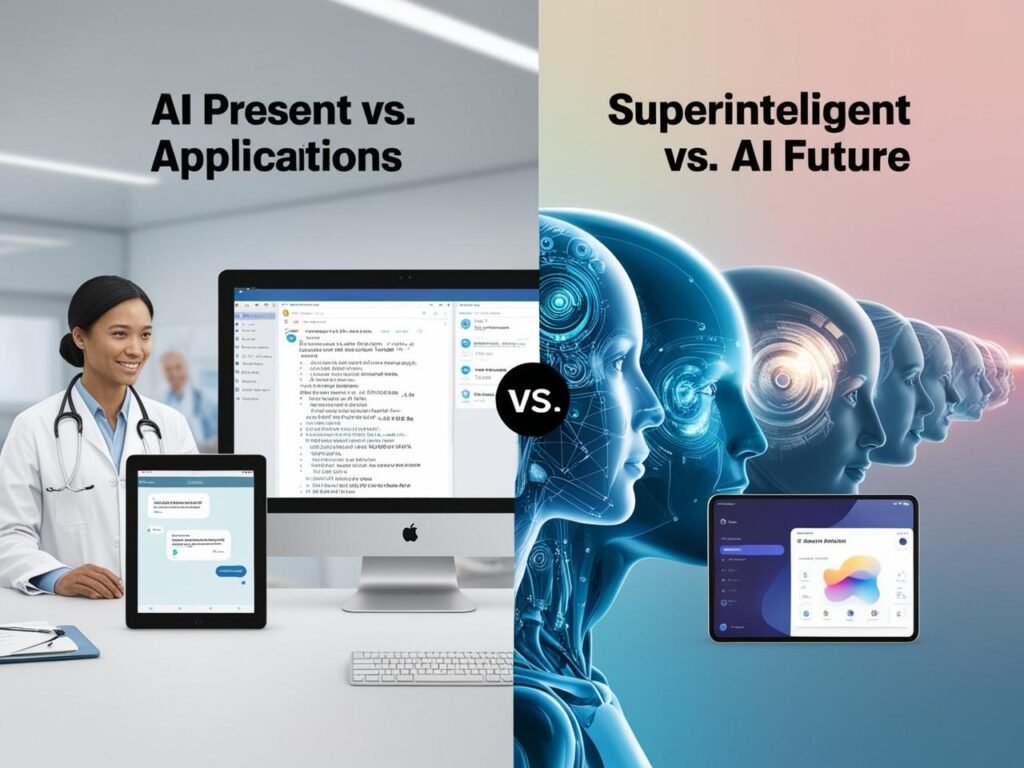
    "Comparative illustration showing current AI applications in healthcare and finance on the left, with futuristic representations of superintelligent AI systems on the right, highlighting the evolution of artificial intelligence."

    1. SoftBank on Artificial Superintelligence (ASI): SoftBank’s chief has made a bold prediction that Artificial Superintelligence (ASI) will be achieved within the next decade. This prediction highlights the rapid advancements in AI technology and the potential for AI to surpass human intelligence in various domains. As we move closer to this reality, it is essential to consider the ethical, social, and economic implications of ASI .

    2. AI and Blockchain Mutuality: A recent study has highlighted the mutual benefits of integrating AI and blockchain technologies. This combination can enhance trust and efficiency in various applications, from financial services to supply chain management. As both technologies continue to evolve, their integration is expected to drive innovation and create new opportunities across industries .

    Conclusion

    The AI landscape is rapidly evolving, with significant advancements and ethical considerations shaping its future. From groundbreaking research to industry developments and expert opinions, AI continues to revolutionize industries and reshape our understanding of technology. As we move forward, it is crucial to stay informed about the latest trends and developments in AI to leverage its potential fully and responsibly.

  • Inside the Black Box AI: The Hidden Logic We Still Can’t Crack

    Inside the Black Box AI: The Hidden Logic We Still Can’t Crack

    A translucent, glowing neural network structure contained within a dark, enigmatic box. Light paths show data entering and decisions emerging, but the internal connections are obscured and mysterious

    Black box AI systems make billions of decisions daily, yet scientists cannot fully explain how these systems arrive at their conclusions. While artificial intelligence continues to achieve breakthrough results in everything from medical diagnosis to autonomous driving, the underlying logic remains surprisingly opaque. Despite their impressive capabilities, modern neural networks operate like sealed machines – data goes in, decisions come out, but the internal reasoning process stays hidden from view.

    Today’s AI transparency challenges extend far beyond simple curiosity about how these systems work. Understanding the decision-making process of AI has become crucial for ensuring safety, maintaining accountability, and building trust in automated systems. This article explores the complex architecture behind black box AI, examines current interpretability challenges, and reviews emerging technical solutions that aim to shed light on AI reasoning. We’ll also analyze the limitations of existing methods and discuss why cracking the black box problem remains one of artificial intelligence’s most pressing challenges.

    Understanding Black Box AI Architecture

    Modern black box AI systems rely on sophisticated neural networks that process information through multiple interconnected layers. These networks contain thousands of artificial neurons working together to identify patterns and make decisions, fundamentally different from traditional programming approaches.

    Neural Network Structure Basics

    Neural networks mirror the human brain’s architecture through layers of interconnected nodes called artificial neurons [1]. Each network consists of three primary components: an input layer that receives data, hidden layers that process information, and an output layer that produces results. The hidden layers perform complex computations by applying weighted calculations and activation functions to transform input data [2].

    The strength of connections between neurons, known as synaptic weights, determines how information flows through the network. These weights continuously adjust during training to improve the network’s accuracy [2]. Furthermore, each neuron contains a bias term that allows it to shift its output, adding another layer of complexity to the model’s decision-making process.

    Deep Learning vs Traditional Programming

    Deep learning represents a significant departure from conventional programming methods. Traditional programs rely on explicit rules and deterministic outcomes, where developers must code specific instructions for each scenario [3]. In contrast, deep learning models learn patterns directly from data, enabling them to handle complex problems without explicit programming for every possibility.

    The key distinction lies in their approach to problem-solving. Traditional programming produces fixed solutions requiring manual updates, whereas machine learning algorithms adapt to new data and continuously improve their performance [4]. This adaptability makes deep learning particularly effective for tasks involving pattern recognition, natural language processing, and complex decision-making scenarios.

    Key Components of Modern AI Systems

    Modern AI systems integrate several essential components that work together to enable sophisticated decision-making capabilities:

    Data Processing Units: These handle the initial input and transform raw data into a format suitable for analysis [5].

    Learning Algorithms: The system employs various learning approaches, including:

    Supervised learning with labeled data

    Unsupervised learning for pattern discovery

    Reinforcement learning through environmental feedback [5]

    The system’s problem-solving capabilities stem from specialized techniques like planning, search, and optimization algorithms [5]. Additionally, modern AI incorporates natural language processing and computer vision components, enabling it to understand human language and interpret visual information effectively.

    Each layer in a deep neural network contains multiple neurons that process increasingly complex features of the input data [6]. Through these layers, the network can analyze raw, unstructured data sets with minimal human intervention, leading to advanced capabilities in language processing and content creation [6]. Nevertheless, this sophisticated architecture creates inherent opacity, as even AI developers can only observe the visible input and output layers, while the processing within hidden layers remains largely inscrutable [6].

    Current Interpretability Challenges

    Interpreting the decision-making process of artificial intelligence systems presents significant technical hurdles that researchers continue to address. These challenges stem from the inherent complexity of modern AI architectures and their data-driven nature.

    Model Parameter Complexity

    The sheer scale of parameters in contemporary AI models creates fundamental barriers to understanding their operations. Modern language models contain billions or even trillions of parameters [7], making it impossible for humans to comprehend how these variables interact. For a single layer with just 10 parameters, there exist over 3.5 million possible ways of permuting weights [8], highlighting the astronomical complexity at play.

    Moreover, these parameters function like intricate knobs in a complex machine, loosely connected to the problems they solve [9]. When models grow larger, they become more accurate at reproducing training outputs, yet simultaneously more challenging to interpret [10]. This complexity often leads to overfitting issues, where models memorize specific examples rather than learning underlying patterns [7].

    Training Data Opacity Issues

    The lack of transparency regarding training data poses substantial challenges for AI interpretation. Training datasets frequently lack proper documentation, with license information missing in more than 70% of cases [11]. This opacity creates multiple risks:

    Potential exposure of sensitive information

    Unintended biases in model behavior

    Compliance issues with emerging regulations

    Legal and copyright vulnerabilities [11]

    Furthermore, the continuous training or self-learning nature of algorithms compounds these challenges, as explanations need constant updates to remain relevant [10]. The dynamic nature of AI systems means they learn from their own decisions and incorporate new data, making their decision-making processes increasingly opaque over time [10].

    Processing Layer Visibility Problems

    The internal representation of non-symbolic AI systems contains complex non-linear correlations rather than human-readable rules [10]. This opacity stems from several factors:

    First, deep neural networks process information through multiple hidden layers, making it difficult to trace how initial inputs transform into final outputs [12]. The intricate interactions within these massive neural networks create unexpected behaviors not explicitly programmed by developers [13].

    Second, the complexity of these systems often leads to what researchers call “ghost work” – hidden processes that remain invisible even to the systems’ creators [14]. This invisibility extends beyond technical aspects, as AI systems frequently make decisions based on factors that humans cannot directly observe or comprehend [15].

    Significantly, excessive information can impair decision-making capabilities [15]. AI systems must adapt to human cognitive limitations, considering when and how much information should be presented to decision-makers [15]. This balance between complexity and comprehensibility remains a central challenge in developing interpretable AI systems.

    Research Breakthroughs in AI Transparency

    Recent advances in AI research have unlocked promising methods for understanding the inner workings of neural networks. Scientists are steadily making progress in decoding the decision-making processes within these complex systems.

    Anthropic’s Feature Detection Method

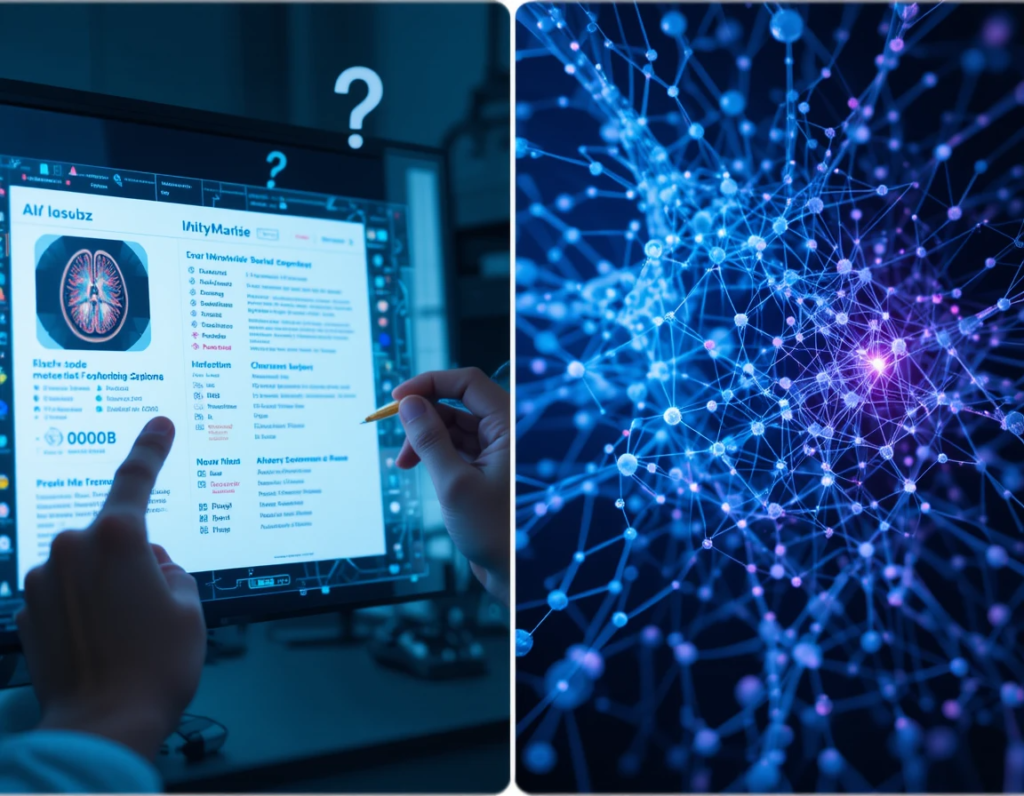
    plit-screen image: on the left, a doctor examining an AI-generated medical diagnosis with question marks hovering overhead; on the right, a visualization of a complex neural network with millions of nodes and connections illuminated in blue and purple, demonstrating the impossible task of tracing AI reasoning.

    Anthropic researchers have pioneered an innovative approach to decode large language models through dictionary learning techniques. This method treats artificial neurons like letters in Western alphabets, which gain meaning through specific combinations [16]. By analyzing these neural combinations, researchers identified millions of features within Claude’s neural network, creating a comprehensive map of the model’s knowledge representation [16].

    The team successfully extracted activity patterns that correspond to both concrete and abstract concepts. These patterns, known as features, span across multiple domains – from physical objects to complex ideas [1]. Most notably, the researchers discovered features related to safety-critical aspects of AI behavior, such as deceptive practices and potentially harmful content generation [16].

    Through careful manipulation of these identified features, scientists demonstrated unprecedented control over the model’s behavior. By adjusting the activity levels of specific neural combinations, they could enhance or suppress particular aspects of the AI’s responses [1]. For instance, researchers could influence the model’s tendency to generate safer computer programs or reduce inherent biases [16].

    Neural Network Visualization Tools

    Significant progress has been made in developing tools that make neural networks more transparent. These visualization techniques provide crucial insights into how AI systems process and analyze information:

    TensorBoard enables real-time exploration of neural network activations, allowing researchers to witness the model’s decision-making process in action [17]

    DeepLIFT compares each neuron’s activation to its reference state, establishing traceable links between activated neurons and revealing dependencies [18]

    The development of dynamic visual explanations has proven particularly valuable in critical domains like healthcare. These tools enable medical professionals to understand how AI systems reach diagnostic conclusions, fostering a collaborative environment between human experts and artificial intelligence [19].

    Visualization techniques serve multiple essential functions in understanding AI systems:

    Training monitoring and issue diagnosis

    Model structure analysis

    Performance optimization

    Educational purposes for students mastering complex concepts [20]

    These tools specifically focus on uncovering data flow within models and providing insights into how structurally identical layers learn to focus on different aspects during training [20]. Consequently, data scientists and AI practitioners can obtain crucial insights into model behavior, identify potential issues early in development, and make necessary adjustments to improve performance [20].

    The combination of feature detection methods and visualization tools marks a significant step forward in AI transparency. These advances not only help researchers understand how AI systems function at a deeper level but accordingly enable more effective governance and regulatory compliance [21]. As these technologies continue to evolve, they promise to make AI systems increasingly interpretable while maintaining their sophisticated capabilities.

    Technical Solutions for AI Interpretation

    Technological advancements have produced several powerful tools and frameworks that help decode the complex decision-making processes within artificial intelligence systems. These solutions offer practical approaches to understanding previously opaque AI operations.

    LIME Framework Implementation

    Local Interpretable Model-agnostic Explanations (LIME) stands as a groundbreaking technique for approximating black box AI predictions. This framework creates interpretable models that explain individual predictions by perturbing original data points and observing corresponding outputs [3]. Through this process, LIME weighs new data points based on their proximity to the original input, ultimately fitting a surrogate model that reveals the reasoning behind specific decisions.

    The framework operates through a systematic approach:

    Data perturbation and analysis

    Weight assignment based on proximity

    Surrogate model creation

    Individual prediction explanation

    LIME’s effectiveness stems from its ability to work with various types of data, including text, images, and tabular information [22]. The framework maintains high local fidelity, ensuring explanations accurately reflect the model’s behavior for specific instances.

    Explainable AI Tools

    Modern explainable AI tools combine sophisticated analysis capabilities with user-friendly interfaces. ELI5 (Explain Like I’m 5) and SHAP (Shapley Additive exPlanations) represent two primary frameworks integrated into contemporary machine learning platforms [3]. These tools enable data scientists to examine model behavior throughout development stages, ensuring fairness and robustness in production environments.

    SHAP, based on game theory principles, computes feature contributions for specific predictions [23]. This approach delivers precise explanations by:

    Analyzing feature importance

    Calculating contribution values

    Providing local accuracy

    Maintaining additive attribution

    Model Debugging Approaches

    Effective model debugging requires a multi-faceted strategy to identify and resolve performance issues. Cross-validation techniques split data into multiple subsets, enabling thorough evaluation of model behavior across different scenarios [4]. Validation curves offer visual insights into performance patterns as training data size varies.

    Feature selection and engineering play crucial roles in model optimization. These processes involve:

    Identifying relevant features

    Transforming existing attributes

    Creating new informative variables

    Addressing data imbalance issues [4]

    Model assertions help improve predictions in real-time, alongside anomaly detection mechanisms that identify unusual behavior patterns [24]. Visualization techniques prove invaluable for debugging, allowing developers to observe input and output values during execution. These tools enable precise identification of error sources and data modifications throughout the debugging process [24].

    Modular debugging approaches break AI systems into smaller components, such as data preprocessing and feature extraction units [25]. This systematic method ensures thorough evaluation of each system component, leading to more reliable and accurate models. Through careful implementation of these technical solutions, developers can create more transparent and trustworthy AI systems that maintain high performance standards.

    Limitations of Current Methods

    Current methods for understanding black box AI face substantial barriers that limit their practical application. These constraints shape how effectively we can interpret and scale artificial intelligence systems.

    Computational Resource Constraints

    The computational demands of modern AI systems present formidable challenges. Training large-scale models requires immense processing power, often consuming electricity equivalent to that of small cities [26]. The hardware requirements have grown exponentially, with compute needs doubling every six months [26], far outpacing Moore’s Law for chip capacity improvements.

    Financial implications remain equally daunting. The final training run of GPT-3 alone cost between $500,000 to $4.6 million [5]. GPT-4’s training expenses soared even higher, reaching approximately $50 million for the final run, with total costs exceeding $100 million when accounting for trial and error phases [5].

    Resource scarcity manifests through:

    Limited availability of state-of-the-art chips, primarily Nvidia’s H100 and A100 GPUs [5]

    High energy consumption leading to substantial operational costs [27]

    Restricted access to specialized computing infrastructure [5]

    Scalability Issues with Large Models

    As AI models grow in size and complexity, scalability challenges become increasingly pronounced. The Chinchilla paper indicates that compute and data must scale proportionally for optimal model performance [28]. However, the high-quality, human-created content needed for training has largely been consumed, with remaining data becoming increasingly repetitive or unsuitable [28].

    The scalability crisis extends beyond mere size considerations. Training Neural Network models across thousands of processes presents significant technical hurdles [29]. These challenges stem from:

    Bottlenecks in distributed AI workloads

    Cross-cloud data transfer latency issues

    Complexity in model versioning and dependency control [6]

    Most current interpretability methods become unscalable when applied to large-scale systems or real-time applications [30]. Even minor adjustments to learning rates can lead to training divergence [29], making hyper-parameter tuning increasingly sensitive at scale. The deployment of state-of-the-art neural network models often proves impossible due to application-specific thresholds for latency and power consumption [29].

    Essentially, only a small global elite can develop and benefit from large language models due to these resource constraints [31]. Big Tech firms maintain control over large-scale AI models primarily because of their vast computing and data resources, with estimates suggesting monthly operational costs of $3 million for systems like ChatGPT [31].

    Conclusion

    Understanding black box AI systems remains one of artificial intelligence’s most significant challenges. Despite remarkable advances in AI transparency research, significant hurdles persist in decoding these complex systems’ decision-making processes.

    Recent breakthroughs, particularly Anthropic’s feature detection method and advanced visualization tools, offer promising pathways toward AI interpretability. These developments allow researchers to map neural networks’ knowledge representation and track information flow through multiple processing layers. Technical solutions like LIME and SHAP frameworks provide practical approaches for explaining individual AI decisions, though their effectiveness diminishes with larger models.

    Resource constraints and scalability issues present substantial barriers to widespread implementation of interpretable AI systems. Computing requirements continue doubling every six months, while high-quality training data becomes increasingly scarce. These limitations restrict advanced AI development to a small group of well-resourced organizations, raising questions about accessibility and democratization of AI technology.

    Scientists must balance the drive for more powerful AI systems against the need for transparency and interpretability. As artificial intelligence becomes more integrated into critical decision-making processes, the ability to understand and explain these systems grows increasingly vital for ensuring safety, accountability, and public trust.

  • Data Privacy vs. AI Progress: Can We Find a Balance?

    Data Privacy vs. AI Progress: Can We Find a Balance?

    As we move forward with artificial intelligence, a big question is: can we balance data privacy with AI progress? The General Data Protection Regulation now has fines up to EUR 20 million or 4% of global sales for breaking the rules. This shows that data protection laws are getting stricter.

    More people are using AI and machine learning at work, with 49% saying they use it in 2023. This makes us worry about data privacy and the need for ethical AI practices, like following GDPR rules.

    The global blockchain market is growing fast, expected to hit USD 2,475.35 million by 2030. This shows more people trust blockchain for safe and ethical AI. As we push for AI progress, we must remember the importance of data privacy and strong data protection.

    The White House’s Executive Order 14091 wants to set high standards for AI. It aims to improve privacy and protect consumers. With AI helping to keep data safe from cyber threats, we can make data security and privacy better. This way, we can achieve ethical AI.

    Key Takeaways

    • Data privacy is a growing concern in the age of AI progress, with 29% of companies hindered by ethical and legal issues.
    • The General Data Protection Regulation has introduced significant fines for data protection violations, emphasizing the need for GDPR compliance.
    • AI systems can involve up to 887,000 lines of code, necessitating careful management to ensure security and utility.
    • The use of AI and machine learning for work-related tasks has increased, with 49% of individuals reporting its use in 2023.
    • Companies are increasingly adopting AI-driven encryption methods to protect data from advanced cyber threats, enhancing data security and privacy.
    • The growth of the global blockchain market indicates a rising trust in blockchain for secure and ethical AI applications, supporting the development of ethical AI.

    The Growing Tension Between Privacy and AI Innovation

    AI technologies are getting better, but this makes privacy concerns grow. Using federated learning, synthetic data, and privacy tech helps protect data. Yet, the need for more data to train AI models is a big challenge for privacy.

    Today, each internet user makes 65 gigabytes of data every day. In 2023, 17 billion personal records were stolen. This shows we need strong data protection and privacy tech. Synthetic data and federated learning can help keep AI systems private.

    Data protection and privacy are very important. Using federated learning, synthetic data, and privacy tech helps solve these issues. By focusing on data protection, companies can use AI safely and protect privacy.

    Here are some ways to balance privacy and AI innovation:

    • Implementing federated learning to train AI models across multiple decentralized devices without exchanging raw data
    • Using synthetic data to minimize the risk of data breaches and ensure that AI systems are designed with privacy in mind
    • Utilizing privacy tech to protect individual privacy and mitigate the risks associated with AI innovation

    Understanding Data Privacy in the AI Era

    ai innovation

    Data privacy is a big worry in the AI world. More personal data is being collected and used by AI systems than ever before. It’s key to keep this data safe to protect our privacy.

    AI is getting smarter, and so should our data protection. We need to trust AI to keep our information safe. This trust is built on responsible AI development.

    Companies can take steps to keep data safe. They can use encryption and multi-factor authentication. Regular checks on AI systems are also important.

    People want to know how their data is used. This is why being open about data handling is more important than ever. By following privacy rules, companies can lower the risk of data leaks.

    To keep our data safe, companies can use special techniques. These include making data anonymous or using fake names. The need for data is growing as AI is used in more areas.

    But, data must be collected fairly and openly. People should have control over their data. By focusing on safe AI and data, we can build trust and make AI good for everyone.

    Here are some ways to keep data private in the AI age:

    • Use strong data security like encryption and multi-factor authentication.
    • Check AI systems often to find and fix privacy issues.
    • Follow privacy rules and use less data than needed.
    • Be open about how data is handled and let people control their data.

    How AI Relies on Personal Data

    Artificial intelligence (AI) needs personal data to work well. Machine learning, a part of AI, uses lots of data to get better. But, this use of personal data makes us worry about ethics and digital rights.

    AI uses personal data in many areas, like healthcare and finance. For example, AI chatbots in healthcare use patient data for support. AI in finance uses customer data to spot fraud and keep things safe.

    To deal with AI and personal data risks, companies must have strong data rules. They need to be clear about how they collect and use data. Also, they should let people control their own data. This way, companies can build trust and do well.

    Sector AI Application Personal Data Used
    Healthcare Chatbots Patient data
    Finance Fraud detection Customer data

    The Cost of Privacy Protection on AI Development

    data privacy

    Organizations now focus more on protecting data and following rules. This makes the cost of keeping AI safe a big worry. Using tech policy and sustainable AI can lower these costs. It also makes sure AI is made with care for data privacy.

    A study showed 68% of people worldwide worry about their online privacy. This worry leads to more demand for data privacy. Using sustainable AI, like data-saving patents, can help with this. From 2000 to 2021, AI patents grew fast, but data-saving ones grew slower.

    Data privacy is key in AI making. 57% of people see AI as a big privacy risk. Companies must protect data and follow rules like GDPR. GDPR has made companies use less data in AI, which is good for privacy.

    • 81% of people think AI companies misuse their data
    • 63% worry about AI data breaches
    • 46% feel they can’t protect their data

    By focusing on data privacy and using sustainable AI, companies can save money. They also make sure AI is made right. This means finding a balance between AI progress and keeping data safe. It also means following tech policies that support sustainable AI.

    Data Privacy vs. AI Progress: Can We Have Both?

    Looking at the link between data privacy and AI progress is key. We must focus on ethical AI. Making sure we follow GDPR rules is very important. Breaking these rules can lead to big fines.

    Being strict about data privacy can make customers trust you more. Companies that care about privacy can avoid data breaches better. A data breach can cost a lot, so good privacy rules are vital.

    Using ethical AI and following GDPR helps build trust. This trust is good for both people and companies. We need to find a way to keep privacy and AI moving forward together.

    • 79% of consumers worry about how companies use their data.
    • 83% of consumers are okay with sharing data if they know how it’s used.
    • 58% of consumers are more likely to buy from companies that care about privacy.

    By focusing on data privacy and ethical AI, we can create a trustworthy environment. This will help AI grow and improve.

    Innovative Solutions in Privacy-Preserving AI

    AI technologies are getting more popular, but so is the risk of data breaches. New solutions in privacy-preserving AI are being created. One is federated learning, which lets models train together without sharing data. This keeps data safe while still making models work together.

    Another solution is synthetic data. It’s used to train AI models without using real data. This method uses generative models and data augmentation. It helps keep AI systems private and safe.

    Privacy tech also plays a big role. It protects data points from being guessed from a dataset. Differential privacy is a key part of this. It lets you adjust how private data is, balancing privacy with usefulness.

    These solutions bring many benefits. They improve data privacy and security. They also help follow data protection rules. Plus, they make people trust AI more and help manage data better.

    Regulatory Frameworks Shaping the Future

    As ai innovation grows, rules are being made to keep data safe and use ai wisely. In the United States, over 120 AI bills are being looked at by Congress. These bills cover things like AI education, copyright, and national security.

    The Colorado AI Act and the California AI Transparency Act are examples of state rules. They focus on keeping data safe and being open. These rules make sure developers and users of risky AI systems tell about AI-made content and follow the law.

    Rules are key for making sure everyone can use AI fairly. They stop bad practices and help AI grow in a good way. By focusing on keeping data safe and using ai right, companies can avoid legal problems and help society with ai.

    Some important parts of AI rules include:

    • Explainability and transparency in AI decision-making processes
    • Human oversight in AI-driven decision-making
    • Auditability and accountability in AI applications

    By following these rules, businesses can make sure their AI systems are safe. They can avoid mistakes and keep things open and legal.

    Conclusion

    The digital world is changing fast. This makes balancing data privacy and AI’s growth harder. But, we can find a way to use AI’s power while keeping our data safe.

    People are starting to care more about their data privacy. Only 11% of Americans want to share their health info with tech companies. But, 72% are okay with sharing it with their doctors. This shows we need strong privacy rules and clear data use policies.

    AI is getting into more areas, like healthcare. We must have strong security and ethics to keep data safe. New tech like differential privacy and federated learning can help us use AI safely and respect privacy.