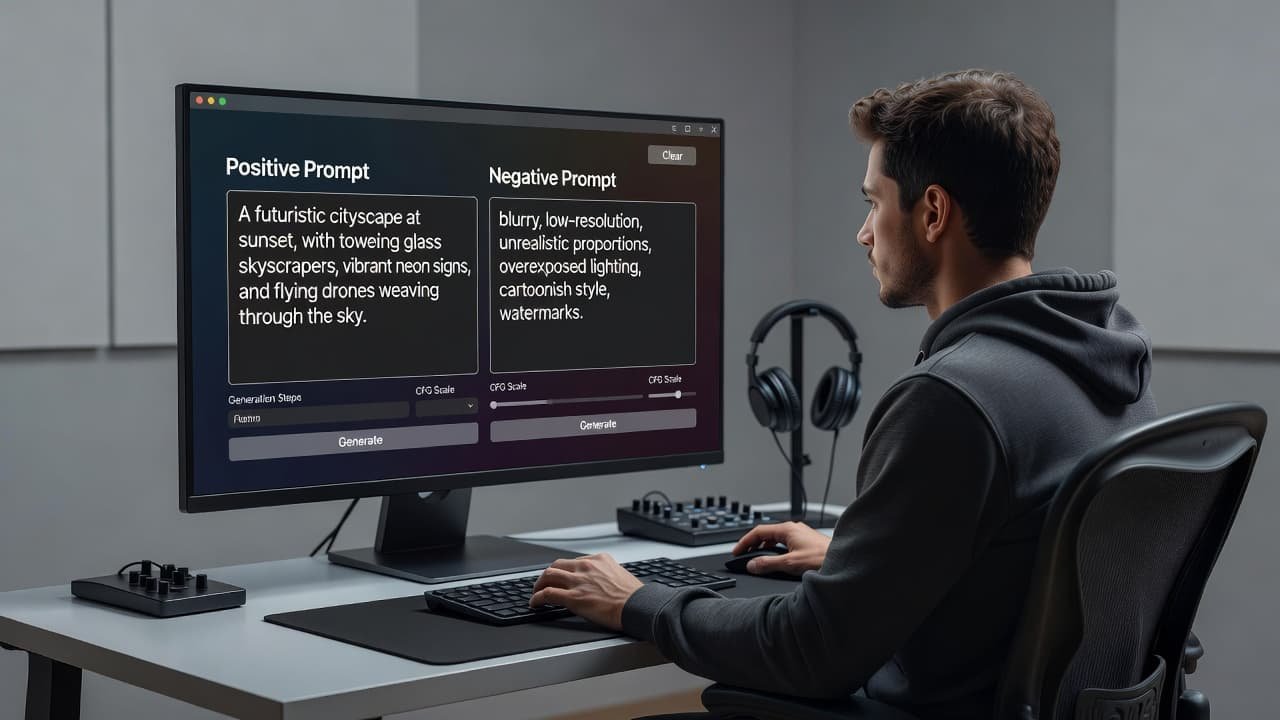
Object removal can rescue an otherwise usable image when a cable, logo, or passerby distracts from the scene. With inpainting prompts, you can remove that distraction while preserving believable lighting, materials, and geometry.
The prompt alone won’t carry the edit. Your mask image limits where diffusion models may change pixels, while your words describe the background the model must rebuild. Start by treating the edit as a reconstruction task, not a delete command.
Key Takeaways
Treat object removal as a reconstruction task: the mask defines where pixels may change, while the prompt describes the background that should replace the unwanted object.
Mask the full object, including nearby shadows and reflections, with a narrow margin to help the model rebuild edges, texture, and contact details.
Keep positive prompts focused on the hidden surface, material, pattern, lighting, perspective, and depth; use targeted negative prompts to discourage visible remnants.
Tune mask blur, denoising strength, and guidance scale together, and compare results with a fixed seed before changing multiple settings.
Save complete, reusable recipes with the source image, mask, prompts, model, seed, dimensions, settings, and result so successful repairs can be reproduced.
Start With a Mask That Protects the Scene
Your mask and prompt work as a pair. During object removal, a careless mask or prompt can make the repaired area look pasted in.
Mask the object and its immediate evidence
In most stable diffusion inpainting tools, white areas of the mask are regenerated and black areas remain untouched. The Diffusers inpainting documentation follows that convention. The mask image is the editable input, showing the model where it may redraw the scene.
Cover the full object, then add a narrow margin to the mask image. This gives the model room to rebuild contact shadows, reflections, occluded grout lines, and nearby background texture. A mask that cuts through a bicycle wheel or a person’s sleeve often leaves a visible edge.
Include shadows and reflections that belong directly to the object, or the edit may leave a ghost behind.
Describe the surface behind the object
Don’t spend your positive prompt describing the object you want gone. Instead, state what should appear in its place.
Use the prompt to name the material, pattern, direction, lighting, perspective, and depth behind the masked area. If a wall has uneven brickwork, mention the mortar joints. If a person blocks a tiled floor, mention the tile size, grout lines, and camera angle.
Write Inpainting Prompts That Respect Context
Good prompts read like concise instructions for rebuilding a small part of a photograph. For object removal, describe the hidden background instead of the object being removed. Diffusion models need visual constraints without reinventing the entire frame.
Put the background description first
For a bicycle beside a wall, use a prompt such as:
The mask image supplies the spatial boundary, while the prompt describes what should fill it:
“Continue the weathered red-brick wall and gray concrete sidewalk through the masked area, matching straight mortar joints, low afternoon side light, eye-level perspective, and a faint wall shadow.”
The clip text encoder interprets concrete terms such as mortar joints, tile size, and camera angle. These details give the repair clearer visual rules.
This prompt works because it identifies the missing surfaces and their visual rules. It tells the model to continue existing lines instead of adding a generic patch of brick.
Keep the wider image description short. The surrounding pixels already provide most of the context. Your prompt should focus on the hidden area.
Use a negative prompt to block remnants
A negative prompt can use classifier-free guidance to discourage remnants without dictating the whole repair. For the same edit, try:
Keep the list targeted. A long list of unrelated defects can pull attention away from the repair. If your tool supports prompt weighting, emphasize only a stubborn issue, such as warped masonry or extra wheels.
Decide Whether You Need Removal, Replacement, or Restoration
Each edit needs a different prompt: object removal asks the model to continue the scene, replacement introduces a new subject, and restoration repairs damage while preserving the original image. Context-aware image inpainting uses surrounding pixels and scene structure, so task prompts should target the edit rather than broad image generation. Diffusion models can introduce new pixels for replacements, but restoration should remain conservative.
Edit goal
Positive prompt focus
Mask approach
Object removal
Describe the exposed background, texture, and scene continuity
Cover the object and a thin surrounding ring
Object replacement
Describe the new subject, placement, and boundary
Cover the old item and the intended footprint
Damage restoration
Describe missing material, texture, and repeating pattern
Cover scratches, tears, or corrupted pixels only
For object removal, describe the exposed background and its texture so the model continues the scene naturally.
Treat replacements as new subjects
With text-guided object inpainting, describe the replacement as a new subject. If its silhouette, footprint, or mounting geometry matters, shape-guided object inpainting can help define those boundaries. If you replace a broken wall lamp, define its size, mounting point, material, light direction, and cast shadow. “Small brass wall sconce centered on the existing mounting plate, warm reflected light on the plaster wall” gives the model a clear job.
For image restoration, stay closer to the original. A prompt such as “restore continuous oak grain and satin finish, matching the adjacent panel” preserves texture without adding a new design.
Tune Mask Blur, Strength, and Guidance
Prompt quality matters, but settings decide how far the model can alter the masked area. Treat them as controls, not universal defaults.
Blend edges with controlled mask blur
In AUTOMATIC1111, the edge-softening control blends preserved and regenerated pixels. For a typical web-sized image, set mask blur around 4 to 12 pixels. Increase it as spatial dimensions and resolution rise.
Too little mask blur can leave a hard cutout edge. Too much allows changes to spill into skin, clothing, or nearby architecture. In AUTOMATIC1111, padding mask crop can also give the model a tighter working crop around the edit.
Balance denoising strength and guidance scale
In stable diffusion inpainting, denoising strength determines how much source information survives the denoising process. For ordinary object removal, start near 0.35 to 0.55.
Raise it when the hidden background needs major reconstruction. This can help when object removal covers complex texture, but expect more variation in texture and edges.
A guidance scale around 4 to 7 is a practical starting range. It controls classifier-free guidance, which pushes the result toward the prompt.
At a higher guidance scale, classifier-free guidance can overconstrain the edit, creating brittle surfaces or repeated detail. Prompt weighting can make a small emphasis adjustment, but it won’t replace a better mask.
The masked-content choice also changes how the mask image initializes the edit. Original can preserve nearby visual information, but it may retain traces of the removed item. Fill gives the model a neutral starting area. Latent noise encourages a fuller rebuild and suits large replacements, although it increases the risk of mismatched lighting.
After a high-resolution upscale, use ControlNet Tile Resample to restore local material detail. Choose upscaler models according to local texture, using smoother models for skin and sharper models for architecture.
Keep denoising low when testing upscaler models, then inspect edges for halos or invented detail. Some upscaler models can exaggerate boundaries, so return to the mask if the repair starts to look artificial.
Use the original image as the conditioning image for this workflow. The ControlNet Tile Resample guide explains why it is often paired with an upscaler. This step restores detail, but it can’t correct a poorly masked edit.
Pick a Model and Workflow That Match the Edit
A general text-to-image checkpoint can inpaint, yet an inpaint-specific checkpoint usually produces cleaner transitions. A Stable Diffusion inpainting workflow preserves source context better than a standard text-to-image pipeline, which may invent surrounding pixels during image generation.
Technical note: diffusion models often use a latent diffusion model for this task. It denoises latent representations, while its unet network predicts each update and the clip text encoder supplies text conditioning.
Configure a Hugging Face Diffusers pipeline
For Python, use hugging face diffusers and load an inpaint-compatible checkpoint with AutoPipelineForInpainting. Pass the source as image, using it as the conditioning image, and pass the binary mask as mask_image.
Confirm that this mask image matches the source dimensions. In the generation call, provide prompt, negative_prompt, strength, and guidance_scale.
The guidance_scale value controls classifier-free guidance, balancing prompt influence against image context. Higher strength allows more of the denoising process to rewrite masked pixels.
Before generation, validate the mask image’s alignment with the intended edit region. If you use automatic1111, check whether prompt weighting is enabled, and consider Kandinsky inpainting when its checkpoint matches your workflow.
Use a fixed seed while testing. That lets you compare one adjustment at a time instead of chasing random differences. The Stable Diffusion inpainting pipeline reference documents this inpaint-compatible pipeline and lists its supported inputs and controls.
If edits follow the prompt too aggressively, lower guidance_scale; excessive classifier-free guidance can overpower local context.
Use task-aware tools for harder repairs
PowerPaint separates text-guided object inpainting from context-aware image inpainting through learned task prompts named Pobj and Pctxt.
In a compact comparison, PowerPaint uses Pobj for text-guided object inpainting when adding or replacing a subject. Pctxt supports context-aware image inpainting when rebuilding a scene after object removal.
The official project page explains how PowerPaint’s learned task prompts and training strategies give the two controls different behavior.
For ordinary object removal, let the mask and surrounding image carry most of the instruction. For a replacement, shape-guided object inpainting helps preserve silhouette and placement while the prompt describes the new subject.
If a repair looks soft, inspect it at native resolution before using upscaler models. Upscaler models can sharpen edges, but they shouldn’t hide a mask or texture mismatch.
Build a Prompt Library You Can Reuse
Save successful edits as reproducible recipes, not isolated lines of text. A useful library records the positive prompt, negative prompt, model, seed, dimensions, denoising strength, guidance scale, mask notes, upscaler models, and a result thumbnail.
Tag each recipe by edit type, such as text-guided object inpainting, context-aware image inpainting, object removal, or image restoration.
Store context with every prompt
When you save prompts or recipe files, keep the source image, mask image, and task prompts with the settings. Record the seed, workflow, output dimensions, and model-specific controls beside them.
For example, note automatic1111, PowerPaint, or Hugging Face Diffusers in the workflow field. Save task prompts when the workflow uses them.
Also record the relevant CLIP text encoder version, classifier-free guidance setting, and documented training strategies. Checkpoint family matters because diffusion models can interpret the same description differently.
Judge prompt packages by their edit data
Judge prompt packages by their edit data, not by prompt length. A reliable object removal recipe includes the source image, mask, seed, settings, and before-and-after result.
Compare source and repaired outputs at native size first. If enlargement matters, test the same upscaler models and save the comparison.
Frequently Asked Questions
What should an inpainting prompt say when removing an object?
Describe the background that should appear after the object is gone rather than repeating details about the unwanted object. Include relevant materials, patterns, lighting, perspective, and depth so the model can continue the surrounding scene.
How much of the image should the mask cover?
Cover the entire object and include a narrow surrounding margin. Include shadows, reflections, and other evidence that belongs to the object, but avoid extending so far that nearby skin, clothing, or architecture is unnecessarily regenerated.
What denoising strength is a good starting point for object removal?
For ordinary object removal, start around 0.35 to 0.55 and adjust based on the complexity of the hidden background. Raise it when the area needs major reconstruction, but expect more variation in texture and edges.
Should I use a negative prompt for object removal?
A targeted negative prompt can discourage remnants such as wheels, text, duplicate objects, or warped brickwork. Keep the list short, because unrelated terms may distract the model from rebuilding the masked area.
How can I make an inpainted repair look native to the image?
Start with a precise mask, a background-focused prompt, and settings that preserve nearby pixels. Inspect the result at native resolution, check for mismatched lighting or hard edges, and only then consider using upscaler models to restore local detail.
Make Each Repair Look Native to the Image
Precise object removal starts with a narrow mask, a background-focused prompt, and settings that protect nearby pixels. When a repair fails, check the mask boundary, background continuity, and settings before rewriting everything.
The strongest inpainting prompts describe the scene that should remain after the unwanted object disappears. This simple principle helps the final object removal look native to the original frame.
A strong image prompt can still produce a face with odd eyes, unwanted text, extra fingers, or a background that fights your subject. Negative prompts AI images give you another control point during AI image generation: a way to tell a model which traits, objects, and visual defects should stay out of the frame.
You won’t get a perfect result by pasting a giant blacklist into every generation. Cleaner output comes from pairing a clear positive prompt with short exclusions that match the failure you can see. Start with the image you want, then remove only what interferes with it.
Key Takeaways
Negative prompts steer an image model away from unwanted concepts, but they are not absolute bans.
Your positive prompt defines the subject and composition. Negative terms remove distractions, artifacts, and conflicting styles.
Stable Diffusion supports a dedicated negative prompt field, while Midjourney uses the --no parameter.
Short, focused exclusions work better than long strings of generic quality complaints.
Change one variable at a time so you can see which term improves or harms the image.
How Negative Prompts AI Images Make Cleaner
A negative prompt is an exclusion instruction. It tells the model to reduce the chance of visual elements you don’t want, such as a watermark, distorted hands, a crowded scene, or a cartoon style.
Your main prompt still has the larger job. If you write editorial portrait of a founder in a sunlit office, you describe the intended image. Adding blurry, text, watermark, extra fingers to a negative field asks the model to avoid common distractions.
In Stable Diffusion interfaces, the negative text replaces the empty unconditional conditioning used during the diffusion process. That gives the model a direction to move away from as it forms the image. The Stable Diffusion Art explanation of negative prompts shows why exclusions influence generation rather than delete pixels after the fact.
That difference matters. A negative instruction cannot reliably repair a weak positive prompt or save overall image quality. If you ask for a “woman holding a product” without describing the pose, camera distance, product shape, or setting, the model still has too much freedom. Adding bad anatomy or bad hands may reduce defects, yet it won’t create a convincing product photograph on its own.
A negative prompt works best when it removes a known failure from an otherwise clear creative direction.
Treat it as a guardrail, not a substitute for art direction. First describe the subject, setting, visual medium, lighting, and composition. Then add exclusions that protect those choices.
Build Negative Prompts Around Visible Failures
Start each test with a narrow set of terms. Generic lists copied from a prompt repository often include dozens of words that don’t fit your model or scene. Some terms can even push the image toward strange crops, simplified details, or empty backgrounds.
Match the negative prompt to the error category you need to control:
For portrait artifacts, try extra fingers, extra limbs, deformed face, crossed eyes, disfigured.
For marketing visuals, use text, watermark, logo, signature, border when you need clean space for your own copy.
For a realistic style, exclude cartoon, illustration, CGI, plastic skin, skin texture if the model keeps drifting away from photorealistic results or realistic images.
For composition issues, test cropped head, out of frame, duplicate subject, cluttered background.
For product images, add terms such as distorted packaging, warped label, floating object, jpeg artifacts only after you see quality artifacts or other problems in your outputs.
For example, a creator making a website header might use:
modern ceramic coffee mug on pale stone counter, soft window light, editorial product photograph
Then add:
text, watermark, logo, extra objects, distorted mug handle
This works because each negative term connects to a realistic risk. The positive prompt fixes the subject and style. The exclusions preserve a clean commercial frame.
Avoid contradictory language. A prompt that requests “dramatic motion blur” but excludes blurry sends mixed signals. Similarly, asking for a dense city market while blocking people, crowd, stalls, signs leaves little material for the model to use.
You should also separate quality faults from personal preferences. Low resolution and blurry target output quality. Blue or trees are content exclusions. When a result feels wrong, identify which category failed before adding more terms.
The practical guide to negative prompting offers useful examples across Stable Diffusion, Midjourney, and Leonardo. Still, your own test images should decide which terms remain in your template.
Midjourney, Stable Diffusion, and Positive Alternatives
Each platform interprets exclusions differently. You need specific AI model prompts, not one universal negative string pasted everywhere.
Stable Diffusion tools, such as the AUTOMATIC1111 interface, usually give you a separate negative prompt field. A short baseline such as low quality, blurry, watermark, signature can help for general content, although many SDXL checkpoints respond differently. A photorealistic model may benefit from anatomy terms, while an anime checkpoint may already have strong style defaults.
A useful Stable Diffusion test pair looks like this:
positive prompt: business owner seated at a walnut desk, natural window light, documentary photography
negative: extra fingers, distorted hands, text, watermark, duplicate person
Generate several images with the same seed if your tool allows it. Then remove or add one exclusion. That controlled comparison shows whether duplicate person solved a real issue or accidentally reduced scene detail.
Midjourney handles exclusions through --no. Its official documentation says each word in the parameter is read independently, so keep it brief. You might write:
minimal skincare bottle on white pedestal, soft shadows --no text watermark hands
The --no parameter documentation also advises describing what you want when exclusion is unreliable. If Midjourney keeps adding a busy backdrop, write isolated product on an empty white studio background before expanding the --no list.
Some models respond better to positive constraints. Rather than writing --no crowd, cars, signs, clutter, describe one person on an empty beach at sunrise. Positive wording supplies clear visual material. Negative wording only tells the model which associations to reduce.
This is especially true for difficult concepts. Excluding shoes may produce bare feet, hidden feet, or a crop above the ankles. If footwear matters, state the desired result: wearing black leather boots, full body, feet visible. Use exclusions only for failures that continue after the positive prompt is clear.
A Simple Workflow for Refining Exclusions
When an image misses the mark, don’t rewrite every prompt line. Follow a repeatable sequence:
Save the best current prompt and settings, including model, seed, aspect ratio, steps, CFG scale, and stylization values.
Name the one largest flaw in plain language, such as “unwanted text” or “two faces.”
Add one to three relevant negative terms, then generate another batch with all other settings unchanged.
Compare outputs at full size. Keep terms that fix the flaw without weakening the subject.
Move proven exclusions into a small template for that model and image type.
Image-generation settings are separate controls. Higher resolution may improve detail, but it won’t remove a watermark. A different aspect ratio can prevent a cropped subject, while it won’t solve deformed hands. Sampling steps, seed, model checkpoint, denoise strength, and guidance scale also change the result. Diagnose the failure before blaming the negative prompt, and keep in mind that careful refinement during AI image generation ensures your overall image quality improves without relying on bloated default lists.
Save working templates in a searchable prompt repository. You might offer a prompt download free sample for new subscribers, then let readers download AI prompts organized by tool and use case. A prompt library download is more useful when each file records the model, version, settings, positive text, negative text, and a thumbnail of the result.
For example, a Midjourney prompt download should include --no syntax, while a Stable Diffusion prompt pack should identify the checkpoint and sampler. An AI art prompt package can include image prompts, but it should not pretend that a ChatGPT prompt collection, text generation prompts, or creative writing prompts will transfer directly to a visual model.
If you sell templates, make instant prompt access practical rather than vague. Let buyers get prompt packages in labeled folders, with prompt files available for download and clear notes on which tools they suit. A reliable prompt repository saves your audience from testing an exclusion list built for the wrong model.
Frequently Asked Questions
What is a negative prompt in AI image generation?
A negative prompt is an exclusion instruction that tells the model which traits, objects, and visual defects you want to avoid in the final output. It acts as a guardrail to steer the AI away from common errors like distorted hands, watermarks, or unwanted text.
How do negative prompts differ between Stable Diffusion and Midjourney?
Stable Diffusion usually utilizes a dedicated negative prompt text field where you can paste lists of exclusions. Midjourney handles exclusions through the --no parameter appended to your prompt, which works best when kept brief.
Are long lists of negative terms better for image quality?
No, short and focused exclusions work much better than long strings of generic complaints. Copying massive blacklists from prompt repositories can cause strange crops, simplified details, or unintended style shifts.
Cleaner Images Start With Clear Direction
Negative prompts remove friction when they target a visible problem. They work best beside a detailed positive prompt and stable generation settings, not as a long list of borrowed terms.
Keep your exclusions short, test them one at a time, and save only the combinations that improve your own outputs. Cleaner AI images come from precise direction, careful comparison, and well-crafted negative prompts that give the model enough good information to follow during AI image generation.
Ready to Supercharge Your AI? Discover the Best Prompt Marketplaces!
In today’s fast-paced AI world, the difference between a “meh” output and a masterpiece often boils down to one crucial thing: the prompt. As AI tools like ChatGPT, Midjourney, Stable Diffusion, and DALL-E become essential for creators, marketers, developers, and businesses, the demand for high-quality, effective prompts has skyrocketed. It’s not just a niche curiosity anymore; crafting precise and powerful prompts is a valuable skill.
But what if you don’t have the time, expertise, or inspiration to engineer the perfect prompt every single time? Or perhaps you’ve mastered the art of prompt crafting and are looking to make some cash from your unique talent? That’s where AI prompt marketplaces come in – exciting hubs where innovation meets commerce, allowing you to buy and sell expertly designed prompts that truly unlock AI’s potential.
This guide will dive deep into the world of AI prompt marketplaces, showing you the top platforms where you can find premium prompts or start your journey as a prompt seller today. Get ready to elevate your AI game!
Why Quality AI Prompts Are Your New Secret Weapon
Imagine your AI as a super-smart, incredibly versatile assistant that sometimes needs a little direction. Without clear, concise, and well-structured instructions, even the most advanced AI can produce generic, irrelevant, or just plain uninspiring results. A quality prompt is like the steering wheel, guiding your AI exactly where you want it to go, with precision and creativity.
Why bother with premium prompts? Well, they help you:
Save Time: No more spending hours on trial-and-error prompt engineering. Achieve Superior Results: Get access to prompts proven to generate high-quality, specific outputs. Unlock New Possibilities: Discover creative ways to use AI you might not have considered. Boost Efficiency: Streamline your workflows for content creation, image generation, code development, and more.
Basically, great prompts fuel your AI’s performance, transforming it from a general tool into your personal, super-efficient, specialized assistant.
The Rise of the AI Prompt Marketplace
The AI boom naturally led to prompt marketplaces. Once “prompt engineer” became a legitimate and highly sought-after role, it was clear we needed platforms where these valuable digital tools could be exchanged. These marketplaces are great for two main reasons:
For Buyers: They offer a curated selection of prompts for various AI models and use cases, often categorized and reviewed. This makes it super easy to find exactly what you need. From intricate Midjourney prompts for photorealistic art to sophisticated ChatGPT prompts for marketing copy, the options are vast. For Sellers: They provide a platform to earn money from your prompt engineering skills. If you’re great at getting incredible results from AI, you can package and sell your best prompts, earning passive income from your expertise. It’s a fantastic way to contribute to the AI community while being rewarded for your creativity.
These aren’t just shops; they’re communities where prompt engineers share their best work, learn from each other, and push AI’s limits.
Top AI Prompt Marketplaces to Explore
Ready to explore? Here are the top platforms to find and sell awesome prompts, each with its own vibe and community.
PromptBase: The Gold Standard for High-Quality Prompts
If you’re looking for a dedicated AI prompt marketplace, PromptBase is usually the first name that comes up. They kicked things off aiming to make prompt selling a real profession, and offer a sleek interface with a strong emphasis on quality.
For Buyers: PromptBase has a huge selection of prompts for popular AI models like ChatGPT, Midjourney, Stable Diffusion, DALL-E, and even specific applications like Claude and Llama. Prompts are well-categorized, often include example outputs, and are designed for specific outcomes – from “realistic photography” to “professional blog post outlines.” Because they’re so selective, you’re pretty much guaranteed to find top-notch, tested prompts. For Sellers: If you have a knack for crafting effective prompts, PromptBase offers an excellent opportunity to sell them. They have a strict submission and approval process, ensuring a high standard of quality. Sellers set their own prices, and PromptBase takes a cut (typically 20%). It’s a fantastic platform for prompt engineers to showcase their skills and earn income.
Why it’s a Top Pick: Its focus on premium quality, user-friendly interface, and robust support for both buyers and sellers make PromptBase a leading contender in the AI prompt marketplace arena.
PromptHero: A Huge Community with Premium Perks
PromptHero started as a massive library of free AI art prompts, allowing users to browse and get inspiration for Midjourney, Stable Diffusion, and other image generators. While it still offers a significant free section, it has now evolved to include premium options too, making it a full-fledged AI prompt marketplace.
For Buyers: You can explore millions of prompts, many shared by the community for free. This is perfect for learning and experimenting. For those seeking more refined or niche prompts, PromptHero also features a “Pro” section where creators can sell their best work. The ability to filter by AI model, style, and even specific artists makes finding what you need incredibly efficient. For Sellers: PromptHero allows creators to build a profile, share their prompts (both free and premium), and get noticed by a huge community. While lots of free content can mean more competition, it’s an excellent platform for building a reputation and eventually directing users to your premium offerings.
Why it’s a Top Pick: Its blend of a vast free prompt library with growing premium options, coupled with a highly active community, makes PromptHero a powerful resource for both inspiration and commerce.
FlowGPT: For Complex Tasks and Smart Workflows
FlowGPT is special because it’s not just about single prompts, but “flows” – like a chain of prompts, or even whole AI workflows designed for bigger, more complex jobs. This AI prompt marketplace is particularly great for anyone wanting to automate multi-step processes or get super specific, detailed results.
For Buyers: If you’re looking to generate a series of interconnected content pieces, develop a complex narrative, or implement a multi-stage creative process, FlowGPT is an excellent resource. Prompts here are often more elaborate, complete with instructions for iterating and refining. They cater to a more advanced user base who wants to push the boundaries of AI automation. For Sellers: Crafting effective “flows” requires really understanding AI and how to string prompts together. If you excel at designing comprehensive AI solutions, FlowGPT offers a unique platform to sell these intricate prompt chains. The community aspect, with upvoting and comments, helps quality flows rise to the top.
Why it’s a Top Pick: Its emphasis on multi-step prompts and workflows differentiates it, making it ideal for users and sellers focused on advanced AI applications and automation.
General Marketplaces: Gumroad & Etsy
Even though they aren’t just for AI prompts, platforms like Gumroad and Etsy have become popular spots for creators to sell their digital goods.
Gumroad: This e-commerce platform is a favorite among independent creators for selling digital stuff straight to their fans. Many prompt engineers create bundles or specialized prompt guides and sell them through Gumroad. It offers more control over branding and pricing. Etsy: Known for handmade and unique items, Etsy has also seen a surge in digital product sales, including AI prompts. Sellers often make attractive listings for prompt bundles, especially for image generation AIs, appealing to a creative audience.
Pros of General Marketplaces: More control, potentially lower fees (depending on volume), direct relationship with customers. Cons of General Marketplaces: Less built-in discovery for prompts specifically, requires more self-promotion.
These platforms are excellent alternatives for sellers who want more autonomy and for buyers who prefer to support individual creators directly.
How to Buy Prompts Effectively
Shopping for prompts can be fun, but a little strategy goes a long way:
Know what you need: Which AI are you using? What specific output are you trying to achieve? (e.g., “Midjourney prompt for cyberpunk cityscapes,” “ChatGPT prompt for LinkedIn post ideas”).
Read descriptions carefully: Look for clarity, examples of outputs, and instructions on how to use the prompt effectively.
Check reviews and ratings: Community feedback is invaluable for assessing a prompt’s quality and effectiveness.
Consider the price vs. value: While some prompts might seem expensive, think about the time and effort they save you, and the quality of output they enable.
Try it out and tweak it: Once purchased, experiment with the prompt. You might need to make minor adjustments to perfectly align it with your specific requirements.
How to Sell Prompts Successfully
Thinking of selling your prompts on an AI prompt marketplace? Here’s how to hit it big:
Become a pro: Get exceptionally good at prompt engineering for at least one AI model. Understand its nuances, strengths, and weaknesses.
Find your niche: Instead of generic prompts, focus on specific use cases or aesthetics (e.g., “vintage sci-fi art prompts,” “SEO-optimized blog intro prompts”).
Make amazing prompts: Your prompts should be clear, concise, and consistently produce excellent results. Test them rigorously.
Write clear descriptions: Explain what your prompt does, what AI model it’s for, and include multiple example outputs. Clear instructions for use are crucial.
Price smart: Research what similar prompts are selling for. Price competitively but also value your expertise.
Be helpful: Be prepared to answer questions from buyers. Good customer service can lead to repeat business and positive reviews.
Get the word out: Even within a marketplace, promote your listings on social media, your website, or relevant forums.
Conclusion: Your Gateway to AI Excellence
AI prompt marketplaces are more than just places to swap digital files; they’re a testament to the amazing collaboration and innovation fueling the AI revolution. Whether you’re an AI pro streamlining your work, a budding creator looking for ideas, or a skilled prompt engineer ready to earn from your talent, these platforms open up incredible doors.
With great, well-chosen prompts, you can boost your AI efficiency, creativity, and precision like never before. Jump in, see what’s out there, and totally change how you use AI!
Ready to supercharge your content creation with AI? Message me to get my pdf “ChatGPT Prompts Bundle for Content Creators”!
The world of Artificial Intelligence is booming, but the key to unlocking its true power lies in one crucial skill: prompting. A well-crafted prompt can be the difference between generic, unusable text and a masterpiece of marketing copy, efficient code, or stunning art. But mastering this skill takes time. That’s where specialized AI prompting tools come in. They are the force multipliers for the modern creator, marketer, and developer. This curated list will guide you through the best tools on the market, helping you cut through the noise and choose the perfect solution to elevate your AI interactions, boost your output, and ultimately, save you precious time and mental energy. As an extra bonus I’ve included 50 prompts at the end to give these tools a try for yourselves. You’re welcome to copy and paste and use for whatever!
Jasper
Brief Overview: Jasper is a powerful, all-in-one AI content platform designed specifically for marketers and businesses to scale their content creation.
Key Features & Benefits: Brand Voice Consistency: Teach Jasper your brand’s style and tone, and it will apply it across all content, ensuring a unified brand identity. SEO Mode Integration: Built-in SEO suggestions (via SurferSEO) help you create content that ranks higher on search engines right from the start. Long-Form Document Editor: Go beyond short snippets and craft full-length blog posts, reports, and stories with a intuitive, word processor-like interface. Templates for Everything: Access over 50 templates for everything from Facebook ads and email subject lines to video scripts and creative stories.
Why We Love It: Jasper feels like having a professional copywriter on your team who never sleeps. Its focus on marketing-specific use cases makes it incredibly practical.
Affiliate Angle: If you’re frustrated with the disjointed nature of generating ideas in one tool, outlines in another, and final copy in a third, Jasper is your solution. It streamlines the entire content workflow into a single, powerful platform, making it an indispensable tool for agencies and content teams serious about scaling their output without sacrificing quality or brand voice. It’s the ultimate ROI play for content-driven businesses.
Copy.ai
Brief Overview: Copy.ai is a user-friendly AI writing assistant focused on generating high-converting marketing copy, social media content, and sales collateral at incredible speed.
Key Features & Benefits: Freemium Model: Get started immediately with a free plan that offers generous credits, making it perfect for beginners and those on a tight budget. Workflow Automation (“Infinity Mode”): Create custom workflows to generate not just one piece of content, but an entire series of related assets (e.g., a blog post, a social media carousel, and an email newsletter) from a single prompt. Vast Template Library: An extensive collection of templates for digital marketing needs, including cold emails, product descriptions, and LinkedIn bios. Multi-Language Support: Create content in over 25 languages, a huge advantage for global teams and marketers.
Why We Love It: Its incredibly low barrier to entry and focus on quick, effective copy make it a go-to for solopreneurs and social media managers.
Affiliate Angle: For anyone who needs to beat writer’s block and produce a week’s worth of social media posts or ad copy in an afternoon, Copy.ai is a game-changer. The free plan allows you to test its value risk-free, and the workflow automation features save so much time that the paid version quickly pays for itself. It’s the ultimate tool for maximizing your content output while minimizing effort.
ChatGPT Plus (by OpenAI)
Brief Overview: The subscription tier for the world’s most famous AI chatbot, ChatGPT Plus gives you reliable access to the advanced GPT-4 model, even during peak times.
Key Features & Benefits: Access to GPT-4: Experience significantly improved reasoning, creativity, and accuracy compared to the free GPT-3.5 model, handling complex prompts with ease. General-Purpose Powerhouse: Unlike niche tools, ChatGPT is a jack-of-all-trades, capable of assisting with coding, creative writing, brainstorming, analysis, and casual conversation. Priority Access: Skip the queue during high-demand periods, ensuring you can use the tool whenever inspiration strikes. Plugins & Browsing (Beta): Extend its capabilities with plugins for specific tasks (e.g., Expedia, Kayak, Wolfram) and allow it to access current web information.
Why We Love It: It’s the most versatile AI assistant available, acting as a Swiss Army knife for a huge range of intellectual tasks.
Affiliate Angle: If you’ve been disappointed by the downtime or limitations of the free version of ChatGPT, upgrading to Plus is a no-brainer. The leap in capability with GPT-4 is substantial, transforming it from a novelty into a truly professional-grade tool. For developers, writers, and researchers who need dependable, top-tier AI performance, the monthly fee is a minimal investment for a massive productivity boost.
Midjourney
Brief Overview: Midjourney is an AI program and service that generates stunning, high-resolution images from text descriptions (prompts) through a Discord channel.
Key Features & Benefits: Unmatched Aesthetic Quality: Widely regarded as producing the most artistic, visually beautiful, and photorealistic images of any mainstream AI image generator. Strong Community Aspect:** Learning happens in public on Discord, allowing you to see the prompts behind other users’ amazing creations and improve your own skills. High Customization: Use parameters to finely control aspect ratios, stylization, chaos, and specific models to get exactly the look you want. Iterative Refinement: Easily create variations and upscale chosen images to high resolution for practical use.
Why We Love It: For artists, designers, and concept creators, Midjourney is pure magic. The quality of output consistently inspires awe.
Affiliate Angle: Struggling to find the perfect stock image or commission expensive custom artwork? Midjourney puts the power of a digital artist in your hands. While there’s a learning curve to crafting the perfect prompt, the ability to generate completely unique, royalty-free visual assets for branding, blog posts, and mood boards is an incredible value. It’s not just a tool; it’s a source of unlimited creative inspiration.
PromptHero
Brief Overview: PromptHero is not a generator itself but a massive search engine for AI art prompts, allowing users to discover the prompts used to create specific images from DALL-E, Midjourney, and Stable Diffusion.
Key Features & Benefits: Reverse Image & Prompt Search: Find images similar to one you have or love, and see the exact prompt used to create them. Massive Learning Database: Deconstruct successful AI art to understand how specific keywords and phrases affect the final output. Community Rankings: See which prompts and images are most popular and effective, giving you a curated list of proven formulas. Save & Organize: Build collections of your favorite prompts and images for future projects.
Why We Love It: It dramatically shortens the learning curve for AI image generation by showing you what works, not just telling you.
Affiliate Angle: If you’ve ever wasted credits on failed image generations because you couldn’t find the right words, PromptHero is your secret weapon. It pays for itself by saving you time and subscription fees on your AI art tools. This is the ultimate resource for going from an AI art novice to a proficient prompt engineer, ensuring you get usable results every time.
Of course. Here are the remaining five products to complete your comprehensive roundup article.
Claude AI (by Anthropic)
Brief Overview: Claude is a next-generation AI assistant known for its conversational depth, long-context capabilities, and strong focus on safety and constitutional AI principles.
Key Features & Benefits: Massive Context Window: Claude can process and remember information from extremely long documents (up to 200K tokens), making it ideal for analyzing lengthy reports, contracts, or entire books. Nuanced Dialogue: Excels at complex reasoning, summarization, and open-ended conversation with a noticeably natural and helpful tone. Reduced Harmful Outputs: Built with a strong constitutional AI framework to be more cautious, honest, and less prone to generating harmful or biased content. Document Analysis: You can upload PDFs, Word docs, and other text files directly for Claude to read, summarize, and answer questions about.
Why We Love It: Claude feels like a thoughtful, intelligent partner, especially for deep work involving large amounts of text. Its ability to “remember” context over long conversations is unparalleled.
Affiliate Angle: If you’re working with dense legal documents, lengthy technical papers, or need to synthesize information from multiple large sources, Claude is your indispensable research assistant. It saves you hours of manual reading and analysis, allowing you to focus on strategic decision-making instead of information gathering. For professionals who value accuracy and depth, Claude offers a uniquely reliable AI experience.
Perplexity AI
Brief Overview: Perplexity AI is an AI-powered answer engine that combines the capabilities of a chatbot with the accuracy of a search engine, providing detailed answers with cited sources.
Key Features & Benefits: Source-Cited Answers: Every response includes footnotes linking directly to the sources it pulled information from, allowing for instant fact-checking and deeper research. Proactive Search: Instead of just answering your question, it often asks clarifying follow-ups to provide the most relevant and comprehensive answer possible. Focus & Search Modes: Tailor your search to specific domains like academic papers, computational knowledge, or general web search. Copilot Feature: An interactive AI guide that helps you explore topics thoroughly by asking you questions to narrow down your search.
Why We Love It* It eliminates the guesswork and frustration of verifying AI-generated information, making it the ultimate tool for researchers, students, and journalists.
Affiliate Angle: Tired of AI chatbots that confidently state misinformation? Perplexity solves the biggest trust issue in AI today. It’s the perfect tool for anyone who needs fast, accurate, and verifiable information without having to wade through pages of search results. For content creators who need to back up their work with credible sources, Perplexity isn’t just a nice-to-have; it’s a critical part of a responsible workflow.
Stable Diffusion (via DreamStudio)
Brief Overview: Stable Diffusion is a powerful open-source AI image generation model, and DreamStudio is its official, user-friendly web interface created by Stability AI.
Key Features & Benefits: Unprecedented Control: Offers a wide array of settings to fine-tune your generated images, including negative prompts (what not to include), sampler types, and step counts. Open-Source Foundation: Because the core model is open-source, it has a massive community constantly creating custom models and styles (e.g., generating photorealistic people, anime styles, 3D icons). Cost-Effective Credits: DreamStudio operates on a pay-as-you-go credit system, which can be very economical for users who don’t need a unlimited monthly subscription. Image-to-Image Editing: Upload an existing image and use a prompt to modify it, alter its style, or fill in parts of the picture.
Why We Love It: It offers the best balance of power, control, and affordability for serious AI art enthusiasts who want to tweak every aspect of the generation process.
Affiliate Angle: For the AI artist who has outgrown the constraints of simpler tools and wants granular control over their creations, Stable Diffusion through DreamStudio is the next step. The ability to use negative prompts alone is a game-changer for fixing common AI image errors. If you want to develop a unique artistic style and leverage the power of community-trained models, this platform offers a professional-grade toolkit without a hefty subscription fee.
Writer
Brief Overview: Writer is a full-stack generative AI platform built for the enterprise, focusing on secure, brand-consistent, and governed content creation at scale.
Key Features & Benefits: Enterprise-Grade Security & Governance:** Offers robust data encryption, strict access controls, and guarantees that your data is never used to train public models. Knowledge Graph: Teach Writer your company’s specific terminology, product details, and style guidelines, and it will adhere to them religiously. Workflow Integrations: Seamlessly integrates into existing workflows via APIs, Chrome extension, and direct plugins for tools like Figma, Slack, and Word. Built-in Fact Checking: Includes features designed to help verify claims and reduce hallucinations in generated text.
Why We Love It: It’s the most secure and customizable platform for large organizations that need to maintain strict brand voice and data security.
Affiliate Angle: If your legal and compliance teams are hesitant about adopting public AI tools, Writer provides a secure, auditable, and controlled solution. It’s not just a writing tool; it’s a knowledge management system that ensures every piece of content, from marketing to internal comms, is on-brand and accurate. For regulated industries and large teams, Writer mitigates the risks of AI while maximizing its benefits for productivity.
NovelAI
Brief Overview: NovelAI is a monthly subscription service for AI-assisted authorship, storytelling, and virtual companionship, with a strong focus on unfiltered creative freedom.
Key Features & Benefits: Uncensored Storytelling: Specifically designed to avoid the heavy-handed content restrictions of other AIs, allowing for a wider range of creative genres and themes. Memory & Lorebook: Powerful features that let you build a persistent world. The Memory section keeps track of key plot details, while the Lorebook is a wiki for your characters, settings, and rules. Image Generation: Includes a powerful image gen module (trained on anime/illustrative styles) perfectly suited for creating character art and scene illustrations for your stories. Customizable AI Personas:** Adjust the AI’s prose style, verbosity, and genre adherence to match your specific needs.
Why We Love It: It’s a sanctuary for writers of fiction and role-play who have been frustrated by other AIs refusing to follow their creative lead.
Affiliate Angle: Have you ever had an AI suddenly moralize or shut down a creative story idea? NovelAI is built on the principle that the user is the author, offering unparalleled freedom for storytellers, game masters, and writers exploring niche genres. Its unique Lorebook system ensures your story’s world remains consistent chapter after chapter. If you want an AI that collaborates on your terms without judgment, this is the ultimate creative sandbox.
How to Choose the Right AI Prompting Tool for You
Selecting the best tool depends entirely on your primary need: For Marketers & Bloggers: Jasper, Copy.ai, and Writer.com are top choices. For Developers & Analysts: ChatGPT Plus and Claude.ai excel. For Artists & Designers: Midjourney and Stable Diffusion are industry leaders. For Researchers & Curious Minds: Perplexity.ai and ChatGPT Plus are incredible resources. For Enterprises with Security Needs: Writer is the standout platform. For Fiction Writers & Role-Play: NovelAI is in a class of its own.
Most tools offer free trials or freemium plans—we highly recommend testing a few to see which interface and output style resonate with you.
Here are some image prompts to use to try the image generation platforms:
A hovering over ethereal massive huge moon. Mixed media of hyper-detailed digital illustration, a luminous painting inspired by William Blake, in a masterpiece with smooth clear clean edges
A deciphering bioluminescent crystal ball. Mixed media of hyper-detailed vector art, a mystical painting inspired by Salvador Dalí, in a masterpiece with smooth clear clean edges
A summoning ornate ancient ruins. Mixed media of hyper-detailed oil painting, a haunting painting inspired by Hieronymus Bosch, in a masterpiece with smooth clear clean edges
A sailing through holographic sci-fi city. Mixed media of hyper-detailed neon art, a futuristic painting inspired by Syd Mead, in a masterpiece with smooth clear clean edges
A repairing fractured dimension portal. Mixed media of hyper-detailed etching, a surreal painting inspired by M.C. Escher, in a masterpiece with smooth clear clean edges
A discovering whimsical enchanted forest. Mixed media of hyper-detailed watercolor painting, a dreamlike painting inspired by Arthur Rackham, in a masterpiece with smooth clear clean edges
A transforming cybernetic organism. Mixed media of hyper-detailed 3D rendering, a metallic painting inspired by H.R. Giger, in a masterpiece with smooth clear clean edges
A defending celestial nebula. Mixed media of hyper-detailed acrylic painting, a cosmic painting inspired by Chesley Bonestell, in a masterpiece with smooth clear clean edges
A conjuring iridescent mystical island. Mixed media of hyper-detailed mixed media artwork, a fantastical painting inspired by Alan Lee, in a masterpiece with smooth clear clean edges
A evoking melancholic abandoned laboratory. Mixed media of hyper-detailed charcoal sketch, a dramatic painting inspired by Zdzisław Beksiński, in a masterpiece with smooth clear clean edges
A navigating steampunk city. Mixed media of hyper-detailed collage, a vintage painting inspired by Jules Verne, in a masterpiece with smooth clear clean edges
A igniting glowing alien landscape. Mixed media of hyper-detailed digital Photoshop creation, an otherworldly painting inspired by Wayne Barlowe, in a masterpiece with smooth clear clean edges
A avenging cursed vampire castle. Mixed media of hyper-detailed ink drawing, a gothic painting inspired by Brom, in a masterpiece with smooth clear clean edges
A building colossal giant robot. Mixed media of hyper-detailed technical drawing, a mechanical painting inspired by Hayao Miyazaki, in a masterpiece with smooth clear clean edges
A banishing shadowy figure. Mixed media of hyper-detailed pen and ink drawing, a haunting painting inspired by Edward Gorey, in a masterpiece with smooth clear clean edges
A exploring bioluminescent bay. Mixed media of hyper-detailed pastel artwork, an ethereal painting inspired by Rebecca Guay, in a masterpiece with smooth clear clean edges
A revealing sacred shrine. Mixed media of hyper-detailed gold leaf art, a divine painting inspired by Klimt, in a masterpiece with smooth clear clean edges
A dancing in flamboyant ballroom. Mixed media of hyper-detailed art deco painting, an elegant painting inspired by Tamara de Lempicka, in a masterpiece with smooth clear clean edges
A repairing fractured time machine. Mixed media of hyper-detailed schematic, a retro-futuristic painting inspired by Moebius, in a masterpiece with smooth clear clean edges
A observing prismatic parallel universe. Mixed media of hyper-detailed op art, a psychedelic painting inspired by Alex Grey, in a masterpiece with smooth clear clean edges
A sculpting frozen ice fortress. Mixed media of hyper-detailed ice sculpture, a crystalline painting inspired by Andy Goldsworthy, in a masterpiece with smooth clear clean edges
A chasing luminous firefly. Mixed media of hyper-detailed miniature painting, a whimsical painting inspired by Beatrix Potter, in a masterpiece with smooth clear clean edges
A weaving intricate tapestry. Mixed media of hyper-detailed textile art, a textile painting inspired by Anni Albers, in a masterpiece with smooth clear clean edges
A decoding arcane manuscript. Mixed media of hyper-detailed calligraphy, an esoteric painting inspired by Aubrey Beardsley, in a masterpiece with smooth clear clean edges
A ascending colossal celestial event. Mixed media of hyper-detailed astronomical illustration, a cosmic painting inspired by Chesley Bonestell, in a masterpiece with smooth clear clean edges
A vaporizing ethereal dragonfly. Mixed media of hyper-detailed stained glass art, a luminescent painting inspired by Louis Comfort Tiffany, in a masterpiece with smooth clear clean edges
A navigating colossal steampunk city. Mixed media of hyper-detailed etching, an intricate painting inspired by Hayao Miyazaki, in a masterpiece with smooth clear clean edges
A healing fractured crystal ball. Mixed media of hyper-detailed watercolor painting, a serene painting inspired by Alphonse Mucha, in a masterpiece with smooth clear clean edges
A dismantling cybernetic organism. Mixed media of hyper-detailed technical drawing, a metallic painting inspired by H.R. Giger, in a masterpiece with smooth clear clean edges
A discovering bioluminescent bay. Mixed media of hyper-detailed digital illustration, an ethereal painting inspired by James Cameron, in a masterpiece with smooth clear clean edges
A conjuring iridescent mushroom. Mixed media of hyper-detailed macro photography, a psychedelic painting inspired by Alex Grey, in a masterpiece with smooth clear clean edges
A defending ancient manuscript. Mixed media of hyper-detailed calligraphy, a mystical painting inspired by John Howe, in a masterpiece with smooth clear clean edges
A ascending parallel universe. Mixed media of hyper-detailed astronomical illustration, a cosmic painting inspired by Chesley Bonestell, in a masterpiece with smooth clear clean edges
A repairing time machine. Mixed media of hyper-detailed schematic, a retro-futuristic painting inspired by Moebius, in a masterpiece with smooth clear clean edges
A evoking melancholic abandoned laboratory. Mixed media of hyper-detailed charcoal sketch, a haunting painting inspired by Zdzisław Beksiński, in a masterpiece with smooth clear clean edges
A weaving intricate tapestry. Mixed media of hyper-detailed textile art, a textile painting inspired by Anni Albers, in a masterpiece with smooth clear clean edges
A decoding arcane shrine. Mixed media of hyper-detailed gold leaf art, a divine painting inspired by Gustav Klimt, in a masterpiece with smooth clear clean edges
A chasing luminous firefly. Mixed media of hyper-detailed miniature painting, a whimsical painting inspired by Beatrix Potter, in a masterpiece with smooth clear clean edges
A sculpting frozen ice fortress. Mixed media of hyper-detailed ice sculpture, a crystalline painting inspired by Andy Goldsworthy, in a masterpiece with smooth clear clean edges
A observing prismatic nebula. Mixed media of hyper-detailed op art, a psychedelic painting inspired by Bridget Riley, in a masterpiece with smooth clear clean edges
A summoning ornate vampire castle. Mixed media of hyper-detailed ink drawing, a gothic painting inspired by Brom, in a masterpiece with smooth clear clean edges
A transforming holographic alien landscape. Mixed media of hyper-detailed neon art, a futuristic painting inspired by Syd Mead, in a masterpiece with smooth clear clean edges
A banishing shadowy figure. Mixed media of hyper-detailed pen and ink drawing, a haunting painting inspired by Edward Gorey, in a masterpiece with smooth clear clean edges
A navigating colossal celestial event. Mixed media of hyper-detailed astronomical illustration, a cosmic painting inspired by Chesley Bonestell, in a masterpiece with smooth clear clean edges
A deciphering fractured dimension portal. Mixed media of hyper-detailed etching, a surreal painting inspired by M.C. Escher, in a masterpiece with smooth clear clean edges
A igniting glowing enchanted forest. Mixed media of hyper-detailed digital Photoshop creation, a fantastical painting inspired by Alan Lee, in a masterpiece with smooth clear clean edges
A avenging cursed time machine. Mixed media of hyper-detailed technical drawing, a retro-futuristic painting inspired by Jules Verne, in a masterpiece with smooth clear clean edges
A discovering whimsical mushroom. Mixed media of hyper-detailed watercolor painting, a dreamlike painting inspired by Arthur Rackham, in a masterpiece with smooth clear clean edges
A hovering over ethereal massive huge moon. Mixed media of hyper-detailed vector art, a luminous painting inspired by William Blake, in a masterpiece with smooth clear clean edges
A repairing cybernetic organism. Mixed media of hyper-detailed 3D rendering, a metallic painting inspired by Masamune Shirow, in a masterpiece with smooth clear clean edges
A crystallizing luminous dragonfly. Mixed media of hyper-detailed stained glass art, a prismatic painting inspired by Louis Comfort Tiffany, in a masterpiece with smooth clear clean edges
A unraveling bioluminescent mushroom. Mixed media of hyper-detailed macro photography, a psychedelic painting inspired by Alex Grey, in a masterpiece with smooth clear clean edges
A resurrecting fractured ancient ruins. Mixed media of hyper-detailed charcoal sketch, a haunting painting inspired by Zdzisław Beksiński, in a masterpiece with smooth clear clean edges
A navigating colossal steampunk city. Mixed media of hyper-detailed etching, an intricate painting inspired by Hayao Miyazaki, in a masterpiece with smooth clear clean edges
A decoding iridescent crystal ball. Mixed media of hyper-detailed calligraphy, a mystical painting inspired by John Howe, in a masterpiece with smooth clear clean edges
A weaving ethereal tapestry. Mixed media of hyper-detailed textile art, a textile painting inspired by Anni Albers, in a masterpiece with smooth clear clean edges
A summoning ornate vampire castle. Mixed media of hyper-detailed ink drawing, a gothic painting inspired by Brom, in a masterpiece with smooth clear clean edges
A transforming holographic alien landscape. Mixed media of hyper-detailed neon art, a futuristic painting inspired by Syd Mead, in a masterpiece with smooth clear clean edges
A banishing shadowy figure. Mixed media of hyper-detailed pen and ink drawing, a haunting painting inspired by Edward Gorey, in a masterpiece with smooth clear clean edges
A sculpting frozen ice fortress. Mixed media of hyper-detailed ice sculpture, a crystalline painting inspired by Andy Goldsworthy, in a masterpiece with smooth clear clean edges
A observing prismatic nebula. Mixed media of hyper-detailed op art, a psychedelic painting inspired by Bridget Riley, in a masterpiece with smooth clear clean edges
A igniting glowing enchanted forest. Mixed media of hyper-detailed digital Photoshop creation, a fantastical painting inspired by Alan Lee, in a masterpiece with smooth clear clean edges
A avenging cursed time machine. Mixed media of hyper-detailed technical drawing, a retro-futuristic painting inspired by Jules Verne, in a masterpiece with smooth clear clean edges
A discovering whimsical mushroom. Mixed media of hyper-detailed watercolor painting, a dreamlike painting inspired by Arthur Rackham, in a masterpiece with smooth clear clean edges
A hovering over ethereal massive huge moon. Mixed media of hyper-detailed vector art, a luminous painting inspired by William Blake, in a masterpiece with smooth clear clean edges
A repairing cybernetic organism. Mixed media of hyper-detailed 3D rendering, a metallic painting inspired by Masamune Shirow, in a masterpiece with smooth clear clean edges
A evaporating luminous firefly. Mixed media of hyper-detailed miniature painting, a whimsical painting inspired by Beatrix Potter, in a masterpiece with smooth clear clean edges
A ascending parallel universe. Mixed media of hyper-detailed astronomical illustration, a cosmic painting inspired by Chesley Bonestell, in a masterpiece with smooth clear clean edges
A deciphering fractured dimension portal. Mixed media of hyper-detailed etching, a surreal painting inspired by M.C. Escher, in a masterpiece with smooth clear clean edges
A healing bioluminescent bay. Mixed media of hyper-detailed digital illustration, an ethereal painting inspired by James Cameron, in a masterpiece with smooth clear clean edges
A dismantling cybernetic organism. Mixed media of hyper-detailed technical drawing, a metallic painting inspired by H.R. Giger, in a masterpiece with smooth clear clean edges
A conjuring iridescent mystical island. Mixed media of hyper-detailed mixed media artwork, a fantastical painting inspired by Alan Lee, in a masterpiece with smooth clear clean edges
A defending celestial nebula. Mixed media of hyper-detailed acrylic painting, a cosmic painting inspired by Chesley Bonestell, in a masterpiece with smooth clear clean edges
A evoking melancholic abandoned laboratory. Mixed media of hyper-detailed charcoal sketch, a dramatic painting inspired by Zdzisław Beksiński, in a masterpiece with smooth clear clean edges
A navigating colossal celestial event. Mixed media of hyper-detailed astronomical illustration, a cosmic painting inspired by Chesley Bonestell, in a masterpiece with smooth clear clean edges
1|CONTENT STRATEGY / WRITING PROMPTS
Prompt: “Act as a social media strategist. Create a 30-day content calendar for Instagram Reels and Carousels in the [your niche] space with hooks that grab attention.’”
2 VIRAL HOOKS
Prompt: “Generate 25 viral-style hooks for social media posts, keeping them short, bold, and curiosity-driven.”
3 SCRIPT WRITER
Prompt: “Write engaging 30-second scripts for Instagram Reels based on these 5 topics: [insert topics]. Keep them punchy and fast- paced.”
4ICAPTION BUILDER
Prompt: “Write captions for Instagram Reels that expand on the scriot. include storytelling, and finish with a strong CTA to follow me.”
5 1 DESIGN IDEA GENERATOR
Prompt: “Suggest creative visual ideas for a carousel post on [topic] including layout, colors, and text placement.”
6 I VIDEO EDITOR
Prompt: “Give me editing instructions for a viral-style Reel, including transitions, text overlays, and trending effects.”
7 ISCHEDULER
Prompt: “Organize this content into a posting schedule, optimized for reach in US/UK/Canada time zones.’”
Final Thoughts
The right AI prompting tool doesn’t replace your creativity; it amplifies it. By handling the heavy lifting, these platforms free you to focus on strategy, refinement, and big-picture thinking. Investing in one is an investment in your own productivity and creative potential. Explore the options on this list, find the one that best fits your workflow, and start creating smarter, not harder.
Ready to transform how you work? Click on any tool above to visit their website and start your free trial today!
Dolphins hold a special place in many minds. Their playful nature and bright intelligence make them seem almost human. Some people believe dolphins can understand and even talk with us. Over time, a few individuals claim to have unlocked the secret to dolphin communication. Among them is DolphinGemma, a popular figure online. But what is the truth? How much of her story is real, and how much is made up?
This article explores these questions. We’ll look at what science says about dolphin talk and whether DolphinGemma’s claims hold water. Read on to discover the real deal behind dolphin communication.
Who is DolphinGemma? A Closer Look at the Persona and Claims Background and biography of DolphinGemma
DolphinGemma first gained fame through social media, where she shares videos and stories about her experiences with dolphins. She often claims to have special abilities to understand what dolphins are thinking. Her followers grow daily, drawn by her confident approach. Details about her training and background are sparse, but she emphasizes her deep connection to these marine mammals.
The nature of her claims and services offered
DolphinGemma offers workshops, courses, and retreats. She promises that participants will learn how to communicate with dolphins clearly. She suggests her methods can unlock a spiritual bond with marine life. Many testimonials celebrate her as a “dolphin whisperer” who can hear their thoughts and feelings. She also claims her techniques are scientifically backed and spiritual at once.
Public reception and controversies
While some supporters praise her work, many experts and skeptics question her claims. Critics often see her as promoting false hope or exploiting animals for money. Scientists warn that genuine dolphin communication is much more complex than what she suggests. There are even concerns about whether her methods are ethical or just a marketing ploy. Legal or scientific investigations haven’t found any solid evidence backing her abilities.
The Science of Dolphin Communication The complexity of dolphin vocalizations and behaviors
Dolphins are incredibly smart. They use sounds like whistles, clicks, and squeaks. These noises help them find food, talk to each other, and stay safe. Echolocation — where they send out sound waves and listen for echoes — is a prime example of their skill. They also use gestures and body language that all have meaning. Scientists know dolphins are capable of understanding complex social signals, but how they do it is still not fully understood.
Scientific methods used to study dolphin language
Researchers use many tools to learn about dolphin talk. They record sounds with underwater microphones, analyze patterns, and perform playback experiments. Sometimes they observe dolphin groups interact naturally. These methods have helped unlock tiny bits of their language. But the challenge remains: dolphins are silent, intricate, and unpredictable. Scientists believe full understanding is still out of reach.
Can humans truly “talk” to dolphins?
So, can we really have conversations with dolphins? Not quite yet. While some dolphins respond to human cues and commands, true cross-species “talking” isn’t proven. There are a few cases of mutual understanding, especially with trained animals, but these are limited. Think of it like trying to decode a language you just don’t fully speak — the gap remains large.
Separating Myth from Reality: Evaluating DolphinGemma’s Claims Analyzing the authenticity of her communication abilities
There’s little scientific proof that DolphinGemma can truly understand dolphins in the way she describes. Many experts argue her claims are exaggerated or misunderstood. While she might be good at reading animal behaviors, claiming to speak dolphin is a bigger leap. No credible evidence supports her abilities as a psychic or spiritual communicator.
The role of intuition and spiritual beliefs
A lot of dolphin communication stories rely on intuition or personal belief. People often feel a “connection” because they want to believe. Spiritual practices may influence perceptions, but they don’t replace scientific facts. It’s important to differentiate between feeling a bond and scientifically understanding dolphin language.
Ethical considerations in dolphin communication practices
Using animals for entertainment or profit raises ethical questions. Training dolphins for demonstrations or workshops should prioritize animal welfare. Pushing images of magical communication might encourage people to get closer than animals are comfortable with. Respect for marine life is key — always choose responsible, eco-friendly options.
Authentic Ways to Connect and Communicate with Dolphins Supported techniques and approaches Observe Dolphins Respectfully: Book eco-tourism trips where you watch dolphins from a distance. Join Scientific Programs: Participate in research projects that study dolphin communication. Avoid Exploitative Practices: Steer clear of shows or activities that harm dolphins or break rules. Enhancing understanding through research and education
Reading books like The Social Behavior of Dolphins or watching documentaries such as Dolphins: Spy in the Pod can boost your knowledge. Courses led by marine biologists teach you how dolphins communicate naturally. Volunteering at aquariums or marine research centers gives firsthand experience.
Tips for aspiring dolphin enthusiasts Be patient and respectful. Building trust with marine life takes time. Practice empathy — animals sense your intentions. Protect environments where dolphins live. Support preservation efforts. Key Takeaways and Final Thoughts
Understanding dolphins isn’t about magical conversations but about respecting their true abilities. While figures like DolphinGemma make bold claims, science remains our best guide. Responsible, ethical encounters with dolphins promote their well-being—and your understanding. Always question hype and look for credible information. As science advances, we’ll learn more about these amazing creatures. Until then, approach dolphin communication with curiosity, not assumption.
Final Words
Dolphins are incredible, but not quite telepathic. Genuine connection comes through understanding and respect, not shortcuts or special abilities. Keep exploring, stay curious, and you’ll discover that the real magic is in the natural bond we can build with these intelligent mammals. Remember — science, kindness, and curiosity are your best tools in the journey to communicate with dolphins.
AI tools that can understand and create images have grown a lot in recent years. They turn simple prompts into stunning visuals and help analyze pictures for many uses. Whether you’re in marketing, design, education, or healthcare, picking the right AI platform matters. But how do Gemini and ChatGPT compare in handling images? Are they equally good at generating, recognizing, or explaining pictures? In this article, we’ll examine their features, performance, and real-life uses. By the end, you’ll see which one fits your needs best.
Understanding Gemini and ChatGPT: An Overview
What is Gemini?
Google’s Gemini is a new AI platform focused on multi-use tasks. It combines different AI models to handle images, text, and more, all in one system. Gemini was built to be a versatile tool for creative projects and accurate recognition tasks. Recent updates have added powerful image recognition and generation features. With its deep ties to Google’s cloud and data tools, Gemini aims to be a top choice for businesses needing sharp, reliable image AI.
What is ChatGPT?
OpenAI’s ChatGPT is best known for conversation. It started as a text-based chatbot with impressive language skills. Recently, OpenAI added vision features so ChatGPT can now interpret images. This makes it a true multimodal tool, not just a chat robot. Unlike Gemini, which is geared towards image creation and recognition, ChatGPT uses images mainly to support dialogue and analysis. It’s designed for users who want simple, integrated AI for talking about pictures, not just creating them.
Core Image Capabilities and Feature
Gemini: Uses advanced diffusion models and other architectures to turn text prompts into images. It excels at producing high-quality visuals, capturing style and detail well. It can generate images from simple phrases or complex scenes with good accuracy. ChatGPT: Has recently started creating images, but it’s still limited compared to Gemini. Its focus is more on improving understanding and discussion of visuals rather than generating complex art. When it does create images, they are basic but improve with updates. Image Recognition and Analysis Gemini: Recognizes objects and scenes with high precision. It can classify and detect elements in photos for uses like medical imaging or surveillance. Its recognition features are fast and accurate, making it ideal for professional needs. ChatGPT: Can analyze images embedded in conversations. It recognizes objects and can describe what it sees, helping users troubleshoot problems or understand content. Its analysis is good for general use but less precise than Gemini for detailed tasks. User Interface and Accessibility Gemini: Offers a user-friendly interface for creators and developers. Integrated into Google’s ecosystem, it works smoothly within cloud platforms. While powerful, it’s best suited for professional or enterprise users. ChatGPT: Known for ease of use by both casual and professional users. Its platform is simple, with API options for integration. People familiar with ChatGPT enjoy talking about images without complex tools. Performance and Accuracy Comparison Quality of Image Outputs
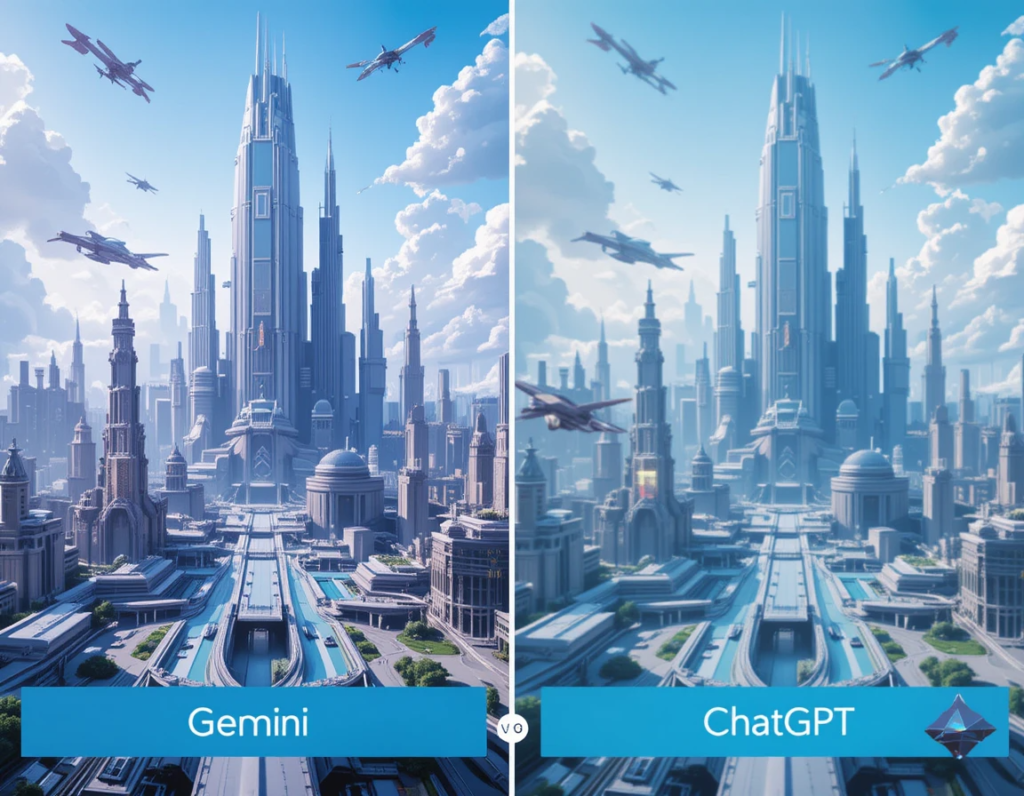
Gemini produces images that often look like professional art. Their clarity, style, and relevance are top-tier. In test cases, Gemini images show high detail and creative flair. ChatGPT’s image outputs are more basic, focusing on simple scenes or icons. They work well for quick tasks but lack the polish of Gemini.
Recognition and Analysis Precision
Gemini’s object detection and classification are highly accurate. It can tell apart different objects and understand complex scenes. ChatGPT’s image analysis is useful in conversations. It describes images well enough but sometimes misses subtle details. Industry experts say Gemini is better for precision work, while ChatGPT is perfect for casual insights.
Speed and Efficiency
Both platforms handle requests quickly; Gemini can generate detailed images fast, especially in batch. ChatGPT processes images and provides explanations almost instantly. For high-volume tasks, Gemini’s specialization means faster results when creating or analyzing high-res visuals.
Real-World Applications and Use Cases
Marketing and Content Creation
Gemini helps craft visuals for ads, websites, and branding. Its ability to create tailored images makes it a favorite among designers. ChatGPT excels at describing or tagging visual content, making it useful for content management and social media.
Education and Training
In schools, Gemini can assist in generating educational images or visual aids. It’s also used in teaching medical imaging or technical illustrations. ChatGPT helps explain images during lessons and supports learning through dialogue.
Healthcare and Medical Imaging
Gemini’s advanced recognition powers can aid in diagnostics and analysis of medical scans. It’s suitable for detecting anomalies or features in complex images. ChatGPT supports medical professionals by analyzing images during consultations or for quick explanations.
Strengths and Limitations
Gemini Strengths: Creates high-quality images, detects objects accurately, works well with Google’s tools. Limitations: Not always accessible for casual users, can be costly, and needs technical skill for advanced features. ChatGPT Strengths: Easy to use, integrates well with conversations, can analyze images within chats. Limitations: Still building image creation features; sometimes less accurate for complex tasks. Its recognition is simpler compared to Gemini. Expert Insights and Industry Perspectives
Many AI research leaders believe multimodal AI will grow closer to human reasoning. Recent progress shows platforms like Gemini and ChatGPT are just starting to unlock their full potential. Challenges include making image recognition more precise and improving image generation quality. Experts suggest that combining both platforms’ strengths will shape future tools.
Actionable Tips for Choosing Between Gemini and ChatGPT Pick Gemini if you need high-quality images, precise recognition, or professional-grade tools. Choose ChatGPT for easier, conversational tasks involving images, like explanations or simple analysis. Think about your technical skills and whether you need deep integration or just quick insights. Watch for upcoming updates to get even better features from both platforms. Conclusion
Gemini and ChatGPT each have their strengths in handling images. Gemini shines at creating and analyzing high-quality visuals, perfect for professional tasks. ChatGPT offers a simple, conversational way to understand and work with images, great for more casual needs. To pick the best tool, consider what you need most—top-notch image quality or easy analysis. As AI advances, both systems will get even smarter. Keep an eye on their updates, and always choose the right platform for your specific tasks. With the right AI, your work with images will become faster, easier, and more creative.
What if the world of quantum computing were a sports league? Who would be the MVP, the underdog, or the team with the most funding? This isn’t just about tech—it’s about innovation, performance, and a race to redefine the future.
From IBM’s century-long legacy to Google’s groundbreaking quantum supremacy announcement, the field has seen game-changing moments. Companies are pushing boundaries, securing massive investments, and delivering real-world solutions. It’s a high-stakes competition where every player brings something unique to the table.
In this article, we’ll dive into the rankings, evaluating these tech giants on innovation, funding, and their ability to surprise. Whether you’re a tech enthusiast or just curious, you’ll get a front-row seat to the action.
Key Takeaways
Discover the leading innovators in the quantum computing arena.
Learn about historical milestones like IBM’s legacy and Google’s quantum supremacy.
Explore how funding and innovation shape the competitive landscape.
Get insights into underdog companies making big strides.
Understand why quantum computing is a hot topic in tech today.
Welcome to Your Quantum Arena
Step into a world where quantum innovation feels like a high-stakes game. Here, companies are the athletes, and breakthroughs are the trophies. It’s a dynamic arena where every move counts, and the competition is fierce.
Imagine a lineup of tech giants and startups, each bringing their A-game. From healthcare to finance, these players are reshaping industries with their cutting-edge solutions. The stakes are high, and the rewards are even higher.
At the heart of this competition are quantum algorithms. These strategies make companies agile, much like a well-played game plan in sports. They’re the secret sauce behind breakthroughs in cybersecurity, drug discovery, and more.
Real-world examples highlight the intensity of this arena. IBM’s latest processor advancements and partnerships with leading research institutions show just how serious this game is. It’s not just about innovation—it’s about collaboration and pushing boundaries.
So, grab your front-row seat. This is more than just tech—it’s a thrilling showdown where the future is being rewritten. Are you ready to witness the action?
Understanding Quantum Computing: The Basics
Quantum computing might sound complex, but it’s simpler than you think. At its core, it’s about harnessing the quirky rules of quantum mechanics to solve problems faster than ever. Think of it as a game where the pieces can be in multiple places at once. That’s the magic of superposition.
Superposition allows a quantum computer to process multiple possibilities simultaneously. It’s like flipping a coin that lands on both heads and tails at the same time. This principle, combined with entanglement—where particles are linked no matter the distance—creates a powerhouse of computational potential.
“Quantum computing isn’t just about speed; it’s about redefining what’s possible.”
Research is the driving force behind these advancements. From Google’s quantum supremacy claim to IBM’s breakthroughs in processor design, scientists are pushing the boundaries of what a quantum computer can do. These machines aren’t just faster; they’re smarter, capable of tackling problems that classical computers can’t handle.
Take machine learning, for example. Quantum computers can analyze massive datasets in seconds, uncovering patterns that would take years for traditional systems. This isn’t just theoretical—companies like JPMorgan are already using quantum algorithms to optimize financial models.
Aspect
Classical Computing
Quantum Computing
Processing Unit
Bits (0 or 1)
Qubits (0, 1, or both)
Speed
Linear
Exponential
Applications
General-purpose
Specialized (e.g., drug discovery, cryptography)
So, why does this matter? Because quantum computers are rewriting the rules of technology. Whether it’s simulating molecules for drug discovery or optimizing traffic flows in cities, the possibilities are endless. And with ongoing research, these systems are only getting better.
Ready to dive deeper? The quantum revolution is just getting started, and you’re already part of it.
The Quantum Computing Landscape Unveiled
Picture the quantum computing field as a grand chessboard, where every move shapes the future. Here, players range from tech giants to nimble startups, each bringing unique strengths to the game. It’s a high-stakes arena where innovation and strategy collide.
Let’s break it down. The landscape is divided into three main categories: giants, hardware-centric companies, and software-focused startups. Think of them as the quarterbacks, linemen, and wide receivers of the quantum world. Each plays a crucial role in advancing the field.
First up, the giants. These are the household names with deep pockets and decades of experience. They’re pushing the boundaries of what’s possible, from IBM’s 1,000+ qubit Condor processor to Microsoft’s ambitious Majorana 1 project. Their quantum computing systems are setting the pace for the entire industry.
Next, the hardware-centric players. Companies like Pasqal and QuEra are focusing on quantum hardware, developing processors with hundreds of qubits. Pasqal’s goal of scaling to 10,000 qubits by 2026-2027 is a testament to their ambition. These companies are the backbone of the quantum revolution.
Finally, the software-focused startups. Firms like Q-CTRL and Xanadu are creating algorithms and platforms that make quantum computing accessible. Xanadu’s open-source PennyLane library is a game-changer for researchers and developers alike. Their innovation is driving real-world applications across industries.
Giants: IBM, Microsoft, Google – setting the pace with cutting-edge quantum computing systems.
Hardware-centric: Pasqal, QuEra – advancing quantum hardware with scalable solutions.
Software-focused: Q-CTRL, Xanadu – enabling innovation through algorithms and platforms.
This is more than just tech—it’s a thrilling competition where every player matters. Whether it’s a giant’s breakthrough or a startup’s clever algorithm, the quantum computing landscape is evolving faster than ever. Ready to see who’s leading the pack?
Top 10 Quantum Computing Companies
Imagine a lineup of tech titans, each vying for the championship in the quantum arena. These companies are the MVPs of innovation, pushing the boundaries of what’s possible. Let’s dive into the rankings and see who’s leading the pack.
First up is IBM, a legacy player with a century of expertise. Their 433-qubit processor is a game-changer, showcasing quantum advantage without error correction. IBM’s Qiskit SDK is a powerhouse for building quantum circuits, making them a leader in both hardware and software.
Google isn’t far behind, having achieved quantum supremacy in 2019 with its Sycamore processor. Completing a calculation in 200 seconds that would take a supercomputer 10,000 years is no small feat. Their open-source Cirq interface is another testament to their commitment to advancing the field.
Microsoft’s Azure Quantum platform is a force to reckon with. Offering access to various quantum hardware and a robust development environment, they’re making quantum algorithms accessible to developers worldwide. Their Majorana 1 project is another ambitious step forward.
Amazon’s AWS Braket provides access to superconducting, trapped-ion, and neutral atom-based processors. Their cloud service is a go-to for researchers and developers, making quantum computing more accessible than ever.
Alibaba and Baidu are making waves in Asia. Alibaba’s cloud-based quantum computing service is a testament to their innovation, while Baidu’s Quantum Institute is pushing the boundaries of research and development.
D-Wave Systems is a pioneer in quantum annealing, with their Advantage2 prototype featuring over 500 qubits. Their focus on solving optimization problems sets them apart in the industry.
IonQ’s 160-qubit processor surpasses many competitors, making them a key player in the hardware space. Their focus on trapped-ion technology is driving advancements in quantum computing.
Rigetti Computing is another standout, with their 84-qubit processor and plans to scale to 1,000 qubits. Their focus on both hardware and software makes them a versatile contender.
Quantinuum, backed by Honeywell, offers a comprehensive full-stack solution. Their System Model H2 is a second-generation quantum computer with improved architecture, making them a leader in the field.
Finally, Xanadu Quantum Technologies is making strides with their photonic-based quantum computer. With $250 million in funding, they’re scaling up to one million qubits, aiming for fault-tolerant quantum computing.
“In the quantum arena, innovation is the MVP, and these companies are rewriting the rules of technology.”
These companies are not just competing; they’re collaborating to shape the future of technology. Whether it’s IBM’s legacy, Google’s supremacy, or Xanadu’s ambition, each brings something unique to the table. The quantum revolution is here, and these are the players leading the charge.
Ranking by Performance: Innovation, Funding, and More
In the world of quantum tech, performance metrics are the scoreboard that separates the leaders from the pack. Just like in sports, innovation, funding, and breakthrough technology are the stats that define success. Let’s break down how these players are scoring.
First, innovation is the MVP. IBM’s 433-qubit processor is a game-changer, showcasing quantum advantage without error correction. Google’s Sycamore processor achieved quantum supremacy, solving a problem in 200 seconds that would take a supercomputer 10,000 years. These milestones are like record-breaking plays that set the bar high.
Funding is the fuel that drives the race. Companies like Xanadu have secured $250 million to scale their photonic-based systems. Quantinuum closed a $300 million investment round, valuing the company at $5 billion. These financial stats are the equivalent of a team’s budget, determining how far they can go.
Hardware quality is another critical metric. Amazon Braket provides access to multiple quantum systems, including superconducting and trapped-ion processors. This versatility makes it a go-to platform for researchers and developers. Think of it as a versatile player who can adapt to any position on the field.
Innovation: IBM’s 433-qubit processor and Google’s quantum supremacy are defining moments.
Funding: Xanadu’s $250 million and Quantinuum’s $300 million investments fuel progress.
Hardware: Amazon Braket’s diverse systems offer unmatched flexibility for developers.
Performance in quantum computing isn’t just about speed—it’s about strategy, funding, and cutting-edge systems. These metrics are the stats that determine who’s leading the quantum revolution. Ready to see who’s at the top of the leaderboard?
Innovation and Research Excellence in QC
Think of innovation in quantum tech as the secret playbook that separates the champions from the rest. Just like in sports, the best teams rely on groundbreaking strategies to stay ahead. In the quantum arena, cutting-edge research and novel solutions are the game-changers.
Take error correction, for example. It’s one of the biggest hurdles in quantum systems. Companies like IBM and Google are tackling this with advanced algorithms that make their processors more reliable. These breakthroughs are like perfecting a playbook—each improvement brings them closer to victory.
Practical applications are where these innovations shine. From optimizing supply chains to accelerating drug discovery, quantum solutions are transforming industries. Imagine a logistics company using quantum algorithms to reduce delivery times or a pharmaceutical firm simulating molecules for new treatments. These real-world applications are the trophies of the quantum race.
“Innovation isn’t just about ideas; it’s about turning those ideas into solutions that change the game.”
Collaboration is another key strategy. Universities like MIT and Caltech are partnering with tech giants to push the boundaries of what’s possible. These partnerships are like assembling a dream team, where each player brings unique strengths to the table.
Error correction: Advanced algorithms are making quantum systems more reliable.
Practical applications: From logistics to healthcare, quantum solutions are reshaping industries.
Collaboration: Partnerships between universities and companies are driving breakthroughs.
So, what’s next? As research continues, expect even more innovative solutions to emerge. The quantum revolution is just getting started, and the best is yet to come. Ready to see how these companies are rewriting the rules of technology?
Powerhouse Players: Giants in Quantum Computing
In the realm of quantum tech, certain names stand out like legendary athletes in their prime. These giants have not only shaped the field but continue to push its boundaries with groundbreaking innovations. Think of them as the veteran teams that consistently dominate the league.
IBM is a prime example. With over a century of expertise, they’ve built a legacy that’s hard to match. Their Quantum System Two boasts over 1,400 qubits, making it one of the most powerful systems in the world. It’s like having a star player who’s always in top form.
Google is another heavyweight. Their Sycamore processor achieved quantum supremacy in 2019, solving a problem in 200 seconds that would take a supercomputer 10,000 years. It’s a record-breaking performance that set the bar high for the entire industry.
These companies aren’t just about hardware. IBM’s Qiskit SDK and Google’s Cirq interface are revolutionizing how developers build quantum circuits. It’s like having a playbook that’s constantly updated with new strategies.
IBM: Over 1,400 qubits and a legacy of innovation.
Google: Quantum supremacy with the Sycamore processor.
Microsoft: Azure Quantum platform and Majorana 1 project.
Microsoft is also in the game. Their Azure Quantum platform offers access to various systems, while the Majorana 1 project explores new frontiers in hardware. It’s like having a versatile player who excels in multiple positions.
“In quantum tech, the giants aren’t just playing the game—they’re rewriting the rules.”
These companies are more than just competitors. They’re collaborators, driving the field forward with every breakthrough. Whether it’s IBM’s record-setting qubit counts or Google’s quantum supremacy, their impact is undeniable.
So, who’s leading the pack? It’s a close race, but one thing’s clear: these giants are the backbone of the quantum revolution. Ready to see how they’re shaping the future?
DIY Quantum: From Startups to Underdogs
While the big names grab headlines, smaller players are quietly reshaping the quantum landscape. These startups are like rookie athletes—full of potential and ready to shine. With fresh ideas and agile development, they’re proving that innovation isn’t just for the giants.
Take Q-CTRL, for example. This emerging firm is advancing error correction with cutting-edge algorithms. Their work is making quantum systems more reliable, a critical step for practical applications. It’s like a rookie perfecting their technique to compete with the pros.
Another standout is Xanadu Quantum Technologies. Focused on photonic-based computing systems, they’re scaling up to one million qubits. Their approach is unique, leveraging light to power universal quantum computers. It’s a bold strategy that’s turning heads in the industry.
“Innovation thrives where creativity meets opportunity. These startups are proving that size doesn’t limit impact.”
Riverlane, backed by leading venture capital funds, is another underdog making waves. Their focus on software development is enabling researchers to tackle complex problems. It’s like a rookie quarterback with a playbook full of surprises.
Q-CTRL: Advancing error correction with innovative algorithms.
Xanadu: Scaling photonic-based computing systems to new heights.
Riverlane: Empowering researchers with cutting-edge software solutions.
These companies are more than just underdogs—they’re game-changers. By leveraging unique computing systems and creative strategies, they’re disrupting the status quo. The quantum race isn’t just about who’s ahead; it’s about who’s pushing the boundaries.
So, keep an eye on these rising stars. They’re not just playing the game—they’re rewriting the rules. Ready to see what they’ll achieve next?
Exploring Quantum Hardware Advances
Imagine quantum hardware as the cutting-edge gear that powers the next generation of tech athletes. Just like modern sports equipment, these advancements are designed to push boundaries and deliver peak performance. From processors to error correction, the evolution of hardware is reshaping the game.
Take IBM’s Quantum Hummingbird processor, for example. With 65 qubits, it’s like a high-performance engine for complex calculations. Their Quantum Eagle processor takes it further with 127 qubits, showcasing how innovation is scaling up. These processors are the backbone of modern quantum systems, enabling faster and more reliable computations.
Error correction is another critical area. Google’s Willow processor incorporates enhanced techniques to reduce errors, much like how advanced materials improve sports gear. This approach ensures that quantum systems remain stable and efficient, even under heavy workloads.
Companies are also bridging the gap between quantum and classical computers. Microsoft’s topological qubits, for instance, are designed to be more stable and less prone to errors. This hybrid approach combines the best of both worlds, creating systems that are both powerful and practical.
IBM’s Quantum Hummingbird and Eagle processors set new benchmarks in qubit counts.
Google’s Willow processor enhances error correction for more reliable performance.
Microsoft’s topological qubits offer a stable and scalable solution.
These advancements aren’t just theoretical—they’re changing the game. From optimizing supply chains to accelerating drug discovery, quantum hardware is unlocking new possibilities. It’s like upgrading from a bicycle to a rocket ship, where every innovation propels us further into the future.
“Quantum hardware is the high-tech toolkit reshaping the future of problem-solving.”
So, what’s next? As companies continue to refine their approach, expect even more breakthroughs. The race is on, and the winners will be those who push the limits of what’s possible. Ready to see how these innovations will transform the world?
Quantum Software and Algorithm Prowess
Think of quantum software as the playbook that turns raw power into championship-level performance. Without it, even the most advanced hardware is like a star athlete without a game plan. Software platforms are the brains behind the brawn, enabling companies to tackle complex problems with precision and efficiency.
Take IBM’s Qiskit, for example. This open-source platform is like a coach’s playbook, guiding developers to build and optimize quantum circuits. It’s not just about solving problems—it’s about solving them smarter. Qiskit’s flexibility and accessibility make it a go-to tool for researchers and developers alike.
Microsoft’s Q# is another standout. Designed for the Azure Quantum platform, it’s like a strategic playbook for hybrid systems. Q# bridges the gap between classical and quantum computing, making it easier to develop algorithms that solve real-world challenges. It’s a game-changer for industries like finance and healthcare.
“Software is the silent MVP of the quantum revolution, turning theoretical potential into practical solutions.”
Here’s how these platforms are transforming the game:
IBM’s Qiskit: Empowers developers to build and optimize quantum circuits with ease.
Microsoft’s Q#: Simplifies algorithm development for hybrid systems.
Open-source frameworks: Foster collaboration and innovation across the industry.
These platforms aren’t just tools—they’re strategic assets. They streamline processes, reduce errors, and unlock new possibilities. Whether it’s optimizing supply chains or accelerating drug discovery, quantum software is the key to solving the toughest problems.
So, what’s next? As these platforms evolve, expect even more breakthroughs. The quantum revolution is just getting started, and software is leading the charge. Ready to see how these playbooks will shape the future?
Quantum Computing Platforms and Cloud Services
Imagine having access to the most advanced tools in quantum tech, just like stepping into a state-of-the-art sports facility. Cloud-based platforms are opening up these resources to everyone, making high-performance quantum machines as accessible as a gym membership.
Platforms like Amazon Braket and Microsoft Azure Quantum are leading the charge. They allow you to experiment with quantum algorithms and run simulations without needing your own hardware. It’s like having a premium locker room where all the equipment is ready for you to use.
These services integrate quantum machines with cloud technology, enabling seamless development and testing. Whether you’re a researcher or a developer, you can access robust toolkits from anywhere. It’s a game-changer for innovation.
Here’s how these platforms are transforming the field:
Amazon Braket: Offers access to superconducting, trapped-ion, and neutral atom-based machines, giving you flexibility in experimentation.
Microsoft Azure Quantum: Provides a hybrid environment where classical and quantum systems work together, simplifying complex problem-solving.
Open-source frameworks: Encourage collaboration and accelerate breakthroughs across industries.
“Cloud platforms are the bridges that connect innovators to the future of quantum technology.”
These tools aren’t just for experts. They’re designed to make quantum computing accessible to anyone with curiosity and a vision. From optimizing supply chains to accelerating drug discovery, the possibilities are endless.
So, what’s next? As these platforms evolve, expect even more democratization of quantum tools. The future of innovation is in the cloud, and it’s open to all. Ready to take your first step into this high-tech arena?
The Role of Classical-Quantum Hybrid Systems
Hybrid systems are the ultimate team players, blending classical and quantum tech for unmatched results. Think of them as a dream team where each member brings unique skills to the table. Together, they solve problems faster and smarter than ever before.
These systems combine the reliability of classical computers with the raw power of quantum machines. It’s like pairing a seasoned strategist with a powerhouse athlete. The result? A synergy that drives innovation across industries, from finance to logistics.
In finance, hybrid systems are game-changers. They analyze massive datasets in seconds, uncovering patterns that traditional systems miss. For example, JPMorgan uses quantum algorithms to optimize trading strategies, giving them a competitive edge.
Here’s how hybrid systems work: classical computers handle routine tasks, while quantum processors tackle complex calculations. This division of labor ensures efficiency and accuracy. It’s like having a well-coordinated team where everyone plays to their strengths.
“Hybrid systems are the bridge between today’s technology and tomorrow’s breakthroughs.”
Key benefits of hybrid systems include:
Enhanced Performance: Quantum processors handle complex calculations, while classical systems manage data flow.
Scalability: Hybrid approaches make it easier to scale quantum solutions for real-world applications.
Error Reduction: Classical systems can correct errors in quantum calculations, improving reliability.
Aspect
Classical Systems
Hybrid Systems
Processing Power
Linear
Exponential
Error Handling
Manual Correction
Automated Mitigation
Applications
General-purpose
Specialized (e.g., finance, logistics)
Companies like IBM and Microsoft are leading the charge in hybrid development. IBM’s Quantum System Two integrates classical and quantum processors, while Microsoft’s Azure Quantum platform offers hybrid solutions for developers.
So, what’s next? As hybrid systems evolve, expect even more breakthroughs. They’re not just the future of computing—they’re the future of problem-solving. Ready to see how they’ll transform your world?
In the race to dominate the quantum arena, error correction and scalability are the ultimate hurdles. Just like a championship team perfecting its plays, companies are developing clever strategies to tackle these challenges head-on. The stakes are high, and the rewards are even higher.
Error correction is one of the biggest obstacles. Qubits, the building blocks of quantum systems, are prone to errors due to environmental interference. Companies like Google Quantum and IBM are leading the charge with innovative solutions. For instance, Google’s Willow chip achieved a logical error rate of just 0.143% per cycle, a significant milestone in reducing qubit errors.
Scalability is another critical challenge. As systems grow, so do the complexities. IBM’s Condor chip, with its 156 qubits, showcases how modular designs can help scale quantum systems. Their focus on “error mitigation” rather than traditional correction is a game-changer, ensuring stable performance even as qubit counts increase.
“Error correction isn’t just about fixing mistakes; it’s about building systems that can handle the future.”
Here’s how companies are tackling these challenges:
Google Quantum: Advanced surface code architectures reduce logical errors exponentially, making systems more reliable.
IBM: Modular chip designs and quality gate operations focus on error mitigation, ensuring scalability.
Microsoft: Hybrid systems combine classical and quantum approaches to enhance performance and reduce errors.
These advancements aren’t just theoretical—they’re transforming industries. From optimizing financial models to accelerating drug discovery, error correction and scalability are unlocking new possibilities. It’s like upgrading from a bicycle to a rocket ship, where every innovation propels us further into the future.
So, what’s next? As companies continue to refine their strategies, expect even more breakthroughs. The quantum revolution is just getting started, and these challenges are the hurdles that will define the champions. Ready to see who’s leading the pack?
Investments and Financial Trends in Quantum Tech
Imagine the financial world of quantum tech as a high-stakes game of investments and sponsorships. Just like in sports, where team budgets determine competitive advantage, funding flows are shaping the quantum landscape. Billions are being poured into research and development, driving breakthroughs in areas like drug discovery and other industries.
In 2024, global deal value in quantum tech surpassed $1 billion for the first time. This milestone highlights the growing confidence in its potential. North America leads the charge, with significant investments also flowing into Asia and Europe. Governments worldwide are stepping up, launching funding programs to achieve technological sovereignty.
Private companies are equally active. IBM, with its $242 billion market cap, continues to dominate. Meanwhile, startups like Quantinuum, valued at $5 billion, are making waves. These players are not just competing—they’re collaborating to push the boundaries of innovation.
“Investments in quantum tech are like building a championship team—every dollar counts in the race for breakthroughs.”
Here’s where the money is flowing:
Drug Discovery: Quantum systems are accelerating the development of new treatments, with companies like JPMorgan leveraging algorithms for pharmaceutical research.
Industries: From finance to logistics, quantum solutions are transforming operations, making them faster and more efficient.
R&D: Significant funding is directed toward error correction and scalability, ensuring quantum systems are reliable and ready for real-world applications.
Microsoft’s $3 trillion market cap and Alphabet’s $2.2 trillion valuation show the financial muscle behind these giants. Even smaller players like IonQ, with an $8.1 billion market cap, are securing partnerships with major cloud providers like AWS and Google Cloud.
So, what’s next? As investments continue to grow, expect even more breakthroughs. The quantum race isn’t just about innovation—it’s about who can secure the funding to stay ahead. Ready to see how these financial trends will shape the future?
Quantum Future: Emerging Trends and Roadmaps
Emerging trends in quantum innovation are setting the stage for a transformative era. Think of it as a playbook where every strategy promises to reshape the game. From enhanced chips to fault-tolerant systems, the future is brimming with possibilities.
Companies like Rigetti Computing are leading the charge. Their focus on error correction and scalable systems is like perfecting a championship playbook. With advancements in heterogeneous quantum-classical processing, they’re paving the way for real-world applications.
Next-generation research initiatives are also in the spotlight. IBM’s virtual quantum system, combining two 127-qubit processors, is a prime example. This innovation is like adding a star player to the team, boosting performance and scalability.
Collaborative work environments are another key trend. Universities and companies are teaming up to tackle complex challenges. It’s like assembling a dream team where each member brings unique strengths to the table.
“The quantum future isn’t just about breakthroughs; it’s about collaboration and strategic planning.”
Here’s a glimpse of how current and future systems compare:
Aspect
Current Systems
Future Systems
Qubit Count
100-500
1,000+
Error Correction
Manual
Automated
Applications
Specialized
Universal
Optimization processes are also evolving. From financial models to drug discovery, quantum systems are becoming faster and more efficient. It’s like upgrading from a bicycle to a rocket ship, where every innovation propels us further into the future.
So, what’s next? As these trends unfold, expect even more breakthroughs. The quantum revolution is just getting started, and the best is yet to come. Ready to see how these strategies will shape the future?
Conclusion
The world of quantum innovation is like a championship game, where every move reshapes the future. From IBM’s Condor processor to D-Wave’s Advantage System, these players are solving complex optimization problems with unmatched precision. Their strategies—whether in error correction or scalability—are rewriting the rules of technology.
This isn’t just a race for speed; it’s a battle of creativity and collaboration. Companies are pushing boundaries, securing investments, and delivering real-world solutions. The result? A landscape where innovation thrives, and the possibilities are endless.
So, what’s next? The game is far from over. As these advancements unfold, the world will witness even more breakthroughs. Stay tuned—this is just the beginning of a transformative era.
FAQ
What is quantum computing, and why should you care?
Quantum computing uses qubits to solve complex problems faster than classical computers. It’s a game-changer for industries like finance, drug discovery, and machine learning. Think of it as the turbocharged engine of the future.
How do quantum computers differ from classical computers?
Classical computers use bits (0s and 1s), while quantum computers use qubits, which can be both 0 and 1 simultaneously. This allows them to tackle optimization problems and machine learning tasks with unmatched speed.
Who are the key players in the quantum computing field?
Companies like IBM, Google, and Rigetti Computing lead the charge. Amazon Braket also offers cloud-based quantum solutions, making the technology accessible to researchers and developers.
What are the main challenges in quantum computing?
Error correction and scalability are the big hurdles. Building stable qubits and creating reliable quantum hardware is no walk in the park, but progress is happening fast.
How does quantum computing impact industries like finance and healthcare?
In finance, it’s revolutionizing portfolio optimization. In healthcare, it’s speeding up drug discovery by simulating molecular interactions. The possibilities are endless, and the future is bright.
Can you access quantum computing platforms without owning a quantum computer?
Absolutely! Platforms like Amazon Braket and IBM Quantum Experience let you experiment with quantum algorithms and circuits via the cloud. No lab coat required.
What’s the role of classical-quantum hybrid systems?
These systems combine the best of both worlds. Classical computers handle familiar tasks, while quantum systems tackle the heavy lifting. It’s like having a superhero team-up in your data center.
What’s next for quantum computing?
Expect breakthroughs in quantum hardware, software, and algorithms. Emerging trends point to more scalable systems and practical applications across industries. Buckle up—it’s going to be a wild ride.
Imagine a world where your online interactions are no longer just with real people. Synthetic engagement, a growing trend, is reshaping how we connect on social media. This phenomenon involves bots and fake accounts, creating a landscape where genuine interactions are increasingly rare.
At the heart of this shift are digital personas like Lil Miquela, who have gained millions of followers. These AI-driven entities are changing the game, making it harder to distinguish real from artificial. The result? A digital environment where authenticity is under threat.
The implications are profound. For everyday users, it means interacting with content that may not be human-created. For marketers, it challenges the very foundation of engagement metrics. As technology advances, the line between real and artificial continues to blur.
Understanding this trend is crucial. The rise of synthetic engagement demands urgent attention to preserve the authenticity of social media. The future of online interactions depends on our ability to address this challenge head-on.
Key Takeaways
Synthetic engagement is altering social media dynamics through bots and fake accounts.
Digital personas like Lil Miquela highlight the growing influence of AI in online interactions.
Authenticity is at risk as artificial interactions become more prevalent.
Marketers face challenges as engagement metrics become less reliable.
Addressing synthetic engagement is essential to maintaining genuine online connections.
Understanding Synthetic Engagement and Its Impact
Synthetic engagement refers to interactions on social media that are not genuine but are instead automated. These interactions are designed to mimic real human behavior, making it difficult to distinguish between authentic and artificial exchanges.
Artificial intelligence models, particularly advanced tools like GPT-4, play a significant role in generating human-like content. These models use sophisticated algorithms to create posts, comments, and even entire conversations that feel real but are entirely artificial. This automation allows for the manipulation of engagement metrics, making it appear as though content has more interactions than it truly does.
The impact of synthetic engagement is profound. As users struggle to discern between human and bot-generated interactions, trust in online platforms erodes. This erosion can lead to a decline in the overall quality of engagement, as genuine interactions become increasingly rare.
The broader implications for public trust are significant. Synthetic engagement undermines the authenticity of social media, creating an environment where users are increasingly skeptical of the interactions they have online. This skepticism can have far-reaching consequences, affecting everything from personal relationships to business interactions.
Synthetic Engagement: How AI is Quietly Taking Over Social Media
On social media platforms, the line between genuine human interaction and artificial intelligence-driven activity is becoming increasingly blurred. This subtle yet pervasive phenomenon, known as synthetic engagement, is reshaping how companies and influencers achieve success online.
One notable example is the rise of AI personas like Lil Miquela, who have amassed millions of followers and secured major brand deals. These digital entities operate under the guise of authenticity, seamlessly integrating into the social media ecosystem. By mimicking human behavior, they create an illusion of real engagement, allowing companies to appear more successful than they truly are.
This trend challenges traditional notions of credibility and success. As synthetic engagement becomes more prevalent, the value of social media as a genuine networking space is at risk. The future of online interactions may be defined by AI-driven content, potentially redefining industry standards and changing how companies measure their success on these platforms.
The Evolution of Social Media: From Human Connection to AI-Driven Content
Over time, social media has transformed from a space for personal connections to a platform dominated by AI-driven content. Early platforms like Friendster and Myspace focused on helping users connect with friends and share personal updates. These services were simple, with basic tools that allowed users to share photos, leave comments, and join groups.
In those days, the user experience was straightforward. Platforms were designed to facilitate genuine interactions, fostering a sense of community. As social media evolved, so did the tools and services available. Today, platforms use advanced algorithms to curate content, often prioritizing posts that generate the most engagement.
This shift has led to a more superficially engaging yet synthetic user experience. Many interactions are now mediated by technology, with AI-driven content strategies shaping what users see. The rapid transformation from organic community building to AI-mediated interactions has changed how users engage with content.
The impact on the quality of social interactions is significant. While platforms offer more advanced tools and services, the authenticity of user experiences has diminished. As social media continues to evolve, the balance between technology and genuine human connection will be crucial to maintaining meaningful online interactions.
Spotting Synthetic Engagement Online
Identifying synthetic engagement online requires a keen eye for detail and an understanding of the tools behind it. As chatbots become more advanced, distinguishing between genuine interactions and automated ones can be challenging. However, there are practical steps you can take to recognize synthetic content and maintain the integrity of your online network.
One key characteristic of synthetic engagement is overly polished interactions. While humans often express themselves in imperfect ways, chatbots tend to produce uniformly structured and grammatically perfect responses. This consistency can be a red flag, especially in conversations that seem too formal or lack personal touches.
Another indicator is consistent posting patterns. Synthetic accounts often follow strict schedules, posting content at precise intervals. In contrast, real users tend to have more erratic patterns, reflecting the ups and downs of daily life. Be wary of profiles that post multiple times a day without variation in timing or content style.
Chatbots also play a dual role in this landscape. While they generate synthetic engagement, they can also be tools for detecting it. Advanced chatbots can analyze patterns in user behavior and identify anomalies that may indicate automated activity. This duality highlights the evolving nature of the technology and its impact on online interactions.
For marketers, recognizing synthetic engagement is crucial for maintaining the power of genuine networks. By understanding the signs of automated interactions, businesses can focus on building authentic connections with their audience. This vigilance not only preserves trust but also ensures that engagement metrics reflect real user interest and product value.
In conclusion, spotting synthetic engagement online requires a combination of awareness and the right tools. By staying vigilant and leveraging technology, we can maintain the integrity of our online networks and foster more meaningful interactions in our digital lives.
The Economic Impact on Marketers and Advertisers
The rise of synthetic engagement has significant economic implications for marketers and advertisers. As bots inflate engagement metrics, companies face increased costs to discern genuine interactions. This challenge directly affects their return on investment, making it harder to assess campaign effectiveness.
Social media platforms also bear the brunt of rising costs. Verifying content authenticity requires substantial resources, which can strain operational budgets. These expenses are often passed on to advertisers, further complicating the financial landscape.
Consumer trust plays a crucial role in this equation. When users perceive interactions as inauthentic, their trust in brands diminishes. This erosion can lead to decreased sales and brand loyalty, creating long-term economic challenges for businesses.
The industry is grappling with these shifts, striving to balance innovation with authenticity. As synthetic engagement evolves, marketers must adapt strategies to maintain genuine connections, ensuring sustainable growth in the digital marketplace.
The Backlash: Devaluation of Human Expression
The rise of AI-driven content has sparked a growing backlash, as many feel it diminishes the value of genuine human expression. This shift is altering the way we perceive creativity and authenticity online. Users and creators alike are pushing back, arguing that the increasing reliance on machine-generated content overshadows the unique value of human creativity.
This cultural shift is leading to a reevaluation of what we consider valuable in online interactions. When human creativity is overshadowed by AI, it changes the way we connect and share ideas. The development of more advanced AI tools has only accelerated this trend, making it harder for authentic voices to stand out.
Markets are also responding to this backlash. There’s a noticeable push toward platforms and tools that prioritize human-driven content. This development indicates a growing resistance to the influence of synthetic personalities and their perceived devaluation of real human connection.
The Ethical and Social Implications
The ethical concerns surrounding synthetic engagement spark intense debates about authenticity and human influence in the digital age. As technology advances, the production of automated content raises questions about accountability and transparency in online interactions.
The capability of AI to generate human-like content challenges traditional notions of authenticity. Each year, as synthetic engagement grows, it becomes harder to distinguish between genuine and artificial interactions. This blur raises critical ethical issues, particularly concerning the role of human agency in digital spaces.
One key issue is the lack of accountability in synthetic content. Unlike human creators, AI lacks personal responsibility, making it difficult to address harmful or misleading information. This gap in accountability undermines trust in online platforms and complicates efforts to maintain ethical standards.
Moreover, the societal impact of synthetic engagement is a growing concern. As the technology evolves each year, it threatens to erode the authenticity of human connections. This shift could lead to a culture where genuine interactions are overshadowed by machine-driven content, raising philosophical questions about the future of social dynamics.
In conclusion, the ethical and social implications of synthetic engagement are profound. Addressing these challenges requires a balanced approach that prioritizes transparency, accountability, and the preservation of human agency in the digital world.
Technological Innovation: Generative AI and Social Media
Generative AI is transforming how content is created and consumed on media platforms. These tools enable users to produce high-quality videos and images quickly, making content creation more accessible than ever.
However, this innovation comes with risks. The rise of deepfakes—realistic but fake content—poses significant challenges. Traditional verification methods struggle to keep up with these advanced forgeries.
The need for robust detection systems is growing. As deepfakes become more common, protecting consumers from misinformation is crucial. This requires advanced technologies to identify and flag synthetic content effectively.
“The integration of generative AI in social media is a double-edged sword. While it democratizes content creation, it also introduces significant risks that we must address proactively.”
The digital economy is shifting rapidly. The economy is increasingly driven by synthetic content, changing how value is created and measured. This evolution brings both opportunities and challenges for businesses and consumers alike.
The Future Prospects of Synthetic Engagement
As we look ahead, the digital landscape is poised for significant transformation. Synthetic engagement is expected to evolve rapidly, reshaping how content is created and consumed. This shift raises important questions about the future of online interactions and the role of technology in shaping them.
The integration of advanced systems will play a crucial role in this transformation. These systems will not only generate content but also influence how users interact with it. As a result, the line between human and machine-generated content may become even more blurred, creating new challenges and opportunities in the process.
One major risk associated with this evolution is the potential disruption of traditional content creation methods. As synthetic engagement becomes more sophisticated, it could overshadow human creativity, leading to a homogenization of online content. This raises concerns about the diversity of ideas and the authenticity of digital interactions.
However, there are also opportunities for innovation. Emerging systems designed to balance AI-powered content creation with authentic human expression could pave the way for new forms of digital storytelling. These systems aim to enhance creativity while maintaining the unique value of human input.
Industry responses to these changes are already beginning to take shape. Companies are investing in technologies that can detect and mitigate the risks associated with synthetic engagement. At the same time, there is a growing emphasis on creating platforms that prioritize human-driven content, ensuring that users can still engage with authentic ideas and perspectives.
In conclusion, the future of synthetic engagement is both promising and perilous. While it offers new possibilities for content creation and interaction, it also poses significant risks that must be addressed. By understanding these dynamics, we can work towards a digital future that balances innovation with authenticity, ensuring that human connection remains at the heart of online interactions.
Conclusion
As we navigate the evolving digital landscape, it’s clear that authenticity plays a pivotal role in maintaining meaningful online interactions. The rise of synthetic engagement has introduced both opportunities and challenges, particularly for creators striving to connect with their audiences on a genuine level.
Creators must remain vigilant, ensuring that their content stands out in a world where automated interactions are becoming increasingly prevalent. By prioritizing authenticity, they can foster trust and build stronger connections with their audience, even as technology continues to advance.
Looking ahead, the future of online interactions hinges on our ability to balance innovation with authenticity. As synthetic engagement becomes more sophisticated, it’s crucial for users, creators, and marketers to stay proactive in identifying and mitigating its risks. By doing so, we can safeguard the integrity of our online communities and ensure that genuine human connection remains at the heart of social media.
In a world where technology is advancing at an unprecedented rate, agentic systems are poised to revolutionize humanity. These intelligent systems have the capability to anticipate needs, make decisions autonomously, and collaborate with other agents and humans. As we delve deeper into the realm of agentic systems, let’s explore their potential to transform industries, impact society, and shape the future of work.
Understanding Agentic Systems
Agentic systems are not your run-of-the-mill AI. They possess autonomy, proactivity, reactivity, and social capabilities, setting them apart from traditional rule-based AI. These systems can think, act, and communicate like smart collaborators, rather than passive tools. Their key components – sensors, decision-making engines, actuators, and knowledge bases – work in unison to help them achieve their goals efficiently. Agentic Systems vs. Traditional AI: A Paradigm Shift Unlike traditional AI, which follows commands, agentic systems can anticipate needs and take actions on behalf of users. For instance, a self-driving car doesn’t just react to steering but plans routes and avoids accidents independently. This adaptability and learning capability give agentic systems an edge in handling complex tasks and situations.
The Transformative Potential Across Industries
Agentic systems hold promise in various industries, including healthcare, finance, manufacturing, and education. In healthcare, these systems can provide personalized care and early detection of health issues. In finance, they can analyze market trends, automate compliance tasks, and offer personalized financial advice. In manufacturing, agentic systems can streamline processes, enhance productivity, and optimize supply chains. And in education, they can create personalized learning experiences and offer automated tutoring.
Challenges and Ethical Considerations
While agentic systems offer great potential, they come with ethical considerations and challenges. Ensuring fairness, addressing bias, dealing with job displacement, and enhancing security are some of the key areas that need attention. Transparency, accountability, and ethical guidelines are crucial to prevent misuse and ensure that the benefits of these systems are shared equitably.
Building and Implementing Agentic Systems
Building an agentic system may seem daunting, but with the right tools and best practices, it can be achieved. Technologies like Python, TensorFlow, and PyTorch can help in development, while collecting and evaluating data, and overcoming implementation challenges gradually are essential steps in the process. By starting small and iterating over time, one can build an effective and efficient agentic system.
The Future of Agentic Systems: A Glimpse into Tomorrow
The future of agentic systems is bright, with the potential for even greater intelligence and capabilities. The convergence of agentic systems with other emerging technologies like blockchain and IoT opens up new possibilities for innovation and collaboration. Human-agent collaboration, where humans and agentic systems work symbiotically, could lead to incredible advancements in governance, problem-solving, and societal development.
In conclusion,
agentic systems have the power to transform humanity by increasing efficiency, driving innovation, and solving complex problems. Embracing the future of agentic systems requires a proactive approach to address ethical challenges and ensure responsible use. The journey towards a revolutionized society powered by agentic systems has begun, and the possibilities are limitless.
Imagine seeing a video of your favorite politician saying something outrageous. What if that video wasn’t real? This isn’t some far-off future; it’s happening now. Artificial intelligence has become a powerful tool in shaping public opinion, and it’s being used in ways that threaten democracy itself.
Recent examples, like a fake video of a presidential candidate created with generative AI ahead of the 2024 election, show how dangerous this can be. Experts like Thomas Scanlon and Randall Trzeciak warn that deepfakes and AI-generated misinformation could sway election outcomes and erode trust in the political process.
These manipulated videos, known as deepfakes, are so realistic that they can fool even the most discerning eye. They allow politicians to spread false narratives, making it seem like their opponents are saying or doing things they never did. This kind of misinformation can have serious consequences, influencing voters’ decisions and undermining the integrity of elections.
As we approach the next election cycle, it’s crucial to stay vigilant. The line between fact and fiction is blurring, and the stakes have never been higher. By understanding how these technologies work and being cautious about the information we consume, we can protect the heart of our democracy.
Stay informed, verify sources, and together, we can safeguard our democratic processes from the growing threat of AI-driven manipulation.
Overview of AI in Political Campaigns
Modern political campaigns have embraced technology like never before. AI tools are now central to how candidates engage with voters and shape their messages. From crafting tailored content to analyzing voter behavior, these systems have revolutionized the political landscape.
The Emergence of AI in Politics
What started as basic photo-editing tools has evolved into sophisticated generative AI. Today, platforms like social media and generative systems enable rapid creation of politically charged content. For instance, ChatGPT can draft speeches, while deepfake technology creates realistic videos, blurring the line between reality and fiction.
Understanding Generative AI Tools
Generative AI uses complex algorithms to produce realistic media. These tools can create convincing videos or audio clips, making it hard to distinguish fact from fiction. Institutions like Heinz College highlight how such technologies can be misused on social media, spreading misinformation quickly.
The transition from traditional image manipulation to automated, algorithm-driven content creation marks a significant shift. This evolution raises concerns about the integrity of political discourse and the potential for manipulation.
Politicians Are Using AI Against You – Here’s the Proof!
Imagine a world where a video of your favorite politician saying something shocking isn’t real. This isn’t science fiction—it’s our reality now. Deepfakes, powered by AI-generated content, are reshaping political landscapes by spreading false information at an alarming rate.
A recent example is a fabricated video of a presidential candidate created with generative AI ahead of the 2024 election. This deepfake aimed to mislead voters by presenting the candidate in a false light. Similarly, manipulated speeches using generative AI systems have further blurred the lines between reality and fiction.
Aspect
Details
Definition
Deepfakes are AI-generated videos that manipulate audio or video content.
Uses complex algorithms to produce realistic media.
These technologies allow for rapid creation and sharing of deceptive content, making it harder to distinguish fact from fiction. As we approach the next election, it’s crucial to recognize and verify AI-generated content to protect our democracy.
The Rise of AI-Powered Propaganda
AI-powered propaganda is reshaping how political messages are spread. By leveraging advanced algorithms, political campaigns can craft tailored narratives that reach specific audiences with precision. This shift has made it easier to disseminate information quickly and broadly.
Deepfakes and Synthetic Media
Deepfakes are a prime example of synthetic media. They manipulate images and audio to create convincing but false content. For instance, a deepfake might show a public figure making statements they never actually made. These creations are so realistic that they can easily deceive even the most discerning viewers.
Effects on Public Opinion and Trust
The impact of deepfakes and synthetic media on public trust is significant. When false information spreads, it can erode confidence in institutions and leaders. Recent incidents have shown how manipulated media can sway public opinion, leading to confusion and mistrust in the political process.
Coordinated groups can amplify these effects, using deepfakes to spread disinformation on a large scale. This poses a significant risk to the integrity of elections and democratic systems. As these technologies evolve, the challenge of identifying and countering false information becomes increasingly complex.
Identifying AI-Generated Content
As technology advances, distinguishing between real and AI-generated content is becoming increasingly challenging. However, with the right knowledge, you can protect yourself from misinformation.
Recognizing Deepfake Indicators
Experts highlight several red flags that may indicate a deepfake:
Indicator
Details
Jump Cuts
Sudden, unnatural transitions in the video.
Lighting Inconsistencies
Lighting that doesn’t match the surroundings.
Mismatched Reactions
Facial expressions that don’t align with the audio.
Unnatural Movements
Stiff or robotic body language.
Best Practices for Verification
To verify the authenticity of political media, follow these steps:
Check the source by looking for trusted watermarks or official channels.
Use fact-checking websites to verify the content’s legitimacy.
Examine user comments for others’ observations about the media.
Stay vigilant, especially during voting periods, and report suspicious content to help curb misinformation.
Legislative and Regulatory Responses
Governments are taking action to address the misuse of AI in politics. States and federal agencies are introducing new laws and regulations to protect voters and ensure fair campaigns.
State-Level Laws and Initiatives
Several states have introduced legislation to combat AI-driven misinformation. For example, Pennsylvania proposed a bill requiring AI-generated political content to be clearly labeled. This law aims to prevent voters from being misled by deepfakes or synthetic media.
California has taken a different approach, focusing on transparency in political advertising. A new law mandates that any campaign using AI to generate content must disclose its use publicly. These state-level efforts show a growing commitment to protecting democratic processes.
Challenges in Federal Regulation
While states are making progress, federal regulation faces significant hurdles. The rapid evolution of AI technology makes it difficult for laws to keep up. Experts warn that overly broad regulations could stifle innovation while failing to address the root issues.
“The federal government must balance innovation with regulation,” says Dr. Emily Carter, a legal expert on technology. “It’s a complex issue that requires careful consideration to avoid unintended consequences.”
Despite these challenges, there is a pressing need for federal action. Without a coordinated effort, the risks posed by AI in politics will continue to grow. By learning from state initiatives and engaging in bipartisan discussions, lawmakers can create effective solutions that protect voters while promoting innovation.
How AI is Shaping Election Strategies
Modern political campaigns are increasingly turning to AI to refine their strategies and connect with voters more effectively. This shift marks a new era in how elections are won and lost.
Innovative Campaign Tactics
AI tools are being used to craft hyper-personalized messages, allowing campaigns to target specific voter groups with precision. For instance, AI analyzes voter data to create tailored ads that resonate deeply with individual preferences. This approach has proven effective in driving engagement and support.
Risks of Tailor-Made Misinformation
While AI offers innovative strategies, it also poses significant risks. The ability to create customized messages can be exploited to spread misinformation. On election day, false narratives tailored to specific demographics can influence voter decisions, undermining the electoral process.
As we move through the election year, the real-time adjustment of campaign messages using AI becomes more prevalent. This dynamic approach allows campaigns to respond swiftly to trends and issues, enhancing their agility in a fast-paced political environment.
Social Media Platforms and AI Misinformation
Social media platforms have become central to how information spreads. However, they also face challenges in controlling AI-generated misinformation. Major companies are now taking steps to address this issue.
Platform Policies and Digital Accountability
Companies like Meta, X, TikTok, and Google are introducing policies to tackle AI-driven misinformation. Meta uses digital credentials to label AI-generated content, helping users identify manipulated media. X has implemented a system to flag deepfakes, reducing their spread. TikTok employs content labeling to alert users about synthetic media, while Google focuses on removing election-related misinformation through advanced detection tools.
Company
Initiative
Meta
Digital credentials for AI content
X
Flagging deepfakes
TikTok
Content labeling
Google
Advanced detection tools
User Responsibilities in the Age of AI
Users play a crucial role in managing AI misinformation. They should verify information through trusted sources and fact-checking websites. Examining user comments can also provide insights. Being cautious and responsible when sharing content helps prevent the spread of false information.
Check sources for trusted watermarks or official channels.
Use fact-checking websites to verify content legitimacy.
Look at user comments for others’ observations.
Conclusion
As we’ve explored, the misuse of advanced algorithms in politics poses a significant threat to global democracy. Deepfakes and manipulated media, created by sophisticated systems, can spread false information quickly, influencing elections around the world. Every person has a responsibility to verify the content they consume online, ensuring they’re not misled by deceptive material.
The challenges posed by these technologies are not limited to one country. From the United States to nations around the world, the impact of AI-driven misinformation is evident. It’s crucial for policymakers, tech companies, and individuals to collaborate, restoring trust in our information ecosystem. By staying informed and proactive, we can address these challenges head-on.
Take the sign to educate yourself about AI’s role in politics. Together, we can create a more transparent and accountable digital landscape, safeguarding the integrity of elections worldwide.