

Inline prompt redaction can keep sensitive data in a customer support prompt from reaching an external model before it writes a single word. If those details reach an external model unnecessarily, removing them from the answer won’t undo the disclosure.
Prompt-level redaction and data minimization help define what to remove and where to enforce it. They also clarify when an authorized application may restore context before an artificial intelligence request crosses that boundary.
What prompt redaction protects, and when
Inline prompt redaction detects sensitive material in a request and transforms it before large language models receive it. The compliance boundary matters: a filter that examines only the model’s answer may prevent some disclosures to users, but it can’t retract data already sent to a model provider.

Check the complete outbound request
A prompt is often assembled from several sources: a user’s message, a system template, conversation history, retrieved documents, and tool results. Scanning only the message box leaves the rest untouched. Run the policy against the assembled outbound payload, after those sources are combined but before transmission.
Also inspect what your application stores on the way out. A well-placed model filter offers little protection if tracing copies the original prompt into an unrestricted log. That can cause data leakage beyond security operations’ view.
Keep output filtering as a separate control
Response scanning still has a job. A model might reproduce sensitive data supplied through an approved route, or include information from a retrieved document in the wrong user’s answer. Inspect outputs before display or tool use.
Treat the two checks as different safeguards: input redaction limits disclosure to the model, while output controls limit what leaves your application afterward.
Write rules around the data your workflow handles
A blanket rule to “remove PII” misses sensitive non-PII and the context a model needs to finish the task. Start with a data inventory for each AI feature. Use data governance and security policies to set rules by route and destination.
Classify identifiers, secrets, and business data
Common candidates include names, email addresses, account numbers, payment card details, health information, API keys, access tokens, internal URLs, confidential business records, and other personal data. A marketing assistant and a clinical workflow shouldn’t share the same allowlist.
For example, a support assistant may need to know that a customer has an overdue invoice. It rarely needs the customer’s full payment details. Replace the identifying value while keeping the status and question intact.
Credentials deserve a stricter rule: block the request or remove the secret, then investigate exposure. Substituting a placeholder doesn’t make a copied API key safe if it has already entered logs or another system.
Choose the action for each finding
Define data redaction actions for each finding: block, remove, replace with a typed placeholder, or allow after review. Prompt-level redaction controls which action applies to each data type and route. A typed placeholder such as [CUSTOMER_1] can preserve the relationship between two mentions without showing the underlying name.
Document exceptions by route and data type, with an owner from security operations. A rule that blocks every number may break an assistant asked to compare invoice totals. Conversely, allowing all numbers can let account identifiers through. Each exception needs a reason and a test case.
A redaction rule should answer both “What must stay private?” and “What minimum context does the model need?”
Build a detection and transformation pipeline
Detection and redaction are separate operations in an AI security pipeline. A threat detection step identifies candidate values and their locations. Then apply the right transformation based on policy, destination, and confidence.
Combine patterns with contextual detection
Regular expressions support regex matching for recognizable formats, including some account numbers and token patterns. This format-based pattern matching can produce false positives and miss values without a stable format, such as personal names or a diagnosis mentioned in prose.
Named entity recognition and contextual rules can help detect those cases. Microsoft Presidio’s documentation describes components for detecting private entities and applying anonymization operators. If you use it, test its recognizers against your own languages, document formats, and data. No detector knows your organization’s private project names by default.
Use route-specific rules for known internal identifiers. An AI writing assistant, for instance, may need the draft’s topic while having no reason to receive a client’s contact record pasted alongside it.
Transform without damaging the task
Inline prompt redaction should preserve useful structure where possible. If a user asks whether two support tickets concern the same customer, stable placeholders can let the model compare them. Replacing every identifier with an identical token would erase that distinction.
Before sending, validate the transformed payload as part of prompt-level redaction. Check that no high-severity findings remain, that placeholders haven’t broken the required format, and that the request still has enough information to answer. When those conditions fail, ask for a safer input or route the case for review instead of silently sending the original.
Put enforcement where requests actually leave
You can run inline prompt redaction in application code, through a self-hosted proxy, or at a shared AI gateway. For enterprise security, choose the placement based on how many applications you run and whether they can bypass the control.
| Placement | Good fit | Main burden |
|---|---|---|
| Application SDK or middleware | A small number of owned applications | Every integration must use it correctly. |
| Self-hosted proxy | Multiple clients using a common model endpoint | You operate routing, availability, and policy updates in your cloud environment. |
| Central API gateway | Several teams, providers, or model routes | You must control bypass paths and tenant-specific rules. |
Whatever you choose, confirm that requests can’t quietly reach a model through an unfiltered SDK call, fallback endpoint, or agent tool. Products such as Philter AI Proxy and Concentrate.ai offer centralized filtering approaches; assess their current deployment and data-handling options against your requirements before adopting one.
A shared boundary reduces duplicated policy work, but it adds an operational dependency. Measure detection quality, request latency, failures, and support effort with representative traffic, including the burden on security operations. Published claims about speed or coverage can’t replace tests on your prompts.
Preserve context without restoring data in the wrong place
Irreversible masking is enough when the task doesn’t require the original value. Reversible substitution takes more care because the system must remember what each placeholder means.
Separate redaction from anonymization
Data redaction removes or conceals sensitive data in a particular copy. Pseudonymization replaces identifiers in personal data with substitutes that can be linked back to people. Anonymization requires a stronger outcome: a person must not be reasonably identifiable from the remaining data.
Removing a name alone may leave a rare condition, location, and appointment date that identify someone when combined. Prompt-level redaction should account for surrounding context and the model’s task, since removing direct identifiers doesn’t eliminate re-identification risk.
Keep token maps inside a trusted boundary
If a workflow needs the original name in its final reply, keep the placeholder mapping outside the model context. Store it inside a trusted system’s compliance boundary. Scope it to the correct tenant and request, restrict access, and expire it when no longer needed.
Restore values only after validating the response and confirming the recipient is authorized. Don’t let the model select which customer record a placeholder refers to. Nor should an agent restore real values before passing its next message to an external service. Each outbound hop needs its own policy decision.
Cover retrieved documents and agent handoffs
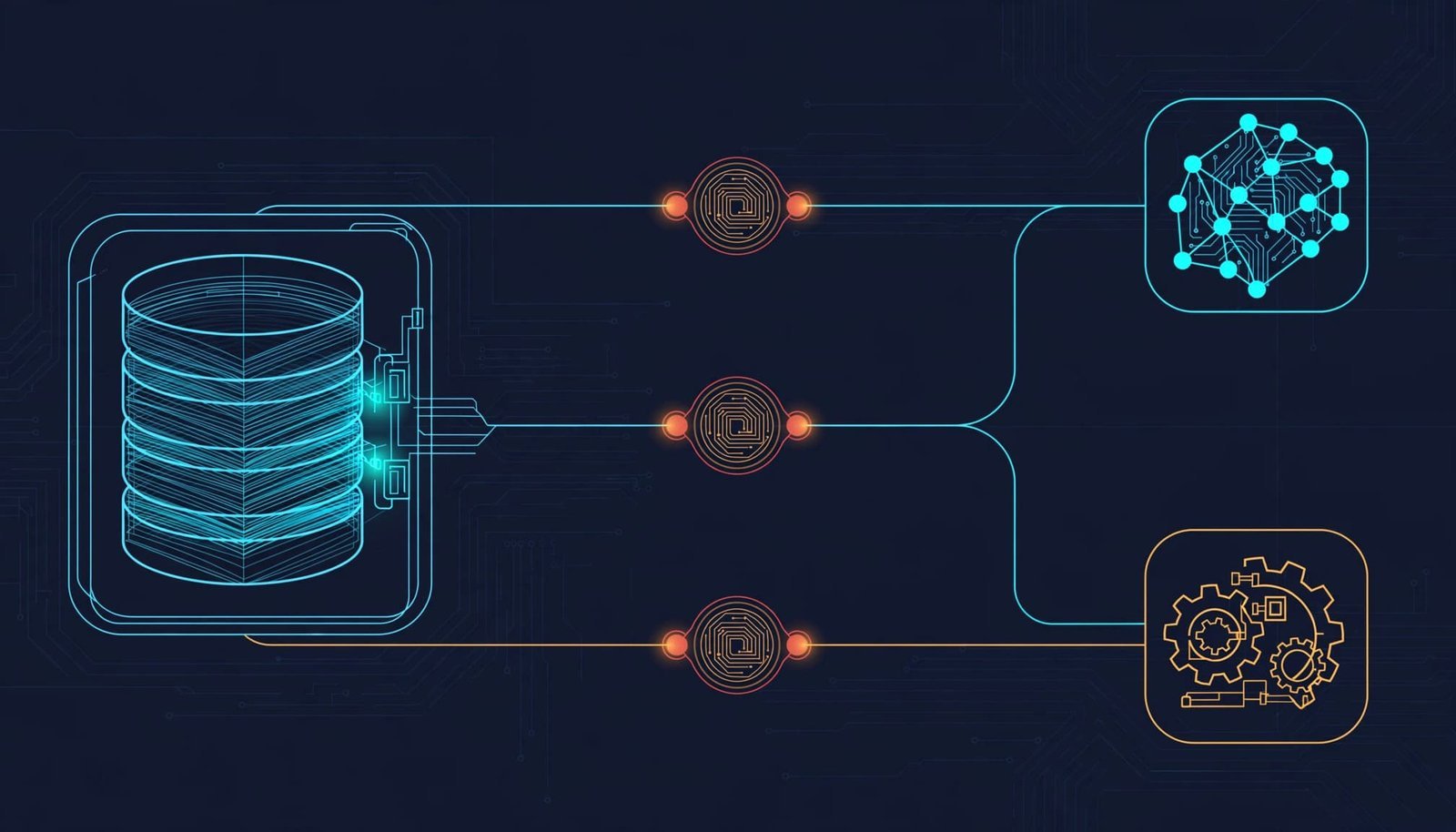
Retrieval-augmented generation (RAG) and multi-step agents create fresh prompts after the initial user message. A clean first request doesn’t make later steps safe.
Scan retrieved context before assembly
A RAG assistant may retrieve a customer note containing sensitive data unrelated to the user’s question. For retrieval-augmented generation, filter selected passages before adding them to model context, and check access rights before retrieval. Redaction doesn’t compensate for giving a user access to the wrong document.
Keep retrieved text clearly marked as reference material. A document that says “ignore previous instructions” must not acquire authority over your application rules. Prompt linting can flag risky templates and familiar attack phrases before release, while runtime threat detection handles new inputs.
Recheck every agent boundary
In systems that use ai agents, a tool result may contain a private email address that gets forwarded to another model or service. Apply inline prompt redaction and inspect each newly assembled request, including summaries and tool outputs, before that outbound call.
Keep tool permissions narrow as well. OWASP’s LLM application security guidance covers risks that filtering alone cannot settle. A redacted document can still contain an instruction to send a message or change an account; your application must validate that action independently.
Treat compliance as a design constraint, not a redaction badge
Sending sensitive data to an external AI service calls for more than a masking rule. Enterprise security and data governance require clarity on what crosses the boundary, who receives it, which agreements apply, and what systems retain.
Check the applicable obligations
For healthcare use, the HHS summary of the HIPAA Security Rule explains the safeguards for protected electronic health information. Before sending data, security operations should assess the provider’s role and any required arrangements.
For payment workflows, consult the PCI Security Standards Council’s standards when cardholder data may enter an AI route. Redaction can reduce exposure, but it doesn’t, by itself, establish HIPAA or PCI DSS compliance.
Prove the boundary works
The NIST Generative AI Profile identifies privacy risks, including unauthorized disclosure and re-identification. Test inline prompt redaction before transmission, using synthetic examples to assess threat detection across identifiers, mixed-language documents, unusual formats, and sensitive facts in ordinary text.
Record the policy version, finding category, decision, route, and outcome in audit logs. Default to metadata rather than raw prompt capture on sensitive routes. If investigators need content, limit access and retention through an approved process.
Maintain the rules as your prompts change
A redaction policy can fail after a seemingly harmless edit. A new source in retrieval-augmented generation may contain different identifiers, or an agent may add a tool whose response format the scanner has never seen.
Test misses and false alarms
Build a fixture set from safely generalized cases. Include values that must be blocked, values that must remain for the task, and ambiguous matches requiring review. Use pattern matching to test likely formats, and track false negatives and false positives by route so enterprise security teams can monitor risk across workflows.
Run those fixtures when you change prompts, detectors, model routes, or document sources. Static prompt checks can catch committed secrets and unsafe template boundaries. End-to-end tests show whether prompt-level redaction protects the assembled request that actually leaves your system.
Define failure behavior before an outage
Decide what happens when detection times out or a gateway is unavailable. For sensitive routes, fail closed rather than silently forwarding an unscanned request. If inline prompt redaction is unavailable, return a clear failure, use an approved local path, or send the request for human review.
Assign an owner in security operations to rule changes and suppression decisions, and align policy updates with data governance. That way, an exception made to fix one false alarm doesn’t quietly become permission to expose the same data everywhere.
Key takeaways
- Apply prompt redaction before every outbound model or tool call, including calls made by AI agents, not only before the first chat message.
- Preserve task context with typed placeholders, but keep reversible mappings outside model context.
- Test missed detections, false alarms, logs, and failure paths using representative, non-sensitive fixtures.
- Keep access controls, tool permissions, output validation, and compliance review alongside redaction.
Frequently asked questions
Can you redact a document once and reuse it across workflows?
Only if the transformed copy meets every workflow’s policy. A passage safe for an internal summary may expose more than an external writing assistant needs. Check the destination and user permissions each time the document enters a new route.
Is replacing names enough to anonymize a prompt?
No. Other details may identify a person alone or in combination. Review dates, locations, rare circumstances, and linkable placeholders before treating a prompt as anonymous.
Should you block every request that contains personal data?
Your policy should match the task and destination. Some approved workflows require limited personal data under appropriate safeguards. Block unnecessary or prohibited disclosure, and preserve only what the authorized task requires.
Safer prompts start before the model call
A clean-looking answer cannot undo an exposed request. The decisive check happens before transmission, when prompt-level redaction checks the full payload your application has assembled.
Start with one high-risk route and define what the model needs. Test inline prompt redaction across retrieval, tool use, logging, and failure. Then apply the same discipline across security operations and every route ai agents use to send sensitive data outward.
Leave a Reply