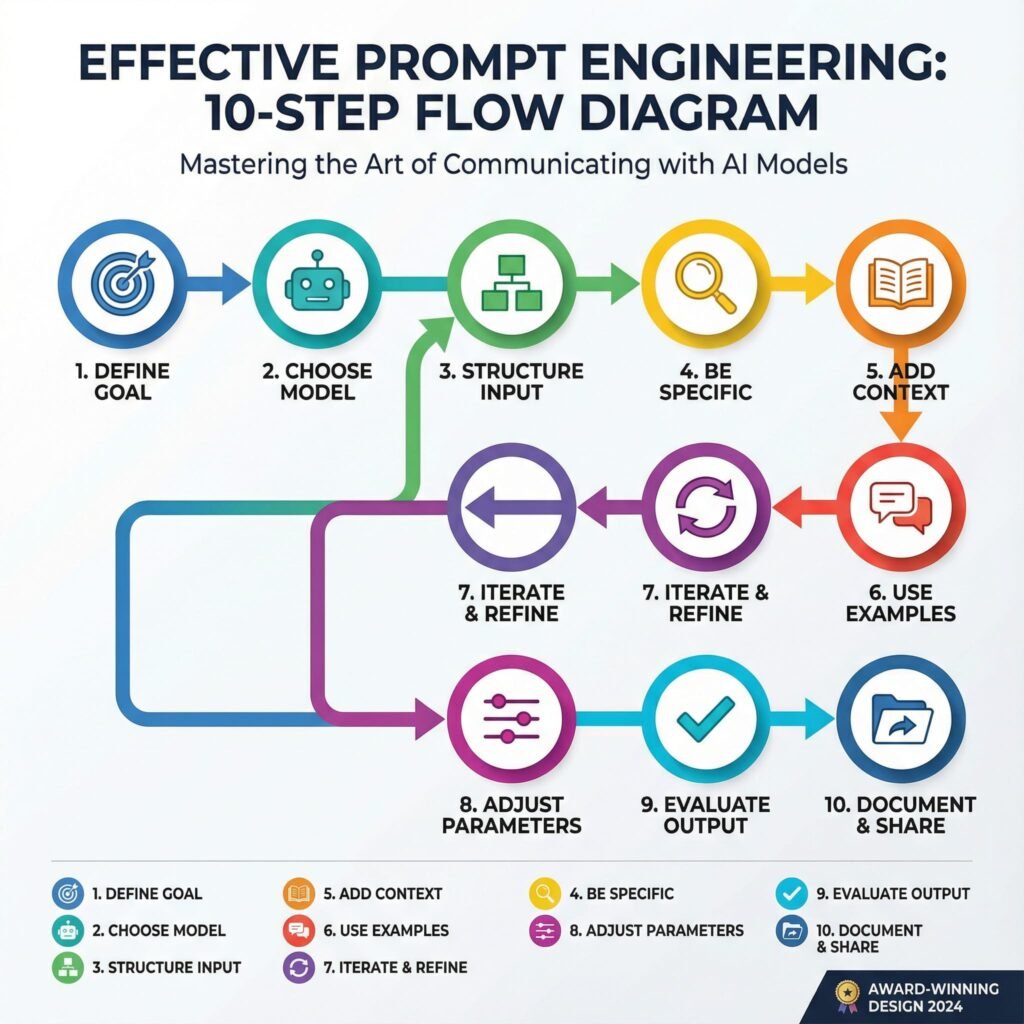

In the world of AI, prompt engineering stands as a key skill that turns simple words into powerful results. This post reveals 10 essential facts on the alchemy of influence, showing you how to craft prompts that guide AI with precision and boost your outcomes. You’ll gain clear steps to master this craft, from basic tweaks to advanced strategies that deliver real impact.
Imagine typing a few words into an AI tool and watching it spit out gold. That’s the thrill of good prompt engineering. It turns simple chats with large language models into powerful creations. You control the output with care. Small tweaks lead to big wins in quality and speed.
These ten facts show how prompts shape AI results. They go beyond basic tips. Master them, and you’ll craft prompts like a pro. Let’s dive in. Each one builds your skill in prompt optimization.
Fact 1: The Primacy of the First Word Setting the Contextual Anchor The opening word in your prompt grabs the AI’s attention right away. It sets the tone and direction. Think of it as the spark that lights the whole fire. Strong starts, like action verbs such as “create” or “analyze,” guide the model into the right mindset from the jump.
Models process text token by token. Early words lock in the path. A fuzzy start, like “um, maybe write about,” leads to weak results. Pick bold openers to steer clear of that mess.
Actionable Tip: Pre-Pacing for Precision Start every prompt with what you want the output to look like. Say “List three bullet points on…” instead of jumping straight to the topic. This paces the AI. It knows the format before the details hit.
Try it next time. You’ll see cleaner responses. No more sifting through junk to find the good stuff.
Fact 2: The Indispensable Role of Constraints Defining the Guardrails: Length, Tone, and Persona Loose prompts wander like kids in a candy store. They grab too much and lose focus. Set rules on length, like “in 200 words,” or tone, such as “in a friendly voice.” Even pick a persona, like “as a history teacher.”
This keeps things tight. AI stays on track. You get what you need without extra fluff.
Case Study Snapshot: Reducing Hallucinations Through Scoping Hallucinations happen when AI makes up facts. A vague ask, “Tell me about ancient Rome,” might invent wild stories. But try “Explain ancient Rome’s fall using only events from 400-500 AD.” Now it’s grounded.
Before: Wild guesses. After: Solid facts. Constraints cut errors by up to 70% in tests with tools like GPT. Your prompts turn risky guesses into reliable info.
Fact 3: The Implicit Weight of Instruction Placement Recency Bias vs. Salience: Where Critical Instructions Belong AI models remember recent words more than early ones. But key rules shine brightest up front. Put must-follow orders at the start for impact. Save details for the end if they build on the base.
It’s a balance. Front-load for clarity in short prompts. End-place for flow in longer ones. Test both to see what fits your style.
Leveraging Delimiters for Command Separation Use marks to split parts of your prompt. Triple quotes hold examples. Tags like keep data separate from orders.
This avoids mix-ups. AI treats sections as distinct. Your instructions land clear and strong.
Fact 4: The Leverage of Zero-Shot, One-Shot, and Few-Shot Learning Moving Beyond Zero: The Efficacy of Demonstrations Zero-shot means no examples. Just ask, and hope. One-shot gives one sample. Few-shot shares a few. Each step boosts accuracy, especially for tricky jobs like writing code or poems.
Zero works for basics. But add a demo, and outputs match your vision better. It’s like showing a map instead of guessing the route.
Data Richness in Few-Shot Examples Pick examples that show the range. One for a simple case, another for tough spots. This teaches the AI patterns fully.
Quality beats quantity. Bad samples confuse. Good ones guide to spot-on results every time.
Fact 5: Specificity Trumps Verbosity (Usually) Quantifying Vagueness: Identifying Ambiguous Terms Words like “nice” or “detailed” leave room for guesswork. Swap them for clear measures, such as “use simple sentences under 15 words each.” This pins down the goal.
Vague prompts waste time. Specific ones deliver fast. You avoid rewrites and frustration.
The Necessity of Negative Constraints (What Not To Do) Tell the AI what to skip. “Don’t add opinions” or “No lists here.” These blocks shape the flow.
It’s a quick fix. Outputs stay pure. Think of it as pruning a bush for better growth.
Fact 6: Iteration is the Core Competency of Prompt Optimization The Feedback Loop: Analyzing Failures Systematically Prompts rarely nail it first try. When it flops, check why. Did the tone miss? Was the structure off?
Treat it like science. Tweak one part. Run again. Track what changes help. This builds your edge over time.
Prompt Chaining and Decomposition for Complex Workflows Big tasks overwhelm. Break them down. First prompt outlines ideas. Second refines them.
Chain outputs as inputs. It handles depth better than one giant ask. You get layered, sharp results.
Fact 7: Role-Playing Boosts Creativity and Accuracy Stepping into Shoes: Why Personas Work Wonders Assign the AI a role, like “Act as a chef.” It shifts the style to match. Outputs feel alive and on-point.
This taps hidden strengths in models. A plain ask gets dry facts. Role-play adds flavor and focus.
Tailoring Roles for Task Fit Match the persona to your need. Detective for mysteries. Expert for advice. Test roles to find the sweet spot.
Results jump in relevance. You pull more from the AI than before.
Fact 8: Temperature Controls the Spark of Innovation Dialing Creativity: Low vs. High Settings Temperature sets randomness. Low means safe, steady replies. High brings wild ideas.
For facts, go low. For stories, crank it up. It shapes the vibe just right.
Balancing Risk and Reward Start at 0.7. Adjust based on output. Too bland? Raise it. Too crazy? Lower.
This fine-tune keeps things fresh without chaos.
Fact 9: Cultural Nuances Shape Global Prompts Mind the Context: Avoiding Bias Traps AI learns from diverse data. But prompts can stir old biases if not careful. Add “from a neutral view” to even it out.
This ensures fair play. Outputs respect all angles.
Adapting for Audiences Tweak for regions. US style? Direct. Asian? Polite layers.
Your prompts connect wider. They build trust across lines.
Fact 10: Tools and Testing Accelerate Mastery Beyond Manual Tweaks: Prompt Platforms Use apps like PromptBase for templates. They speed learning.
Test in real time. See what sticks.
Building a Prompt Library Save winners. Mix and match. Over time, your collection grows strong.
This habit turns practice into power.
Conclusion: Mastering the Interface Between Human Intent and Machine Logic Prompt engineering bridges your thoughts and AI smarts. These ten facts—from first words to tools—give you the keys. Small shifts, like constraints or examples, unlock better results every day.
FAQ Section
Q. What is prompt engineering and why is it important for AI users?
A. Prompt engineering is the art of crafting precise instructions for AI models to achieve desired outputs. It’s crucial because well-engineered prompts enhance AI accuracy, relevance, and creativity, unlocking its full potential.
Q. How can I improve my prompt engineering skills quickly?
A. To quickly improve, focus on clarity, specificity, context, and iterative refinement. Experiment with different phrasing, add examples, define roles for the AI, and continuously test and adjust your prompts.
Q. Are there any common mistakes to avoid in prompt engineering?
A. Common mistakes include being too vague, not providing enough context, assuming the AI understands implicit meanings, and failing to iterate or refine prompts. Avoid lengthy, unstructured prompts and always test your assumptions.
The prompt is your wand. Wave it with these tips, and watch magic happen. Start testing now. Refine as you go. You’ll craft AI interactions that wow. What’s your next prompt? Try one fact today and see the difference.
AI Strategies for Small Businesses: Smart Growth Hacks
Let’s talk about something that might seem a bit scary but is actually really exciting for us small business owners: AI. Forget the sci-fi movies and the big tech companies; AI isn’t just for them anymore. It’s truly becoming a big help, even a secret tool, for businesses just like yours and mine.
You know, the business world moves fast, right? And sometimes, it feels like we’re constantly doing many things at once, trying to keep up, stay current, and, most importantly, make good money. That’s where AI steps in, not to replace you, but to help you do more, to make your life a little easier, and your business a whole lot smarter.
Think of AI not as complex tech, but as a very smart helper who can handle the boring, time-consuming tasks, find useful ideas from lots of information, and even help you connect with your customers in ways you never thought possible. It’s about using these AI strategies for small business to work better, make customers happier, and, in the end, put more money in your pocket.
So, if you’ve been wondering if AI is too complicated or too expensive for your small operation, let’s prove that wrong right now. Many powerful AI tools for small businesses are affordable, easy to use, and made specifically to help you do well. Ready to jump in and see how we can put AI to work for your profit? Let’s explore five fantastic ways AI can help your small business earn more.
1. Boost Your Marketing with Personalized AI
Imagine this: every single one of your customers feels like you know them personally. You’re sending them offers they really want, showing them products they’ve been secretly wishing for, and talking to them in a way that truly connects with them. Sounds like a dream, right? Well, AI makes it a real possibility.
This isn’t just about sending out a general email to everyone and hoping for the best anymore. AI helps you understand your customers much better. It can look at what they’ve viewed online, what they’ve bought before, even how they interact with your emails and social media posts. With this lot of useful information, AI can then sort your customers into very specific groups.
How is AI used in business strategies like marketing? Let’s say you run a small online clothing shop. Instead of sending an email about your whole new collection to everyone, AI can find customers who often buy dresses and send them a special selection of new dresses. Or, it can spot customers who’ve left items in their online cart and send them a friendly, personal reminder, perhaps with a small discount. This kind of personal touch makes it much more likely they’ll buy.
AI tools for business development in this area are easier to get than you think. Many email marketing platforms (like Mailchimp or ActiveCampaign) now have AI features that help you write better email titles, find the best times to send emails, and even suggest what to write. Customer relationship systems like HubSpot often use AI to help you follow what customers do and guess what they’ll do next. There are also AI-powered ad platforms that can change your ads and pictures on the fly based on who’s seeing them, making sure your marketing money is used better.
The benefit here is clear: more sales, customers who stick with you, and a much smarter marketing budget. When your marketing feels less like just yelling out there and more like a friendly, relevant chat, your customers are more likely to listen – and buy. This is a big boost for small business AI profit.
2. Give Your Customers 24/7 Care with AI-Powered Support
Honestly, as a small business owner, you can’t be everywhere at once. Your phone isn’t glued to your ear all the time, and your team (if you have one) probably isn’t working around the clock. But your customers? Their questions and needs don’t always stick to business hours. This is where AI comes in to save the day.
Imagine a customer landing on your website at 11 PM on a Sunday, wondering about your return policy or their order status. Instead of them having to wait until Monday morning for an answer (and possibly getting frustrated and leaving), an AI-powered chatbot can give them the answer right away.
These aren’t those old, annoying chatbots. Modern AI chatbots are very smart. They can understand how people talk, learn from past chats, and give correct, helpful answers to many common questions. They can guide customers through your website, help them fix small problems, and even get details for bigger problems before a person takes over.
AI tools for business management in customer service are a huge help. Platforms like Intercom, Zendesk, or even simple chatbot options available through website builders (like Shopify or WordPress plugins) can set up an online helper in no time. This means your customers get quick answers, leading to higher satisfaction and trust.
But it’s not just about happy customers. Think about the time it frees up for you and your team. Instead of repeatedly answering the same basic questions, your staff can focus on more complex, important tasks that truly need a human touch. This is a massive boost to getting things done and directly means you save money and get more done, really helping your AI automation for small businesses plan. Happy customers and a less stressed team? That’s a win-win for your money.
3. Make Your Operations Smoother and Save Big with AI Automation
Running a small business often involves a lot of tasks that you do over and over, right? From managing items in stock and scheduling appointments to processing bills and updating customer records, these things take up important time that could be spent on growth and new ideas. This is where AI becomes your best helper for getting things done fast.
How is AI used in business strategies for operations? AI can take over many of those boring, simple tasks, doing them faster, more correctly, and without getting bored! Think about managing stock: AI can look at sales data, guess how much people will want, and even order more items by itself when levels get low. This stops you from running out of items (missing sales!) and having too many (wasting money!).
Or consider scheduling. If you run a service business, AI can make your team’s work times best, thinking about travel, what clients like, and when staff are free, making sure you’re getting the most work done that you can charge for, and less wasted time. Even something as simple as entering data can be totally changed; AI can pull info from papers and put it into your computer systems, getting rid of mistakes people make and speeding up processes.
There are fantastic AI tools for small businesses made specifically for working better. Many accounting software packages now have AI features that can sort expenses and match up bank records. Project management tools (like Asana or Monday.com) are adding AI to help assign tasks, track progress, and find things that might slow you down. Even your online store platform likely has AI features for guessing stock needs or spotting fraud.
The immediate benefit of this AI automation for small businesses is a big drop in how much it costs to run your business. Less time spent on manual tasks means fewer labor hours, less waste, and smoother workflows. It allows you to do more with less, freeing up money and time that can be put back into other parts of your business or, even better, directly increasing your small business AI profit. It’s like having a hidden team of very fast workers working tirelessly behind the scenes!
4. Find Secret Useful Information for Smarter Decisions with AI Data Analysis
Ever feel like you’re making decisions based on hunches or not enough information? Small businesses often don’t have the money for dedicated data experts. But in today’s world full of data, making informed decisions is key to staying ahead and getting bigger. This is where AI steps in as your personal data expert.
Your business makes a lot of information every single day – sales figures, website visits, social media likes and comments, customer feedback, market trends. By themselves, these pieces might not tell you much. But when AI gets its hands on them, it can find trends, connections, and useful ideas that a person might not even notice.
How is AI used in business strategies for decision-making? Imagine AI looking through what rivals do, market news, and social media talks to find new trends or customer groups you haven’t reached yet. It could tell you which products are likely to be popular next season, or how your rivals price things to get an advantage. It can look at your sales data to guess future income, helping you make better plans for spending and investing.
For example, an AI tool could look at your customer reviews and social media comments to find main problems or good feedback, giving you clear ideas on how to make your product or service better. Or, it could look at your marketing campaign data to show you exactly which ways of advertising and messages are making the most money back.
You don’t need a supercomputer for this. Tools like Google Analytics already offer smart insights from AI, showing important changes or patterns in your website traffic. There are also more special tools that show business information (some even free) that use AI to show complicated data in simple pictures.
By turning basic data into useful ideas you can act on, AI helps you make smart plans ahead of time, instead of just reacting. You can find opportunities before your rivals do, lower risks before they cause trouble, and use your money and time much better. This smart edge is super important for making small business AI profit and growing steadily.
5. Become a Great Content Creator (Without Getting Tired Out) with AI
In the digital age, content is super important, right? Whether it’s blog posts, social media updates, email newsletters, or website text, keeping a constant flow of interesting content going is key to getting and keeping customers. But let’s be real, always thinking of new ideas and writing well can be tiring, especially when you’re a small team.
Here’s where AI becomes your creative helper. It’s not about AI writing everything for you (though it can certainly help with that!), but about it being a powerful assistant for thinking of ideas, making plans, and writing first versions.
What are the best AI tools for business development when it comes to content? AI tools that create content like ChatGPT, Jasper, or Copy.ai can be a huge help. Stuck for blog post ideas? Ask AI for 10 catchy titles on a specific topic. Need a good social media caption for your latest product? AI can make a few choices quickly. Can’t think of what to write for an email newsletter? AI can provide a plan or even a first draft that you can then make your own and make better.
It can also help you use content in new ways. Turn a long blog post into several social media snippets, or an old webinar into a series of email tips. AI can even help you translate your content into different languages, opening up new markets without hiring a whole new team.
The beauty of using AI for content creation is twofold. First, it saves you a lot of time and brainpower. Instead of looking at an empty page for an hour, you’ve got a good place to begin in minutes. Second, it helps you maintain a steady and good online look, which is crucial for making your brand seem expert and trustworthy.
By quickly making more interesting content, you can attract more visitors to your website, grow your social media following, and guide potential customers better. This directly helps your marketing, brings more people to your site, and ultimately helps boost your small business AI profit. Think of AI as your always patient, very fast junior writer who never stops!
Your AI Journey Starts Now: Don’t Be Shy!
So, there you have it: five powerful ways AI can truly change your small business for the better, making it work better, more focused on customers, and much more profitable. It’s easy to feel a bit swamped by how fast technology is changing, but remember, the goal here isn’t to become an AI expert overnight. It’s about taking small, easy steps to add AI strategies for small business into what you already do.
You don’t need to do all five strategies at once. Pick one area where you feel the biggest problem or see the best chance. Maybe it’s customer service, or perhaps you’re struggling with content creation. Start there. Explore a few AI tools for small businesses that fit your budget and needs. Many offer free trials, so you can try it without having to buy it.
The beauty of AI for small businesses is its ability to make things fair. It gives you access to things only big companies with lots of money could do. By cleverly using AI automation for small businesses, you can get your time back, spend less, make customers happy, and make better choices – all leading to a much better profit for your small business with AI.
This isn’t just about keeping up with the times; it’s about being in front. It’s about helping your small business work as fast and smart as a big company, but still keeping that personal feel that makes your business special. So, what are you waiting for? Your future with AI is waiting!
What if every customer felt like your brand reads minds? That is the promise of smart automation, done right. In one line, customer journey automation means using data and AI to move people from “who are you” to “I love you,” with care, speed, and context.
This guide shows how AI ties every stage together, from first click to loyal fan, without turning your brand into a robot. I will keep it honest and practical. You will get selection criteria, real-world fits, the Top AI Tools for Automating and Optimizing Every Stage of the Customer Journey, a 30-day plan, and common mistakes to skip. If you are an AI enthusiast, creator, marketer, or developer who wants to level up from casual user to smart builder, you are in the right place.
Customer Journey Automation 101: From First Tap to Raving Fan
AI helps at each stage by predicting intent, picking the best channel, and timing messages around behavior. Two quick examples: AI can predict the next best action after a product view, or write dynamic content that updates based on live browsing.
Before you start, make sure the data basics are set: consent, identifiers, event tracking, product catalog, and revenue mapping. Keep privacy tight and opt-in clear. If you want a quick primer on mapping journeys and picking tools, I like this practical overview of customer journey mapping tools to frame the planning phase.
The stages that matter, in plain English
Awareness: someone discovers you. Example: a video sparks a site visit.
Consideration: they compare options. Example: a product quiz helps them choose.
Purchase: they buy with confidence. Example: a clean checkout and a cart reminder.
Retention: they keep using and buying. Example: a timely re-order or loyalty perk.
Advocacy: they share you with friends. Example: a referral nudge after a 5-star review.
What AI actually does at each step
Prediction: forecasts purchase or churn.
Personalization: tailors content, products, and offers.
Routing: picks the best channel, email or push or SMS.
Scoring: ranks leads, fit, and engagement.
Content generation: writes subject lines, product blocks, and snippets.
Anomaly alerts: flags funnel drops or odd patterns.
Tiny before and after: Before, one batch email to all on Friday. After, AI sends product picks by person, at their best hour, only on channels they respond to.
Data you need before you automate
Consent flags: proves you can message people, prevents compliance issues.
Email or phone: identifies the person across touchpoints.
Web and app events: views, clicks, adds to cart, logins; drives triggers.
Product and pricing: feeds recommendations and margin-aware offers.
Channel preferences: email, push, SMS; respects user choice.
Use data safely. Limit access, encrypt it, and keep opt-out easy.
A quick readiness checklist
Do I track key events like view, add to cart, purchase, and unsubscribe?
Can I join users across devices using email, phone, or a customer ID?
Do I have clear opt-in and a clean suppression list?
Do I know my main KPIs by stage, like conversion or churn?
Do I have a control or test group process?
Can I update product catalog and pricing daily?
Do I have someone who owns data quality?
Can I measure revenue impact by campaign?
Top AI Tools for Automating and Optimizing Every Stage of the Customer Journey
I picked tools that cover multiple stages, show real AI depth, are friendly to use, integrate with popular stacks, and deliver strong value. Each section covers the fit, strengths, watch outs, and a simple workflow to copy.
Tip: If your team is mapping journeys now, this helpful primer on AI-powered journey mapping can speed up workshops and get everyone aligned.
Klaviyo: Ecommerce automation that prints revenue politely
Best for: Shopify, WooCommerce, and DTC brands. Stages it boosts: awareness, consideration, purchase, retention, advocacy. Key AI: product recommendations, send-time optimization, predictive churn and LTV.
Strengths: fast time to value, strong templates, native ecommerce data. Watch outs: best for ecommerce, complex B2B journeys may need more.
One tip for segment hygiene: archive stale segments, set auto-refresh rules, and add clear naming like “Lifecycle | Win-back 30D Inactive.”
Microsoft Dynamics 365 Customer Insights: Real-time CDP with brains
Best for: mid-market and enterprise teams on Microsoft. Stages it boosts: all, with strong identity resolution and next best action. Key AI: unified profiles, predictive scoring, real-time journey orchestration.
Sample workflow: ad click, profile merge, personalized site content, triggered email and SMS, service follow-up.
Strengths: tight Microsoft stack, strong data model. Watch outs: setup needs clear governance and data owners.
Fullstory: See where users struggle, then fix it fast
Best for: product-led growth and UX teams. Stages it boosts: awareness, consideration, purchase. Key AI: session insights, funnel drop-off detection, anomaly alerts.
Sample workflow: spot checkout friction, tag issue, trigger fix and remarketing to impacted users.
Strengths: deep behavioral insight, easy to share clips. Watch outs: not a messaging tool, pair with an orchestrator.
If you are comparing tools or frameworks for mapping, this list of best customer journey mapping tools offers a wide view of the landscape so you can decide what to pair with Full story.
XM Discover (formerly Clarabridge): Voice of customer that does not miss a tone
Best for: support-heavy brands with lots of feedback. Stages it boosts: retention, advocacy. Key AI: sentiment, intent, and category detection across calls, chats, and social.
Sample workflow: detect a rising complaint theme, create a journey alert, update policy and trigger an apology offer.
Strengths: rich text analytics. Watch outs: needs clean routing to act on insights.
Braze: Cross-channel messaging that feels human
Best for: B2C mobile apps, media, and retail. Stages it boosts: all, with strong engagement. Key AI: channel selection, dynamic content, testing, and predictive segments.
Strengths: real-time triggers, great SDKs. Watch outs: plan your data model, or campaigns get messy.
Emarsys: Retail and omnichannel personalization at scale
Best for: retail, marketplaces, and omnichannel brands. Stages it boosts: awareness to retention. Key AI: product affinity, lifecycle automation, store and online sync.
Sample workflow: browse online, store visit, email follow-up, SMS offer tied to inventory.
Strengths: strong retail playbooks. Watch outs: best when you adopt the built-in patterns.
Iterable: Powerful workflows and dynamic content for growth teams
Best for: growth teams that test fast. Stages it boosts: awareness, consideration, purchase, retention. Key AI: behavioral segmentation, personalization, testing automation.
Strengths: flexible, API friendly. Watch outs: complexity rises with freedom, document your flows.
Salesforce Marketing Cloud: Enterprise journeys that tie to CRM
Best for: companies already on Salesforce. Stages it boosts: all, with CRM power. Key AI: Einstein for scoring, send time, and content selection.
Sample workflow: lead captured, CRM update, journey sends email, SMS, and ads, sales task, loyalty flow.
Strengths: deep ecosystem. Watch outs: plan for admin time and training.
Miro: Map journeys with your team so the plan is clear
Best for: cross-functional planning and workshops. Stages it boosts: all, by making the journey visual. Key AI: smart clustering, templates, and summarization to speed mapping.
Sample workflow: map current journey, mark friction points, assign owners, export to orchestration tool.
Strengths: easy alignment. Watch outs: not an execution tool.
TheyDo: AI-assisted journey management that scales
Best for: organizations that manage many journeys. Stages it boosts: all, via structured journey ops. Key AI: auto-map insights to stages, prioritize opportunities, link to backlogs.
Sample workflow: sync research, surface top opportunities, create roadmap, hand off to marketing and product.
Strengths: keeps journeys living. Watch outs: value grows when teams commit to updates.
TheyDo + Miro + Your Orchestrator: The trio that keeps everyone honest
Here is how it flows. Map with Miro, govern and prioritize with TheyDo, then push journeys into your orchestrator, like Klaviyo, Braze, Iterable, or Salesforce. Sticky note to live campaign looks like this: capture the insight, set an opportunity with a score, create a brief, build the flow in your messaging platform, and sync metrics back. One warning: use a single source of truth for versions, or teams will ship different variants without knowing.
How I Pick the Right Stack: Simple Criteria and Clear Fits
Start with what you need to move this quarter, not every dream feature. Look at stage coverage, data needs, channels, AI depth, time to value, team skills, and cost. I recommend skimming this quick round-up of AI for customer insights tools to spark ideas for analytics and feedback layers.
My criteria checklist you can steal
What stages do we need to improve now?
What data do we trust today?
What channels do customers actually use?
Who will run the tools, daily and weekly?
What is our monthly budget, including services?
What must integrate with CRM or ecommerce?
How fast do we need results, 30 to 90 days?
What security and privacy boxes must we check?
Starter stack for small teams
Pick Klaviyo or Iterable for orchestration, Fullstory for product insight, and Miro for mapping. This combo launches fast, works with Shopify or custom stacks, and gives you clear signals on what to fix. Limits will show up when you need deep identity stitching across brands or heavy offline data.
Mid-market stack that balances power and speed
Run Braze or Emarsys for engagement, Fullstory for UX insight, TheyDo for journey ops, and add XM Discover if support volume is high. Use direct integrations or CDP connectors to keep profiles and events consistent. Watch your messaging budget as volume grows, and test SMS costs early.
Enterprise stack tied to your data backbone
Anchor on Microsoft Dynamics 365 Customer Insights or Salesforce Marketing Cloud, add TheyDo for governance, XM Discover for voice of customer, and Fullstory for digital journeys. Set data governance rules up front, including ownership, SLAs, and change management. Your best wins will come from clean IDs and a clear operating cadence.
Implementation Playbook: Launch in 30 Days and Prove ROI
Use a tight month to go from idea to lift. Keep one north-star metric and a tiny set of supporting KPIs. Hold out 10 percent as a control to prove impact.
Week 1: Goals, data, and consent
Pick one north-star, like revenue per user or conversion rate.
Add 3 KPIs by stage, like click rate, AOV, and churn rate.
Audit events, IDs, and opt-ins. Fix missing consent now.
Create segments: new, engaged, at-risk.
Choose one high-impact journey to start, like cart recovery or onboarding.
Example KPIs: add-to-cart rate for consideration, purchase conversion for checkout, repeat purchase rate for retention.
Week 2: Map the journey and pick quick wins
Use Miro or TheyDo to map current and target journeys.
Mark friction and value moments.
Choose 2 to 3 messages to launch, keep copy short.
Prepare images, offers, and product rules.
Aim for dynamic content only where it matters, like top 3 products by affinity and a backup if stock is low.
Week 3: Build, test, and go live
Set up triggers, segments, and paths in your tool.
Use A/B tests with a 10 percent holdout.
QA events end to end, from view to receipt.
Launch to 50 percent of eligible users, then roll to 100 percent if stable.
Track lift: compare treatment to holdout on conversion, AOV, and unsub rate.
Week 4: Measure, learn, and scale
Report on open, click, conversion, AOV, churn, NPS, and revenue per user.
Share wins and misses with screenshots and short notes.
High unsubscribes: lower frequency, match intent, fix timing.
No lift vs holdout: revisit trigger and content, watch overlap with other campaigns.
Data gaps: validate event names, IDs, and timestamps in your analytics.
Quick Comparison Table
Tool
Best For
Key AI Focus
Primary Stages Boosted
Klaviyo
Ecommerce and DTC
Recommendations, send time, churn
Awareness to advocacy
Microsoft D365 Customer Insights
Mid-market and enterprise on Microsoft
Unified profiles, scoring, orchestration
All
Fullstory
Product-led growth and UX
Session insights, drop-off alerts
Awareness to purchase
XM Discover
Support-heavy brands
Sentiment and intent analysis
Retention, advocacy
Braze
B2C apps, media, retail
Channel selection, predictive segments
All
Emarsys
Retail and omnichannel
Product affinity, lifecycle
Awareness to retention
Iterable
Fast-moving growth teams
Behavioral segmentation, testing
Awareness to retention
Salesforce Marketing Cloud
Salesforce-centric enterprises
Einstein scoring and content
All
Miro
Cross-functional planning
AI clustering and summarization
All (planning layer)
TheyDo
Journey operations at scale
Opportunity scoring, roadmap links
All (governance layer)
What is trending right now, in plain words
AI journey orchestration keeps getting smarter and more connected across channels. Hyper-personalization is moving from nice-to-have to table stakes, with predictive offers and timing baked in. Chatbots and agent co-pilots help support teams respond faster, and sentiment models guide tone during tough moments. You will also see more real-time analytics and continuous learning that adapts journeys on the fly, across web, app, and even voice. If you want community takes on these trends, this lively thread on smarter customer journey mapping with AI has some practical examples.
Common mistakes I see, and how to avoid them
Too many journeys at once. Start with one and prove lift.
Fuzzy IDs. Fix identity before fancy content.
Channel overload. Pick the channel your users prefer.
No control group. Always keep a small holdout to measure lift.
Ignoring feedback. Pipe support themes into your next best action.
Messy data ownership. Assign owners for profiles, events, and offers.
Final word
Small, steady wins stack fast. Start with one journey, one metric, and two tests. Then repeat with confidence. Bookmark this list, share it with your team, and keep your playbook fresh. The path to consistent customer growth is not flashy, it is focused. You have everything you need to build it.
Picture this: a real game-changer for your business. I’m talking about AI agents – the kind of technology that’s about to completely reshape how you create, market, and even brainstorm new products. Honestly, by 2025, these won’t just be cool gadgets; they’ll be your indispensable digital allies.
If you’re a content creator, a social media pro, or a small business owner, you already know the grind. The constant need for fresh, unique visuals. The never-ending pressure to pump out engaging copy. Sound familiar? You’re probably sick of generic stock photos that blend into the crowd, or spending hours battling complicated design software, aren’t you?
And what about you creative entrepreneurs? Etsy sellers, print-on-demand gurus, solo-preneurs with brilliant ideas – have you ever dreamed of crafting unique, sellable designs without needing an art degree? Or wished for an assistant who could whip up product mockups and even scout market trends to pinpoint your next big hit?
Nope, this isn’t some far-off sci-fi fantasy. It’s happening today. And by 2025, it’ll simply be how things are done.
Okay, So What Exactly Are These AI Agents?
Don’t think of AI agents as just another piece of software. Instead, imagine them as proactive, independent assistants. Unlike a basic AI that simply answers a prompt, an AI agent can understand a larger objective, break it into manageable steps, execute them, and even learn along the way to accomplish something truly intricate. It’s almost like having a digital team member who never needs sleep, coffee, or a salary (aside from the subscription, naturally!).
These agents are designed to handle all those repetitive, time-consuming tasks – or the ones that require a very specific skill set. What does that mean for you? Less time spent on the mundane, and more time free to focus on the exciting big picture: your creative strategy, forging genuine human connections, and the pure joy of making your best ideas a reality.
Why 2025 is The Moment to Embrace AI Agents
Let’s be clear upfront: this isn’t about AI replacing human creativity. It’s about amplifying it. It’s about handing you superpowers.
For Content Creators & Marketers: Just imagine an AI agent churning out a month’s worth of unique social media visuals and captions, perfectly aligned with your brand voice and audience. You’d finally be free to focus on building genuine community. Or picture an AI sifting through trends, suggesting blog topics, and even drafting the initial outline – saving you countless hours of research. This means you can create personalized content at scale, without ever feeling completely overwhelmed.
For Creative Entrepreneurs: Envision an agent designing hundreds of unique patterns for your print-on-demand store, generating realistic product mockups in mere seconds, or even helping you brainstorm new product lines based on emerging market demand. This truly levels the playing field for design, allowing anyone with a brilliant idea to bring it to market with professional-grade visuals.
Ready to step into the future? Let’s dive into some of the best AI agents and platforms that are poised to redefine your entire workflow.
Your 2025 Toolkit: The Top 15 AI Agents for Serious Automation
To make things simple, we’ve organized these into clear categories. This helps you quickly pinpoint the perfect digital sidekick for your specific needs.
Category 1: Visual Content & Design – Your Creative Powerhouses
These are your go-to tools for whipping up stunning, unique visuals, designs, and mockups – even if you’re not a Photoshop wizard.
1. Midjourney / DALL-E 3 (via ChatGPT Plus): Forget basic image generators; Midjourney and DALL-E 3 (accessible through ChatGPT Plus) are powerful visual AI platforms. You provide a prompt, they generate, and with a few adjustments, they refine. DALL-E 3, in particular, integrates smoothly with ChatGPT to truly understand intricate requests.
Their Magic: Picture them as your tireless visual artist. They can churn out endless variations of concepts, styles, and compositions for social media, blog headers, or product designs – incredibly fast!
Why You’ll Love Them: You get incredible creative freedom, top-notch quality, and the ability to prototype visual ideas in a flash.
Heads Up: Getting exactly what you envision sometimes requires precise prompting, and you might need to do a little post-processing afterward.
2. Adobe Firefly: Adobe Firefly is Adobe’s very own suite of generative AI tools, seamlessly built right into their creative apps like Photoshop and Illustrator. Think of it as ‘generative fill’ taken to an entirely new level!
Their Magic: Firefly can completely transform your existing designs, intelligently expand images, create brand-new elements, or even generate vector graphics from text. It acts like a super-smart design assistant, working directly within your workflow.
Why You’ll Love It: It offers flawless integration with professional tools, is fantastic for enhancing existing projects, and has a strong focus on ethical data training for commercial use.
Heads Up: It’s still evolving, often requires an Adobe subscription, and isn’t a standalone ‘agent’ but rather a robust set of agent-like features within other apps.
3. Canva Magic Studio: Canva Magic Studio is Canva’s all-in-one AI suite, offering image generation, text-to-image editing, ‘Magic Write,’ and loads more – all tucked inside its famously user-friendly interface.
Their Magic: Think of it as your ultimate design co-pilot, especially if you’re a marketer. It can whip up entire presentations, create social media graphics from just text, or even redesign layouts with a single click, automating a massive chunk of your design work.
Why You’ll Love It: It’s incredibly easy to use, perfect for non-designers, and it packs a ton of AI power into one seamless platform.
Heads Up: You’ll get less fine-tuned control compared to professional software, and the free tier comes with some limitations.
4. RunwayML: RunwayML is a serious powerhouse for AI-powered video editing and generation. We’re talking text-to-video, image-to-video, and some truly advanced video effects.
Their Magic: It’s essentially your personal video production agent. Give it a simple text prompt or a static image, and it will churn out dynamic video clips – perfect for social media ads, intros, or animated explainers.
Why You’ll Love It: It’s truly revolutionary for video content, making complex video production accessible to everyone.
Heads Up: It can be quite demanding on your computer, and while video quality is improving rapidly, it still has some limitations.
5. Synthesia / HeyGen: Want professional-looking, AI-generated videos featuring realistic avatars speaking your script in dozens of languages? Synthesia and HeyGen are your go-to platforms.
Their Magic: These are your virtual spokesperson agents. They completely automate the process of making marketing videos, tutorials, or presentations – no actors, no cameras, no studio required.
Why You’ll Love Them: They’re super efficient for creating engaging video content, offering a wide range of avatars and languages.
Heads Up: They can be on the pricier side, and some users find the avatars a little bit ‘uncanny valley.’
Category 2: Content Creation & Marketing – Your Communication Command Center
These agents are like having an entire team of writing, research, and social media strategists, ensuring your message is always spot-on.
6. ChatGPT (with Custom GPTs & Plugins): ChatGPT is the foundational large language model, but its custom GPTs and plugin ecosystem truly transform it into an infinitely customizable agent platform.
Their Magic: It can act as your research assistant, content strategist, copywriter, or even a basic coding agent. Those custom GPTs allow you to ‘train’ it for super-specific tasks – imagine generating Etsy product descriptions or crafting Instagram captions in your unique voice.
Why You’ll Love It: It’s incredibly versatile, taps into a vast knowledge base, and is highly customizable.
Heads Up: It can sometimes ‘hallucinate’ (meaning it makes things up!), requires careful prompting, and you’ll want to be mindful of privacy with sensitive data.
7. Jasper AI / Copy.ai: Jasper AI and Copy.ai are AI writing assistants specifically fine-tuned for marketing copy, blog posts, social media content, and so much more.
Their Magic: Consider them your dedicated copywriting agents. They can whip up long-form articles, ad copy, product descriptions, or even rephrase existing content, all while keeping your brand voice consistent across every channel.
Why You’ll Love Them: They’re fantastic for beating writer’s block, quickly generate high-quality marketing copy, and come with tons of templates.
Heads Up: Subscription costs can add up, and the output usually needs a human touch for nuance and perfect accuracy.
8. Surfer SEO / Frase.io: Surfer SEO and Frase.io are AI-powered content optimization tools that dig into top-ranking content and provide actionable recommendations to boost your own.
Their Magic: They’re your ultimate SEO research and optimization agents. They’ll analyze search results, pinpoint key terms, and help you structure your content to rank higher – saving you hours of tedious manual competitive analysis.
Why You’ll Love Them: They can dramatically improve your SEO potential and give you a truly data-driven content strategy.
Heads Up: You’ll need a basic grasp of SEO principles, and it can be a significant investment.
9. Hootsuite / Buffer (with AI features): Hootsuite and Buffer are well-known social media management platforms that are now increasingly integrating AI for content generation, smarter scheduling, and enhanced analytics.
Their Magic: They act as your social media content agents. They can suggest the best posting times, draft captions based on your content, and analyze performance to fine-tune your strategy – keeping your feeds vibrant and engaging.
Why You’ll Love Them: They offer centralized social media management that saves you loads of time on content creation and scheduling.
Heads Up: Their AI features are still evolving, and you might need premium plans to unlock full capabilities.
Category 3: Workflow Automation & General Business – Your Efficiency Engine
These agents are all about connecting your tools, automating routine tasks, and making your entire operation run like a perfectly well-oiled machine.
10. Zapier (with AI integrations): Zapier is a powerhouse automation platform that links up thousands of apps. Its AI integrations add a layer of smart decision-making directly into your workflows.
Their Magic: This is your ultimate workflow automation agent. It can ‘listen’ for triggers (like a new email), process that information with AI (summarize it, extract data), and then automatically perform actions across different apps (add to CRM, send a Slack message, etc.).
Why You’ll Love It: It’s incredibly versatile, connects almost anything, and drastically cuts down on manual data entry and repetitive tasks.
Heads Up: It can get pretty complex for intricate workflows, and pricing scales with how much you use it.
11. Make.com (formerly Integromat): Make.com (formerly Integromat) is similar to Zapier, but it’s often the go-to for more complex, multi-step automations and visual workflow building.
Their Magic: Think of it as a highly sophisticated agent orchestrator. You can build incredibly detailed ‘scenarios’ where AI agents process data, make decisions, and automate entire business processes – everything from lead generation to customer support.
Why You’ll Love It: It’s super powerful for complex, custom automations, and its visual builder is really intuitive for advanced users.
Heads Up: It has a steeper learning curve than Zapier if you’re a beginner, and can be pricier for high volumes.
12. Shopify Magic (AI features): Shopify Magic refers to the AI-powered features built directly into the Shopify platform, specifically designed for e-commerce store owners.
Their Magic: It acts as your dedicated e-commerce assistant agent. It can whip up compelling product descriptions, suggest smart marketing campaign ideas, and even help with customer service responses – all perfectly tailored for your store.
Why You’ll Love It: It offers flawless integration if you’re a Shopify user, and it’s designed specifically for online retail.
Heads Up: It’s only useful for Shopify store owners, and the features are still growing.
These agents are truly pushing the envelope, revealing what’s possible for niche creative work and product design.
13. AutoGPT / BabyAGI (and similar open-source autonomous agents): AutoGPT and BabyAGI (along with similar open-source autonomous agents) are more foundational, experimental agent frameworks. You give the AI a goal, and it autonomously generates and executes tasks to achieve it.
Their Magic: While they certainly require more technical know-how, these tools genuinely represent the future of truly autonomous agents. For tech-savvy entrepreneurs, you could configure them to autonomously research market trends, generate design concepts, or even manage parts of a content pipeline without constant human oversight.
Why You’ll Love Them: They push the boundaries of AI autonomy and are incredibly customizable for unique needs.
Heads Up: They demand significant technical skill to set up and manage, are still in early development, and can be quite resource-intensive.
14. Brandmark.io / Looka: Brandmark.io and Looka are AI-powered tools specifically designed for generating logos and brand identities.
Their Magic: They act as your instant brand design agents. Just input your business name and preferences, and these tools will autonomously whip up a wide range of logo concepts, full brand kits, and even social media assets – potentially saving you thousands in design fees.
Why You’ll Love Them: They’re super fast and incredibly affordable for branding, offering tons of variations.
Heads Up: They might not be as unique or bespoke as what a human designer could create, and you’ll have limited control over the fine details.
15. Adept AI (ACT-1/Fuyu models): Adept AI (with its ACT-1/Fuyu models) is developing general-purpose AI agents that can actually perform actions across any software or website, essentially mimicking a human interacting with a computer.
Their Magic: While not yet widely available to the public, Adept represents the ultimate vision of a ‘universal agent.’ Imagine telling an AI, “Research the top 10 Etsy shops selling custom mugs, identify their best-selling designs, and summarize the recurring themes,” and it simply does it – navigating websites and pulling data just like you would. This is truly the cutting edge.
Why You’ll Love It: It holds the potential for truly transformative, hands-off automation across nearly all digital tasks.
Heads Up: It’s still largely in research and early access, so it’s not a tool you can sign up for daily use today. But it’s definitely one to watch closely!
Picking Your AI Co-Pilot: What to Consider
With so many incredible options, how do you pick the right AI agent for your journey?
Pinpoint Your Core Problem: What’s the biggest headache you want to solve right now? Is it whipping up visuals, crafting compelling content, automating your social media, or designing products? Start there. Don’t try to automate absolutely everything all at once!
Assess Your Skill Level: How comfortable are you with a bit of technical setup, or do you need something truly plug-and-play? Tools like Canva and Shopify Magic are brilliant for beginners, but AutoGPT or Make.com might demand a bit more patience and technical know-how.
Consider Scalability & Integration: Will the agent grow as your needs do? Can it seamlessly integrate with your existing tools – like your website, CRM, or social media platforms? A standalone tool might solve one specific problem, but an integrated agent can truly transform your entire workflow.
Cost vs. Value: Many agents come with free tiers or trials, so don’t hesitate to experiment! Crunch the numbers: calculate the time saved versus the subscription cost. You’ll often find the return on investment is immediate and quite significant.
Ethical Considerations: Always be mindful of data privacy, originality, and any potential biases in AI-generated content. Make sure to review and refine AI output to ensure it perfectly aligns with your brand values and ethical standards.
The key here? Start small, experiment, and discover what truly amplifies your unique creative voice and business goals.
Ever wish your browser did more than just, you know, browse? Imagine having a digital co-pilot that actually helps you navigate the web, instead of just showing you pages. That’s Atlas AI Browser! Get ready for a smarter, faster online experience, launching first on macOS in October 2025. If you’re tired of endless tabs and digital clutter, Atlas is designed to bring you speed, clear information, and fewer distractions.
What makes it so different? It seamlessly weaves ChatGPT right into every page you visit. This means you can ask questions, get quick article summaries, pinpoint key details, or even kick off an email draft – all without ever leaving your current tab. Atlas is truly built to supercharge everything you do online, whether you’re reading, researching, writing, or just tackling simple automated tasks. And don’t worry if you’re not on a Mac; Windows, iOS, and Android versions are on their way!
We’re even rolling out a special preview of “Agent Mode” in select regions. Think of it like having a personal assistant for those annoying, repetitive chores – things like putting together a shopping list or filling out a form. Just a heads-up: this is “supervised automation,” so you’ll always want to quickly review its plan before giving it the green light. Your watchful eye is super important!
No matter what you do – whether you’re a content creator, a marketing wizard, a developer, a student, or a journalist – Atlas is designed to shave precious hours off your day. This guide will show you how to truly make the most of it. We’ll cover everything: from ditching those old extensions and mastering AI summaries, to building your very own “prompt playbook.” You’ll learn how to switch seamlessly from Chrome, supercharge your journalist workflows, keep your privacy locked down, compare products like a pro, conquer SEO research, set up Atlas for classroom success, and ultimately, unlock your inner power user.
Curious for more details on the launch and all its cool features? Check out OpenAI’s official announcement, “Introducing ChatGPT Atlas.” For a hands-on look at the top 7 features, Tom’s Guide offers a fantastic roundup. And if you’re wondering how Atlas stacks up against Chrome, Wired has a useful overview.
A Week with Atlas: Ditch Five Extensions with Smart, On-Page AI
Picture this: In just one week, you could swap out your separate summarizer, translator, grammar checker, web clipper, and even a basic price tracker. How? Simply by using the Atlas sidebar on any page – and always ensuring the AI provides its sources. It’s truly that straightforward.
Here’s a realistic daily flow that can make a real difference:
Morning: Breeze through your inbox. Get quick summaries and draft replies in a flash. Mid-day: Dive into deep research, effortlessly using section summaries and pulling direct quotes. Late-day: Power through drafting tasks with AI-powered rewrites, outlines, and perfectly organized notes.
Of course, you’ll still want to hang onto your ad blocker, password manager, and screenshot tool. Those are definitely must-haves!
Day 1 Setup: Your First Steps with the Sidebar and Page Actions
Ready to get started?
When you open Atlas on your mac device and pin the sidebar. This keeps it visible and ready whenever you need a hand. Try selecting any paragraph on a page, then ask Atlas for a quick, one-paragraph summary. Experiment with these three essential actions: “Summarize this page,” “Extract the headings,” and “Give me a one-paragraph brief with the page title and URL at the top.” Just a friendly reminder: Agent Mode is still in preview, so always keep an eye on it. Double-check any steps before you approve them!
For more on why OpenAI created Atlas, check out Axios’s coverage of the release.
Ditch Your Separate Summarizer and Translator – Atlas Does It All
Atlas makes summarizing and translating incredibly simple. Just use these short, yet powerful, prompts:
“Give me a 5-bullet summary with the source link.” “One sentence TLDR, plain English.” “Rewrite for clarity in plain English. Keep names and dates exact.” “Translate this paragraph to Spanish, keep quotes in English if they are names or brands.”
Always remember to ask Atlas to include the source link in its output. This ensures your notes are trustworthy and easy to trace back!
Clip Notes with Citations – Your Web Clipper is Now Built-In
You can finally say goodbye to your old web clipper! Just highlight a section, then give Atlas a prompt:
“Key takeaways in bullets. Add the page title and URL at the top.” “Pull exact quotes with short context.”
Try this super simple note format for instant organization:
Heading: Topic or page title Bullets: Key points with short quotes Source: Page title and URL
Compare Prices Without a Separate Price Tracker
Here’s a neat trick for comparing products across different sites:
On your first product page, run this prompt: “Extract price, model, specs, shipping, and return policy from this page.” Hop over to the second tab and run that exact same prompt. Now, back in either tab, simply ask: “Create a two-column comparison using the extracted data.”
You’ll get a handy mini-table like this – perfect for making quick, informed decisions:
Item
Store A
Price
$1,199
Model
X13, 16 GB RAM, 512 GB SSD
Shipping
Free, 3 to 5 days
Returns
30 days, restocking fee may apply
Just a heads-up: prices and policies can change, so always click through to verify before you hit “buy.” For a closer look at privacy when shopping with AI, The Washington Post’s article, “ChatGPT’s new browser and memories,” explains what Atlas remembers.
Supercharge Your Research with AI Summaries – Keep That Context Intact!
You’ll seriously boost your research speed by controlling how much Atlas summarizes and always keeping your sources front and center. You can summarize an entire page, a specific section, or even just a small selection. Make it a habit to include citations, dates, and names in every output. For those really long articles, try breaking them into smaller chunks, then combine them for a full, comprehensive overview.
Choose Your Focus: Page, Section, or Just a Bit
Full page: Brilliant for quickly scanning news, hefty documents, or lengthy articles. Section by heading: Your go-to when you need specific details without all the surrounding noise. Selection: Perfect for when you just want to focus on one paragraph or a particular table.
Try limiting long content to 7 bullets and shorter pieces to 3. It’s amazing how much this helps you focus!
Always Keep Sources Visible in Your Summaries
Always ask Atlas to add the page title and URL. If you’re pulling from multiple sources, request numbered citations with links after each point. This makes fact-checking and tracing claims super quick and easy.
Break Down Long Reads and Build a Polished Brief
Work through content section by section for peak efficiency:
Summarize Section A with a 3-bullet limit and a key quote.
Summarize Section B, making sure to grab important dates and names.
Then, ask Atlas to weave these section notes into a concise, one-page brief, complete with clear headings, bullets, and a handy reference list.
Steer Clear of Blind Spots: Double-Check Dates, Authors, and Conflicts
Prompt Atlas for the publish date, last update, author, and any disclosed sponsorships. For an extra layer of fact-checking, try asking:
“Find two opposing sources and list their key claims with links.”
Your Atlas Prompt Playbook: 25 Quick Commands for Any Page
Think of these as your secret weapon! Save these powerful, short commands right in your sidebar, ready to fire off instantly.
To Read and Extract:
TLDR in 5 bullets with link
Outline the headings
Pull key stats with units
Extract FAQs with answers
List claims with citations
Summarize pros and cons
Quote the top three lines with context
Convert to a 100-word abstract
Explain like I am 13
Translate to Spanish
To Compare and Decide:
Turn this into a checklist
Turn tables into CSV
Compare these two tabs by spec
Price, shipping, and return policy table
Find missing counterarguments
To Rewrite and Create:
Create a meta description under 155 chars
Draft an email reply in a friendly tone
Rewrite for clarity and short sentences
Make a 7-day study plan from this page
Create a step-by-step guide
To Investigate and Catalog:
Timeline of events with dates
Extract entities: people, organizations, products
Pull definitions with quotes
Turn this into interview questions
Summarize comments into themes
Read and Extract: Outlines, Stats, and FAQs in a Flash
Next time you’re on an article, try running the outline, key stats, and FAQs prompts one after another. Ask Atlas to pop citations right next to each item. You’ll get a super fast brief and clear follow-ups, making your research way more efficient.
Compare and Decide: Specs, Pricing, Pros, and Cons Made Easy
Got two product tabs open? Ask for a side-by-side comparison. Then, go a step further and add pros and cons, plus a “fit note” – maybe for students, travelers, or power users. And always keep links for each row; it makes verifying details and making smart choices a breeze.
Rewrite and Create: Emails, Briefs, and Spotless Tables
Transform your messy notes into a concise email with a clear call to action, or a powerful one-page brief packed with bullets and links. And if you stumble upon a jumbled table on a page, just ask Atlas to convert it to CSV. You can then import it easily, saving you a ton of manual cleanup!
Save and Reuse: Build Your Own Quick Prompts
Start building a small collection of your absolute favorite, most-used prompts. Give them clear, easy-to-remember names, tell Atlas exactly what kind of output you’re looking for, and always, always ask for links. This little personal playbook will quickly become something you can’t live without.
Switching from Chrome to Atlas: Making the Move Easy
If you’re on macOS, Atlas makes bringing over your old data incredibly simple. You can easily map your favorite Chrome extensions to Atlas’s powerful built-in actions, then set your new default preferences. And no worries, you’re absolutely welcome to stick with your current password manager if that’s what you prefer!
For a quick comparison of Atlas versus Chrome, take a look at Wired’s report.
Import Your Bookmarks, Passwords, and History
Head to Settings, then simply select “Import.” While you’re at it, take a moment to tidy up old folders during the import. This way, Atlas starts fresh and organized. Archive those stale bookmarks and only keep what you truly use – it’s like a digital spring cleaning!
Swap Your Favorite Extensions for Atlas’s Built-in Power
That old summarizer? Now it’s an Atlas summary. Your translator? That’s an Atlas translate. Your note clipper? Meet Atlas notes with links. And your basic writing helper? That’s an Atlas rewrite.
Set Your Search, Start Page, and Privacy Defaults
Pick a default search engine you trust. Choose a clean, distraction-free start page. And customize your cookie, history, and site permission rules to truly feel comfortable and secure. It’s a great habit to review these settings monthly!
Have a Backup Plan for Unique Features
Some super specialized extensions might not be ready or even needed with Atlas. And that’s totally fine! Feel free to keep Chrome or another browser handy for those rare, unique tasks. You can easily switch between them without skipping a beat.
Journalist’s Toolkit: Transform Long Filings into Clean Notes, Quotes, and Timelines
Work faster and maintain accuracy. The goal is always clean text, exact quotes, clear timelines, and consistent, traceable sources. Atlas helps you achieve all of this effortlessly.
Grab Clean Text with the Source Always Visible
Select your filing, then ask for a section summary. Pop the page title and URL right at the top. Using a standard note template ensures your newsroom can scan it quickly and efficiently.
Extract Quotes and Keep Them Word-for-Word
Ask Atlas to pull quotes exactly as they appear. If possible, include the section header or paragraph number. Remember, never paraphrase quotes – accuracy is absolutely vital.
Build a Timeline of Events, Complete with Dates
Prompt Atlas for a date-sorted list, including one-line summaries and citations. Even better, ask it to flag any gaps or unclear dates for you to double-check later, ensuring your reporting is comprehensive.
Move Notes to Your Editor Without Losing Those Crucial Links
Copy Atlas’s output as plain text, making sure you keep all source links intact. A smart tip: tag items that need a fact-check later – it’s a fantastic way to stay organized.
Privacy Check: What Happens When AI Reads a Page, and How You Stay in Control
Atlas offers “on-page” help, which means it might read the content you’re looking at to answer your prompts. But don’t worry – you are always in charge of what gets shared. Make it a habit to regularly review your settings, site permissions, and sidebar history to stay on top of things.
For a really clear look at the privacy implications, check out The Washington Post’s explainer: “Use it, but understand what it remembers.”
Understand What Might Be Shared, and Why
Atlas can use the text you highlight or the page you’re currently viewing to summarize, answer questions, or pull out information. It’s always best to avoid sending private data or internal documents unless you’re completely comfortable with its privacy policy. If you’re ever unsure, just don’t share.
Control Sharing on Sensitive Websites
Make sure to turn off AI help when you’re on banking, HR, or health pages. For any sensitive research, always use a private window. And get into the habit of clearing your sidebar history regularly – it’s a simple, yet powerful, privacy step.
Leverage Profiles, Clear Data, and Local Notes
Consider keeping separate profiles for work and personal browsing. Store any sensitive notes offline or in a local app. And only hold onto what you truly need – decluttering your digital footprint is always a smart move.
Always Supervise Agent Mode Before Approving Actions
Once Agent Mode rolls out, make sure you always review its proposed plan, confirm the steps, and don’t hesitate to cancel if anything looks a bit off. It’s also wise to keep a quick record of its actions for any future checks – just in case.
For more context on Atlas’s features, Tom’s Guide has a great rundown of the top ones.
Shop Smarter with Atlas: Compare Specs, Prices, and Reviews All in One Spot
Open a few product tabs, then easily extract specs, prices, shipping, and return policies. Summarize reviews into their main themes. You can build a quick shortlist and pick what truly fits your needs – all without that endless tab juggling!
Transform Product Pages into a Clean Spec Table
Ask for the model, CPU, RAM, storage, size, ports, and warranty. Make sure to keep a source link for each row. If some details are missing, ask for likely values and mark them for a quick manual check – it’s always good to be thorough!
Summarize Reviews and Quickly Spot Common Issues
Pull out pros and cons, complete with short quotes and links. Ask for the top three recurring themes. Keep an eye out for patterns related to battery life, build quality, heat, or customer support experiences – these insights are incredibly valuable.
Quickly Check Price, Shipping, and Return Policy
Create a mini-table showing price, delivery time, shipping cost, and the return window. Always, always verify these details on the seller’s page before buying, as prices can change in a flash. You don’t want any surprises!
Build a Shortlist with “Fit Notes”
Ask Atlas to rate options for things like travel, school, or gaming. Add a quick one-line reason, such as “lightweight, better battery” or “best screen for color work.” This helps you zero in on the perfect choice.
Your SEO Workday: Extract Outlines, FAQs, and Content Gaps Right as You Browse
Imagine planning your content directly from the Atlas sidebar while you’re scanning search engine results pages (SERPs)! You can grab outlines from top-ranking pages, collect FAQs, and pinpoint exactly where content gaps exist. Then, draft a one-page brief complete with title ideas, H2s, FAQs, and even internal link suggestions. Just remember to keep citations on each item for accuracy!
For the latest on how Atlas is transforming browsing, check out OpenAI’s launch post and the broader launch news from KSL’s Atlas report.
Scan SERPs and Quickly Grab Top Page Headings
Ask Atlas to list the H2 and H3 headings from the top search results. Organize them into a simple outline, complete with links. This is a super fast way to reveal common content structures and kickstart your own planning.
Gather FAQs from Pages, Forums, and Reviews
Collect common questions with short answers and source links. Tag each one as either beginner or advanced. This quickly turns into your go-to FAQ set and schema map, saving you hours of tedious research.
Uncover Content Gaps and Angles Where You Can Shine
Prompt Atlas to compare outlines and highlight any missing topics or weak sections. Then, ask for two new subtopics you could cover even better than the current top results – a brilliant way to find your competitive edge!
Draft a One-Page Brief Directly in the Sidebar
Generate title ideas, H2s, key points, FAQs, and internal link targets. Add notes on search intent and reader level. Then, simply paste it straight into your CMS or document – instant content planning, just like that!
Ready for the Classroom: Help Students Summarize Sources and Cite Links Smartly
Atlas can be a fantastic tool for teaching students how to craft short, effective summaries, pull exact quotes, and practice proper citation. Encourage them to always stay connected to the original source, rather than just relying on the summary alone.
Encourage Active Reading with Short Prompts
Ask for key points, any open questions, and one counterpoint. Keep the outputs under 150 words. These short limits really push students towards focused, critical reading and better comprehension.
Cite Sources and Keep Quotes Exact
Require the page title and URL in every note. Quotes must be word-for-word and enclosed in quotation marks. This is a great way to reinforce academic integrity.
Help Avoid Plagiarism with Paraphrase Checks
Ask Atlas to compare a student’s paragraph to its source and flag any overly similar phrasing. This is a great opportunity to teach them how to paraphrase effectively and cite correctly – a truly crucial skill.
Support Diverse Reading Needs
Utilize short-sentence rewrites, vocabulary lists, and step-by-step outlines. Where available, encourage audio reading options, making learning more accessible for all students.
Power User Shortcuts: Master Keyboard, Sidebar, and Prompt Chains for Lightning-Fast Work
Real speed comes from building muscle memory, keeping your sidebar conveniently pinned, and crafting smart prompt chains. Just be ready for occasional context drift and slow-loading pages – even the pros run into these!
Your First Keyboard Shortcuts to Master
Practice opening the sidebar, focusing your input, copying the last answer, and switching tabs. Use them daily until they feel like second nature – you’ll be zipping through tasks in no time.
Pin That Sidebar and Switch Modes in a Flash
Keep your AI assistant visible as you browse. You can easily switch between summarizing, extracting, and rewriting, depending on your current task – it’s all about making your workflow as smooth as possible.
Chain Prompts to Breeze Through Multi-Step Tasks
Here’s a sample chain to kick things off:
Outline the page.
Pull stats with links.
Draft a 120-word summary.
Create a 5-point email for a teammate.
Save your favorite chains as your very own mini-playbook! They’ll become incredibly handy.
Troubleshooting Common Hiccups Like Context Drift
If Atlas seems to lose track of the page, just restate your task and re-include your selection. For slow-loading pages, try working in smaller chunks – that often does the trick!
Wrapping Up
So, what’s the big picture? Atlas AI Browser weaves ChatGPT right into every page, giving you the power to read, compare, and create faster than you ever thought possible. It first launched on macOS in October 2025, with plans to expand to even more platforms soon, bringing its incredible capabilities to a wider audience. Start by getting comfortable with summaries and notes, then dive into prompt playbooks, quick comparisons, and simple prompt chains to truly unlock its full potential. Always keep privacy at the forefront, and remember to supervise Agent Mode before approving any actions. Why not pick just one workflow from this guide and give it a shot today? You might be surprised at the difference it makes!
Frequently Asked Questions
1. What is Atlas AI Browser?
Atlas AI Browser is a tool built for macOS users. It uses AI to speed up tasks like searching and browsing. You get smarter results without extra hassle.
2. How do I install it on my Mac?
Download the app from the official site. Open the file and drag it to your Applications folder. It takes just a few minutes to set up.
3. What key features does it have?
It offers quick AI summaries of web pages. You can ask questions right in the browser for instant answers. Tabs stay organized with smart grouping.
4. Is Atlas AI Browser free to use?
Yes, the basic version is free for all Mac users. Premium options add more AI tools for a small fee. Start with the free plan to test it out.
5. Does it protect my privacy?
The browser keeps your data local on your Mac. AI processes happen without sending info to servers. You control what gets shared.
6. What are the system needs for macOS?
It runs on macOS 12 or later. You need at least 4GB of RAM for smooth use. Most recent Macs handle it well.
Time is your edge. With simple AI workflows, you can turn a spare hour into paid projects, products, and posts. In 2025, your best stack is small and fast: ChatGPT or Claude or Gemini for words, Synthesia for videos, and Canva Magic Studio for visuals. You will see what each tool does, quick steps, a weekly stack you can run, and pricing tips that keep profit high. Real prompts are included so you can copy, paste, and ship today. Keep reading and pick one quick win before you close this tab.
The only 3 AI tools you need to automate and earn in 2025
These three cover writing, video, and design, the core tasks that turn ideas into income.
ChatGPT (Claude, Gemini): fast writing and research for scripts, posts, and emails
You need clear words on demand. These models draft scripts, product descriptions, emails, captions, blog posts, and briefs in minutes. Best uses that pay: YouTube scripts, Etsy listings, gig proposals, and client emails.
3 quick wins:
Outline a 5-minute video.
Write 10 Etsy tags.
Draft a cold email.
Mini prompt pack:
“Write a 5-part YouTube script on [topic]. Tone: friendly. Target: [niche]. Include hook, CTA.”
“Turn this transcript into an Instagram caption and 5 hashtags.”
“Rewrite this product description to focus on benefits and SEO keywords.”
Tips that speed results:
Add brand voice in the prompt. Example: fun, simple, no jargon.
Ask for 3 variations to pick the best line fast.
Use bullet lists for clarity and skimmability.
Outcome: you write in minutes, not hours. For more ideas on AI-driven side income, browse this list of AI side hustle ideas.
Synthesia: make faceless videos from text for YouTube, ads, and courses
Turn a script into a clean video with an AI avatar and voice. No camera. No mic. No studio.
Use cases:
Faceless YouTube channel in a tight niche.
Short ads for local businesses.
Bite-size lessons for a mini course.
Simple steps:
Paste your script.
Pick an avatar and voice.
Add captions.
Add b-roll or on-screen text.
Export.
Hook tips:
Lead with a strong first line.
Use big on-screen text.
Cut every 3 to 5 seconds.
Keep captions on.
Outcome: you publish more videos each week with less effort. For a peek at how solo founders build lean content engines, skim this breakdown of one-tool side hustles.
Canva Magic Studio: quick thumbnails, social posts, and digital products
Design that sells is simple, bold, and clear. Magic Studio helps you create thumbnails, carousels, logos, and lead magnets fast.
Use cases:
YouTube thumbnails that get clicks.
Instagram carousels that teach.
Pinterest pins that drive traffic.
Simple digital templates you can sell.
Steps:
Start with Magic Design.
Pick a style.
Drop in brand colors and fonts.
Resize for each platform.
Checklist:
Bold title text.
High contrast.
Clear subject.
One focus per design.
Small logo for trust.
Outcome: pro visuals that boost click rate and save you time.
For market context, read how AI is changing freelance work in this research-backed piece from Business Insider. It shows why you must sell outcomes, not hours.
Stack the tools: a plug-and-play workflow that runs each week
One idea becomes a script, a video, and a set of posts you can sell or use to grow your audience.
Pick a simple niche and offer you can sell this week
Try one of these:
Faceless YouTube shorts about useful apps, then sell a Notion template.
Etsy store with printable planners and matching social posts.
Local business package: 4 short promo videos and 8 social posts per month.
One-line test: if you can explain the offer in one line, keep it.
From idea to script to video to posts in one hour
Ask ChatGPT for 5 hooks and a 90-second script on your topic.
Drop the script into Synthesia, add captions, export a 9:16 short and a 16:9 version.
Use Canva to make a YouTube thumbnail, 1 Instagram carousel, and 2 Pinterest pins.
Write a short description and 5 hashtags with ChatGPT.
Tip: batch 4 scripts on Monday, render 4 videos on Tuesday, design all visuals on Wednesday.
Batch, schedule, and track simple metrics
Batching saves context switching time. Schedule posts so you stay consistent. Track results in a simple sheet with columns: video title, publish date, platform, views after 7 days, clicks, sales.
Metrics to watch:
Hook rate: views in the first 24 hours.
Click rate: thumbnail and title strength.
Saves or shares: content value.
Improve one metric at a time. That focus compounds.
Repurpose one script into five assets
1 YouTube short via Synthesia.
1 square post and 1 carousel in Canva.
1 email and 1 blog outline from ChatGPT.
Change the first line for each platform so it matches the audience.
For more real examples from builders, this active thread on AI side hustle ideas can spark quick tests.
Pricing, ROI, and safe use of AI so you protect your income
Keep your costs tight, sell clear value, and protect your work.
Keep costs low with free trials and starter plans
ChatGPT, Synthesia, and Canva offer free tiers or trials, plus paid plans with more features. Start on free or entry plans, then upgrade after your first sale. Plan for design assets and video storage if you scale. Keep monthly tool spend lean until your pipeline is steady.
Price your work with simple packages that clients understand
4 short videos per month: $200 to $600.
Thumbnail and post set for a channel: $100 to $300.
Etsy template packs: $7 to $29 per pack.
Offer 2 tiers at first, and include one revision. Make delivery times clear. Keep scope in writing so projects stay clean.
Do quick ROI math before you build more
Example: you sell 8 shorts at $75 each, total $600. If tools cost under $100 for the month, profit is about $500. Time saved matters. If AI cuts production from 8 hours to 3 hours, your hourly rate jumps. Raise prices once you have a steady queue and repeat wins.
If you want more possibilities to test, this roundup of lucrative AI side hustles lists digital products, content, and services you can start fast.
Use AI safely: rights, brand voice, and disclosure
Check licenses for fonts, images, and music. Do not use brands or faces without permission. Keep a short brand voice note so outputs stay consistent. Be honest about AI use if clients ask. Always review drafts for accuracy before you publish. Treat AI as a helper, not a final judge.
Conclusion
Here is your stack: ChatGPT for words, Synthesia for video, Canva for visuals. Pick one small win today. Draft one script, render one short, design one thumbnail. Post it in the next 24 hours and learn from the data. The momentum you build this week sets up next month’s income. You are one finished asset away from your next sale.
Ready to turn AI into extra cash this October 2025? With tools like ChatGPT and Midjourney, you can start fast, even with zero experience. All you need is a laptop or phone, a simple plan, and a bit of curiosity.
This guide rounds up 25 AI-powered side hustles that are perfect for beginners. We picked ideas that pay, scale, and do not require special skills. You’ll see what each one is, who it fits, and the first steps to get started today.
You’ll find quick wins like AI content writing, prompt packs, and faceless video. You’ll also see design with Midjourney, thumbnails that sell, and low-lift AI websites for local businesses. If you want higher pay, there are simple automations, basic chatbots, and AI tutoring for everyday tools.
The best part, AI does the heavy lifting. ChatGPT drafts, rewrites, and plans, Midjourney creates eye-catching visuals, and easy builders launch sites in hours. You learn by doing, then improve with templates and prompts we’ll share.
By the end, you’ll know where to start, how to price, and what to avoid. Follow the short steps, ship your first offer, and get paid online faster than you thought. Let’s pick your first hustle and make it real today.
AI Content Creation Hustles That Pay Quick
AI turns long writing tasks into fast client wins. You can draft, edit, and polish in a fraction of the time, then ship work that looks pro. Use tools like ChatGPT, Jasper, and Grammarly to produce clean copy fast. Pitch small projects, keep your scope tight, and deliver within 24 to 72 hours. Clients love speed and clarity, you love repeat orders.
Write Blogs and Posts with AI Help
Offer blog posts, social media captions, or product descriptions. Keep the work scoped, fast, and repeatable.
Tools to use: ChatGPT for drafts, Jasper for templates, Grammarly for polish, Hemingway for readability, SurferSEO for on-page suggestions.
Prompt tips:
Role + goal: “You are an SEO writer. Draft a 900-word post on ‘eco-friendly cleaning tips’ for moms, friendly tone.”
Structure: “Add H2s for intro, 5 tips, and a short FAQ. Include a meta description, 155 characters.”
Voice sample: Paste 2 paragraphs of the client’s tone, ask to match it.
Pricing and earnings: Common price points are $5 to $25 per pack. With 4 to 5 daily sales, you can hit $20 to $100 per day.
How to start on Etsy or Fiverr:
Pick one niche and build a tight, outcome-focused pack.
Include a quick-start page, copy, paste, and customize.
Add 3 screenshots showing real outputs from your prompts.
Offer a custom add-on for businesses that want brand voice tuning.
Stand-out tip: Add “prompt chaining” examples, step one to three workflows that guide users from idea to final draft.
Script Podcasts Using AI Magic
Podcast scripts sell fast because hosts want clear structure and strong hooks. You can create episode outlines, intros, outros, and full scripts.
Tools to use: ChatGPT for script drafts, Notion or Google Docs for structure, ElevenLabs or Play.ht for sample voiceovers, Auphonic for audio leveling.
Offer types:
Solo show script, 10 to 15 minutes with intro, 3 key points, CTA.
Interview prep, 10 research questions, transitions, sponsor read.
Series kit, 5-episode outline with hooks and titles.
Where to sell: Fiverr for scripts, Gumroad for downloadable packs, “10 podcast hooks,” “50 sponsor read templates.”
Earnings: $20 to $50 for a short script, $60 to $100 for longer or research-heavy episodes.
Stand-out tip: Include a 30-second cold open with a cliffhanger. Clients love it when listeners stay to the end.
Build Resumes and Letters Fast
Use AI templates to turn rough work history into clean resumes and tailored cover letters that pass ATS scans.
Tools to use: ChatGPT for drafts, a resume ATS checker, Grammarly for tone, Google Docs for shareable edits.
Fast workflow:
Ask for 3 target job links and a raw resume.
Extract keywords from the job posts, mirror them in the resume.
Client finding: Post before and after samples on LinkedIn, share 1 resume tip daily, and answer job-seeker posts. Offer a free headline rewrite to start chats.
Earnings: $20 to $60 for a resume refresh, $60 to $100 for resume plus cover letter and LinkedIn summary.
Quick-win outcomes: Many clients get interview invites within days when keywords match the posting and the formatting is clean.
Stand-out tip: Deliver a short “how to tailor in 5 minutes” guide so clients can keep updating on their own.
Boost Sites with AI SEO Tricks
Small businesses want traffic and leads. Offer fast SEO wins they can feel this week.
What you deliver:
Keyword list: 10 low-competition topics with search intent.
Content fixes: Titles, meta descriptions, H2s, internal links.
Briefs: 1-page outlines writers can follow.
Tools to use: ChatGPT for brief drafts and FAQ ideas, Ahrefs with AI features for keyword and content gaps, SurferSEO for on-page suggestions.
How to start on Upwork or Fiverr:
Create a “SEO quick tune-up” gig with a 72-hour delivery.
Include a sample audit, before and after title tags and meta.
Offer a content calendar upsell, 8 posts with titles and outlines.
Earnings: $40 to $100 per quick audit or content brief bundle.
2025 outlook: More small teams will use AI to publish faster, which raises demand for strong briefs and on-page fixes.
Stand-out tip: Show a one-page report with three wins, one priority, one next step. Busy owners love simple plans.
Pick one of these and test it this week. Keep it simple, ship fast, and collect feedback. A few $20 to $100 gigs turn into steady work when you deliver clean results and clear communication. Ready to post your first offer today?
Design and Art Side Gigs Powered by AI
AI art tools open doors for anyone, even if you do not draw. You can create bold visuals, clean logos, and fun books in hours, not weeks. The trick is simple prompts, fast edits, and clear offers. Below are five design ideas you can ship this week.
Design Graphics and Logos Easily
Create client-ready graphics or sell premade packs while you sleep. Use AI to produce options fast, then refine for brand fit.
Tools to try: Midjourney, DALL·E, Ideogram, Canva, Kittl, Adobe Express. For logo help, see this review of AI logo generators in 2025. For image models and strengths, this guide on the best AI image generators is helpful.
Where to sell: Fiverr, Upwork, Etsy, Creative Market, Gumroad.
Customization tips:
Lock a color palette and font set first.
Generate 6 to 12 variations, then combine the best parts.
Use vector traces for clean logo edges before delivery.
Earnings: $50 to $500 per logo or brand kit, $15 to $50 per premade pack.
Beginner steps:
Pick one niche, for example, coffee shops or fitness coaches.
Draft a simple prompt style and export three polished samples.
Post a Fiverr gig with clear tiers, deliver 24 to 72 hours.
Offer a one-time brand sheet, logo, colors, and usage tips.
Line art is perfect for AI. You can batch hundreds of pages, then publish once and sell for years with print on demand.
Tools to try: Midjourney or DALL·E for line art, Photoshop or Photopea for cleanup, Canva for interiors and covers.
Themes that sell: Animals, dinosaurs, unicorns, cars and trucks, space, farm life, ocean scenes, holiday packs.
Where to sell: Amazon KDP, Etsy printables, Gumroad bundles.
Earnings: $50 to $300 per book, plus steady long-tail sales.
Beginner steps:
Create a 30 to 60 page set, consistent style and line weight.
Keep lines bold, 2 to 4 mm, and avoid tiny details.
Export in high-contrast black and white, 8.5 x 11 inches.
Upload to KDP with a clean cover, title, and keywords.
Offer Custom AI Portraits
Sell stylized portraits for gifts, avatars, pets, or couples. Fast delivery wins repeat buyers.
Tools to try: Midjourney or Ideogram for styles, Photoshop or GIMP for touch-ups, Topaz Photo AI for upscaling.
Offer types: Pet portraits, fantasy RPG looks, wedding illustrations, family cartoons, corporate headshot refresh.
Where to sell: Etsy, Instagram DMs, TikTok Shop, Fiverr.
Earnings: $50 to $200 per portrait, more for bundles or print add-ons.
Beginner steps:
Build a style menu, for example, watercolor, comic, oil paint.
Ask buyers for 2 to 3 photos and a short vibe note.
Render 3 looks, refine the best one, then export print size.
Share before and afters on Reels and tag customer favorites.
Craft Storybooks with AI Illustrations
Create charming children’s books with AI art and short stories. Parents love quick, cozy reads with bright pages.
Tools to try: ChatGPT for drafts and edits, Midjourney or DALL·E for consistent art, Canva for layout, Vellum or Atticus for formatting.
Where to publish: Amazon KDP print and Kindle, Etsy PDFs, Gumroad bundles.
Family-friendly tips:
Keep 24 to 36 pages, 50 to 120 words per page.
Maintain character consistency, reuse poses, and color palettes.
Add a moral or fun fact page at the end.
Earnings: $100 to $500 per book package, plus ongoing royalties.
Beginner steps:
Pick one theme, for example, “A shy fox learns to share.”
Draft a tight outline, hook, three scenes, sweet ending.
Generate a character sheet first, then all scenes to match it.
Publish on KDP and upload a PDF to Etsy for instant downloads.
Generate Music and Sounds for Creators
Short tracks and sound packs sell to YouTubers, podcasters, and indie devs. Keep licensing clean and royalty-free.
Tools to try: AIVA or Beatoven.ai for AI compositions, BandLab or GarageBand for arranging, Audacity for edits, LMMS for beats.
What to sell: 15 to 60 second intros, loopable background beds, UI clicks, whooshes, retro game packs, ambient soundscapes.
Where to sell: Etsy digital, Gumroad, Itch.io for game devs, Fiverr gigs.
Earnings: $50 to $300 per pack or track, higher for custom cues.
Beginner steps:
Pick one niche, for example, cozy vlog music or pixel game SFX.
Produce a 10 to 20 item pack, same key vibe and loudness.
Export WAV and MP3, include a simple commercial license text.
Post demo reels on YouTube Shorts and link to your shop.
Ready to try one idea this week? Pick a niche, post a clear offer, and share your best samples on social. Consistent posts build trust, and a few small wins stack into steady income.
Tech and Education AI Hustles for Extra Cash
AI side gigs do not have to be complex. These ideas are tech-light, pay well, and fit busy schedules. You can start small, help real people, and grow to $100 to $1,000 per month with simple systems. Pick one, follow the steps, and ship a quick win this week.
Ecommerce owners want fast answers for buyers. No-code chatbot tools make it simple to set up product Q&A, order status checks, and lead capture forms without coding.
Good no-code picks: Zapier Chatbots, Tidio, and Botpress. This roundup of the best chatbot builders in 2025 shows options for beginners and power users.
Where it shines: FAQs, shipping details, size guides, and upsell prompts. Add a name and email field at the end to capture leads before handoff to live chat.
Lead capture wins:
Offer a discount code after email capture.
Save common questions, then email a weekly tips series.
Tag buyers by interest, for example, “running shoes” or “gifting.”
How to launch in 48 hours:
Pick one store niche, for example, skincare or pet supplies.
List 15 FAQs from product pages and support emails.
Build a bot flow, greet, 3 quick buttons, human handoff, and a lead form.
Add it to the homepage and the top 5 product pages.
Check logs daily and refine answers.
Pricing and earnings:
Starter setup: $99 to $250 for one bot and 3 flows.
Care plan: $49 to $149 per month for tweaks and reports.
Outcome to sell: More email signups and faster pre-sale replies.
Use an assistant to propose solutions, then test locally and document steps.
Deliver with a short loom walkthrough and a clear change log.
Ask for a one-line testimonial and a referral intro.
Earnings snapshot:
4 to 8 small tickets per month, $200 to $800.
With retainers for updates, $500 to $1,000 per month.
Stand-out tip: Sell speed. Same-day fixes with clean notes make clients stick.
Analyze Data with AI Insights
Many small teams sit on spreadsheets they never use. Turn numbers into clear charts and simple actions with AI-assisted analysis.
What you deliver:
A one-page snapshot, top 3 insights, one priority, next steps.
Clear visuals, weekly trends, top products, channel mix, refund rates.
A short call to explain findings and set a 30-day metric.
Tools you can use:
Google Sheets with AI helpers to draft formulas and summaries.
Built-in AI in BI tools for quick chart suggestions.
CSVs and dashboards that update weekly.
Use cases:
Ecommerce, spot products with high views and low conversions.
Local service, find peak inquiry times and top ZIP codes.
Content, identify posts with strong saves but weak clicks.
Launch in 5 steps:
Ask for a sample CSV and goal, for example, more add to carts.
Clean columns, fix dates, and remove blanks.
Create 5 to 7 charts that match the goal.
Write a plain-language brief with actions, change titles, create a bundle, fix pages.
Share a template so the client can refresh it monthly.
Pricing and earnings:
One-time report: $149 to $350.
Monthly review: $99 to $249.
Hitting one clear metric keeps renewals strong.
Teach AI Skills in Workshops
People pay for hands-on help with common tools. Short, live workshops on Zoom sell fast when the outcomes are clear.
Great topics for beginners:
ChatGPT for email, outlines, and meeting notes.
AI for resumes, keyword match and quick edits.
AI video basics, scripts, B-roll, and voiceover.
No-code chatbots for ecommerce FAQs.
How to fill your first session:
Pick a single outcome, for example, write a resume that passes ATS.
Create a 60-minute outline, intro, steps, practice, Q&A.
Post on LinkedIn and local Facebook groups with a clear promise.
Price the first run at $19 to $39 to get traction.
Record, then sell the replay as a mini course.
Simple course outline example:
0 to 10 minutes, what we will build and tool setup.
10 to 35 minutes, live demo with a template.
35 to 50 minutes, attendee practice time with prompts.
50 to 60 minutes, Q&A and next steps.
Earnings path:
20 seats at $29 equals $580 for one live hour.
Add replays and templates to reach $500 to $1,000 per month.
Pro tip: Send a checklist before the session, then a replay and a one-page cheat sheet after. This raises trust and referrals.
Unique AI Product and Niche Hustles
You can sell smart digital goods and tiny tools that solve real problems, all from your laptop. Most offers land in the $10 to $300 range per sale, with simple systems that scale. Use marketplaces like Etsy and Gumroad, or teach on Teachable. Set up automation for delivery and follow-up emails, then improve your best sellers with small updates.
Turn AI output into polished products people buy on repeat. Think templates, planners, and toolkits that save time.
Strong evergreen ideas:
Budget planners: Monthly, weekly, and sinking funds trackers.
Business templates: Client onboarding forms, SOP checklists, proposal kits.
Content calendars: 30 to 90 day post plans with prompts.
Study aids: Flashcards, summary sheets, revision planners.
Wellness trackers: Habit logs, meal plans, sleep and workout sheets.
How to build and automate:
Draft inside Google Docs or Notion, then design covers in Canva.
Export clean PDFs or editable files for Canva or Sheets.
List on Etsy or Gumroad with 5 to 7 mockups and a clear outcome.
Automate delivery and add a welcome email with a quick-start guide.
Ask buyers one question by email, what did this help you do, and collect ideas for version 2.
Smart pricing:
Mini packs at $10 to $19, core kits at $25 to $49, premium bundles at $79 to $149.
Offer a storewide bundle at $199 to $299 for power users.
Quick product map
Niche
Product
Target Price
Personal finance
12-month zero-based budget planner
$19 to $39
Coaches
Client intake and session notes pack
$29 to $79
Content creators
90-day content calendar with prompts
$25 to $59
Provide Fast Translation Services
Mix AI speed with human edits to deliver clear, on-brand translations. Focus on industries that value accuracy and fast turnaround, like ecommerce, SaaS, and travel.
Your workflow:
Run a first pass with AI to draft the translation.
Edit for tone, idioms, and brand voice. Fix dates, numbers, and units.
Add a short glossary and guidelines for repeat clients.
Target global clients:
Pitch ecommerce sellers, newsletter teams, and course creators.
Post samples and before and after snippets on LinkedIn.
List on 2 to 3 marketplaces to get early orders.
Pricing tip:
Charge per word with a minimum fee. Common ranges are $0.04 to $0.12 per word, with higher rates for technical or urgent work.
Product page and email translations for Shopify stores.
App store listings and release notes for mobile apps.
Short legal disclaimers and FAQs with a client-approved glossary.
Give AI Finance Advice
Offer simple, personalized budgets and money tips that everyday people can use. Keep it clear, friendly, and focused on small wins. This is educational, not investment advice.
What to deliver:
Custom monthly budget based on income and fixed bills.
Debt payoff plan with snowball or avalanche method.
Savings roadmap, emergency fund and sinking funds.
Spending insights, 3 habits to change this month.
Easy tool stack:
Google Sheets for templates and charts.
ChatGPT to summarize patterns and suggest actions.
Loom for a 5-minute walkthrough of the file.
Simple 3-step setup:
Ask for last month’s spending by category, income, and goals.
Load numbers into a sheet, then auto-calc targets and timelines.
Send a one-page action plan with due dates and a check-in invite.
Pricing:
Starter plan: $29 to $59 for a one-time budget.
Plus plan: $99 to $199 with a 30-day check-in and tweaks.
Stand-out tip: Add a one-tap duplicate link so clients can update next month without help.
Monetize Custom ChatGPT Setups
Package AI workflows that save pros hours each week. You build the system once, then sell the file or offer a setup service.
Good targets:
Real estate agents: Listing description generator, showing follow-up emails, and CMA summary prompts.
Consultants: Proposal drafts, meeting notes, and scope checks.
Ecommerce teams: Product copy, ad variants, UGC brief prompts, and customer support macros.
How to sell:
Create a clean prompt library with role, goal, and examples.
Add step-by-step instructions and 2 sample outputs.
Share as a Notion or Google Doc, then sell on Gumroad.
Offer a premium tier with brand voice tuning and one live call.
Pricing ideas:
Pack only: $29 to $79.
Pack plus setup call: $149 to $299.
Team version with SOPs and training video: $249 to $499.
Pro move: Include a short troubleshooting section, what to tweak when results feel generic.
Launch Tiny AI Apps for Niches
Build a micro SaaS that fixes one pain point and charges a small subscription. No-code tools and APIs make this fast, even for beginners.
Pick a narrow problem:
Scheduling aid for tutors with smart reminder texts.
Listing optimizer for marketplace sellers with title and tag suggestions.
FAQ answerer for nonprofit sites with simple report exports.
Email rewriter for sales reps with tone presets.
Build and ship:
Choose a no-code builder or a simple stack you know.
Sketch flows on paper, sign up, set up payments, then connect AI.
Ship a v1 in 7 to 10 days with one core feature.
Add usage caps on the base plan, then upsell higher limits.
Monetization:
Starter at $9 to $19 per month, Pro at $29 to $49, Team at $79 to $149.
Offer a free trial and a yearly discount to improve conversions.
Scale tips:
Add a help center and in-app tips.
Watch support emails, then ship fixes that cut tickets.
Partner with niche creators for demos and reviews.
These five ideas fit a simple path. Create a useful item once, list it on a trusted platform, and add small improvements each month. Sales stack up when your offer is clear, priced right, and easy to buy.
Conclusion
You now have 25 clear paths to earn with AI, from quick content gigs and prompt packs to faceless video, chatbots, data snapshots, workshops, and tiny apps. Each one is beginner friendly in 2025 thanks to simple tools, clean tutorials, and fast templates. The stack is ready, ChatGPT for words, Midjourney for visuals, no-code for flows, and easy checkouts for sales.
Pick one idea, set a small scope, and ship this week. Share your first win in the comments, or try a free AI tool today and post your results. Keep notes, tighten your offer, and raise your price as outcomes improve.
Small steps compound when you publish often and deliver on time. Start now, build momentum, and let your best offers stack into steady income. Flexible work, real skills, and scalable products are within reach. Your next pay bump can start today.
More Than Just Code: Your Coding App Can Be a Work of Art
Many of us spend hours coding, making our ideas real. But does your coding space feel special, or just useful? If it’s plain and boring, you’re missing out on making it more creative.
We want to help you make your coding work exciting. Imagine your workspace as a digital art studio. It can have great themes that not only look good but also help you feel better, focus, and even work smarter. It’s not just about looks; it’s about making your daily work fun and nice to see.
If you’re a business owner with new ideas, a content creator learning web design, or someone who codes for fun, a good setup can change everything. It makes you happy, is easier on your eyes, and honestly, makes you want to spend more time on your projects.
So, ditch the boring standard settings and get ready to see some cool stuff. We’ve searched online to find seven coding apps that are more than just tools; they’re like art studios. You can decorate them with themes that make your code look awesome. Let’s check out the top 7 coding apps that can be like digital art studios. Enjoy nice themes that make your coding better and give you new ideas. Let’s go!
Why Your Coding Space Is More Important Than You Think
Artists choose their brushes, musicians pick their instruments, and writers choose their pens. Coders should do the same. Your coding tool (like an IDE or text editor) is your main tool. How it looks really changes how comfortable and interested you feel.
A well-chosen theme can: Help Your Eyes: Dark themes with good colors for your code can really help when you code for a long time. Improve Focus: A clean, tidy, and nice-looking screen helps you stay focused. Boost Creativity: Yes! Working in a space that makes you feel creative can really help new ideas pop up. It’s like painting in a beautiful studio instead of a dusty garage. Make It Yours: It makes your digital workspace truly yours, showing who you are and what you like.
Discover 7 coding apps that are also art tools. Make beautiful visuals as you code, and take your projects to the next level. Start exploring now.
The Top Seven: Coding Apps That Are Secret Art Studios
1. Visual Studio Code (VS Code): The King of Themes
If any editor feels like a “digital art studio,” it’s VS Code. This strong tool from Microsoft is very adaptable and has many features. It’s also a great place for people who love themes. The VS Code Marketplace has tons of great looks, from the simple “One Dark Pro” to the bright colors of “SynthWave ’84” (which even glows like neon!).
You’re not just changing colors; you’re changing your whole creative coding space. With add-ons for special icon sets, beautiful fonts, and even moving backgrounds, VS Code lets you build a workspace that feels less like a basic tool and more like your own art you can play with. It’s popular because it’s both useful and stylish.
2. Sublime Text: Fast and Stylish
Sublime Text is known for being super fast and looking simple. But don’t let its quiet style fool you; you can change how it looks more than you’d guess. While it doesn’t have as many themes as VS Code, Sublime’s themes are often made very carefully. They focus on clear lines, good colors, and a space where you can focus.
With the right dark theme and a carefully chosen font, this editor feels like a stylish design piece. If you like tools that are simple, smart, and work well, Sublime Text offers a very smooth way to work with your coding tools that looks as good as it works.
3. Atom: The Customizable Canvas
Remember Atom? GitHub’s “hackable text editor” might not get as many new updates now, but it’s still great for people who love to change things a lot and want a space with lots of visual options.
Its package manager has many themes for the app’s look, themes for code colors, and even tools that let you add your own styles right to the editor. This means you can truly color your workspace with special colors, change every small part, and make a coding experience that is totally yours. Atom is for coders who see their editor as part of their art.
4. JetBrains IDEs (e.g., IntelliJ IDEA, WebStorm): The Professional’s Art Studio
For serious developers who need powerful features and a nice look, the JetBrains tools (like IntelliJ IDEA for Java, WebStorm for JavaScript, PyCharm for Python, etc.) are excellent. They are known for their smart features and tools to make code better, but they also have lots of different themes.
Besides the basic light and dark options, the JetBrains Marketplace has many themes made by users. These themes range from very dark blacks with bright code colors to soft, gentle colors. You can change everything, from the editor’s background to the tab colors. This makes these professional places for visual coding feel very personal and inspiring. It’s where powerful tools meet great design.
5. Vim/Neovim: The Expert’s Command-Line Art
Wait, listen up. Vim and its newer version, Neovim, might seem like the opposite of a “digital art studio” because you control them with text commands and mostly the keyboard. But for people who use them a lot, these editors let you change how they look in amazing ways. Since everything is set up using text files, you have full control over every color, font, and layout piece.
The Vim/Neovim community is known for its beautiful setup files (dotfiles), showing editors that are true pieces of art. From status lines with lots of details that show system info with nice symbols, to special color sets that make code stand out, turning Vim into a space that looks really good is a creative coding project all by itself. It shows that beauty can be found even in very technical places.
6. Brackets: The Web Designer’s Live Colors
Adobe’s free editor, Brackets, was made for web developers and designers, and its looks show this. It’s known for its “Live Preview” feature, which shows changes in your browser as you type. This makes Brackets naturally good for an easy way to work that you can see.
Its themes, while not as many as VS Code’s, often have clean, modern designs and good color choices that match its live-editing tools. If you’re building websites and want your editor to feel like a seamless part of your design work, Brackets offers a fresh and clear way to work with your coding tools.
7. p5.js Web Editor / Processing: The True Digital Art Studio
Now, for something a bit different, but very important when we talk about visual coding tools as art studios. Tools like the p5.js Web Editor (which uses the Processing language) are made just for creative coding and making digital art. The editor itself might be simple, but the results are truly amazing to look at.
Here, your code isn’t just about making things work; it is the art. You write code that draws shapes, makes particles move, and creates things you can play with. The editor becomes your canvas. The themes you pick for its look (often a clean, dark mode) help show off the bright, moving art you’re making in the preview window. It’s the best blend of code and art, making the whole coding process a joy to see.
More Than Just Colors: Making Your Workspace Truly Yours
Finding the perfect theme is just the start. To truly turn your coding app into a digital art studio, think about:
Custom Fonts: Find special fonts made for coding (like Fira Code, Dank Mono, or JetBrains Mono). These fonts are easy to read and join certain letters and symbols in a cool way. Icon Packs: Many editors let you change file icons. This makes things look even better and helps you find files faster. Backgrounds: Some editors (like VS Code with certain add-ons) even let you put your own backgrounds, which you can see a little bit behind your code. Look at Communities: Check out Reddit groups (like r/unixporn for Vim/Neovim setups, or other editor groups) for lots of ideas from other creative coders.
Your workspace shows off your skill. Why use something plain when you can have something inspiring?
Code Beautifully, Create Freely
Coding in boring, plain spaces is old news. Today, your coding app is a powerful tool for your creative ideas, like a digital canvas waiting for your personal style. Whether you’re a developer with lots of experience, a new business owner, or someone who codes for fun and likes to learn, taking time to make a beautiful workspace isn’t just a small bonus; it helps you feel good, focus better, and get more done.
So go ahead, try things out! Download some themes, play with different fonts, and watch your creative coding space change into a place that truly inspires you. Who knew that just changing colors could make you so much more creative? Now, go make some beautiful code!
Ever feel buried by emails before 9 a.m., then pinged by chats, reports, and news alerts until your brain buzzes? I’ve been there, staring at five tabs, knowing something matters, but not sure what to read first. That’s data overload, too much info hitting at once, making it hard to focus or decide.
Here’s the good news. You don’t need fancy tools or tech skills to cut through the noise. With a few easy AI prompts in a free tool like ChatGPT, you can turn long threads, messy notes, and crowded dashboards into clear next steps.
In this post, you’ll get simple prompts to summarize inbox chaos, highlight what changed in a report, and pull key points from articles. You’ll see how to set quick AI checks for trends, compare options, and plan actions in minutes. We’ll keep the steps short, the language plain, and the results practical.
Think of it like a friendly filter for your day. Ask the right prompt, get the right signal, skip the fluff. You’ll spend less time sorting and more time doing.
Ready to try it? I’ll share copy-and-paste prompts, plus examples you can use right away, even if you’re new to AI. By the end, you’ll have a small set of go-to prompts that tame your inbox, tidy your notes, and help you focus on what matters.
Big files slow you down. Long reports hide the signal. A quick summary pulls out main ideas fast, so you spot what matters and act. Short prompts in ChatGPT can turn spreadsheets, survey results, or long PDFs into a few clear bullets.
Try this starter prompt: Summarize the key points of this dataset on customer preferences for eco-friendly products, focusing on the most popular brands and regions.
Tweak it for your own data by swapping the topic and focus:
Change the subject: sales, support tickets, survey responses, research notes.
Name what you care about: top trends, outliers, shifts by month, risk flags.
Add the format you want: bullets, a table, or a short brief.
Here is a quick real-world flow. You paste a 20-page market report into ChatGPT. You ask for a 7-bullet summary, the top 3 drivers of demand, and any red flags. In 30 seconds, you have a snapshot you can present to your team. No skimming. No guesswork.
Tips to Make Your Summary Prompts Work Better
Small tweaks make a big difference. Use these simple rules to get clearer summaries on the first try.
Specify the data type: Say if it is a CSV, survey results, meeting notes, or a PDF excerpt.
Name key interests: Tell it what to spotlight, like trends, anomalies, or changes by region.
Use clear language: Keep it short, concrete, and free of jargon.
Refine based on output: If it missed something, tell it what to add or cut, then ask again.
Before and after example:
Vague: “Summarize this.”
Better: “Summarize this 3-month sales CSV in 6 bullets, highlighting top 5 products, biggest month-over-month jump, and any regions with drops over 10 percent.”
Another sharp prompt you can copy:
Summarize support tickets from Q2. Give 5 bullets on the top issues, a table of the most affected product lines, and 3 suggestions to reduce repeat tickets.
Test your prompts in ChatGPT and adjust fast:
Run a short summary first to check tone and focus.
Ask for specifics you did not see, like outliers or a simple table.
Lock the format for reuse with a saved prompt template.
Keep it simple. Tell the model what the data is, what you want, and how to present it. You will get crisp summaries that help you move, not stall.
When everything looks important, nothing moves. Priority prompts cut the noise by asking AI to rank items against clear rules. You pick the target, set a cap, and get a shortlist you can act on. Start with the top three, then move down. That simple shift breaks the overwhelm and gives your brain a clear lane.
Try this prompt for product work:
Prioritize the features of this new software release based on user feedback and market trends, focusing on the top three customer-requested features.
Adjust the same pattern for other tasks:
Emails: Prioritize today’s emails by urgency and impact. Return the top five with sender, subject, and one-line reason.
News: Rank today’s AI news by relevance to small business marketing. List the top three with one key takeaway each.
Projects: Prioritize my open projects by deadline risk and customer value. Show the top three with the next action.
Tips that boost results:
State clear criteria: urgency, impact, cost, risk, time, or value.
Set a number limit: top 3 or top 5.
Keep words short: simple rules lead to clean output.
Ask for a format: bullets, a short table, or a checklist.
Get next steps: add one action per item to drive momentum.
Quick example for daily tasks:
Prioritize these tasks by deadline and impact. Return the top three and one next step for each: prep slides, 1:1 notes, vendor email, bug review, Q3 plan.
Common Mistakes to Skip When Prioritizing
Small errors can sink a good prompt. Here are the usual culprits and fast fixes you can apply right away.
Vague criteria: You say “important” with no context. Fix: Name two criteria, like urgency and impact, or cost and risk.
Too many items on the list: You ask for everything to be ranked. Fix: Cap it. Ask for the top 3 or top 5 only.
No time frame: You do not say today, this week, or this quarter. Fix: Add a window, for example “for this week.”
Missing audience or goal: The AI cannot judge fit. Fix: Add who it is for or what you are trying to achieve.
Long, messy wording: The model guesses what you want. Fix: Use short sentences, simple nouns, and verbs. Avoid fluff.
No output format: You get a wall of text. Fix: Ask for bullets or a table with columns like item, reason, action.
Skipping validation: You trust the first answer. Fix: Run a small test. Feed five items first, review the top three, then scale.
No feedback loop: You repeat the same mistake tomorrow. Fix: Tweak one variable at a time, like the criteria or the cap, then save the prompt.
Fast test flow to build confidence:
Start with five items and two criteria. Get a ranked top three.
Check the picks. Do they match your gut? If not, tighten the criteria.
Lock the prompt and reuse it daily. Name the goal, the cap, and the format.
Keep it simple. Clear rules, small caps, short words. You will spot what matters first, then move.
Think of insights as hidden gems in your data. They point to what to do next, not just what happened. With a few smart prompts, AI can pull patterns, outliers, and drivers without the slog. Add a goal, set a time window, and ask for the right insight types. Simple, clear prompts get you clarity fast.
Try this prompt to set the bar: Analyze the sales data from the last quarter to identify trends and insights that could inform our marketing strategy for the upcoming holiday season. Ask for 5 insights, one risk, and 3 fast wins.
Start broad, then tighten the aim. The goal is to move from “interesting” to useful. Use this tweak flow to sharpen results without rewriting everything.
Example goal: Increase Q4 revenue from returning customers.
Name the insight types
Ask for trends, outliers, drivers, segments, or risks.
Example: trends by week, outliers by region, top 3 purchase drivers.
Lock the time frame
Pick a window: last 90 days, Q3, this week.
It keeps the model from mixing old and new signals.
Add context that steers the lens
Audience, channel, price point, constraints.
Example: focus on email and paid social, budget cap 20 percent up.
Specify format
Bullets or a tight table, plus 3 next steps.
Short output forces focus.
Iterate with a single tweak
If it misses, adjust one variable: insight type, timeframe, or audience.
Rerun. Compare. Save the best version.
One worked example, start to finish:
Initial: Analyze the sales data from the last quarter to identify trends and insights that could inform our marketing strategy for the upcoming holiday season.
Tweak 1, add goal and types: Identify weekly trends, top 3 purchase drivers, and any outliers by region. Goal: boost repeat purchases in Q4.
Tweak 2, add context and format: Focus on email and paid social. Budget can rise by 20 percent. Return 5 bullets, 1 risk, and 3 immediate actions.
Tweak 3, validate with current patterns: If you see rising interest in sustainable gifts and short videos trending this October, confirm whether eco-friendly messaging and short-form video offers lift conversion.
Tip: Recent signals show holiday build-up favors short-form video, personalization, and sustainability themes. Ask the model to verify these trends against your data and recommend tests.
Copy-ready templates you can adapt:
Marketing: Analyze Q3 ecommerce sales. Report weekly trends, top 3 product bundles, and any regions with drops over 10 percent. Suggest 3 holiday tests for email and paid social.
Support: Review Q2 tickets. List 5 recurring issues, the most affected SKUs, and 2 fixes with highest impact.
Personal finance: Review my last 90 days of expenses. Identify categories with month-over-month growth, one hidden drain, and 3 ways to cut spending this month.
Time frames: last 30 days, last quarter, year to date.
Context: audience, channels, budget, season.
Use this quick check at the end: Are these insights actionable in a week? If not, tighten the ask, cut the fluff, and rerun.
Conclusion
You started with inbox noise and sticky tabs. Now you have simple prompts to summarize, rank, and pull insights so you can act fast. Keep them short, name what you care about, and ask for clear formats. Iterate in small steps, then save what works.
Pick one prompt today. Drop in a long email thread, a weekly report, or your notes. Ask for five bullets, a top three list, and one next step per item. That small win builds the habit and cuts the clutter.
These beginner prompts turn data overload into a steady flow. You gain control, save time, and get back focus. Tomorrow gets lighter when you reuse your best prompt and refine.
Thanks for reading. Try one prompt with your own data today, then tell me how it went in the comments.
Mia sent great emails that nobody opened. Week after week, her open rate sat in the single digits. Then she tried a few simple AI prompts, and her next campaign jumped, fast and clean.
Here is the big idea. Short, clear prompts can spin up 33 subject lines that get clicks, save hours, and lift opens by 10 to 22% based on 2025 trends. You get consistency, sharper tests, and less guesswork.
In this post, you’ll see why AI helps, how to build prompts that fit your list, the 33 subject lines to copy and adapt, and quick tips to tune for tone, audience, and timing. We’ll keep it practical and easy to use.
Ready to make your emails impossible to ignore?
Why AI Prompts Boost Your Email Marketing Results
Your inbox fights for attention. AI prompts help you win faster. They turn data into tight subject lines, test ideas at scale, and save hours you can spend on strategy. In 2025, teams using AI for subject lines report 10 to 22% higher opens and 13 to 15% more clicks. That adds up fast, even on small lists.
AI also improves focus. It reads patterns in your list, like past opens, clicks, purchases, and timing. It learns what your subscribers respond to, then generates options that fit. Compared with writing by hand, you get more ideas, stronger tests, and less guesswork. For context, the average open rate sits near the mid-40s, but it varies by industry and tracking method, as shown in HubSpot’s 2025 open rate benchmarks [https://blog.hubspot.com/sales/average-email-open-rate-benchmark]. Your edge comes from relevance, speed, and iteration.
A simple way to start:
Basic prompt: Write 10 subject lines for a spring sale on running shoes, friendly tone, under 45 characters. Prioritize benefit and urgency. Sample output: “Fresh miles, today only,” “Run faster for less,” “Spring deal ends tonight”
Personalization That Feels Personal
Personalization is more than a first name. AI can tailor subject lines to recent behavior, product interest, location, and send time. That is why it works. People open what feels written for them.
The numbers back it up. Subject lines with personalization raise open rates by 10 to 14%, according to Omnisend’s 2025 email statistics [https://www.omnisend.com/blog/email-marketing-statistics/]. Broader studies echo this. Brands that personalize promotional emails see 11% higher opens and 27% higher unique clicks, as reported by DemandSage [https://www.demandsage.com/email-marketing-statistics/]. Relevance lifts curiosity, which lifts the click.
Try prompts that mirror user behavior:
“Viewed but not bought” prompt: Create 7 subject lines for users who viewed our noise-canceling headphones twice this week, mention comfort and battery life, under 45 characters.
Example outputs: “Comfort you can hear,” “48h battery, final peek?” “Category interest” prompt: Write 8 subject lines for subscribers who click camping content, focus on lightweight tents, include subtle urgency, 40–50 characters.
Example outputs: “Pack light, pitch fast,” “Ultralight tents, last call” “Location + season” prompt: Generate 6 subject lines for customers in Chicago facing a cold snap, promote heated gloves, use practical tone, under 50 characters.
Example outputs: “Cold front, warm hands,” “Chicago chill, 20% off heat”
Why it drives engagement:
Message-market fit: The line matches what the subscriber did, not what you wish they did. Reduced friction: Clear benefit, fewer words, faster yes. Compounding gains: Small lifts on opens create more chances to earn the click.
Spark Curiosity Without the Spam Vibe
Curiosity pulls the eye in crowded inboxes. The key is a tease that hints at value, not clickbait that hides it. You get about eight seconds of attention on the first scan, so your subject line must land fast.
Aim for specific yet open loops:
Promise the “what,” hint at the “why.” Use concrete nouns and simple verbs. Avoid spammy triggers like ALL CAPS or vague hype.
Prompt ideas to spark clean curiosity:
Emotional hook: Write 10 subject lines that tease a before-and-after story about back pain relief products, warm tone, 35–45 characters.
Example outputs: “What changed her workday,” “The chair that ends fidgets” Exclusive peek: Create 8 subject lines offering early access to our fall styles, avoid the word “exclusive,” keep it crisp, under 40 characters.
Example outputs: “Early peek: fall fits,” “Your 48h head start” Outcome tease: Generate 7 subject lines for a case study on cutting ad spend by 22%, direct tone, 40–50 characters.
Example outputs: “22% less spend, same sales,” “How we trimmed ad waste”
Why it works:
Curiosity + clarity: A clear benefit with an open question in the mind. Fast skim: Short, concrete words get the tap within seconds. Trust intact: No bait, no bounce, better long-term engagement.
Create Urgency and FOMO for Quick Action
Inbox fatigue is real. Urgency cuts through it when the offer is real and the timeline is clear. FOMO works best with honest limits, not fear tactics.
Use scarcity, time, and access:
Time bound: end dates, countdowns, “last chance” Quantity bound: limited stock, small batch, first 100 Access bound: early access, members-only, waitlist opens
Prompts to drive quick action:
Limited time: Write 9 subject lines for a 24-hour flash sale on skincare, calm tone, no exclamation marks, 35–45 characters.
Example outputs: “24h glow sale,” “Ends tonight: SPF bundle” Limited stock: Create 7 subject lines for low inventory on size 9 trail shoes, mention color, 40–50 characters.
Example outputs: “Olive 9s almost gone,” “Last pairs, trail-ready” VIP access: Generate 6 subject lines inviting loyalty members to a 2-day preview, friendly tone, under 45 characters.
Example outputs: “Your 2-day head start,” “Members get first pick”
Why it boosts clicks:
Clear stakes: People act when delay means loss. Focused intent: Urgency filters casual scrollers from ready buyers. Trend aligned: Brands see higher unique clicks when relevance and timing meet, as shown in 2025 email performance data from DemandSage [https://www.demandsage.com/email-marketing-statistics/].
Quick bonus for busy teams:
Feed your AI small, clean prompts. Generate 20 to 30 lines in seconds. Test 2 to 3 per send, keep the winners, and move on.
Step-by-Step Guide to Building AI Prompts for Subject Lines
Great subject lines start with great prompts. Set clear boundaries, feed the right context, then iterate fast. Think of it like giving a chef a tight brief: who you are feeding, the flavor you want, and the time it takes to plate. Do that well and the output gets sharp, short, and ready to test.
Key Ingredients for Strong Prompts
Strong prompts give AI just enough guardrails to write tight lines without guesswork. Start with three basics, then layer constraints.
Essentials to include:
Audience: segment, behavior, or lifecycle stage. Goal: open, click, purchase, sign-up, or reply. Tone and style: short, playful, direct, warm, bold, professional. Emotions: curiosity, relief, pride, urgency, joy, safety. Length limit: character count, often 35 to 50. Campaign type: launch, flash sale, webinar, newsletter, win-back. Must-have details: product, benefit, deadline, discount, or hook. What to avoid: exclamation marks, spammy words, all caps.
Before-and-after examples:
Weak: “Write subject lines for our sale.”
Strong: “Write 12 subject lines for a 24-hour skincare flash sale, calm tone, under 45 characters, focus on SPF bundles, include soft urgency, avoid exclamation marks.” Weak: “Make a subject line for our webinar.”
Strong: “Create 10 subject lines for a live SEO webinar for Shopify stores, friendly tone, 40 to 50 characters, highlight ‘free seat’ and ‘30-minute playbook,’ avoid jargon.” Weak: “I need options for abandoned carts.”
Strong: “Generate 8 subject lines for abandoned carts on noise-canceling headphones, practical tone, under 45 characters, mention comfort and 48h battery, include gentle nudge to finish checkout.”
Try interactive building with AI:
Start broad, then add constraints after the first draft. Ask for two sets: one curiosity-led, one benefit-led. Request rewrites by segment, like VIPs or new subscribers. Push for variety: “Give 5 with numbers, 5 with verbs, 5 with a question.”
Five sample prompts ready for 2025 tools:
Sales promo: Write 10 subject lines for a 48-hour shoe sale, playful tone, under 42 characters, highlight free shipping, avoid exclamation marks.
Webinar: Create 12 subject lines for a live webinar on GA4 tips for ecommerce, friendly tone, 40–50 characters, include “free seat,” avoid buzzwords.
Product launch: Generate 10 subject lines for a new planner app launch, direct tone, under 45 characters, focus on “save 20 minutes a day.”
Re-engagement: Write 8 subject lines for win-back subscribers inactive 90 days, warm tone, 35–45 characters, feature “your picks are waiting.”
Seasonal event: Create 12 subject lines for back-to-school tech deals, confident tone, under 45 characters, mention student pricing and 24h window.
If you want a refresher on subject line formulas that still work, scan the 4 U’s approach in this guide on writing subject lines with AI prompts from HoppyCopy: Deep Dive: Writing great email subject lines (AI prompts + …) [https://www.hoppycopy.co/blog/deep-dive-guide-to-great-email-subject-lines-ai-prompts-examples].
Test and Tweak for Top Performers
Treat AI lines like drafts. Your list will tell you what wins when you run clean A/B tests. Change one variable, send to a fair split, then pick the winner based on a clear metric like open rate or unique clicks. Salesforce has a simple overview on keeping tests clean in its 2025 A/B testing guide: Email Marketing A/B Testing: A Complete Guide (2025) [https://www.salesforce.com/marketing/email/a-b-testing/].
How to test well:
Define one goal per test, usually open rate for subject lines. Keep the email body the same. Only switch the subject. Use a 10 to 20% sample to find a winner, then send the rest. Set a minimum sample size and a fixed test window to avoid noise. Track device and inbox client for context, not excuses.
Pick winners with data:
Favor higher open rate when deliverability is stable. Break ties with downstream metrics, like click-to-open rate. Tag winners by theme, like “benefit,” “number,” or “time bound.” Save top performers to a swipe file and reuse the pattern.
Quick iteration is a 2025 staple. Teams ship 3 to 5 versions per send, learn fast, then refine. If you work inside a marketing suite, tools like HubSpot’s built-in generator make iteration faster with prompt fields and character controls: Generate subject lines for marketing emails using HubSpot AI [https://knowledge.hubspot.com/marketing-email/generate-subject-lines-for-marketing-emails-with-hubspot-ai].
A simple A/B plan for your next campaign:
Generate 20 to 30 lines from one strong prompt.
Shortlist 4 based on clarity, benefit, and length.
Test 2 at a time on a sample, pick a winner.
Ask AI to rewrite the winner in two new styles, retest next send.
Update your prompt rules based on what won.
Keep sharpening your prompts. Add the character length that worked, the emotion that lifted opens, and the phrases to avoid. Small edits stack up into reliable gains.
33 AI-Generated Subject Lines Ready to Convert
Steal these lines, tweak a word, and ship. Each one is short, benefit-led, and built from prompts you can reuse. Keep your tone clean, avoid hype, and stick to honest value. If you want a quick refresher on what still works in subject lines, scan Klaviyo’s guide to subject line best practices and examples [https://www.klaviyo.com/blog/subject-lines-best-practices]. Now, pick your category and grab what you need.
Personalized Subject Lines to Build Connections
Personalized lines feel like a direct note, not a broadcast. Use name, behavior, location, or timing to make each message feel relevant. Small signals matter, and they add up fast.
Hey [Name], your VIP pick ships free today (Prompt: personalized urgent line for loyal customer sale)
[Name], a quick upgrade for your [Product] (Prompt: behavior-based upsell for recent buyer)
[City] crew, warm gear is 20% off (Prompt: geo-personalized promo in cold weather)
Your saved [Item]: back in stock now (Prompt: wishlist restock alert)
Happy Birthday, [Name]! A small gift inside (Prompt: birthday perk, soft tone)
[Name], finish checkout for free 2-day ship (Prompt: abandoned cart with shipping incentive)
Welcome, [Name]! Your first perk is ready (Prompt: onboarding bonus for new subscriber)
We picked these for you, [Name] (Prompt: recommendation based on click history)
[Name], friends get $10 when you share (Prompt: referral nudge for advocates)
Curiosity Hooks That Pull Readers In
Curiosity opens the door when you hint at value without hiding it. Tease the outcome, not just the offer. Keep it crisp, concrete, and clean. For inspiration on action-first wording, check Squarespace’s list of subject line examples that start with strong verbs [https://www.squarespace.com/blog/email-subject-lines-examples].
The 3-minute tweak behind bigger clicks (Prompt: teaser for quick optimization tip)
What changed our cart rate in one week (Prompt: cliffhanger for a short case study)
Guess what 12,384 shoppers did next (Prompt: social proof tease with number)
The tiny swap that saves you $20 (Prompt: benefit-led mystery swap)
Your August surprise starts at checkout (Prompt: seasonal perk teaser)
A small habit, a big inbox win (Prompt: behavior tip with outcome)
Open for a before and after you can use (Prompt: story teaser for product impact)
We tested 9 ideas, 2 crushed it (Prompt: experiment summary teaser)
The quiet feature you asked for (Prompt: product update reveal)
This chart says try subject line B (Prompt: data-backed insight tease)
Urgency and FOMO Lines for Fast Clicks
When time or quantity is real, say it clearly. Honest scarcity moves scanners to action. Use dates, counts, and plain words to set the stakes.
Last chance: prices roll back tonight (Prompt: end-of-day rollback notice)
Ends in 4 hours: early access closes (Prompt: countdown for preview window)
12 left in size [Size], grab yours (Prompt: low-stock alert with size)
Final day: free gift with [Product] (Prompt: deadline for add-on bonus)
Members only: doors close at midnight (Prompt: loyalty gate with timeline)
Waitlist opens at 10, spots go fast (Prompt: launch queue announcement)
Price jumps tomorrow, lock it in (Prompt: price change warning)
Flash sale, 24 hours, clean and simple (Prompt: short window sale, no fluff)
First 100 get free shipping (Prompt: quantity-bound perk)
Going, going, almost gone (Prompt: near sellout nudge)
Playful and Emotional Lines for Warm Engages
A little warmth goes a long way around holidays and fun moments. Keep it light, kind, and easy to say out loud.
Cozy vibes only, unwrap your winter pick (Prompt: holiday curation with soft tone)
Treat yourself, your cart will smile (Prompt: self-care angle for promo)
Holidays call, we brought the snacks (Prompt: playful seasonal campaign)
Copy, paste, ship, and test. Tag winners, tweak the prompts, and run them again on your next send.
Pro Tips to Make These Subject Lines Shine in Your Campaigns
You have the lines. Now make them work harder. Small tweaks in context, tone, and timing can turn a good subject into a standout. Use these focused tips to ship faster, stay on brand, and lift opens without guesswork.
Pair your subject with a strong preview
Your preview text is the wingman. It finishes the thought and earns the tap.
Aim for 30 to 80 characters, clear and concrete. Echo the benefit, not the subject line words. Remove “View in browser” or template filler in the preview slot.
Examples:
Subject: “24h glow sale” + Preview: “SPF bundles drop tonight, free ship included.” Subject: “The tiny swap that saves you $20” + Preview: “See the one setting we changed.”
Match your brand voice every time
Consistency builds trust. Train your AI on your style so each line sounds like you.
Feed a short style guide: tone, banned words, and favorite verbs. Keep two approved styles per segment, like “friendly” and “direct.” Avoid drift. Review winners monthly and update your prompt rules.
Quick prompt starter: “Write 5 subject lines in a calm, confident voice, under 45 characters, no exclamation marks, avoid hype words like ‘insane’ or ‘unbelievable.’”
Segment first, then write the line
Relevance beats clever. Write for the person, not the list.
Behavior segments: viewed, added to cart, repeat buyer, churn risk. Value tiers: VIPs hear access; new subs hear welcome and clarity. Geo or season: local weather, events, and store availability.
Simple framework:
Segment: “Viewed tents twice”
Subject focus: comfort and weight
Line example: “Pack light, sleep warm tonight”
Keep it short, clear, and clean
Mobile trims long lines. Get to the point fast.
Target 35 to 50 characters for most sends. Avoid ALL CAPS, spammy symbols, and vague hype. Use numbers, verbs, and concrete nouns.
Good: “Price jumps tomorrow, lock it in”
Risky: “HURRY!!! Lowest prices EVER!!!”
Test fast, decide faster
Quick cycles beat long debates. Treat each send like a sprint.
Test 2 lines at a time, same audience split. Decide by open rate, break ties with click-to-open. Move the winner forward, retire the rest. Keep a swipe file of themes that win, like number, time bound, benefit.
A simple cadence: generate 20 options, shortlist 4, test 2, ship winner, repeat next send.
Track the metrics that matter
Measure beyond opens so your tests drive revenue, not noise.
Open rate: interest and deliverability signal. Click-to-open rate: real engagement with your promise. Revenue per recipient: bottom-line tie to the line. Spam rate and unsubscribes: guard your sender reputation.
Create a weekly scoreboard by segment. Tag each line by theme and tone so patterns are easy to spot.
For B2B, try plain-text and reply-ready lines
Plain-text often feels human in crowded B2B inboxes. It reads like a note, not a blast.
Use simple subjects with a clear outcome or time cue. Keep sender name personal when possible. Write preview text that sounds like a sentence, not a slogan.
Examples:
Subject: “Quick idea to cut ad waste by 22%”
Preview: “Three steps, under 10 minutes.” Subject: “Tuesday or Thursday for your GA4 review?”
Preview: “30 minutes, we bring the playbook.”
Bring it all together. Pair lines with crisp previews, write for segments, keep it short, and test fast. Adapt every example to your audience and voice. Small, steady wins stack up into big lifts.
Conclusion
AI prompts turn blank screens into subject lines that earn the tap. You now have 33 ready-to-send lines, plus a simple process to shape and test your own. Used well, these prompts lift opens, drive more clicks, and push real sales, even as tracking shifts in 2025.
Try one prompt today. Paste this into your tool: Write 10 subject lines for our next promo, direct tone, under 45 characters, highlight one clear benefit, avoid exclamation marks. Ship two, measure the winner, then iterate. Small wins stack up fast.
Share your results in the comments, or subscribe for weekly tips. Your next email can be the one that gets opened first.