


Intro:
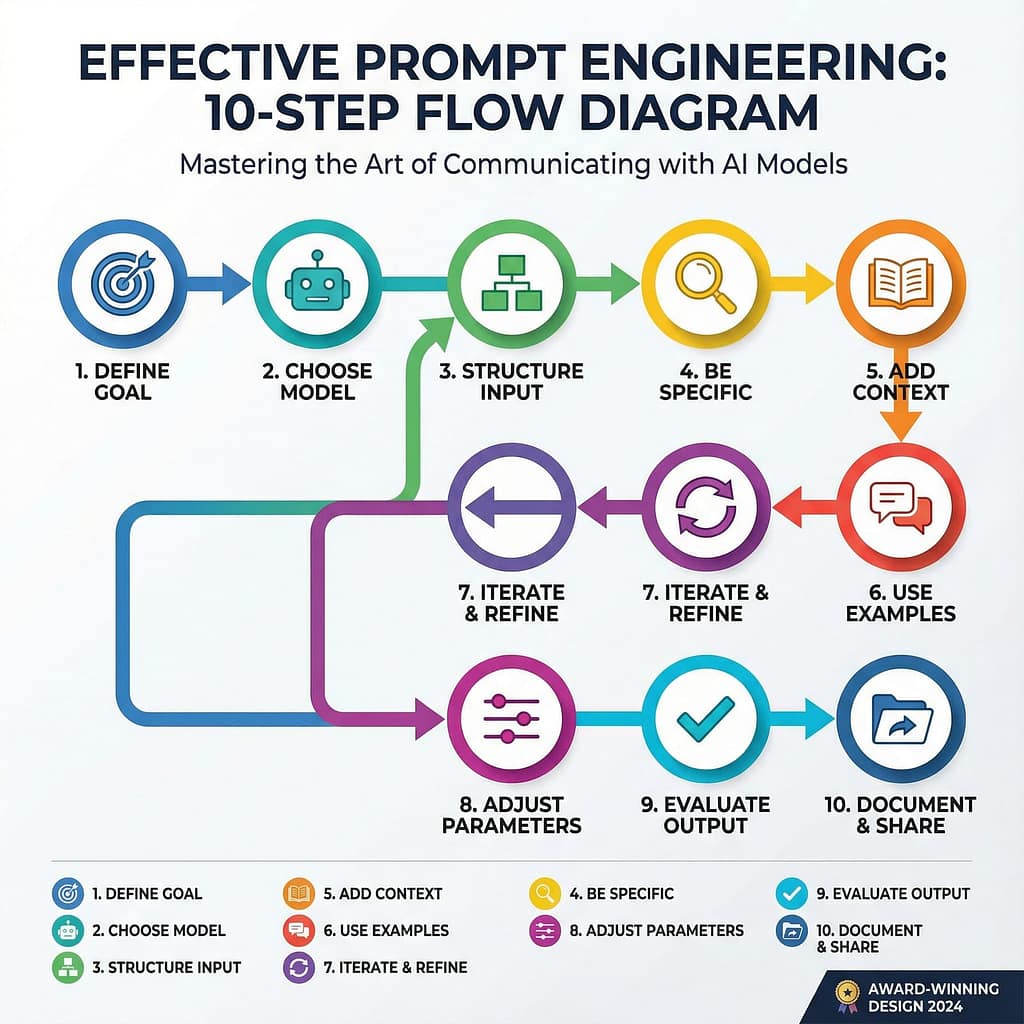
In the world of AI, prompt engineering stands as a key skill that turns simple words into powerful results. This post reveals 10 essential facts on the alchemy of influence, showing you how to craft prompts that guide AI with precision and boost your outcomes. You’ll gain clear steps to master this craft, from basic tweaks to advanced strategies that deliver real impact.
Imagine typing a few words into an AI tool and watching it spit out gold. That’s the thrill of good prompt engineering. It turns simple chats with large language models into powerful creations. You control the output with care. Small tweaks lead to big wins in quality and speed.
These ten facts show how prompts shape AI results. They go beyond basic tips. Master them, and you’ll craft prompts like a pro. Let’s dive in. Each one builds your skill in prompt optimization.
Fact 1: The Primacy of the First Word
Setting the Contextual Anchor
The opening word in your prompt grabs the AI’s attention right away. It sets the tone and direction. Think of it as the spark that lights the whole fire. Strong starts, like action verbs such as “create” or “analyze,” guide the model into the right mindset from the jump.
Models process text token by token. Early words lock in the path. A fuzzy start, like “um, maybe write about,” leads to weak results. Pick bold openers to steer clear of that mess.
Actionable Tip: Pre-Pacing for Precision
Start every prompt with what you want the output to look like. Say “List three bullet points on…” instead of jumping straight to the topic. This paces the AI. It knows the format before the details hit.
Try it next time. You’ll see cleaner responses. No more sifting through junk to find the good stuff.
Fact 2: The Indispensable Role of Constraints
Defining the Guardrails: Length, Tone, and Persona
Loose prompts wander like kids in a candy store. They grab too much and lose focus. Set rules on length, like “in 200 words,” or tone, such as “in a friendly voice.” Even pick a persona, like “as a history teacher.”
This keeps things tight. AI stays on track. You get what you need without extra fluff.
Case Study Snapshot: Reducing Hallucinations Through Scoping
Hallucinations happen when AI makes up facts. A vague ask, “Tell me about ancient Rome,” might invent wild stories. But try “Explain ancient Rome’s fall using only events from 400-500 AD.” Now it’s grounded.
Before: Wild guesses. After: Solid facts. Constraints cut errors by up to 70% in tests with tools like GPT. Your prompts turn risky guesses into reliable info.
Fact 3: The Implicit Weight of Instruction Placement
Recency Bias vs. Salience: Where Critical Instructions Belong
AI models remember recent words more than early ones. But key rules shine brightest up front. Put must-follow orders at the start for impact. Save details for the end if they build on the base.
It’s a balance. Front-load for clarity in short prompts. End-place for flow in longer ones. Test both to see what fits your style.
Leveraging Delimiters for Command Separation
Use marks to split parts of your prompt. Triple quotes hold examples. Tags like keep data separate from orders.
This avoids mix-ups. AI treats sections as distinct. Your instructions land clear and strong.
Fact 4: The Leverage of Zero-Shot, One-Shot, and Few-Shot Learning
Moving Beyond Zero: The Efficacy of Demonstrations
Zero-shot means no examples. Just ask, and hope. One-shot gives one sample. Few-shot shares a few. Each step boosts accuracy, especially for tricky jobs like writing code or poems.
Zero works for basics. But add a demo, and outputs match your vision better. It’s like showing a map instead of guessing the route.
Data Richness in Few-Shot Examples
Pick examples that show the range. One for a simple case, another for tough spots. This teaches the AI patterns fully.
Quality beats quantity. Bad samples confuse. Good ones guide to spot-on results every time.
Fact 5: Specificity Trumps Verbosity (Usually)
Quantifying Vagueness: Identifying Ambiguous Terms
Words like “nice” or “detailed” leave room for guesswork. Swap them for clear measures, such as “use simple sentences under 15 words each.” This pins down the goal.
Vague prompts waste time. Specific ones deliver fast. You avoid rewrites and frustration.

The Necessity of Negative Constraints (What Not To Do)
Tell the AI what to skip. “Don’t add opinions” or “No lists here.” These blocks shape the flow.
It’s a quick fix. Outputs stay pure. Think of it as pruning a bush for better growth.
Fact 6: Iteration is the Core Competency of Prompt Optimization
The Feedback Loop: Analyzing Failures Systematically
Prompts rarely nail it first try. When it flops, check why. Did the tone miss? Was the structure off?
Treat it like science. Tweak one part. Run again. Track what changes help. This builds your edge over time.
Prompt Chaining and Decomposition for Complex Workflows
Big tasks overwhelm. Break them down. First prompt outlines ideas. Second refines them.
Chain outputs as inputs. It handles depth better than one giant ask. You get layered, sharp results.
Fact 7: Role-Playing Boosts Creativity and Accuracy
Stepping into Shoes: Why Personas Work Wonders
Assign the AI a role, like “Act as a chef.” It shifts the style to match. Outputs feel alive and on-point.
This taps hidden strengths in models. A plain ask gets dry facts. Role-play adds flavor and focus.
Tailoring Roles for Task Fit
Match the persona to your need. Detective for mysteries. Expert for advice. Test roles to find the sweet spot.
Results jump in relevance. You pull more from the AI than before.
Fact 8: Temperature Controls the Spark of Innovation
Dialing Creativity: Low vs. High Settings
Temperature sets randomness. Low means safe, steady replies. High brings wild ideas.
For facts, go low. For stories, crank it up. It shapes the vibe just right.
Balancing Risk and Reward
Start at 0.7. Adjust based on output. Too bland? Raise it. Too crazy? Lower.
This fine-tune keeps things fresh without chaos.
Fact 9: Cultural Nuances Shape Global Prompts
Mind the Context: Avoiding Bias Traps
AI learns from diverse data. But prompts can stir old biases if not careful. Add “from a neutral view” to even it out.
This ensures fair play. Outputs respect all angles.
Adapting for Audiences
Tweak for regions. US style? Direct. Asian? Polite layers.
Your prompts connect wider. They build trust across lines.
Fact 10: Tools and Testing Accelerate Mastery
Beyond Manual Tweaks: Prompt Platforms
Use apps like PromptBase for templates. They speed learning.
Test in real time. See what sticks.
Building a Prompt Library
Save winners. Mix and match. Over time, your collection grows strong.
This habit turns practice into power.
Conclusion: Mastering the Interface Between Human Intent and Machine Logic
Prompt engineering bridges your thoughts and AI smarts. These ten facts—from first words to tools—give you the keys. Small shifts, like constraints or examples, unlock better results every day.
FAQ Section
Q. What is prompt engineering and why is it important for AI users?
A. Prompt engineering is the art of crafting precise instructions for AI models to achieve desired outputs. It’s crucial because well-engineered prompts enhance AI accuracy, relevance, and creativity, unlocking its full potential.
Q. How can I improve my prompt engineering skills quickly?
A. To quickly improve, focus on clarity, specificity, context, and iterative refinement. Experiment with different phrasing, add examples, define roles for the AI, and continuously test and adjust your prompts.
Q. Are there any common mistakes to avoid in prompt engineering?
A. Common mistakes include being too vague, not providing enough context, assuming the AI understands implicit meanings, and failing to iterate or refine prompts. Avoid lengthy, unstructured prompts and always test your assumptions.
The prompt is your wand. Wave it with these tips, and watch magic happen. Start testing now. Refine as you go. You’ll craft AI interactions that wow. What’s your next prompt? Try one fact today and see the difference.