
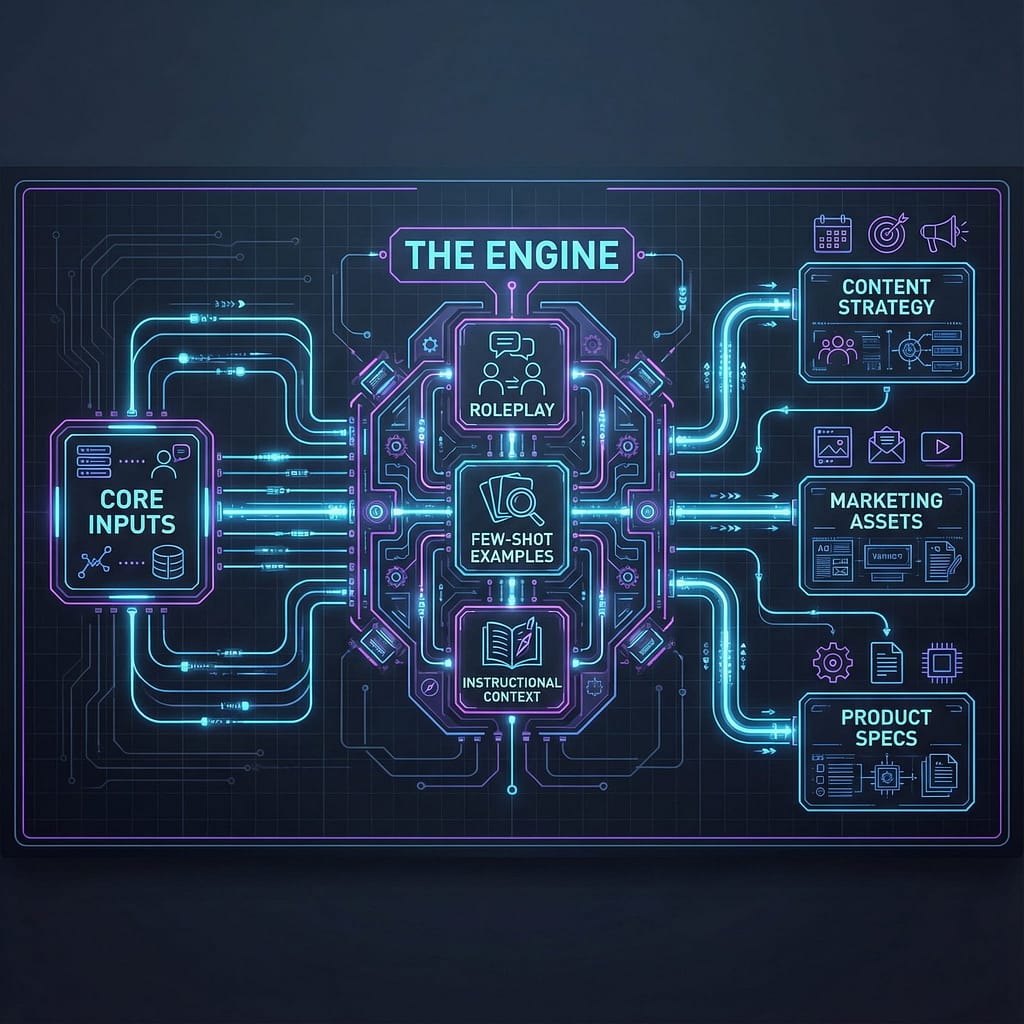
What if your everyday AI chats could power your next product, campaign, or course? With the right system, they can. You will turn scattered prompts into a repeatable engine that saves time and grows ideas on command.
Think of AI prompt packages as bundled scripts for common tasks. Each bundle covers one goal, like blog briefs, ad angles, email sequences, or product research. You plug them in, follow simple steps, and get consistent results, even on a busy day.
If you are new to prompts or run a small business, this is your cheat code. No more guessing what to type or fixing messy outputs. AI Prompt Package Creation gives you structure, guardrails, and quality control you can count on.
You will learn how to build clear roles, inputs, and examples, plus when to use mega-prompts, prompt chaining, and simple multimodal cues for better context. We will also touch on safe prompting habits that cut errors and bias. By the end, you will have a starter set you can use across content, marketing, and ops.
Want a head start on tools to test your package ideas? Check out these beginner-friendly picks in the guide to best free AI prompt tools for beginners. And if you like to see it in action, this video is a helpful primer: https://www.youtube.com/watch?v=P08jrZhyNxw
Get ready to map your core tasks, wire in smart prompts, and run them like templates. Our comprehensive guide walks you through the entire process. You will learn how to create prompts that save time and boost your ideas, starting today.
Understand AI Prompt Packages and Why You Need Them
Think of an AI prompt package as a ready-to-run system for a task. You get structured prompts, roles, inputs, examples, and QA checklists, all built to work together. Instead of guessing what to type, you follow a simple flow and get reliable results.
This is the core of AI Prompt Package Creation. You build once, then reuse daily. It saves time, locks in voice and style, and reduces rework across your content, marketing, and ops.
What an AI Prompt Package Includes
A strong package has a few core parts that keep outputs consistent and on-brand:
- Role setup: Clear model identity and constraints, like “You are an SEO editor.”
- Inputs: What you supply each time, such as audience, topic, brief, and data.
- Steps or chains: Small prompts that run in a set order for quality control.
- Examples: Short input and output pairs to show the model what “good” looks like.
- Style guardrails: Tone, banned phrases, formatting, and reading level targets.
- QA checks: A checklist the model follows to catch errors before final output.
- Variants: Optional prompts for short, long, or platform-specific versions.
If you want a quick primer on prompt quality and structure, review Google’s overview of prompt engineering for AI or AWS’s breakdown of what prompt engineering is and why it matters.
Why You Need Them
You need packages when speed and consistency matter. Single prompts help, but they rarely scale. Packages do.
- Faster work: You cut trial and error from hours to minutes.
- Consistency: Same tone, structure, and depth across writers and projects.
- Onboarding: New team members produce strong work on day one.
- Accuracy: Built-in checks reduce factual drift and formatting errors.
- Reuse: One package fuels many tasks, like briefs, outlines, and drafts.
- Measurable wins: You can test, compare, and improve each step.
If you prefer ready-made sets before building your own, browse the Top AI Prompt Package Providers for 2025.
How AI Prompt Package Creation Works
You can build a package in a simple five-step loop:
- Define the job to be done, like “publish a blog brief in 20 minutes.”
- Write the role, inputs, and constraints in plain language.
- Split the workflow into 3 to 5 steps with short prompts.
- Add examples and a QA checklist to lock in quality.
- Test with 5 real tasks, then refine weak steps and freeze a v1.
Keep prompts short. Use the same variable names. Store examples beside the prompts. That small discipline makes updates painless.
When a Package Beats Single Prompts
Single prompts work for one-off tasks. Packages shine when you need repeatable outcomes.
- Multiple deliverables from one input, like brief, outline, and draft.
- Hand-offs between people or tools, such as writer to editor.
- Compliance needs, where tone and claims must be precise.
- Multi-channel content, where you need consistent variants.
Example: A “Blog Content Package”
- Role: You are a senior SEO editor. Follow AP style.
- Inputs: Topic, target keyword, audience, angle, internal links.
- Steps: Brief, title ideas, outline, draft, meta data, QA.
- QA: Check reading level, link placement, claims, and duplicates.
Run this flow and you get tight, on-brand content, every time. That is the promise of AI Prompt Package Creation.
Grab the Latest Tips to Build Even Better Prompts in 2025
You can get sharper outputs with less effort this year. Models handle more context, more modes, and tighter instructions. Pair that power with smart structure and you will ship stronger work with your AI Prompt Package Creation system.
Treat Every Prompt Like a Mini Spec
Loose prompts create loose results. Write prompts as if you are handing a clear brief to a junior teammate.
- Role: Define who the model is and the limits of its job.
- Goal: State the output format and success criteria.
- Inputs: List the variables you will supply each run.
- Rules: Include tone, banned phrases, and must-have checkpoints.
Example you can adapt: You are a senior SEO editor. Goal: produce a 600-word blog outline with H2s and H3s. Inputs: topic, audience, primary keyword, internal links. Rules: active voice, 8th grade reading level, no hype words, include 2 internal links, return JSON with fields: title, outline, notes.
Why this works: you reduce guesswork, prompt length, and rework. The model fills a form, not a blank page.
Chain Short Steps, Not One Giant Ask
Short, focused steps beat one mega prompt. Split your package into a small chain, then review each step.
- Step 1, clarify inputs and edge cases.
- Step 2, produce outline options.
- Step 3, draft with constraints.
- Step 4, run QA and fix gaps.
Multi-agent flows can help for complex work, like one agent for research and another for editing. 2025 tools make this easier, and the pattern is backed by current best practices on multi-step prompting and structure seen in resources like Lakera’s prompt engineering guide for 2025.
Use Few-Shot Micro Examples for Style and Format
One or two small examples steer tone and structure better than long lectures.
- Show a good outline and a weak outline, then explain why the good one wins.
- Include one labeled example of the JSON or table format you want.
- Keep examples short, so they do not bloat context.
Quick comparison:
- Bad: “Write a great outline.”
- Better: “Write 5 H2s with 2 H3s each. Use 8 to 12 words per heading. Match this sample style: H2: Problem, H3: Symptom, H3: Fix.”
For more nuance on what works and what does not across modern models, see Lenny’s breakdown in AI prompt engineering in 2025: What works and what doesn’t.
Add Multimodal Cues for Clarity
Models now accept text plus images or audio in many tools. Use that to add context, not clutter.
- Paste a product screenshot, then ask for a 70-word feature summary.
- Attach a chart image and ask for three key takeaways in bullets.
- Provide a brand voice audio clip, then request copy in that tone.
Tip: always restate the objective and constraints in text, even when you add images. Visuals guide context, text locks precision.
Control Cost and Speed Without Sacrificing Quality
Token waste adds up. Trim, structure, and reuse.
- Store your role and rules as a reusable system prompt.
- Keep variables short and clear. Use the same names every time.
- Ask for compact outputs where possible, like bullet summaries before drafts.
- Prefer JSON or simple tables for intermediate steps. They are easy to review and refeed.
A quick tactic:
- First prompt: “Draft 6 title ideas with a 60-character limit.” Choose one.
- Second prompt: “Write the outline using the selected title.” This saves tokens and time.
Build Safety and QA Into the Flow
Quality checks should not be an afterthought. Bake them in.
- Add a short QA checklist at the end of each step.
- Require sources for claims and reject vague language.
- Flag risky phrasing and verify numbers before finalizing.
- For public content, include a bias and risk pass.
Simple end-of-step QA example: Before returning the final draft, confirm reading level is grade 8 to 9, confirm two internal links are present, verify all data points with sources, and remove filler phrases.
If you want tools to help explore, test, and improve prompts faster, scan this curated roundup of Top 10 AI Prompt Tools for Boosting Creativity in 2025. It is a practical add-on to your AI Prompt Package Creation workflow.

FAQ Section
What is an AI prompt package?
An AI prompt package is a curated bundle of structured prompts designed for a specific goal, allowing users to achieve consistent, high-quality AI outputs for tasks like blog briefs, ad copy, or product research, making AI interactions more efficient and reliable.
Why should I use AI prompt packages?
They save time by reducing guesswork, ensure consistency in AI outputs, provide built-in quality control, and allow for repeatable workflows. This makes AI more predictable and effective for everything from content creation to marketing campaigns and operational tasks.
What are mega-prompts and prompt chaining?
Mega-prompts are comprehensive, single prompts designed to handle complex tasks with extensive context and instructions. Prompt chaining involves a series of interconnected prompts, where the output of one prompt feeds as input into the next, breaking down complex tasks into manageable, sequential steps.
How do prompt packages help small businesses?
For small businesses, prompt packages act as a ‘cheat code’ by providing ready-to-use, effective AI workflows without needing extensive prompt engineering knowledge. They enable consistent, high-quality support across content, marketing, and operational needs, saving time and resources.
What are safe prompting habits?
Safe prompting involves creating prompts with clear boundaries, specifying ethical guidelines, and regularly reviewing AI outputs for potential biases or inaccuracies. It also includes protecting sensitive information and refining prompts to reduce errors and undesirable responses, ensuring responsible AI use.
Conclusion
You started with casual chats, now you have a repeatable system that turns ideas into outputs on command. Build small, clear steps, add micro examples, and run tight QA to keep quality high. The payoff is speed, consistency, and results you can trust across content, marketing, and ops, powered by AI Prompt Package Creation.
You have the tools, so create your first package today. Take one task you do every week, write the role, inputs, and rules, then ship a simple v1. Our comprehensive guide walks you through the entire process. Start creating.
Want a next move that builds momentum fast? Explore proven prompts and sellable templates with this roundup of Top AI Prompt Marketplaces for Buying and Selling Quality Prompts.
Try one prompt right now, record your result, then share what worked. Keep refining, keep shipping, and keep your system simple. This is how you turn everyday AI into output you can count on.